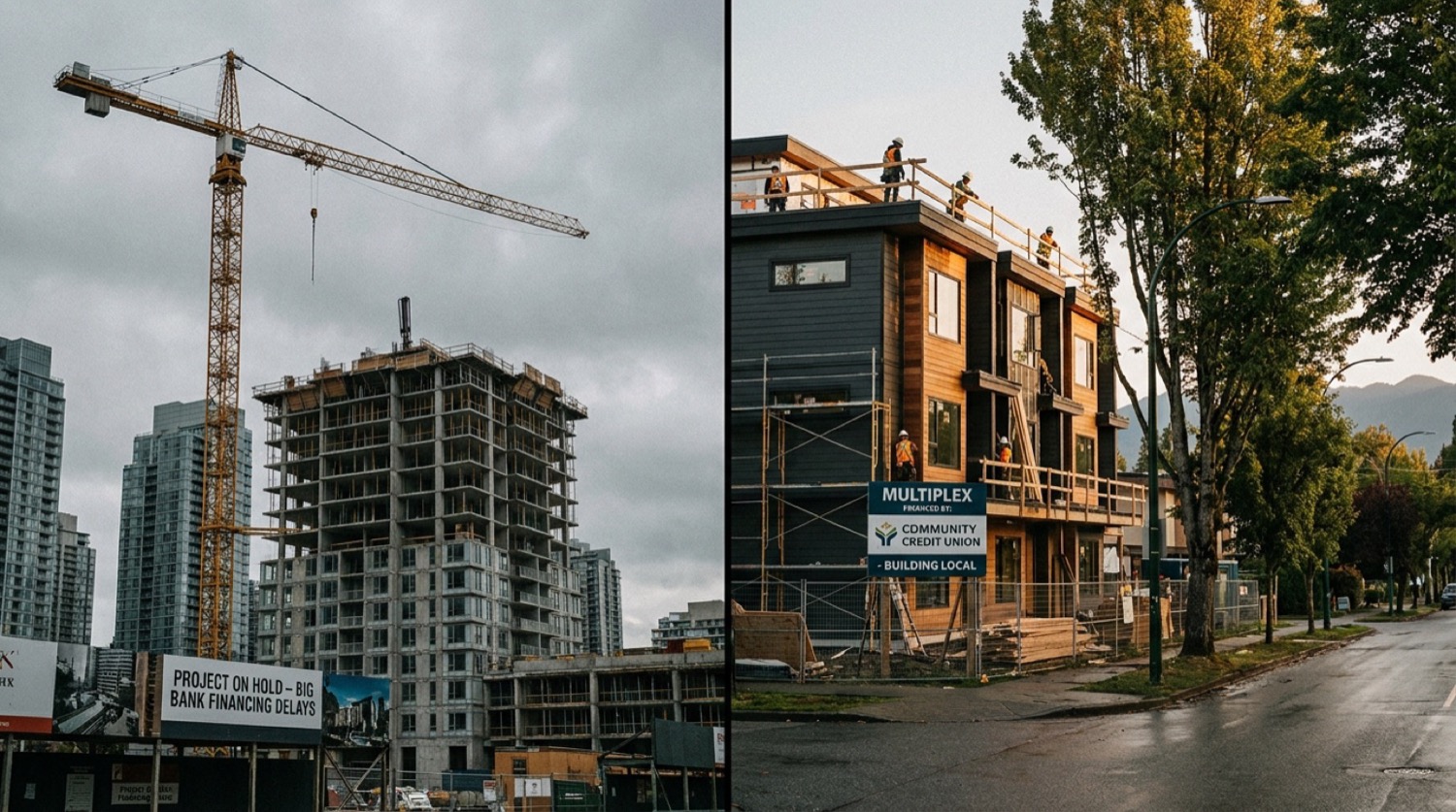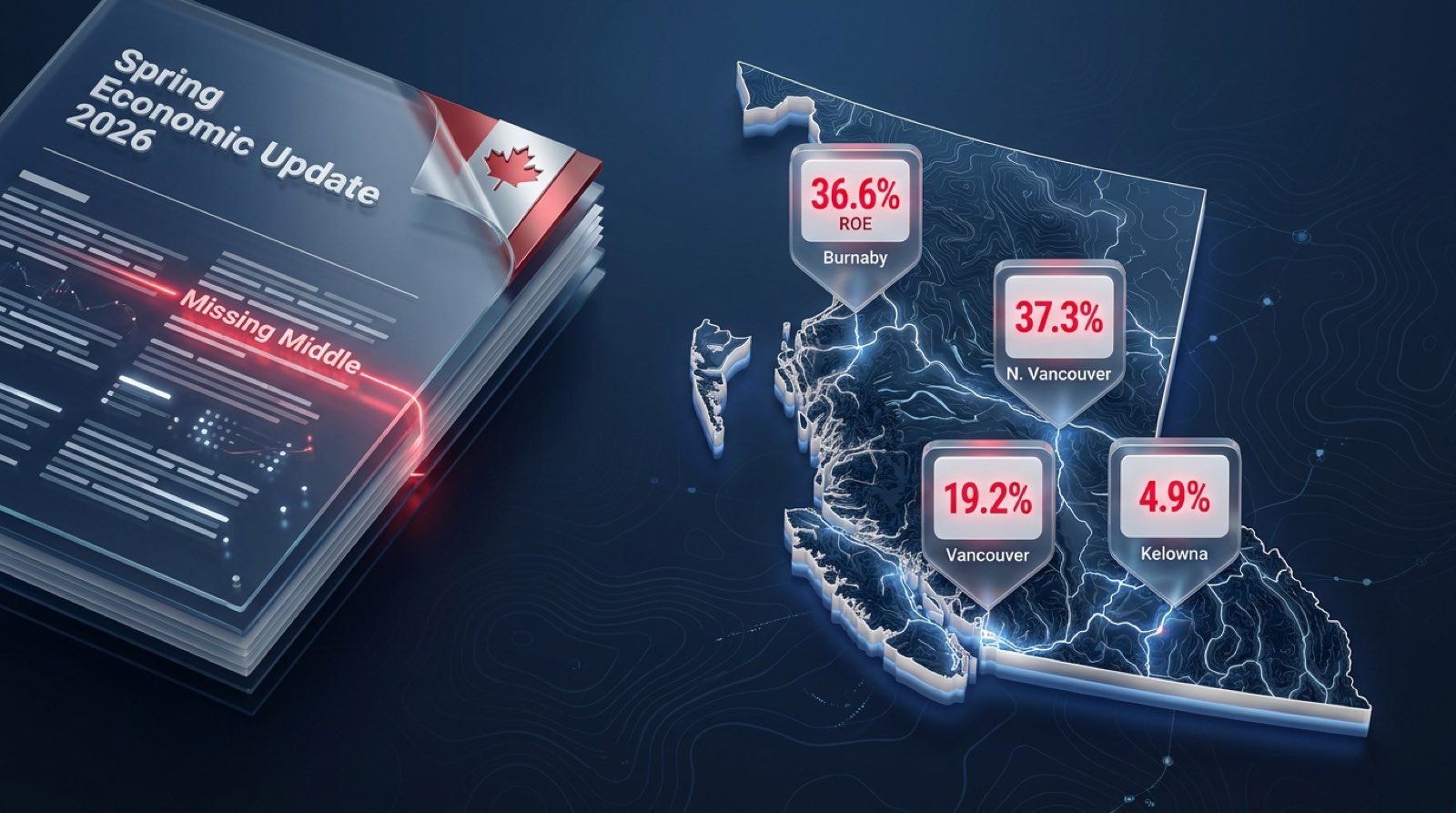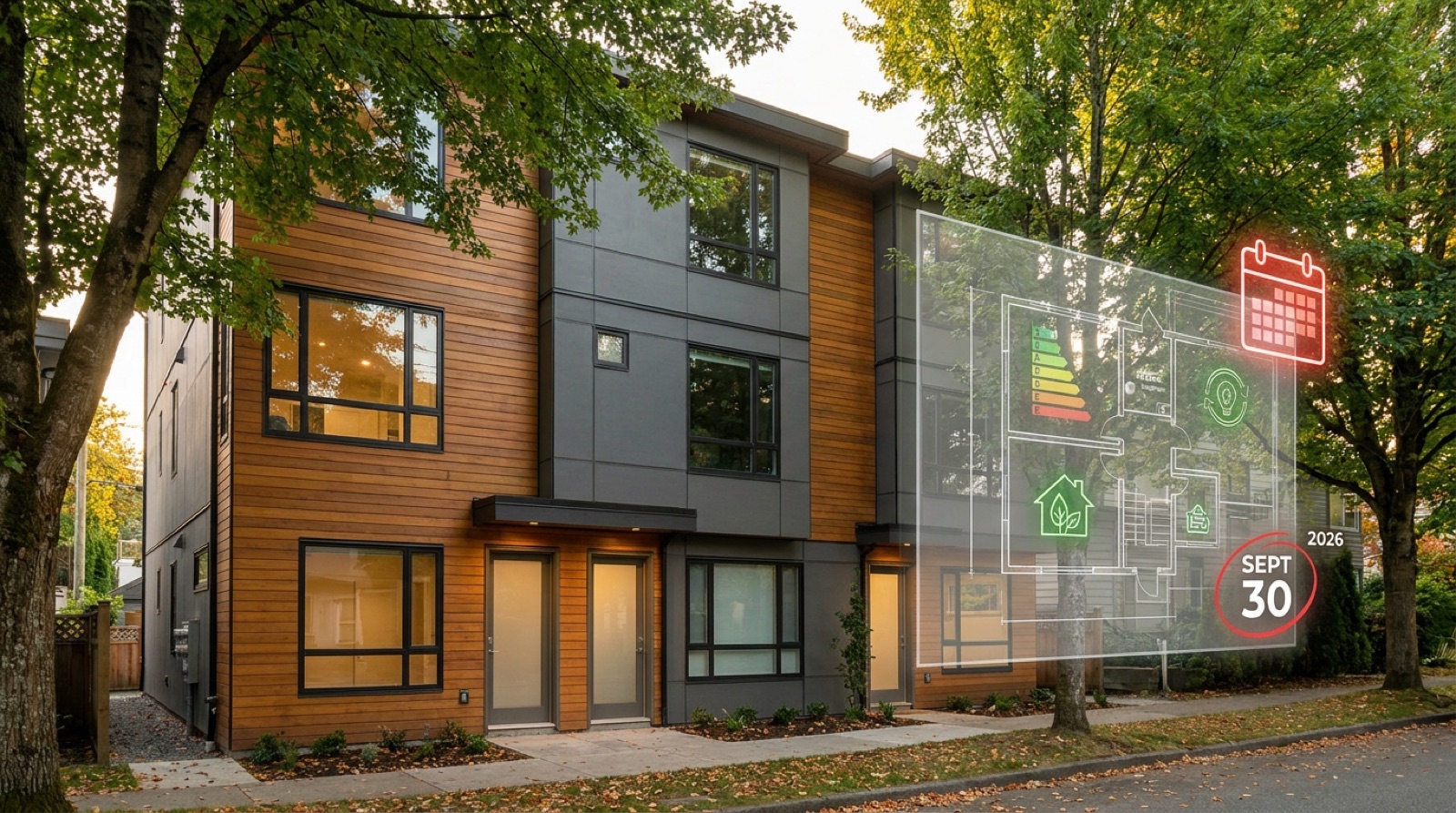
On September 30, 2026, CMHC’s MLI Select program stops accepting energy-efficiency attestations against the 2015 National Building Code and 2017 National Energy Code for Buildings. After that date, every new construction file is scored against the 2020 NBC and 2020 NECB. Tougher baselines, fewer points, and — for a meaningful chunk of build-to-rent multiplex pipelines — the difference between a 50-year amortization and a 45-year one.
If your project files an MLI Select application before September 30, 2026, you’re scored under the standard most BC builders already understand. After that, the math changes.
TL;DR (Key Takeaways)
- September 30, 2026 is the hard cutoff: MLI Select energy points scored against 2015/2017 codes ends
- After the deadline, all new construction files are scored against 2020 NBC and 2020 NECB — tougher targets
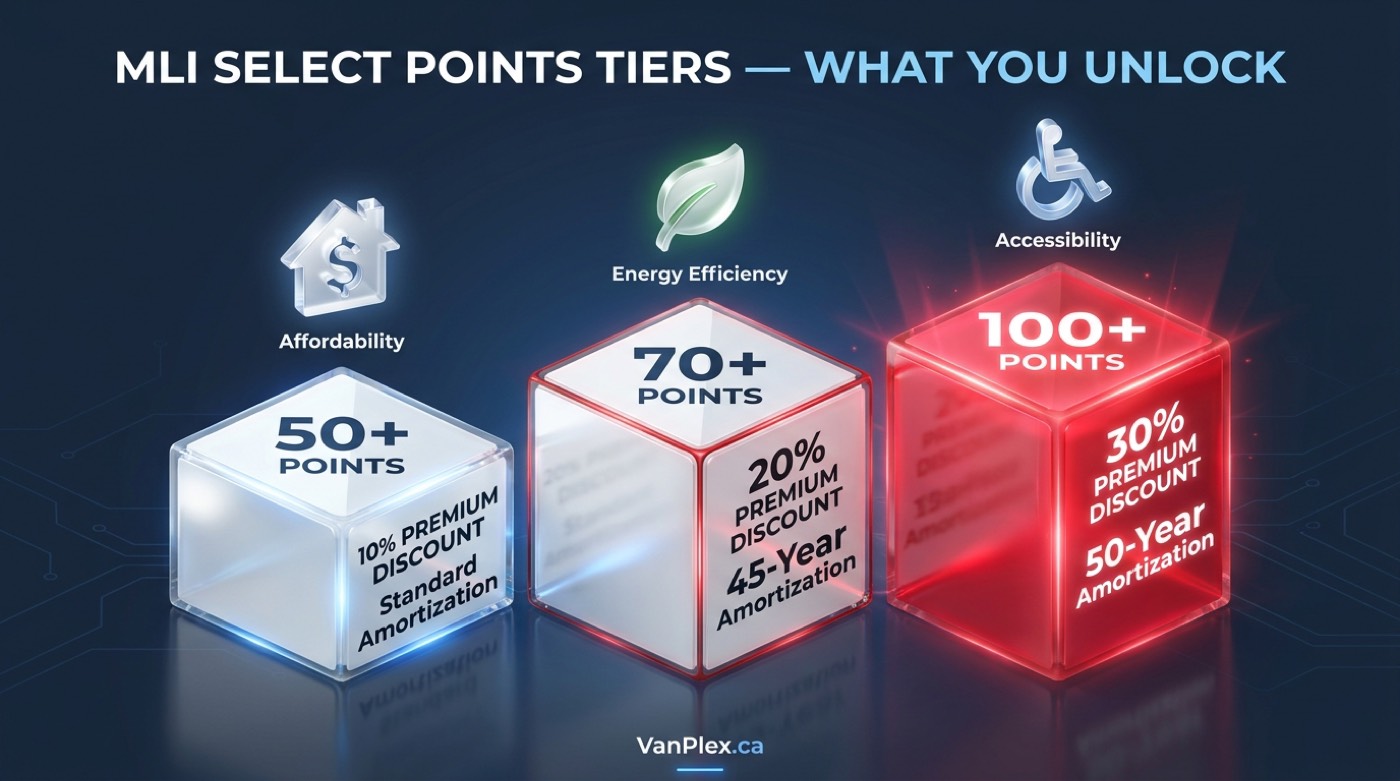
- The points-based system has three tiers: 50+ points = 10% premium discount; 70+ = 20% + 45-year amortization; 100+ = 30% + 50-year amortization
- Points come from three categories: affordability, energy efficiency, accessibility
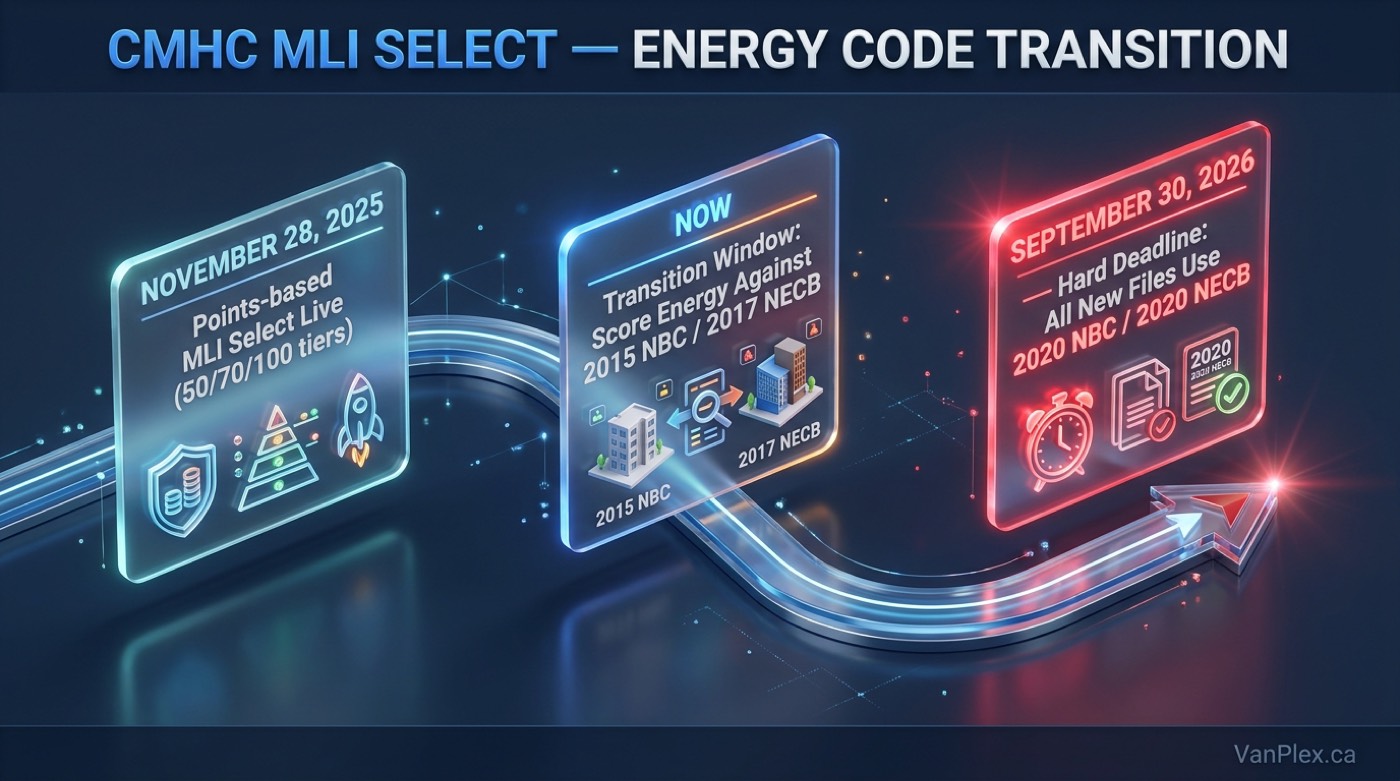
- The transition from old to new energy standards went live November 28, 2025; the September 2026 deadline ends the grace window
- The 100-point tier — the one that unlocks 50-year amortization — is the hardest to hit and the most exposed to the code shift
- Projects already in the pipeline can lock in 2015/2017 scoring by attesting before September 30
What MLI Select actually does for a multiplex
MLI Select is the federal government’s premium discount and amortization extension program for purpose-built rental, attached to CMHC’s multi-unit mortgage insurance product. It’s the financing vehicle behind a large share of build-to-rent multiplex deals in BC.
You earn points across three categories:
- Affordability — committing rents below median market rates for a defined period
- Energy efficiency — building above the applicable code baseline
- Accessibility — meeting universal design and barrier-free standards
The points add up across the three categories. The total determines what you unlock.
| Points | Premium discount | Amortization |
|---|---|---|
| 50+ | 10% | Standard (up to 40 years) |
| 70+ | 20% | Up to 45 years |
| 100+ | 30% | Up to 50 years |
The 100-point tier is the prize. A 50-year amortization on a $5M loan vs. a 40-year amortization is the difference between an annual debt service that comfortably clears CMHC’s DSCR threshold and one that fails by a hair. For a small builder running a build-to-rent multiplex, hitting 100 points is often the entire reason the project pencils.
Why the energy code shift matters
To hit 100 points, you almost always need a high score in the energy efficiency category. Affordability points have a ceiling. Accessibility points are real but bounded by what’s physically achievable on a small lot. The lever that gets a project from 70-something to 100+ is energy.
Until September 30, 2026, the energy attestation can be done against 2015 NBC or 2017 NECB. These are the standards most BC builders, designers, and energy modellers know cold. The points thresholds at each tier — X% better than code — have been calibrated against them.
After September 30, 2026, the reference standard becomes 2020 NBC and 2020 NECB. The 2020 baselines are themselves more efficient than the 2015/2017 codes, which means:
- The “above code” bar is higher. A wall assembly that scored aggressively against 2015 NBC may score modestly against 2020 NBC.
- The same building is worth fewer energy points. Same drawings, same R-values, same windows — different score.
- Projects that comfortably hit 100 points today may land at 85–95 next October.
Real numbers will vary by project. The direction of travel is unambiguous.
Three categories of project — and what to do about each
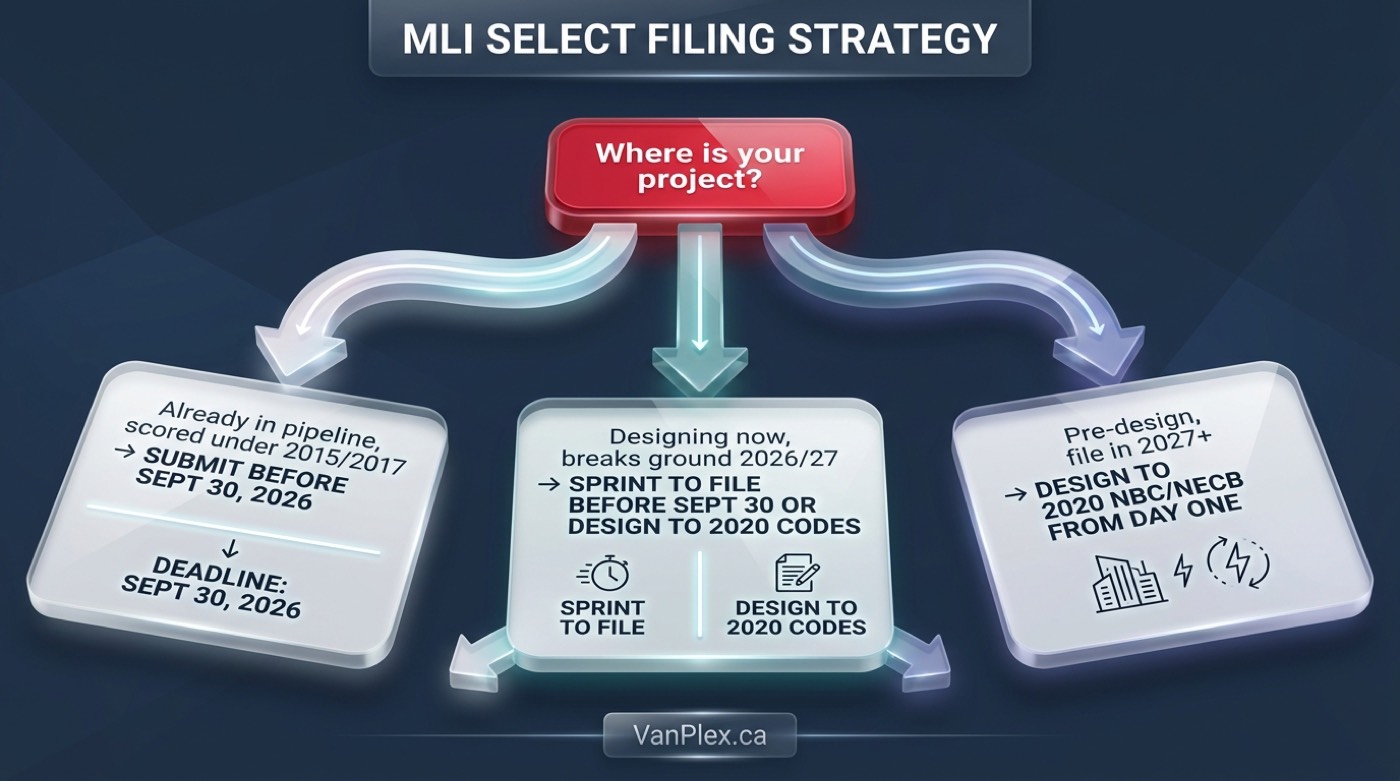
Already in MLI Select pipeline, scored under 2015/2017
If your file is in motion and your energy attestation is against the 2015 NBC or 2017 NECB, finish the application and submit the attestation before September 30, 2026. CMHC has been clear that attestations under the older codes are accepted up to that date. You keep the score you’ve designed for.
The risk: project delay pushes attestation past the deadline. Talk to your CMHC specialist now about timing.
Currently designing, expect to break ground in 2026 or early 2027
You have a choice. Either:
- Sprint the design and submit attestation before September 30, 2026 under the 2015/2017 codes — the familiar regime, the lower bar, the cleaner path to 100 points
- Design to 2020 NBC/NECB from day one, accept that you may score lower on energy and need to make it up in affordability or accessibility, and submit on either side of the deadline
The first option is cheaper and faster but assumes your design and energy modeling team can move. The second is more conservative and arguably more durable — projects designed to a tougher code today are projects that age better.
Pre-design, no application filed
You’re scoring under 2020 NBC/NECB regardless. Don’t bother engineering against the 2015 standard for a building that won’t apply for MLI Select until 2027. Brief your designer for the post-September standard, build the proforma assuming the harder energy points scoring, and re-test whether 100 points is realistic for the lot and design.
If 100 points doesn’t pencil under 2020 codes, the question is whether 70 points (the 45-year amortization tier) still makes the deal work. For most multiplex projects in Vancouver and Burnaby, 45 years vs. 50 years is meaningful but survivable. For tight-margin projects, the answer is sometimes no.
What changed November 28, 2025 — and why this isn’t optional
The September 30, 2026 deadline didn’t appear from nowhere. It’s the back end of a transition CMHC announced November 28, 2025. The announcement simplified MLI Select’s structure into the points-based system above and set a 10-month grace window for existing projects to keep using the older energy codes.
CMHC has signaled that the rest of the points-based scoring is staying. Affordability commitments, accessibility standards, and the three tiers (50/70/100) survive the transition. What changes is the energy reference.
For builders, the practical reading: MLI Select is not getting harder broadly. It’s getting harder in the one category that disproportionately drives whether you hit the top tier.
What this is worth on a $5M project
Round numbers, single project, BC build-to-rent multiplex with a $5M MLI Select-insured loan:
- 30% premium discount at 100 points vs. 20% at 70 points: roughly $25,000–$50,000 in upfront premium savings, depending on LTV and project specifics
- 50-year amortization vs. 45-year: lower monthly debt service, materially better DSCR, and improved cash flow that compounds across the hold
The five-year amortization difference between the 70-point and 100-point tiers is the lever most operators will fight to keep. The September 30, 2026 deadline is the moment that fight gets harder.
What to do this month
If you’re a Vancouver or Burnaby owner with a multiplex in active design or permitting, three actions:
- Ask your designer or energy modeler today whether your file is being scored against 2015/2017 or 2020 codes
- If it’s the older codes, ask your CMHC specialist what attestation date is realistic and whether September 30, 2026 is achievable
- If your project doesn’t file until late 2026 or 2027, rebuild the proforma assuming 2020 NBC/NECB scoring — and check whether the 70-point tier (still solid economics) is the realistic target
For a quick check on whether your specific lot can support a build-to-rent multiplex that hits 100 points under either code regime — and what it’s worth in MLI Select premium and amortization terms — drop the address into the VanPlex proforma. The energy and points logic stays current as CMHC updates roll out.
Author: David Babakaiff, Co-Founder of VanPlex PlexRank™ | Profit with Multiplex
Sources: