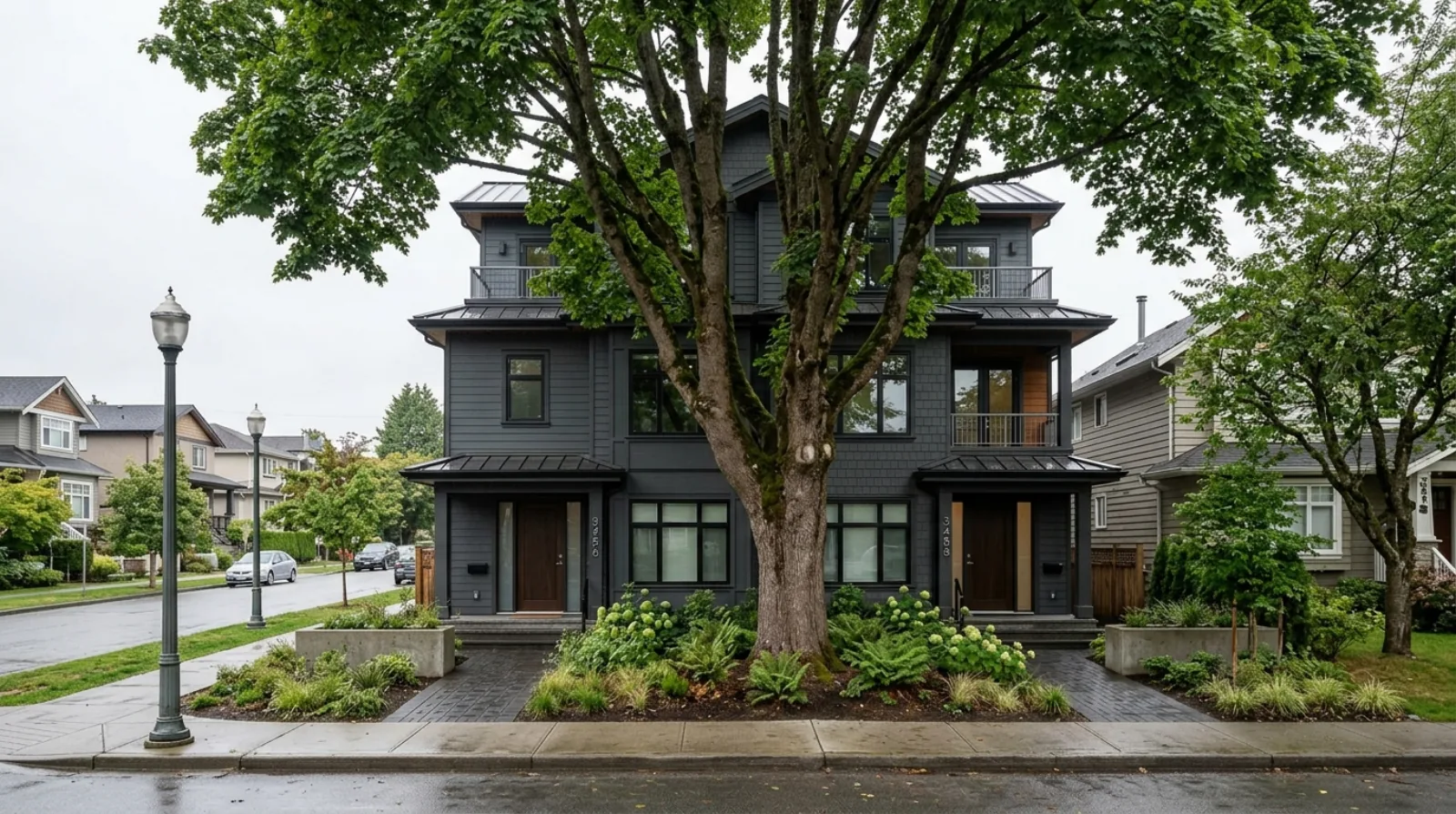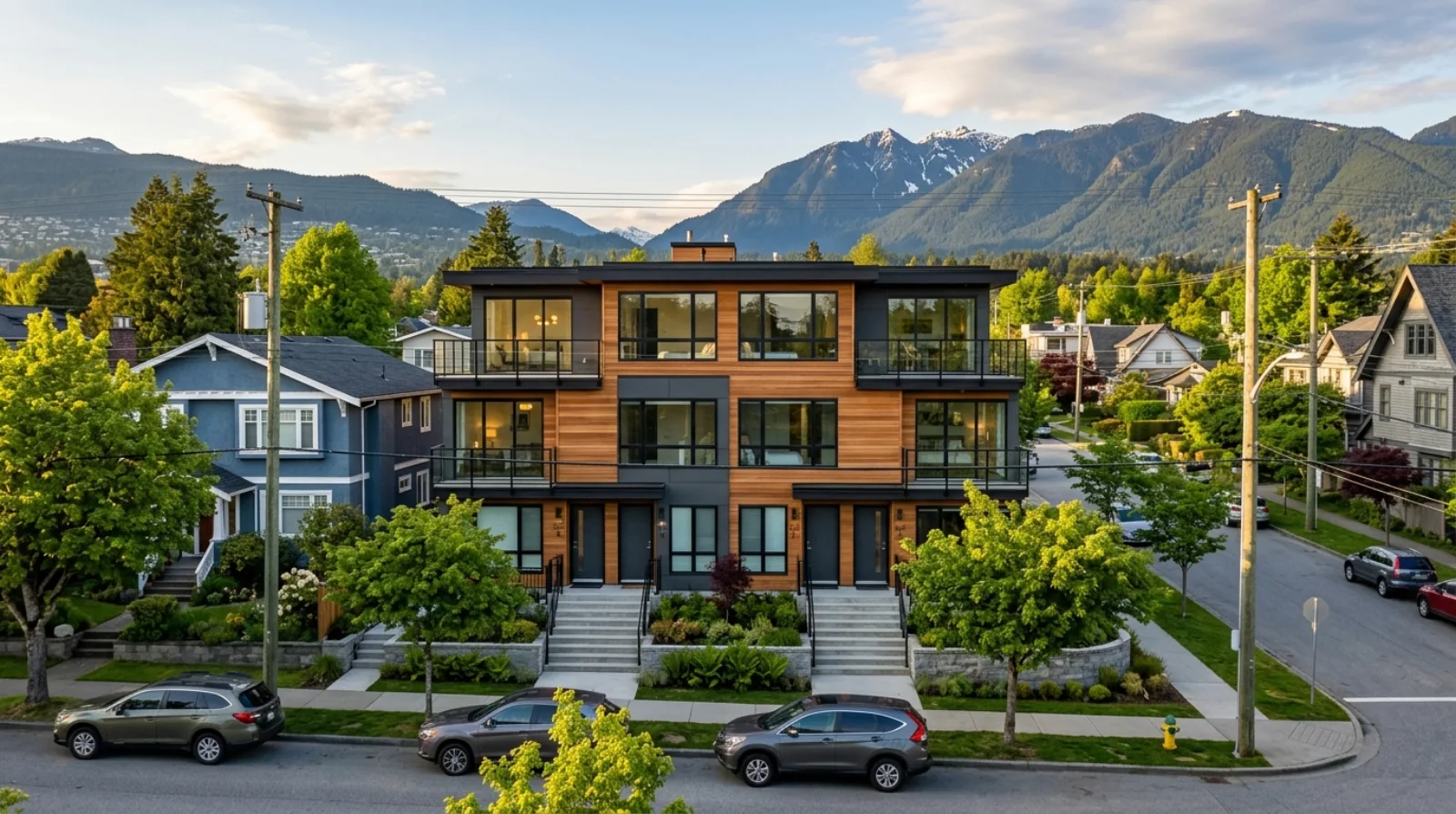
How One Vancouver Homeowner Sold Their $5,000,000 Home for $6,300,000 with Multiplex
By David Babakaiff - Award winning Multiplex and Multi-Generational Homes Expert
August 5, 2025
In Vancouver’s South Granville neighborhood, a homeowner with a $5 million property faced a common crossroads: whether to sell their home and downsize—or find a way to stay rooted in their community while accommodating generational needs.
Instead of selling, they pursued an emerging model of urban land use that’s gaining traction in high-value housing markets: owner-led, small-scale redevelopment. Our services page explains how VanPlex structures these owner-led projects from feasibility through to final sale.
The Result?
✅ A 26% increase in equity
✅ A new multi-generational living arrangement
✅ A model that could reshape how homeowners and cities think about residential infill development
The Situation: A $5M Lot, Fully Owned, Underutilized
The property in question was an inside lot just over 12,000 square feet, with 66 feet of frontage, located in one of Vancouver’s most established neighborhoods.
Owned outright, its open-market value was approximately $5 million.
Under updated zoning allowances, the lot qualified for six residential units. With strategic planning, the homeowner realized they could redevelop the site, retain two units for personal and family use, and sell the remaining four—capitalizing on both asset appreciation and market demand for mid-sized, family-friendly homes.
The Strategy: Designing for Retention, Sale, and Livability
Instead of maximizing density without regard to layout or appeal, the homeowner worked with a development team to optimize the site’s design for both emotional and market value.
- Courtyard-style architecture was selected to promote community, privacy, and green space—attributes increasingly valued by urban buyers
- Unit Mix Each unit was designed to be just over 1,500 square feet, with pricing aligned to local comps at approximately $1,200 per square foot, or $1.8 million per unit
This approach allowed the homeowner to address multiple objectives:
- Downsize into a newly built home on their own land
- Provide housing for an adult child
- Monetize remaining space through market-rate sales
- Avoid displacement or relocation
The Financial Outcome: +$1.3M in Equity Gain
The project’s financials underscore the latent potential in single-family lots under the right development framework.
| Metric | Value |
|---|---|
| Pre-Development Property Value | $5,000,000 |
| Total Development Costs (All-In) | $4,500,000 |
| Gross Revenue from Sales (4 Units) | $7,200,000+ |
| Retained Property Value (2 Units) | Included in equity |
| Final Post-Project Equity | $6,300,000 |
| Equity Gain vs. Sale-As-Is | +$1.3 million |
Rather than selling the property and relocating, the owner increased their equity position by 26%, secured new customized housing, and strengthened family ties through co-location.
Implications: Owner-Led Redevelopment as a Scalable Model
This case offers broader insights into how cities, developers, and individual homeowners might approach infill housing in high-value urban areas. You can read more real project outcomes in our case studies.
1. Homeowners Can Be Proactive Developers
With the right team and financing, property owners can lead development projects rather than simply selling to developers who capture the upside.
2. Gentle Density Can Be Desirable
Well-designed multi-unit developments can enhance neighborhood character rather than diminish it, especially when community space and architectural quality are prioritized.
3. Design for Lifestyle, Not Just for Code
The courtyard layout wasn’t just about meeting zoning requirements—it created a living environment that families actually want, which translates directly to market value.
4. Policy and Financing Enablement Is Key
Updated zoning made this project possible, but streamlined permitting and owner-friendly financing options could make it more accessible to a broader range of homeowners. Learn more about who David Babakaiff is and the expertise behind these projects on our about page.
Conclusion
As cities grapple with housing shortages and changing demographics, stories like this reveal a path forward: one where property owners are empowered to lead development, not just participate in it.
With the right design, economics, and policy backing, small-scale infill development could become a powerful tool in reshaping urban housing—one lot at a time.
David Babakaiff is an award-winning expert in multiplex and multi-generational homes, known for premium construction & development and devoted to family.
PS: Want to know what your home could be worth as a multiplex? Visit VanPlex.ca — pop in your address and get a full AI-generated analysis in seconds.