
Your mom calls on a Tuesday afternoon. She fell again—this time in the bathroom. Nothing broken, but the pause before she says “I’m fine” is getting longer every time. Your dad’s knees are worse. The stairs in their split-level are becoming an obstacle course. You’ve been researching care homes, and the numbers make your stomach drop: publicly subsidized care runs $1,466 to $4,073 per month depending on income, while private-pay facilities range $7,000 to $18,000+ per month in British Columbia (BC Office of the Seniors Advocate, 2024)—with waitlists averaging 290 days for publicly subsidized beds. There’s a better answer, and it’s probably sitting under your feet right now.
TL;DR (Key Takeaways)
- Over 80% of Canadian seniors prefer to age at home rather than in institutional care (National Institute on Ageing, 2024)
- BC subsidized care costs $1,466-$4,073/month; private-pay runs $7,000-$18,000+/month—$480,000 to $960,000+ over 10 years
- A purpose-built ground-floor multiplex unit for parents costs $0/month in ongoing housing after construction
- The MHRTC provides up to a $7,000 refundable tax credit (14% of up to $50,000 for 2026) for creating a secondary unit for a senior 65+
- Bill 44 enables 4-6 unit multiplexes on single-family lots—enough for parents, your family, and rental income
- Accessible design features (main-floor living, wide doorways, grab bars) add minimal cost during new construction
The conversation every family dreads
Here’s how it usually starts. The adult children gather—sometimes at a kitchen table, sometimes on a group text—and somebody says the thing nobody wants to say: “We need to talk about Mom and Dad.”
The options feel binary. Keep them in a home that’s becoming dangerous—stairs they shouldn’t climb, a bathtub they can’t safely enter, a neighbourhood where driving is the only way to get groceries. Or move them into a care facility where publicly subsidized beds cost $1,466-$4,073/month (income-based) and private-pay facilities range $7,000-$18,000+/month (BC Office of the Seniors Advocate, 2024; Route65.ca).
Neither option feels right. And the guilt compounds in both directions.
But there’s a third option that most families never consider—because until recently, the zoning didn’t allow it.
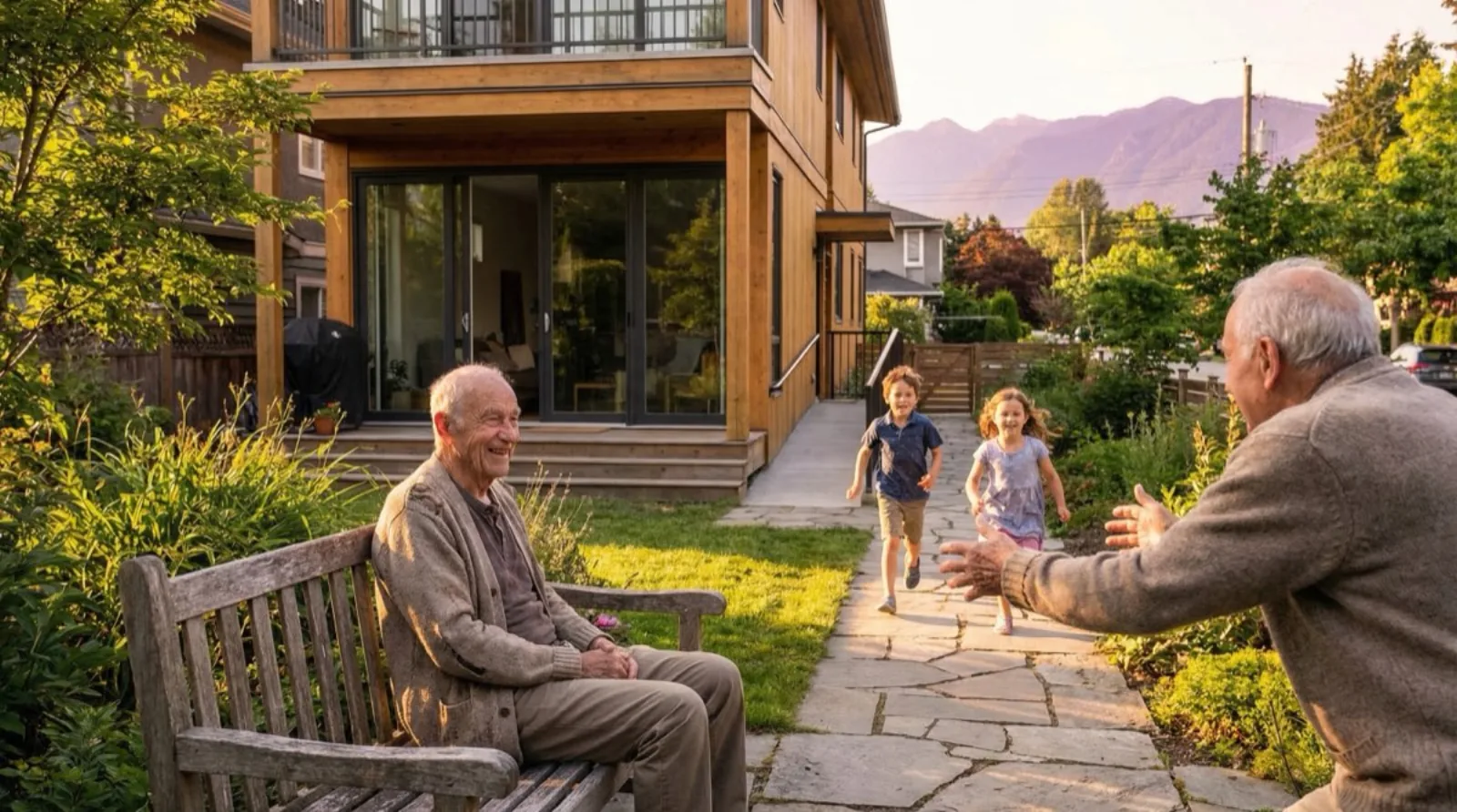
Build them a home. Right next to yours.
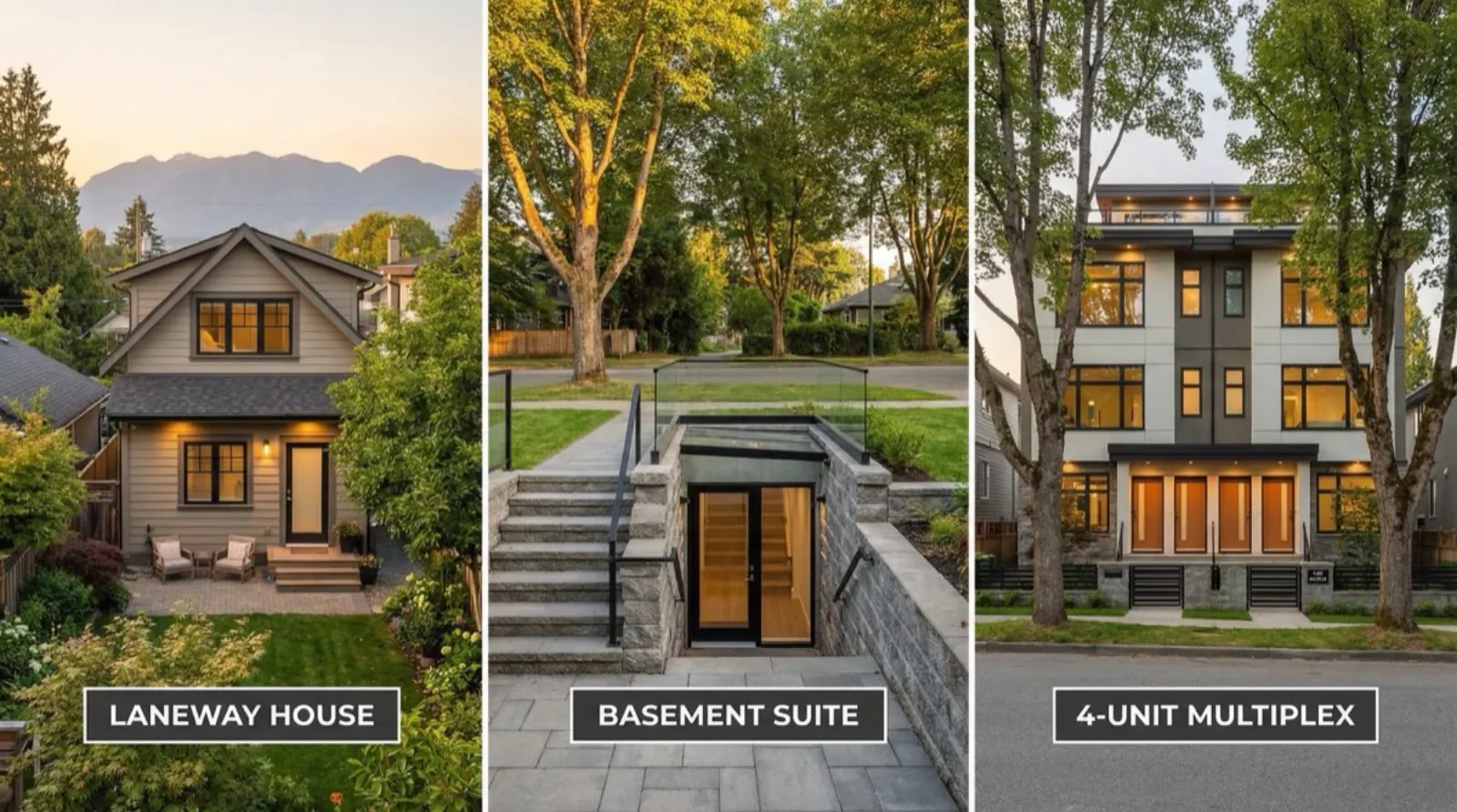
Bill 44, effective across BC since 2024, permits 4-6 unit multiplexes on traditional single-family lots. For a full breakdown of what that legislation allows, see our Bill 44 guide. That means a single property can house your parents in a purpose-built accessible ground-floor unit, your own family in the main living space, and generate rental income from additional units to offset the construction cost.
This isn’t a theoretical concept. It’s happening across Metro Vancouver right now. For families thinking through how to structure a multigenerational build, our multigenerational living page covers unit design, shared-space planning, and tax considerations.
What accessible design actually looks like
When you build new rather than retrofit, accessible design is straightforward and adds minimal cost. Key features for a senior-friendly ground-floor unit include:
- Main-floor living: Bedroom, bathroom, kitchen, and living area all on one level—no stairs required
- Wide doorways: 36-inch door width recommended to achieve the 32-inch minimum clear opening required for accessibility, accommodating walkers and wheelchairs
- Roll-in shower: Zero-threshold entry with grab bars and a built-in bench
- Lever handles: On all doors and faucets—easier to operate with arthritic hands
- Non-slip flooring: Throughout all living areas and bathroom
- Emergency response: Wired for medical alert systems
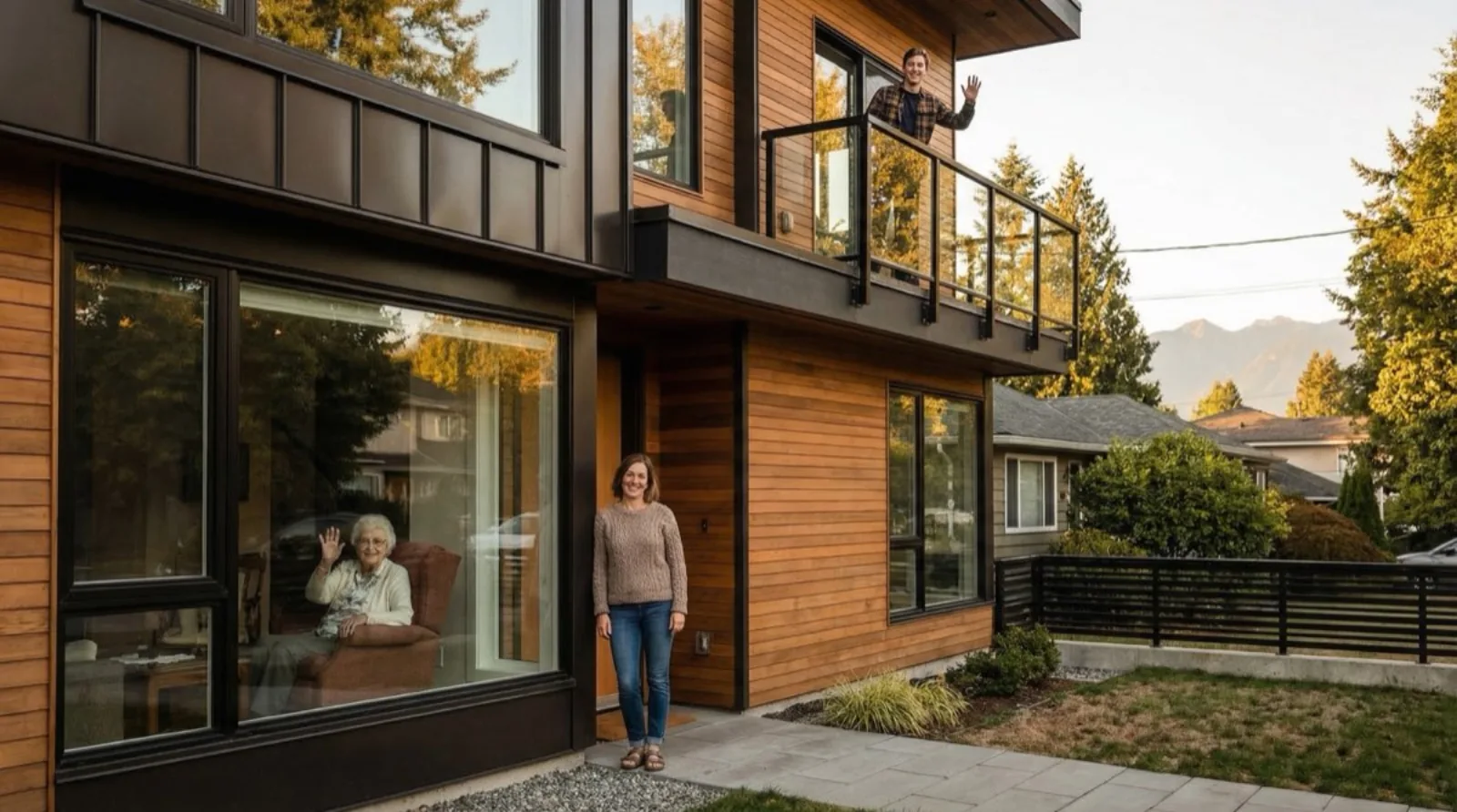
- Separate entrance: Independence and dignity, with family just steps away
During new construction, accessibility features add less than 1-3% to project costs (ADA National Network research). During a retrofit, the same modifications can cost $18,000-75,000 depending on scope (Angi home accessibility data). Building new is not just better design—it’s better economics.
The math that changes everything
Let’s compare the two paths over 10 years for a BC family.
| Cost Factor | Care Facility (10 Years) | Multiplex Unit (10 Years) |
|---|---|---|
| Monthly housing cost | $4,000-8,000/month (subsidized high-end to private-pay) | $0/month after build |
| Total housing cost (10 yr) | $480,000-960,000 | $0 |
| Construction cost (parent unit) | N/A | ~$400,000-500,000 (share of fourplex) |
| MHRTC tax credit | N/A | -$7,000 (2026 rate) |
| BC HRTC for seniors | N/A | Up to -$1,000/year |
| Net cost of parent unit | N/A | ~$392,000-493,000 (one-time) |
| Property value created | $0 | $1.1-1.4M (unit equity) |
| Rental income (other units) | $0 | $72,000-120,000/year |
| Family proximity | 15-45 min drive | Next door |
| Quality of life | Institutional | Home |
Even at the mid-range of care facility costs ($4,000/month subsidized), a family spends $480,000 over 10 years with zero equity created. The multiplex unit costs more upfront but creates a real asset worth over $1 million—and the rental income from the other units in the fourplex can exceed $6,000-10,000/month.
The hidden cost of care homes nobody mentions
Beyond the monthly fee, care facilities carry costs that don’t appear on the brochure:
- Waitlists: 6-12 months for publicly subsidized beds in Metro Vancouver (BC Office of the Seniors Advocate, 2024)
- Location: Your parents may end up in a facility 30-45 minutes away
- Transition trauma: Research on relocation stress syndrome shows seniors who move to institutional care experience elevated rates of depression and anxiety, particularly in the first weeks and months (gerontological research literature)
- Loss of independence: Fixed meal times, shared spaces, institutional routines
- Annual increases: Private-pay care home fees in BC have no regulatory cap on increases, with some facilities raising rates significantly year over year (BC Seniors Advocate)
National survey data consistently shows that over 80% of Canadian seniors express a preference for aging at home in a familiar setting rather than institutional care (National Institute on Ageing, 2024). The desire is clear. The barrier has been zoning—and that barrier is now gone.
How the tax credits work in your favour
The federal Multigenerational Home Renovation Tax Credit (MHRTC) was specifically designed for this scenario. Here’s how it applies:
Eligibility: You’re creating a secondary dwelling unit for a parent or grandparent aged 65+ (or an adult family member with a disability qualifying for the Disability Tax Credit).
The credit: Refundable credit at the lowest federal tax rate (14% for 2026) on up to $50,000 of eligible renovation or construction costs = up to $7,000 back at tax time.
What qualifies: The secondary unit must have a separate entrance, kitchen, bathroom, and sleeping area. A ground-floor unit in a new multiplex meets all four requirements by design.
Combine this with BC’s Home Renovation Tax Credit for Seniors and Persons with Disabilities (up to $1,000/year for eligible modifications), and the tax system actively rewards you for keeping your parents close.
| Tax Credit | Amount | Eligibility | Application |
|---|---|---|---|
| MHRTC (Federal) | Up to $7,000 (one-time, 2026 rate) | Senior 65+ or DTC-qualifying adult | Claim on T1 return, year of completion |
| BC HRTC for Seniors | Up to $1,000/year | Senior 65+ or person with disability | Claim on BC tax return annually |
| Combined first-year benefit | Up to $8,000 | Meeting both criteria | Stacks with any other eligible credits |
The moment it stops being a spreadsheet
I’ve sat across from families working through this decision. The numbers matter—they have to. Nobody can build without understanding the financial picture.
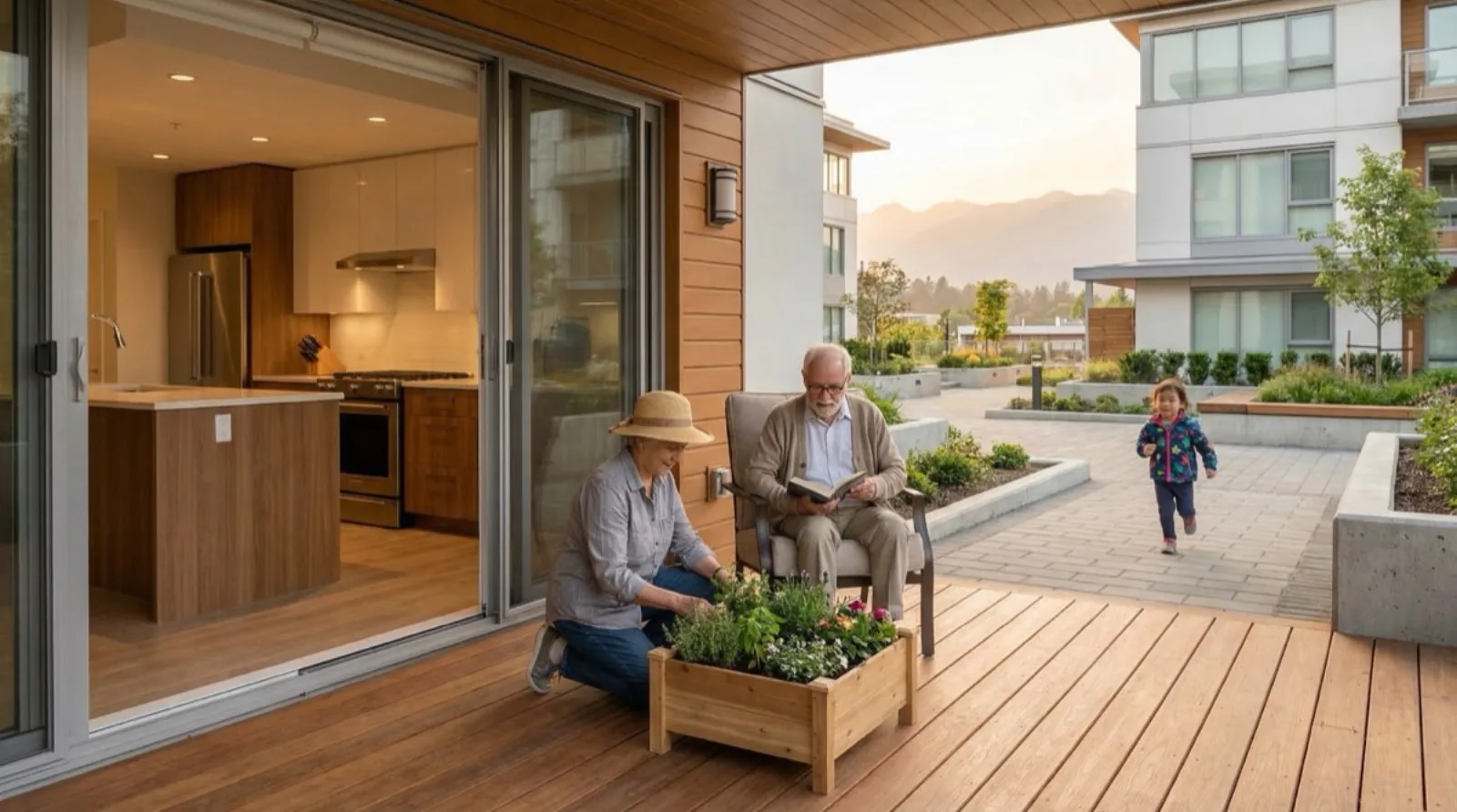
But the moment it clicks isn’t usually about the proforma. It’s when someone realizes their mother can walk out her front door, cross a shared courtyard, and have dinner with her grandchildren every night. It’s when a father who was facing a room in a care facility instead gets his own kitchen, his own garden patch, his own front door.
It’s when a family stops choosing between financial responsibility and emotional wellbeing—because the multiplex eliminates the trade-off.
The overwhelming majority of seniors want to age at home near family. Bill 44 makes it possible. The MHRTC makes it more affordable. And the rental income from additional units makes it financially sustainable.
Your next step
If your family is facing this decision—or if you can see it coming in the next 3-5 years—the time to plan is now. Multiplex development takes 12-18 months from permit to completion. Starting the conversation today means your parents could be in their new home by 2027.
Visit VanPlex.ca and enter your property address. In under two minutes, you’ll see whether your lot qualifies for a multigenerational multiplex under Bill 44, what a development could look like, and what the financial picture looks like for your specific property. This isn’t about spreadsheets. It’s about your family.
VanPlex Team
PlexRank(TM) | Profit with Multiplex