
Twenty-four brown polygons. That’s what appears when you toggle the “Peat Bog” layer on our Vancouver Multiplex Permits Map. They mark the spots where construction crews have hit peat — soft, spongy soil that’s been decomposing for thousands of years. If your lot sits inside one of those polygons, your foundation budget just doubled.
What’s actually under the ground
Peat is partially decomposed plant material that accumulated in swamps and bogs over millennia. Parts of Vancouver were originally swampland, streams, and beaver-engineered lakes. The city drained these areas as it grew, but the underlying peat never went anywhere.
The problem for builders is straightforward: peat behaves like a waterlogged sponge. When it dries, it contracts. When it’s wet, it expands. Put a building on top and you get differential settlement — one side sinks faster than the other. Walls crack, doors jam, foundations fail.
Standard soil can support a building with a conventional spread footing. Peat can’t. It compresses under load and keeps compressing for years.
Where the peat zones are
The City of Vancouver maintains an official Peat Areas dataset through their Engineering Services department. We’ve loaded all 24 zones directly into our permits map so you can see them overlaid on every active multiplex permit.
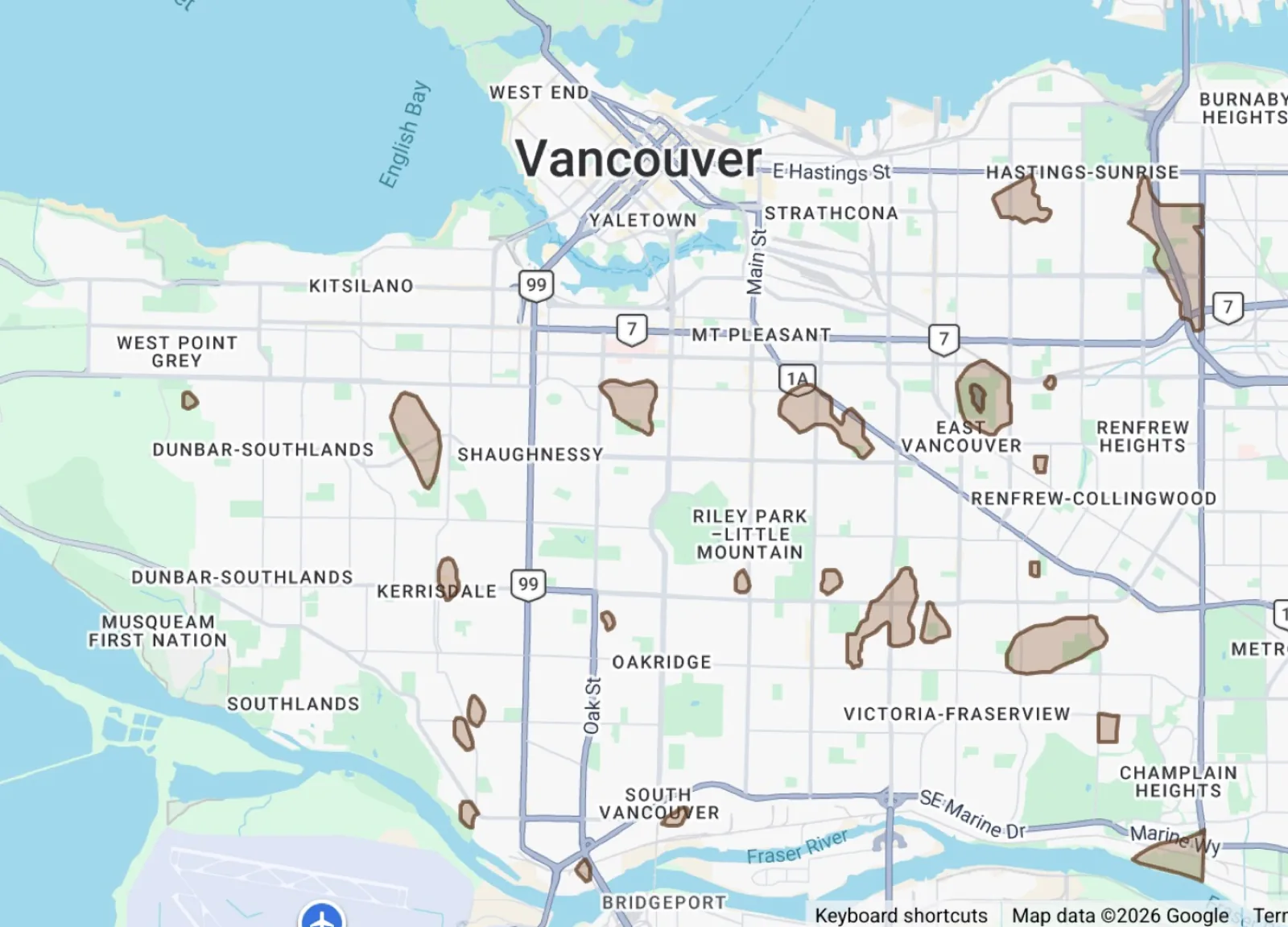
The major peat zones by neighbourhood:
| Area | Approximate boundaries | Notes |
|---|---|---|
| Mount Pleasant / Tea Swamp | Main to Fraser, 15th to 22nd Ave | Historic beaver lake; Labrador tea plants grew here — hence “Tea Swamp” |
| Trout Lake | Surrounding Trout Lake, Prince Edward to Inverness St | Active wetland remnant |
| Kingsway corridor | 16th to 24th Ave, pockets near Kingsway | Multiple fragmented zones |
| Kerrisdale | King Edward to Edington Dr, Granville to Arbutus | Includes Kerrisdale Park area |
| South Vancouver | 37th-47th Ave, Windsor to Beatrice; 43rd-49th, Nanaimo to Rupert | Large zones near Boundary Rd |
| Hastings-Sunrise | Adanac to Napier, Garden to Slocan | Near PNE grounds |
One important caveat: the mapped boundaries are based on where crews have encountered peat, not where peat definitively ends. The actual edge of a peat deposit doesn’t follow property lines. A geotechnical investigation on your specific lot is the only way to know for sure.
The cost hit on your proforma
This is where most developers get surprised. You’ve run your numbers, the proforma works, and then the geotech report comes back showing 8 metres of peat under your lot.
Geotechnical investigation:
| Service | Cost |
|---|---|
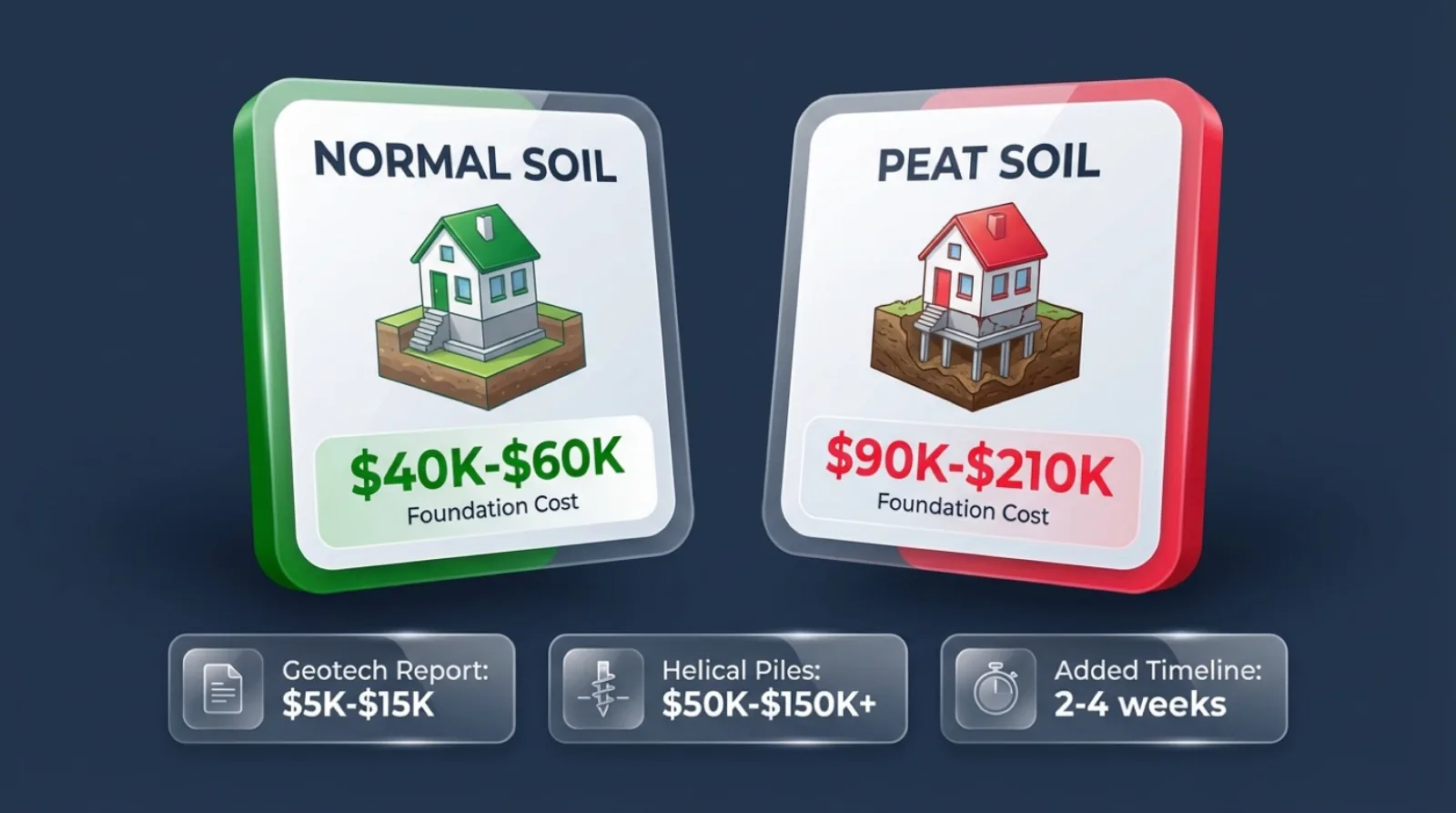
| Standard geotechnical report | $5,000+ |
| Complex sites (deep peat, multiple borings) | $10,000-$15,000 |
Foundation solutions:
The two main approaches for building on peat:
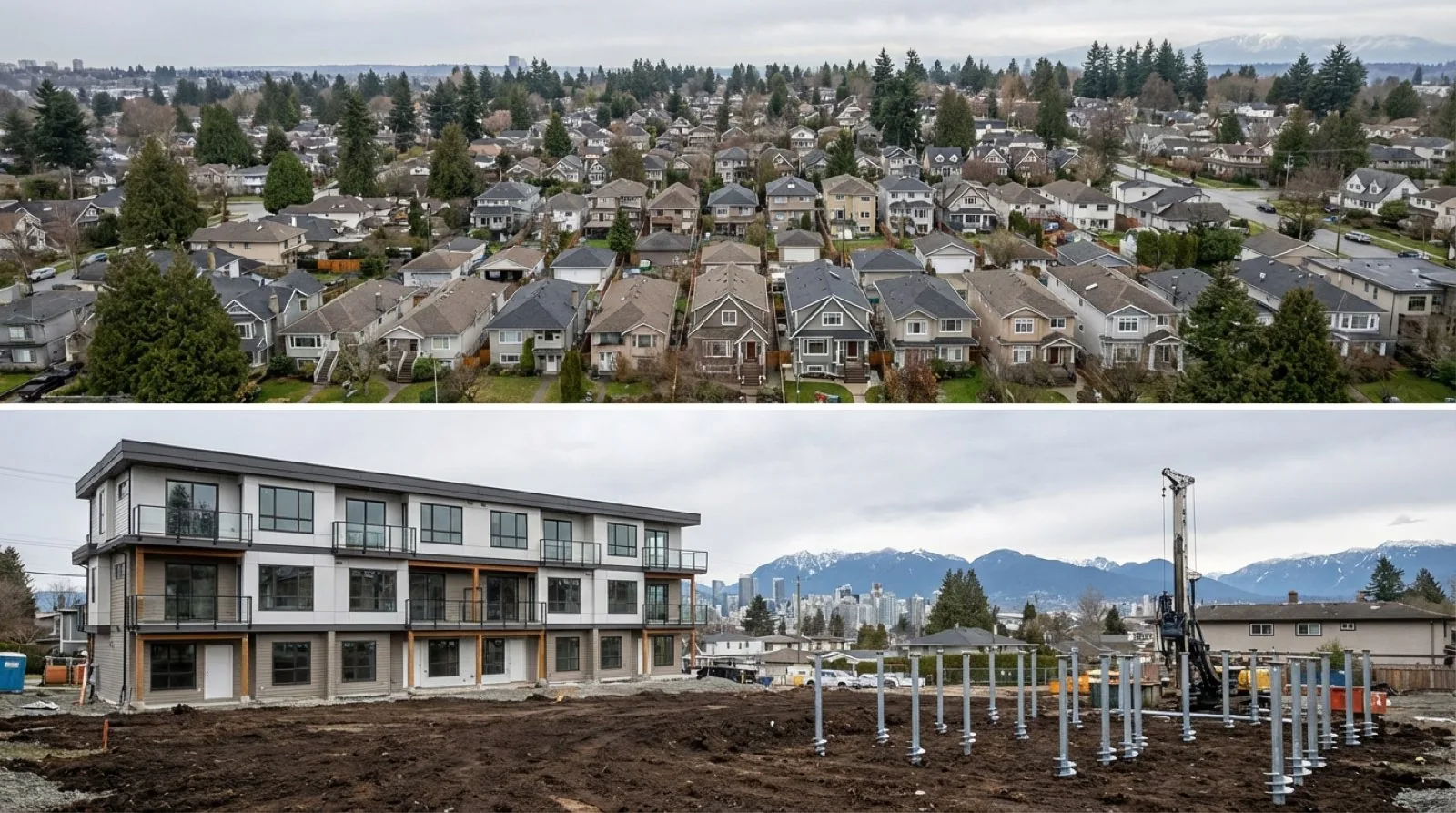
Helical piles (screw piles) are the most common solution for multiplex development. Steel shafts with helical plates are drilled into the ground until they reach bearing soil below the peat. A structural engineer designs the pile grid, and a slab-on-grade foundation sits on top. Piles are charged by the foot — the deeper the peat, the higher the cost. One documented duplex project in East Vancouver required helical piles through 8 metres of peat.
Excavation and replacement only works for shallow peat (a few feet deep). Crews dig out the peat and backfill with compacted granular material — one case study used 2.5 feet of compacted 19mm road base to achieve 700 psf bearing capacity. This approach risks destabilizing neighbouring structures and isn’t viable for deep deposits.
| Foundation approach | Added cost | When it works |
|---|---|---|
| Helical piles | $50,000-$150,000+ | Deep peat (3m+), most multiplex projects |
| Excavation and fill | $30,000-$60,000 | Shallow peat only (under 2m) |
| Grade beams on piles | $70,000-$120,000 | Moderate to deep peat, larger footprints |
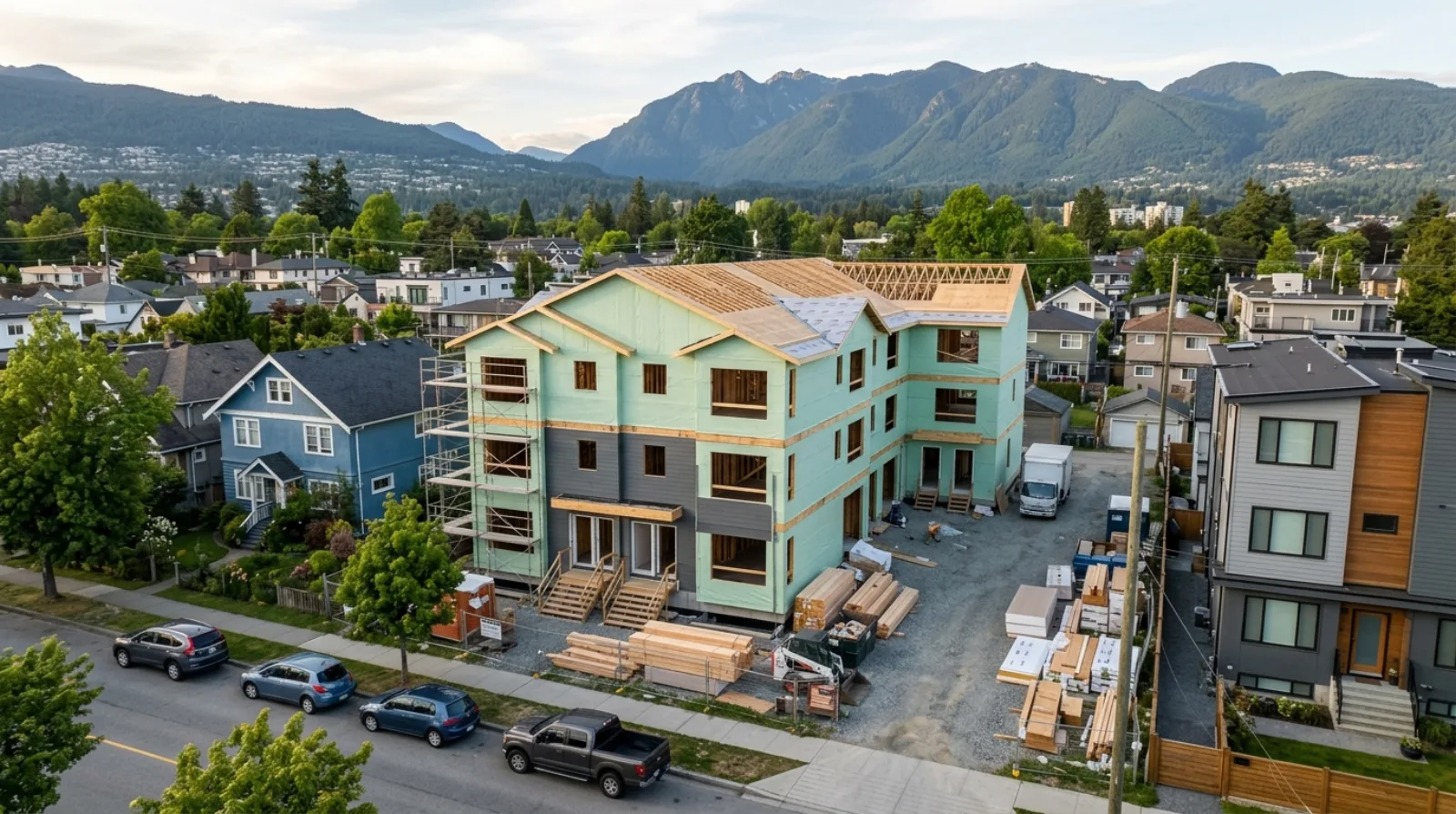
A typical sixplex on a 33-foot lot with 6+ metres of peat could see foundation costs of $100,000 or more above what you’d pay on stable ground. On a $3M total project, that’s a 3% hit to your budget — not a dealbreaker, but it changes the math enough that you need to know about it before you buy the lot.
What the city requires
The City of Vancouver takes peat seriously. Two bulletins govern construction in peat zones:
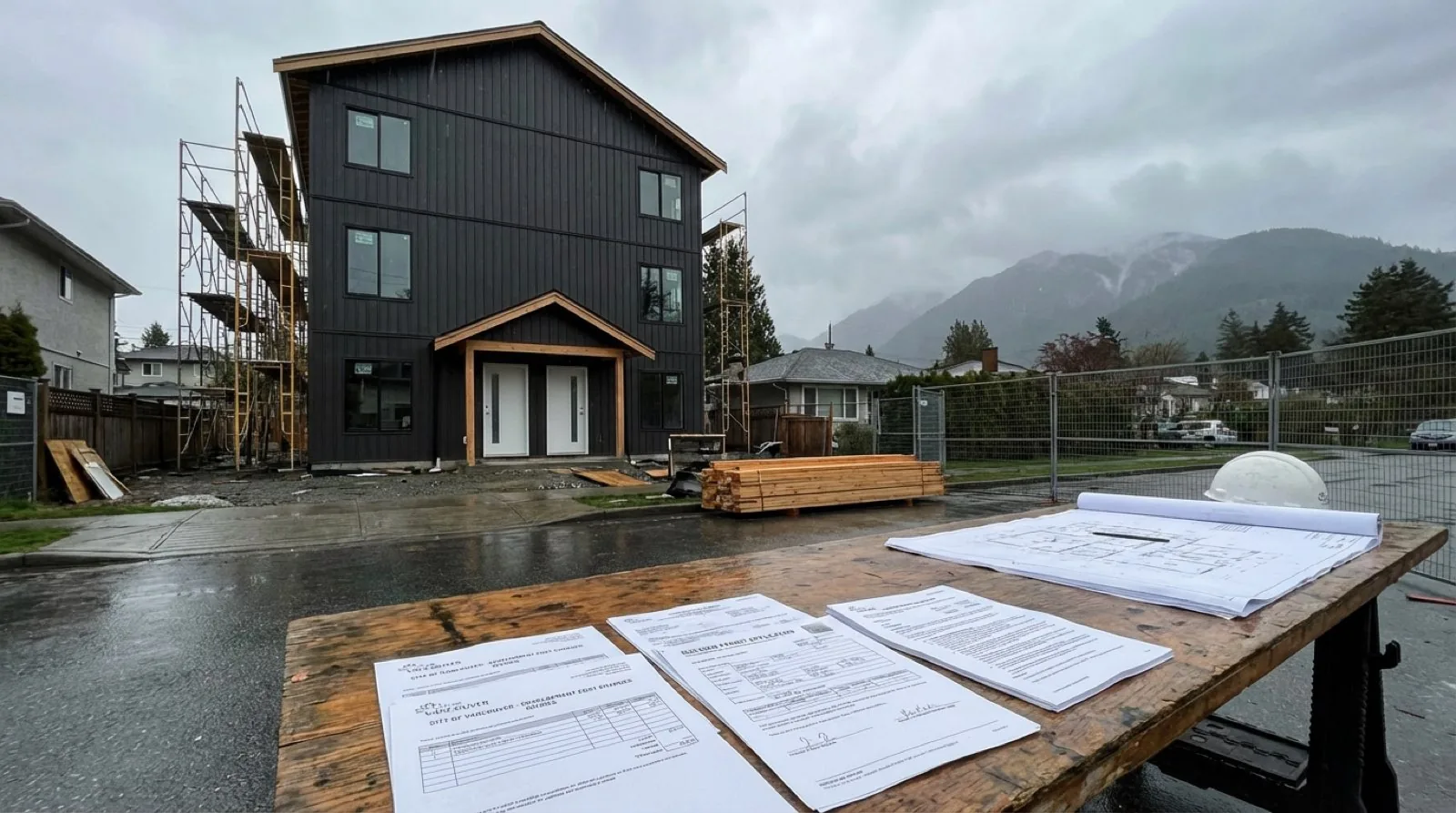
Bulletin 2000-057: “Foundations in Areas of Peat Bogs or Soft Soils” is the primary policy. If your property falls within the city’s designated Peat and Waterways Map zones, your building permit application must include:
- A geotechnical report detailing depth and characteristics of subsoil materials
- Foundation design recommendations from a geotechnical engineer
- An assessment of predicted settlement over the building’s life
- Confirmation that the proposed foundation system accounts for peat conditions
Bulletin 2016-005: “Geotechnical and Shoring Design” adds requirements for deeper excavations, including impact statements on adjacent properties and engineered shoring designs.
Practically, this means your permit timeline extends by 2-4 weeks for the geotech work, and your consulting costs increase by $5,000-$15,000 before construction starts.
How peat affects property values
Peat doesn’t just increase construction costs. It affects what you pay for the lot in the first place.
Properties in documented peat zones trade at a 10-20% discount compared to equivalent lots on stable soil. Sellers know their buyer pool is smaller — anyone running a proforma will factor in the extra foundation costs. For a $2M lot, that’s $200,000-$400,000 in potential discount.
For multiplex developers, this creates a counterintuitive opportunity. The lot discount often exceeds the added foundation cost. A lot that’s $300,000 cheaper because of peat, paired with $100,000 in extra foundation work, puts you $200,000 ahead on land basis.
The catch: you need to know the peat depth before you make an offer. A geotech report on a property you don’t own requires the seller’s permission, and many sellers won’t grant it during the offer process. Subject-to-satisfactory-geotechnical conditions in your offer protects you, but weakens your bid in a competitive market.
Check your lot before you commit
We built the peat bog layer into our permits map specifically for this reason. Before you run a proforma, before you make an offer, toggle on the brown overlay and see if your target lot sits in a documented peat zone.
Here’s the process:
- Go to the VanPlex Permits Map
- Click the Peat Bog button in the toolbar
- Brown polygons appear showing all 24 documented peat zones
- Click any polygon to see its area and estimated foundation cost range
- Cross-reference with nearby multiplex permits to see what others have built in the same zone
The data comes directly from the City of Vancouver Engineering Services department — the same dataset the city uses to flag permit applications.
If your lot is near the edge of a peat zone, you’re not necessarily clear. Peat deposits don’t have clean boundaries. A property 50 metres outside the mapped area could still have peat. When in doubt, get the geotech report.
Real projects on peat: what builders have learned
Builders who work in peat zones regularly share a few consistent lessons:
Budget the geotech report early. Don’t wait until you have the permit application ready. Order the investigation during due diligence, before you remove subjects. The $5,000-$10,000 you spend on a geotech report is insurance against a $150,000 surprise.
Helical piles are predictable. Unlike excavation, which can uncover worse conditions as you dig, helical piles are engineered to a specific load capacity. The installer drills until torque readings confirm the pile has reached bearing soil. With 30 kip capacity piles and grade beams, you get virtually zero settlement.
Neighbours matter. Excavation in peat areas can cause settlement on adjacent properties. If you’re removing peat and the house next door starts cracking, you’re liable. Helical piles avoid this issue because they don’t disturb the surrounding soil.
The city reviews peat-zone permits more carefully. Expect additional rounds of review and questions from the building department. Factor 2-4 extra weeks into your permit timeline.
The bottom line for multiplex developers
Peat isn’t a reason to walk away from a lot. It’s a reason to do your homework first. The added $50,000-$150,000 in foundation costs is real, but so is the 10-20% lot discount that often comes with it. Some of the best multiplex deals in Vancouver are in peat zones — because most buyers don’t want the hassle.
The developers who win in these areas are the ones who know the numbers before they make an offer. Toggle on the peat layer on our permits map, get a geotech report, and run the real proforma — not the one that assumes standard foundations.
VanPlex Team | PlexRank™ | Profit with Multiplex