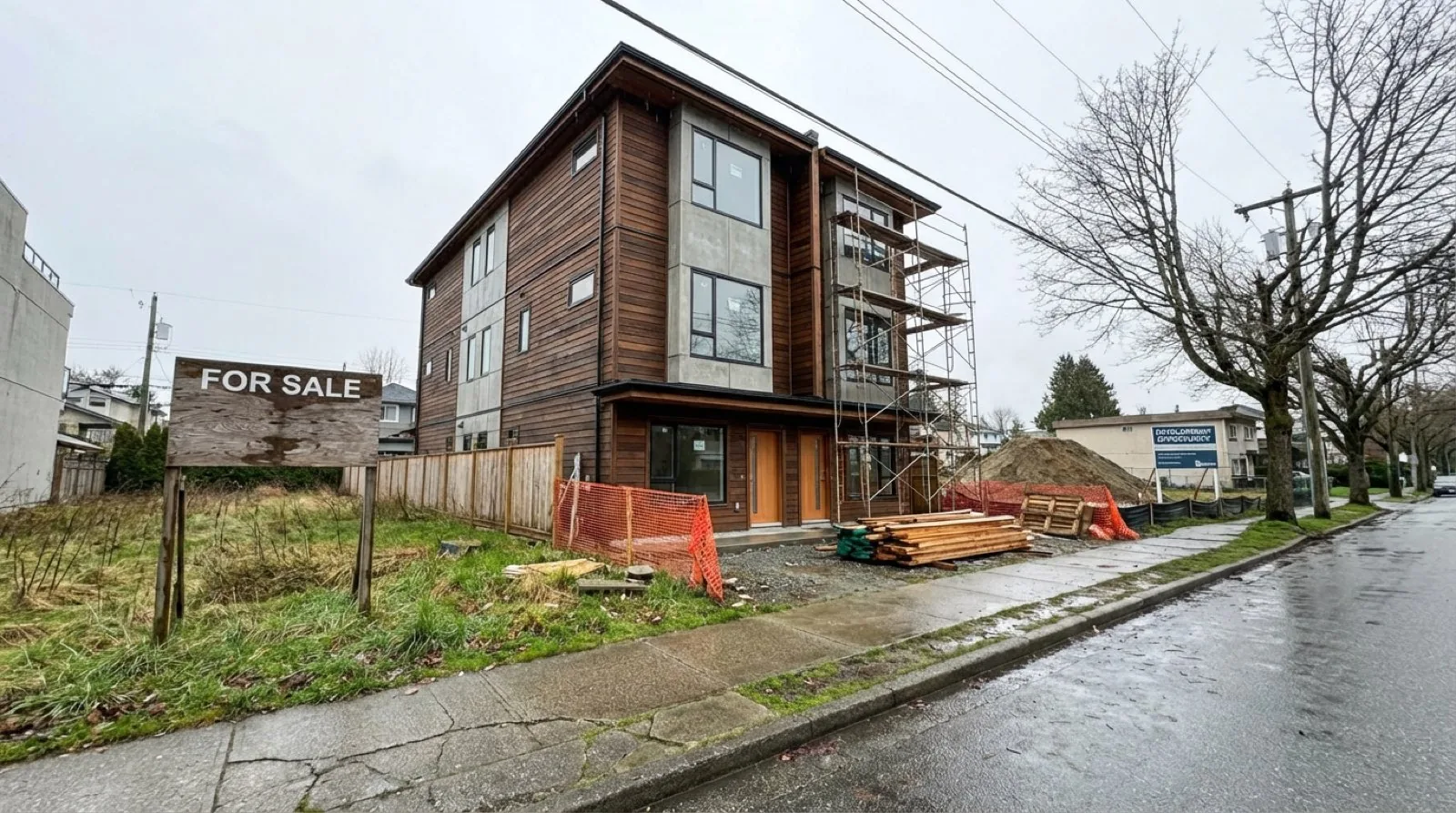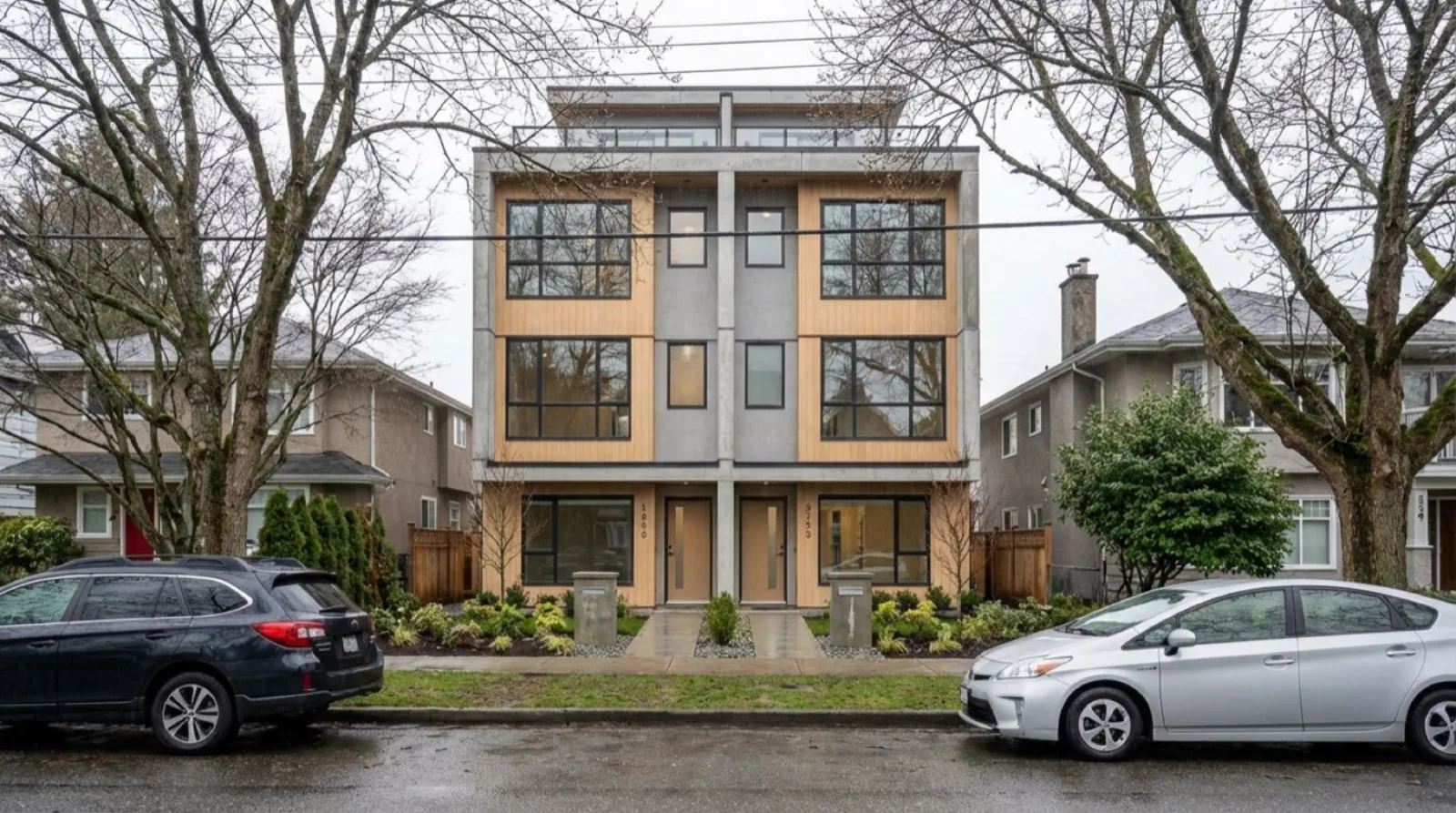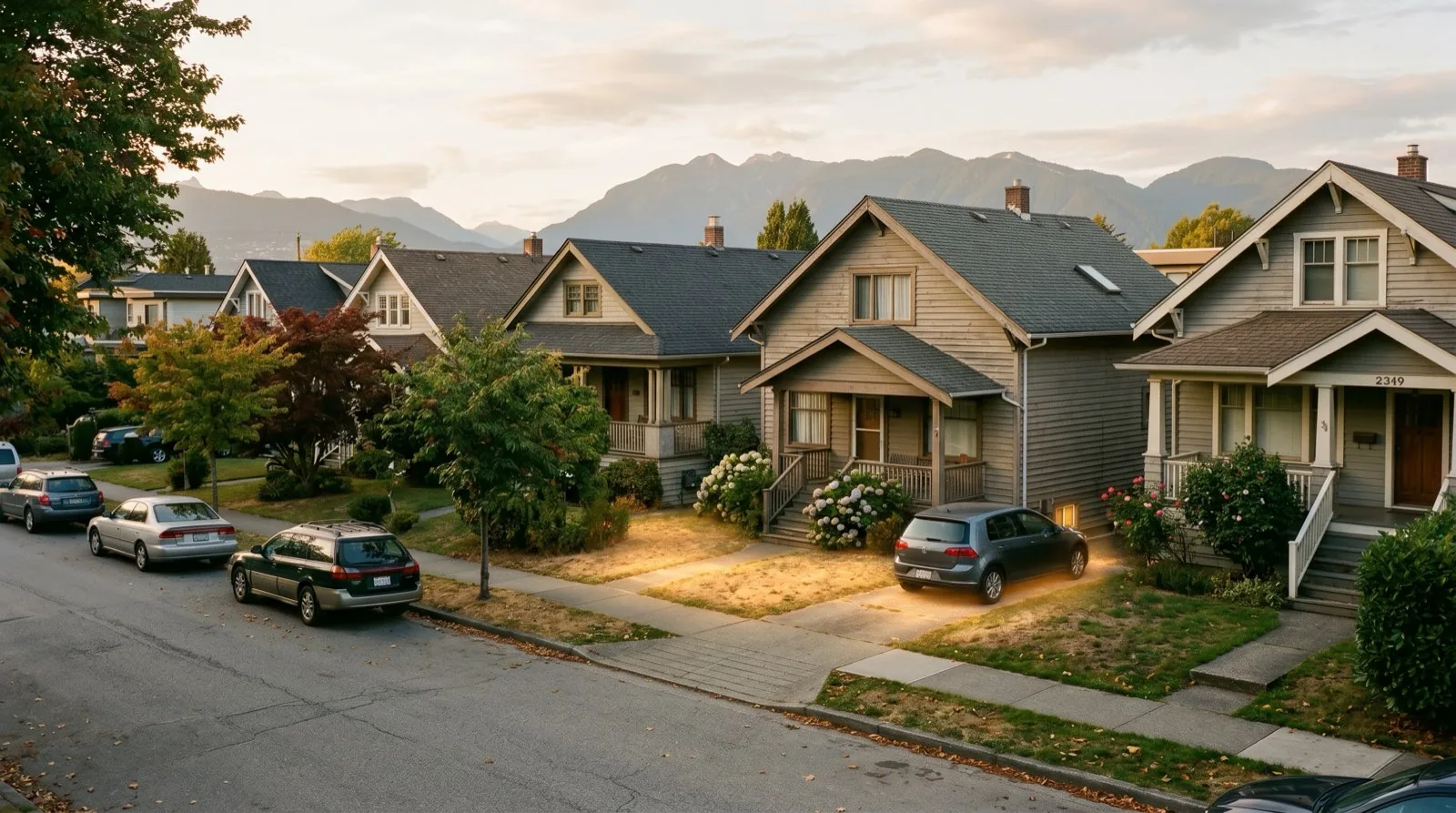

Editorial illustration of a Vancouver residential street where one ordinary detached-house lot is lit like a gold seam, representing the small fraction of multiplex-zoned lots that are actually viable
Market Analysis Featured

Where Is the Gold in Vancouver Multiplex Zoning?

5 min read

New zoning gives a detached house the right to four, six or more homes. That's possibility, not profit. Of 100,000+ Greater Vancouver lots PlexRank scored, only ~2% pencil. The edge is the map, not the rush.

Key takeaway

An essay by VanPlex co-founder David Babakaiff arguing that new multiplex zoning across Canadian neighbourhoods creates abundant possibility but rare viability: a detached house may now have the right to support four, six or more homes, yet only a fraction of permitted lots actually pencil once land cost, construction, financing, design constraints and market demand are accounted for.

When PlexRank first scored more than 100,000 Greater Vancouver lots, only about 2,419 -- roughly 2% -- cleared a 100%-plus return-on-equity bar; PlexRank now scores more than 205,000 residential lots across six BC cities. Using a gold-rush metaphor, the piece argues the durable advantage is not owning, financing or building everything, but the intelligence (the map) that distinguishes valuable ground from barren ground before money is spent.

What this covers

  • possibility vs viability in multiplex zoning
  • only ~2% of Vancouver lots clear a strong ROE bar
  • PlexRank scoring across 205,000+ BC lots
  • the right to build is not a guarantee of profit
  • homeowner, REALTOR®, developer and investor perspectives
  • data and measurement replacing rumour in development
multiplex zoning PlexRank Vancouver viability ROE

Human beings have always been drawn to the possibility that the world contains more value than is visible on its surface.

A farmer looks across an empty field and imagines a harvest. An inventor sees possibility in a machine that does not yet exist. An investor studies an unfashionable business and wonders whether the market has misunderstood it. And in another age, a prospector crossed a continent because he believed that somewhere beneath ordinary-looking ground there might be gold.

The forms change. The impulse does not. We are drawn to hidden value — to the chance that something overlooked, misunderstood or improperly measured may be worth far more than it appears.

That is part of what is happening now in residential neighbourhoods across Canada.

A house that may no longer be only a house

A detached house may still look like a detached house. Its yard, driveway and roofline may be unchanged. Yet beneath that familiar appearance, a new set of development rights may exist. The property may now support four homes, six homes or more.

That does not mean it contains a fortune. It means it contains a possibility.

And possibility, as every prospector eventually learns, is abundant. Viable opportunity is rare.

The presence of gold somewhere was always just a story

Gold rushes were filled with people who mistook enthusiasm for evidence. They heard stories of riches, saw others heading west, and concluded that the ground itself must be generous. But the presence of gold somewhere did not mean there was gold everywhere.

The same is true of multiplex zoning.

A municipality may permit additional homes on thousands of properties. Yet only a fraction of those properties may support development once land value, construction cost, financing, design constraints and market demand are brought together.

The new zoning creates the right to explore. It does not guarantee the discovery.

Possibility is abundant. Viable opportunity is rare.

This is not a turn of phrase. It is what the data keeps showing.

When PlexRank first ran the numbers on more than 100,000 Greater Vancouver lots, only about 2,419 — roughly 2% — cleared a 100%-plus return-on-equity bar. The rest didn’t pencil, barely penciled, or only worked on paper until real-world risk was added: what if the finished homes sell for less than today’s comps suggest?
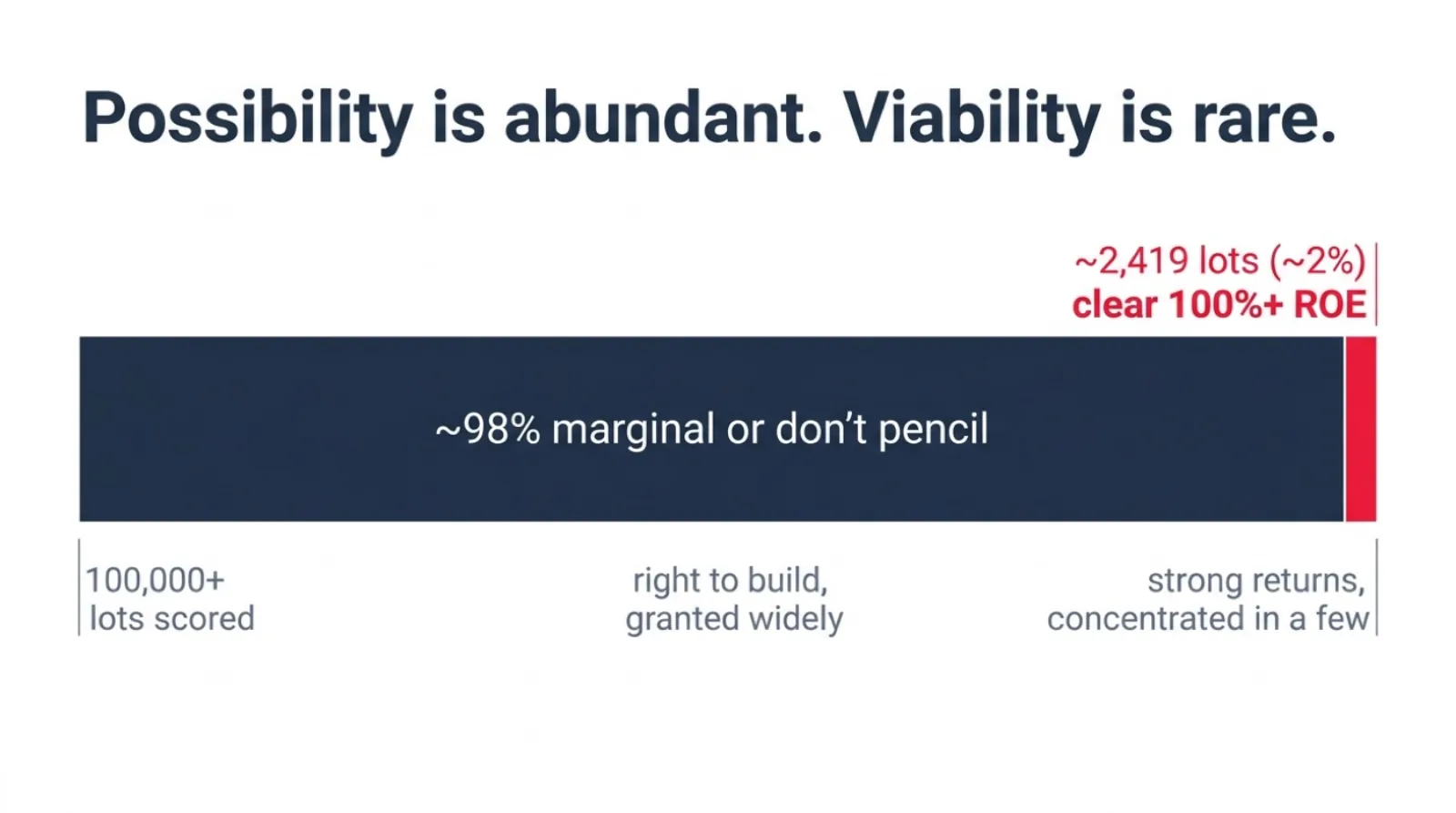
Comparison graphic: of 100,000-plus Greater Vancouver lots PlexRank scored, about 2,419 (roughly 2%) clear a 100%-plus return-on-equity bar while the remaining 98% are marginal or do not pencil

PlexRank now scores more than 205,000 residential lots across six BC cities. The pattern holds in each one. The new rights are spread across the map. The viable deals are not.

What zoning grantsWhat the math returns
The right to build on tens of thousands of lotsA strong, risk-adjusted return on roughly 2% of them
Permission to exploreNo guarantee of discovery
Possibility, everywhereViability, in a few places

Same ground, four different questions

Each kind of owner is looking at the same ground, but from a different place.

For the homeowner, the question is whether the property already owned contains an unrealized opportunity. For the REALTOR®, it is whether a seemingly ordinary listing has a second value that conventional buyers may not recognize. For the developer, it is which of thousands of permitted properties deserves attention. For the investor, it is whether the projected profit remains after the optimism has been removed.

Each needs more than hope.

From rumour to evidence

The early prospectors relied on crude maps, local knowledge and whatever tools they could carry. Over time, exploration became less dependent on rumour and more dependent on geology, measurement and evidence.

The greatest advantage did not always belong to the person willing to dig the hardest. It often belonged to the person who knew where digging was justified.

Multiplex development is beginning to undergo a similar change.

Until recently, understanding a property required information to be gathered from many places: zoning documents, architects, builders, REALTORS®, lenders, comparable sales and private spreadsheets. Considerable time and money could be spent before anyone knew whether the original idea was sound.
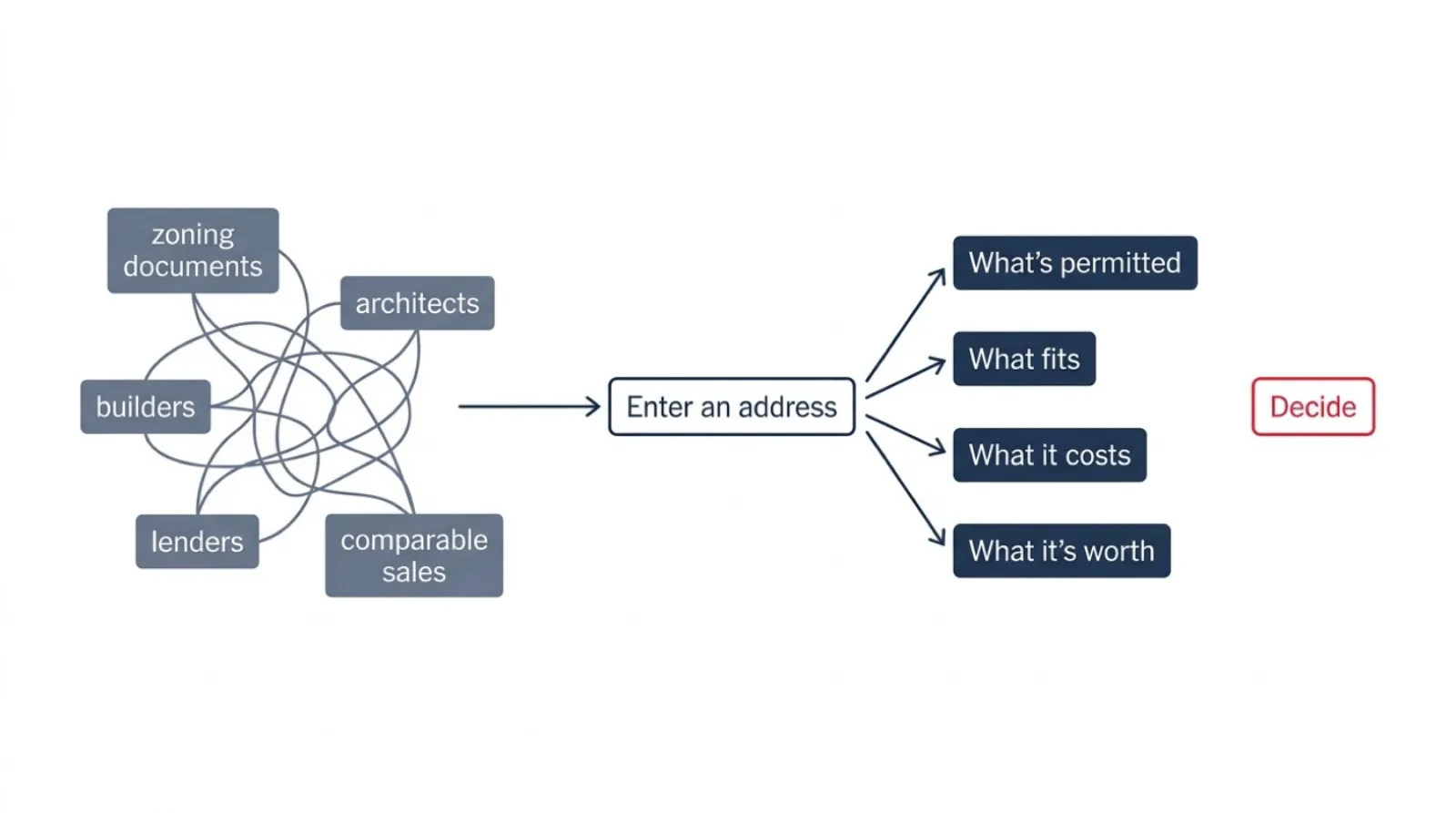
Timeline graphic showing how property exploration moves from scattered sources -- zoning documents, architects, builders, lenders, comparable sales -- to a single address lookup that returns permitted density, fit, cost and value

VanPlex began with a simpler objective. Enter an address. Understand what may be permitted. Estimate what may fit. Test what it may cost and what the completed homes may be worth. Then decide whether the property deserves further attention.

The map matters more than the treasure

At first, we viewed this mainly as a way to discover potential projects. But the more properties we examine, the more significant the position appears.

The greatest opportunity may not be to own every property, finance every development or construct every building. It may be to create the intelligence that allows everyone else to distinguish valuable ground from barren ground.

This matters because an enormous field has recently been opened. Governments have granted new development rights across established neighbourhoods. Artificial intelligence is changing the speed at which information can be gathered and interpreted. Homeowners, developers and investors are all searching for practical ways to create value from land that already exists.

Yet the central problem remains unchanged from every earlier age of exploration. Where should we look? Which opportunities are real? And which ones merely appear promising from a distance?

The emerging multiplex market does not suffer from a shortage of possibility. It suffers from a shortage of reliable ways to recognize the few possibilities worth pursuing.

In every age of exploration, the map eventually becomes as important as the treasure. Sometimes more so.

Find out which ground you’re standing on

If you own property in Metro Vancouver, one of two things is true. Your lot is in the small fraction where the math works — or it isn’t, and multiplex development isn’t the right play for it right now. Either way, you should know which side you’re on before you spend $20K on architectural drawings.

Visit VanPlex.ca and enter your address. You’ll see your property’s PlexRank score and where it falls in the distribution. Two minutes. No cost. Just the data.


David Babakaiff

Co-Founder, VanPlex

PlexRank™ | Profit with Multiplex

Frequently asked questions

What percentage of Greater Vancouver lots actually support a profitable multiplex?

When PlexRank first ran the numbers on more than 100,000 Greater Vancouver lots, only about 2,419 properties, roughly 2%, cleared a 100% or higher return-on-equity bar. The rest did not pencil, barely penciled, or only worked on paper until real-world risk was added, such as the finished homes selling for less than today's comparable sales suggest.

How many BC residential lots does PlexRank currently score?

PlexRank now scores more than 205,000 residential lots across six BC cities. The pattern found in the original Greater Vancouver analysis holds in each of those cities: the new development rights created by zoning reform are spread across the map, but the lots where the numbers actually clear a strong return are concentrated in a small share of that total.

Does new multiplex zoning mean every rezoned lot is worth developing?

No. New zoning creates the right to explore building a multiplex on a property, but it does not guarantee that the numbers will work once land value, construction cost, financing, design constraints and market demand are brought together. A municipality can permit additional homes on thousands of properties while only a fraction of those properties actually support a viable development.

Why does a property need more than a zoning check before spending on architectural drawings?

Zoning eligibility only answers whether a multiplex is legally permitted on a lot, not whether building one makes financial sense. The article recommends checking a property's return-on-equity score before spending on architectural drawings, since around 2% of scored lots clear the 100% return-on-equity threshold while the remaining properties are marginal or do not pencil at all.

What information did people need to gather before tools like VanPlex existed?

Before a single address lookup could answer the question, understanding a property's development potential required gathering information from many separate places: zoning documents, architects, builders, REALTORS®, lenders, comparable sales, and private spreadsheets. Considerable time and money could be spent researching a property before anyone knew whether the original idea was financially sound.

How does a homeowner's question about multiplex zoning differ from a developer's?

A homeowner is asking whether a property they already own contains an unrealized opportunity. A REALTOR® is asking whether an ordinary-looking listing has a second value that conventional buyers may not recognize. A developer is asking which of thousands of permitted properties deserves attention, and an investor is asking whether the projected profit remains once the optimistic assumptions are removed. Each of these four questions is being asked about the same underlying zoning change.

What does the VanPlex Multiplex Score actually check?

Entering an address into VanPlex returns what may be permitted on the lot, what may fit within that permission, what it may cost to build, and what the completed homes may be worth, which together produce a PlexRank score showing where the property falls in the distribution of scored lots. The process is described as taking about two minutes with no cost.

Why does the article compare multiplex zoning to a gold rush?

The comparison is drawn because gold rushes were filled with people who mistook enthusiasm for evidence: the presence of gold somewhere did not mean there was gold everywhere. The article applies the same logic to multiplex zoning, arguing that possibility is abundant across rezoned neighbourhoods while viable, profitable opportunity is rare, which is exactly what the roughly 2% return-on-equity clearance rate across more than 100,000 scored lots demonstrates.

Free 12-page guide for Vancouver-area homeowners. Build, sell, hold, or partner — side-by-side comparison of the numbers, timeline, and risk on each path.

Verified phone required. We'll text you the link in 60 seconds.

David Babakaiff

David Babakaiff

Co-Founder, VanPlex | 25+ Years BC Construction

David Babakaiff is Co-Founder of VanPlex with 25+ years scaling BC construction. He led Alair Homes Vancouver to the 2024 HAVAN Award for Best Multiplex Unit in the GVRD. VanPlex’s PlexRank™ algorithm scores residential parcels across BC for multiplex conversion potential under Bill 44.

Want insights like this delivered weekly?

Join 2,500+ property owners getting ROI case studies, market data, and exclusive opportunities.

No spam. Unsubscribe anytime.