
Updated August 2026: this post originally ran in September 2025, when Bill 44 was still new and most of what got written about it was speculation. Nearly three years after the law passed, there’s now real permit data to look at instead of guesses. The numbers below have been replaced with the current figures.
What Bill 44 Actually Did
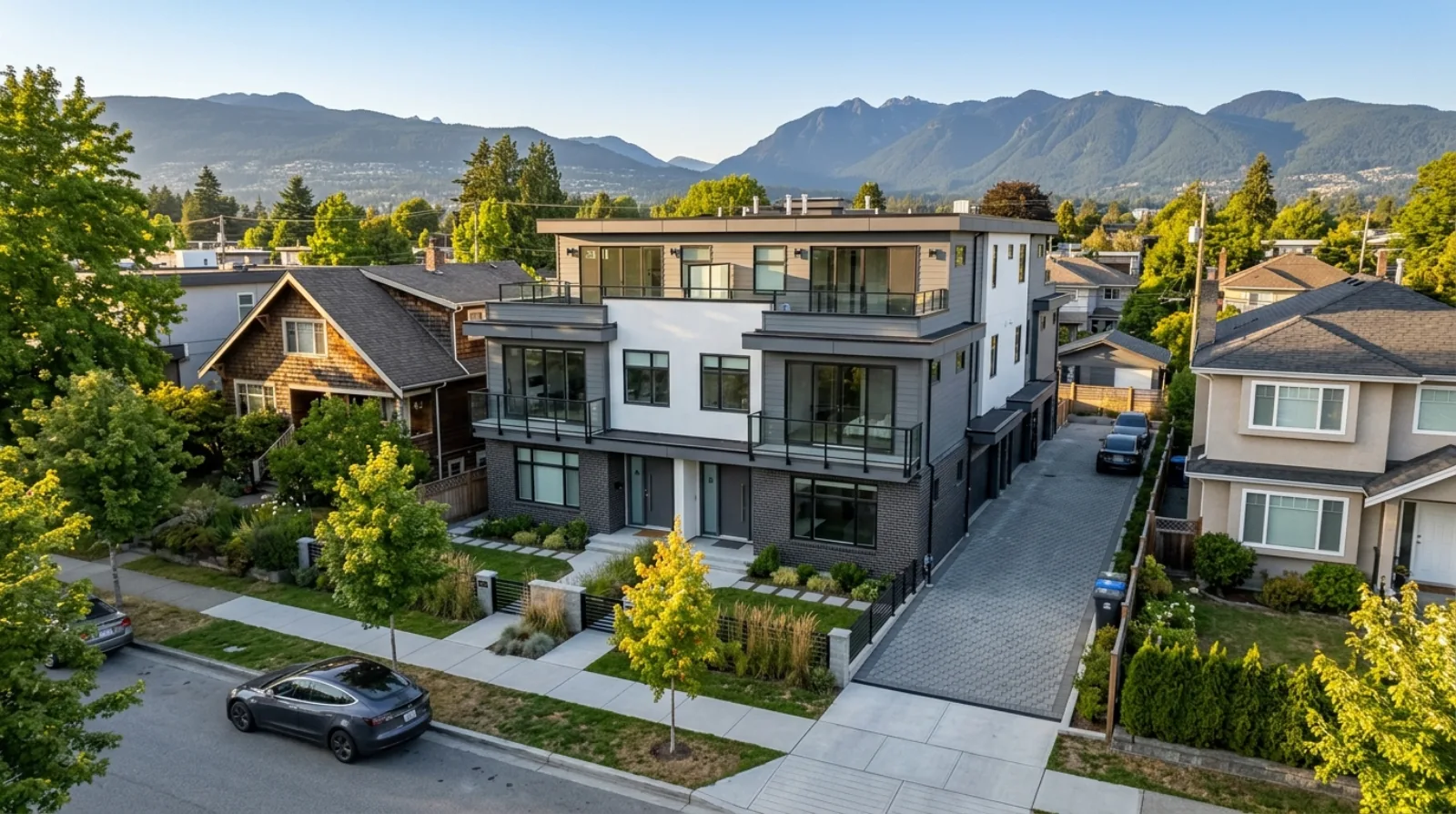
In November 2023, British Columbia passed Bill 44, requiring municipalities to allow 3 to 6 units on lots that used to be zoned for a single detached house. Vancouver’s R1-1 zone is the biggest single pool of newly eligible lots in the province, and it’s the one with the most permit history to look at.
The rezoning didn’t create demand on its own. It removed a legal barrier that used to block multiplex construction outright. Whether a given lot is worth building on is a separate question, one that depends on lot size, construction cost, and what the finished units will sell or rent for, not on the zoning alone.
What the Permit Data Shows, Three Years In
As of mid-2026, Vancouver has logged 591 multiplex permit applications in the R1-1 zone. That is real signal: it tells you which streets and lot sizes are actually attracting builders, not just which ones are legally allowed to.
It also tells you something less obvious. Most of the roughly 205,000 BC residential lots that Bill 44 touched will never see a multiplex application. Frontage, lot depth, construction cost, and achievable resale price rule most of them out well before zoning becomes the limiting factor. VanPlex’s PlexRank scoring has run feasibility numbers across six BC cities, and the spread is wide. Burnaby and the City of North Vancouver both show average projected returns on equity above 35%. Vancouver’s average sits closer to 19%, and Kelowna’s compresses down to single digits, because in each of those markets the same zoning rule meets a different land cost and a different resale ceiling.
The takeaway: the legal right to build 4 to 6 units on a lot and the financial case for actually doing it are two different questions, and the gap between them is most of the story right now.
How to Check Your Own Lot
The process that used to require a paid feasibility study, several weeks, and a set of assumptions from a consultant can now be run in minutes with the right data behind it. VanPlex.ca pulls a property’s zoning, buildable area, and construction cost range, then models resale value against build cost to produce a return on equity estimate.
That doesn’t replace a real proforma before you commit to a project. It tells you, quickly, whether a lot is even worth the cost of getting a real proforma done.
Why Land Cost Is the Real Constraint
Multiplex zoning removed the legal ceiling on unit count. It didn’t touch the two inputs that actually decide whether a project makes money:
- What the land costs today, set by the seller’s asking price, not by what the zoning allows
- What the finished units will sell or rent for, set by the local market, not by the size of the building you’re allowed to put on the lot
A lot in a neighbourhood with strong resale comparables and a builder willing to work at a reasonable margin can pencil well under Bill 44. A lot bought at a price that assumed the multiplex premium before construction costs were checked usually doesn’t. This is the difference between the “zoning creates value” pitch and what a proforma actually shows once real numbers go in.
Getting Started
- Check your zoning and feasibility. Run your address through VanPlex.ca to see buildable square footage, an estimated construction cost range, and a projected return on equity.
- Run a detailed proforma before committing. A full proforma accounts for permit timelines, financing costs, and a realistic exit price, not just a top-line estimate.
- Bring in people who’ve actually built multiplexes in your municipality. Permit timelines, servicing requirements, and inspection sequencing vary by city, and an architect or contractor who has been through your specific municipality’s process will save you months.
Bottom Line
Bill 44 opened the door. It didn’t guarantee what’s on the other side of it is worth walking through. Three years of permit data now exist to check that before you spend money finding out the hard way.
Want to see what your property’s numbers actually look like? Visit VanPlex.ca for a feasibility estimate, then run a full proforma before committing to a project.