Prime Minister Mark Carney just announced Canada’s first national sovereign wealth fund. $25 billion in initial federal contribution, structured as a Crown corporation, designed to invest alongside the private sector in ports, mines, energy corridors, critical minerals, and infrastructure. Carney’s own framing was that it’s “essentially a national savings and investment account.” Returns get reinvested. The fund grows. Future generations benefit.
There’s a real question about whether Ottawa can execute this well. The details on liquidity, governance, and citizen participation are, by the finance minister’s own admission, still being worked out. But the underlying idea is sound — and it’s one that anyone who owns a multiplex-zoned parcel in BC should be thinking about for themselves.
TL;DR
- Carney announced a $25B federal sovereign wealth fund. The mechanism is asset recycling: monetize a finite resource, redeploy the proceeds, compound for generations.
- Norway has run this playbook since 1990. Their fund now holds over $2 trillion — roughly $390,000 per citizen held in trust. The oil is mostly gone. The wealth is permanent.
- Bill 44 just turned single-family BC lots into 4-to-6-unit parcels by right. For a homeowner, that legislative lift is the closest equivalent to having oil discovered under your lot.
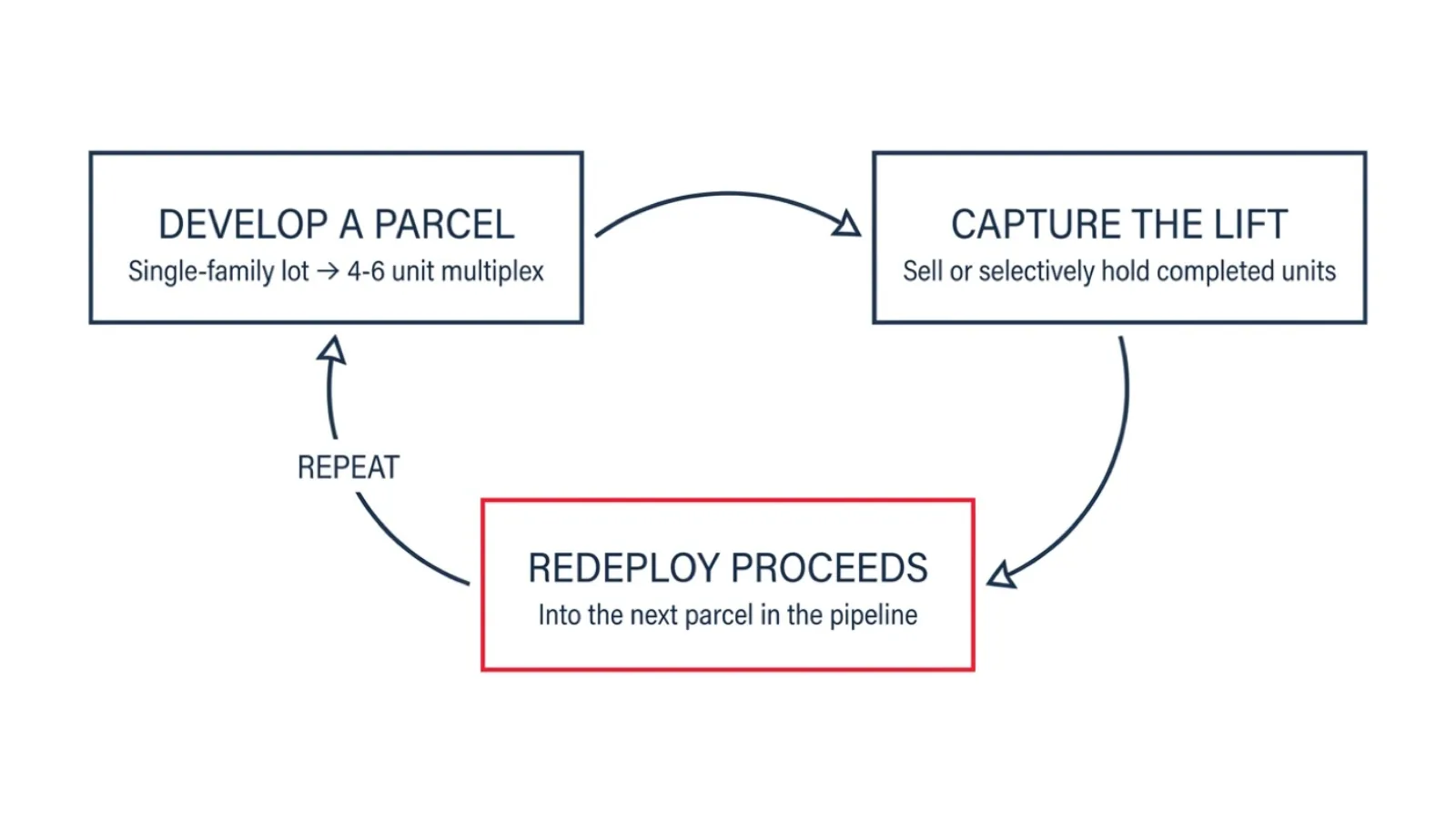
- Most families convert that windfall into a one-time cash event and consume the proceeds. The Norway move is to convert it into a compounding engine — develop, sell or selectively hold, recycle, repeat.
- That structure — a small pool of multiplex parcels and capital, run as a partnership with a continuous reinvestment mandate — is what we’d call a personal sovereign fund.
Where to start: If you’re holding multiplex-zoned land and the words “asset recycling” describe what you actually want to do with it, run your address through VanPlex. The numbers tell you whether your parcel is the first dollar in or whether you’re a cash partner in someone else’s.
The Norway lesson is about discipline, not oil
When commentators reach for a sovereign-wealth benchmark, they reach for Norway. The Norwegians did three things that mattered.
The Government Pension Fund Global was established in 1990, with first deposits in 1996. It now holds over $2 trillion in assets and is the world’s largest sovereign wealth fund.
First, they recognized their oil was a finite, time-locked windfall. They could spend it once, or they could convert it into a perpetual compounding engine. They chose the latter.
Second, they imposed the 4% rule. Only 4% of the fund’s prior-year value can be drawn each year (Norway has since tightened that ceiling further). The principal is permanent. The country lives off the returns.
Third, they professionalized the management. The fund invests in productive assets — equities, fixed income, real estate, renewable infrastructure — under a long-term mandate, with strict ethical exclusions, and with management held independent of short-term political pressure.
The result, after thirty years of compounding, is roughly $390,000 of national wealth held in trust for every Norwegian citizen. That number isn’t from oil. The oil is mostly gone. That number is from the discipline of converting a one-time finite resource into a permanent productive asset.
The phrase “asset recycling”
The technical term Carney used to describe how the Canada Strong Fund will grow over time was asset recycling and reinvestment. Asset recycling means taking an existing asset, monetizing it in a productive way, and redeploying the proceeds into the next productive asset. Then doing it again. Done well, it’s how a finite pool of capital becomes a perpetual one.
Norway is the clearest case. They sell oil and reinvest the proceeds. The fund doesn’t sit on barrels of crude — it monetizes the resource and redeploys the capital into productive assets that compound globally.
The same logic applies to a multiplex parcel.
The family isn’t starting with cash. They’re starting with land that policy has just made more productive by right. The first move is to convert underused single-family land into four or six homes on the same lot. That conversion creates a development lift — the value differential between one home and four to six homes on the same land. That lift is the oil.
The second move is to capture it, through sale, or through selective retention if the family wants to keep one or more units in the neighbourhood.
The third move is the one that matters most: whether the proceeds get redeployed into the next parcel in a continuously compounding pipeline, or whether they get pulled out and consumed.
A sovereign fund makes the third choice impossible by design. A family fund usually doesn’t. The structure is the discipline.
The household question to consider
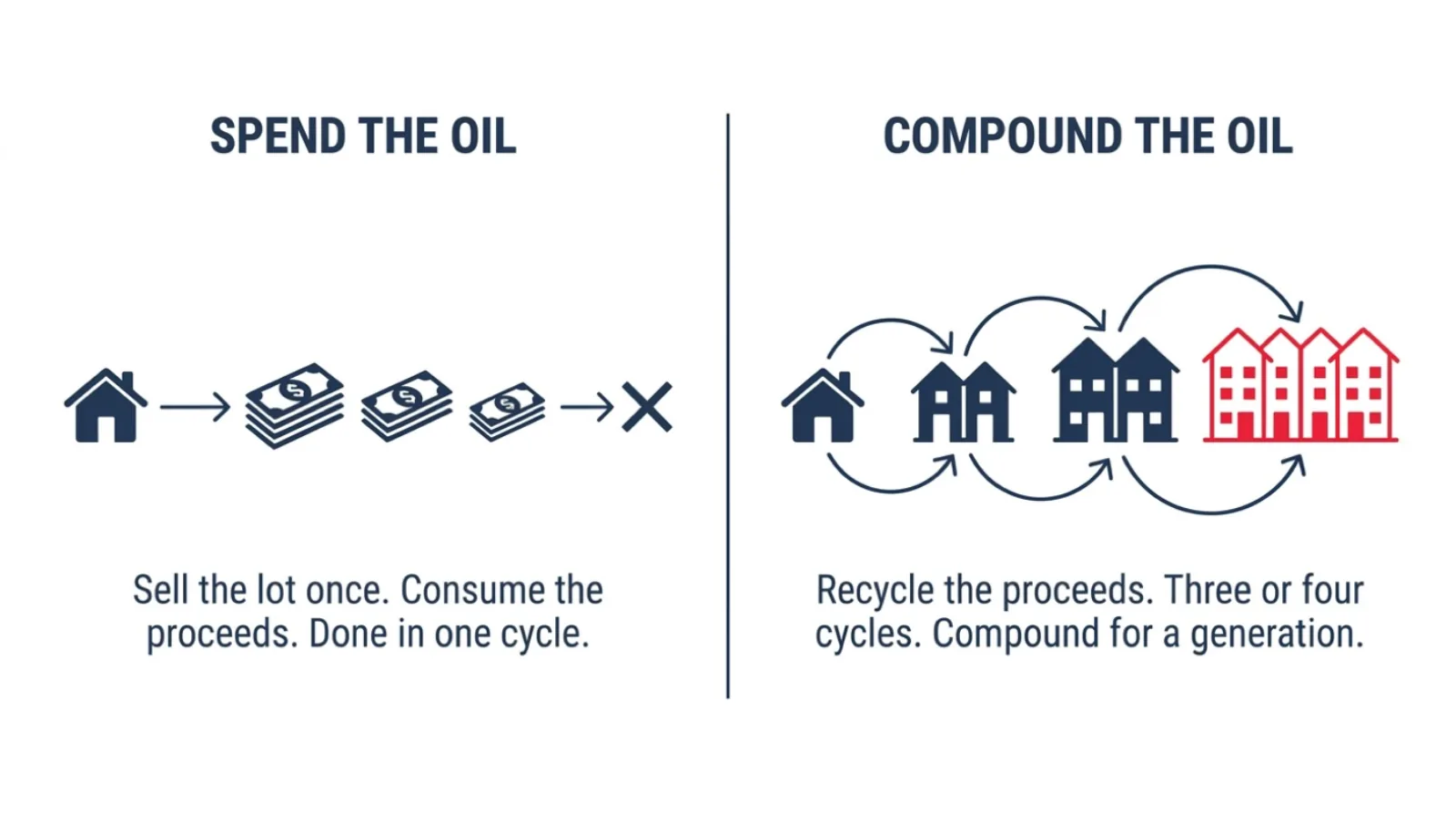
Most BC households that own land think of their property as one of two things. Either it’s a place to live, in which case its value is realized only when they downsize or pass it on. Or it’s something to sell, in which case the proceeds get consumed across a retirement, a renovation, a new home, a few good years.
Both treatments are the equivalent of Norway spending its oil revenue as it came in. The asset gets converted into cash, and the cash gets consumed. No compounding engine is built.
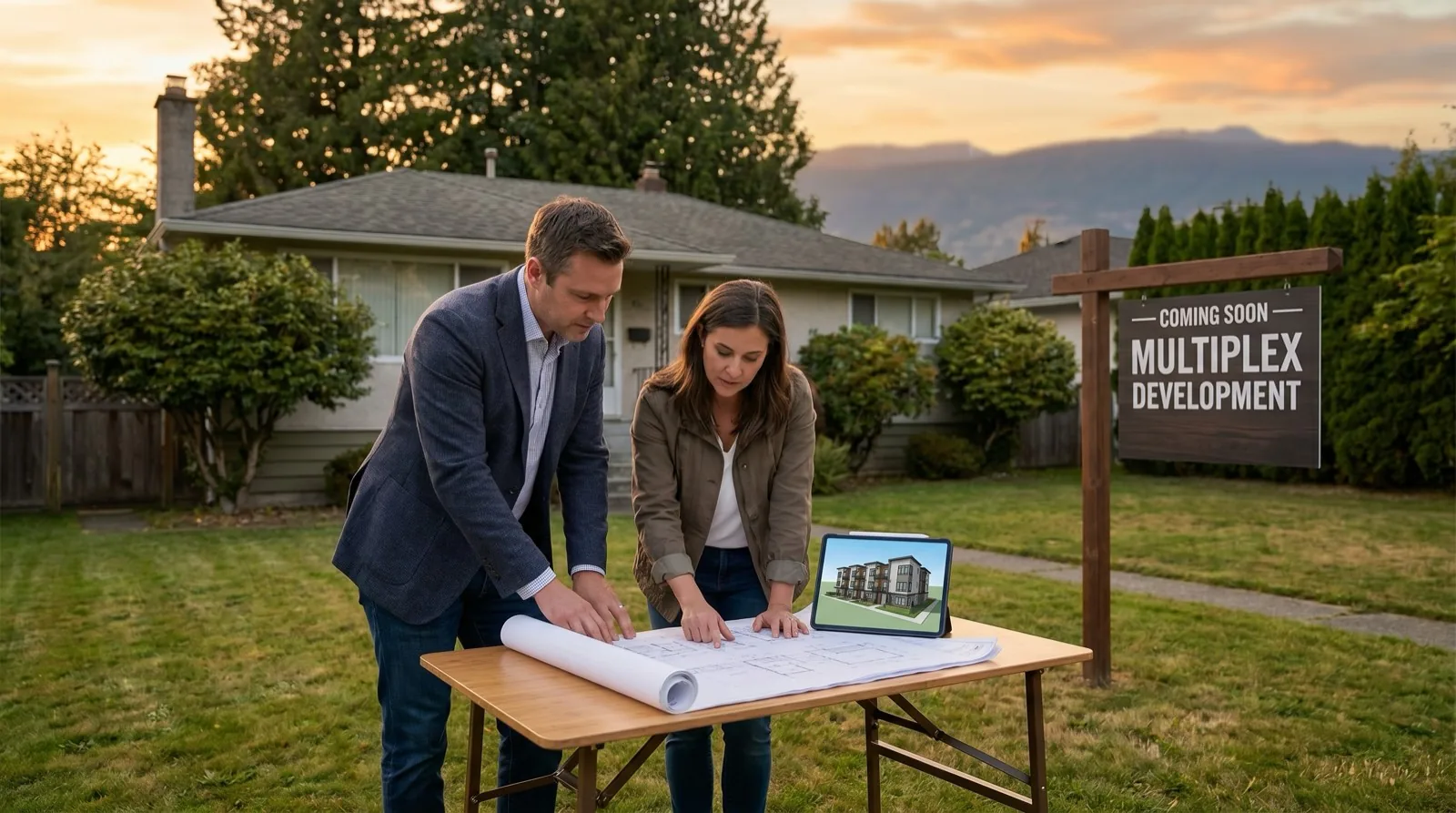
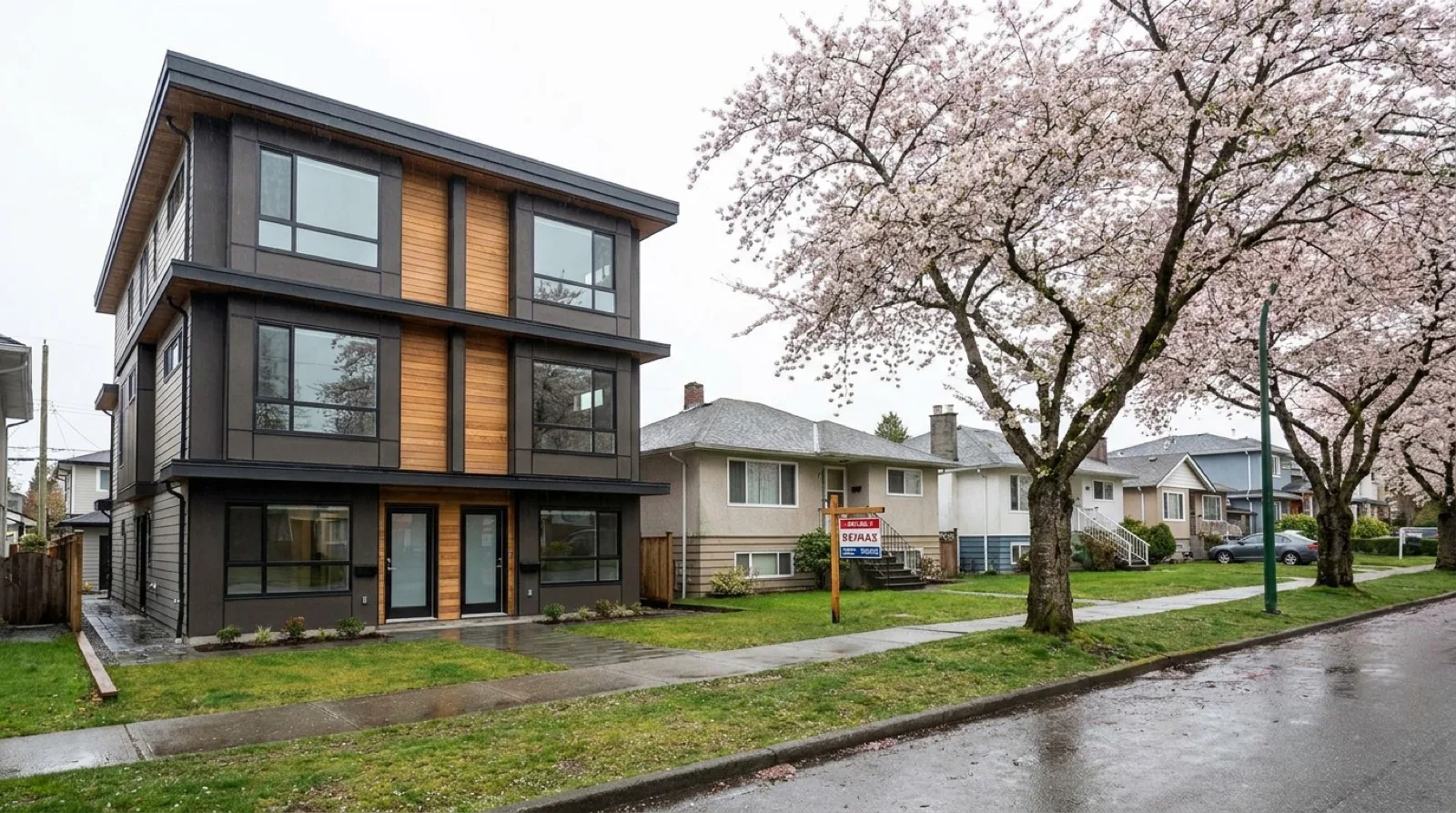
Bill 44 changed the math underneath that calculation, and most owners haven’t yet caught up to what changed. A single-family parcel in Vancouver, Burnaby, City of North Vancouver, or Kelowna is no longer a single-family parcel. By right, it’s a four-to-six-unit parcel. The land wasn’t made more valuable by anything the owner did. It was made more valuable by a piece of provincial legislation.
That’s the closest a homeowner gets to having oil discovered under their lot.
The question is what they do with it.
The personal sovereign fund
Picture a small collective of families. Some bring multiplex-zoned land. Others bring cash. They pool those assets into a partnership structure, with VanPlex acting as general partner — running development, financing, lease-up where applicable, and the reinvestment cycle.
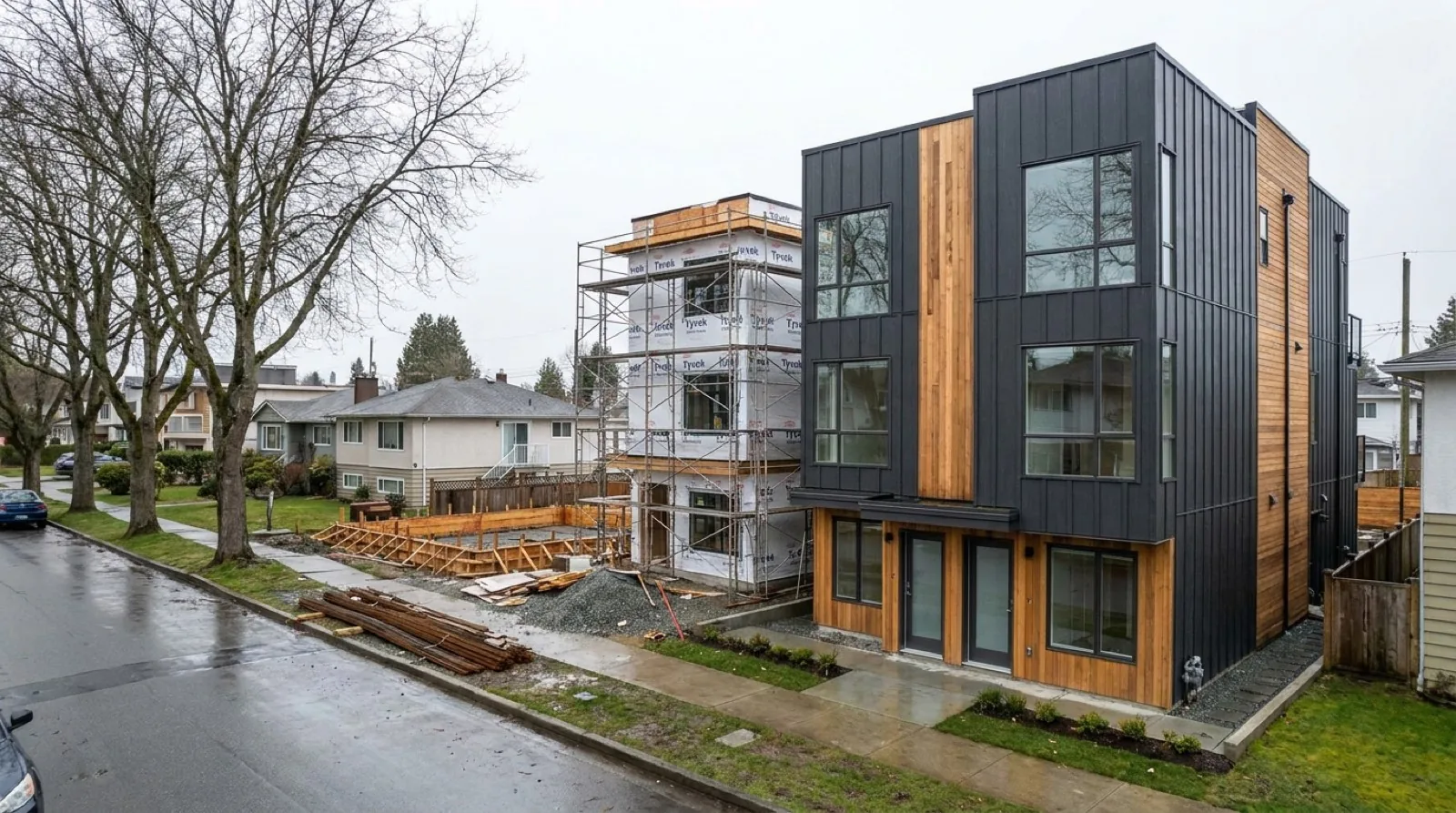
The first parcel gets developed into a four-to-six-unit multiplex. On completion, the project sells into the development lift, capital recycles into the next parcel in the pipeline (scored and ranked by PlexRank™ for projected return on equity), and the cycle compounds.
In some submarkets — particularly parts of Kelowna — the math also supports holding the completed building and running it as a long-term rental asset, because the relationship between land cost, build cost, and achievable rents leaves enough cash-on-cash return on the table to justify the equity sitting there. In high-land-value Vancouver submarkets, the build-sell-repeat cycle generally protects cash-on-cash returns better than the build-and-hold cycle, because too much equity gets trapped behind a stabilized rental in those locations. The structure accommodates either choice on a parcel-by-parcel basis.
Families also have the option to retain one or more units from a completed project — either as a residence in a neighbourhood they want to stay in, or as a long-term holding for the next generation. The pool sells what it needs to sell to recycle. The family keeps what it wants to keep.
That’s a personal sovereign fund.
It’s structurally similar to what Carney announced for Canada and what Norway has run for three decades. A finite asset — whether multiplex-zoned land, the federal balance sheet, or North Sea oil — gets converted into a permanent productive engine. Returns get reinvested. The principal compounds. The next generation inherits a productive asset rather than a consumed one.
The mechanics here are how every long-duration capital pool works, from university endowments to family offices to insurance balance sheets. What’s been missing in BC multiplex is the structure to do this at the household level, with parcels that are small enough that individual owners can’t run them as a fund on their own, but large enough that a pool of them clears the threshold.
Why this becomes anti-fragile
Nassim Taleb coined the term anti-fragile to describe systems that get stronger under stress, rather than systems that merely survive it. The personal sovereign fund structure has a few anti-fragile characteristics worth naming.
Housing demand in BC isn’t weakening. Population growth, federal immigration settings, and a structural deficit of mid-density housing in the inner suburbs all push in the same direction. A pool of multiplex projects, recycled and selectively held over decades, benefits from each of those forces.
Policy momentum is moving toward, not against, this asset class. Bill 44 is the foundation. CMHC’s expansion of mortgage insurance to cover three-to-eight-unit properties, announced in the Spring Economic Update, is a second pillar. A household holding multiplex assets through a properly structured fund benefits from every additional policy tailwind. A household sitting on raw single-family land waits to be told what to do.
Concentration is the obvious counter-argument. A personal sovereign fund built on BC multiplex is geographically concentrated, sector concentrated, and currency concentrated — in a way that Norway’s globally diversified portfolio isn’t. That’s true. The honest reading is this structure is a complement to a diversified securities portfolio rather than a substitute for one, anchored in an asset the family already owns or wants to own, in a market the family already understands.
What this looks like in practice
For a family with multiplex-zoned land, the contribution is the parcel itself, brought in at appraised value. For a family with cash, the contribution is capital, sized to whatever participation they want in the pool. The general partner runs the development cycle on a multi-parcel pipeline, with an explicit mandate to reinvest rather than distribute aggressively in the early years. The compounding is the point.
Over a ten-to-twenty-year horizon, the math is straightforward. A family that contributes a multiplex-zoned parcel today, and lets that equity compound through three or four development cycles, ends up with a meaningfully larger asset base than a family that sells the same parcel into a one-time transaction. The difference isn’t the underlying real estate. The difference is the structure — capturing the development lift, recycling the proceeds, keeping the compounding uninterrupted.
This is the kind of structure VanPlex was built to operate. We’re spending more time on this conversation lately — with families who think generationally rather than transactionally, and with parcel owners who recognize that what Bill 44 unlocked under their lot is closer to a sovereign-wealth event than a sale event.
If that frame fits how you’re thinking about the next decade of your household balance sheet, the conversation is open at VanPlex.
Carney’s $25 billion is going to do what it’s going to do. The terms will be set in Ottawa and the returns will be reported to Parliament. What sits under a BC multiplex-zoned parcel is, in proportion, no less significant for a family than what sits in the federal balance sheet is for the country.
The question is whether the family chooses to build the compounding engine — or whether they spend the oil.
— David Babakaiff, Co-Founder, VanPlex