Data source: CMHC Spring 2026 Housing Supply Report, released March 2026. CMHC’s housing market outlook for Vancouver projects starts declining through 2026–2028 as the condo presale collapse works through the pipeline.
Canada built 259,028 new homes in 2025 — a 5.6% jump over 2024’s 245,367. Metro Vancouver hit 30,855 completions, the highest since 1990. That sounds like progress. Scratch the surface and the picture gets complicated fast.
The CMHC Spring 2026 Housing Supply Report lays out a housing market moving in two directions at once. Rental construction is at historic highs. Condo presales have collapsed. Missing middle housing is surging. And the pipeline for future supply is thinning right when demand will snap back.
Here’s what the report actually says — and what CMHC’s housing market outlook means for Vancouver and BC through 2027.
TL;DR (Key Takeaways)
- Canada built 259,028 homes in 2025 — up 5.6% YoY, led by record rental apartment starts
- Metro Vancouver hit 30,855 completions in 2025 — highest since 1990, up 20.5% from 2024’s 25,614
- Vancouver housing starts declined for two consecutive years: 33,244 (2023) → 28,112 (2024) → 27,185 (2025)
- Condo presales collapsed nationally; Vancouver had the highest unsold condo inventory at completion
- Missing middle starts rose about 10% across Canada’s seven largest metro areas
- Burnaby saw substantial semi-detached housing growth after its 2024 laneway/suite policy changes
- New condo starts now average 20.59 km from downtown Vancouver — nearly double the 2016 distance of 9.28 km
- CMHC says Canada needs 430,000-480,000 units/year by 2035 — nearly double 2025 output
The headline numbers look strong. The trend lines don’t.
The 259,028 national housing starts in 2025 beat the 10-year average across most major markets. Calgary surpassed both Toronto and Vancouver in total starts. Edmonton hit a record. Montreal saw over 80% of its starts go to rental — also a record.
But CMHC’s own leadership flagged the split underneath.
“On the surface, housing starts last year were quite strong, outpacing annual starts in 2024 and led by historic levels of rental starts,” said Tania Bourassa-Ochoa, CMHC’s Deputy Chief Economist. “However, home ownership supply, particularly in the condominium segment, continues to face significant challenges.”
That qualifier is the real story. Rental construction is booming. Ownership housing is weakening. The two are pulling the market in opposite directions.
City-by-city: how Vancouver compares
Calgary surpassed both Toronto and Vancouver in 2025 starts. Montreal nearly doubled year-over-year. Toronto cratered.
| Metro Area | 2025 Starts | 2024 Starts | Change |
|---|---|---|---|
| Montreal | 27,777 | 17,570 | +58% |
| Calgary | 27,684 | 24,369 | +14% |
| Vancouver | 27,185 | 28,112 | -3% |
| Toronto | 26,087 | 37,718 | -31% |
| Edmonton | 21,337 | 18,384 | +16% |
| Ottawa-Gatineau | 12,984 | 11,549 | +12% |
Source: CMHC Starts and Completions Survey, December 2025 annual data
Toronto’s 31% decline is striking — but Vancouver’s story is more nuanced. A 3% decline sounds modest until you realize it follows 2024’s drop from 33,244 to 28,112. That’s two consecutive years of declining starts against a backdrop of record completions.
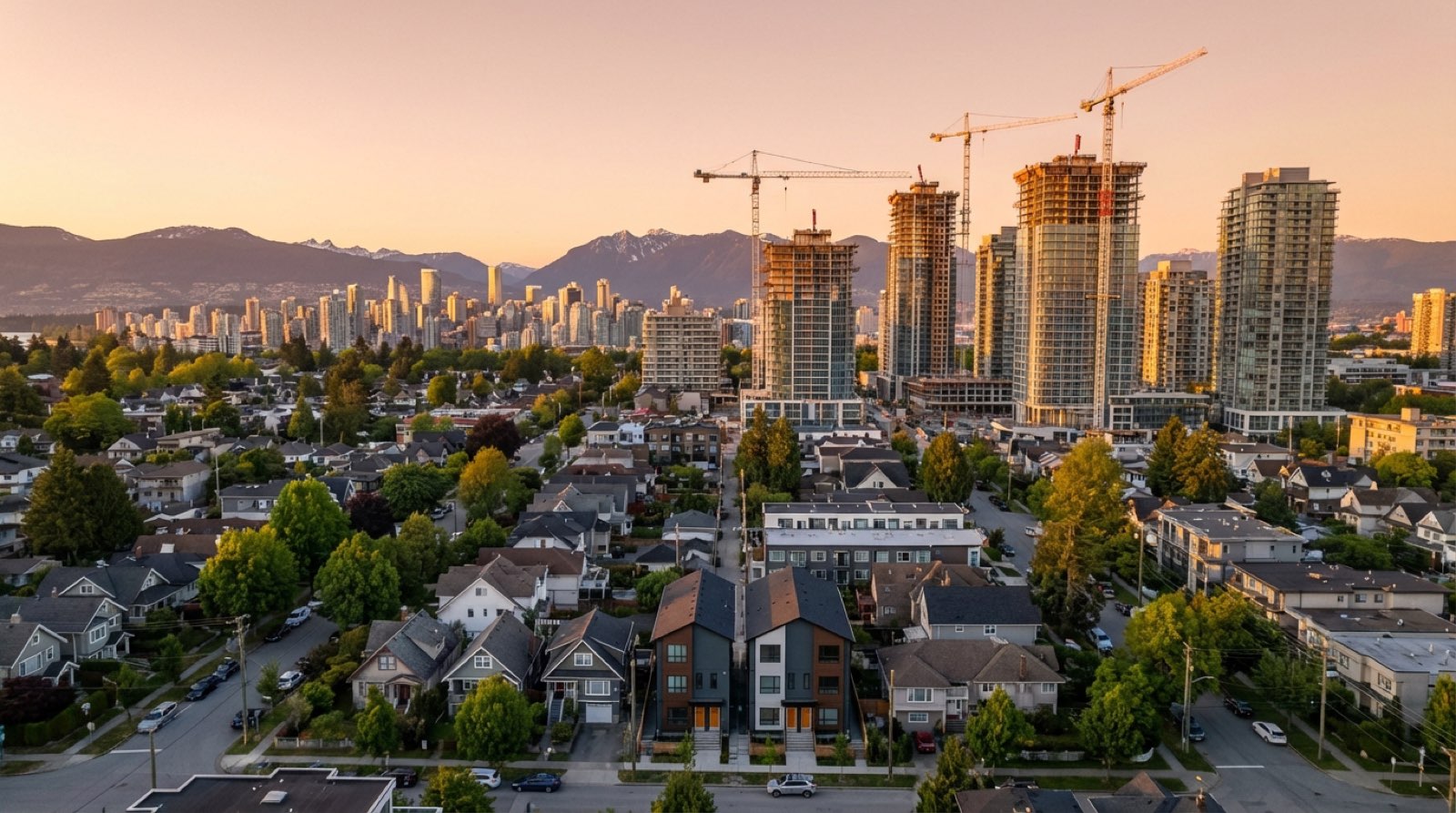
Vancouver’s record completions are yesterday’s decisions
Metro Vancouver’s 30,855 completions in 2025 represent a 20.5% increase over 2024 and a 48.4% jump from 2023. On paper, a building boom.
It’s actually a pipeline clearing.
“Today’s housing construction activity is basically yesterday’s housing decisions,” Bourassa-Ochoa noted. Those 30,855 units were started two, three, even four years ago when interest rates were lower, presales were strong, and land costs — while high — hadn’t yet combined with 2024-2025 construction inflation to kill project viability.
| Year | Metro Vancouver Completions | Metro Vancouver Starts |
|---|---|---|
| 2022 | ~19,500 | 25,983 |
| 2023 | 20,797 | 33,244 |
| 2024 | 25,614 | 28,112 |
| 2025 | 30,855 | 27,185 |
Source: CMHC Starts and Completions Survey
See the divergence? Completions surging upward while starts trend downward. That crossover is the pipeline thinning in real time.
CMHC economist Shiva Moshtari-Doust confirmed the surge will continue short-term: “We experienced a surge of housing completions — both in condominium and rental space — and we expect this to continue for the next couple of years.” But “couple of years” means the pipeline empties, and then what?
The condo presale collapse changes everything
This is where the report gets blunt. Across Canada, condominium presales have collapsed. Unsold inventory surged with double-digit increases in most major markets. Vancouver had the highest unsold condo inventory at completion among the cities studied.
What killed presales? Three things converged:
- Investor retreat: Higher interest rates made the math worse for buy-to-rent investors who drove presale demand for a decade
- End-user hesitation: Mortgage renewal pressures and macroeconomic uncertainty (tariffs, job market softness) kept owner-occupier buyers on the sidelines
- Price misalignment: What developers need to charge to make projects viable doesn’t match what buyers can or will pay
The downstream effect is severe. Fewer presales mean fewer new project launches. Fewer launches mean fewer starts. Fewer starts mean fewer completions three years from now.
Vancouver’s resale market reinforced the picture — activity hit its lowest level in two decades, according to CMHC. Many condo projects have been delayed, shelved, cancelled, or pivoted to rental.
Rental is carrying the load — but for how long?
Rental construction is the one bright spot in the national numbers. Starts hit record highs in Calgary, Edmonton, Ottawa, Halifax, and Montreal. Toronto posted its second-highest rental starts ever — and for the first time this century, rental starts there exceeded condo starts.
Nationally, the number of rental units under construction was nearly twice the 10-year average.
| Market | Rental Milestone (2025) |
|---|---|
| Calgary | Record rental starts |
| Edmonton | Record rental starts (plus record condo starts) |
| Montreal | 80%+ of all starts were rental — a record |
| Toronto | Rental exceeded condo starts for first time this century |
| Ottawa | Near-record starts, rental-dominated |
| Halifax | Balanced conditions, near full construction capacity |
| Vancouver | Rental starts declined; activity weakened |
Source: CMHC Spring 2026 Housing Supply Report
Vancouver stands out as the exception. While other cities posted rental records, Vancouver’s rental starts actually declined. Both absolute numbers and share of total construction decreased — atypical compared to other major centres.
The reasons: rising building costs (labour, materials, regulatory), slower rent growth, higher vacancy rates, and extended lease-up periods. CMHC noted that vacancies will remain elevated as “record numbers of under-construction rental apartments are completed over the next 3 years.” Most of those units are concentrated in and near the City of Vancouver.
For developers evaluating new rental projects, the math is getting harder. Land costs haven’t dropped. Construction costs haven’t dropped. But rents are flattening and lease-up periods are stretching.
Missing middle: the quiet breakout story
While national attention focused on the condo collapse and rental boom, the report flagged what might be the most important trend for Vancouver-area homeowners.
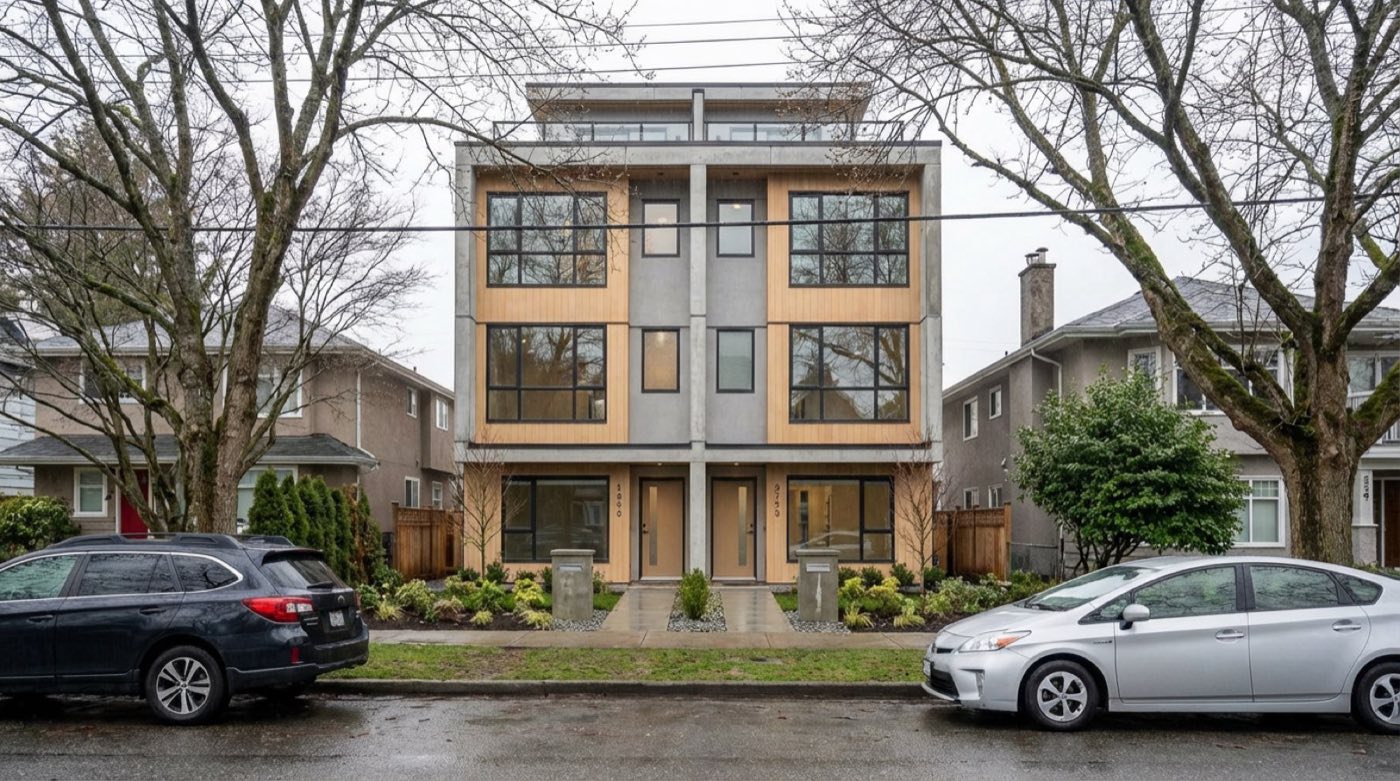
Missing middle housing — low-rise apartments, multiplexes, row homes, stacked townhouses, accessory suites — posted roughly a 10% increase across Canada’s seven largest metro areas in 2025. It was the second-highest level on record.
CMHC’s own language was direct: “Missing middle housing is important because it adds quicker-to-build, lower-cost homes in existing neighbourhoods.”
| Metro Area | Missing Middle Share of 2025 Starts |
|---|---|
| Calgary | ~60% |
| Edmonton | ~60% |
| Toronto | ~50% |
| Ottawa | New highs in medium-density |
| Montreal | Growth in 4-5 storey rentals on North/South Shore |
| Vancouver | Ground-oriented gains; semi-detached growth in Burnaby |
Source: CMHC Spring 2026 Housing Supply Report
Calgary and Edmonton led, with about 60% of their new starts falling in the missing middle category. Toronto followed at roughly 50%. In Toronto, small-plex builds (3-5 units) now outnumber large 100+ unit starts for the first time on record.
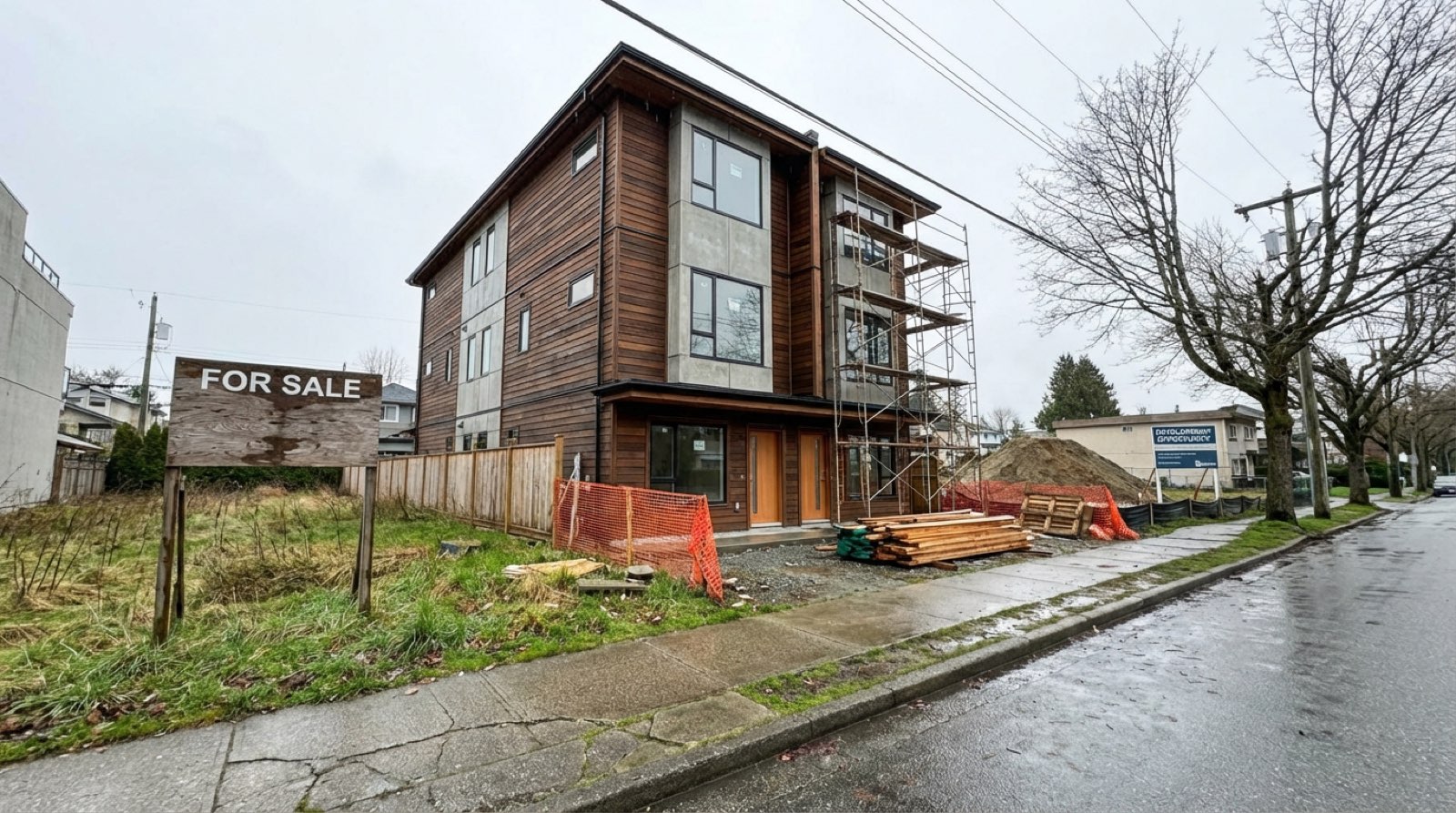
Vancouver’s missing middle growth showed up differently. Ground-oriented homes posted year-over-year gains, with the standout being substantial growth in semi-detached housing in Burnaby. That directly traces to Burnaby’s 2024 approval of laneway homes and secondary suites for semi-detached dwellings.
This is the densification policy feedback loop in action. Province passes Bill 44. Municipalities implement zoning changes. Builders respond. The units get built — faster and at lower cost than towers, without presales, without rezoning hearings, without the three-year permitting process.
Condos are moving farther from downtown — multiplexes aren’t
One of the report’s most revealing datasets tracks where new apartment construction is happening relative to downtown Vancouver. The divergence between rental and condo is dramatic.
| Year | Rental Apartments (km from downtown) | Condos (km from downtown) |
|---|---|---|
| 2014 | 13.26 | 15.01 |
| 2015 | 16.32 | 14.05 |
| 2016 | 11.15 | 9.28 |
| 2017 | 14.97 | 14.11 |
| 2018 | 12.43 | 12.77 |
| 2019 | 13.31 | 13.77 |
| 2020 | 14.91 | 15.79 |
| 2021 | 14.90 | 15.23 |
| 2022 | 15.98 | 13.89 |
| 2023 | 12.61 | 18.86 |
| 2024 | 11.71 | 19.14 |
| 2025 | 14.26 | 20.59 |
Source: CMHC Spring 2026 Housing Supply Report, Figure 1 — Average distance of apartment-unit starts from downtown, Vancouver CMA
Look at condominiums. In 2016, the average new condo started 9.28 km from downtown. By 2025, that had ballooned to 20.59 km — more than double. Developers are being pushed farther and farther out to find land they can afford.
Rental apartments have stayed closer — 14.26 km in 2025, roughly stable over the decade. That’s partly because rental projects benefit from government incentive programs that make urban-core land pencil.
The missing middle opportunity lives in that gap. Multiplexes get built on existing residential lots in established neighbourhoods — Kitsilano, Dunbar, Marpole, Hastings-Sunrise, East Vancouver — where the land is already owned, already serviced, and already zoned for density under Bill 44. No need to chase affordable land 20+ km from the core.
The national gap: 430,000-480,000 units/year by 2035
CMHC’s long-term projection hasn’t changed, but the gap keeps widening.
To restore the affordability levels Canadians experienced in 2019, the country needs 4.8 million new homes by 2035 — between 430,000 and 480,000 annually. In 2025, we built 259,028.
That’s roughly half what’s needed. And with starts projected to decline through 2026-2028 due to high costs, softer demand, and tariff uncertainty, the trajectory is moving in the wrong direction.
| Metric | Current (2025) | Required by 2035 | Gap |
|---|---|---|---|
| Annual Housing Starts | 259,028 | 430,000 - 480,000 | 171,000 - 221,000 units/year |
| Trajectory | Declining through 2026-2028 | Needs to nearly double | Widening |
Canada can’t close this gap with towers alone. Not at current costs. Not at current timelines. Not with collapsed presales.
Missing middle housing — multiplexes, row homes, stacked townhouses — is the only category that grew in 2025 and the only one that doesn’t depend on the presale financing model that just broke.
How this hits Vancouver homeowners
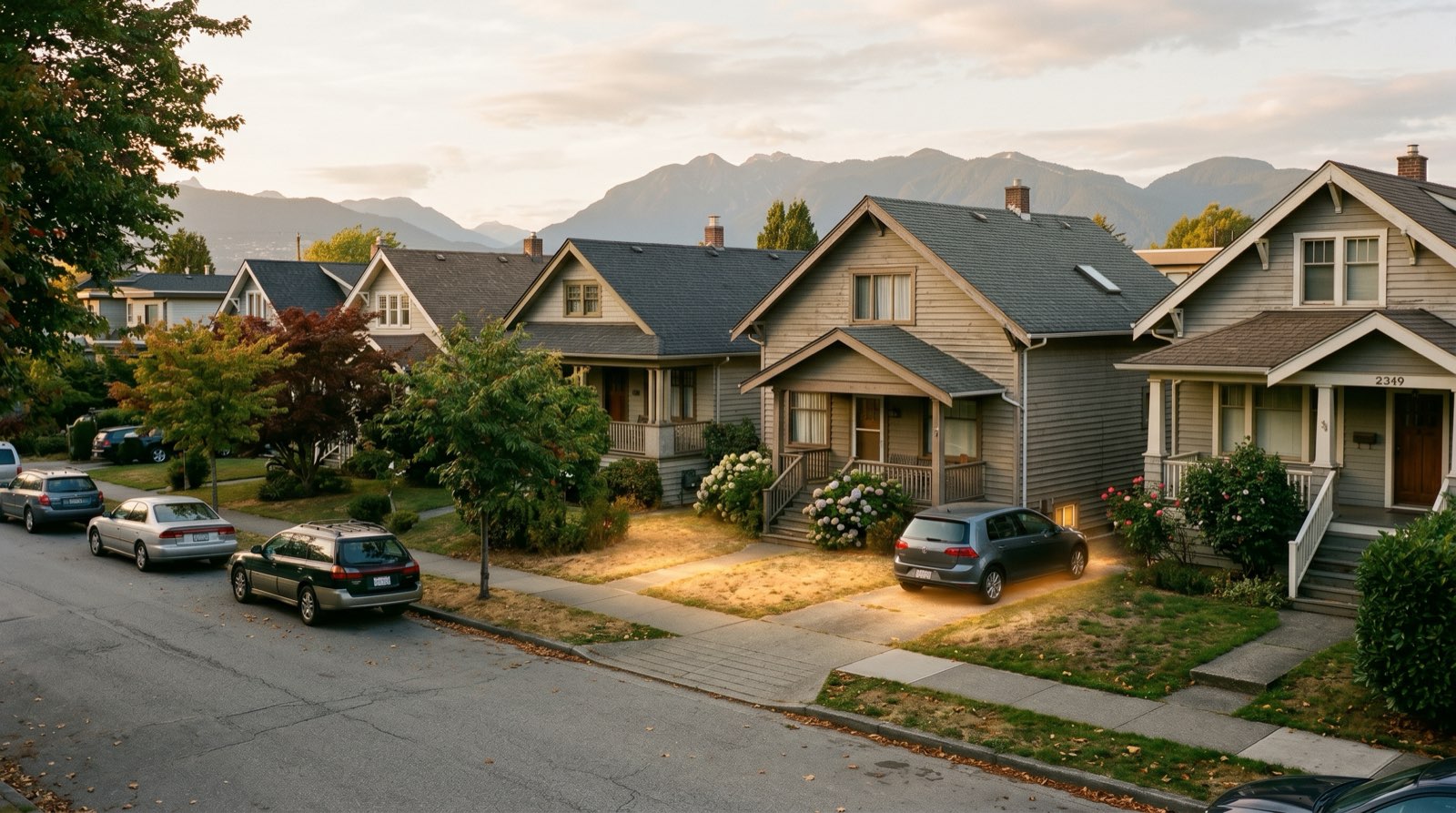
If you own a single-family home on an RS-zoned lot in Vancouver or Burnaby, the CMHC report tells you four things:
1. The completion wave is temporary. Record completions in 2025 came from projects started years ago. The starts pipeline is thinning. Two to three years from now, completions will drop — and the supply gap will reassert itself.
2. Condo supply is contracting. Fewer presales, fewer launches, more cancellations. The ownership housing segment that defined Vancouver construction for 20 years is pulling back. That reduces future competition for ground-oriented housing products.
3. Missing middle is the growth category. Bill 44 enabled it. Burnaby’s results prove it works. Semi-detached and multiplex starts are rising while everything else falls.
4. The affordability gap guarantees demand. With 430,000-480,000 units needed annually and 259,028 being built, the structural shortage isn’t going away. Purpose-built, ground-oriented housing in established neighbourhoods is exactly where unmet demand concentrates.
What’s actually happening on the ground in Metro Vancouver
The CMHC data confirms a pattern VanPlex has tracked across 100,000+ GVRD properties through PlexRank: the multiplex opportunity is real, but concentrated. About 2% of eligible lots pencil at 100%+ return on equity. The rest don’t clear the hurdle.
The report’s finding that missing middle starts increased while everything else declined isn’t surprising — it’s the predictable result of policy changes (Bill 44), economics (lower per-unit land costs on existing lots), and market timing (subtrades available as tower projects pause).
For homeowners sitting on qualifying lots, the window described in this report — elevated completions masking a thinning pipeline, declining starts, rising demand gap — is exactly the kind of environment where ground-oriented development pencils best. Lower competition for subtrades. Motivated sellers. A product type (ground-oriented, 3-6 units) that doesn’t need presales or a market recovery to work.
Check your property
The CMHC Spring 2026 Housing Supply Report makes the case that Canada’s housing market is splitting into two tracks: a struggling high-rise condo sector and a growing missing middle sector. Vancouver sits right at the intersection.
If you own a single-family lot in Vancouver, Burnaby, or across Metro Vancouver, VanPlex can tell you in under two minutes whether your property qualifies for multiplex development and what the return profile looks like. No obligation, no sales pitch — just the math.
Visit VanPlex.ca to run your address through PlexRank and see where your property falls.
David Babakaiff, CEO & Co-Founder of VanPlex PlexRank™ | Profit with Multiplex
Sources: CMHC Spring 2026 Housing Supply Report | CMHC News Release — Ownership supply under pressure | CMHC Housing Starts December 2025 | Daily Hive — Vancouver Record Completions | CMHC In-House Podcast: Spring 2026 HSR