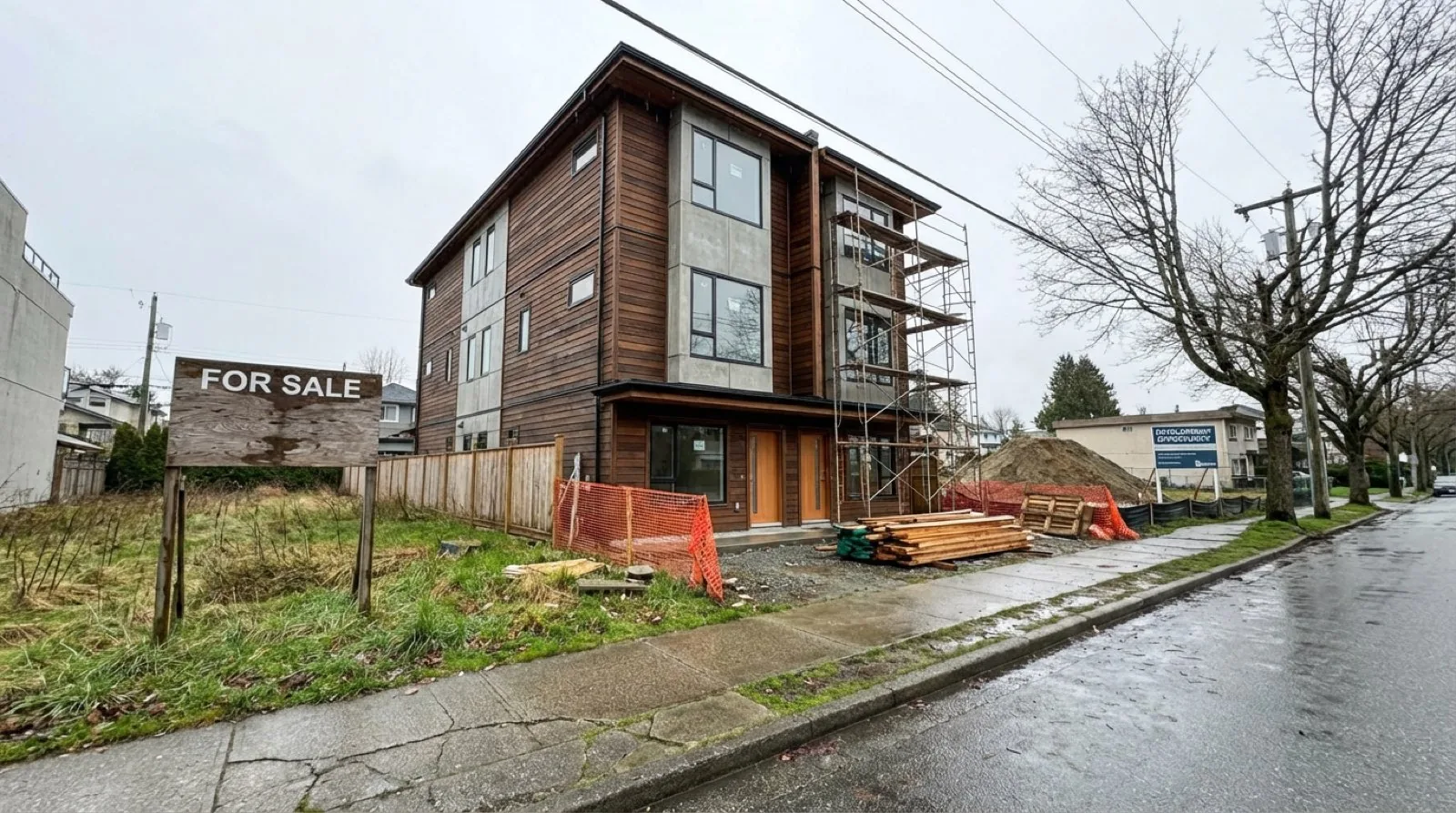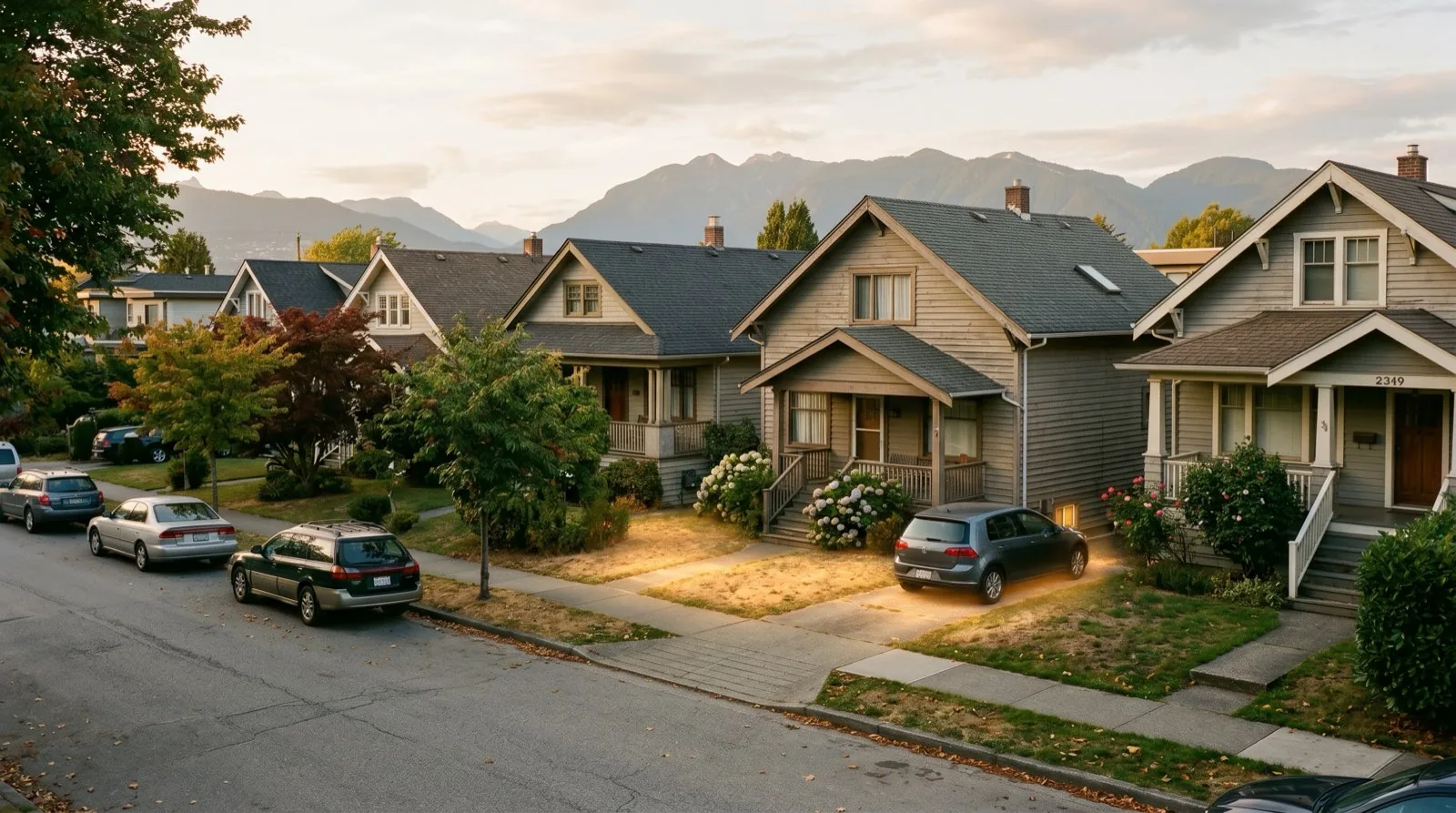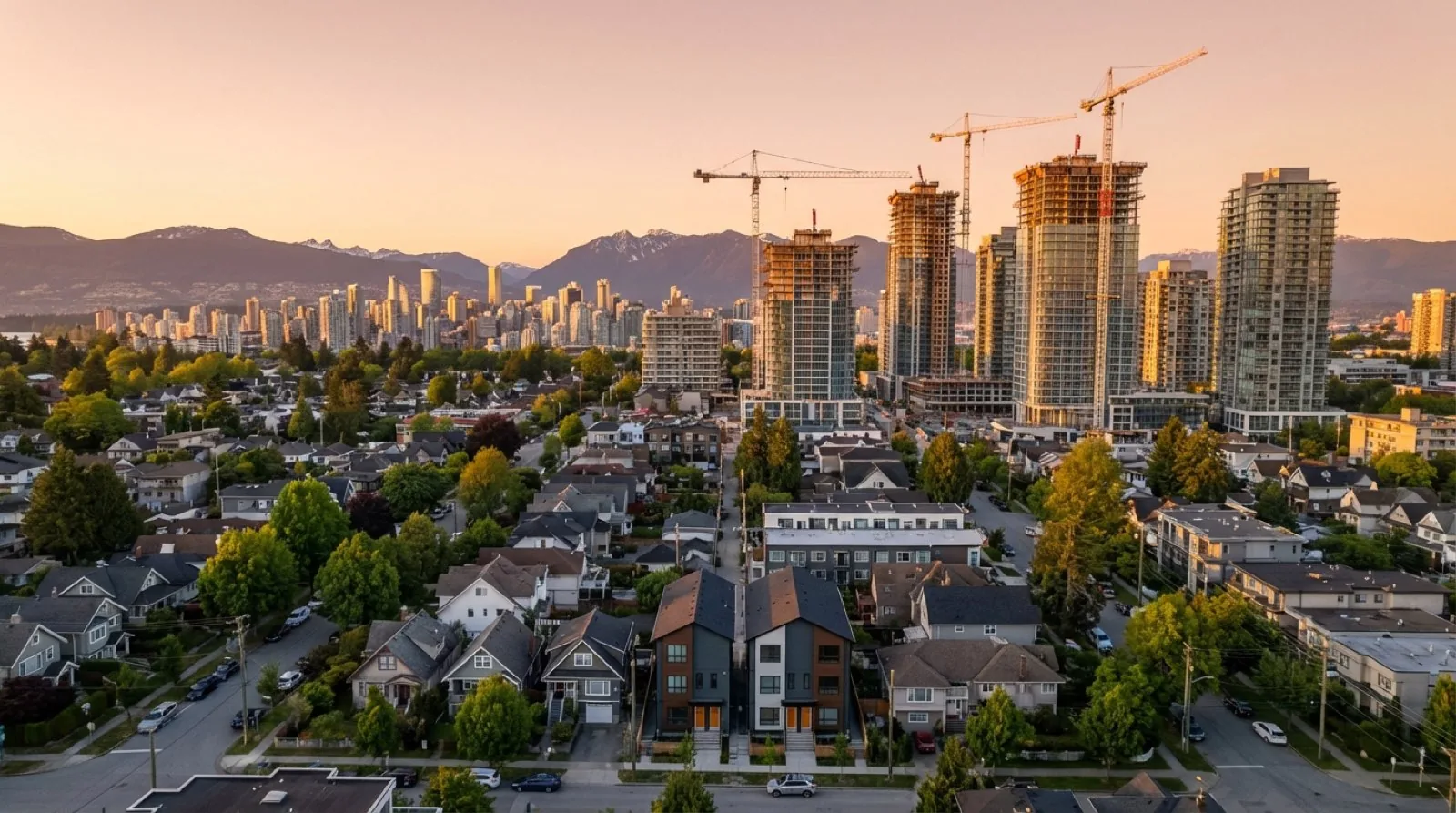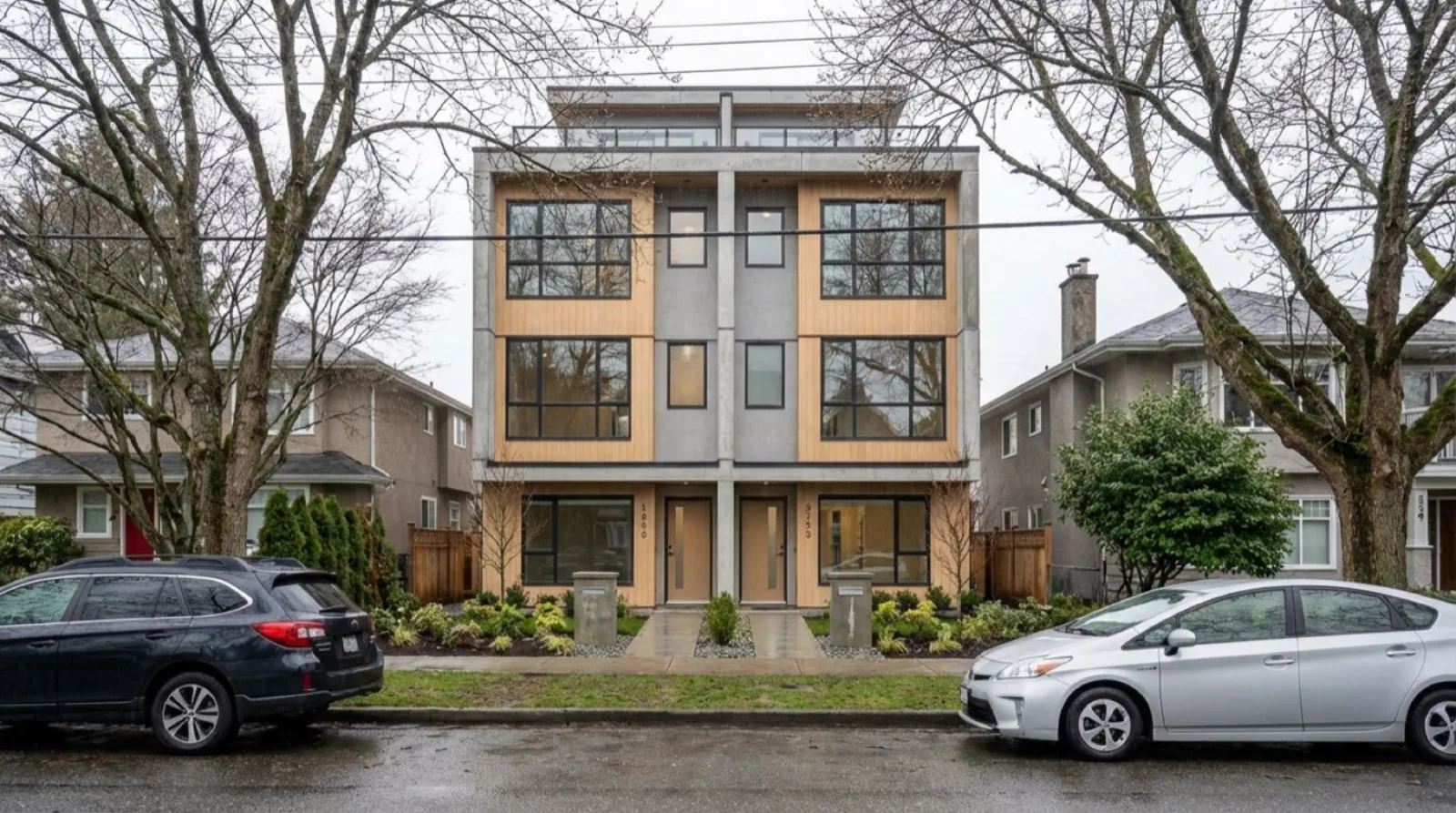

What a “normal” multiplex market looks like
CBRE’s report projects Vancouver will support 40 to 50 multiplex land transactions per year on an ongoing basis. That’s the new floor — not a ceiling, not a peak, but a predictable baseline emerging from the chaos of 2023-2024.
The 2024 surge was always going to be a one-time event. Bill 44 passed. Zoning changed overnight. Landowners, investors, and developers rushed to figure out what it meant. Deals got done fast, some of them speculatively. The math didn’t always hold.
Now the math is being checked more carefully.
Vanplex analyzed median returns across B.C. cities, factoring in land costs, development costs, city charges, engineering, and utility upgrades. The results are blunt: half of single-family properties in Vancouver would yield a maximum profit of less than 15%. In Burnaby, half of eligible properties produce less than a 32% return. Some sites lose money.
“It’s not just about the mechanics of what you can build,” said David Babakaiff, co-founder of Vanplex.ca. “It’s about that price zone that you’ve got to sell into to be able to move the product.”
The 1-in-5 opportunity
Here’s the flip side: about 1 in 5 properties would yield a profit of 60 to 70%, according to Babakaiff’s analysis.
That’s not a small number. In a city with tens of thousands of eligible lots, 20% still represents a very large pool of genuine opportunity. The problem isn’t that multiplex development doesn’t pencil — it’s that most people are looking at the wrong properties.
The surge year of 2024 flushed a lot of that out. Sellers with aspirational expectations got reset. Deals that never should have gone to contract didn’t close. The 2025 slowdown, in that sense, was the market doing its job.
What remains is leaner and more selective. That’s actually better for serious developers and homeowners who do their homework.
Bigger isn’t always better
One of the more interesting findings in CBRE’s report: about 15% of multiplex applications are choosing to build only two storeys instead of the permitted three. And on larger West Side lots, some developers are deliberately choosing not to maximize the 1.0 floor space ratio allowed under zoning.
This is a rational response to market conditions, not a failure of ambition.
If building to the maximum legal size means producing units that would cost more than a house to sell, you don’t build to the maximum. You build and price to what the market will actually support — what Babakaiff calls the “missing middle between a condo and a house.”
The discipline required to leave permitted density on the table is exactly the kind of strategic thinking that separates profitable projects from costly mistakes.
First completions — and what they reveal
Last fall saw the first completed multiplexes following the 2023 passage of Bill 44 and its municipal implementation. A larger wave of completions is expected this spring.
These finished projects matter beyond just housing supply. They’re the market’s first real data points: What do the units actually sell for? How do buyers respond to the product? Do the pro formas hold?
Architects and developers who’ve been through the process are reporting something important: it’s more predictable now.
“In the past, smaller developers kind of had to gamble,” said Xeniya Vins, architect and co-principal of Xquimalt Developments Ltd. “Now, we more or less know that we’ll be able to build a fourplex in some shape or form.”
That predictability has value. It’s easier to raise capital, attract builders, and make decisions when you’re not betting on a discretionary approval process.
Financing is still the hard part
Predictable permitting didn’t solve financing. It remains one of the most cited friction points in multiplex development.
The challenge is structural: many multiplex projects fall under the $5-million threshold that larger institutional lenders want in order to deploy capital. That leaves developers scrambling for private lenders — at higher interest rates that eat directly into project viability.
“We’re kind of left scrambling to find lending through private lenders at higher interest rates, so that eats away at project viability,” said Vins.
This is solvable, but not yet solved. As the asset class matures and lenders build track records on completed projects, financing terms should improve. For now, financing strategy is as important as design strategy — and getting it wrong can turn a viable project into a money-loser.
What this means if you’re considering a multiplex
The market normalization is actually good news for homeowners who approach this with care. Here’s why:
The 2024 frenzy inflated land expectations and compressed timelines. Sellers demanded premiums based on peak-cycle sentiment. Competition for good sites was intense. Decision pressure was high.
In 2026, that pressure is gone. Realistic sellers. Clearer timelines. Better data from completed projects. More experienced consultants and architects. And a regulatory framework that’s now had two years of real-world stress-testing.
The question isn’t whether Vancouver’s multiplex market is viable — 40-50 transactions per year, consistently, is a functioning market. The question is whether your specific property is in the 20% that genuinely pencils.
| Year | Land Sales | Total Land Value | Avg. Per Deal |
|---|---|---|---|
| 2024 | 124 | $303M | ~$2.4M |
| 2025 | 46 | $114M | ~$2.5M |
| 2026+ (projected) | 40-50/yr | — | — |
The per-deal value held. Volume compressed. That tells you the quality of transactions improved, not declined.
The only number that matters for your property
Fifty percent of Vancouver single-family properties yield less than 15% on a multiplex conversion. Twenty percent yield 60-70%. The rest sit somewhere in between.
None of those numbers apply to your specific lot until you run the actual analysis.
If you’re a homeowner thinking about this, the path forward isn’t guessing or hoping. It’s running the numbers on your address — factoring in your specific lot size, configuration, municipal charges, and the realistic selling price for units in your neighbourhood.
VanPlex has analyzed over 86,000 properties across the GVRD. Check yours at Vanplex.ca using the advanced proforma calculator. You’ll know in a few minutes whether you’re in the 20% — or whether your energy is better spent elsewhere. The investment overview also explains how experienced operators are targeting the most viable projects in this environment.
Sources: Robert Veerman, CBRE Ltd. multiplex market report (Feb. 13, 2026); Xeniya Vins, Xquimalt Developments Ltd. Original reporting by Jami Makan, Vancouver Is Awesome (Feb. 25, 2026).
David Babakaiff is CEO and Co-Founder of VanPlex. PlexRank™ | Profit with Multiplex.