
Margaret Chen was 78 when she fell in her Burnaby condo. It wasn’t a bad fall — a bruised hip, some shaken confidence — but it was the fall that changed the conversation. Her daughter Karen and son-in-law James had been circling the topic for two years. Now it was urgent.
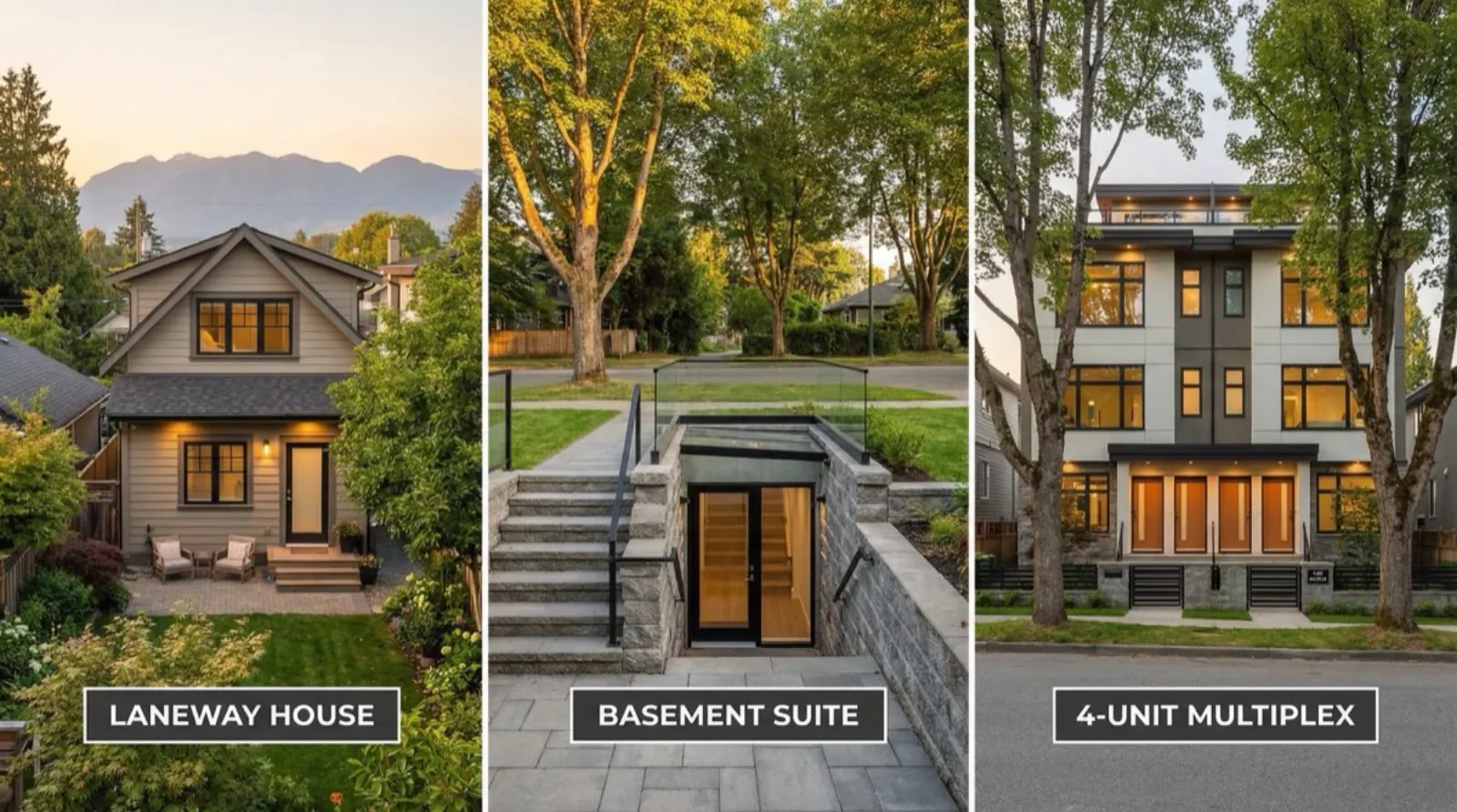
The options were familiar to every family in this position: move Mom into a care home, move Mom into the spare bedroom, or find something in between. They found something better. They built a laneway house.
TL;DR (Key Takeaways)
- Residential care in BC costs $5,000-$8,000/month for private-pay; a laneway house costs $300,000-$400,000 one-time
- Breakeven vs. care home costs: 3-5 years, after which the laneway house is a free-and-clear asset
- Universal design features add only 5-8% to construction costs but dramatically extend independent living
- Key features: zero-step entry, 36” doorways, curbless shower, main-floor everything, smart home integration
- Family proximity reduces emergency response time and social isolation — two of the biggest risks for seniors
- BC’s MHRTC provides up to $50,000 in tax credits for secondary suites housing qualifying relatives
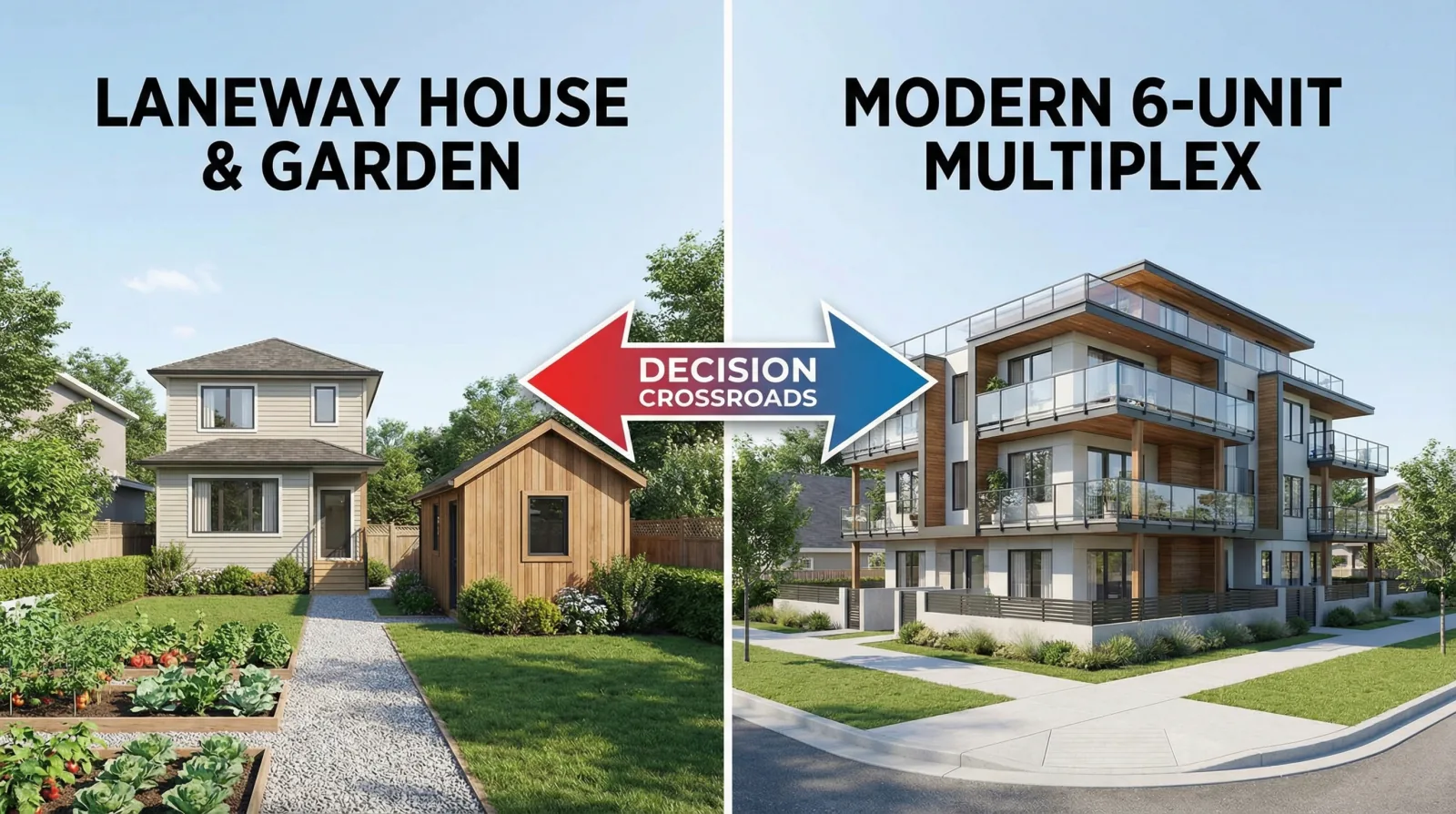
The decision: care home vs. laneway house
Karen and James ran the numbers. Every family should.
Private residential care in BC (2026):
| Care level | Monthly cost | Annual cost |
|---|---|---|
| Independent living (meals, housekeeping) | $3,500-$5,500 | $42,000-$66,000 |
| Assisted living (personal care support) | $5,000-$7,000 | $60,000-$84,000 |
| Residential care (24/7 nursing) | $6,500-$8,000+ | $78,000-$96,000+ |
Subsidized beds exist but waitlists in Metro Vancouver run 12-24 months. Private-pay is the reality for most families who need a solution now.
Laneway house with universal design (2026):
| Component | Cost |
|---|---|
| Design and engineering | $20,000-$35,000 |
| Permits and fees | $10,000-$18,000 |
| Construction (universal design spec) | $270,000-$380,000 |
| Landscaping and accessibility | $12,000-$20,000 |
| Total | $312,000-$453,000 |
The universal design premium — wider doors, curbless shower, reinforced walls for future grab bars — adds about 5-8% to base construction costs. On a $300,000 build, that’s $15,000-$24,000. Trivial compared to the alternative.
The payback math
At $6,000/month for assisted living (a mid-range estimate), a $360,000 laneway house pays for itself in five years. After that, every month of independent living is $6,000 that stays in the family.
Over 10 years: $720,000 in avoided care costs vs. $360,000 in construction. And at the end, you own a second dwelling on your property — an asset worth $200,000-$350,000.
The math isn’t even close.
The universal design features that matter
Universal design isn’t about making a home look clinical or institutional. It’s about building smart from the start so modifications aren’t needed later. Here’s what Karen and James specified — and what every aging-in-place laneway should include.
Non-negotiable features
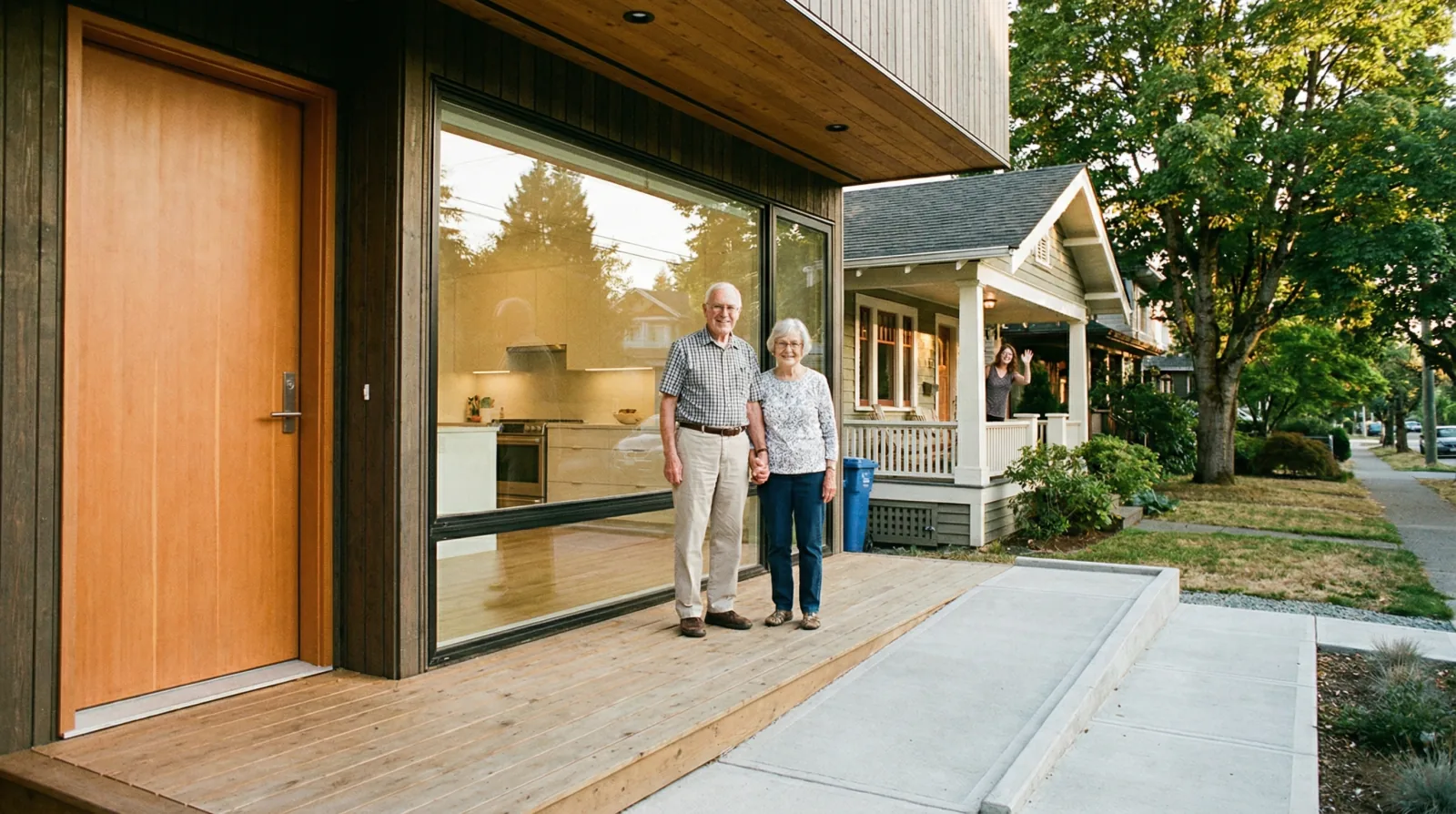
Zero-step entry: No stairs from the lane to the front door. A gently sloped pathway (1:20 grade maximum) with non-slip surface. This single feature is the most important. If a walker or wheelchair can’t get through the front door, nothing else matters.
36-inch minimum doorways: Standard doors are 32 inches. Widening to 36 inches accommodates walkers and wheelchairs and costs almost nothing during new construction. Lever handles instead of knobs — easier to grip with arthritic hands.
Main-floor everything: Bedroom, bathroom, kitchen, living area — all on one level. No stairs inside the unit. This is the default for most laneway houses anyway, since most are single-storey or have the living space on the main floor.
Curbless shower with bench: A roll-in shower with a built-in bench and handheld showerhead. No step to trip over. The bench is structural — it’s part of the framing, not an afterthought bolted to tile.
Grab bar blocking in walls: Even if you don’t install grab bars on day one, reinforce the walls around the toilet, shower, and bathtub with plywood blocking. Installing grab bars later in unreinforced drywall is expensive and ugly. Blocking costs $200 during construction; retrofit costs $2,000+.
Smart additions
Wider hallways (42-48 inches): Standard is 36 inches. The extra width makes wheelchair navigation comfortable rather than just possible.
Raised electrical outlets and lowered switches: Outlets at 18-24 inches instead of 12. Switches at 42-44 inches instead of 48. Less bending, easier reach.
Smart home integration: Voice-controlled lighting, smart thermostat, video doorbell, medical alert integration. Margaret uses a voice assistant to control lights and lock the door. Total cost: $2,000-$4,000 for a comprehensive setup.
Good lighting throughout: This gets overlooked. Seniors need 2-3x the light levels of younger adults. Specify LED fixtures with warm colour temperature (2700-3000K) and dimmer switches in every room. Under-cabinet lights in the kitchen. Motion-activated night lights in the hallway and bathroom.
Non-slip flooring everywhere: Luxury vinyl plank with textured surface. No throw rugs. No transitions between rooms where possible. Falls are the leading cause of injury-related hospitalization for Canadians over 65.
What the family gets back
The financial case is clear. But the non-financial benefits are what Karen talks about when other families ask.
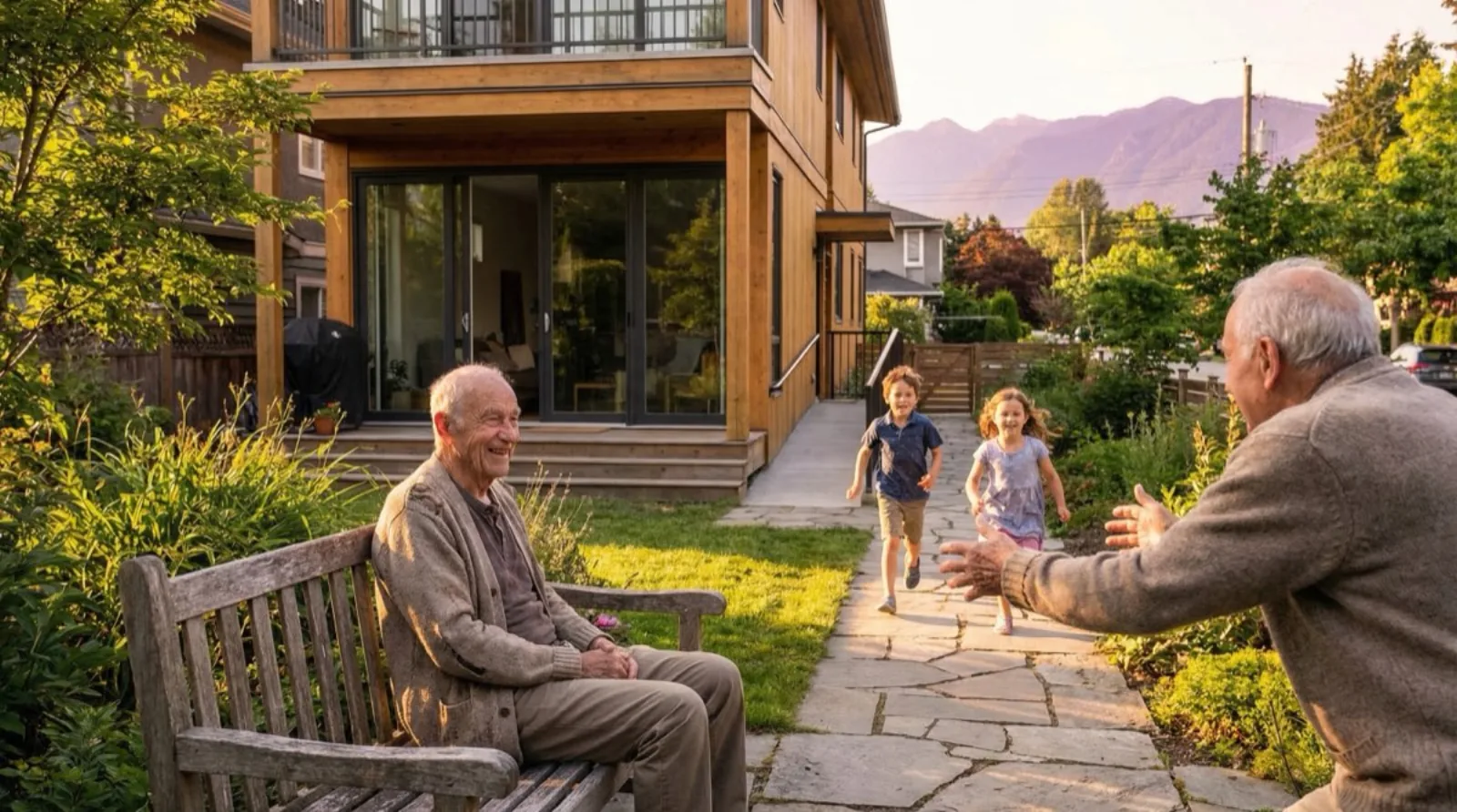
Proximity without cohabitation: Margaret has her own front door, her own kitchen, her own schedule. She’s 30 feet from her grandchildren, not 30 minutes. She has dinner with the family three nights a week — by choice, not by obligation.
Faster emergency response: When Margaret had a dizzy spell at 2 AM, Karen was there in 90 seconds. In a care home, the response time depends on staffing ratios and call bell systems. At home alone in a condo, Margaret might have waited hours.
Reduced isolation: Social isolation is as dangerous as smoking 15 cigarettes a day for seniors (National Academies of Sciences, 2020). Margaret sees her family daily. She watches the grandchildren play in the yard. She’s part of a household, not a resident in a facility.
Preserved dignity: Margaret chose her own paint colours, her own furniture, her own routine. She hosts her book club in her own living room. That sense of agency and identity matters more than any cost calculation.
The tax credit most families miss
BC families building a secondary suite for a qualifying relative should know about the Multigenerational Home Renovation Tax Credit (MHRTC). It provides up to $50,000 in eligible expenses and a 15% refundable tax credit — worth up to $7,500.
The qualifying relative must be 65+ or eligible for the disability tax credit. The renovation must create a self-contained secondary unit (private entrance, kitchen, bathroom). A laneway house qualifies.
That’s $7,500 back on a project that already pays for itself. Learn more in our MHRTC tax credit guide.
Margaret’s laneway, one year later
Margaret tends a small garden beside her laneway house. She walks to the main house for Sunday dinners. She video-calls her sister in Hong Kong from her own living room. When she needs help with groceries, James carries them the 30 feet from the driveway.
She didn’t want a care home. She wanted her own home — just closer to her family.
The laneway house gave her both.
For families exploring this path, our Laneway Housing for Aging Parents guide covers the full planning process, from universal design specifications to financing options and BC building code requirements.