
Data Currency Note — July 2026
All figures in this article are from Statistics Canada’s 2021 Census of Population — the most recent full Census. The 2026 Census is currently underway; results will not be available until 2027. The trends this data identifies (rising multigenerational rates, geographic concentration in Surrey and Metro Vancouver, poverty-protection effect) have been reinforced by CMHC rental data and IRCC immigration volumes released since 2021. We will update all figures once 2026 Census results are published.
One in five Canadians now lives in a multigenerational or intergenerational household arrangement. That’s roughly 9.5 million people (Statistics Canada, 2021 Census—combining 2.4 million in multigenerational households with 7.1 million in intergenerational arrangements where parents co-reside with adult children 20+). The 2021 Census counted 441,750 explicitly multigenerational households—up 21.2% from 2011—but that number captures only the most traditional definition. When you include adult children living with parents, grandparents co-residing with grandchildren, and extended family sharing a single property, the real figure is dramatically larger. Here is the definitive data picture—and what it means for housing policy, development, and your property.
The scale of multigenerational Canada
The numbers are unambiguous. Statistics Canada’s 2021 Census provides the most detailed picture of multigenerational living ever assembled for this country.
Census-defined multigenerational households
Statistics Canada defines a “multigenerational household” as one containing at least three generations (grandparents, parents, and children) OR at least two generations of adult family members where no census family relationship exists (e.g., adult siblings living together with a parent).
| Metric | Count | Source |
|---|---|---|
| Multigenerational households | 441,750 | Statistics Canada, 2021 Census |
| Persons in multigenerational households | 2,400,000+ | Statistics Canada, 2021 Census |
| Growth since 2011 | 21.2% | Statistics Canada, Census comparison |
| National household share | 2.9% | Statistics Canada, 2021 Census |
| Broader intergenerational arrangements | ~9,500,000 persons | Statistics Canada, 2021 Census |
The 21.2% growth rate outpaces overall household formation in Canada (12.4% over the same period, per Vanier Institute analysis of Census data). Multigenerational living is growing faster than the population—a structural shift, not a statistical anomaly.
Where multigenerational households concentrate
Geography tells a story about culture, economics, and housing policy convergence.
Provincial breakdown
| Province | Multigenerational Rate | Rank | Notable |
|---|---|---|---|
| Ontario | 4.0% | Highest | Largest absolute number |
| British Columbia | 3.7% | Second | Bill 44 zoning enables multiplex |
| Alberta | 3.2% | Third | Driven by Edmonton/Calgary immigration |
| Manitoba | 3.1% | Fourth | Strong Indigenous multi-gen tradition |
| Saskatchewan | 2.9% | Fifth | Rural family compounds |
| National Average | 2.9% | — | 441,750 households |
| Quebec | 1.9% | Lowest | Different housing stock, cultural patterns |
Source: Statistics Canada, 2021 Census of Population
BC’s 3.7% rate—second only to Ontario’s 4.0%—is not accidental. The province has the highest immigration rate, the least affordable housing market (forcing shared arrangements), and now—since Bill 44 in 2024—the most permissive zoning for small-scale multiplex development.
Metro Vancouver deep dive
Metro Vancouver’s multigenerational household rate of 4.7% significantly exceeds the national average of 2.9% (Statistics Canada, 2021 Census). The concentration is visible in specific municipalities:
| Municipality | Multigenerational Rate | Context |
|---|---|---|
| Surrey | 9.6% | Highest in BC; second nationally to Brampton (14.3%) |
| Richmond | 5.5% | High immigration, multi-gen cultural norms |
| Coquitlam | 4.5% | Family-oriented, growing rapidly |
| Burnaby | 4.0% | Dense, transit-connected, diverse |
| Vancouver (city) | 2.7% | Lower rate despite affordability pressure |
| Metro Vancouver CMA | 4.7% | 49,135 multigenerational households |
Source: Statistics Canada, 2021 Census Profile
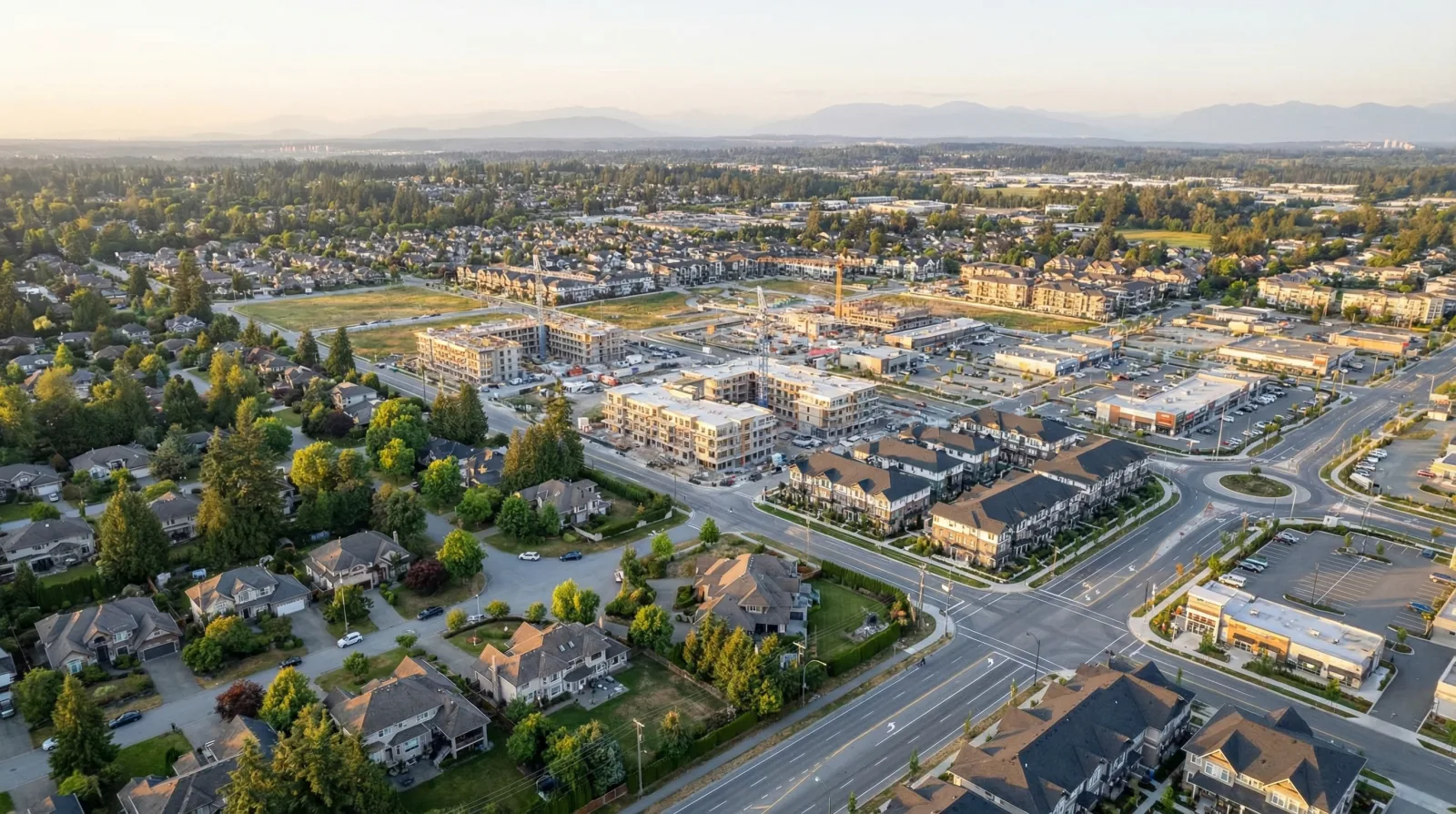
Surrey’s 9.6% rate means nearly 1 in 10 households in that city is multigenerational. That’s not a subculture—it’s a defining feature of how the city houses its residents. The concept of missing middle housing — the range between a single detached home and a high-rise — is exactly what this data points toward as the policy solution.
The demographics of multigenerational living
Who lives this way
Statistics Canada’s 2021 Census provides granular demographic data on multigenerational households:
| Demographic Factor | Multigenerational Households | All Canadian Households |
|---|---|---|
| Include racialized person(s) | 52.7% | 26.5% |
| Include person born outside Canada | 40.5% | 23.0% |
| % of recent immigrants living multi-gen | 8.0% | N/A |
| % of Indigenous persons living multi-gen | 10.4% | 6.4% (non-Indigenous) |
| Average household size | 5.3 persons | 2.4 persons |
Source: Statistics Canada, 2021 Census of Population
Two patterns stand out. First, multigenerational living is disproportionately associated with immigration and racialized communities—52.7% of multigenerational households include at least one racialized person, double the national average. Second, multigenerational living is especially prevalent among Indigenous communities—10.4% of Indigenous persons live in multigenerational arrangements, compared to 6.4% of non-Indigenous Canadians (Statistics Canada, 2021 Census).
The poverty protection effect
Perhaps the most striking statistic in the entire dataset is the low-income rate comparison.
| Living Arrangement | Low-Income Rate | Source |
|---|---|---|
| Multigenerational household | 4.3% | Statistics Canada, 2021 Census |
| Couple with children | 8.2% | Statistics Canada, 2021 Census |
| Single parent | 21.4% | Statistics Canada, 2021 Census |
| Person living alone | 30.2% | Statistics Canada, 2021 Census |
Only 4.3% of people in multigenerational households fall below the low-income threshold. Compare that to 30.2% for solo dwellers—a sevenfold difference. Multigenerational living is one of the most effective anti-poverty arrangements in Canadian society.
The mechanism is straightforward: shared housing costs, shared childcare, shared meals, shared transportation. Three generations pooling resources create economic resilience that no individual household can match.
The growth trajectory
Why the numbers will keep climbing
CMHC’s 2024 Housing Market Outlook identifies several structural drivers that will sustain multigenerational household growth through at least 2030:
- Immigration targets: Canada admitted 483,640 permanent residents in 2024 (IRCC Annual Report to Parliament, 2025). Immigration policy continues to prioritize family reunification, which directly creates multigenerational households
- Affordability pressure: The Metro Vancouver composite benchmark home price of $1.1M (REBGV, February 2026) makes independent household formation increasingly difficult for young adults
- Aging population: Canadians aged 65+ reached approximately 7.8 million in 2024 (Statistics Canada population estimates), up from 5.8 million in 2016. Each year, more families face the decision of how to house aging parents
- Cultural persistence: Among immigrant communities where multigenerational living is the norm, the pattern continues across generations born in Canada
If current growth trends continue—multigenerational households rising 21.2% per decade while overall households grow 12.4%—the gap between demand and supply will only widen through 2030 and beyond.
The housing stock gap
Here is the problem the data reveals: multigenerational households are growing at 21.2% per decade, but Canada’s residential construction has not kept pace with purpose-built multigenerational housing.
Canada’s residential construction has been overwhelmingly focused on two products: single-family detached homes and high-rise condominiums. Neither is designed for multigenerational living. A 1,200 sqft condo can’t hold three generations. A single-family home with one kitchen and one entrance forces families into arrangements that lack privacy and independence.
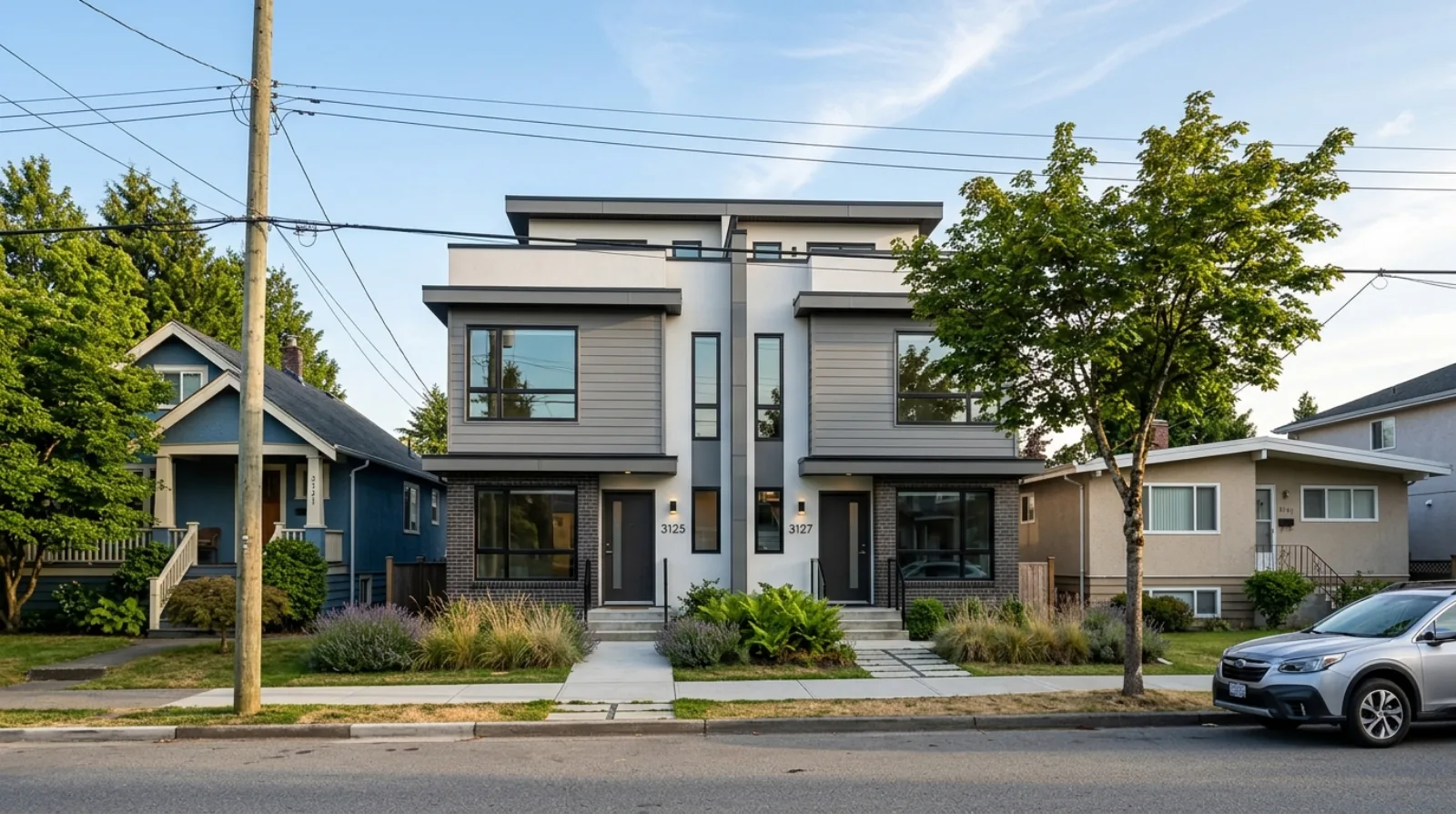
The missing product is the multiplex: 4-6 units on a single lot, each with its own entrance, kitchen, and bathroom. Independent enough for privacy. Close enough for family. Bill 44 unlocked this product type across BC in 2024. Our multigenerational living guide covers how families are structuring these builds, and the SSMUH overview explains the zoning framework that makes it possible.
How policy is catching up to reality
Federal: the MHRTC
The Multigenerational Home Renovation Tax Credit (introduced 2023, permanent) provides a refundable credit at the lowest federal personal income tax rate on up to $50,000 of eligible costs for creating a secondary dwelling unit for a senior 65+ or a person qualifying for the Disability Tax Credit. For the 2026 tax year, the rate is 14%, yielding a maximum credit of $7,000.
Provincial: Bill 44
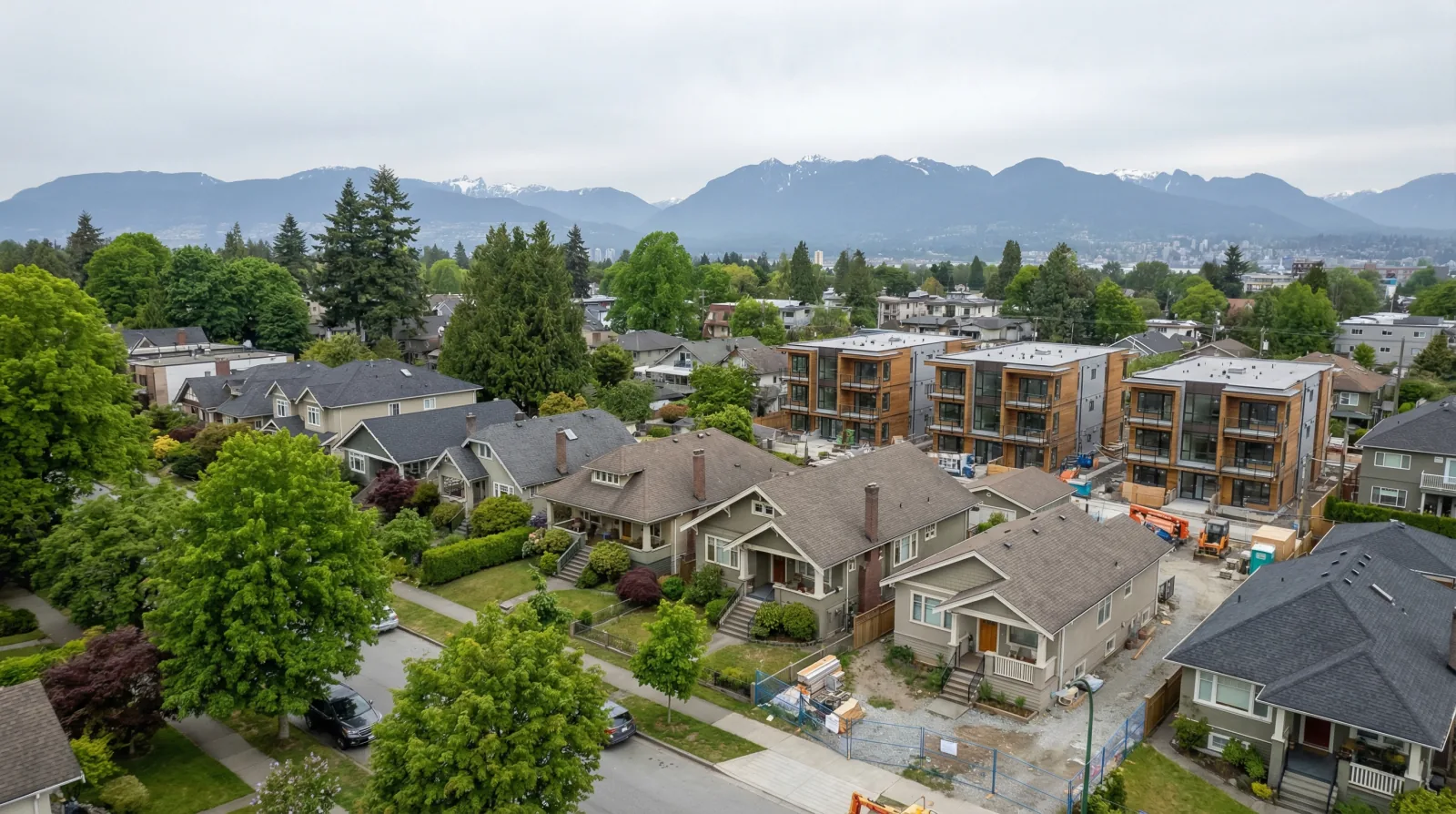
BC’s Bill 44 (effective 2024) mandates that all municipalities permit 4-6 unit multiplexes on single-family lots. No rezoning required. No public hearing. As-of-right development.
Municipal: implementation underway
Vancouver, Burnaby, Surrey, Coquitlam, Richmond, and the North Shore municipalities are all at various stages of Bill 44 implementation. Vancouver and Burnaby are the furthest ahead, with established permit processes and active construction.
The policy stack is deliberate: federal tax incentives encourage multigenerational housing, provincial zoning removes the barriers, and municipal implementation creates the permit pathway.
What this data means for homeowners
If you own a single-family property in Metro Vancouver, you’re sitting on a lot that can legally accommodate the housing type that 9.5 million Canadians already want. The demand is proven. The demographics are growing. The zoning is in place.
The question is whether your specific property maximizes the opportunity. Lot size, frontage, zoning designation, and neighbourhood context all affect what you can build and what it’s worth.
Visit VanPlex.ca to enter your address. In under two minutes, you’ll see your lot’s PlexRank score, eligible unit count under Bill 44, and estimated development value. VanPlex has analyzed 86,000+ properties across Metro Vancouver—turning this data into actionable, property-specific intelligence.
The data is clear. One in five Canadians lives this way. The trend is accelerating. The only question is whether the housing supply will meet the demand. Your property can be part of the answer.
VanPlex Team
PlexRank(TM) | Profit with Multiplex