
We make room for the dishwasher, the laundry and the car. If a household robot becomes useful enough to bring home, where will it go at night? Beside the fridge? In the coat closet? Standing in the hallway while everyone steps around it?
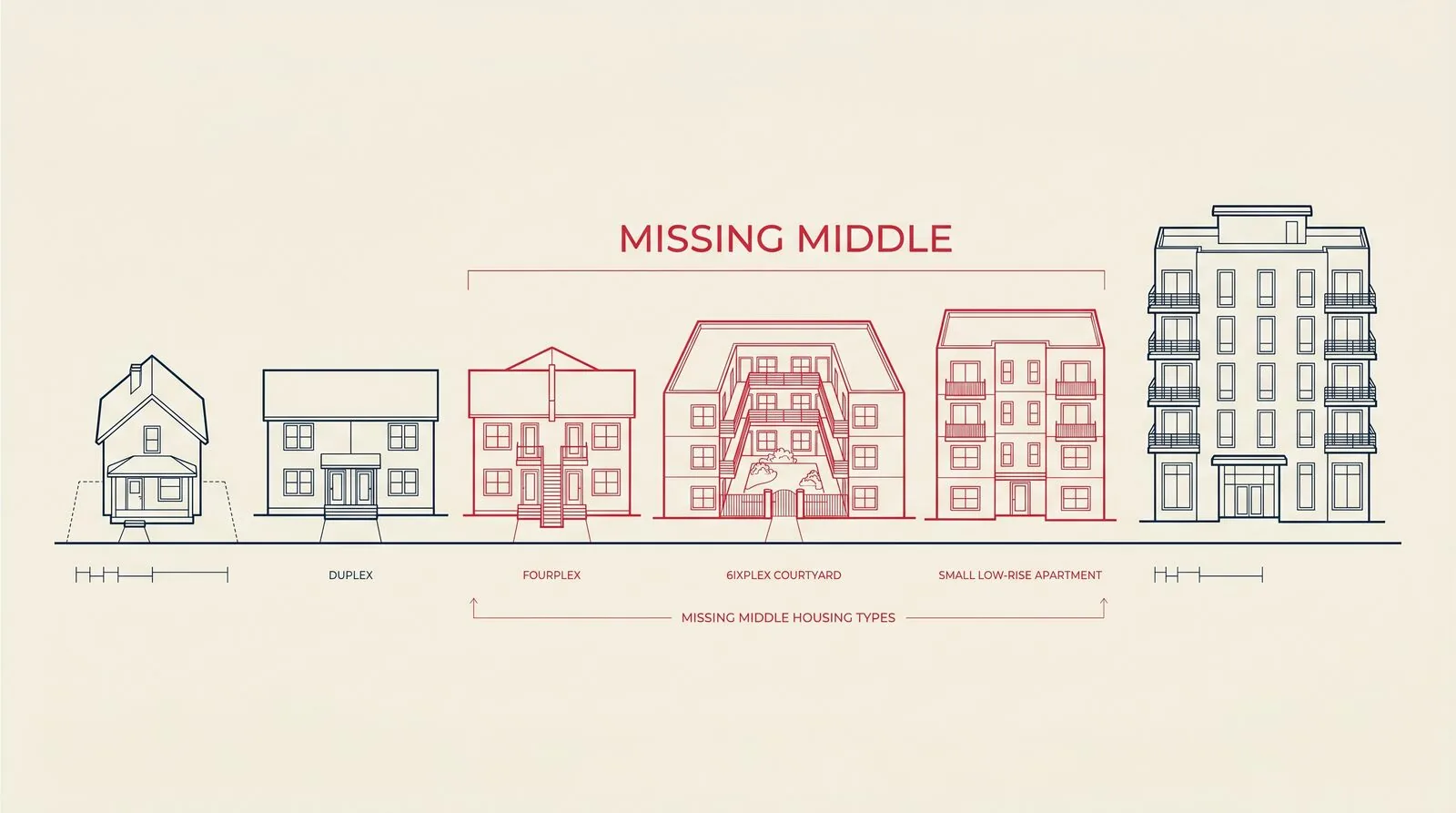
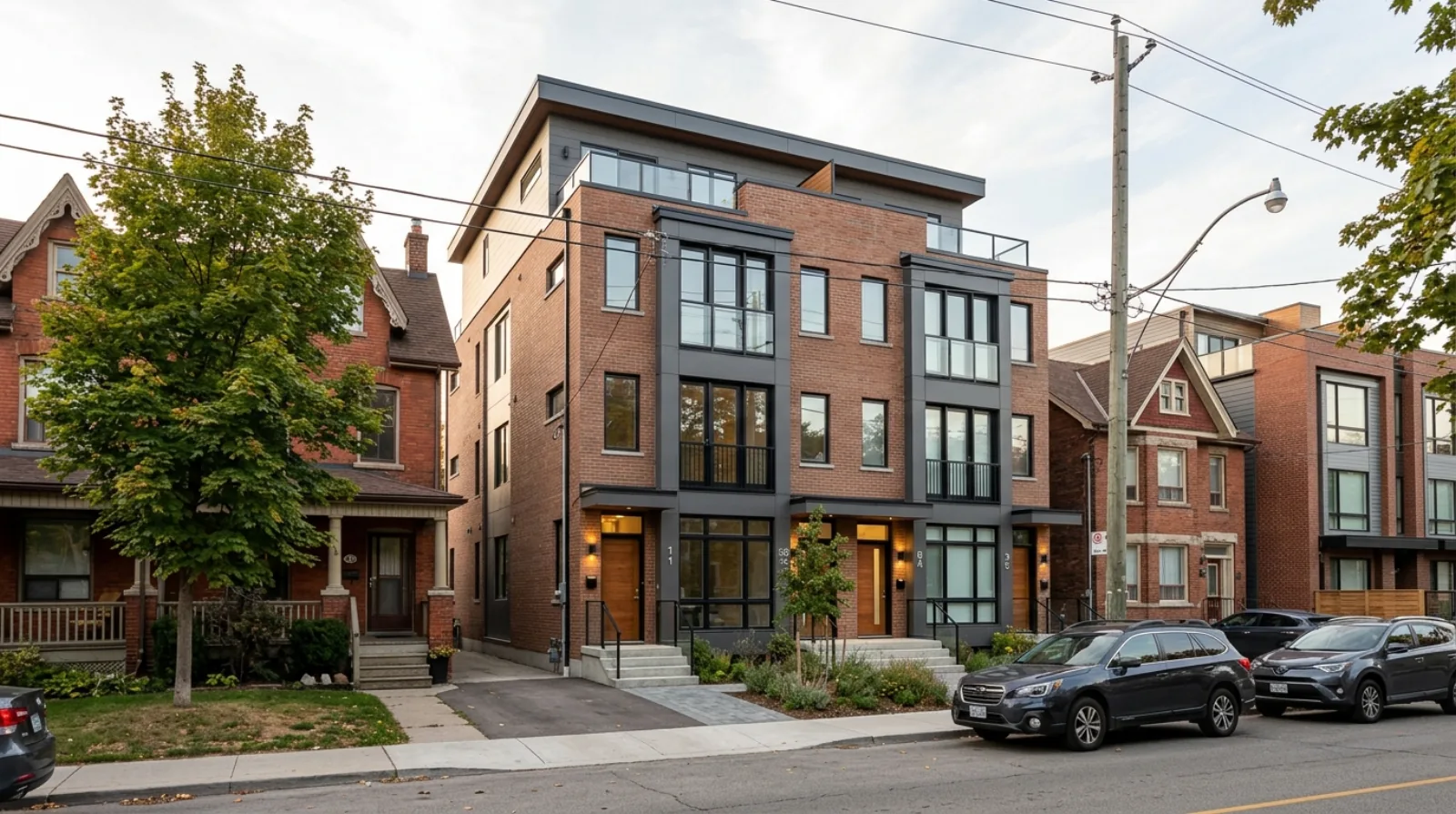
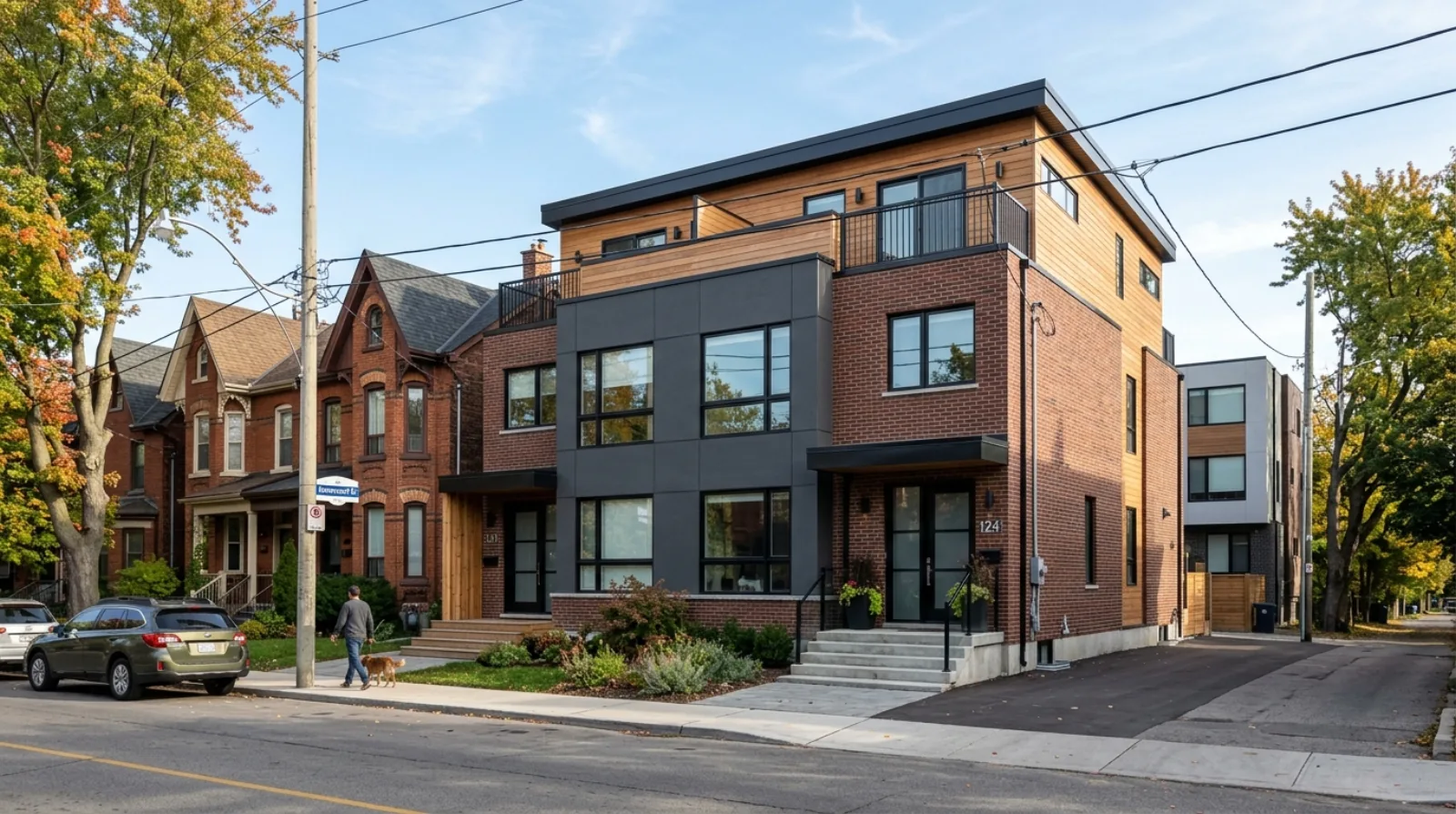
It sounds like an odd design question. I think it opens a worthwhile conversation about the multiplex homes we are building in Vancouver today, because the choices made at the drawing stage (service space, wiring routes, where a sensor can sit) are cheap to make now and expensive to add after the drywall is up.
This post walks through four ideas: a planned home for a cleaning robot, a wellness mirror, sensors that watch for hidden moisture, and one system that coordinates energy, comfort and maintenance. Some already have products behind them. Others are possibilities to design for. At the end I ask which one you would actually pay for.
What Samsung showed at IFA 2025
A Samsung article about its Smart Modular Home caught my attention. Samsung unveiled the concept at IFA 2025, which Samsung calls Europe’s largest home appliance exhibition, and published the walkthrough on September 9, 2025.
The concept brings appliances, heating, cooling and connected controls together in one residential design. In Samsung’s description, the home turns on the lights and adjusts the temperature when someone comes through the door, the robot vacuum finishes its cleaning cycle and returns to its charging station, and an energy app shows current use and a projected monthly total. The same app can run the washing machine and dishwasher outside peak hours.
That is one example of a direction worth watching: designing the technology as part of the home from the start. It is a demonstrated concept. Features and availability vary.
Where does the robot go at night?
Start with the robot we already understand. A robot vacuum needs a place to dock, recharge and be serviced. Would you like that space planned into the cabinetry, with the right clearance and easy access? Or are you happy finding a spare corner after moving in?
Now extend that question to a future household robot that can do more. Tesla calls its humanoid robot Optimus, but we do not need to predict which manufacturer succeeds, or when, to ask how a home might make room for one.
A few design questions follow:
- Would a flexible utility alcove be useful?
- Should circulation space, thresholds and charging access be part of the design conversation?
- In a compact multiplex home, what would you give up to make room?
On a 33-foot Vancouver lot, every square foot of a multiplex unit is spoken for. My own question for owners is direct: would you reserve space for a future robot, or would you rather have another cupboard today?
Would you want your mirror to know how you are doing?
Imagine looking into the bathroom mirror in the morning and choosing to see a short wellness overview.
There are already products in this area. Toronto-based NuraLogix describes its Anura MagicMirror as a tabletop smart mirror that uses its onboard camera to detect blood flow under the skin of the face and turns that signal into health and wellness readings. NuraLogix says the product is intended for wellness purposes only and is not a medical device. Its readings come from facial blood-flow signals, which is a different thing from reading someone’s eyes.
The homeowner question is more personal. Would you welcome that information as part of your morning, or would you prefer your mirror to leave you alone?
My interest would depend on three things:
- I choose when it runs.
- I understand what it measures.
- I control who sees the results.
A useful feature should also be easy to turn off.
The feature I would take seriously: a wall that asks for help
Picture a notification on your phone:
“Moisture change detected near the bedroom window. Check recommended.”
The paint still looks fine. There is no stain. But something has changed at a monitored spot, and you have a reason to investigate.
This one has a practical foundation. Vancouver-based SMT Research sells building enclosure monitoring systems: sensors that track moisture in walls, roofs and foundations. Its roof leak detection systems are accepted by the Roofing Contractors Association of British Columbia for use in its RoofStar warranty program. The open question is how to make the right level of monitoring useful and affordable in an ordinary home.
A moisture reading tells you where to look. Someone still has to open the wall to find out whether there is mould, and sensors can miss a leak that happens away from where they sit. What interests me is the possibility of an earlier warning, followed by a clear response:
- Who receives the alert?
- Who checks it?
- Does the owner get a record of the cause, the repair and the follow-up readings?
For a multiplex, where several owners share one roof and one set of exterior walls, those responsibilities should be written down from the beginning, before the strata is formed.
If two comparable homes were for sale, would documented moisture monitoring affect your choice?
Could the home keep a useful history?
There are other possibilities. A home could coordinate heating and ventilation, track solar production and electricity use, keep a record of equipment service, or remind an owner when a water filter needs changing. A filter reminder tells you the filter is due. Knowing whether the water is safe takes proper testing.
Many individual tasks can run on simple sensors and automation. Where AI could help is in making patterns easier to understand and helping people decide what to do next.
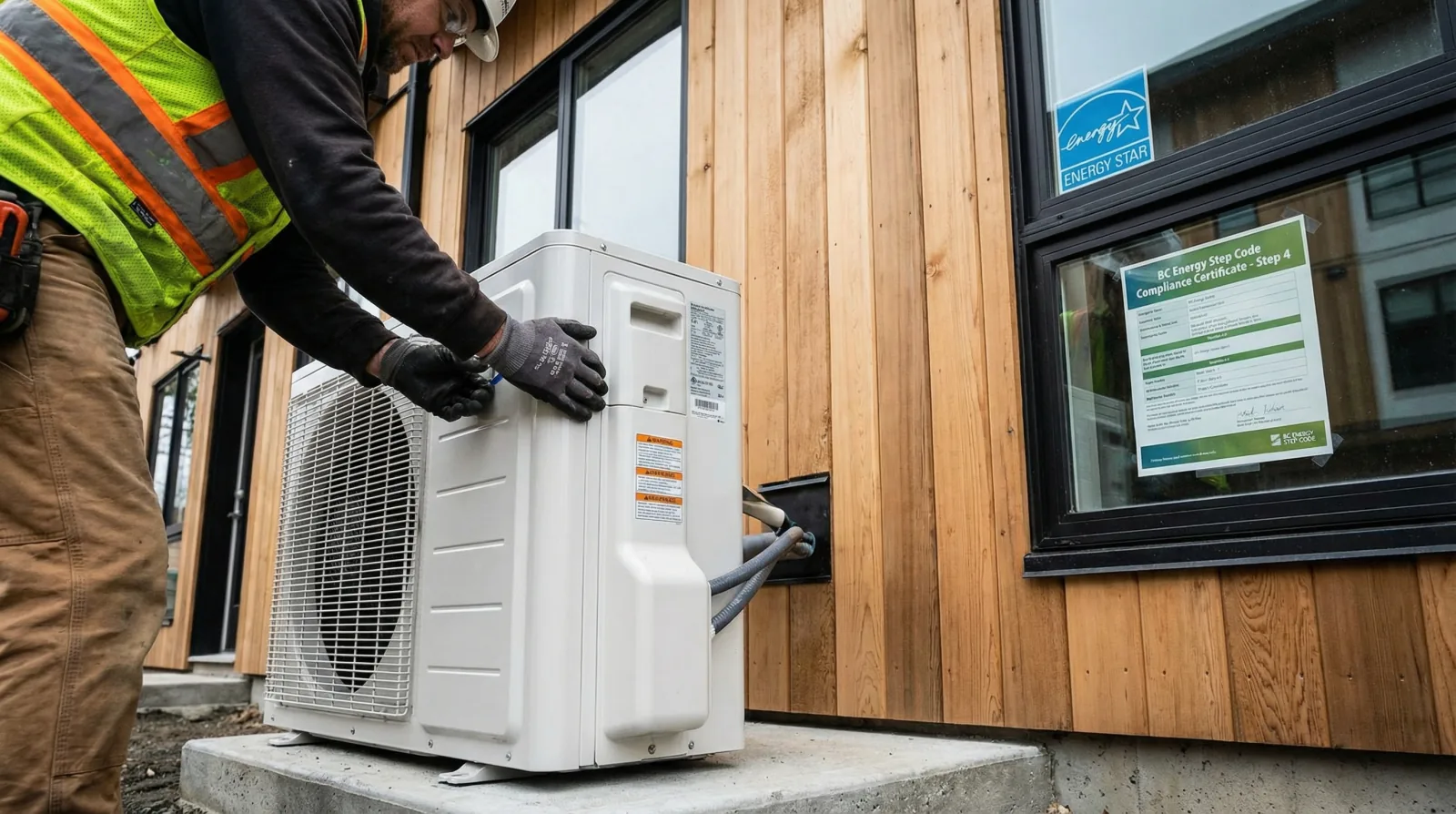
Imagine a home that can tell you its heating system is using more energy than it did under similar weather last year, and then help book a service visit with your permission. Heat pumps are now the default heating in new BC multiplexes, and a heat pump that is slowly losing efficiency is exactly the kind of problem an owner does not notice until the bill arrives. Or picture a building record that makes equipment details, warranties and completed repairs easy to find when a unit changes hands.
That raises a design question that goes past which gadgets to buy: what information should stay with the building, and what personal information should leave with the people who lived there?
| information | who should keep it |
|---|---|
| Roof repair, with cause and date | Stays with the building for the next owner |
| Equipment models, warranties, service dates | Stays with the building |
| Moisture sensor readings on shared walls | Stays with the building and the strata |
| Wellness mirror readings | Leaves with the occupant |
| Daily routines, door and lighting logs | Leaves with the occupant |
I would want a buyer to see a documented roof repair. I would not expect them to inherit the previous owner’s wellness readings or daily routines.
What should we build in now?
For a custom home or a multiplex, some of the most useful decisions are ordinary ones:
- Service spaces you can reach without taking apart a cabinet
- Routes for future wiring, so a sensor or charger can be added without opening finished walls
- Sensors that can be replaced when they fail
- Room to maintain the equipment you install
We should also ask what keeps working if the internet goes down, a subscription ends or a supplier closes. A home that stops heating properly because an app company went out of business is a worse home.
At VanPlex, as we bring together a select group of multiplex builders, these are questions I want us to explore with homeowners. Which features make ownership easier? Which create more work? Which should be tested before they become part of a standard design?
Over time, with owners’ permission, records from several buildings could help the group learn which choices perform well. We have not built that system. It is a possibility worth testing.
Which one would you choose?
Before we decide what an intelligent home should include, I would like to hear what you would actually want to live with. Choose one first:
- A. A planned home for your cleaning robot.
- B. An optional wellness mirror.
- C. Monitoring for hidden moisture.
- D. One system coordinating energy, comfort and maintenance.
- E. None of these. Keep my home simple.
Which would you choose, and what would it have to prove before you paid extra for it?
If you already live with something like this, tell us what happened. Did it make life easier, or did it become one more thing to maintain? Send your answer to [email protected]. I read them.
If you are planning a multiplex on your own lot and want to know what it would return before you start choosing features, request a free property analysis.
David Babakaiff is Co-Founder of VanPlex, a Vancouver-based multiplex development company. 25+ years scaling BC construction. He led Alair Homes Vancouver to the 2024 HAVAN Award for Best Multiplex Unit in the GVRD. VanPlex’s PlexRank™ algorithm scores residential parcels across BC for multiplex conversion potential under Bill 44. This post first appeared in his LinkedIn newsletter, Multiplex Intelligence, on September 29, 2026.