
RBC’s latest Home Ownership Poll found that 53% of Canadians who plan to buy a home in the next two years would consider a multi-generational home. In BC, 54% of all respondents said they would consider living in one, the highest share of any region in the poll. And 35% of current owners said they would sell their home and buy one with their child. RBC published the results on October 14, 2026.
I build multiplexes, so I read this poll with one question: what kind of home are these families looking for? Every figure below is from RBC’s release.
What RBC asked, and who answered
Leger ran the survey online for RBC between August 5 and 24, 2026. It had 1,810 respondents, all Canadians aged 18 to 64. RBC notes that an online panel has no margin of error, and that a random sample of this size would have one of plus or minus 2.3%, 19 times out of 20.
The main question was a simple statement: “I would consider living in a multi-generational home.”
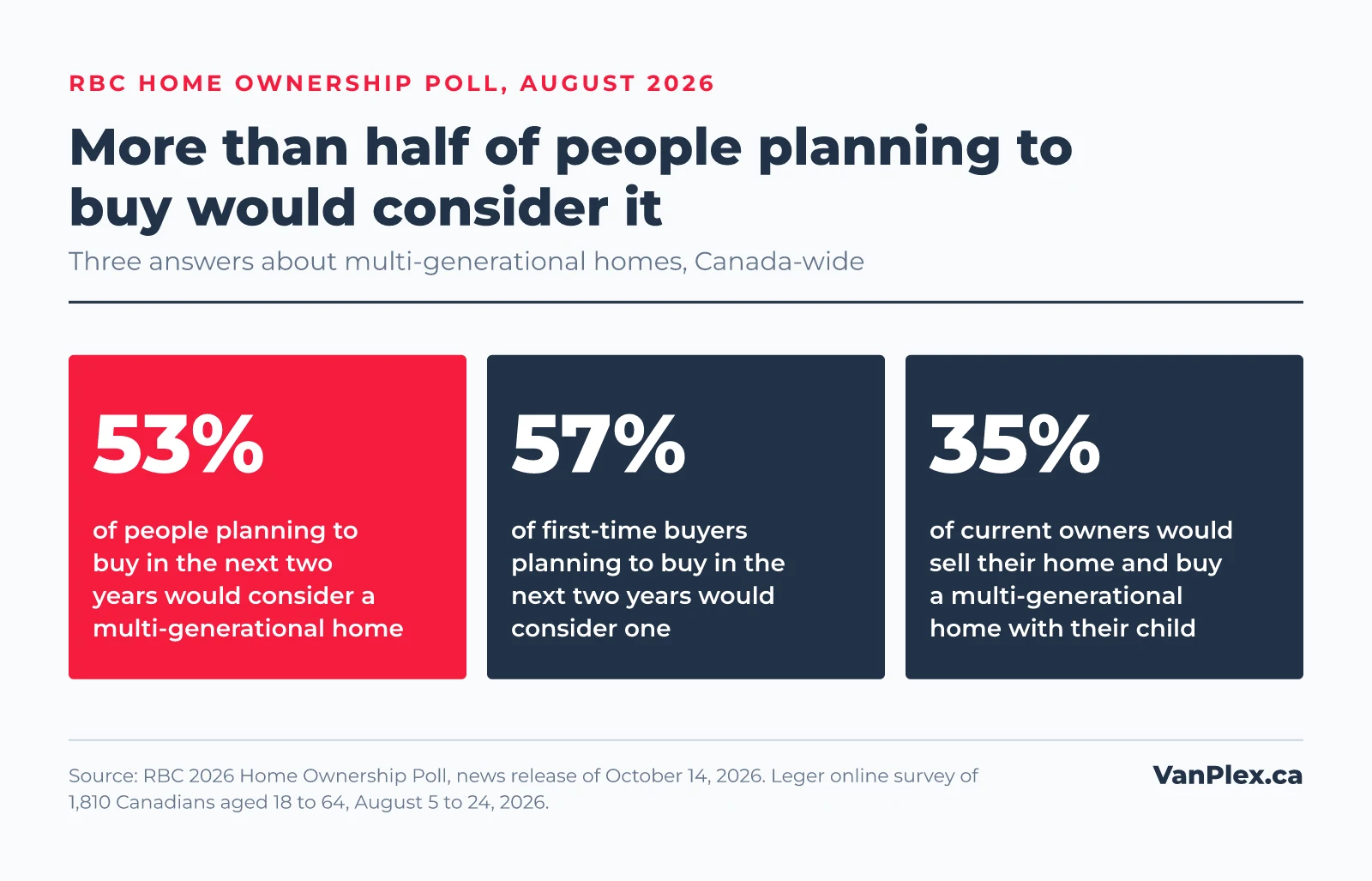
| Group | Would consider a multi-generational home |
|---|---|
| All respondents, Canada | 44% |
| People who plan to buy within two years | 53% |
| First-time buyers who plan to buy within two years | 57% |
The closer someone is to buying, the more likely they said yes. First-time buyers said yes most often.
BC had the highest share of any region
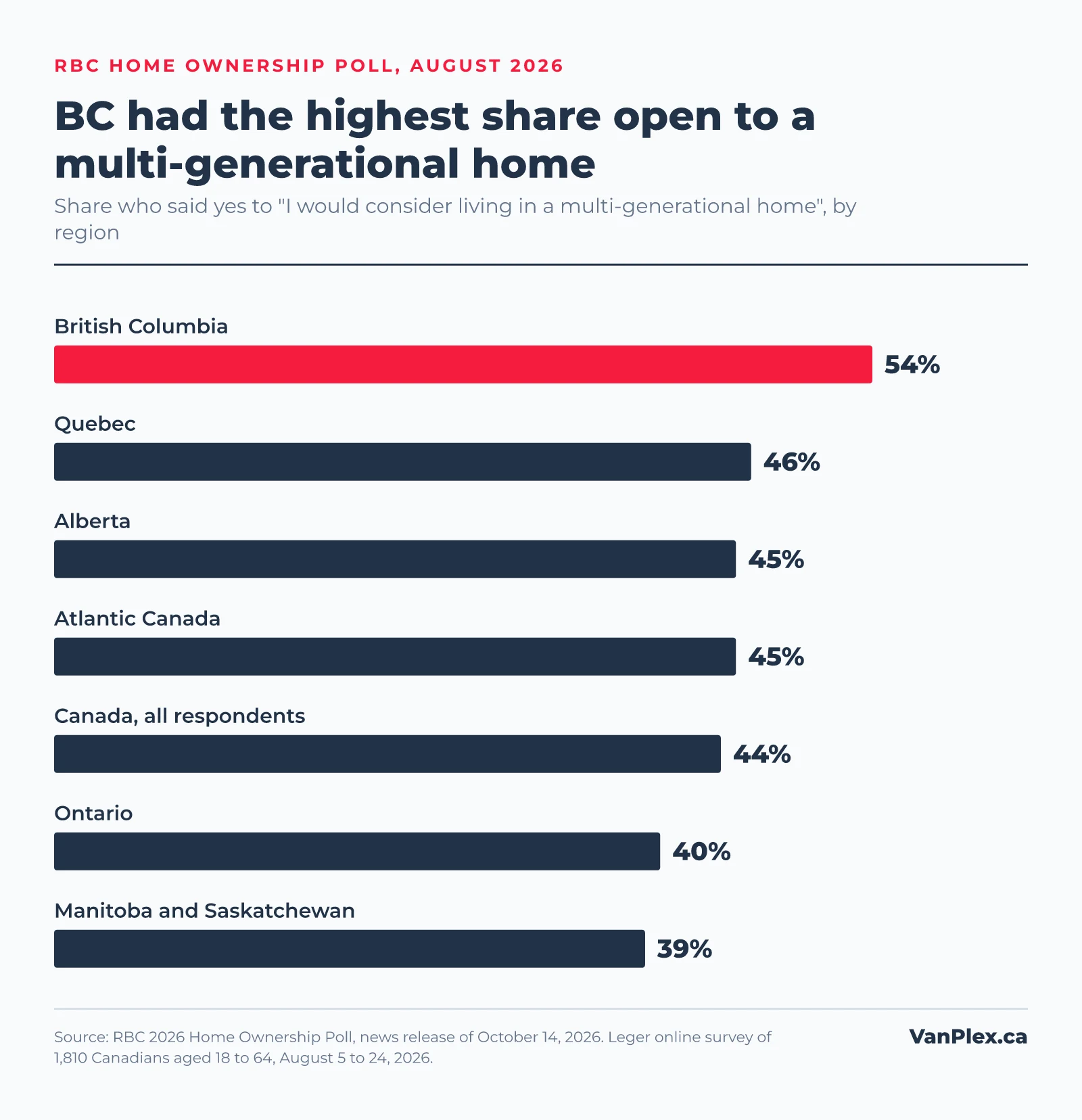
BC’s 54% is 10 points above the national 44% and 14 points above Ontario’s 40%. (The gaps are my subtraction from RBC’s table.)
That fits what I hear from families in Vancouver, Burnaby and Surrey. Parents own a house with no mortgage. Their adult children earn good incomes and still can’t buy nearby. Both sides start asking how to use the one asset the family already has.
Parents said they would sell to buy with their child
RBC asked current owners if they agreed with this: “I would be willing to sell my home and buy a multi-gen home with my child so they can get into the market.”
| Group of current owners | Agreed |
|---|---|
| Canada | 35% |
| BC | 38% |
| Owners renewing a mortgage within two years | 43% |
More than a third of owners said they would give up the home they have. I think that is the most important number in the release for anyone who builds homes.
Why people said they are considering it
RBC gave three statements about multi-generational living and asked who agreed.
| Statement | All respondents | People who plan to buy within two years |
|---|---|---|
| It is becoming more common because of housing affordability | 39% | 34% |
| It is a smart way for families to manage housing costs | 32% | 32% |
| It feels more like a necessity than a choice | 30% | 26% |
Cost leads every row. In BC, 32% said it feels more like a necessity than a choice, and 28% called it a smart way to manage housing costs.
The poll also shows why families plan together now. Current owners said they bought their first home at age 29 on average. Non-owners expect to be 41. And 74% of first-time buyers who plan to buy within two years want a home they can stay in longer, in place of one they may outgrow.
What RBC says to agree on before you buy together
RBC’s release says family members can buy together by applying for a mortgage as co-borrowers. The lender looks at everyone’s income, debts and credit together. Each co-borrower is responsible for the full mortgage, and co-borrowers’ names appear on the property’s title.
RBC lists four things to agree on before applying:
- Who will be on the mortgage and the title
- How each person’s down payment contribution will be documented
- How monthly costs will be split
- What happens if someone wants to sell or their circumstances change
Janet Boyle, Senior Vice President of Home Equity Finance at RBC, said in the release: “What’s easy to overlook is that buying together isn’t just a mortgage decision.”
I agree with her, and I’d add one more item to the list: the building itself.
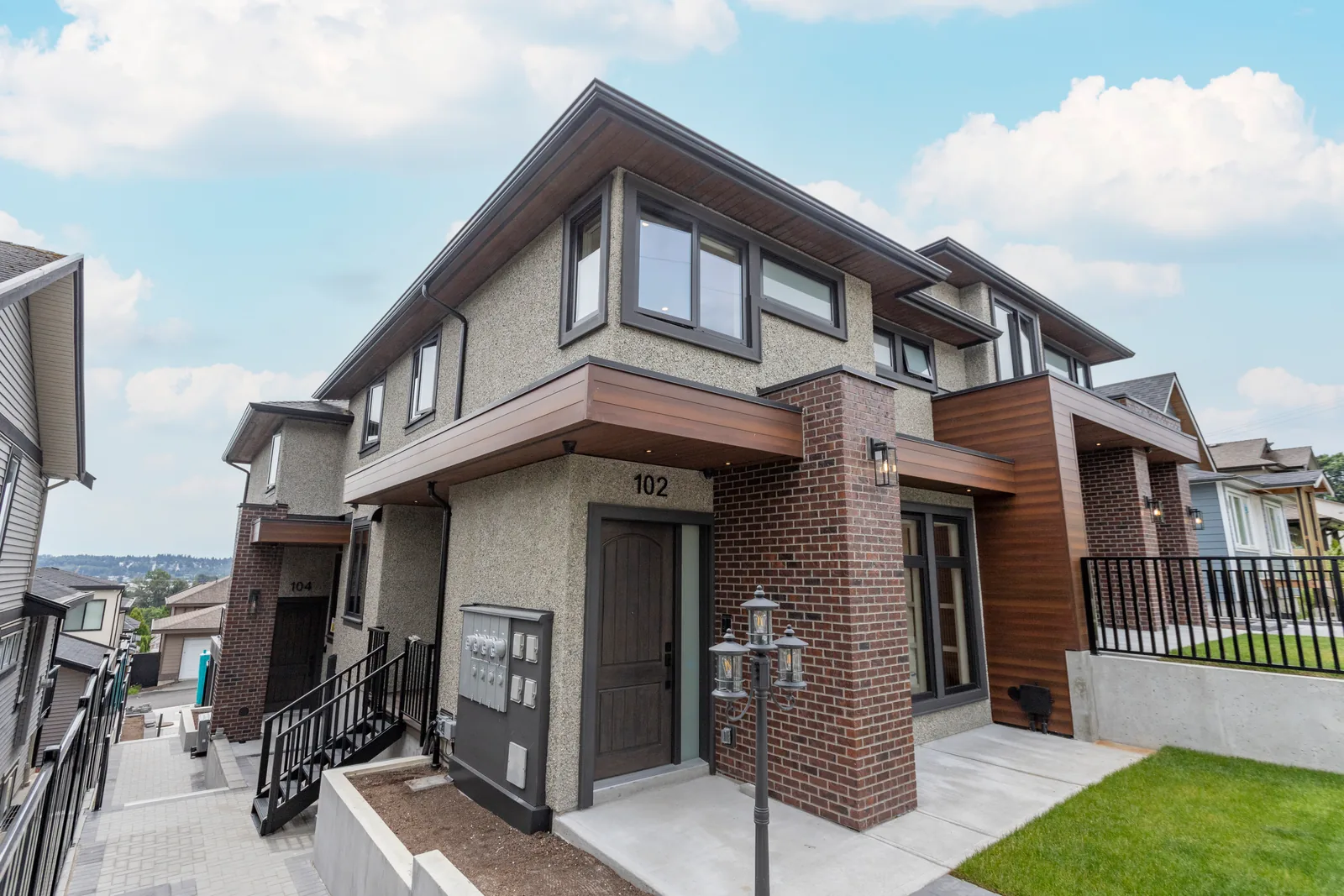
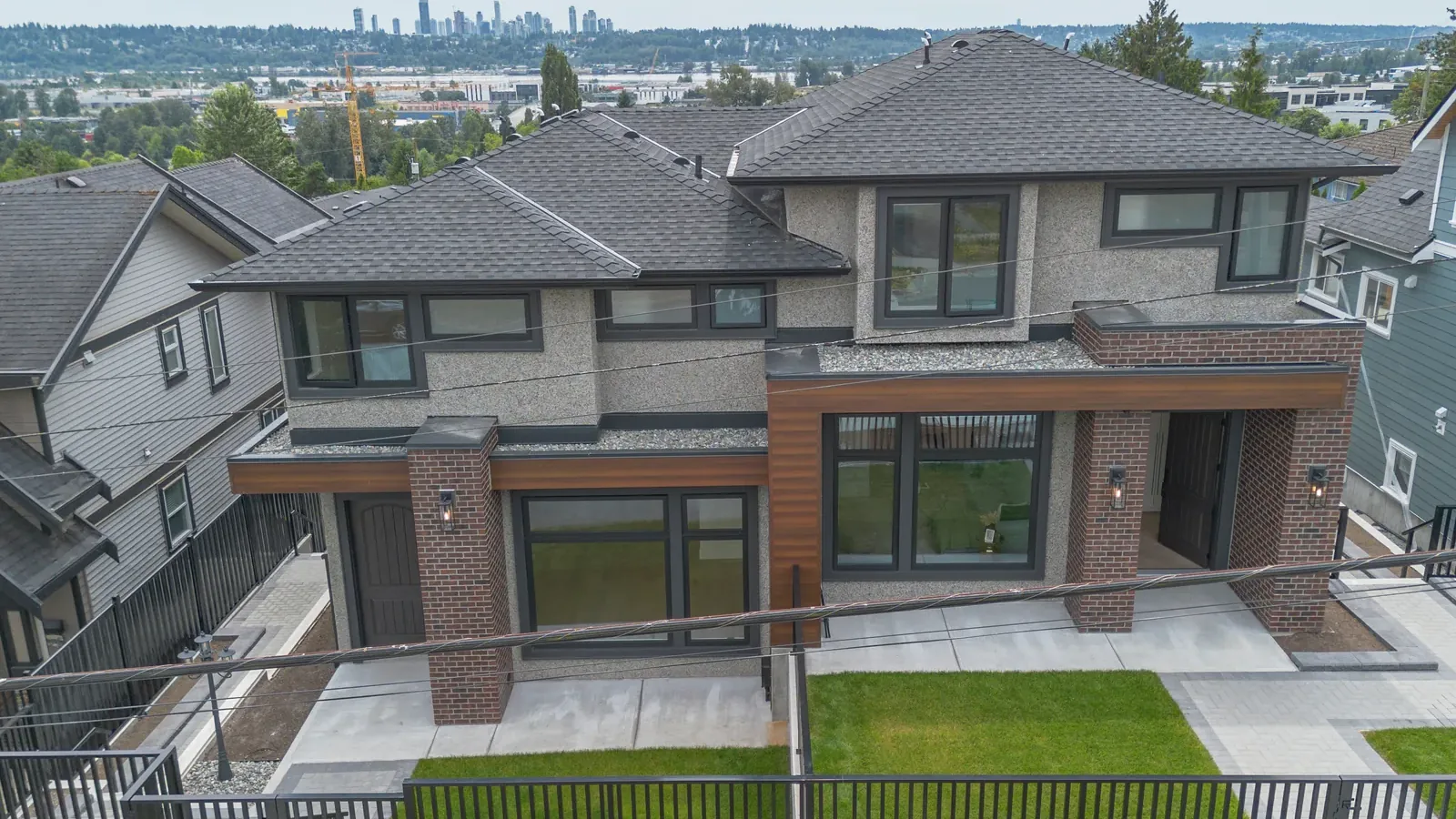
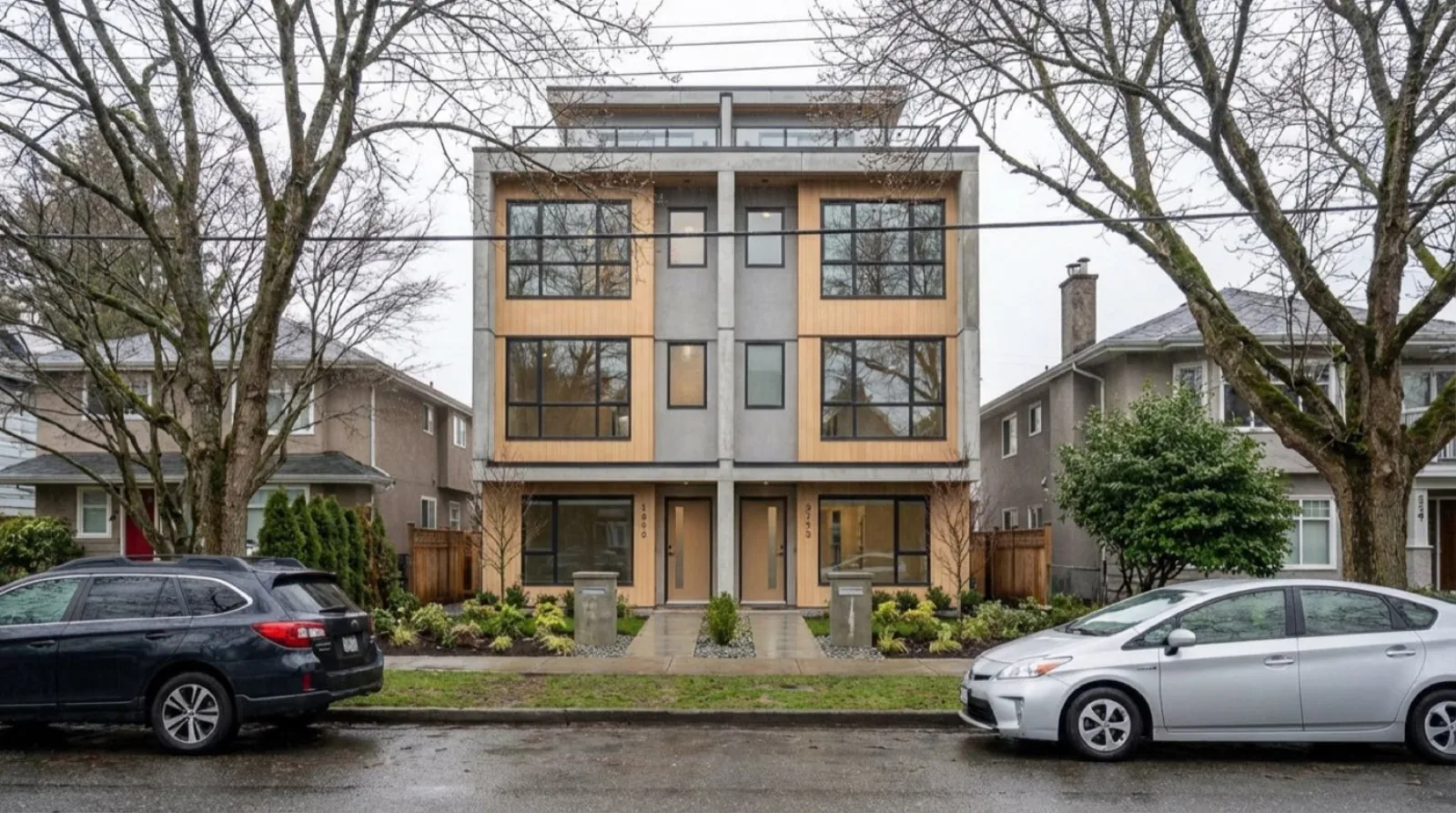
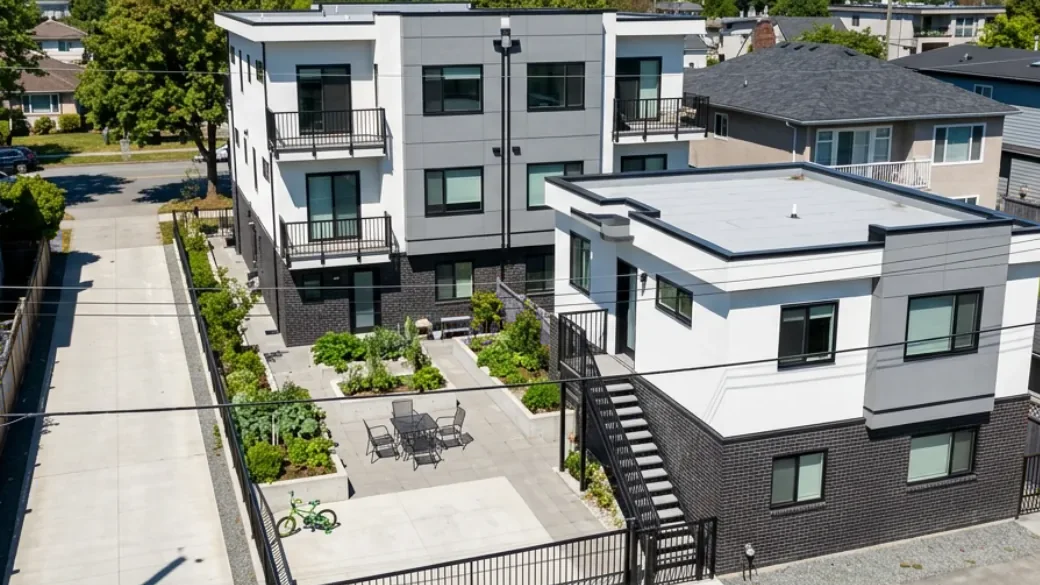
The home these families need is a multiplex
This part is my view. RBC asked whether people would live this way and left the kind of building open.
The multi-generational home I see most often is one house with a suite. Two or three households share one title and one mortgage. That works until someone wants to move, borrow against their share or leave it to their own children. Then RBC’s fourth question has no easy answer.
A multiplex is a different building. Each household gets its own home with its own front door and kitchen, on the same lot. If the family registers a strata plan, each household can hold its own title. Our page on splitting titles with family in a BC plex explains strata titles and co-ownership, and five ways to hold a BC plex compares the choices.
For the parent who told RBC they would sell and buy with their child, there may be a second path: keep the lot and rebuild on it. BC’s small-scale multi-unit housing law, Bill 44, is why many lots once zoned for one house can now hold several homes. Whether one lot can, and what it costs, depends on the city and the lot.
Our multigenerational living guide covers design, financing and city rules for families who build together, and what Canadian lenders offer for multi-generational mortgages covers the lending side.
If your family owns a house in BC, start with the lot. PlexRank™ scores residential parcels across BC for multiplex potential.
General information only, not legal, tax or financial advice. The poll figures are RBC’s, from its news release of October 14, 2026. Speak to a mortgage advisor and a real estate lawyer before you buy or build with family.
David Babakaiff, Co-Founder, VanPlex | PlexRank™ | Profit with Multiplex