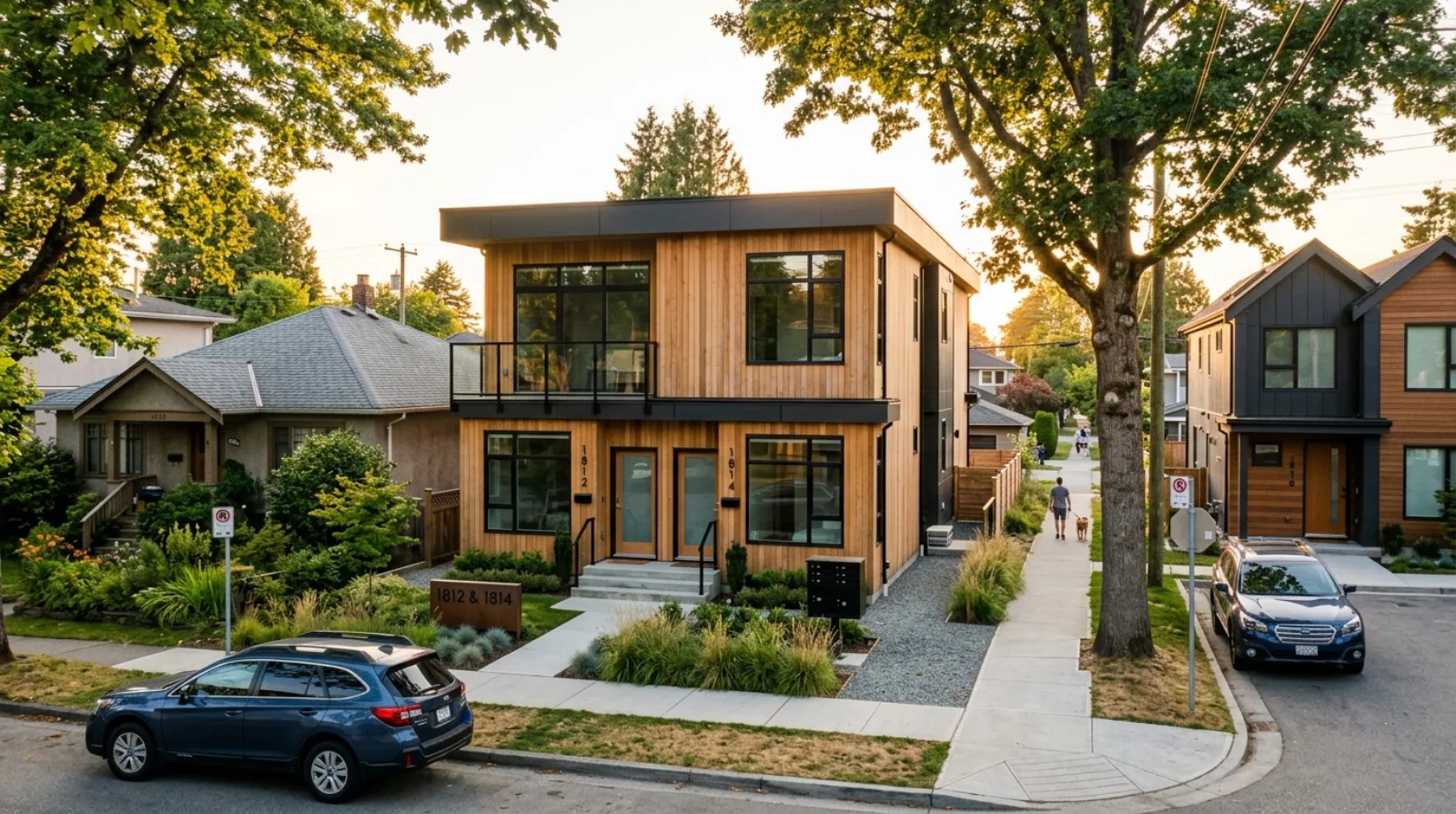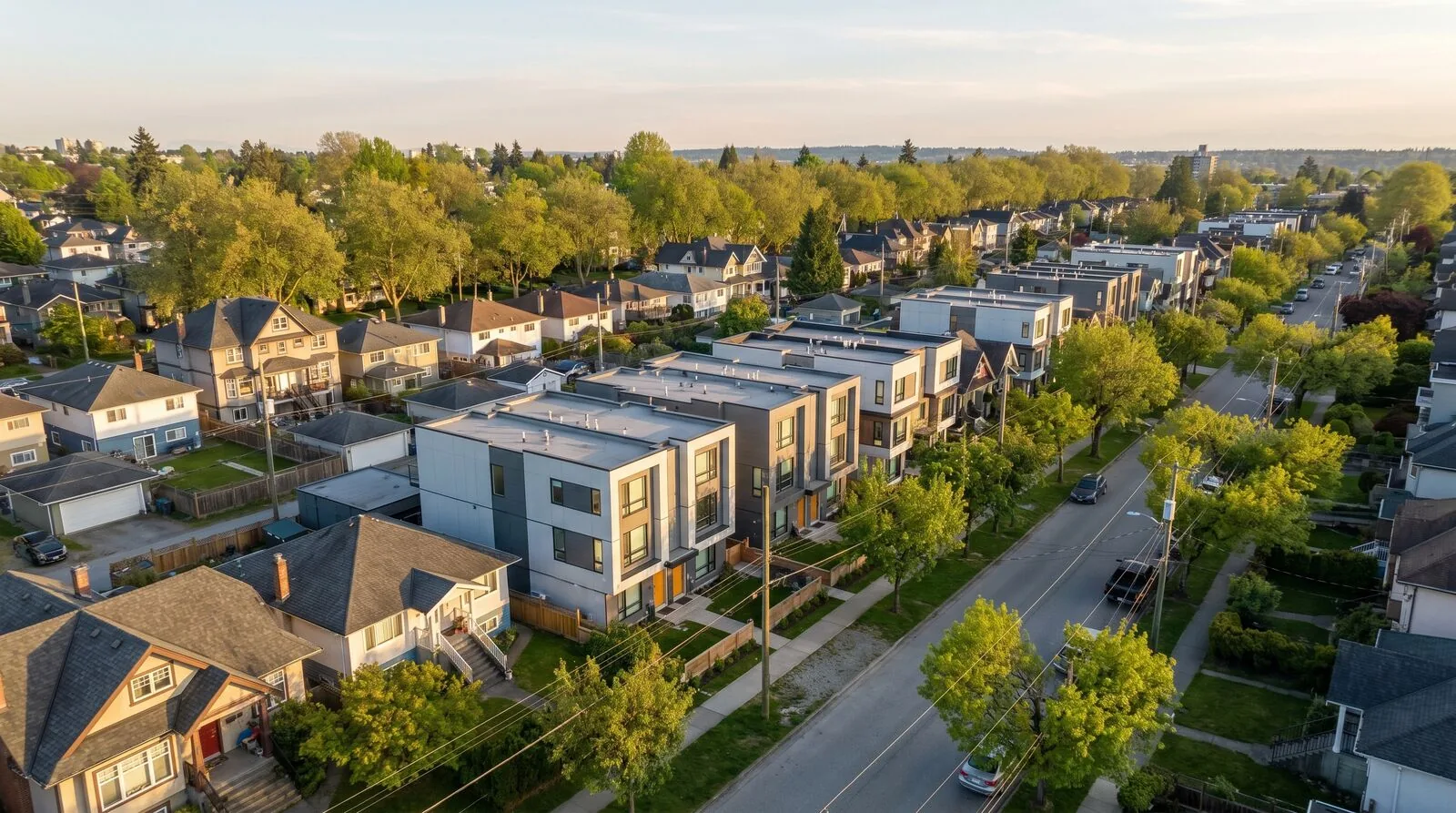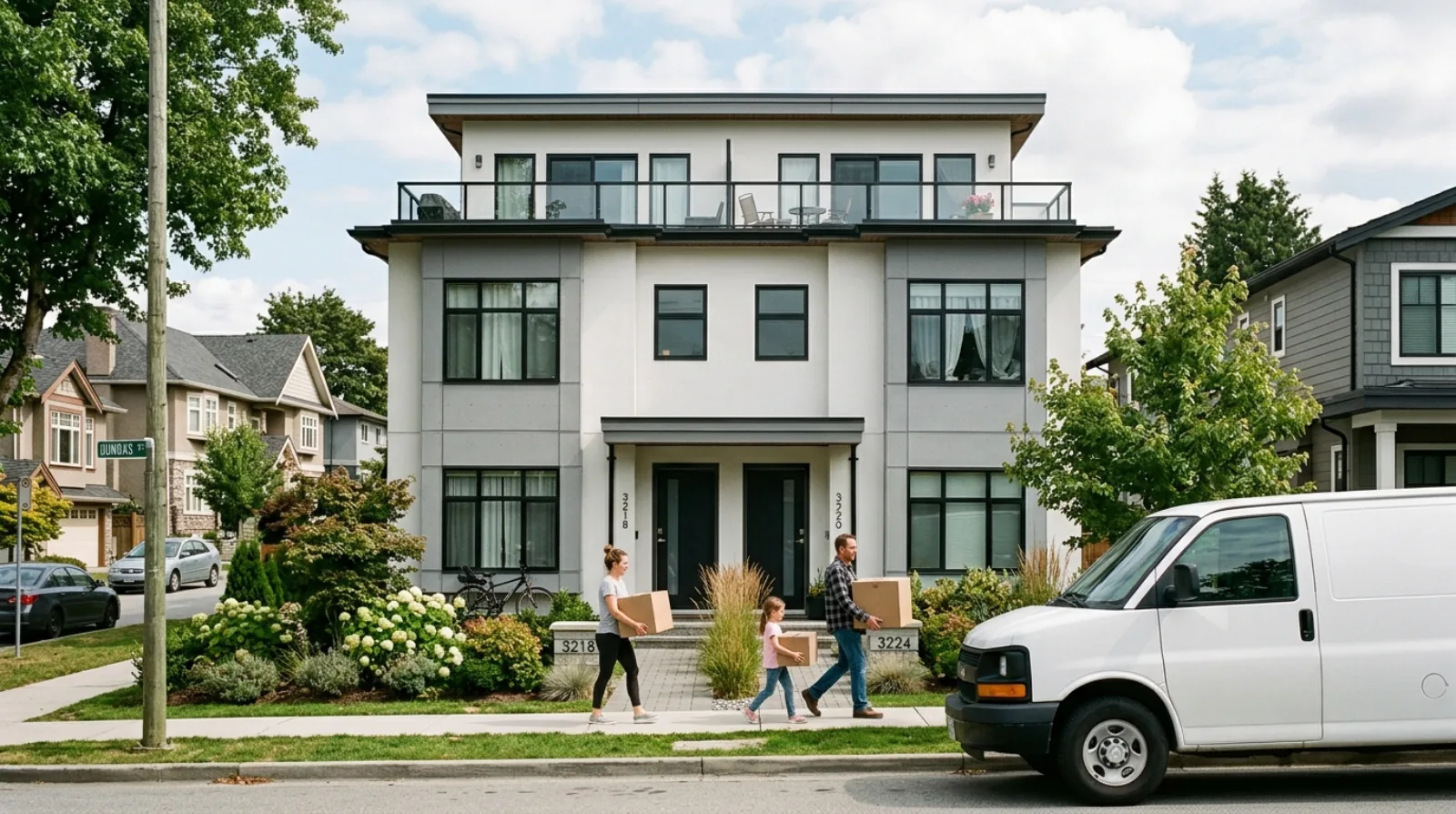

The first wave of BC multiplexes is finished and selling. That changes how you should shop for one. Until recently a buyer had to judge these homes from a rendering and a floor plan. Now you can walk through four of them in an afternoon, stand in the rear unit, open the closets, and see the gap between an average build and a good one.
I have spent 25 years building in BC, and the spread in quality across this first wave is wider than anything I have seen in a new product type. Here is what the finished buildings show, and the one Burnaby rule change from October 14, 2025 that every buyer should understand before making an offer.
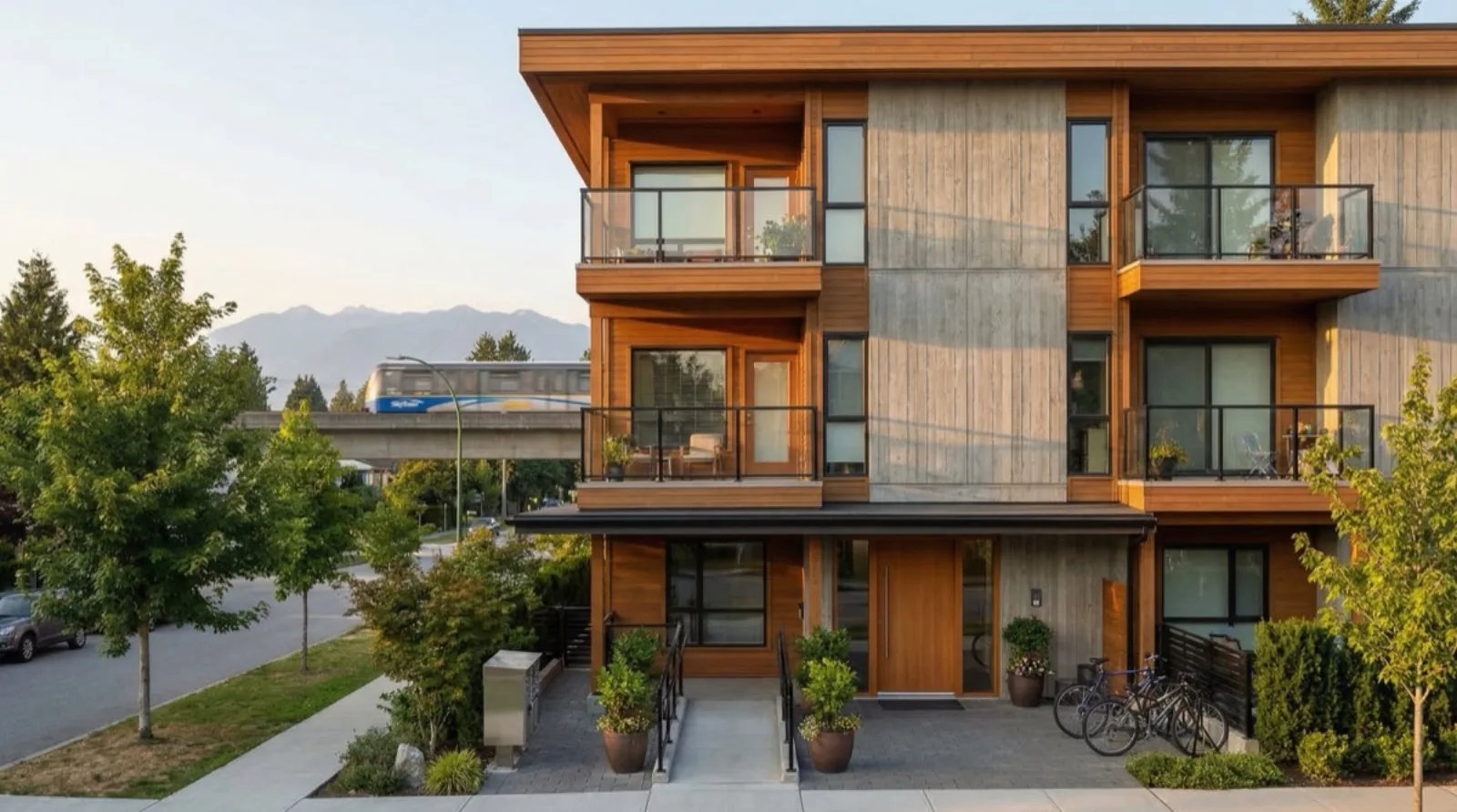
Why brand-new fourplexes are showing up on quiet streets
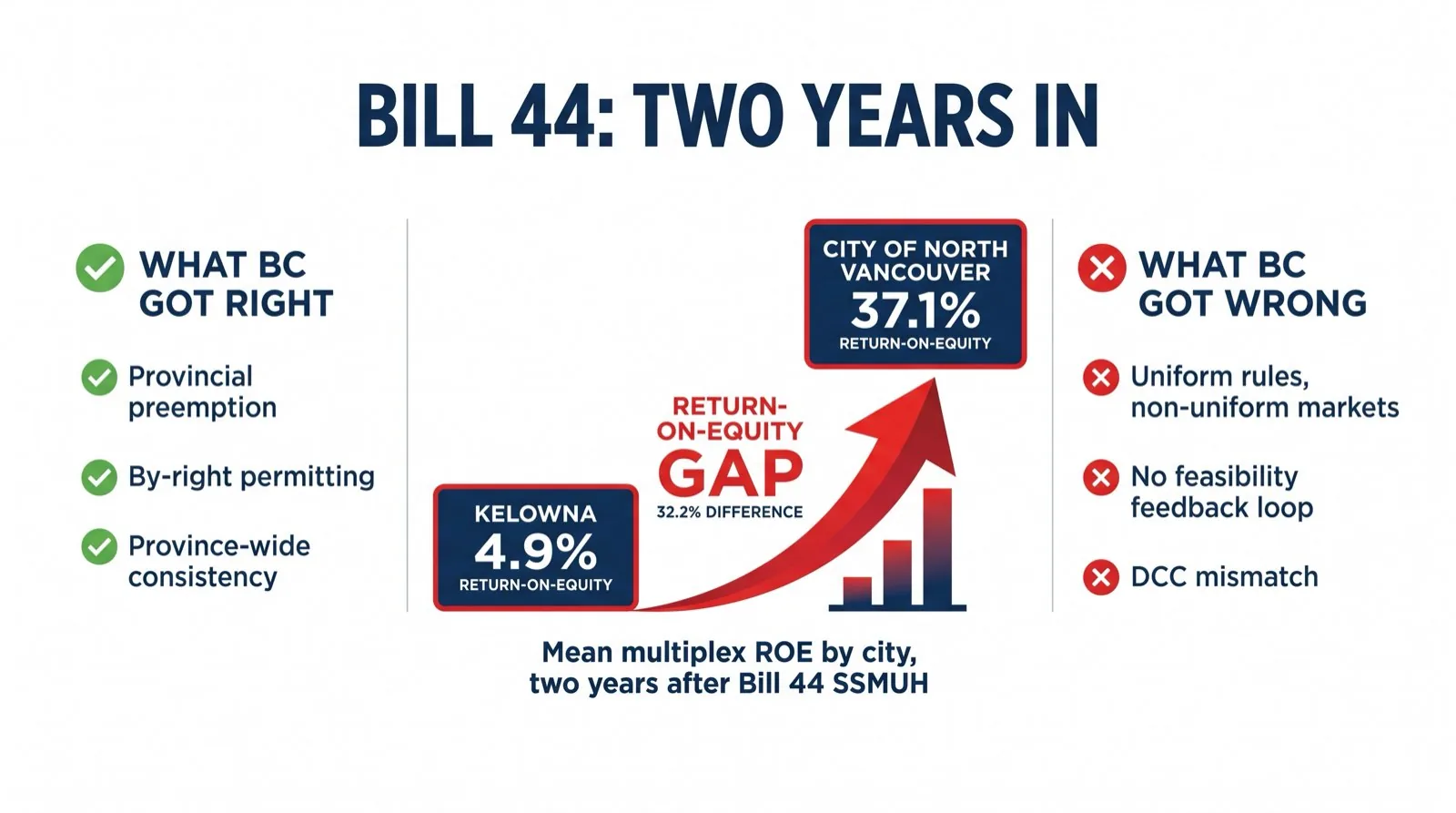
British Columbia’s Bill 44, the Housing Statutes (Residential Development) Amendment Act, took effect on June 30, 2024. It required every municipality with more than 5,000 residents to change its zoning bylaw so that small multi-unit housing is allowed on lots that used to permit only a single house or a duplex. Three to four units on smaller lots, four on larger ones, and up to six on lots over 280 square metres near frequent transit.
That single change is the reason a duplex, triplex, or fourplex can now be built mid-block on a residential street in Burnaby or East Vancouver.
Two years on, the buildings are done. You can visit them. That matters more than any policy detail, because the difference between two projects a few streets apart is bigger than most buyers expect.
Five things the first wave shows
Some of this should reassure you. Some of it should make you slow down.
1. Judge every multiplex on its own.
Two multiplexes on nearby streets can feel completely different in layout, light, and outdoor space. With a condo you can usually assume one unit resembles the next in the same building. Here you cannot assume anything, even between two projects by the same builder.
The reason is structural. A condo tower is one design repeated a hundred times, so the developer amortises the design work across every unit. A fourplex is four units, and the design cost lands on four sales. Some builders invest anyway. Some run the cheapest plan that fits the envelope. You can see which is which the moment you walk in.
2. One parking space has become normal.
Most first-wave homes came with a single carport or space. Buyers made peace with parking a second car on the street, especially near a SkyTrain station. A few years ago that would have ended a deal. Decide early whether it works for your household, then let that filter your search.
One caution. Do not let a seller use your flexibility on parking to talk you into a floor plan that does not work. Parking is a fixable inconvenience. A bad layout is permanent.
3. Walk the front unit and the rear unit, back to back.
This is the single most useful thing a buyer can do.
Front units get the street presence and that feeling of “this is my house.” But a well-designed rear unit often wins on daily life: a private backyard instead of a front yard on display, less street noise, better separation from the neighbours. The rear home can be the better home in the project. It can also be dark, tight, and short on storage, because the rear of a narrow lot is where a builder under pressure gives up window area first.
A floor plan will not tell you which one you are standing in. Light, ceiling height, and how the outdoor space actually works are things you have to see. Visit both on the same day, one after the other.
4. Price it against a townhouse and a half-duplex.
A multiplex sits in an unusual spot. At the same money you are almost always also looking at a newer townhouse and a half-duplex. Run all three.
5. Be careful with the biggest buildings.
The tallest, bulkiest first-wave designs are the least tested part of this market for resale. Some buyers love the extra interior space. Others worry about the stairs, how the building sits next to its neighbours, and who will want it in five years. That question is a Burnaby story, and Burnaby has already answered part of it.
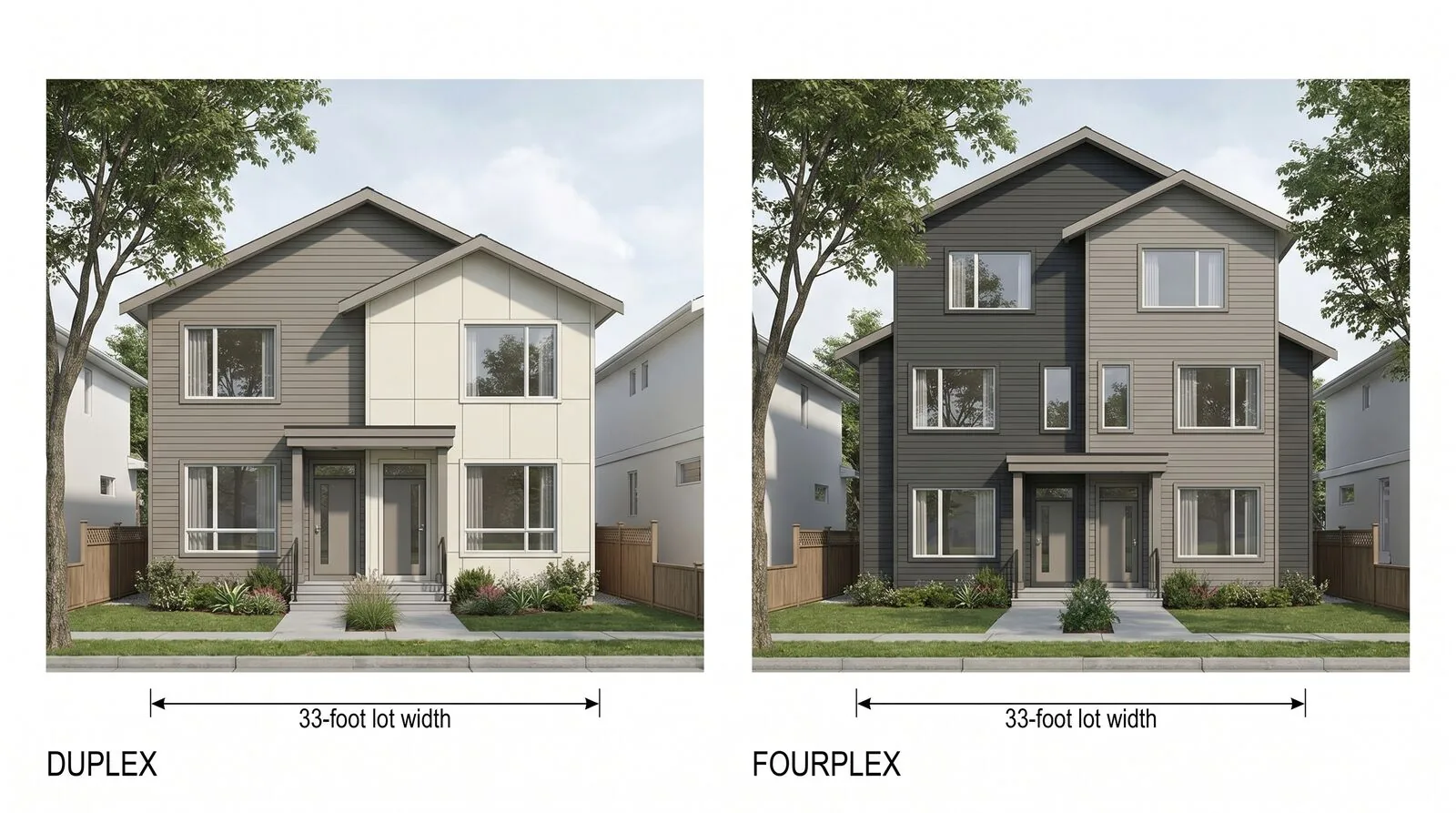
How a multiplex compares to a townhouse and a half-duplex
Do not compare on price alone. These are the questions that decide whether you are happy in three years.
| What to check | Multiplex | Townhouse in a complex | Half-duplex |
|---|---|---|---|
| Monthly strata fee | Ask first. Some projects are stratified, some are not | Almost always a monthly fee, often the largest of the three | Ask first. Often a small shared-cost arrangement |
| Share of the land | The smallest of the three | Common property shared across the whole complex | Roughly half the lot |
| Private outdoor space | Varies a lot between the front and rear unit | Usually a patio or a small yard | Usually a yard |
| Street presence | Front unit yes, rear unit no | Depends where the home sits in the complex | Yes |
| Resale history in BC | Short. Bill 44 only took effect June 30, 2024 | Long | Long |
If a multiplex is priced close to a nearby half-duplex, ask what you are giving up in land, privacy, and street presence. If it is priced close to a townhouse, add up several years of strata fees before you decide the savings are real. Get the actual fee, not an estimate, and read the depreciation report if the project has one.
The Burnaby “monster multiplex” pullback
Some of the first multiplex buildings in Burnaby came out noticeably taller and bulkier than the older houses around them. Locally people started calling the biggest ones monster multiplexes.
That was more than neighbourhood chatter. Public backlash over the scale of the new buildings led Burnaby council to change the rules. On October 14, 2025, council adopted amendments to the R1 SSMUH district. The City announced them two days later.
| What Burnaby changed | The rule as of October 14, 2025 |
|---|---|
| Maximum height | 3 storeys and 10 metres, down from 4 storeys |
| Rear principal building | Limited to 2 storeys |
| Achievable floor area | Reduced by 33% to 60%, depending on housing type, unit count, and lot size |
| Maximum lot coverage | Cut by 5% for all housing types, and by 10% to 15% under certain conditions |
| On-site parking minimum | 0.67 to 1 space per unit, up from 0 to 0.5 spaces per unit |
Source: City of Burnaby, October 16, 2025.
Two things follow from this for a buyer.
First, the very biggest designs that started the trend will not be built the same way again in Burnaby. If you are looking at one of the largest buildings on a block, go in with your eyes open and think about who buys it from you later. A cut of 33% to 60% in achievable floor area is not a small adjustment. It means the next generation of Burnaby multiplexes will be visibly smaller buildings than the ones already standing.
Second, the parking change does not apply everywhere. The City states that provincial legislation limits its ability to enforce parking minimums on R1 lots in transit-oriented areas, which is about 57% of Burnaby’s R1 lots. On a majority of lots, near transit, the new minimum does not bite. Check the specific project rather than assuming the rule applies.
The market is giving careful buyers time
Greater Vancouver REALTORS® put the Metro Vancouver benchmark price for attached homes, the category that covers townhouses and multiplexes, at $1,028,800 in August 2026. That is down 4.4% from August 2025 and down 0.2% from July 2026. Regional sales totalled 1,869 in August, 4.6% below the 1,959 recorded a year earlier.
A softer market gives you something a hot one never does. Time. Time to see four of these in person. Time to walk the front unit and the rear unit. Time to negotiate, and time to walk away.
That is exactly the market where doing the homework pays.
Should a multiplex be on your list?
If you are outgrowing a condo. This is a real option that sits between a townhouse and a detached house, often with a private yard and a front door of your own.
If your family is pooling money. A multiplex can put relatives on the same lot, in a better neighbourhood than any one household could reach alone. Of everything these buildings get used for, this is the case that works best.
If you are buying your first home. Go in clear-headed. The quality range is genuinely wide right now, and the price has to make sense against the townhouses and half-duplexes nearby.
Check the building before you make an offer
If you want to know what a specific lot or building is permitted to be, VanPlex keeps a plain-English breakdown of the Burnaby R1 multiplex rules and a live list of multiplex homes for sale across Metro Vancouver.
David Babakaiff, Co-Founder, VanPlex. 25+ years in BC construction. PlexRank™ | Profit with Multiplex