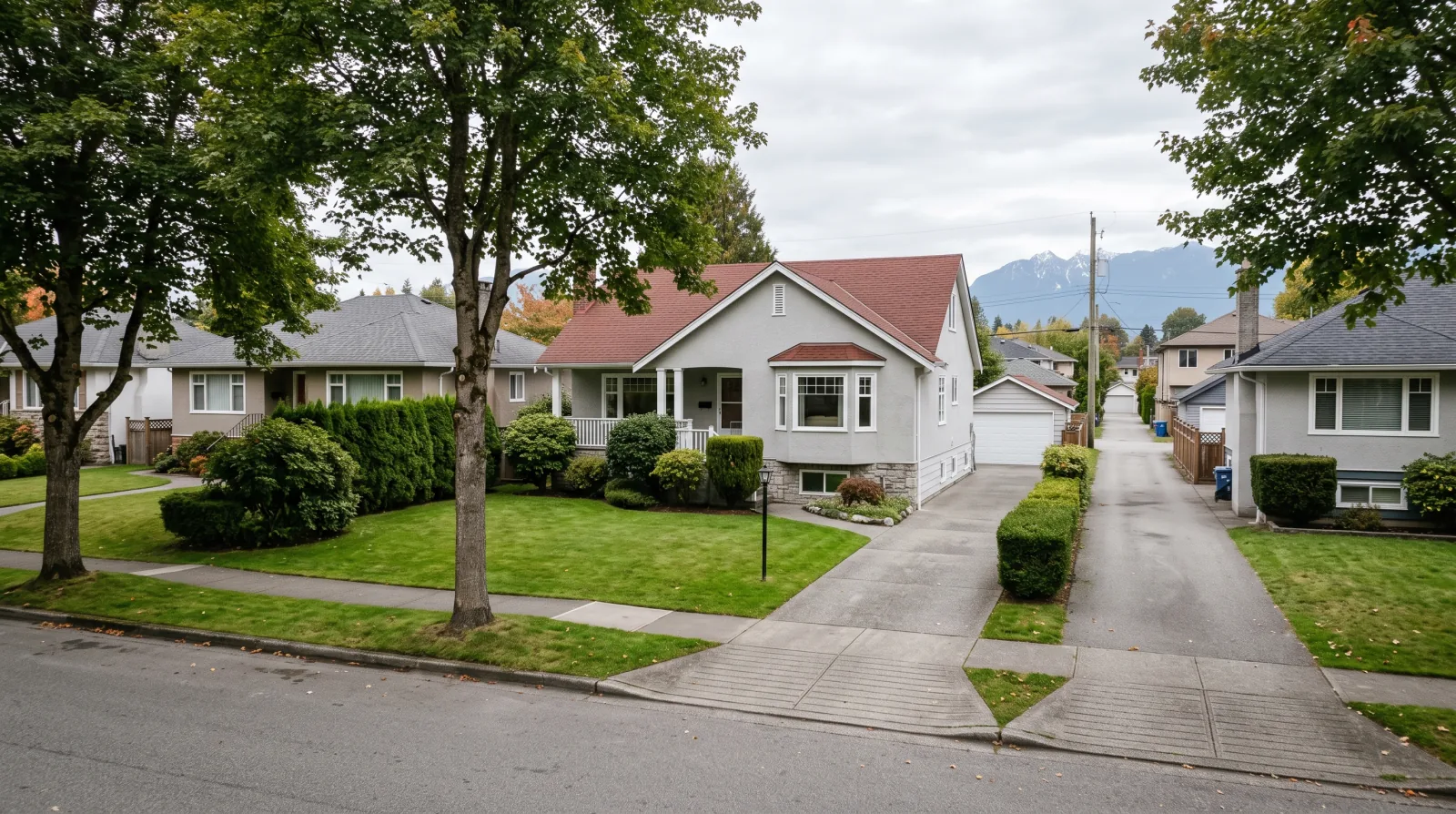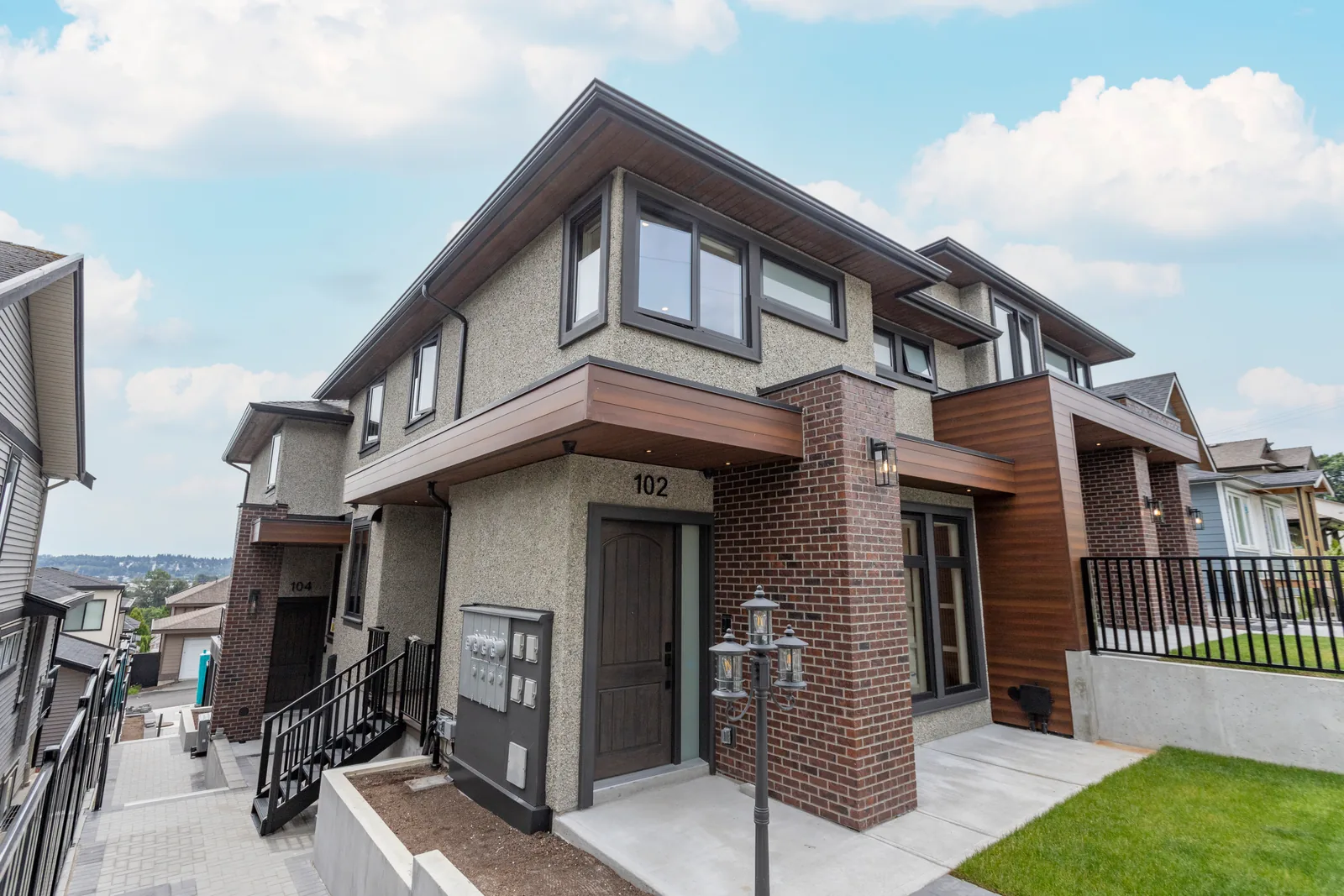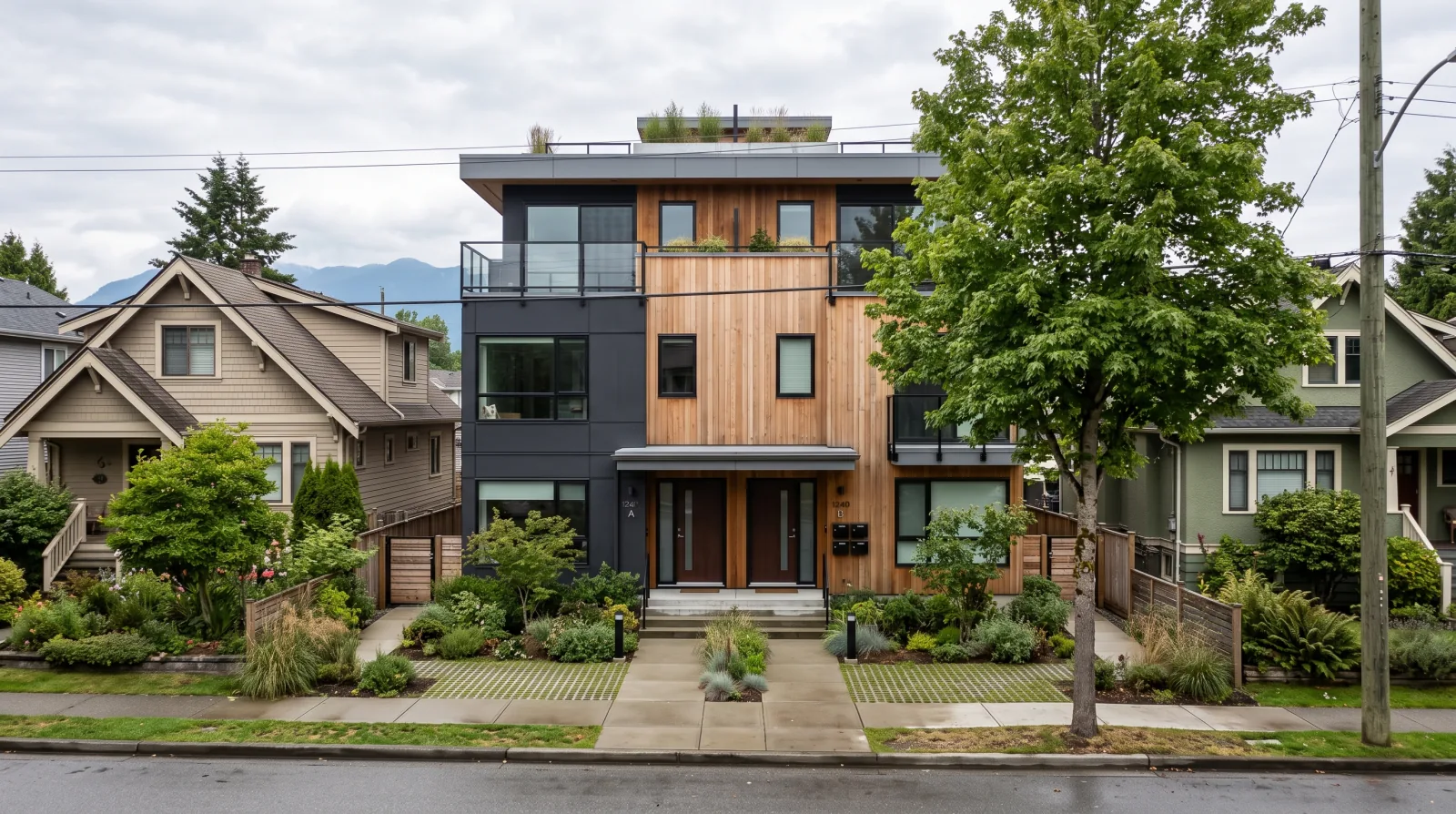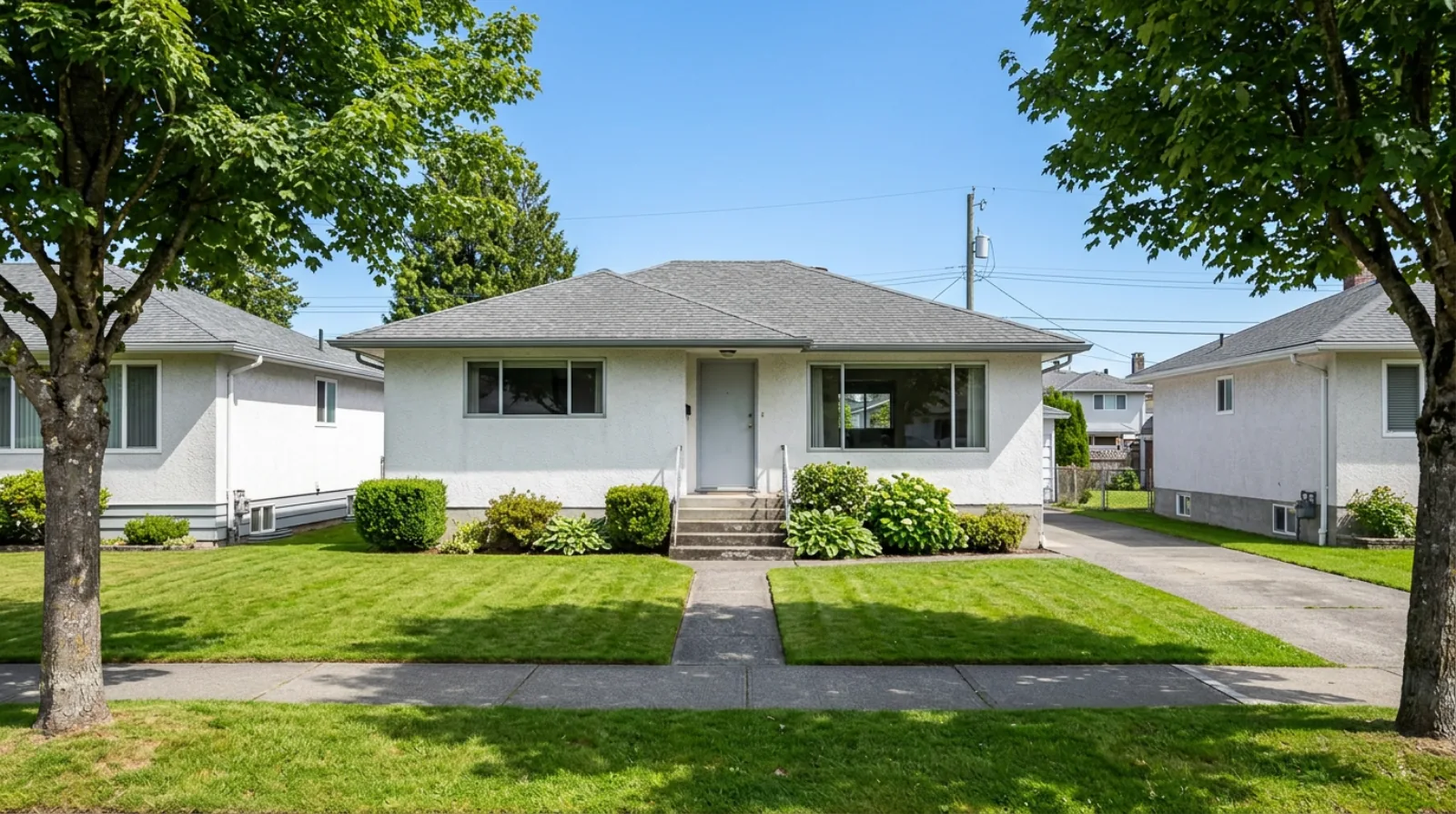

If you own an older house in Vancouver, two kinds of buyer may want it. A family buys the house to live in. A builder buys the land to tear the house down and build a multiplex. They look at the same property and price it in different ways. I’m Desiree McNulty, a REALTOR® with The Donum Group at Oakwyn Realty, and before you list, my advice is to find out which of the two will pay you more.
Sometimes it’s the builder. Often it’s the family. You can work out which before the sign goes up.
Two buyers, two ways to price the same lot
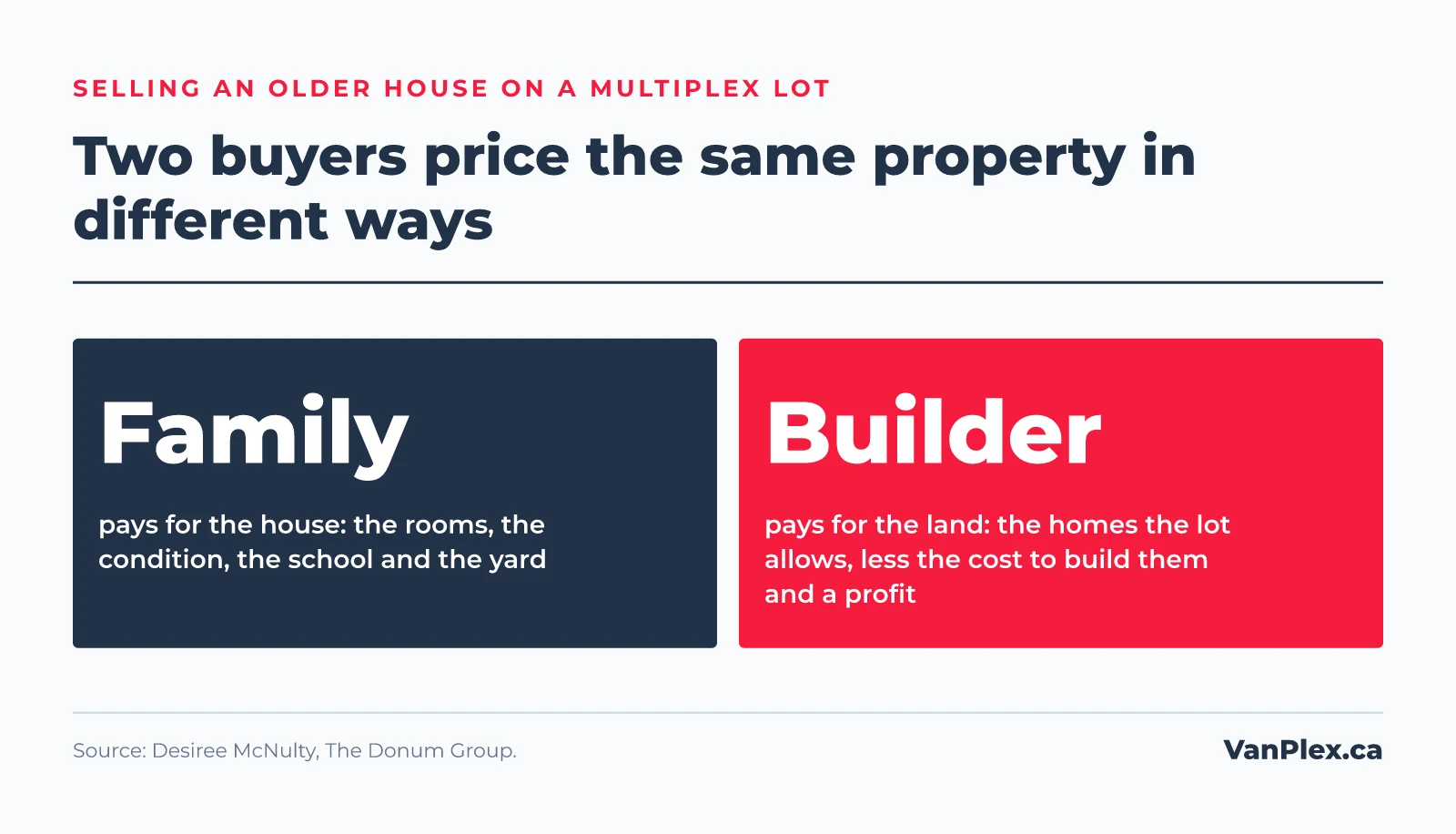
A family prices the house. They look at the kitchen, the number of bedrooms, the roof, the school catchment and the yard. They compare it with other houses for sale nearby.
A builder prices the land. The builder starts from what the finished homes will sell for. Then they take away the cost to build, the City’s fees, the interest on the loans, and the profit they need for the risk. What’s left is the most they can pay for your lot. The condition of your kitchen doesn’t count, because the kitchen is coming out.
So a house in good shape on an ordinary lot suits a family buyer. A tired house on a lot that suits a multiplex may get more from a builder. VanPlex explains how builders read a lot in this post on how multiplex buyers price land.
Most lots don’t make a builder money
When VanPlex modelled every eligible R1-1 lot in Vancouver in 2025, with real build costs, fees, financing and resale prices, most of them did not show a profit for a builder. You can read the full model and its method.
Your lot may still be one that works. Check it before you assume a builder will pay more because the zoning allows a multiplex.
How to find out which buyer pays more
Run the builder’s numbers yourself, before anyone makes you an offer. Enter your address on the VanPlex home page and the proforma shows how many homes your lot allows, what they would cost to build and what they would sell for. It tells you whether a multiplex on your lot makes money, and so how much room a builder has to pay for the land.
Then compare it with what a family would pay for the house. Your REALTOR® can show you recent sales of similar houses nearby.
A builder also checks things a family may never look at:
- the lot’s width and depth, and whether it has a lane
- whether the lot slopes
- large trees the City may not let them remove
- whether the house is on the City’s heritage register
- the sewer and water connections the new building will need
VanPlex lists eight checks that stop a multiplex before the math starts. If your lot fails one of them, a family is your buyer, and you can price and market the house for them.
Market to both if you’re not sure
If the numbers are close, I’d market to both. That means a listing that does two jobs.
For the family: good photos of the house, the yard and the street, and the school catchment.
For the builder: the lot dimensions, the zoning, whether there is a lane, and any survey you have. A builder looks for the lot size and zoning first, so make sure those fields on the listing are filled in.
When both kinds of buyer show up, they compete, and that helps you on price.
Compare the whole offer, beyond the price
Offers from the two kinds of buyer often look different on paper. A builder’s offer may come with longer conditions, because they need time to check the lot with the City and to line up financing. They may ask for a later completion date, or offer to let you stay in the house and rent it back until they’re ready to build.
So I put every offer side by side:
| What to compare | Why it matters |
|---|---|
| Price | The obvious one |
| Deposit | A larger deposit gives the buyer more to lose if they walk away |
| Conditions, and how long they last | Your house is off the market while the buyer checks |
| Completion date | When you get your money, and when you must move |
| Rent-back | Whether you can stay after the sale, and for how long |
A higher price with three weeks of conditions can be worth less to you than a firm offer from a family. My job in a negotiation is to make those trade-offs plain, so you choose with all of it in front of you.
Other choices besides selling
If your lot does work for a multiplex, you have more options than selling to a builder. Some owners partner with a builder and keep one of the new homes. Some sell together with the neighbour next door. VanPlex has a guide to co-development and a frank take on co-developing versus selling. Talk to your accountant too, because each choice can be taxed in a different way.
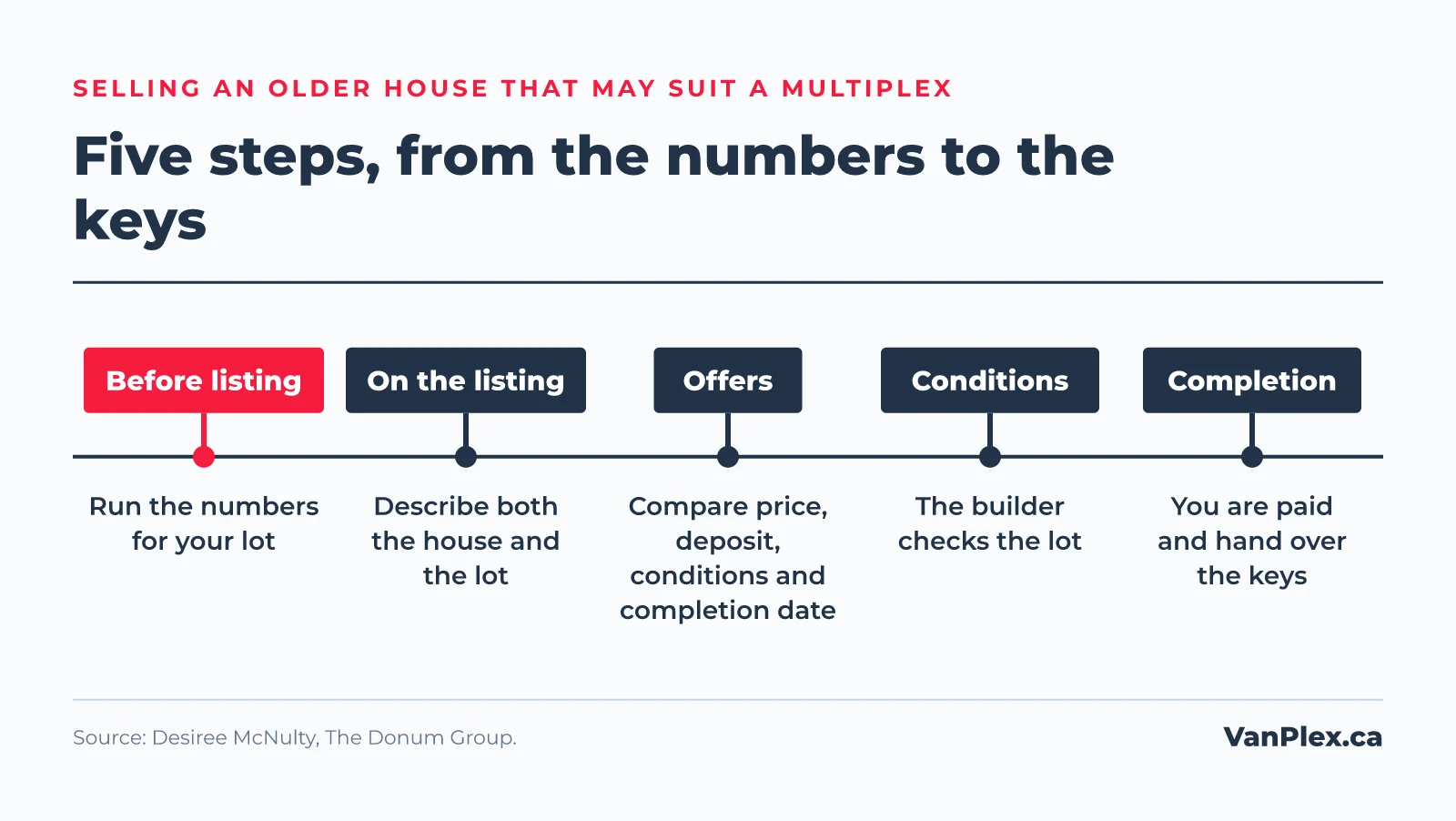
Before you list
- Run the proforma on your address and see whether a multiplex makes money there.
- Ask for recent sales of similar houses to see what a family would pay.
- Check the lot against the eight blocking conditions.
- If the two numbers are close, write the listing for both buyers.
- Compare every offer on price, deposit, conditions and completion date.
If you’d like a second opinion on which buyer your house suits, you can reach my team at The Donum Group.
Desiree McNulty, REALTOR® | Oakwyn Realty | The Donum Group