
A new multiplex in British Columbia reaches the market by one of three legal paths. A licensed residential builder builds it and buys 2-5-10 home warranty insurance on every unit. Or the owner keeps the whole building as a rental under one title, registers a 10-year covenant against selling any unit, and skips the warranty. Or an owner builder builds it, which BC Housing does not allow for a new multi-unit building.
That third path is the one people ask about most and the one that is closed. This post sets out what each path requires, using BC Housing’s own rules, so the choice is made before the permit application rather than after.
What 2-5-10 means
Home warranty insurance in BC is third-party insurance a builder must arrange before construction on any new home that is not exempt. The minimum coverage is two years on defects in materials and labour, five years on the building envelope, and ten years on the structure. BC Housing’s Licensing and Consumer Services branch administers the Homeowner Protection Act that requires it.
The warranty attaches to the home, so it passes to the next buyer. That is the reason the province is careful about exemptions: a home built without warranty is a home whose future buyers have no insurer to claim against.
Path one: a licensed builder and a warranty on each unit
A builder who constructs homes for sale must hold a residential builder licence from BC Housing and must arrange home warranty insurance with one of the approved warranty providers. The homes are registered with BC Housing before the building permit is issued.
For a multiplex sold as strata units, this is the only path. Each unit gets its own coverage, and each buyer inherits it. The warranty is the document a buyer claims against when a new building produces its first list of defects, and the first buyers of Burnaby’s multiplexes learned to read every document in the closing package before signing.
The builder carries the licensing cost, the warranty premium and the enrolment fees. Those are project costs, and they are in the construction financing budget from day one.
Path two: the rental exemption and its 10-year covenant
BC Housing exempts three classes of building from licensing, home warranty insurance, registration fees and reconstruction fees, provided they are built for rental:
- “Multi-unit buildings owned under one legal title and constructed for rental purposes”
- “Multi-unit buildings that are strata-titled but held under a single ownership and constructed for rental purposes”
- “Three or more dwelling units built for rental use and owned under a single legal title”
A fourplex or sixplex held by one owner and rented out qualifies. So does a strata-titled building where one owner keeps every lot.
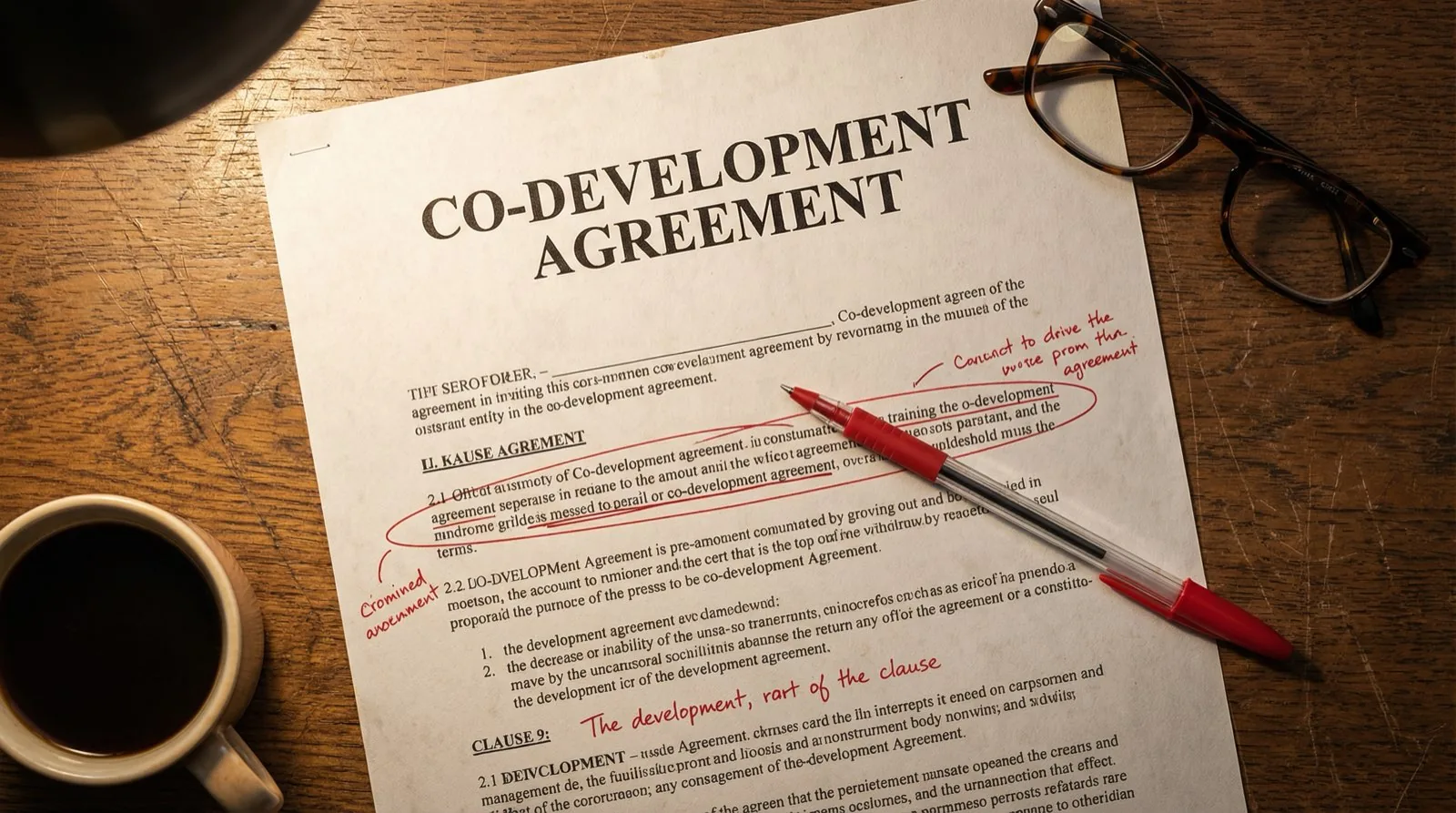
The price of the exemption is a restrictive covenant registered on title. BC Housing says the covenant “requires the building to be used solely for rental purposes” and “restricts the sale or other disposition of any dwelling unit for 10 years from the date of first occupancy.” The branch explains the logic: homes built under the rental exemption have no warranty insurance, so the 10-year sale restriction covers the period during which a buyer would otherwise have been protected.
Before the building permit is issued, the municipality requires a New Home Registration Form from BC Housing confirming the building is exempt. Where no permit is required, the form must be obtained before construction starts.
Ten years is a long time to lock a decision. A build-to-rent multiplex that pencils today as a rental cannot be broken into strata sales in year four if the numbers change. The exit problem on a single-title rental building is already real; the covenant makes it a matter of title, not only of tax and financing.
Path three: owner builder, and why it does not fit a multiplex
An owner builder is a person BC Housing authorizes to build one home for their own use without a builder licence and without warranty insurance. The rules are in BC Housing’s Regulatory Bulletin No. 4 and its Owner Builder FAQs.
To get an Owner Builder Authorization you must:
- hold a registered interest in the land, which includes fee simple, a life interest or a lease of at least 15 years
- intend to build a single dwelling unit that is either a detached home, a home attached to a pre-existing building older than 10 years, or a unit attached to a new non-residential building
- intend to build the home, or directly manage its construction, for your own personal use
- pass the Owner Builder Authorization Exam with a score of 70 percent or higher, with one attempt per application
- pay the $425 authorization fee, of which $50 is non-refundable if the application is rejected
- not have been issued an Owner Builder Authorization within the previous 18 months
The FAQ then states the limit that matters here: “We don’t issue Owner Builder Authorizations for single dwelling units that are in or attached to new, multi-unit residential buildings.”
A new fourplex is a new multi-unit residential building. There is no owner-builder route to one, even if you plan to live in one of the units and rent the rest. Nor is there a route to building one unit of it yourself while a licensed builder builds the other three.
The exception in the eligibility list is narrow and worth knowing. An owner builder may add one dwelling unit to a pre-existing building older than 10 years. BC Housing’s FAQ gives the examples: “the addition of a unit to convert a detached home to a duplex, or conversion of a duplex to triplex.” A homeowner adding a suite to a 1960s house while waiting years for a multiplex to make sense can do that as an owner builder. The same homeowner cannot tear the house down and put up four units under the same authorization.
The obligations an owner builder carries
Even where it is allowed, the owner-builder path is not the light option it looks like. BC Housing’s rules:
- You may not offer the home for sale, sell it or rent it during construction or until one year after first occupancy. Permission to sell earlier is available only on the basis of undue hardship.
- You are personally liable for construction defects in the home for 10 years from first occupancy, to every subsequent buyer during that period. The FAQ notes that owners on average live in their homes for four years, so most owner builders will still be liable to someone when they sell.
- If you sell within the 10 years you must give every prospective buyer an Owner Builder Disclosure Notice obtained from BC Housing.
- A second authorization is available no earlier than 18 months from first occupancy of the first home, and only after passing the exam again.
Those are the conditions on a single detached home. They were written for a person building their own house, and the ban on new multi-unit buildings keeps them from being stretched to cover a small development.
Choosing the path before the permit
| Question | Licensed builder | Rental exemption | Owner builder |
|---|---|---|---|
| Can the units be sold individually? | Yes, with warranty on each | Not for 10 years from first occupancy | Not for a new multiplex; the path is closed |
| Warranty insurance? | 2-5-10 on every unit | None; covenant on title instead | None; personal 10-year liability |
| Who may build? | Licensed residential builder | Any builder, since licensing is exempt | The owner, for one unit, in a building older than 10 years |
| Paperwork before permit | Warranty enrolment and registration | New Home Registration Form confirming exemption | Owner Builder Authorization |
Source: BC Housing, Licensing and Consumer Services: Rental Exemption page, Regulatory Bulletin No. 4, Owner Builder FAQs.
If you plan to sell the units, the decision is made for you: hire a licensed builder and budget the warranty. The pre-sale rules assume it exists.
If you plan to hold and rent, the exemption saves the licensing and warranty costs and locks the building as a rental for a decade from first occupancy. Make the strata versus single-title decision with that covenant in front of you, because the covenant is registered whether or not the building is stratified.
If you wanted to build it yourself, the answer for a new multiplex is no. The owner-builder route exists for one home, and for adding one unit to an old building. A conversion of a house into a duplex is the largest project it covers.
Sources: BC Housing, Licensing and Consumer Services, “Rental Exemption” (web page); BC Housing, “Owner Builder FAQs,” October 2018; BC Housing, Regulatory Bulletin No. 4, “Information for Owner Builders Constructing an Owner-built Home”; BC Housing, “Become an Owner Builder” (web page); Homeowner Protection Act Regulation, B.C. Reg. 29/99. All read September 17, 2026.
David Babakaiff, Co-Founder, VanPlex | PlexRank™ | Profit with Multiplex