
At MultiLiving, BC’s dedicated marketplace for multiplex homes, we list these projects across the province every week, so we see how builders bring them to market. Most multiplex builders in Vancouver are leaving real money on the table. Not because the buildings are bad. The buildings are often excellent. The problem is how the project goes to market. A great fourplex with a broken launch plan still sells slow, sells cheap, or sits.
A finished multiplex that sits is not a small problem. Carrying costs can run past $10,000 a month once you add construction loan interest, property taxes, and insurance. That is money leaving your pocket every week the project waits for a buyer. And most of the time, the wait is self-inflicted. Here are the five costliest mistakes we see, and the fix for each.
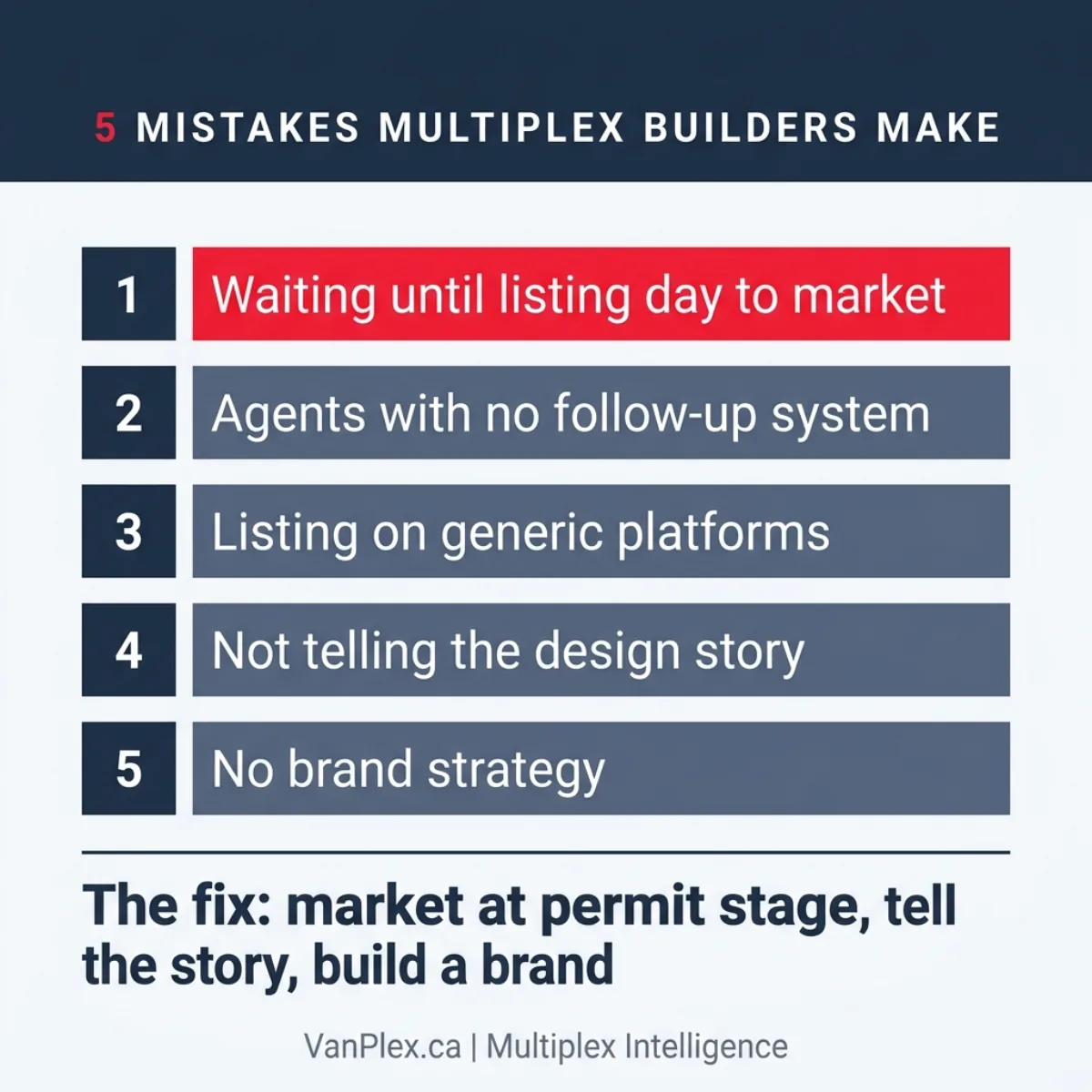
Mistake 1: Waiting until the listing goes live to start marketing
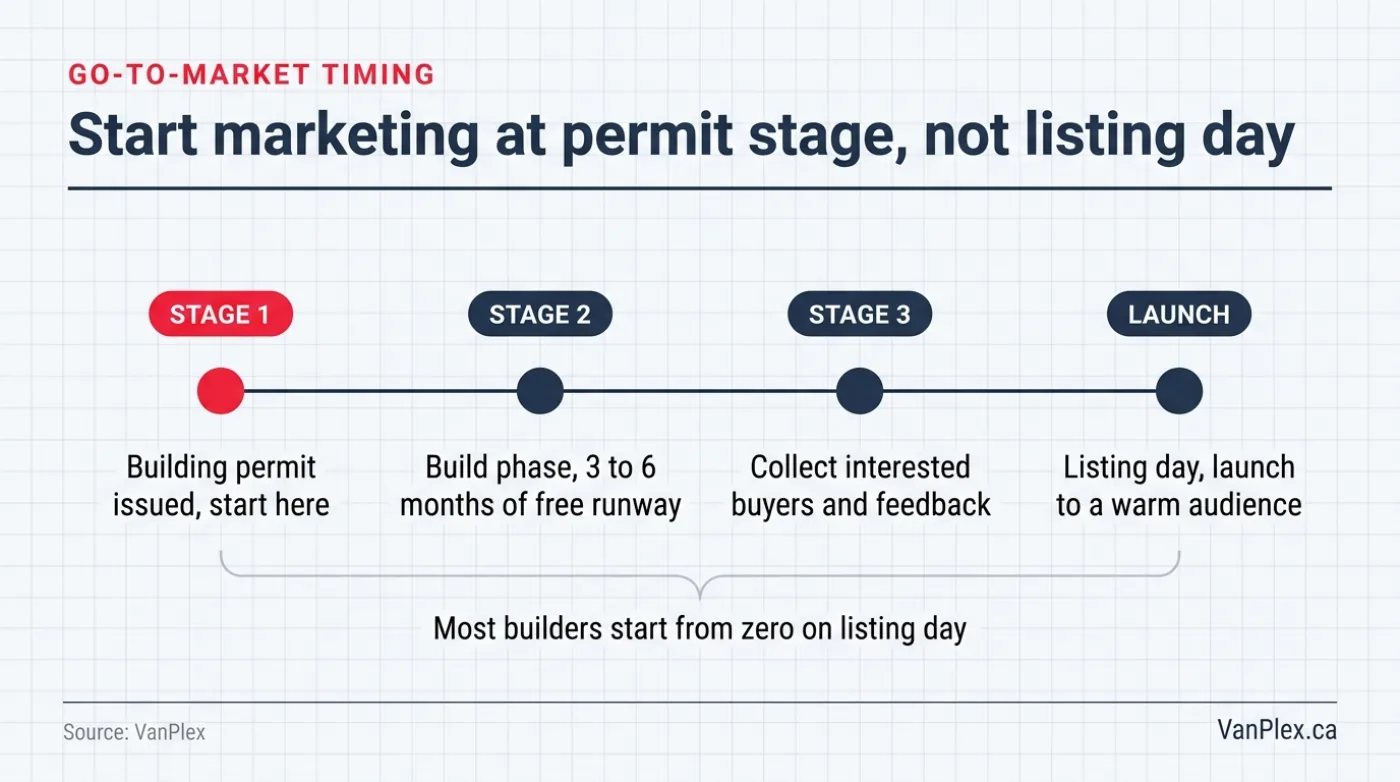
This is the most expensive habit, and almost everyone has it. The sign goes up on completion day and the builder starts building attention from scratch. No audience, no waiting list, no early conversations. Just carrying costs burning away while you hope the right buyer walks past.
A better plan starts far earlier. The moment your building permit is issued you have a clear story to tell: what is coming, where, and why it is worth watching. That window, often three to six months before the project is finished, is free runway. You can build interest, collect names, and get real feedback from the market before a single dollar of listing spend.
By the time the project is ready, you already have a list of people who have been following it. A launch to a warm audience beats a cold listing every time. Same building, very different result.
Mistake 2: Working with agents who have no follow-up system
Believe it or not, most agents do not run a proper follow-up process. They take the call, send the listing, and wait. If the buyer is not ready that week, the lead quietly dies.
Multiplex buyers rarely decide fast. They are weighing a bigger, less familiar purchase than a condo, and they need time. That means a real customer relationship system and a follow-up sequence that keeps them engaged over weeks or months. Most agents have no way to move a qualified buyer from first contact to a signed deal, step by step.
Frankly, this is where the most value leaks out. You spent eighteen months and seven figures building the project. Then the buyer pipeline runs on memory and good intentions. Ask any agent you work with a simple question: what happens to a lead on day three, day ten, and day thirty? If they cannot answer, the leads are going cold.
Mistake 3: Listing on generic platforms
List a sixplex on the MLS® and it lands next to thousands of condos and every other property type. You are not standing out. You are getting lost in the crowd.
A multiplex is a different product. It is a distinct segment with its own buyer, its own math, and its own reasons to buy. Treating it like a condo listing throws away everything that makes it worth more. The missing middle has been missing a place built for it. Buyers who specifically want a small, ground-oriented building have had nowhere to look for them together.
That is the gap we built MultiLiving to close. A dedicated marketplace for multiplex projects puts your building in front of the exact people looking for it, instead of hiding it in a feed built for something else.
Mistake 4: Not telling the design story
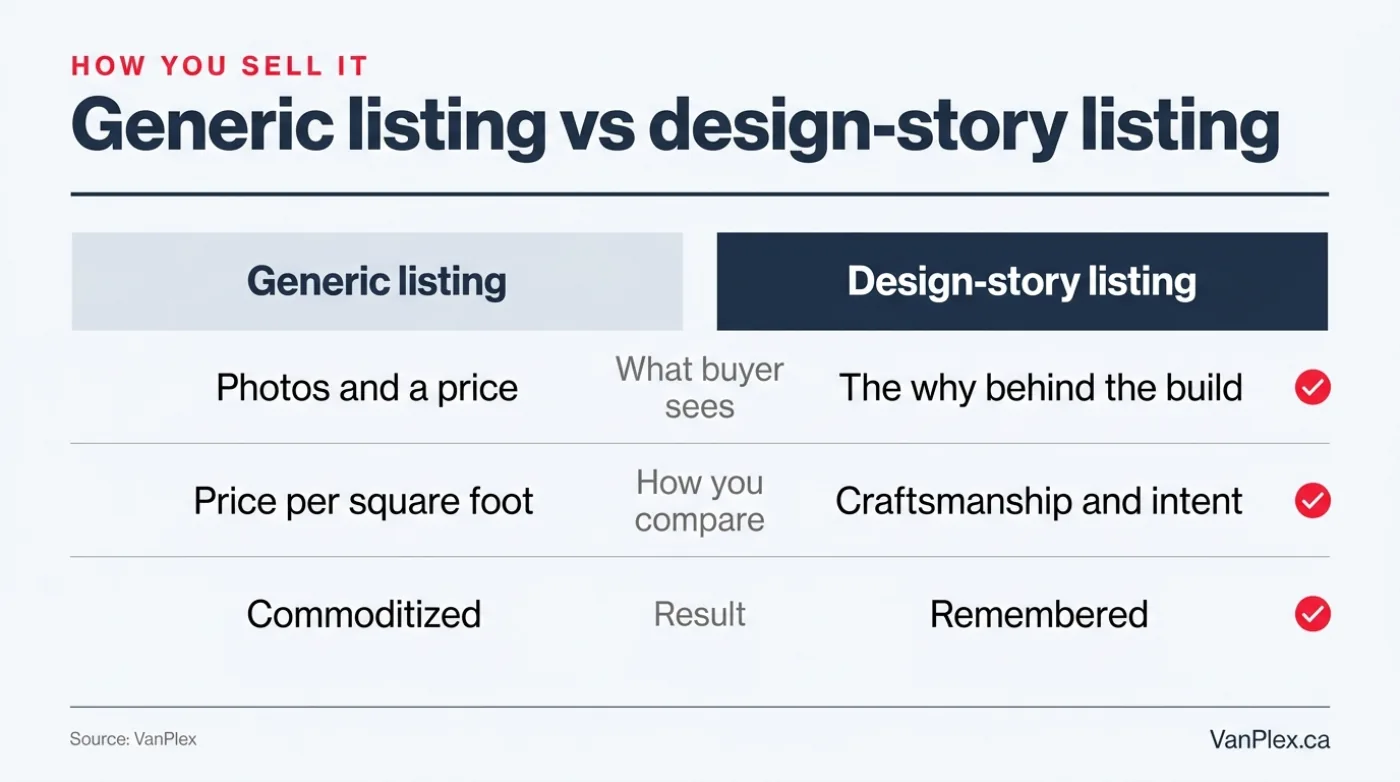
A traditional listing reduces your project to a set of photos and a price. Buyers never see the craftsmanship, the choices, or the thinking behind the build. So you get commoditized. Buyers line you up against weaker projects and compare on price per square foot, because that is the only number they were given.
People buy why you built something, not just what you built. The story is what creates the feeling that this one is different. Why this layout. Why these materials. Why the units are arranged the way they are. What problem the design solves for the family or the tenant who lives there.
When a buyer understands the why, price per square foot stops being the whole conversation. You are no longer one more listing on a spreadsheet. You are the project they actually remember.
Mistake 5: No brand strategy for future projects
Every new project starts from scratch. No following, no reputation, no audience waiting for the next launch. You rebuild trust from zero every single time, which is slow and expensive.
A brand fixes that. When people know your name and your work, each project launches into an audience that already trusts you. That trust carries from one build to the next and compounds over the years. It is the difference between shouting into an empty room and speaking to people who already lean in.
This matters more every year. As more multiplex units reach the market, buyers will have more to choose from. Builders with a brand and a following will stand out. Builders without one will keep competing on price alone, which is the worst place to compete.
The fix: market like the product deserves it
None of these mistakes are hard to fix. They just have to be planned before the project finishes, not after.
| Mistake | What it costs you | The fix |
|---|---|---|
| Waiting for listing day | Months of carrying costs with no pipeline | Start at permit stage and build an audience early |
| Agents with no follow-up | Qualified leads go cold and deals die | Insist on a real CRM and a follow-up sequence |
| Generic platforms | Your project buried among condos | Use a marketplace built for multiplex |
| No design story | Commoditized on price per square foot | Show the why behind the build |
| No brand | Start from zero every project | Build a following that compounds |
Put simply: start marketing at permit stage, not listing stage. Work with people who follow up. Use a platform built for multiplex. Tell the full design story. And build a brand that grows with every project. Do those five things and the same building sells faster, at a better price, with less carrying cost along the way.
Common questions from builders
When should I actually start marketing my multiplex? As early as your building permit is issued, and no later than three to six months before completion. That runway lets you build an audience, collect interested buyers, and get market feedback before you list, so you launch warm instead of cold.
Why not just list on the MLS® like everything else? You still can, and often should, but the MLS® mixes your project in with thousands of condos and other property types. A multiplex is a distinct product with its own buyer. A dedicated multiplex marketplace like MultiLiving puts it in front of the people actually looking for that product instead of burying it.
What does a good follow-up system look like? A customer relationship system that captures every lead, plus a planned sequence of touches over weeks or months. The point is that no qualified buyer falls through the cracks because they were not ready to decide the first week.
Is a brand really worth it for a small builder? Yes, and it matters more as the market fills up. A brand means each new project launches to an audience that already trusts you, instead of starting from zero. That trust compounds and keeps you out of a pure price competition.
The building is the hard part, and you have already done it. Do not let a weak launch give away the margin you earned. List your project on MultiLiving and start your go-to-market plan before the next building is finished.
Michael Lee is a Partner at MultiLiving, BC’s dedicated marketplace for multiplex homes (duplexes, triplexes, and fourplexes) across Greater Vancouver. He works with builders to bring ground-oriented projects to market.
By Michael Lee, Partner, MultiLiving (multiliving.ca)