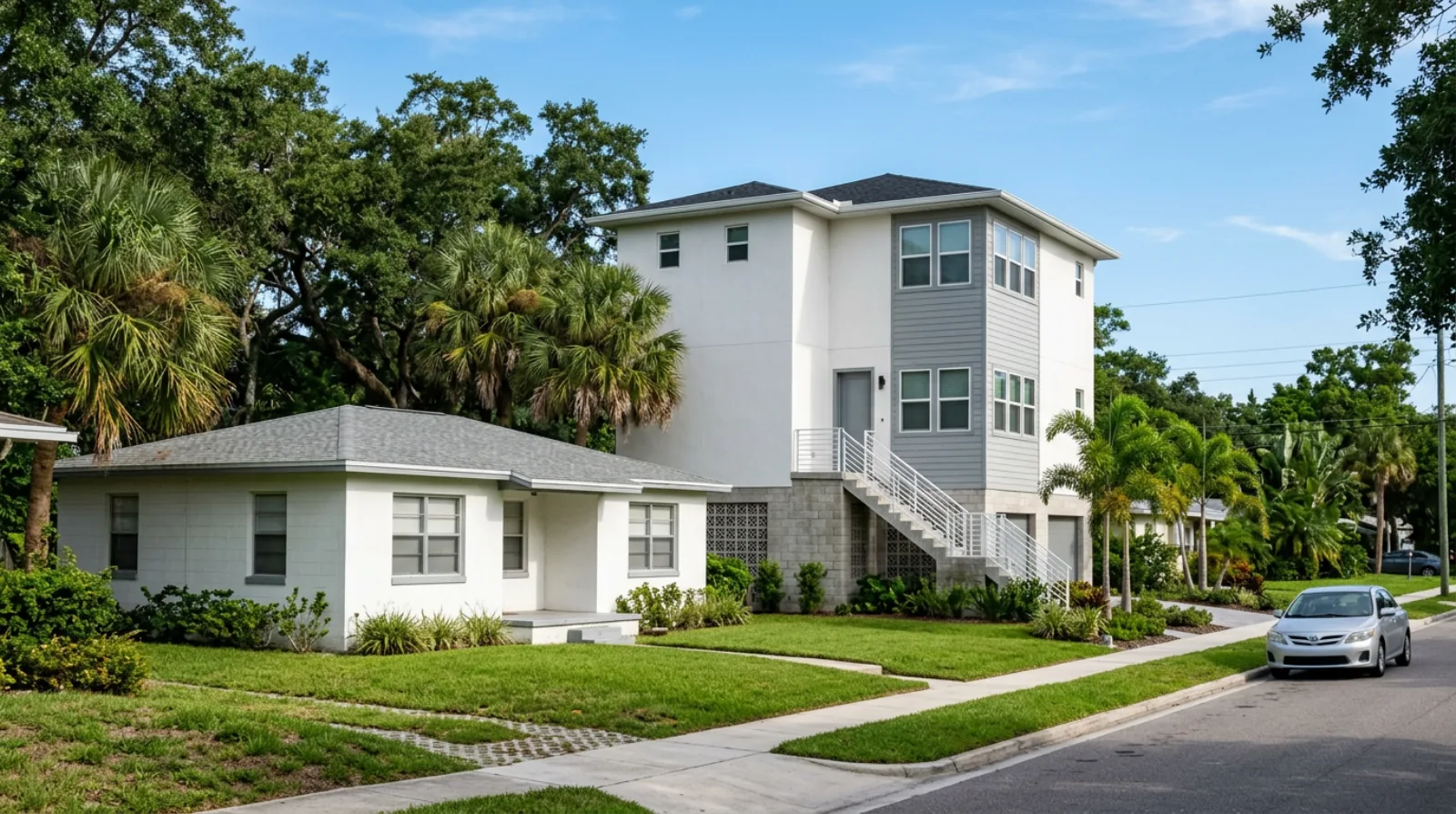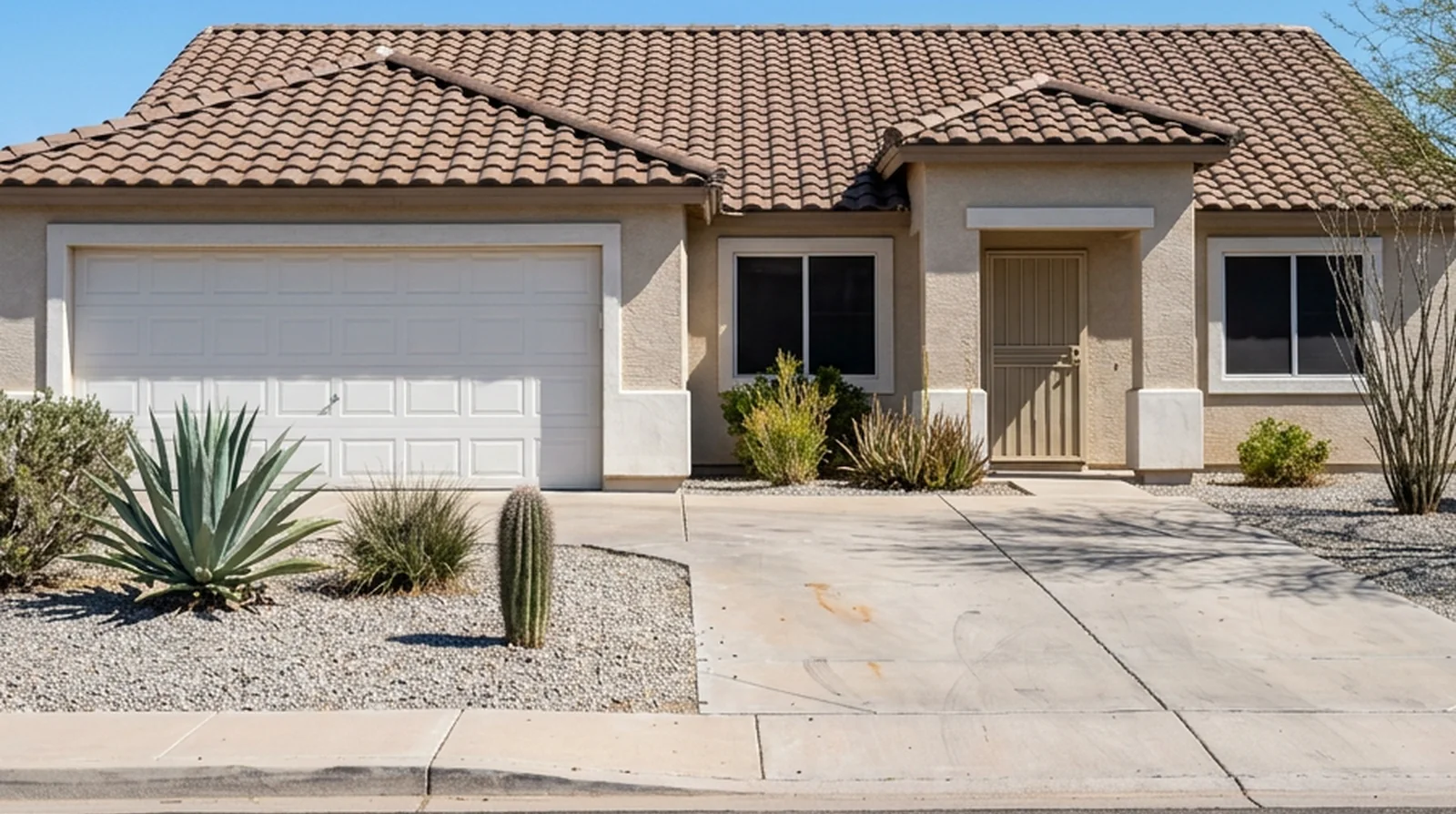
If you own a rental house in Florida or Arizona and plan to put that money into a multiplex build in Vancouver, three things decide when the money reaches you: the tenant, the 15% the buyer holds back for the IRS, and the tax returns you file in both countries. I’m Khonia Shadbakht, founder of BIMINIO Properties. We buy houses in Florida and Arizona, including rented ones, and one of our offices is in Vancouver. This guide walks through each step in the order it happens.
It is general information about rules the US and Canadian tax offices and the Florida and Arizona legislatures publish. Take your own numbers to an accountant who works on both sides of the border before you sign anything.
Why timing matters for a build
If part of your share of a multiplex build is coming from a US sale, the question is when the cash is in your account. VanPlex’s construction financing guide explains how lenders fund a multiplex build.
Money from a US sale by a Canadian arrives in two parts. Most of the price comes at closing, after costs. The rest, usually 15% of the price, goes to the IRS and comes back later, once your US tax on the sale is worked out. Plan your build budget on the first part only, and treat the second part as money that arrives months later.
Say you sell a Phoenix rental for US$500,000 (a made-up number). At closing, the buyer holds back 15%, which is US$75,000, and sends it to the IRS. You receive the rest, less your closing costs. If your US tax on the sale turns out to be US$30,000, the other US$45,000 comes back to you, but only after the IRS processes your US return or a request to reduce the amount held back.
Step 1: the tenant
The tenant can set the earliest date you can hand over an empty house.
In Florida, a month-to-month tenancy ends with written notice of at least 30 days before the end of a monthly period, under section 83.57 of the Florida Statutes. In Arizona, section 33-1375 sets the notice for a month-to-month tenancy at least 30 days before the rental date named in the notice. If your tenant has a lease for a fixed term, read it with a local lawyer before you promise a buyer an empty house.
You can also sell with the tenant in place, to a buyer who will keep renting the house. BIMINIO buys rented houses as they are. If you sell this way, the deposit has to be dealt with. In Florida, section 83.49 says that on a sale, deposits and advance rents are transferred to the new owner with an accounting, and once you have a signed receipt you no longer hold that money for the tenant. In Arizona, section 33-1321 says whoever holds the landlord’s interest when the tenancy ends is bound by the deposit rules, so the deposit should move to the buyer at closing. Your closing agent can put it on the closing statement.
Step 2: the US side of the sale
When a person who is not a US resident sells US real estate, the buyer usually holds back part of the price under a law called FIRPTA. The IRS says the rate of withholding is generally 15% of the amount realized, and in most cases the buyer is the one who withholds. The residence exception only applies when the buyer is an individual who plans to live in the house and the price is $300,000 or less, so it does not fit a sale to an investor who will rent the house out.
You can ask for less to be held back. The IRS issues a withholding certificate when the full amount would be more than your maximum tax on the sale, and it says it generally acts within 90 days of a complete application. For a build, this step can move part of that 15% from next year to this one, so ask your accountant about it early.
Either way, you file a US income tax return for the year of the sale. The IRS stamps a copy of Form 8288-A and sends it to you, and you attach it to your return to get credit for what was withheld. That stamped copy needs a US tax number. If you have none, you can apply for one, called an ITIN, with Form W-7.
A rental adds one more US item. While you owned the house, you could deduct depreciation on the building. The IRS’s page on capital gains says the portion of any unrecaptured section 1250 gain from selling real property of this kind is taxed at a maximum rate of 25%. Ask your accountant to work out that part of your gain before you set your build budget.
Step 3: the Canadian side
As a Canadian resident, you report the sale on your Canadian return too.
The CRA’s rental income guide says that in the year you dispose of rental property, you may have to add an amount to your income as a recapture of capital cost allowance. That applies if you claimed capital cost allowance on the US house in past years.
To avoid paying tax twice on the same gain, the CRA lets you claim a foreign tax credit for income tax paid to another country on income you also report in Canada. Form T2209 covers the federal part, and Form T2036 covers the BC part.
The numbers are in Canadian dollars. The CRA’s folio on reporting currency says each amount is converted at the Bank of Canada rate for the day it arises. So your purchase price uses the rate on the day you bought, and your sale price uses the rate on the day you sold.
There is one more form. A rented house counts as foreign property for Form T1135 once the total cost of your foreign property passes $100,000. The CRA says that if you met that threshold at any point in the year, you report all of it for that year, even property you sold before the year ended. So the year you sell is still a T1135 year.
Selling direct or listing
You can list the rental with an agent or sell it straight to a buyer such as BIMINIO. We buy houses as they are, tenant or no tenant. We send a written cash offer within 24 hours of getting the details we need, and the seller picks a closing date between 7 and 35 days out. The seller pays no commission to us. FIRPTA applies to us like any other buyer.
A direct sale fits an owner who wants a fixed closing date to match a build schedule, a house that needs work, or a tenant situation that makes showings hard. A house in good repair, with an owner who has time, may sell for more on the open market. Ask for both numbers and compare what you keep after costs.
A checklist before you sell
- Read the lease and decide whether to sell with the tenant in place or give notice.
- Get a US tax number if you do not have one.
- Ask a cross-border accountant to estimate your US tax, including the 25% part, and whether a withholding certificate makes sense.
- Find your records of depreciation claimed in the US and capital cost allowance claimed in Canada.
- Build your multiplex budget on the money you receive at closing, and count the held-back 15% only when it arrives.
- Plan for Form T1135 in the year of the sale.
If you are still working out the Vancouver side, VanPlex’s guide to owner-occupied multiplex financing covers how lenders look at a build you plan to live in.