
July 2026 update: The 2024 data cited below remains the authoritative transaction dataset for Vancouver’s first full year of multiplex sales under R1-1 zoning. 2025 volume exceeded 2024 by approximately 40% based on permit data; full transaction data for 2025 will be published by CBRE in Q3 2026. The market dynamics described here have held through mid-2026.
Vancouver’s Multiplex Revolution: The Numbers Don’t Lie
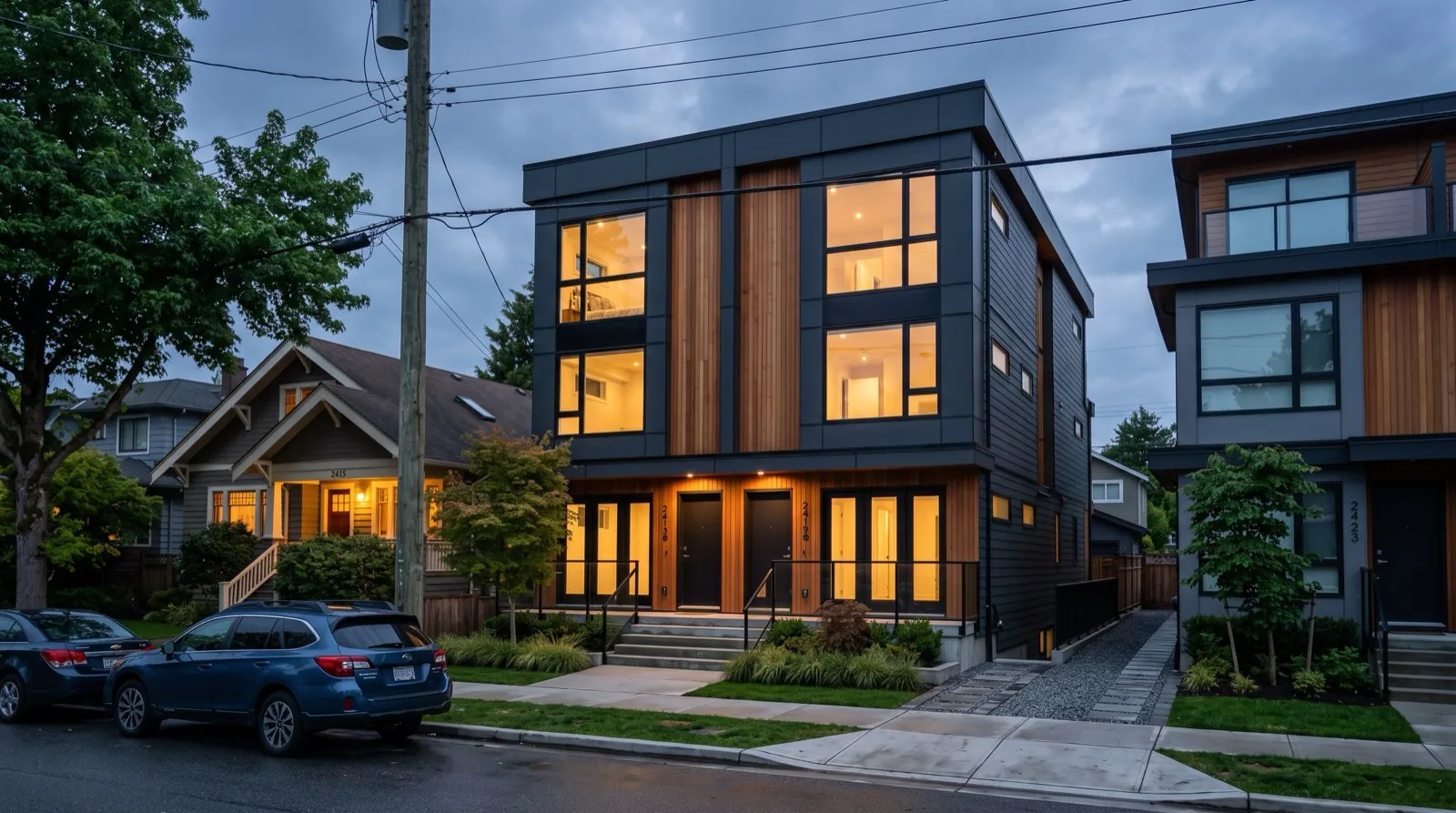
After a cautious start in 2023, Vancouver’s bold multiplex zoning experiment has exploded into a full-scale market transformation. New data reveals that multiplex properties now represent one-third of all residential land sales in Vancouver, marking one of the most successful housing policy implementations in recent Canadian history.
The Stunning Market Transformation
Vancouver’s multiplex zoning — specifically the R1-1 zone — is now generating enough transaction data to show whether the policy is working. According to commercial broker Robert Veerman from CBRE, who specializes in multiplex property sales, the numbers tell an incredible story of rapid market adoption:
“If total residential land sales were about $1 billion, multiplex was about one third of that, which is a surprising stat to me.”
This represents a dramatic shift from just two years ago when the multiplex concept was met with industry skepticism.
2024 Multiplex Sales Snapshot
The data from Veerman’s 2024 Multiplex Land Sales Report reveals impressive market activity:
- 124 multiplex land sales completed in Vancouver
- Average sale price: $2.45 million
- Total market value: Approximately $333 million
- Geographic spread: From luxury Shaughnessy to emerging Hastings-Sunrise
Breaking Down the Numbers by Neighborhood
Premium Markets Leading the Charge
Shaughnessy emerged as the premium multiplex market with:
- 3 transactions averaging $4.4 million
- Demonstrating high-end market acceptance of the multiplex concept
Volume Leaders in Emerging Areas
Hastings-Sunrise dominated transaction volume with:
- 27 sales averaging $1.8 million
- Representing the largest concentration of multiplex activity
- Showcasing the format’s appeal in emerging neighborhoods
Why Developers Are Embracing Multiplexes
The rapid adoption isn’t happening by accident. Industry professionals cite several compelling advantages:
Simplified Development Timeline
Traditional development projects can take years, but multiplexes offer:
- 9-12 month timeline from purchase to completion
- Pre-zoned lots eliminating lengthy approval processes
- Streamlined permit requirements
Financial Advantages
Builder Suraj Jhuty from Theorem Developments, recent winner of the Georgie Award for Best Multiplex Home Project 2025, shares compelling financial data:
- Recent triplex in East Vancouver: $1,050 per square foot
- West side project: $1,250 per square foot
- Construction costs as low as $275 per square foot (vs $600-$750 for custom homes)
Market Accessibility
The multiplex format is democratizing development:
- Small builders can compete with large developers
- Lower capital requirements for entry
- Faster return on investment cycles
The Construction Revolution Underway
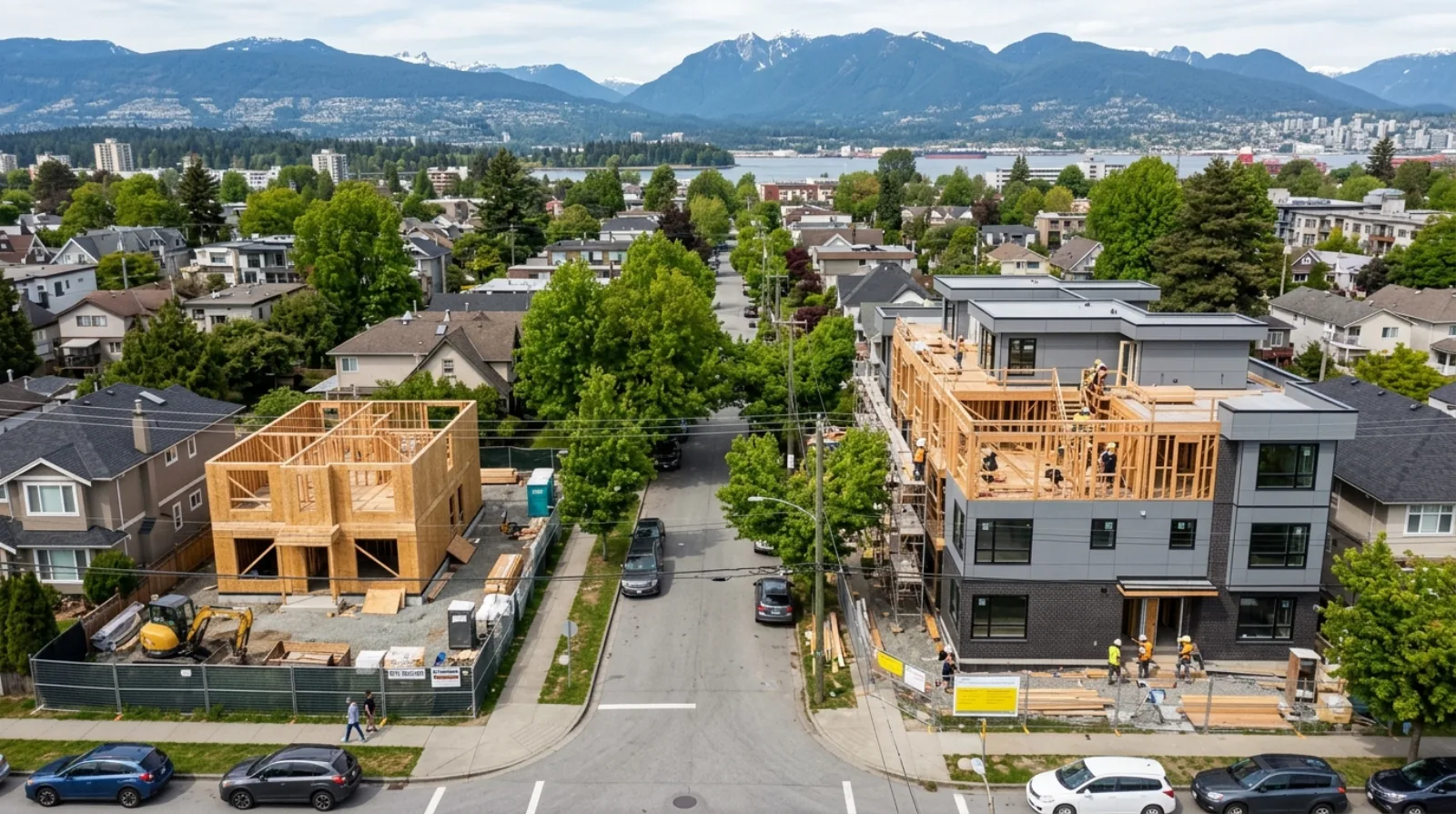
With at least 20 multiplexes currently under construction set to complete in 2025, Vancouver is becoming a real-world testing ground for this housing format.
As Veerman notes: “Everyone is watching Vancouver in my opinion because it’s the best market to do multiplex.”
Industry Transformation: From Skeptics to Believers
The market transformation has attracted diverse participants:
Small Builders Pivoting
- Duplex and townhome builders expanding to multiplexes
- Creating a “developer-light” business model
- Focusing on property flipping with higher unit counts
Mid-Size Developers Exploring Options
- Six-storey wood-frame condo developers investigating multiplexes
- Seeking simplified alternatives to complex tower projects
- Attracted by reduced timeline uncertainty
The Policy Success Story
Daniel Winer from advocacy group Small Housing emphasizes the broader implications:
“We believe it’s the most apt way to actually make a significant dent in the housing crisis. You could build a dozen, two dozen, and three dozen fourplex in that same amount of time [as a large development].”
Recent Policy Enhancements
Vancouver City Council recently approved motions to further streamline the multiplex process:
- Allowing large lot subdivisions
- Permitting more units on qualifying lots
- Including oddly shaped or smaller lots
- Considering Burnaby’s four-floor approach
The Affordability Impact
The multiplex format is delivering real affordability benefits:
Housing Cost Reduction
- 50% cost reduction compared to custom homes in many cases
- More attainable entry points for homebuyers
- Increased rental supply in established neighborhoods
Gentle Densification
- Preserving neighborhood character while adding units
- Creating “missing middle” housing options
- Reducing pressure on high-density corridors
Looking Ahead: The Prefab Revolution
Industry experts predict the next evolution will involve prefabricated multiplexes, potentially creating:
- A new post-war style building boom
- Even faster construction timelines
- Further cost reductions
- Standardized, efficient designs
Market Fundamentals Support Continued Growth
Several factors suggest the multiplex boom will continue:
Supply and Demand Dynamics
- Limited land supply driving creative densification
- Growing population requiring diverse housing options
- Government support for “missing middle” housing
Financial Viability
- Strong rental markets supporting investment returns
- Lower construction costs than alternatives
- Reduced regulatory complexity
Geographic Expansion Potential
Winer suggests national implications: “Across Canada, if you were to redevelop [detached houses] at a rate of about 1% a year, you could actually start talking about getting to those crazy CMHC updated housing targets.”
Challenges and Opportunities
Current Challenges
- Knowledge gap among small-scale builders — our services page outlines how to close that gap with professional design and construction management
- Capital access for smaller developers
- Learning curve for optimal layouts and designs
Emerging Opportunities
- Builder education programs developing
- Financial product innovation for multiplex development
- Design standardization reducing costs and risks
The Ripple Effect Across Canada
Vancouver’s success is being closely watched by other Canadian cities:
- Toronto implementing similar zoning changes
- Other provinces considering multiplex-friendly policies
- Federal government supporting missing middle housing initiatives
Key Takeaways for Investors and Developers
If you’re thinking about putting capital into this market, our investment overview covers financing structures and return expectations. For a look at completed projects, the case studies page shows real numbers from recent builds.
- Market Timing: The multiplex market has moved from experimental to established
- Geographic Strategy: Both premium and emerging neighborhoods show strong activity
- Timeline Advantage: 9-12 month development cycles vs. years for traditional projects
- Financial Returns: Strong sales prices with lower construction costs
- Policy Support: Continued government backing for multiplex development
The Bottom Line
Vancouver’s multiplex experiment has evolved from a policy hope to a market reality. With one-third of all residential land sales now targeting multiplex development, the format has proven its viability and market acceptance.
As the first wave of completed projects hits the market in 2025, the real test will be buyer and renter acceptance. However, early indicators suggest strong demand for this new housing format that bridges the gap between single-family homes and high-density developments.
For investors, developers, and policymakers across Canada, Vancouver’s multiplex success provides a compelling blueprint for addressing housing challenges while creating profitable development opportunities.
Source: Data and insights from Storeys Vancouver Multiplex Analysis by Kerry Gold, July 28, 2025
Want to explore multiplex opportunities in Vancouver? Our team provides detailed financial analysis and market insights to help you navigate this growing market segment.