
Updated July 2026 — Two years since R1-1 zoning took effect. This piece covers what’s working, what isn’t, and what changed in 2026.
Vancouver’s Multiplex Turning Point: Promise, Pushback & Possibility
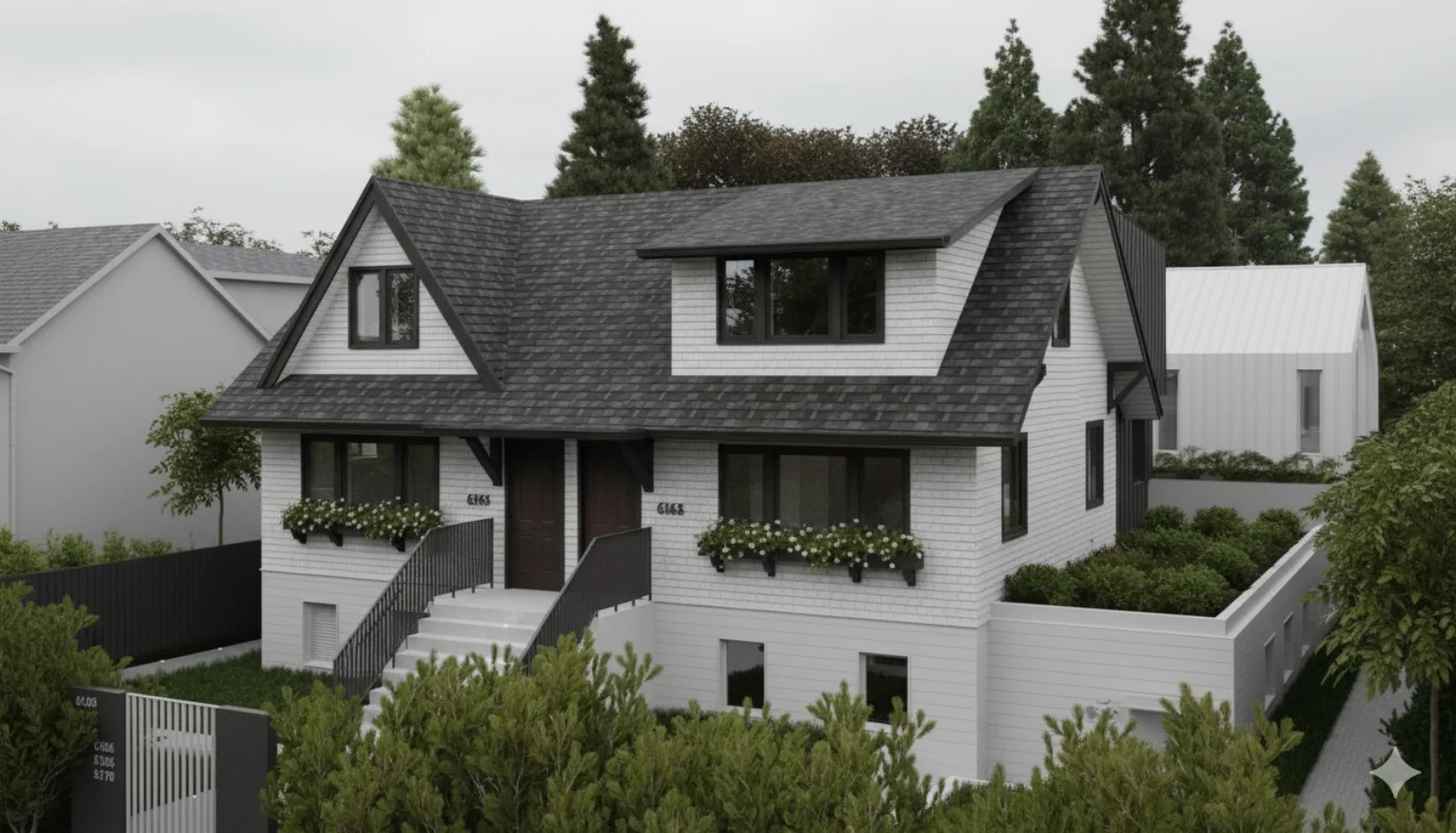
Vancouver’s housing landscape is shifting again. With the city’s new R1-1 zoning, homeowners can now build 3–6 units per lot—and up to 8 for secured rental. But not everyone agrees the policy is working as intended.
This article explores the key viewpoints shaping the conversation—and how VanPlex helps make multiplex housing actually happen.
1. Setting the Stage: A Bold Policy Shift
In 2023, Vancouver overhauled its residential zones, merging old “RS” designations into the new R1-1 district.
For the first time, single-family homeowners can add multiple small homes on a single lot, creating gentle density across established neighbourhoods.
The City’s goal is to:
- Support housing affordability through “missing middle” options.
- Increase housing diversity without major disruption.
- Encourage sustainable, family-friendly infill.
“Multiplexes are an important part of Vancouver’s housing future—adding new homes where infrastructure already exists.” — City of Vancouver, Housing Options in Lower-Density Areas [1]
2. Where Supporters See Opportunity
Advocates say the new zoning is already working.
-
Market shift in motion: Analysts report multiplex-zoned properties now make up nearly one-third of new land sales in Vancouver, as investors and small builders adapt to the change. [2]
-
Faster, simpler builds: Multiplexes are smaller and faster to construct than large multi-family projects, reducing risk for builders and buyers.
-
Greater housing choice: These homes often feature 2–3 bedrooms, private entries, and family-friendly layouts—filling the gap between condos and detached houses. [3]
Supporters argue this is a realistic step toward affordability—growth through incremental density rather than high-rise disruption.
3. The Friction Points Pulling Back the Tide
🏗️ Cost & Financing Constraints
Even with policy support, multiplex projects are expensive to build and hard to finance. Banks often treat them as speculative or non-standard, which limits access to lending for small developers. [4]
⚖️ Regulation vs Viability
Critics say Vancouver’s multiplex policy is too modest compared to what provincial rules allow. The limited Floor Space Ratio (FSR) means some projects don’t financially pencil out, especially on smaller lots. [5]
🧱 Implementation Gaps
Many local builders and trades are new to multiplex projects. Without established workflows, design templates, or experienced subcontractors, projects move slower and cost more. [4]
🌳 Site Constraints
Even when zoning allows, physical site issues—trees, irregular lots, heritage overlays, or floodplain conditions—can reduce buildable space or block approval.
4. How VanPlex Turns Potential into Action
Vancouver’s zoning policy is only as good as the projects that come out of it. That’s where VanPlex bridges policy and practice.
| Challenge | VanPlex Solution |
|---|---|
| Confusing regulations | Clear, visual feasibility reports for your specific lot |
| Design vs livability | Beautiful, efficient designs that maximize allowed density |
| Permit delays | Streamlined submission packages that anticipate city feedback |
| Cost & risk | Transparent pro formas with rental/sale mix options |
| Skill shortage | Partnerships with trusted trades and builders experienced in multiplex work |
Our Process:
- Feasibility Assessment — We analyze your lot’s dimensions, slope, and constraints to confirm potential.
- Concept & Design — We produce efficient, modern multiplex layouts optimized for Vancouver families.
- Permitting & Coordination — We handle City submissions, revisions, and approval tracking.
- Build Partner Network — We connect you with multiplex-ready builders and financing options.
Result: Fewer surprises, faster timelines, and higher confidence in your project’s outcome.
5. Why This Moment Matters
Multiplex housing is more than a zoning update—it’s a cultural and economic turning point.
Vancouver is testing whether incremental density can work at scale. If the policy succeeds, it could become a model for cities across Canada facing similar housing challenges. If it stalls, it may reinforce the belief that only large-scale development can address affordability.
The next 2-3 years are critical. As more projects break ground and the first wave of multiplexes enters the market, we’ll see whether:
- Construction costs come down through economies of scale
- Financing options expand as lenders gain confidence
- Public perception shifts as quality projects demonstrate success
- Policy adjustments are needed to improve viability
This is why having the right partners matters. VanPlex exists to help homeowners, investors, and builders navigate this transition period—turning policy potential into real homes.
Ready to Explore Your Property’s Potential?
Don’t wait to see if your lot qualifies for multiplex development.
👉 Try the VanPlex Calculator - Get instant feasibility analysis for any Vancouver address 👉 Book a Free Consultation - Speak with our team about your specific situation 👉 Learn More About Our Process - Discover how we make multiplex development simple
About VanPlex: We’re Vancouver’s leading multiplex development platform, helping property owners navigate R1-1 zoning through data-driven insights, transparent financial modeling, and end-to-end execution support.
References
[1] City of Vancouver. “Housing Options in Lower-Density Areas.” Shape Your City. shapeyourcity.ca/multiplexes
[2] Storeys.com. “Vancouver’s Multiplex Bet Is Paying Off.” storeys.com/vancouver-multiplex-bet-paying-off
[3] Vassibalatico.com. “Vancouver’s New Housing Type: The Multiplex.” February 4, 2023. vassibalatico.com/2023/02/04/multiplex-vancouvers-new-housing-type
[4] BIV.com. “Potential for BC Multiplex Boom Stuck in Low Gear.” biv.com/news/real-estate/potential-for-bc-multiplex-boom-stuck-in-low-gear-10404495
[5] PolicyAlternatives.ca. “Vancouver’s Multiplex Policy: Missed Potential.” policyalternatives.ca/news-research/multiplex-policy