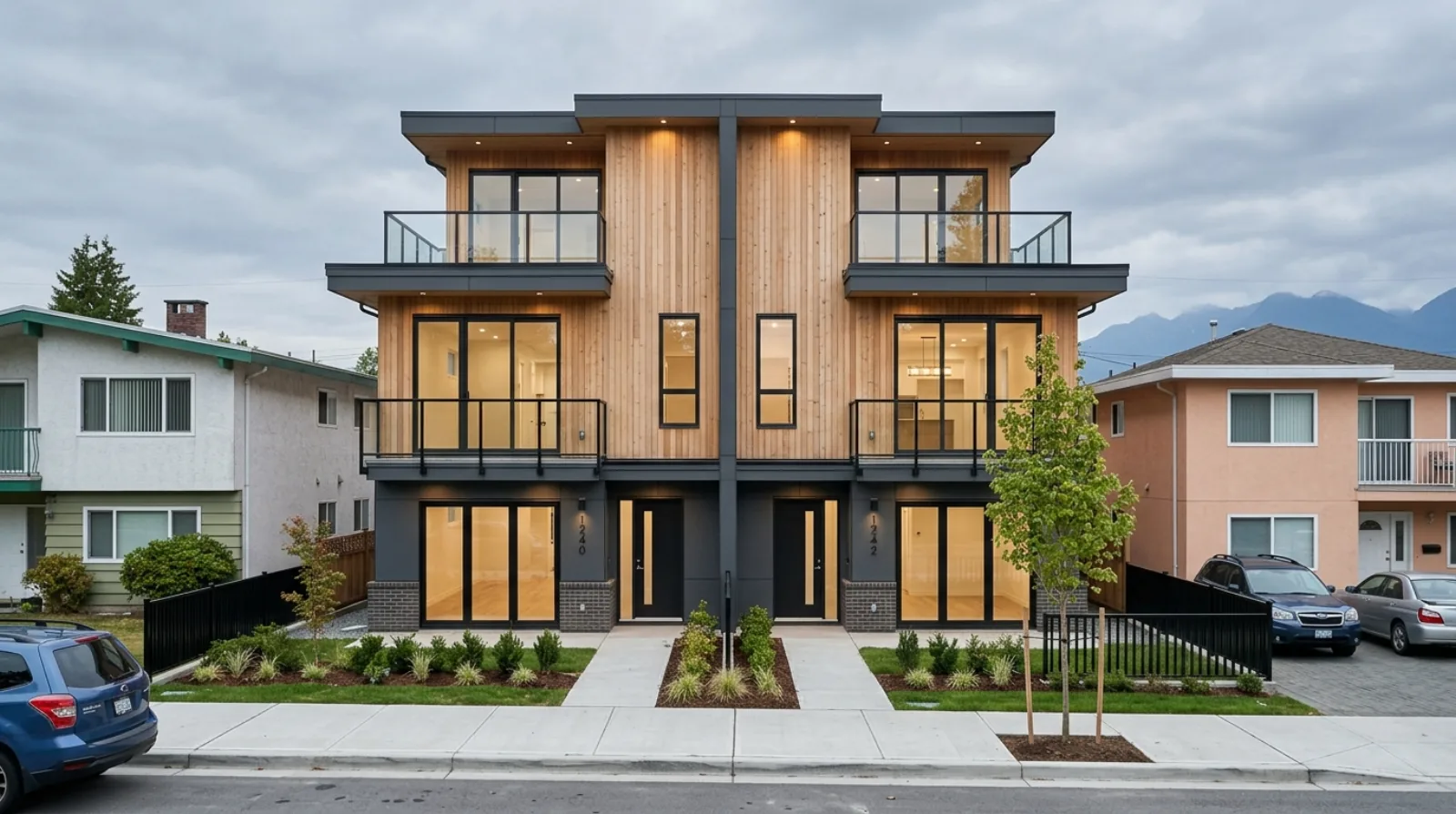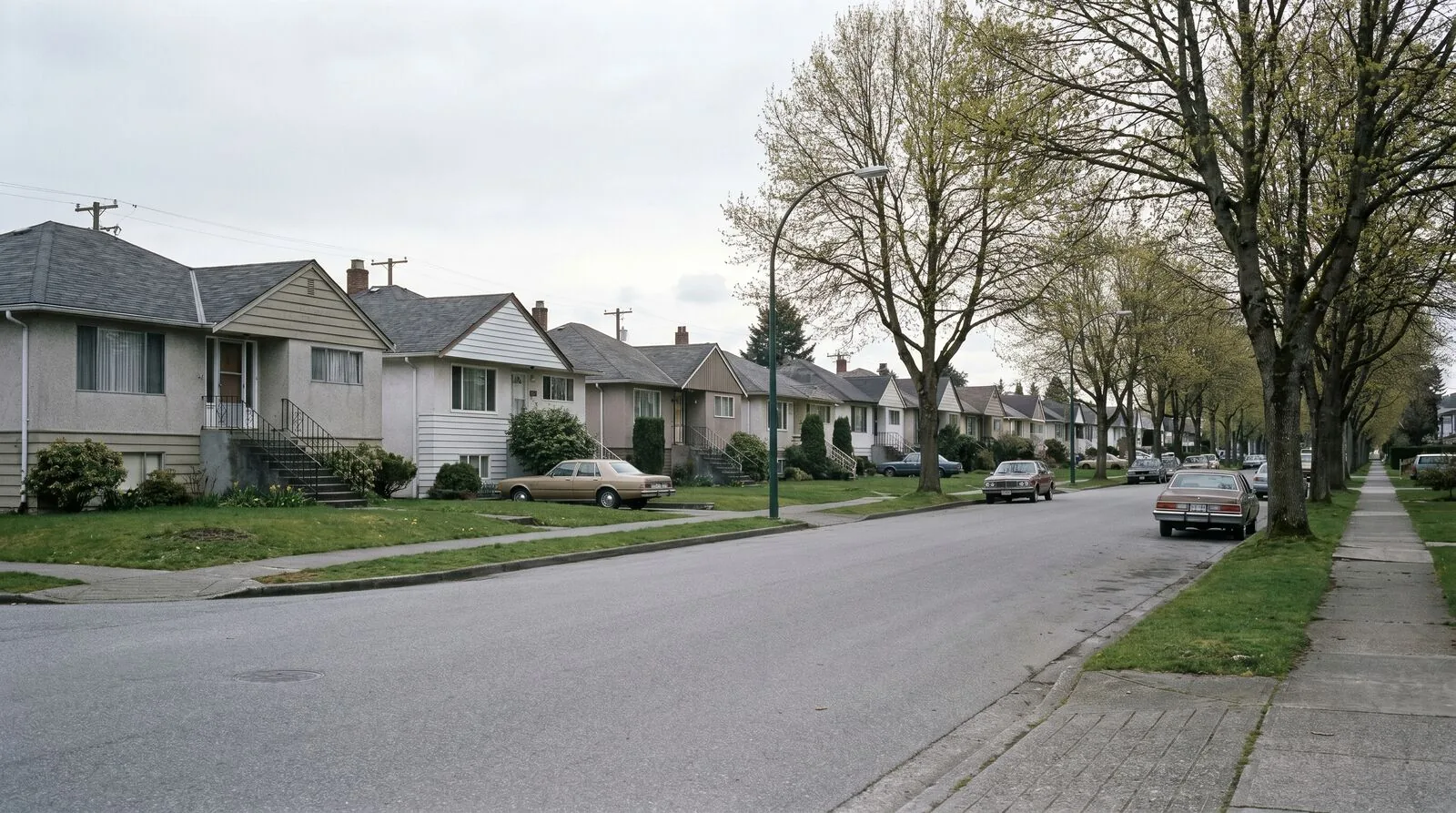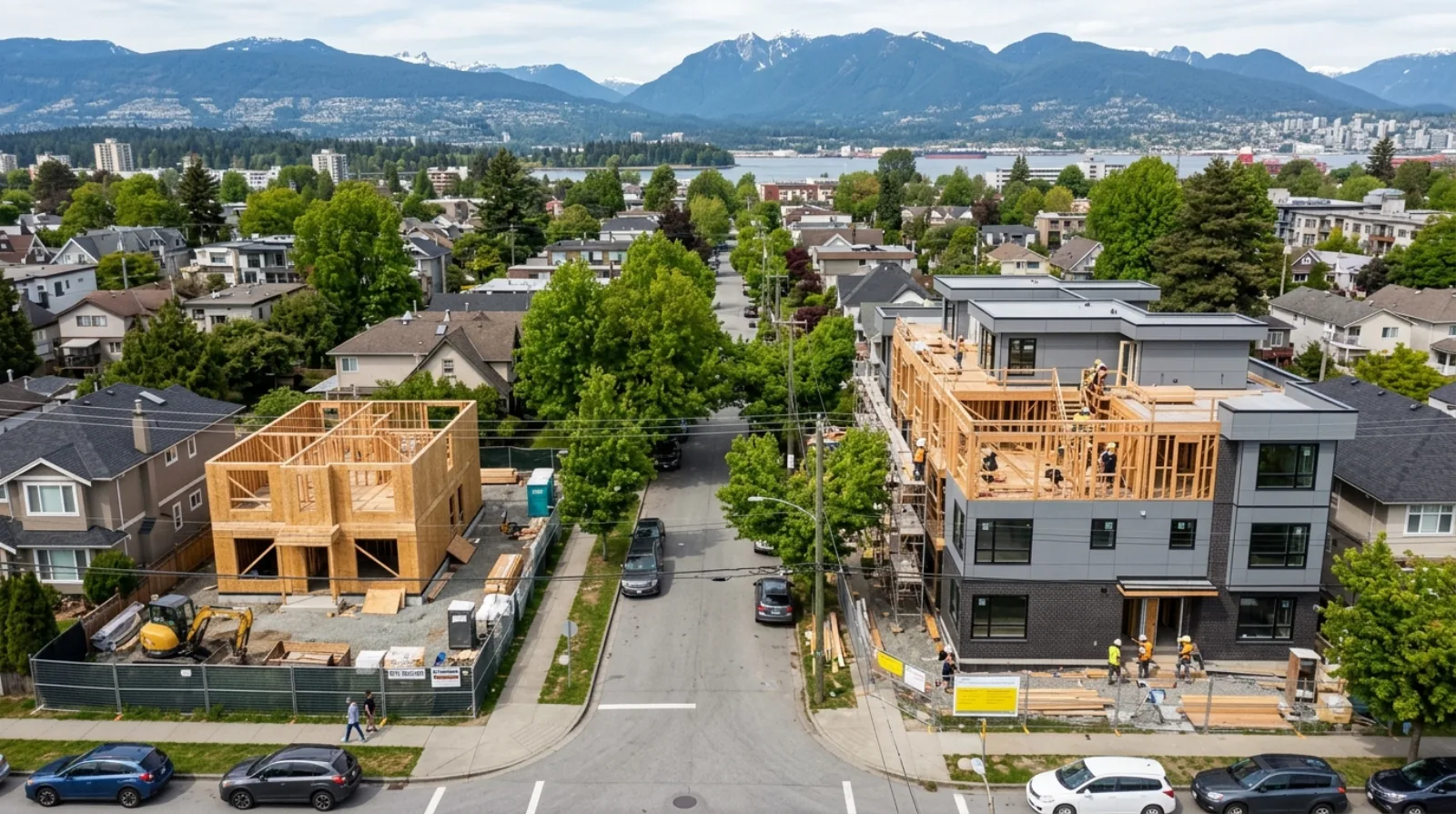
A 33-foot lot is the most common residential parcel in the City of Vancouver. There are roughly 86,000 properties in our underwriting dataset, and a big share of them sit on this exact frontage. Owners on these lots have a real choice now that Bill 44 is in force: build a duplex, or build a fourplex.
Both are legal. Both pencil under the right conditions. Neither is automatically the right answer.
This is a builder’s-eye comparison.
The lot we’re talking about
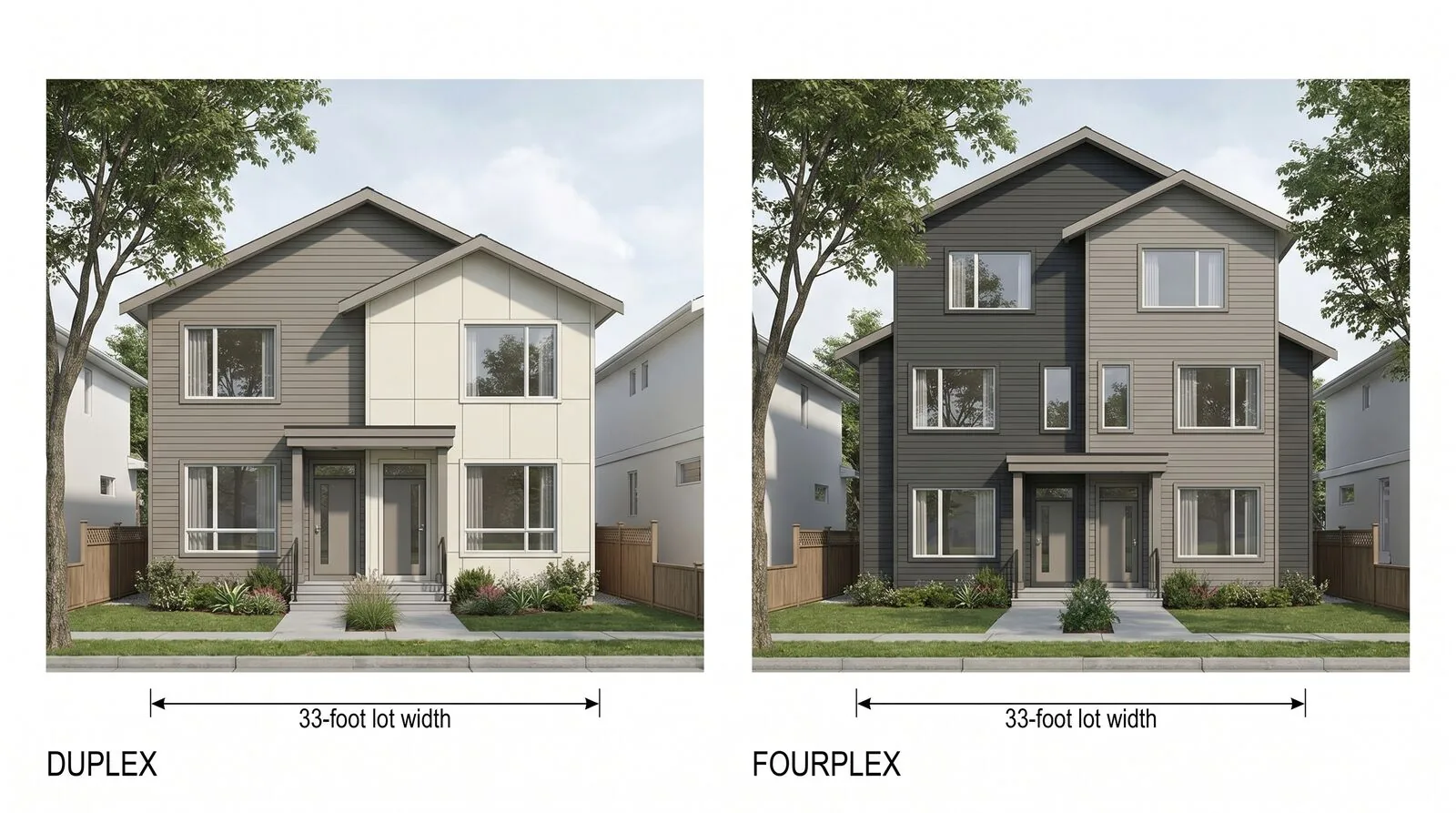
The standard Vancouver 33-foot lot is roughly 33 feet wide by 122 feet deep — about 4,026 sq ft. Vancouver’s R1-1 zoning treats this as a small lot. Lots smaller than 557 m² (about 6,000 sq ft) typically max out at four units in a strata configuration, or potentially more under secured rental. The exact unit count depends on transit proximity and lot shape — confirm with your zoning analyst.
For this comparison we’ll assume a typical 33×122 lot in East Vancouver, R1-1 zoned, not on a frequent transit corridor. By-right options under current bylaws:
- Duplex — two units, side-by-side or stacked.
- Fourplex — four units. Usually two front-facing and two rear-lane-facing on a 33-foot lot.
Both can be done as strata or rental.
Where duplex wins
1. Construction simplicity
A duplex on this lot is essentially a custom home build with a demising wall. BC Building Code Part 9 applies (residential up to 3 storeys, up to 600 m²). No commercial fire-rated corridor system. No common-area exit code. The framing crew, plumbing, and electrical are the same teams who do single-family.
A fourplex on the same lot crosses into different territory. Once you have four dwelling units stacked or arranged with shared circulation, you’re in a more complex code path. Fire separations between units get more demanding. Many fourplexes on 33-foot lots end up needing sprinklers depending on configuration. Read BC Building Code 2024 highlights for the current requirements.
That code complexity translates directly to schedule. Duplex permits in Vancouver currently move faster than fourplex permits — the city’s development review tracker confirms this in aggregated data.
2. End-buyer market
If you’re building strata to sell, the duplex half is one of Vancouver’s most liquid product types. Two 1,500 sq ft side-by-side units in East Van move quickly. Buyers who can’t afford a detached house but want something larger than a condo are the natural audience.
Fourplex strata units are smaller — typically 700–1,100 sq ft each. The buyer pool is different: first-time buyers, downsizers, investors. The market is real, but it’s thinner and more rate-sensitive than the duplex pool.
3. Property management
If you’re renting both halves of a duplex, you have two tenants. Two leases. Two relationships. A fourplex is four. The operational difference between two and four is bigger than it sounds, especially for owner-operators. We covered the operational reality in property management for small rentals.
Where fourplex wins
1. Buildable area per dollar of land
This is the big one. On a 4,026 sq ft lot:
- Duplex at 0.70 FSR ≈ 2,818 sq ft of building, two units, ~1,400 sq ft each.
- Fourplex at 0.70 FSR ≈ 2,818 sq ft of building, four units, ~700 sq ft each.
Same buildable area. Twice the door count. The construction cost per sq ft goes up modestly because of the additional kitchens, bathrooms, and demising walls — typically a 10–15% premium per sq ft. But you’re spreading the same land cost over twice the rent or twice the sales pool.
For owners with high land basis, this matters. The land doesn’t get cheaper in a duplex — you just have fewer units to amortize it across.
2. Rental DSCR strength
Four small rental units on a 33-foot lot in East Van produce more total monthly rent than two larger units, all else equal. CMHC Rental Market Report 2026 data on Vancouver shows per-square-foot rent rises as unit size shrinks — the small studio and one-bedroom pool commands more $/sq ft than two-bedroom side-by-sides.
That matters for DSCR (debt-service coverage ratio). CMHC MLI Select financing requires DSCR thresholds — see the small builder’s guide. The fourplex usually clears DSCR more comfortably than the duplex on the same lot.
3. Five-unit financing threshold
The fourplex doesn’t quite get there — but the secured-rental path on a 33-foot lot in Vancouver can sometimes push to five or six units. That puts the project across the five-unit financing threshold, which unlocks the CMHC programs that make the math work. A pure fourplex sits just below that line and has to use conventional financing.
If you’re on a 33-foot lot and you can get to five units instead of four through the rental bonus, the financing improvement alone often justifies the extra unit. Read Vancouver R1-1 secured rental gets more doors for the specifics.
The factor that decides
In our underwriting work, the variable that most often picks duplex vs fourplex isn’t the lot, the zoning, or the build cost. It’s the owner’s land basis and exit plan.
- Old land basis (purchased pre-2018, low cost) → fourplex usually wins. The land basis is amortized cheaply across more units, the rental yield works, and the owner can hold for cash flow.
- Recent land basis (purchased 2020+, expensive) → duplex often wins. The simpler build, faster timeline, and stronger end-buyer market produce a cleaner exit. Trying to squeeze four units against a recent high land cost rarely pencils once you stack DCLs, soft costs, and financing.
We covered this screening logic in most lots fail the BTR test. The same logic applies in reverse to the build/sell duplex case.
Construction cost: a real number, not a fantasy
I won’t quote dollar figures because BC residential construction costs move every quarter. But the relevant inputs are public. The Statistics Canada residential building construction price index tracks Vancouver costs over time. Use it to anchor your own estimates against current market.
What’s structural — and won’t change based on the cost cycle — is the cost ratio between the two products. On the same 33-foot lot:
- Fourplex hard cost per sq ft typically runs about 8–15% higher than duplex.
- Soft cost per sq ft runs about 10–20% higher (more drawings, more code consulting, often a code consultant for fire separations).
- DCLs and city fees scale per-unit, so the fourplex pays roughly twice the per-unit fees of the duplex. See Vancouver multiplex city fees.
Net: the fourplex is more expensive in absolute dollars but cheaper per door. Whether that math wins depends on your buyer or your tenant.
Permitting timelines
Approximate City of Vancouver review timelines based on the development tracker (these shift monthly):
- Duplex BP: roughly 4–8 months from application to issuance for clean files.
- Fourplex BP: roughly 6–12 months for clean files. Code complexity adds time.
- Add 4–8 weeks for both if the file has resubmissions.
For an owner trying to time a sale or rental lease-up, that 2–4 month gap matters.
Decision framework
If I’m sitting at the kitchen table with someone who owns a 33-foot lot, here’s the actual sequence I run:
- What’s your goal — keep and rent, or build and sell? If sell, lean duplex. If keep, lean fourplex (or rental sixplex if eligible).
- What’s your land basis? Old basis pushes you to more units. Recent basis pushes you to fewer.
- Are you OK with property managing four tenants? If no, duplex. If yes, fourplex or rental five-plus.
- Can you get to five units under the rental bonus? If yes, the financing math usually wins over the fourplex. See Bill 44 rental tenure rules.
There’s no universal answer. The right product depends on the owner more than the lot.
What this looks like in real Vancouver projects
Among the projects Alair Homes Vancouver has built (where I was formerly principal), a clear pattern: duplexes on 33-foot lots produce predictable margins on a faster timeline. Fourplexes produce stronger long-term cash flow but require more patience and stronger contractor relationships. A 2024 Alair Homes Vancouver project — a multiplex on a typical Vancouver lot — was a HAVAN award finalist, and the operational learnings from that build went into how we now scope every fourplex from day one.
Pick the building that matches your tolerance for complexity. Don’t pick based on what’s trendy in the news. The duplex isn’t outdated. The fourplex isn’t always better. They’re different tools for different situations.
For more on building-type fundamentals, see the missing middle hub and the fourplex deep-dive.
— David Babakaiff, Co-Founder, VanPlex