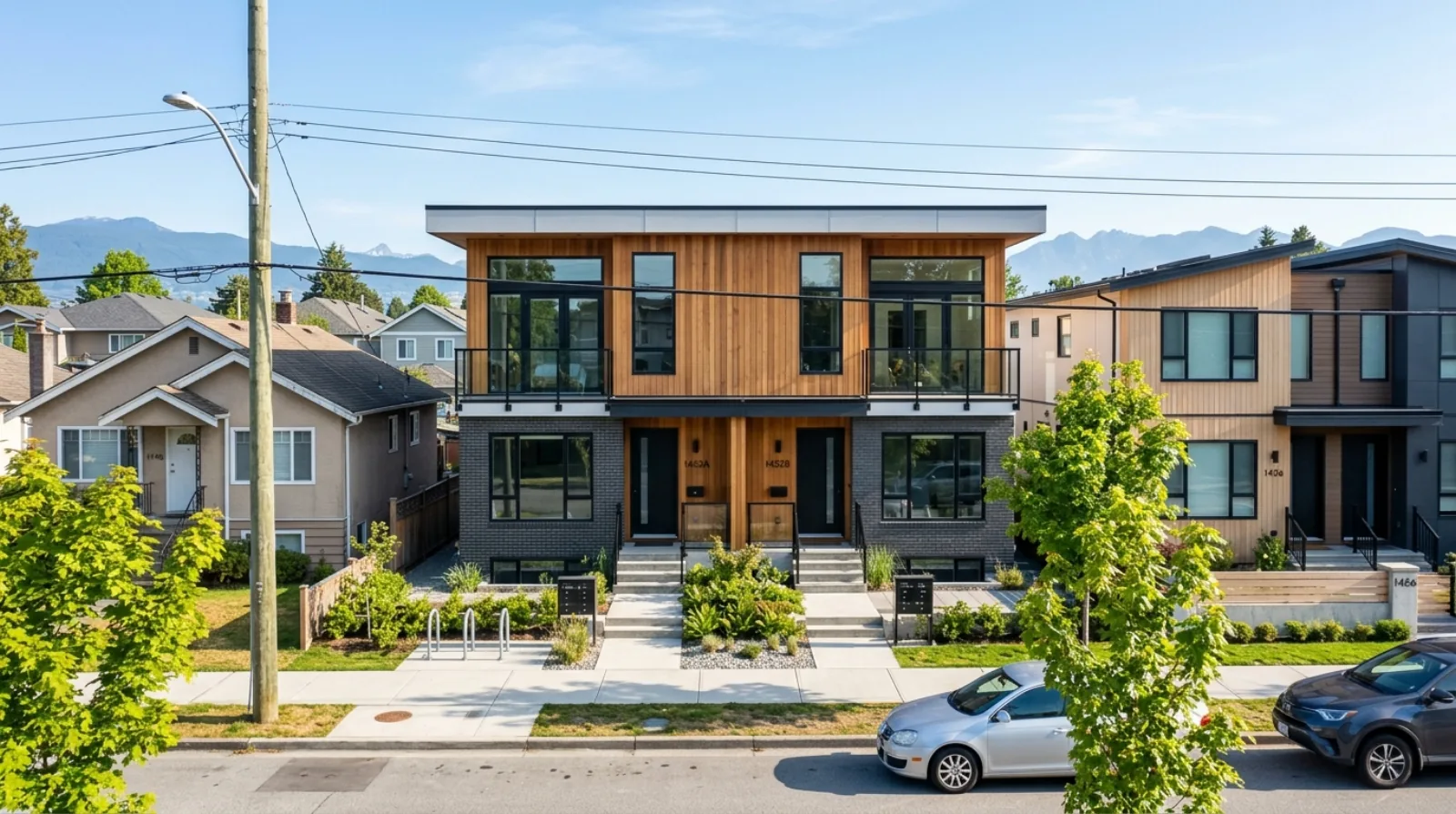

5 Essential Tips for First-Time Real Estate Investors in Vancouver
Entering Vancouver’s real estate market as a first-time investor can feel overwhelming. With property prices among the highest in Canada and complex regulations to navigate, having a solid strategy is crucial. Our investment page is a good starting point for understanding how multiplex development fits the current opportunity. Here are five essential tips to help you start your investment journey on the right foot.
1. Start with Market Education, Not Emotion
Understanding Vancouver’s Unique Market
Vancouver’s real estate market operates differently from other Canadian cities. Key factors include:
- Foreign buyer restrictions: Recent policies affecting international investment
- Speculation tax: Additional costs for non-resident owners
- Rental regulations: Strict tenant protection laws
- Development trends: Shift toward higher density housing
Essential Research Areas
Before making any investment:
- Study neighborhood price trends over 5-10 years
- Analyze rental vacancy rates by area
- Understand demographic shifts and migration patterns
- Review infrastructure development plans
- Learn the key terms — our glossary covers the vocabulary you’ll need when talking to lenders, agents, and builders
Pro Tip: Spend at least 3-6 months studying the market before making your first purchase. Join local real estate investment groups and attend city planning meetings.
2. Build Your Financial Foundation First
Calculate Your True Investment Capacity
Many first-time investors underestimate the total capital required. Beyond the down payment, consider:
- Down payment: Minimum 20% for investment properties
- Closing costs: 2-3% of purchase price
- Emergency fund: 6 months of mortgage and operating expenses
- Initial repairs: Budget 1-2% of property value
- Property management: 8-10% of rental income if outsourced
Financing Strategies
Explore multiple financing options:
- Traditional mortgages: Shop with multiple lenders
- Private lending: Higher rates but more flexible
- Partnership structures: Share costs and risks
- HELOC on primary residence: Use existing equity
3. Choose the Right Property Type for Your Goals
Comparing Investment Options
| Property Type | Pros | Cons | Best For |
|---|---|---|---|
| Condo | Lower entry cost, less maintenance | Strata fees, appreciation limits | Cash flow focus |
| Townhouse | Balance of space and price | HOA restrictions | Families, moderate budgets |
| Single-family | High appreciation, development potential | High cost, more maintenance | Long-term wealth building |
| Multiplex | Multiple income streams | Complex management | Experienced investors |
Location Selection Criteria
Prioritize properties near:
- Public transit stations (especially SkyTrain)
- Major employment centers
- Universities and colleges
- Growing commercial districts
4. Master the Numbers That Matter
Key Investment Metrics
Understanding these calculations is non-negotiable:
Capitalization Rate (Cap Rate)
Net Operating Income ÷ Property Value = Cap Rate
Example: $30,000 NOI ÷ $750,000 = 4% Cap Rate
Cash-on-Cash Return
Annual Cash Flow ÷ Total Cash Invested = Cash-on-Cash Return
Example: $12,000 ÷ $150,000 = 8% Return
1% Rule (Modified for Vancouver)
- Traditional: Monthly rent should equal 1% of purchase price
- Vancouver reality: Aim for 0.4-0.5% given high property values
Creating Realistic Projections
Factor in all expenses:
- Mortgage principal and interest
- Property tax (check BC Assessment)
- Strata/maintenance fees
- Insurance
- Property management
- Repairs and maintenance (1% of value annually)
- Vacancy allowance (5-10% of rental income)
5. Build Your Investment Team Early
Essential Team Members
Don’t try to do everything alone. Assemble:
- Real Estate Agent: Specializing in investment properties
- Mortgage Broker: Access to multiple lenders
- Real Estate Lawyer: Experienced in investment transactions
- Accountant: Understanding of real estate tax strategies
- Property Inspector: Thorough pre-purchase assessments
- Property Manager: If not self-managing
Questions to Ask Potential Team Members
- How many investment property transactions have you handled?
- What’s your familiarity with my target neighborhoods?
- Can you provide references from other investors?
- What’s your fee structure?
- How do you stay updated on market changes?
Bonus Tip: Start Small and Scale Strategically
The Power of Starting Small
Your first investment doesn’t need to be perfect—it needs to be educational. Consider:
- Starting with a condo rather than a house
- Choosing established neighborhoods over speculation
- Focusing on cash flow over appreciation initially
- Learning property management before scaling
Planning Your Portfolio Growth
Create a 5-year plan:
- Year 1: First property, focus on learning
- Year 2: Optimize operations, build reserves
- Year 3: Consider second property or refinancing
- Year 4-5: Expand based on market conditions and experience
Common First-Time Investor Mistakes to Avoid
- Buying based on emotion: “I love this neighborhood” isn’t an investment strategy
- Ignoring cash flow: Betting purely on appreciation is risky
- Underestimating time commitment: Property investment isn’t passive
- Skipping due diligence: Always get inspections and review documents
- Going solo: Leverage expertise of professionals
Take Action with Confidence
Vancouver’s real estate market offers significant opportunities for prepared investors. By following these tips and continuing your education, you can build a profitable portfolio over time.
Your Next Steps
- Calculate your investment budget realistically
- Choose 3-5 target neighborhoods to research
- Connect with local investment groups
- Interview potential team members
- Analyze 10 properties before making an offer
Remember, every successful investor started as a beginner. The key is to start with solid fundamentals and learn from each experience. If you already own a home and want to understand how that changes the math, the homeowners overview explains the equity advantage homeowners have over outside investors.
Ready to analyze your first investment opportunity? Our tools help you evaluate properties with confidence. Start your investment journey with data-driven insights.