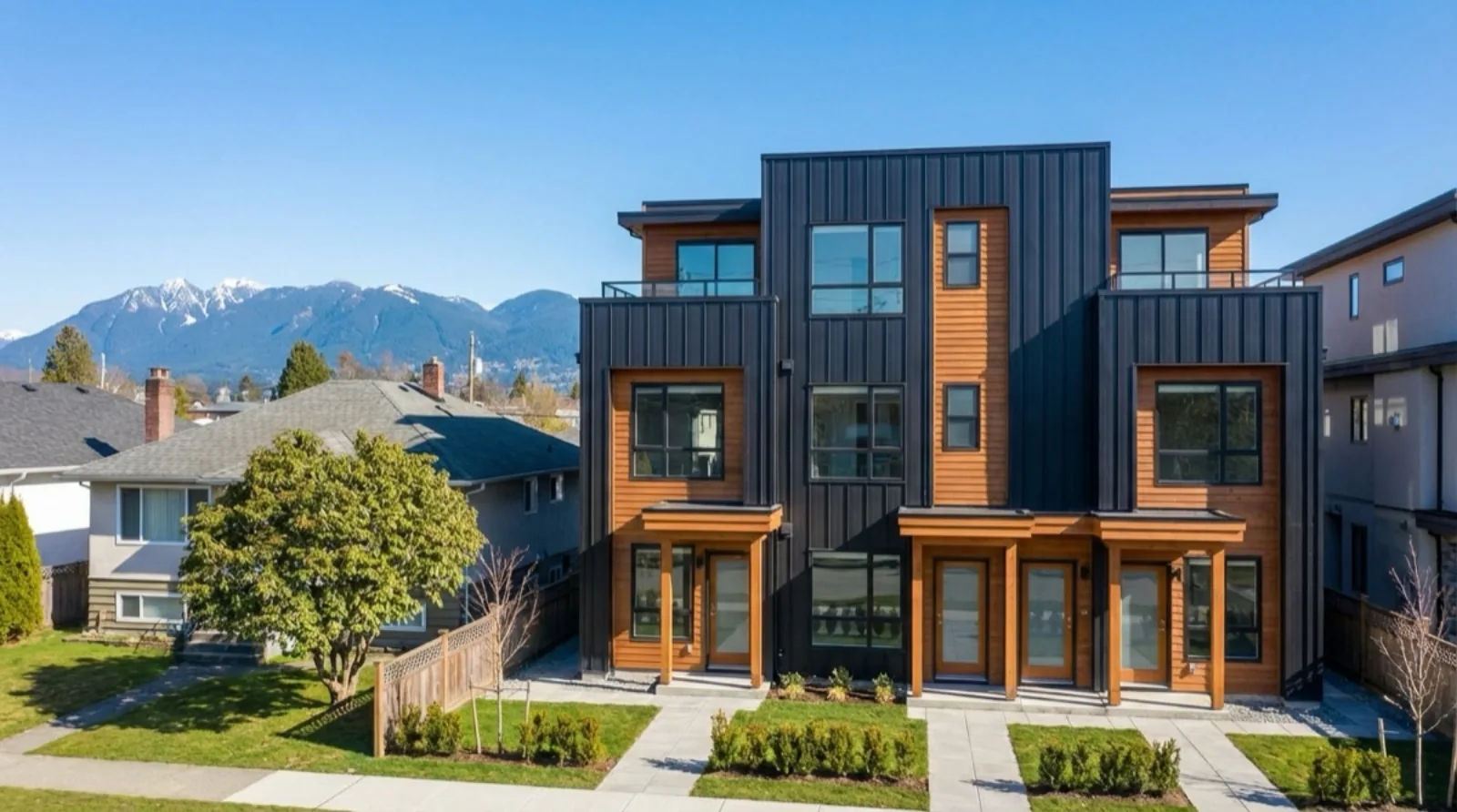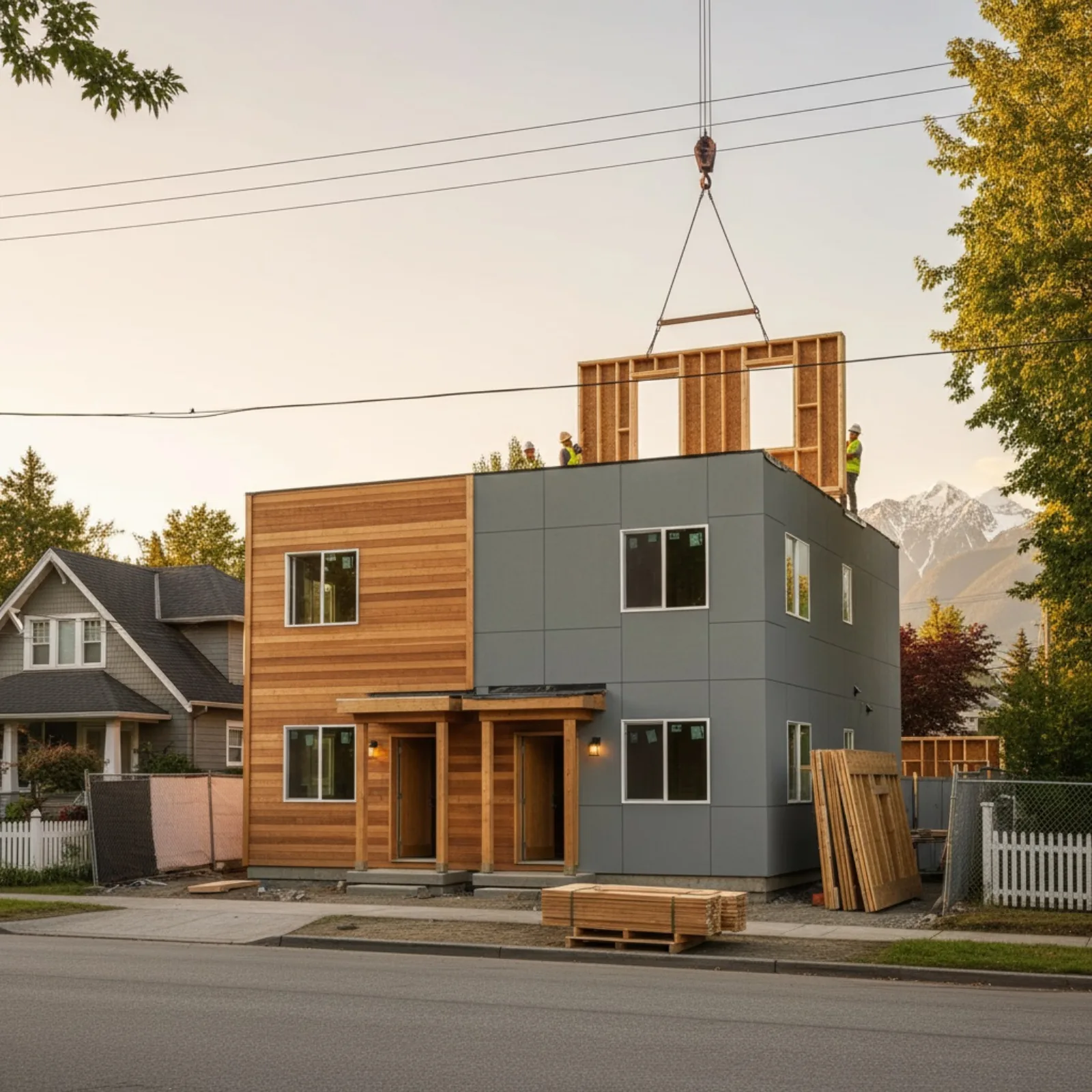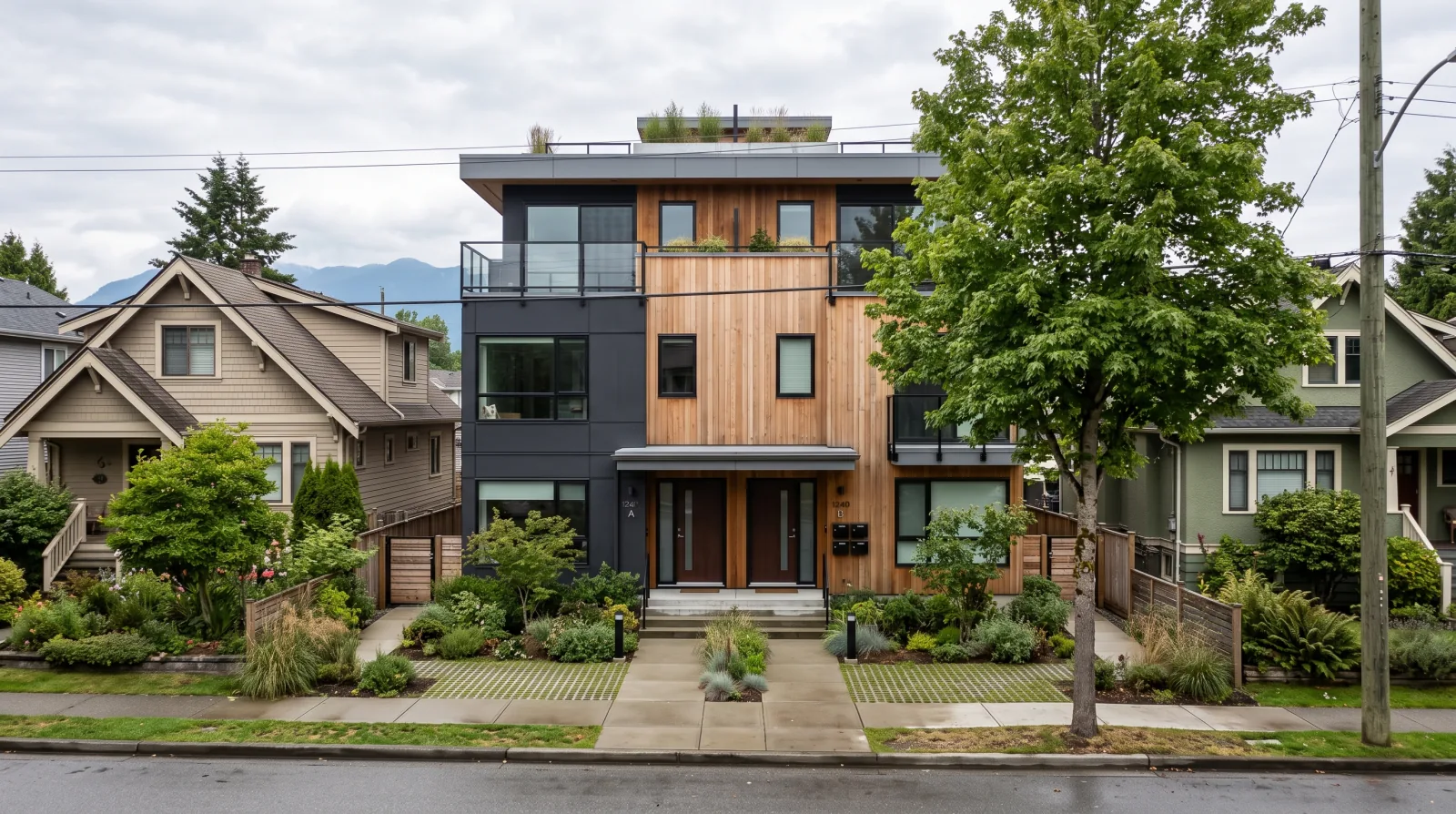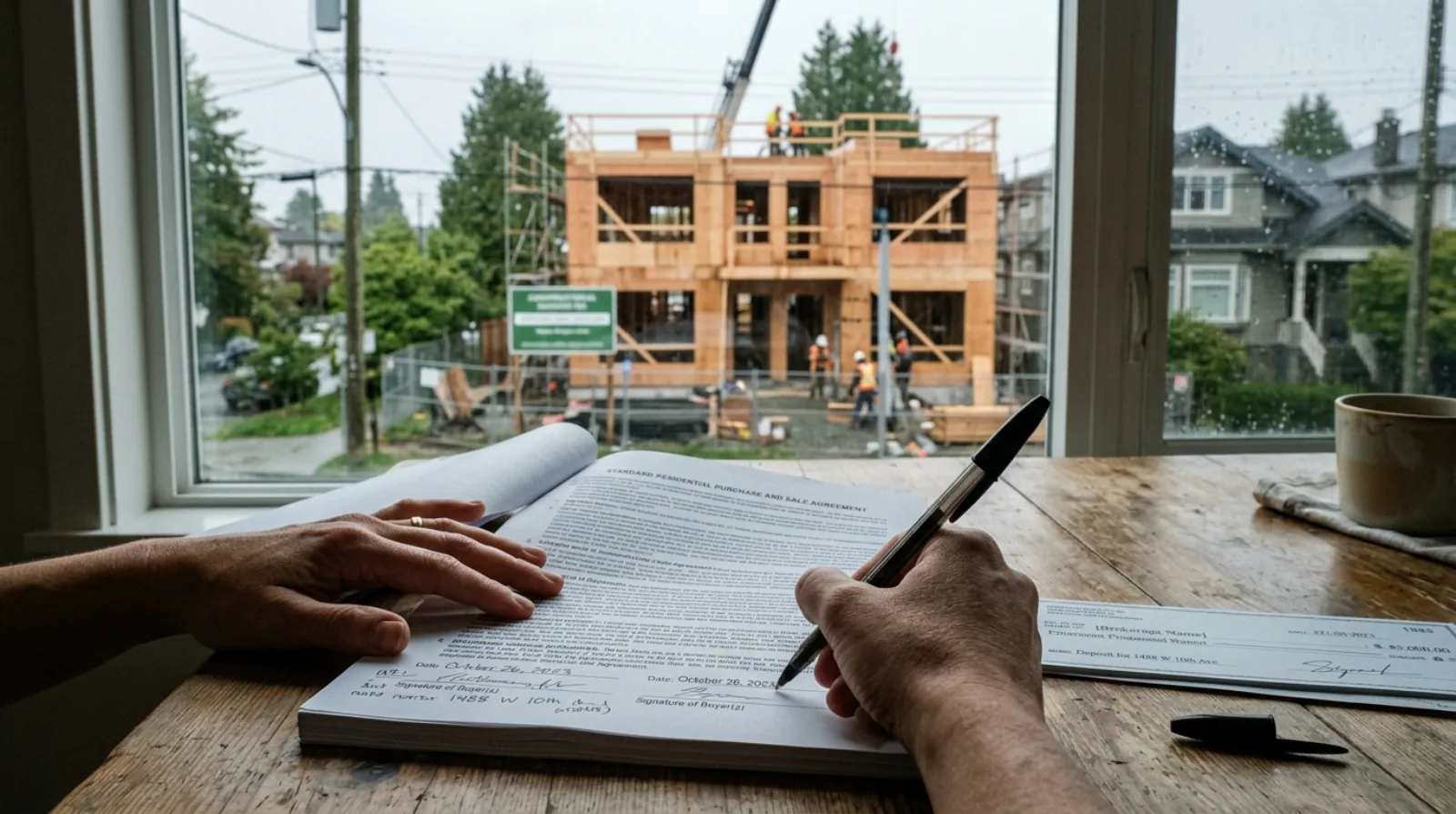

Budget 2026, tabled in Ottawa on November 5, 2026, proposes to keep the federal ban on foreign buyers of existing homes for two more years, to January 1, 2029, and to exempt new homes from it. The ban is now set to end on January 1, 2027. The budget gives no definition of a “new residential property” and no start date for the exemption. For anyone building or selling new multiplex homes in BC, that undefined phrase is the part to watch.
What the budget says, word for word
The passage is in Chapter 3 of the budget, “A more affordable life”:
“Budget 2026 proposes to extend the ban on foreign purchases of existing residential properties for two years, to January 1, 2029, while exempting new residential properties. This would help protect housing affordability by keeping the vast majority of the market available for Canadians, while unlocking additional investment in new housing supply. We will continue to support a range of policy measures, such as those levied by other levels of government, which address housing market pressures, including speculation. The federal government will propose legislation and launch a regulatory process on this change in short order.”
Nothing has changed yet. This is a proposal, and it still needs a bill and new regulations. The budget splits the market into “existing” and “new” homes without a test for telling them apart. Its line about measures “levied by other levels of government” leaves provincial taxes in place, and in BC that includes the 20% foreign buyer tax covered below.
How long the ban has run
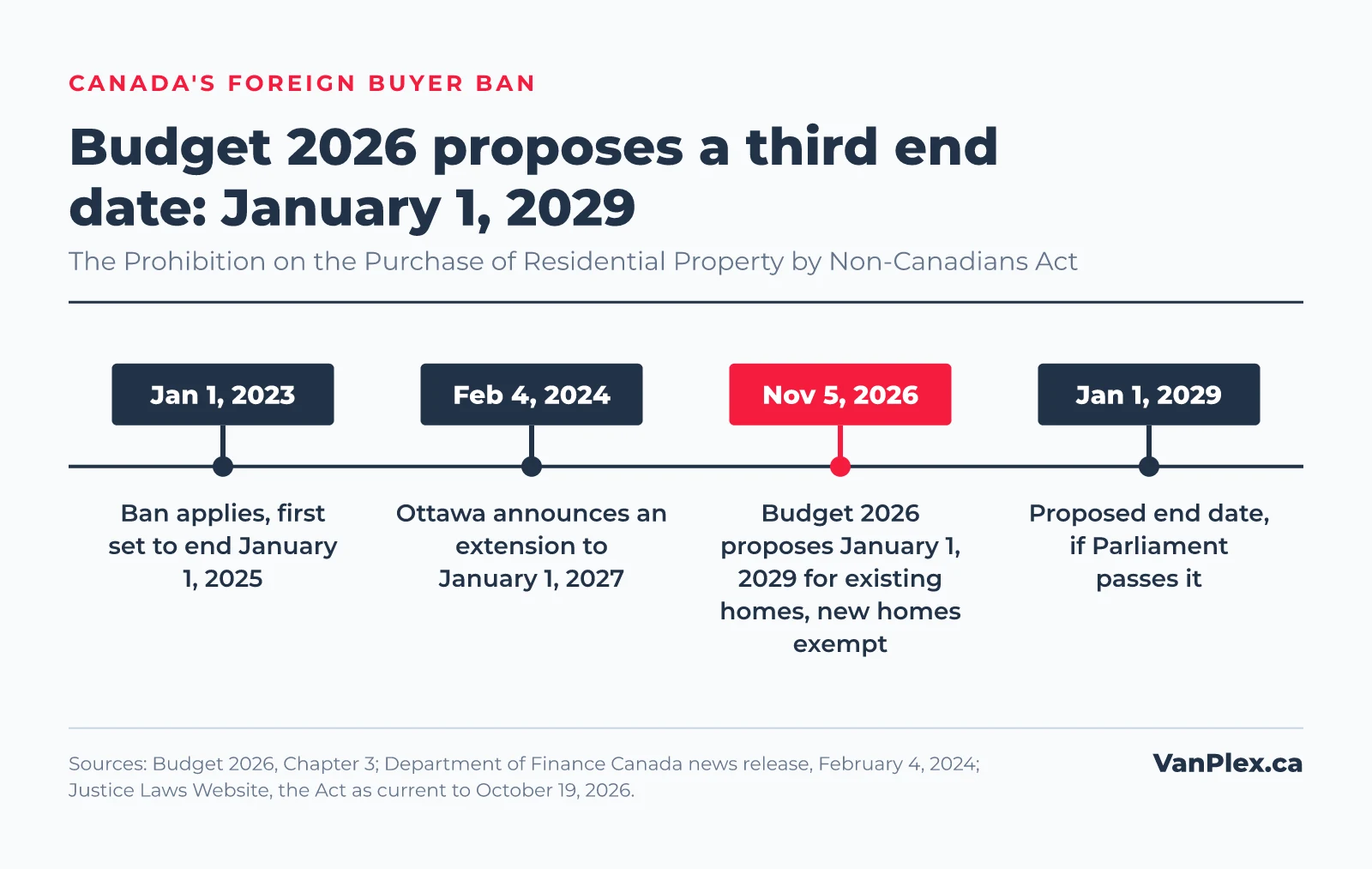
The law is the Prohibition on the Purchase of Residential Property by Non-Canadians Act. It applied from January 1, 2023. Its first end date was January 1, 2025. On February 4, 2024, the Department of Finance announced that the ban “will be extended to January 1, 2027.” If Parliament passes what Budget 2026 proposes, existing homes stay in the ban for two more years after that.
What the ban covers today
Who and what the ban covers comes down to one definition. Section 2 of the Act defines “residential property” as:
- a detached house or similar building “containing not more than three dwelling units”, or
- “a part of a building that is a semi-detached house, rowhouse unit, residential condominium unit or other similar premises.”
A “non-Canadian” is a person who is not a Canadian citizen, a permanent resident or registered under the Indian Act. It also covers foreign corporations, and Canadian corporations not listed on a Canadian stock exchange that such people or companies control. A Canadian citizen living abroad is not caught. We cover that case in our page on Canadians abroad.
Read those two lines with a multiplex in mind:
| What is being bought | Covered by the ban today? | Where it comes from |
|---|---|---|
| A house, duplex or triplex, bought as a whole | Yes | Act s.2(a): “not more than three dwelling units” |
| One strata unit in a new fourplex or sixplex | Yes | Act s.2(b): a unit in a rowhouse, condominium “or other similar premises” |
| A whole building with 4 or more dwelling units | No | Outside the s.2(a) definition |
| A house or lot bought to develop | No | Regulations s.4(2)(e), “for the purposes of development” |
| A home outside a census metropolitan area or census agglomeration | No | Regulations s.3(1) |
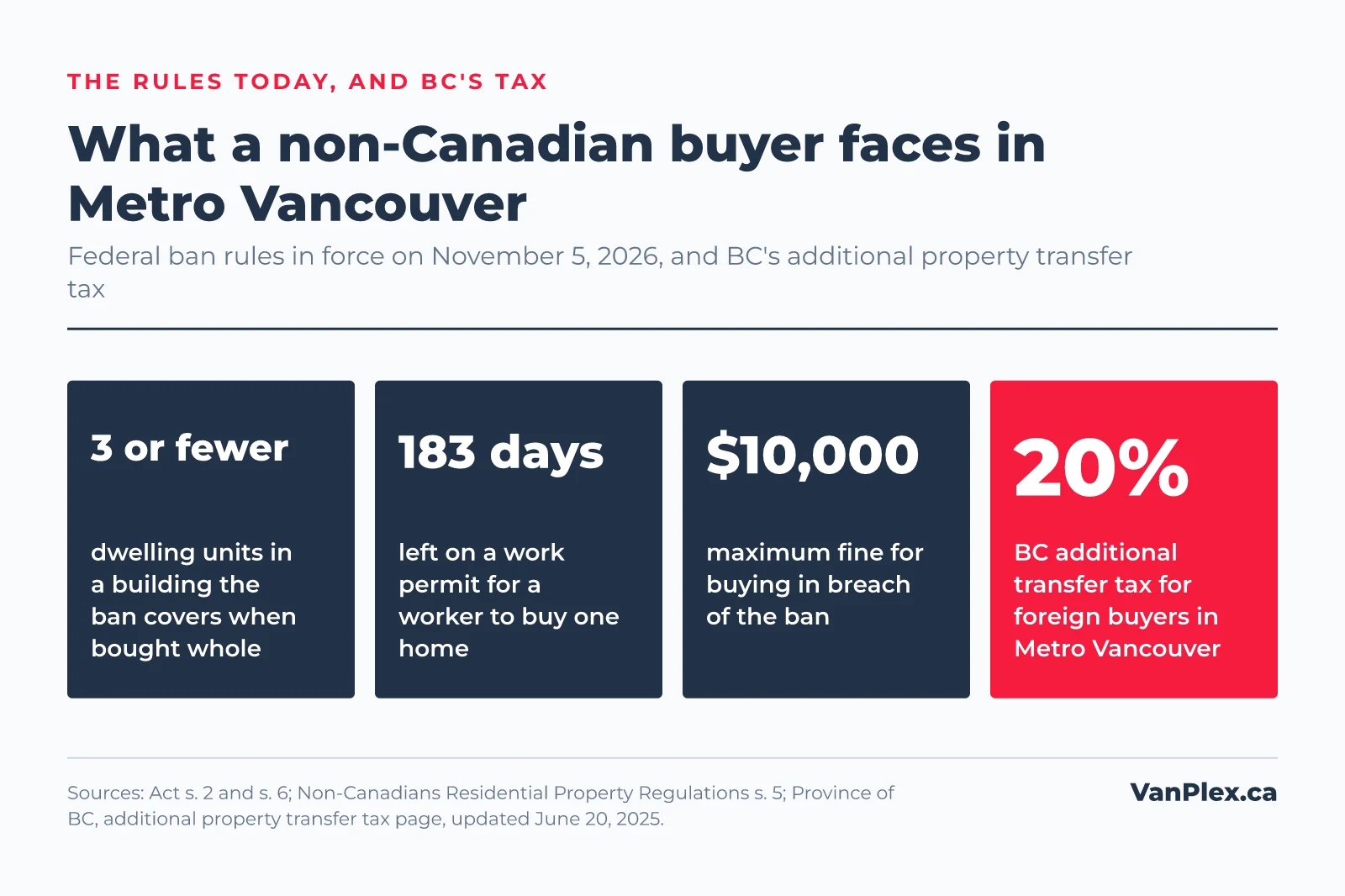
Two exceptions in the regulations matter for multiplex work. A non-Canadian can already buy residential property “for the purposes of development”, so this law does not stop a foreign investor from buying a Vancouver lot to build a sixplex. And a worker on a work permit can buy one home if the permit has “183 days or more of validity remaining” on the purchase date.
The penalty in section 6 is a fine of up to $10,000.
What “new residential properties” could mean for a multiplex
Under today’s law, a foreign buyer can fund the development of a fourplex but can’t buy one of its finished strata units. If the exemption covers new strata units, that changes. A builder could sell presale units in a fourplex or sixplex to buyers who are not Canadian citizens or permanent residents.
Whether it does depends on wording that does not exist yet. The budget does not say whether “new” means presales only, homes never lived in, or homes built after a certain date. It does not say whether a completed multiplex unit that sat unsold for a year still counts. My advice to builders: don’t change a sales plan or a lender’s presale count on this until the regulations are published. The budget says Ottawa will propose legislation and start the regulatory process “in short order”, with no date.
BC’s 20% tax does not change
The federal budget changes only the federal ban. BC’s additional property transfer tax for foreign nationals, foreign corporations and taxable trustees is 20% of the fair market value of their share of a residential property. It applies in five regional districts:
- Metro Vancouver Regional District
- Fraser Valley Regional District
- Capital Regional District
- Regional District of Central Okanagan
- Regional District of Nanaimo
So even with the exemption, a foreign buyer of a new $1,500,000 multiplex unit in Vancouver would owe $300,000 of additional transfer tax on top of the regular property transfer tax. That cost is why I doubt the exemption brings many foreign buyers into Metro Vancouver presales.
What to do now
- If you’re building to sell: keep your presale plan built on Canadian buyers. Watch for the bill and the draft regulations, and read the definition of “new” before you count on foreign buyers.
- If you’re a foreign investor: buying land to develop is already allowed under the regulations. Buying a finished strata unit is not, until the exemption is law. BC’s 20% tax applies to residential property you buy in Metro Vancouver.
- If you own a lot: nothing in this proposal changes who can buy your property for development today. Run a proforma on your address to see what a multiplex on your lot could earn.
We’ll update this post when the bill and regulations are published.
David Babakaiff, Co-Founder, VanPlex | PlexRank™ | Profit with Multiplex