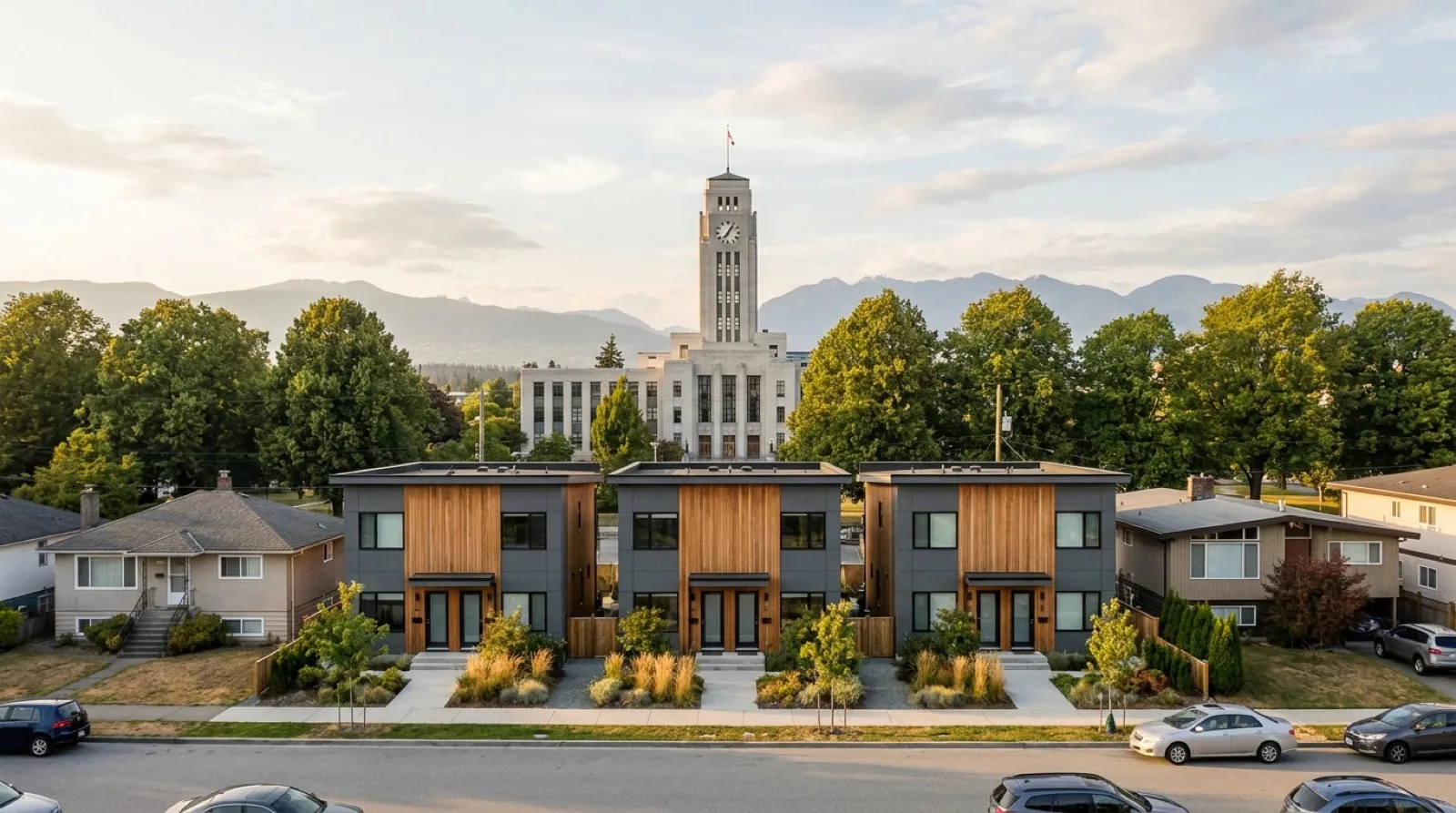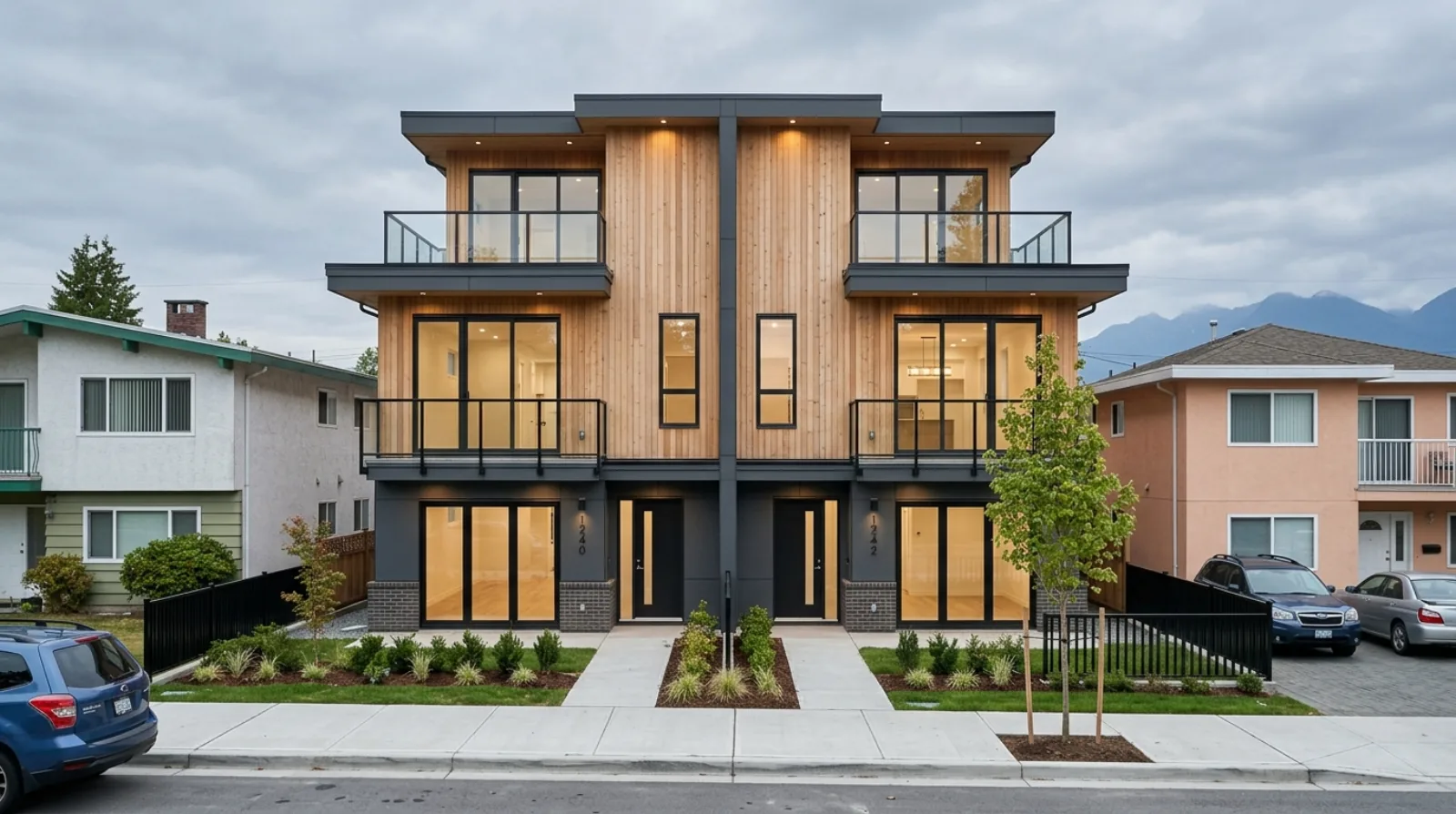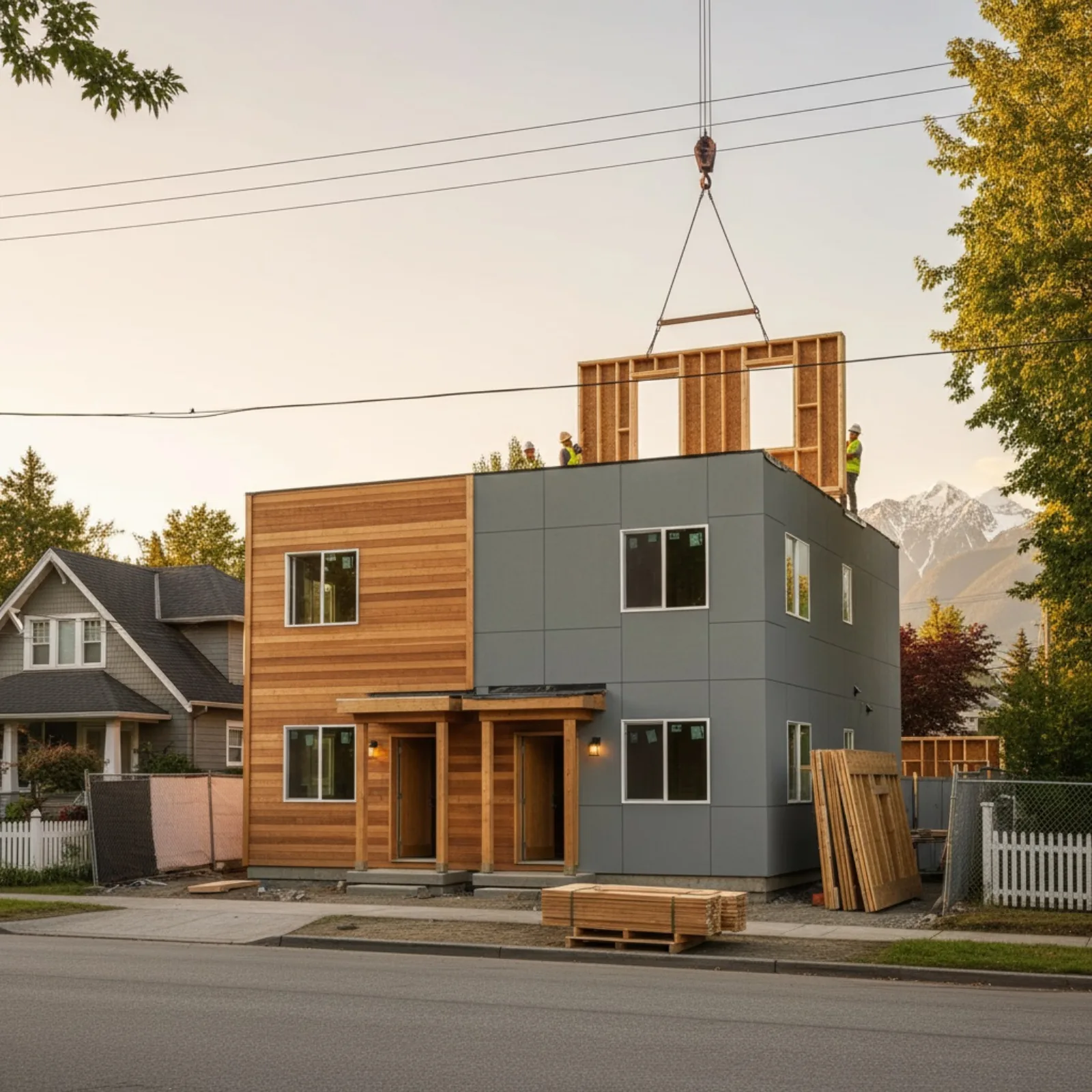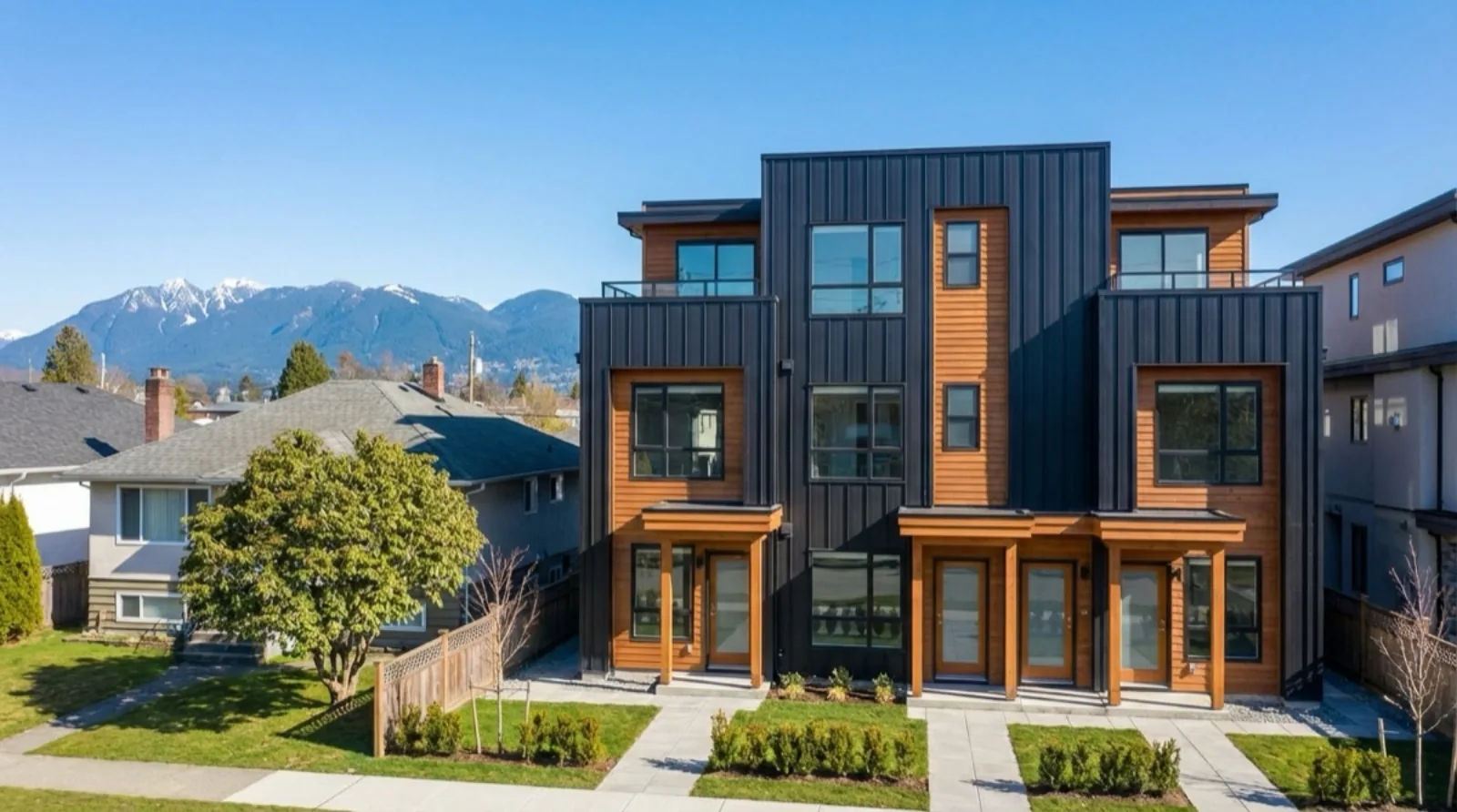
“We will welcome capital back to our province,” Lorne Doerkson told supporters on election night, after CBC News projected a BC Conservative majority on October 24, 2026. If you own a house lot and plan a multiplex, the rules you build under today are still the law. What the new government has promised is lower construction charges, faster approvals, a rewrite of the step code, and more say for cities over where density goes. The last of those could change how many homes a city must allow on your lot.
Results below are CBC News projections from election night, October 24 to 25, 2026. Elections BC publishes the final count later. Every promise comes from the party’s platform, “Lorne Doerkson’s Plan for a Stronger BC”, with the page number.
What happened on October 24
CBC News projected that the BC Conservatives won a majority, the party’s first government in BC since 1928 (CBC News, live coverage). A majority takes 47 seats. David Eby called the election two years early. In his concession speech he resigned as premier and as leader of the BC NDP, and CBC projects he keeps his own seat in Vancouver-Point Grey.
Doerkson, 58, has been the MLA for Cariboo-Chilcotin since 2020. He became Conservative leader last month, after Kerry-Lynne Findlay resigned, and he learned of it on a flight home from South Africa (CBC).
”We will welcome capital back to our province”
That line came in the part of his speech about the economy. He also said Vancouver will host a business summit next year that will be the “envy of the world,” promised to cut red tape “like never before,” and repeated his pledge of a $1,000 tax cut and no new taxes (CBC).
The platform names the summit: a “BC Open for Business” Investment Summit that brings “global investors, Canadian pension plans and private equity funds to BC” (page 48). For anyone who finances multiplexes, the other money items are these:
| Promise | What the platform says | Page |
|---|---|---|
| Income tax cut | Basic personal amount rises from $13,216 to $32,000: $1,000 less tax for people who owe at least that much, from the 2027 tax year | 5, 59 |
| Red tape | Back to 2017 levels by the end of the first term, a “one-in, two-out” law, firm approval timelines | 13 |
| PST | Cancel the PST on professional services; no PST for three years on machinery, equipment and business software | 13 |
| Investment | A Premier’s Advisory Council on Investment and the “BC Open for Business” summit | 48 |
The housing promises, line by line
The housing chapter is called “Make a new home cheaper to build and buy” (pages 5 to 7). Here is every item in it, in the platform’s words:
| Promise | What it says | Page |
|---|---|---|
| Cut construction taxes and charges | ”Scrap unnecessary charges that add to construction costs, and restore choice in energy for home heating and cooking” | 5 |
| Approve homes in months, not years | Work with cities “so zoning bylaws match official community plans” | 6 |
| Local say on density | ”Where the density goes and what it looks like needs to be a decision of local government and local residents, not bureaucrats in Victoria” | 6 |
| Build for families | Shorter approvals for communities that want family-oriented growth | 6 |
| Growth that comes with services | Roads, transit, health care, schools and utilities with new growth | 6 |
| Fix the Building Code | ”Overhaul the step code” and simplify the building code | 6 |
| Multigenerational tax credit | Match the federal credit for a self-contained suite for a senior relative | 7 |
The energy chapter adds one more item that touches new homes: “stop municipal bans on gas connections and mandatory heating technologies” (page 22).
None of these items carries a dollar figure. The platform does not say which charges count as “unnecessary,” so we do not know yet whether development cost charges or amenity cost charges on a multiplex go down, or by how much.
Bill 44 rules stay law until the legislature changes them
The small-scale multi-unit housing law, passed in the fall of 2023, makes cities allow at least 3 homes on lots of 280 m² or less, at least 4 on larger lots, and at least 6 on lots over 281 m² within 400 metres of a prescribed bus stop. The rule covers lots inside an urban containment boundary or in a municipality of more than 5,000 people (Province of BC, SSMUH Provincial Policy Manual, pages 8 and 9). Those rules stay in force until the legislature passes a new law.
The platform names no change to this law. It does say density should be “a decision of local government and local residents.” Doerkson said the same thing in plainer words during the campaign: “Ultimately, it’s not Victoria’s place to tell Terrace where they should put housing” (CBC News, October 16, 2026).
My read, as someone who builds these: if Victoria hands the density decision back to cities, the cities that fought Bill 44 hardest could cut back what they allow. Vancouver is a different case. Council made multiplexes legal with its own bylaw on September 14, 2023, and the vote was unanimous (Daily Hive). That bylaw stays unless Council changes it, and Mayor-elect Pete Fry’s platform proposes nothing that undoes it (our post on Mayor Pete Fry).
The step code and gas: where costs could fall
The BC Energy Step Code is the Province’s set of energy rules for new buildings, on what the Province calls its “path to net-zero energy ready new buildings by 2032.” The platform calls it a code “that has nothing to do with safety and quality construction” and promises to overhaul it (page 6). Together with the end of municipal bans on gas connections (page 22), that is the most direct cost promise for multiplex builders in the platform.
Two cautions. First, nothing changes until a new regulation is written, and the platform gives no date. Second, a lower energy standard can lower the build cost and raise the heating bill your buyers or tenants pay. Run both numbers before you redesign a project around it.
What stays the same after the vote
The speculation and vacancy tax rates for 2026 are already law: 1% for Canadian citizens and permanent residents, 3% for foreign owners and untaxed worldwide earners (Province of BC). The Conservative platform does not mention this tax. The NDP campaigned on an unsold condo tax and a one-point rise in the vacancy tax (CBC News); the Conservative platform includes neither.
Your zoning, your permit and the city fees on your file are the same today as they were before the vote.
What to do this week
If you have a project in permitting, keep going. Nothing in force has changed, and a pause costs you carrying interest every month.
If you are deciding whether to buy a lot, check what the city allows on it today, under its own bylaw. A city bylaw stays in place even if the provincial minimum is later relaxed. Run the address on VanPlex to see the zone, the number of homes allowed and the build math for that lot.
David Babakaiff, Co-Founder, VanPlex | PlexRank™ | Profit with Multiplex