
September 2026 Update — Newer Numbers Available
The 518-application, 16-completion snapshot below is from February 2026. For a running count that updates as new permits are filed and issued, see the VanPlex Interactive Permit Map, which showed 591 applications and 320 issued development permits as of August 11, 2026. The pipeline dynamics and strategy below still apply.
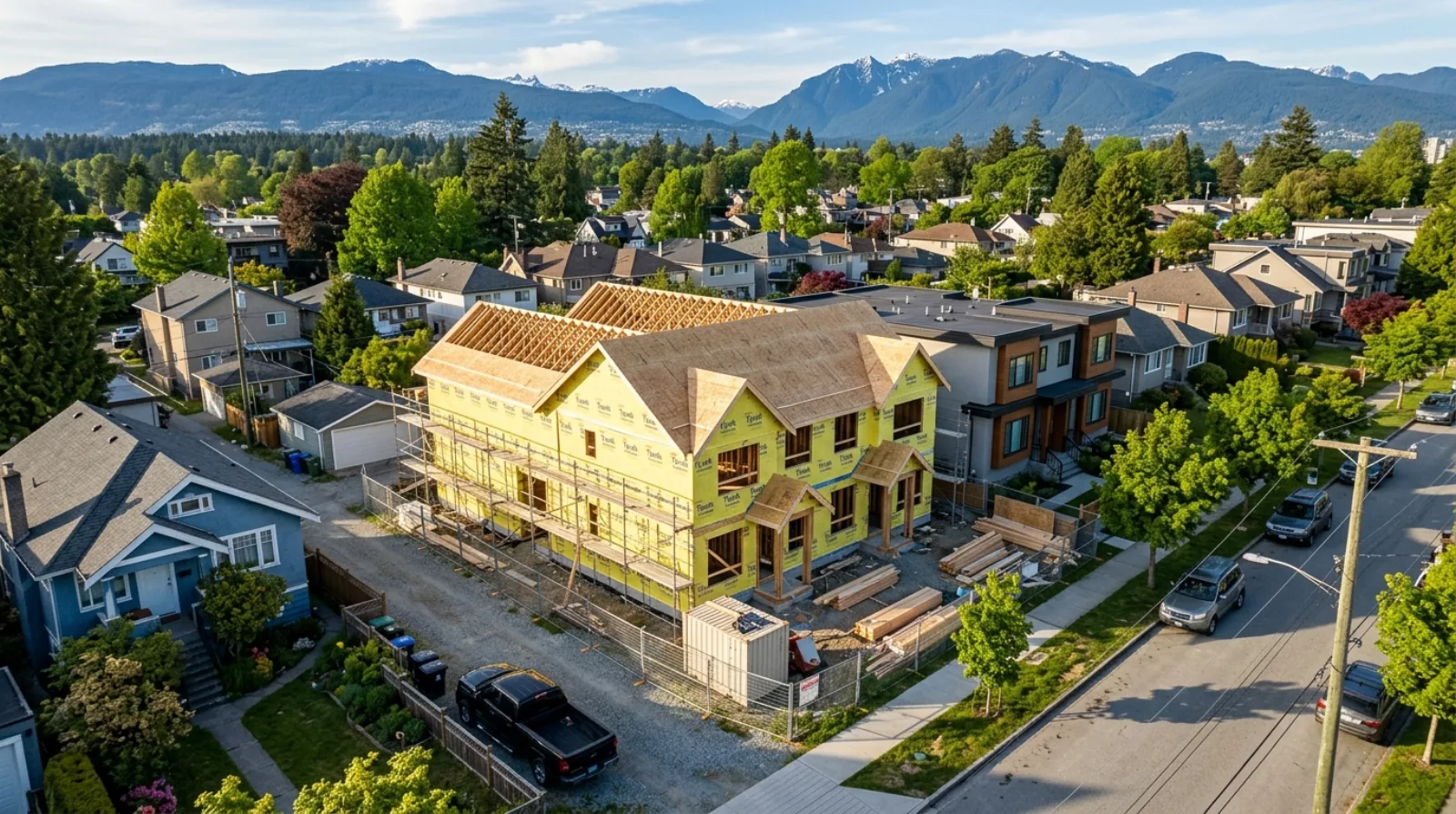
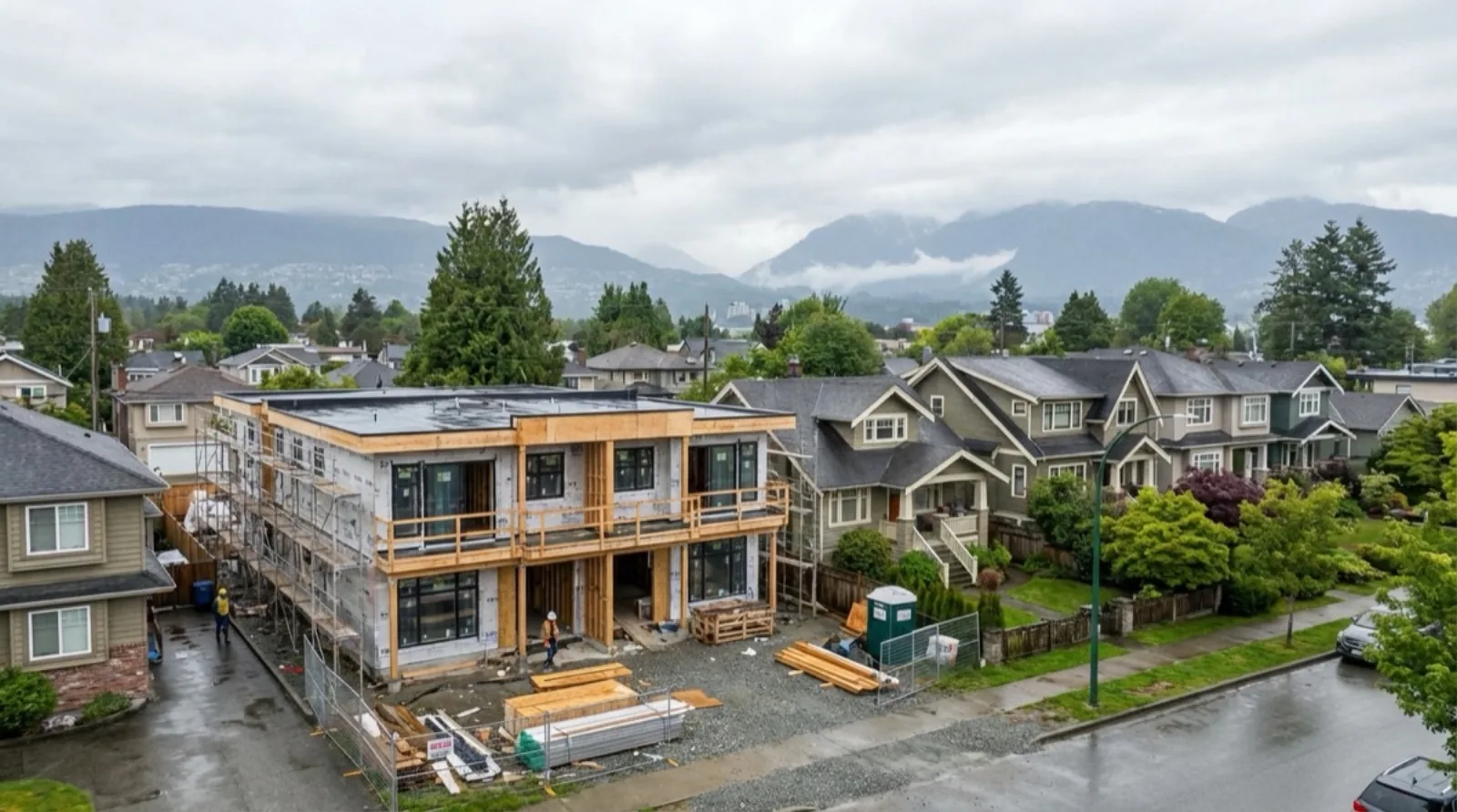
Vancouver had 518 multiplex permit applications in the pipeline as of February 2026. Only 16 had actually completed construction at that point. That 3% completion rate told the real story about multiplex development at the time—and it wasn’t the success narrative in the headlines. Here’s why the backlog mattered and what it meant for homeowners considering development.
The Pipeline Reality: 518 vs. 16
Let’s talk about what those numbers actually mean.
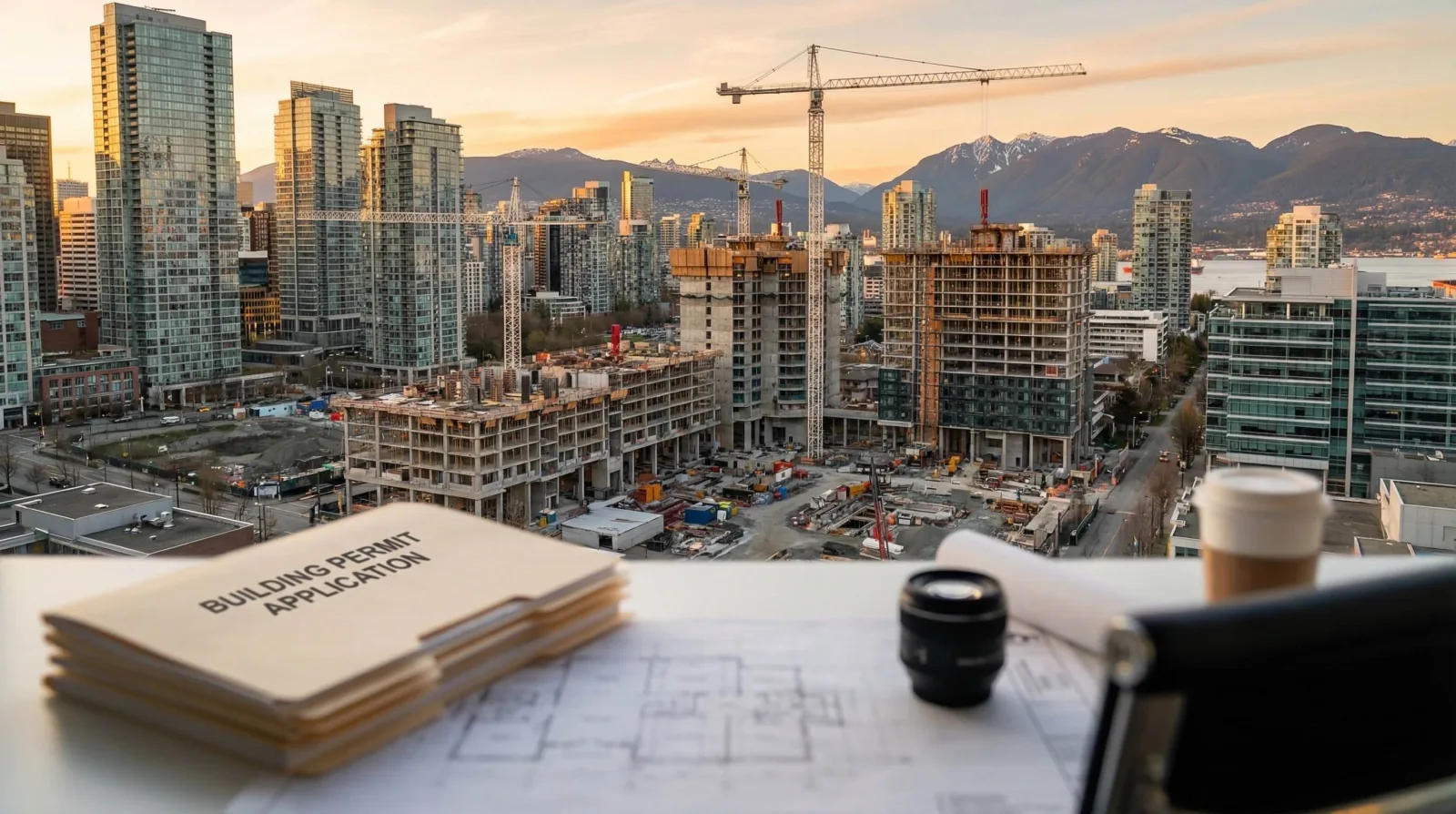
Vancouver’s planning department celebrated reaching 518 multiplex applications as proof that Bill 44 is working. And technically, it is—homeowners are interested. But between “application filed” and “building completed” lies a gauntlet that eliminates most projects.
| Pipeline Stage | Count | Percentage |
|---|---|---|
| Applications Filed | 518 | 100% |
| In Review | ~220 | 44% |
| Approved/Permitted | ~200 | 40% |
| Under Construction | ~60 | 12% |
| Completed | 16 | 3% |
The 16 completions aren’t a failure of policy—they’re a function of timeline. The first multiplex permits under the new regime were issued in late 2024. With 9-12 month build times, we’re just now seeing those early projects finish. But that timeline creates important strategic implications.
Why the Bottleneck Exists
Three factors explain why 518 applications have produced only 16 buildings:
Timeline compression isn’t real. Despite promises of streamlined permitting, the concurrent Development Permit and Building Permit (DBP) process is still finding its footing. City staff report that the new system saves 4-6 months on paper, but applicants report mixed results. Complex projects still face design review delays, sometimes 3-4 rounds of revisions.
Contractor availability is the hidden constraint. Every experienced multiplex builder in Vancouver is booked 6-18 months out. The skills required—foundation work on challenging sites, multi-unit plumbing, complex electrical—aren’t interchangeable with single-family construction. The workforce hasn’t scaled as fast as permit applications.
BC Hydro infrastructure surprises. Many approved projects discover only after permitting that their site requires a pad-mounted transformer (PMT). This isn’t a zoning issue—it’s electrical grid capacity. A PMT adds $40,000-$80,000 and requires dedicating 100+ square feet of your lot. Projects that didn’t budget for this cost often stall.
The First-Mover Math
Here’s why being in the first 100 completions matters more than being in the first 500 applications.
Market absorption capacity. Vancouver’s multiplex buyer pool is finite. Our analysis suggests approximately 200-400 qualified buyers per year are actively shopping for strata multiplex units. With only 16 completions to date, demand far exceeds supply. As completions ramp toward 50, then 100, then 200 annually, that equation shifts.
| Completion Wave | Competition Level | Pricing Power | Buyer Pool Depth |
|---|---|---|---|
| First 50 (Now) | Minimal | Strong | Deep |
| 50-100 | Low | Moderate-Strong | Adequate |
| 100-200 | Moderate | Moderate | Thinning |
| 200+ | High | Competitive | Selective |
Comp advantage. Early completions set the pricing benchmarks. If you’re selling a 3-bedroom, 1,100 sqft unit in Renfrew-Collingwood, the buyer has few comparables. You’re establishing market value, not responding to it.
Refinement opportunity. Projects completing now are learning laboratories. What finishes do buyers actually pay premiums for? Which unit configurations sell fastest? Which marketing approaches work? The first 100 completions generate data that later projects can apply.
The Streamlined DBP: Real Impact Assessment
Vancouver’s concurrent DP/BP processing launched to cut multiplex permitting times. Here’s what the data shows:
The 50% reduction claim. City planning reports a 50% reduction in permit processing time for projects using the streamlined pathway. That’s true for simple projects—4 units or fewer, standard lot configurations, no variances requested.
Reality check: most projects are complex. Our analysis of the 518 applications shows approximately 60% request at least one variance. Heritage adjacency, unusual setback requirements, oversized lots, environmental overlays—any of these push you out of the streamlined pathway.
What streamlining actually helps:
- Design review meetings (from 3-4 rounds to 1-2 for simple projects)
- Staff assignment (dedicated multiplex team)
- Checklist clarity (applicants know requirements upfront)
What it doesn’t help:
- Third-party reviews (BC Hydro, utilities)
- Contractor scheduling (unchanged)
- Construction time (unchanged)
For a qualifying project, expect 6-8 months from application to permit. For complex projects, plan for 10-14 months.
The 2027 Delivery Reality
Most current applications won’t complete until 2027. Here’s the timeline math:
Application filed Q1 2026:
- Review and approval: 6-10 months (permit Q3-Q4 2026)
- Construction: 9-12 months (completion Q2-Q4 2027)
Implication for sellers: If you’re planning to sell completed strata units, your market competition isn’t the 518 applications—it’s the 50-70 projects currently under construction that will complete in 2026, plus whatever percentage of the 200 approved-but-not-started projects break ground this year.
Implication for builders: Construction material and labor pricing 12-18 months out is uncertain. Projects permitted today face unknown cost variables at completion. Build contingency buffers (we recommend 10-15%) into any 2027 delivery proforma.
What’s Actually Working
The 16 completed projects share characteristics worth studying:
Lot selection rigor. Every completion came from a lot with 45ft+ frontage, minimal slope, no heritage complications, and adequate electrical infrastructure. These builders didn’t try to force difficult sites—they selected for buildability.
Pre-approved design adaptation. Several completions used adapted versions of the BC standardized multiplex designs, modified for site-specific conditions. This reduced design review cycles from 3-4 to 1-2.
Experienced builder teams. Not a single completion came from a first-time builder. Every project had a general contractor with previous multiplex or multi-family experience. The learning curve on these projects is steep—experienced teams avoid costly mistakes.
Pre-sale financing. Projects that secured 50-70% pre-sales before construction started had smoother financing approvals and shorter schedules. Builders who tried to construct speculatively faced capital constraints.
The Bottleneck Breakdown
Where in the pipeline are projects actually stuck?
Pre-application (15% of pipeline): Homeowners who filed exploratory applications but haven’t committed to development. Many are waiting for market signals or rate cuts before proceeding.
Design review (25%): Projects cycling through multiple revision rounds. Common issues: rainwater management compliance, setback calculations, site coverage disputes.
Approved but unfunded (20%): Projects with permits but no construction financing secured. Banks are cautious about first-time developers, and pre-sale requirements are challenging.
Approved but no contractor (15%): Permits in hand, financing available, but qualified builders unavailable for 12-18 months.
Under construction (12%): Active building sites. These will complete.
Completed (3%): The 16 finished buildings.
Strategic Implications for 2026
If you’re considering multiplex development, the pipeline data suggests specific strategies:
1. Apply now if your site qualifies. The 12-18 month timeline means 2026 applications become 2027-2028 completions. If you wait for “certainty,” you’re competing with everyone else who waited.
2. Select for simplicity. The streamlined pathway has real value—but only if your project qualifies. Sites requiring variances, heritage review, or complex engineering face 2x longer timelines. Choose simple sites even if they cost slightly more.
3. Lock in contractors early. The bottleneck isn’t permits—it’s builders. Start contractor conversations 12-18 months before you plan to break ground. Get on waitlists now for 2027 starts.
4. Design for pre-sales. Build-and-sell (strata) is outperforming build-and-hold. Design unit configurations buyers want (3-bedrooms dominate), not rental optimization (studios and 1-beds underperform).
5. Budget for unknowns. BC Hydro requirements, construction cost escalation, permit delays—the 16 completions navigated these successfully, but many stalled projects didn’t anticipate them.
The Competition Map
Who’s actually building multiplexes in Vancouver?
Professional developers (45% of active construction): Companies with previous multi-family experience, capital access, and contractor relationships. These move fastest.
Builder-developers (30%): Construction companies expanding into multiplex. They have contractor relationships but may lack development experience.
Homeowner-developers with partners (20%): Homeowners who retained their lot but brought in experienced development partners. The partner handles execution; the homeowner contributes land.
Solo homeowner-developers (5%): Homeowners attempting to manage development themselves. Most successful cases involve homeowners with professional real estate or construction backgrounds.
The 518-to-16 ratio isn’t evenly distributed. Professional developers and builder-developers are disproportionately represented in the 16 completions.
What Happens Next
The pipeline will unclog—slowly. Here’s our projection:
| Period | Projected Completions | Cumulative |
|---|---|---|
| Q1 2026 | 10-15 | 25-30 |
| Q2 2026 | 15-25 | 40-55 |
| Q3 2026 | 20-30 | 60-85 |
| Q4 2026 | 25-35 | 85-120 |
| 2026 Total | 70-105 | 85-120 |
By end of 2026, we expect 85-120 total completions—roughly 10x the current count. That’s still less than 25% of applications filed. The pipeline remains constrained by contractor capacity and construction timelines more than permit processing.
How to Evaluate Your Position
The 518 applications represent 518 homeowners who believed their property could work for multiplex development. The 16 completions represent 16 who were right—and executed correctly.
VanPlex’s PlexRank™ analysis evaluates both factors: can your property work, and can you execute successfully? We’ve analyzed over 86,000 Vancouver lots and tracked which characteristics predict completion versus pipeline stalling.
Visit VanPlex.ca to check your property’s development potential and see where your lot ranks against the 518 applications already in the pipeline.
David Babakaiff, CEO & Co-Founder of VanPlex
PlexRank™ | Profit with Multiplex