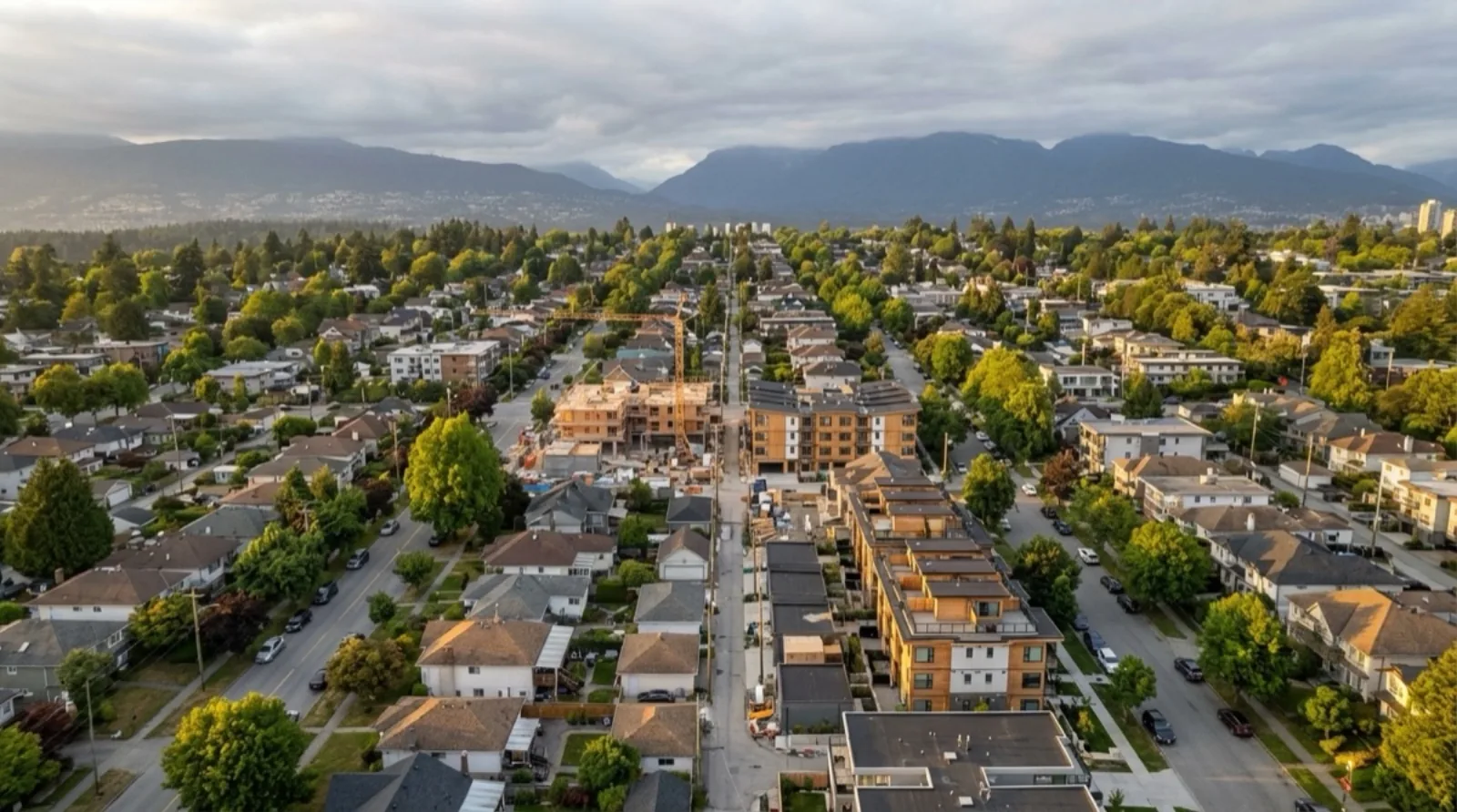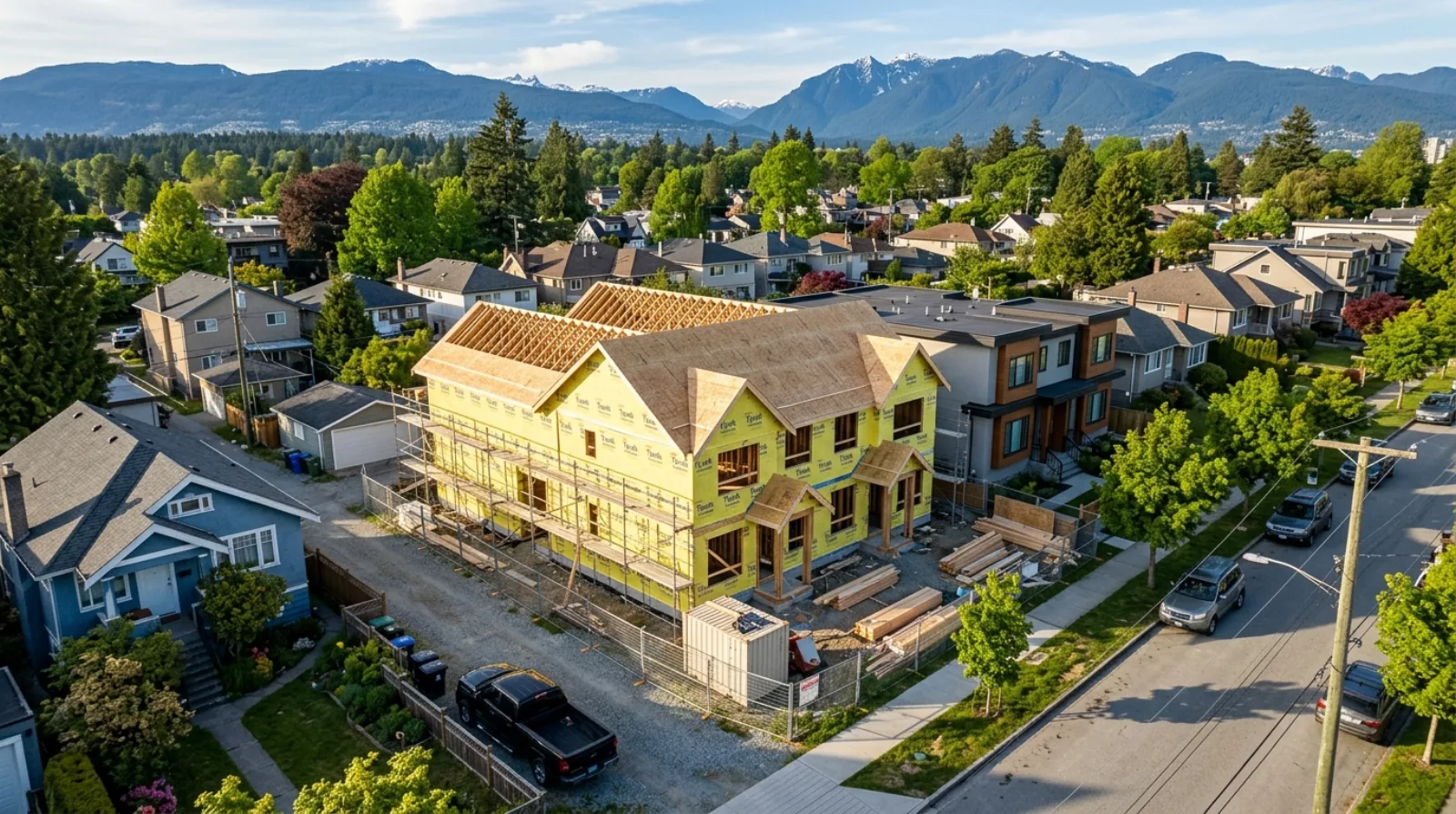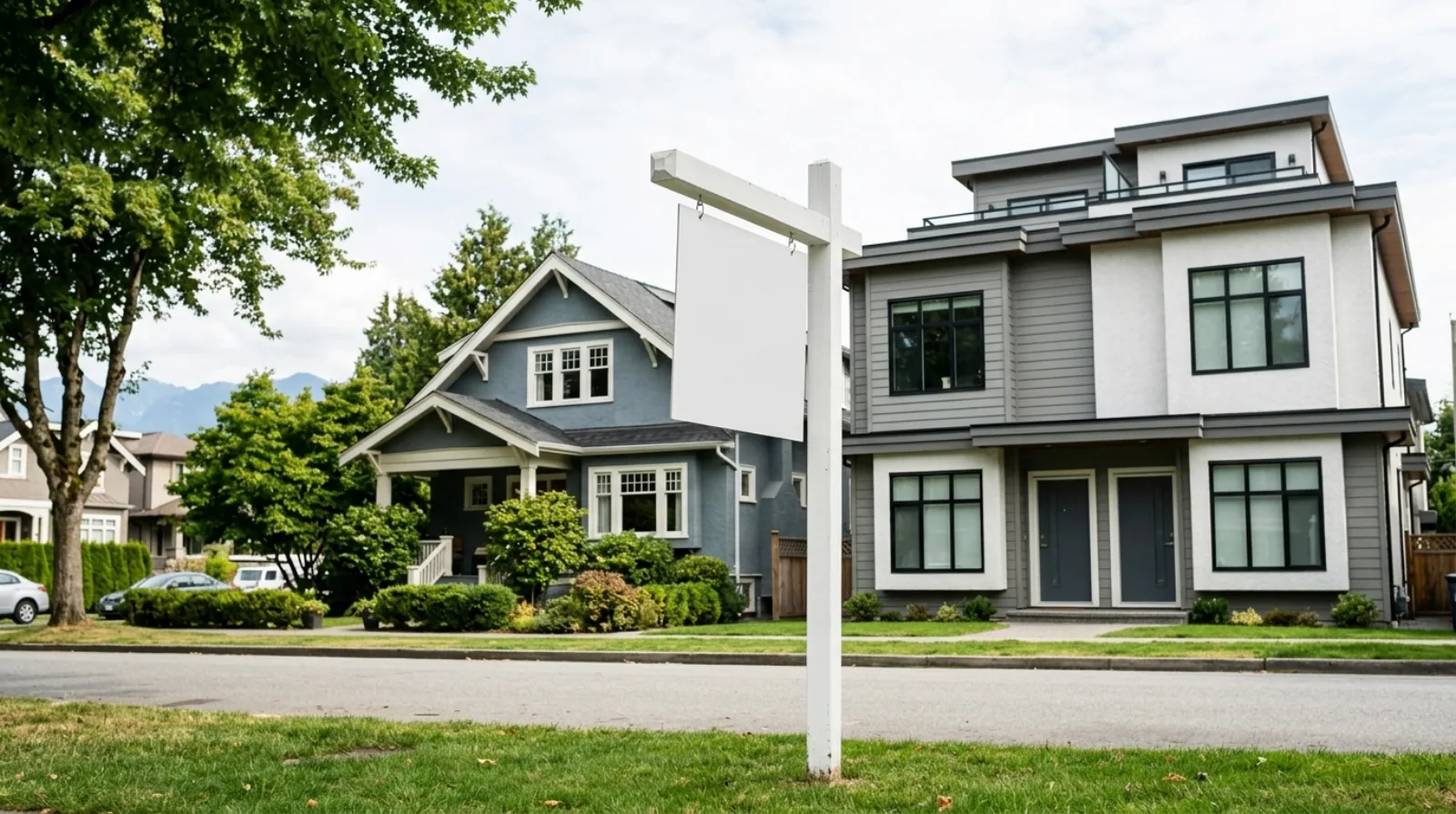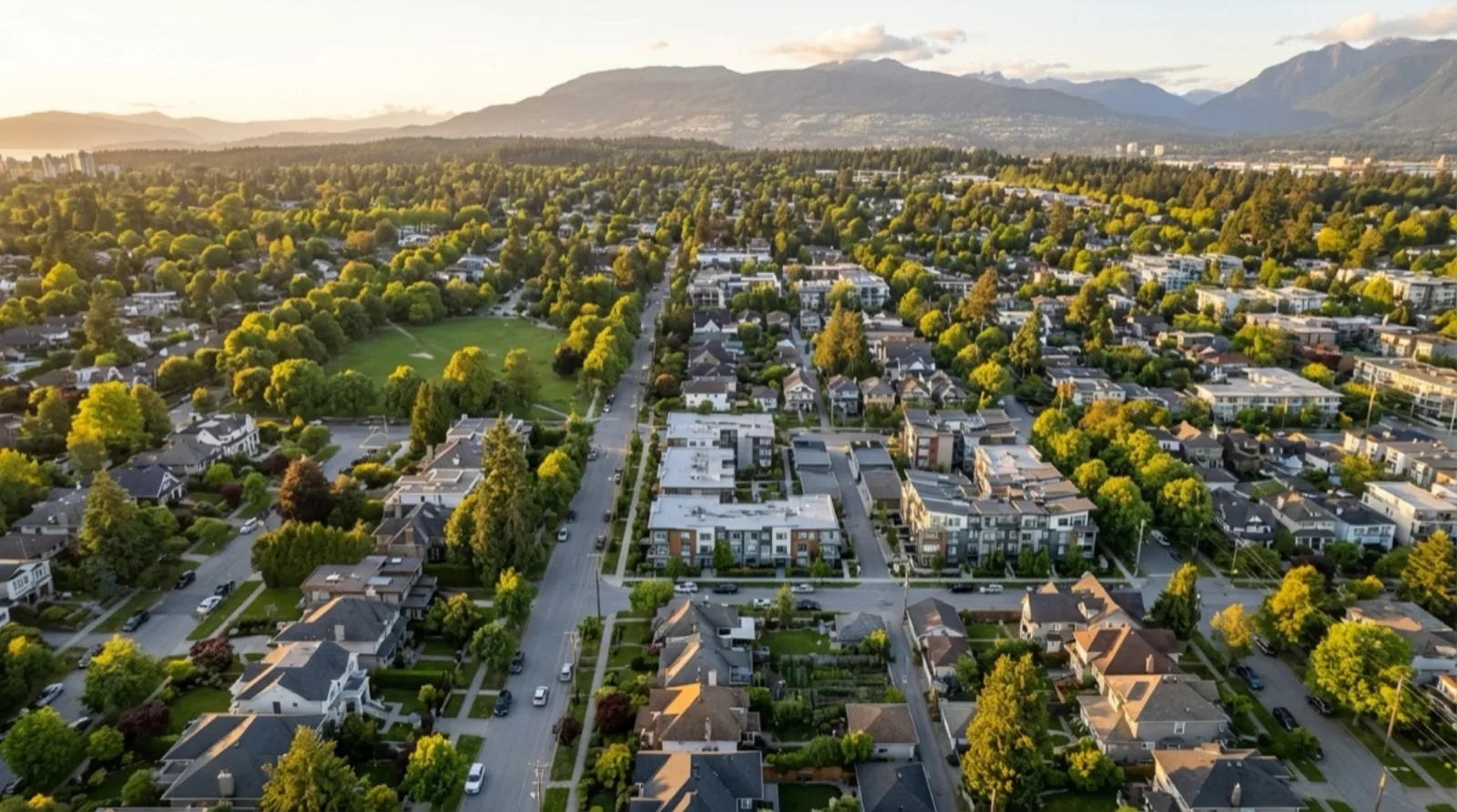
Most of what you’ve read about multiplex treats Vancouver like it’s one big market. It isn’t.
It’s a patchwork of distinct neighbourhoods. Each with its own economics, its own lot patterns, and its own relationship with multiplex development. The economics that work beautifully in Hastings-Sunrise might not pencil in Kitsilano. The buyer who’ll pay top dollar in Kerrisdale wouldn’t even look at the same product in Killarney.
This guide goes neighbourhood by neighbourhood. Where the permits are actually flowing. Where the deals are getting done. Where the numbers work for homeowners—and where they don’t.
I’m also sharing the “Gems”—the hidden treasures in each area that never show up in real estate listings but absolutely show up in quality of life.
The big picture: what year one looked like
Before we go street by street, some numbers set the stage.
By the end of March 2025—roughly eighteen months after Vancouver’s new multiplex zoning took effect—the city had accepted approximately 518 multiplex applications representing around 2,200 new homes. That’s 2,200 new homes created from what used to be about 497 old house lots. Of course they won’t all be built at once, with 55% still in development permit review.
The city had expected maybe a hundred applications in that first year. They got nearly four times that.
In the slowing market of 2024, property purchases intended for multiplex redevelopment made up roughly one-third of all residential land sales in Vancouver. Out of approximately one billion dollars in total residential land transactions, about $300 million went to buyers planning to build multiplexes.
That’s not a niche trend. That’s a market shift.
One more thing worth knowing: about ninety percent of builders are choosing to build without a basement. The new rules allow three storeys above ground without digging. No basement means no expensive excavation, no waterproofing headaches, and weeks shaved off the construction timeline. It’s quickly becoming the standard way to build.
Hastings-Sunrise: ground zero
If there’s a capital of Vancouver’s multiplex movement, it’s Hastings-Sunrise.
66 multiplex land sales so far (January 2026). More than any other neighbourhood in the city. Average price: about $1.9 million per lot.
Why here? Land prices are lower than the west side but still in the range where the numbers work. The lots are mostly standard 33-foot-wide parcels with lane access—the sweet spot for a four-unit building. Transit along Hastings Street qualifies several blocks for the six-unit option on wider lots.
For homeowners: if you’re mortgage-free in Hastings-Sunrise, your property is almost certainly worth exploring. The gap between what a regular homebuyer would pay for your house and what a developer would pay for your lot is one of the widest in the city. That gap is money in your pocket—tax-free if it’s your primary residence.
The Gem: The stretch of East Hastings between Nanaimo and Renfrew is one of Vancouver’s best-kept secrets for livability. The PNE grounds and Hastings Park give you a massive green space with Playland, the Pacific Coliseum, and the Sanctuary—an actual urban nature preserve with ponds and walking trails tucked behind the racetrack. New Brighton Park with its outdoor pool overlooking Burrard Inlet, the Italian Cultural Centre, and the evolving restaurant scene along Hastings are all within walking distance of the busiest multiplex blocks.
Renfrew-Collingwood: the value play
Just south of Hastings-Sunrise, Renfrew-Collingwood is seeing similar levels of multiplex interest—and in some ways, the numbers work even better.
Land prices average slightly lower than Hastings-Sunrise, which means builders have more breathing room in their budgets. The lots tend to be a bit deeper in some blocks, giving designers more flexibility for four-unit layouts. Several blocks along Kingsway qualify for six units thanks to the frequent transit designation.
The tradeoff: sale prices per square foot are lower, so the spread between construction cost and revenue is tighter. Sloppy budgets get punished here. But for disciplined operators (and for homeowners selling to those operators), the lower land cost creates a real cushion.
The Gem: Renfrew Ravine Park is a genuine urban wilderness that most Vancouverites don’t know exists. A forested ravine running from 29th Avenue to the Still Creek wetlands, it hosts an annual lantern festival that feels like stepping into a different world. Collingwood Village around the Joyce-Collingwood SkyTrain station is one of the most walkable commercial districts on the east side, with some of the best Chinese and Vietnamese food in the Lower Mainland.
Kensington-Cedar Cottage: check your zoning twice
KCC is where things get interesting—and a little tricky.
Parts of the neighbourhood are in the R1-1 zone, fully open for multiplex development. But big chunks are covered by RT (two-family dwelling) zones with character-home protections, which means multiplex options are more limited on those blocks.
The practical takeaway: lots in the R1-1 zone carry a premium because they’re surrounded by blocks where multiplex isn’t as straightforward. If you’re thinking about what your property might be worth to a developer, the first thing to do is check which zone you’re in. The difference between one side of a street and the other can be the difference between a real development opportunity and a dead end.
The neighbourhood fundamentals are strong—central, good transit along Kingsway and Knight Street, growing reputation as one of Vancouver’s most interesting food and arts districts.
The Gem: John Hendry Park—Trout Lake—is the kind of neighbourhood park that listings don’t do justice. Families, dogs, kayakers, ice cream vendors, pickup soccer on the open fields. The Trout Lake farmers’ market on Saturday mornings draws people from across the city. The Kensington Community Garden, tucked between Knight and Kingsway, is one of the oldest in Vancouver. This is a neighbourhood where people actually know each other.
Killarney: the quiet opportunity
Killarney doesn’t get the media buzz. That’s exactly why it’s worth paying attention to.
Land prices here are among the lowest in Vancouver. A standard 33-by-122-foot lot might sell for $1.5 to $1.8 million—several hundred thousand less than a comparable lot in Hastings-Sunrise or Renfrew-Collingwood. That lower entry price means builders have more margin for error, and the development premium on your property (if you’re thinking about selling) can be surprisingly healthy relative to your land value.
The tradeoff: end-unit sale prices are lower. Killarney doesn’t command the same price per square foot as neighbourhoods closer to downtown. But for homeowners thinking about selling, the math can still work well—especially because your land cost is so much lower to begin with.
The Gem: The Killarney Community Centre is one of the best-equipped recreation facilities in the city—indoor pool, ice rink, fitness centre, packed community programs. Fraserview Golf Course, a public course with genuinely stunning views of the Fraser River and the North Shore mountains, sits right at the neighbourhood’s edge. And the Champlain Heights strip mall hides some of the most authentic Southeast Asian cooking in Metro Vancouver. None of this shows up in a typical listing. It should.
Sunset: where long-time homeowners hold the cards
Sunset—between Cambie and Fraser, running down to the river—might be the most interesting neighbourhood in the entire multiplex conversation. The reason: this is where the long-time homeowners live.
Many lots here are owned by people who bought them decades ago and are mortgage-free. These are the homeowners with the most to gain from the zoning changes—whether they sell at a development premium or explore other options.
The building stock is aging, so teardown economics work well. Transit along Fraser and Main Streets gives several blocks the frequent service designation enabling six units on wider lots. The Canada Line’s proximity along Cambie adds transit appeal for end buyers.
The Gem: The real Sunset treasure is the network of laneways and garden plots that make parts of the area feel almost rural. The Punjabi Market on Main Street between 48th and 51st—while smaller than it once was—still anchors the community with textile shops, sweet shops, and some of the best butter chicken in the city. Moberly Park hosts free community arts events through the summer. David Thompson Secondary and Sir Wilfrid Laurier Elementary are consistently well-regarded.
Dunbar-Southlands: premium product, premium returns
Dunbar is quiet, leafy west-side Vancouver. No SkyTrain. No busy arterial. Just good schools, big trees, and some of the most expensive single-family lots in the city.
The multiplex economics here are unusual. Land is expensive—significantly pricier than the east side—but end-unit sale prices are too. A finished multiplex unit in Dunbar can command $1,200 to $1,400 per square foot, driven by school catchments like Lord Byng and University Hill, plus proximity to UBC, Pacific Spirit Park, and the beaches.
The margin works, but only if you’re building a premium product. Cheap finishes won’t fly here.
The buyer profile is distinct: young families earning $200K+ who are priced out of single-family homes but want to stay in the catchment. A well-designed 1,200-square-foot multiplex unit with a small yard, priced at $1.4 to $1.7 million, hits a sweet spot that doesn’t exist in today’s market. These buyers have been waiting for this product.
The Gem: Pacific Spirit Regional Park is the obvious draw—800 hectares of temperate rainforest within city limits. But the real Dunbar gem is the village shopping street along Dunbar between 27th and 41st. Independent bookstores, bakeries that use real butter, a hardware store that’s been there for forty years. The Arbutus Greenway cycling and walking path runs right through the neighbourhood’s western edge—a car-free corridor connecting Marpole to Kitsilano. For multiplex residents who want walkable village life, Dunbar is remarkably compelling.
Marpole: the transit advantage
Marpole, at the south end of Granville Street, has been changing rapidly—and that transformation is creating multiplex opportunities.
The transit access is excellent. The Marine Drive Canada Line station provides a direct rapid transit link to downtown, the airport, and Richmond. Several bus routes qualify lots for six-unit development. Land prices, while higher than the deep east side, are meaningfully lower than the more established west-side neighbourhoods to the north.
The sweet spots are the older single-family lots along quieter residential streets east of Granville. Affordable enough to make the multiplex numbers work, with end-unit sale prices supported by that Canada Line proximity.
The Gem: The Fraser River waterfront in Marpole is genuinely underappreciated. The path along the river from the foot of Granville Street east toward the Arthur Laing Bridge offers views of Mitchell Island and the North Shore mountains that rival anything in the city. The small businesses along Granville south of 70th—family-run restaurants, the odd vintage furniture store—have a character that the polished strips up the hill can’t replicate.
Kerrisdale: where character meets opportunity
Kerrisdale is old-money Vancouver. The commercial village along West 41st, anchored by independent shops and cafes, draws comparisons to London’s village high streets. Wide streets. Large lots. Mature trees.
For multiplex development, Kerrisdale is interesting because the lots are often wider than standard—50 feet or more. That means they can support five or six units, which dramatically improves the economics compared to a four-unit build on a 33-foot lot. But land prices are correspondingly higher, often $3 million or more.
Builders working here need to understand the market: the finishes matter, the landscaping matters, the street presence matters. A thoughtfully designed building that respects the neighbourhood’s character can command top dollar.
The Gem: Elm Park, hidden between West Boulevard and Larch Street, is a pocket park most non-residents have never seen. But the real gem is the Arbutus Greenway, a car-free cycling and walking path that runs through Kerrisdale’s western edge. Once a rail corridor, it now connects Marpole to the Kitsilano waterfront. For multiplex residents who bike commute or walk to the village for coffee, it’s daily-life infrastructure that adds genuine value.
Kitsilano: proceed with caution (but the rewards are real)
Kitsilano is complicated for multiplex, and it’s important to understand why.
Large portions of Kits are zoned RT-7 and RT-9—two-family dwelling zones with character-home protections. Council approved multiplex updates for these zones in mid-2024, but the overlay adds design constraints and review requirements that don’t exist in standard R1-1 zones.
The practical effect: multiplex development in Kitsilano is more constrained, more expensive, and slower to permit than in neighbourhoods with cleaner zoning.
That said, end-unit sale prices are among the highest in the city. Proximity to the beaches, downtown via the Burrard Bridge, and the future Broadway Subway extension makes units here extremely desirable. For homeowners on lots that qualify, the development premium can be significant.
The Gem: Everyone knows Kitsilano Beach. Fewer people know about Hadden Park, just east of the Showboat, where tucked-away tennis and basketball courts feel like a private club. The indoor Kitsilano Pool—saltwater, heated, with skyline views—is one of Vancouver’s greatest public amenities. The Broadway Subway extension will add a rapid transit station at Arbutus that transforms Kits connectivity. Units built near that station will carry a premium for decades.
Victoria-Fraserview: the emerging play
Victoria-Fraserview, along Victoria Drive in the southeast, is more affordable now—and it’s going to be worth more later.
Land prices are among the most accessible in Vancouver for multiplex development. The building stock is aging. The homeownership profile skews toward long-time owners who bought decades ago—the exact profile that benefits most from the zoning changes.
A generational shift is happening too. Younger families who can’t afford Kensington-Cedar Cottage or Riley Park are discovering these tree-lined streets and realizing the commute downtown is manageable. These are exactly the buyers who want what multiplexes provide: three-bedroom, ground-oriented, family-sized homes priced below a detached house.
The Gem: Everett Chicken on Victoria Drive is an institution—there’s often a line out the door. But the true gem is Fraserview Golf Course, a public course perched on a bluff with jaw-dropping views of the Fraser River, Mount Baker, and the Gulf Islands. On a clear day, it’s one of the most beautiful spots in the city—surrounded by lots now eligible for multiplex development. The David Thompson Community Centre offers family programming year-round.
First Shaughnessy: the heritage exception
Shaughnessy—home to some of the most magnificent heritage homes in Western Canada—was initially exempted from standard multiplex zoning. Council approved a multiplex option here in mid-2024, but with heavy design constraints. New development must respect the heritage context, character elements, mature trees, and the distinctive streetscape.
Only three multiplex land transactions happened in Shaughnessy in 2024, averaging $4.4 million each. This is a different market entirely—for sophisticated buyers who understand that a heritage multiplex conversion here sells not just square footage but a piece of Vancouver’s history.
The Gem: Walk down The Crescent on a spring evening. Tudor, Craftsman, Georgian Revival homes set back behind mature gardens, North Shore mountains visible through old-growth trees. It’s one of the most beautiful residential streets in Canada. VanDusen Botanical Garden anchors the western edge. The South Granville restaurant and gallery row between 12th and 16th is world-class.
Neighbourhood comparison at a glance
| Neighbourhood | Avg. Land Price | End-Unit $/sqft | Best For | Key Consideration |
|---|---|---|---|---|
| Hastings-Sunrise | $1.9M | $750-850 | Volume builders | Highest activity, proven demand |
| Renfrew-Collingwood | $1.7-1.9M | $700-800 | Value-focused builders | Tighter margins, disciplined budgets |
| Kensington-Cedar Cottage | $1.8-2.2M | $750-850 | Experienced operators | Check R1-1 vs RT zoning |
| Killarney | $1.5-1.8M | $650-750 | First-time developers | Lowest entry, lower exit |
| Sunset | $1.8-2.1M | $750-850 | Long-time homeowners | Mortgage-free sellers benefit most |
| Dunbar-Southlands | $2.5-3.5M | $1,200-1,400 | Premium builders | High land cost, high returns |
| Marpole | $2.0-2.5M | $850-950 | Transit-focused | Canada Line proximity |
| Kerrisdale | $3.0M+ | $1,100-1,300 | Sophisticated operators | Wider lots, character constraints |
| Kitsilano | $2.5-3.5M | $1,200-1,500 | Patient developers | RT zoning adds complexity |
| Victoria-Fraserview | $1.5-1.9M | $700-800 | Long-term investors | Emerging, appreciation play |
| First Shaughnessy | $4.4M+ | $1,500+ | Heritage specialists | Heavy design constraints |
What this means for you
If you’re mortgage-free and your property is in one of these active neighbourhoods—especially on the east side—you’re sitting on a real opportunity. Not the “everybody wins” headline from the newspaper, but a genuine, quantifiable financial advantage. Whether you sell to a developer at a premium (tax-free if it’s your principal residence) or explore other options, the numbers are worth understanding.
If you’re in a neighbourhood where the zoning is more complex—like parts of Kensington-Cedar Cottage, Kitsilano, or First Shaughnessy—it’s still worth investigating, but go in with eyes open. Longer timelines, higher costs, less straightforward path.
If you’re not sure where you stand, that’s exactly what our PlexRank system at VanPlex was built to answer. Drop your address into vanplex.ca and get a real assessment of your property’s multiplex potential—not a guess, but actual numbers based on your lot size, zoning, neighbourhood pricing, and current market conditions.
The multiplex market isn’t a gold rush that came and went. It’s a structural shift in how Vancouver builds housing. The window isn’t closing—it’s just opening.
But the opportunity isn’t equally distributed. It depends on your neighbourhood, your lot, your mortgage situation, and your goals.
Know where you stand. Then decide what’s right for you.
David Babakaiff is Co-Founder and CEO of VanPlex, a Vancouver-based company building multiplex development and Missing Middle housing. He has 25+ years in BC construction and won the 2024 HAVAN Award for Best Multiplex Unit.
PlexRank™ | Profit with Multiplex