
ADU & Laneway House Design Guide for BC
Garden suites, laneway houses, and carriage homes — BC's standardized ADU designs, sizing rules, and cost estimates.
Key Takeaways
- ✓ ADUs are the most broadly permitted housing addition in BC, available in almost all Metro Vancouver cities.
- ✓ BC catalogue includes three ADU types: Garden Suite (ADU-1), Laneway House (ADU-2), and Carriage House (ADU-3).
- ✓ Only laneway houses require rear lane access -- garden suites and carriage houses do not.
- ✓ Total construction cost ranges from $250K to $550K, the most accessible entry point for adding density.
- ✓ ADUs generate meaningful rental income, making them an effective mortgage-helper strategy.
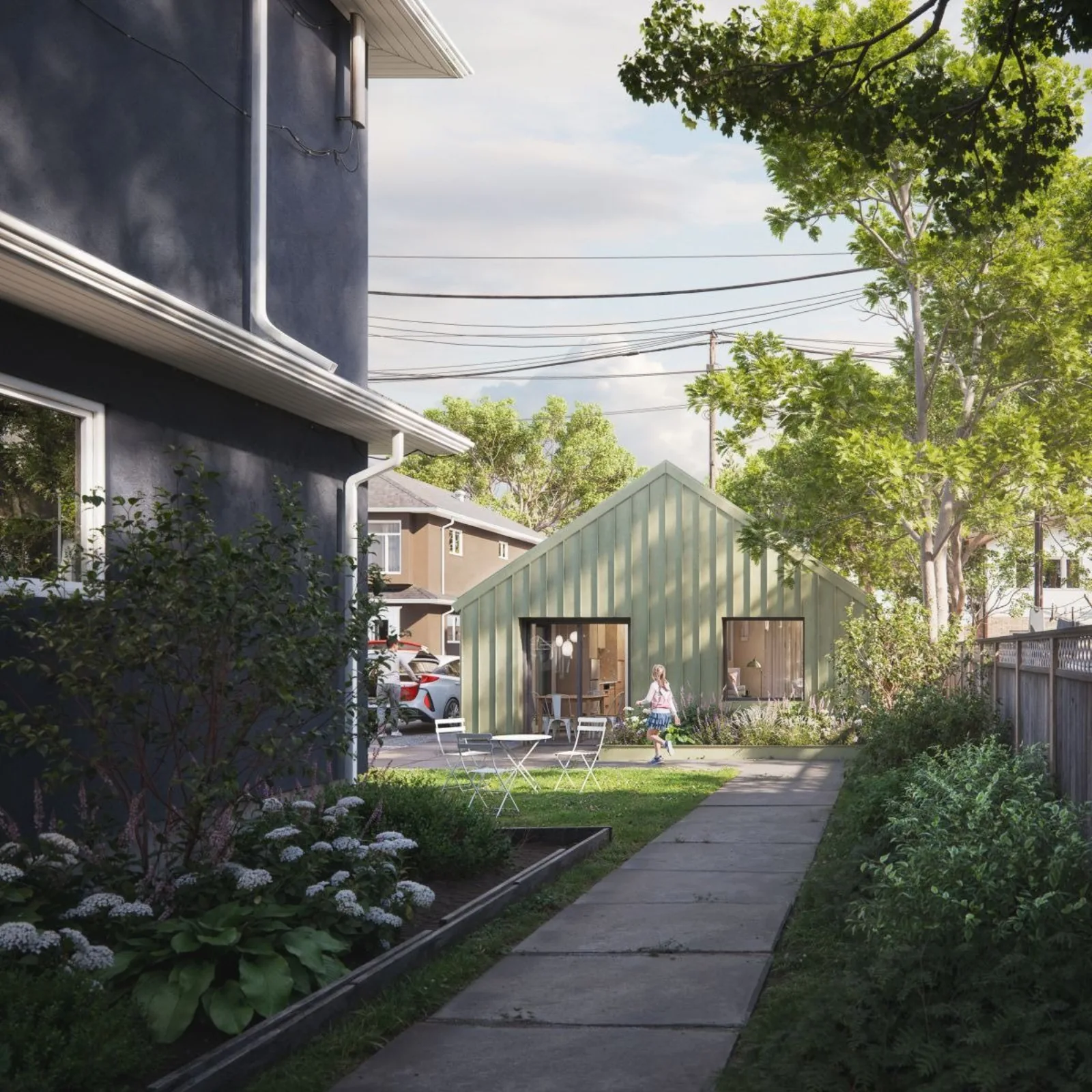
What Is an ADU Under BC Building Code?
An Accessory Dwelling Unit (ADU) is a self-contained secondary residence on a lot that already has a principal dwelling. Unlike multiplex units that replace the existing home, an ADU is added to the property in addition to the main house. Under the BC Building Code, ADUs are classified as Part 9 residential buildings and follow the same prescriptive standards as single-family construction.
BC recognizes several ADU types: garden suites (detached ground-level units), laneway houses (detached units facing a rear lane), and carriage houses (units above a detached garage). Each has distinct site requirements but all share the common characteristic of being accessory to the main dwelling.
Which BC Catalogue Designs Apply?
The BC standardized housing designs catalogue includes three ADU-specific concepts, each designed for different site conditions and access configurations.
Garden Suite
A detached ground-level dwelling in the rear or side yard. Does not require lane access. Typically 1-2 storeys, up to 90-93 m². The most flexible ADU type, suitable for the widest range of lot configurations.
Laneway House
A detached dwelling at the rear of the lot, oriented to face the lane. Requires rear lane access. 1.5-2 storeys, up to 83.6 m² in Vancouver. Provides the unit its own street-like address from the lane, creating a distinct sense of home.
Carriage House
A dwelling unit above a detached garage. Does not require lane access. Smaller than other ADU types (46-65 m²). Efficient use of existing garage structure -- adds a unit without consuming additional yard space.
BC Government Standard ADU Design Renderings
BC Standard ADU 01 — 540 sq ft Garden Suite
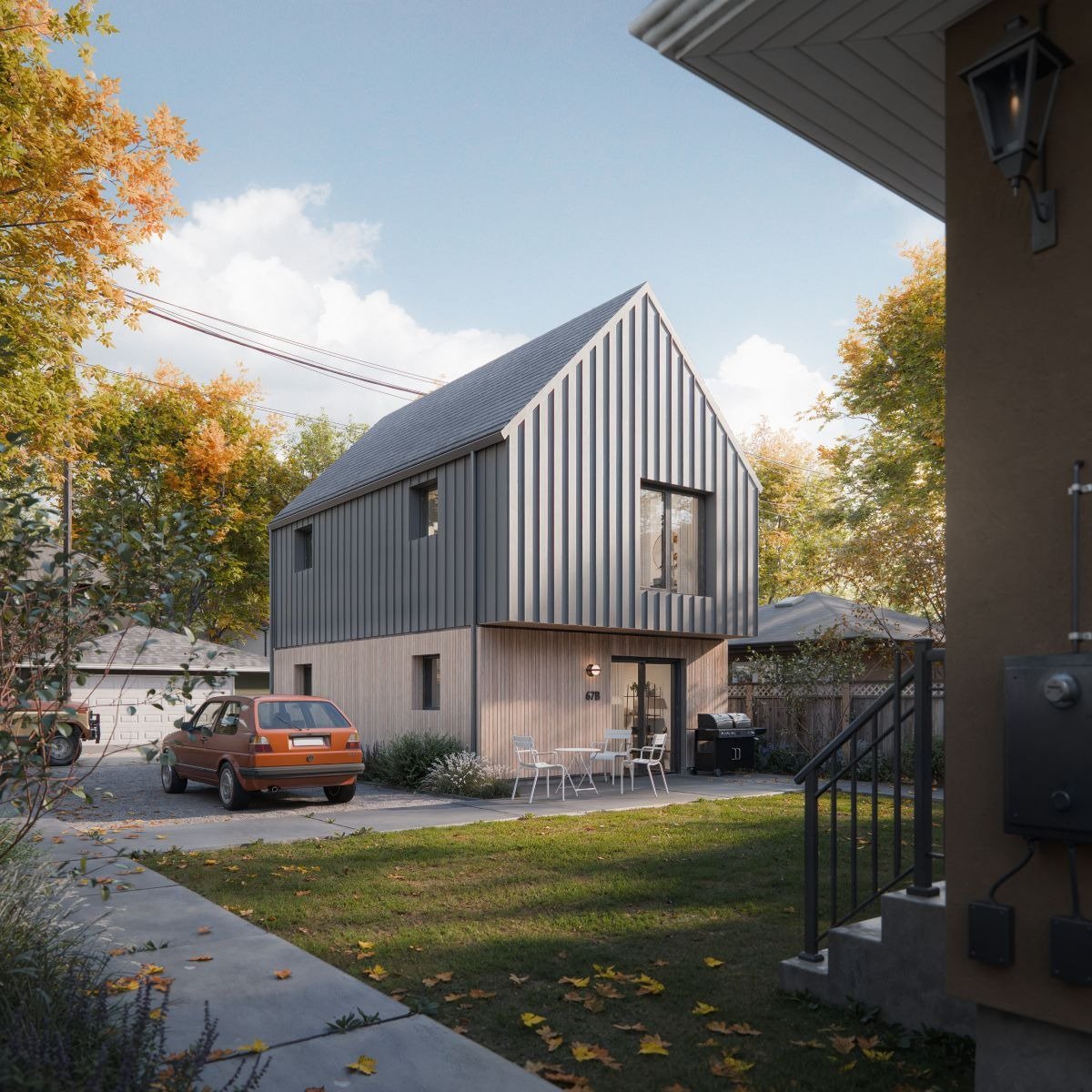
BC Standard ADU 02 — 1,010 sq ft Laneway House
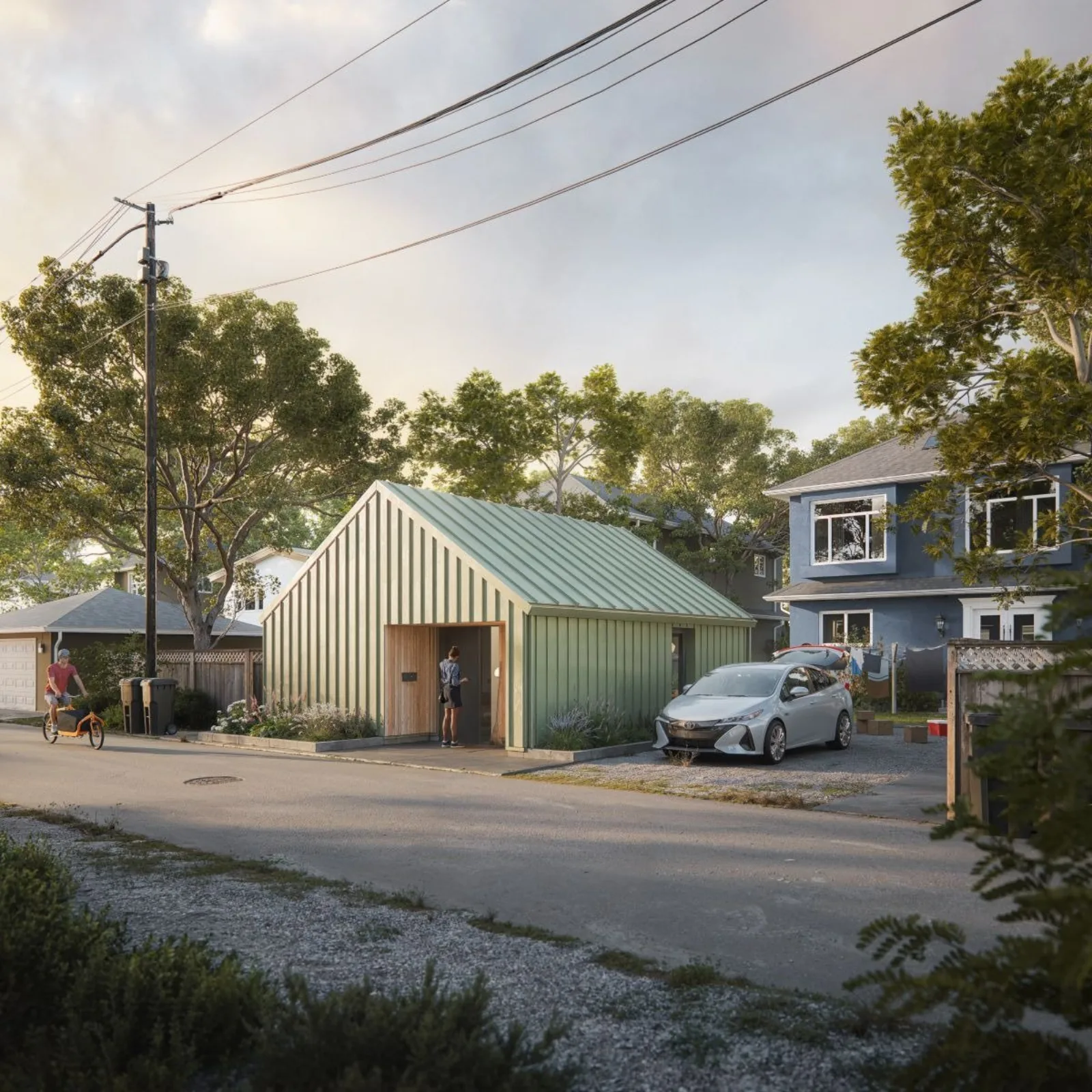
ADU 01 — Alternate View
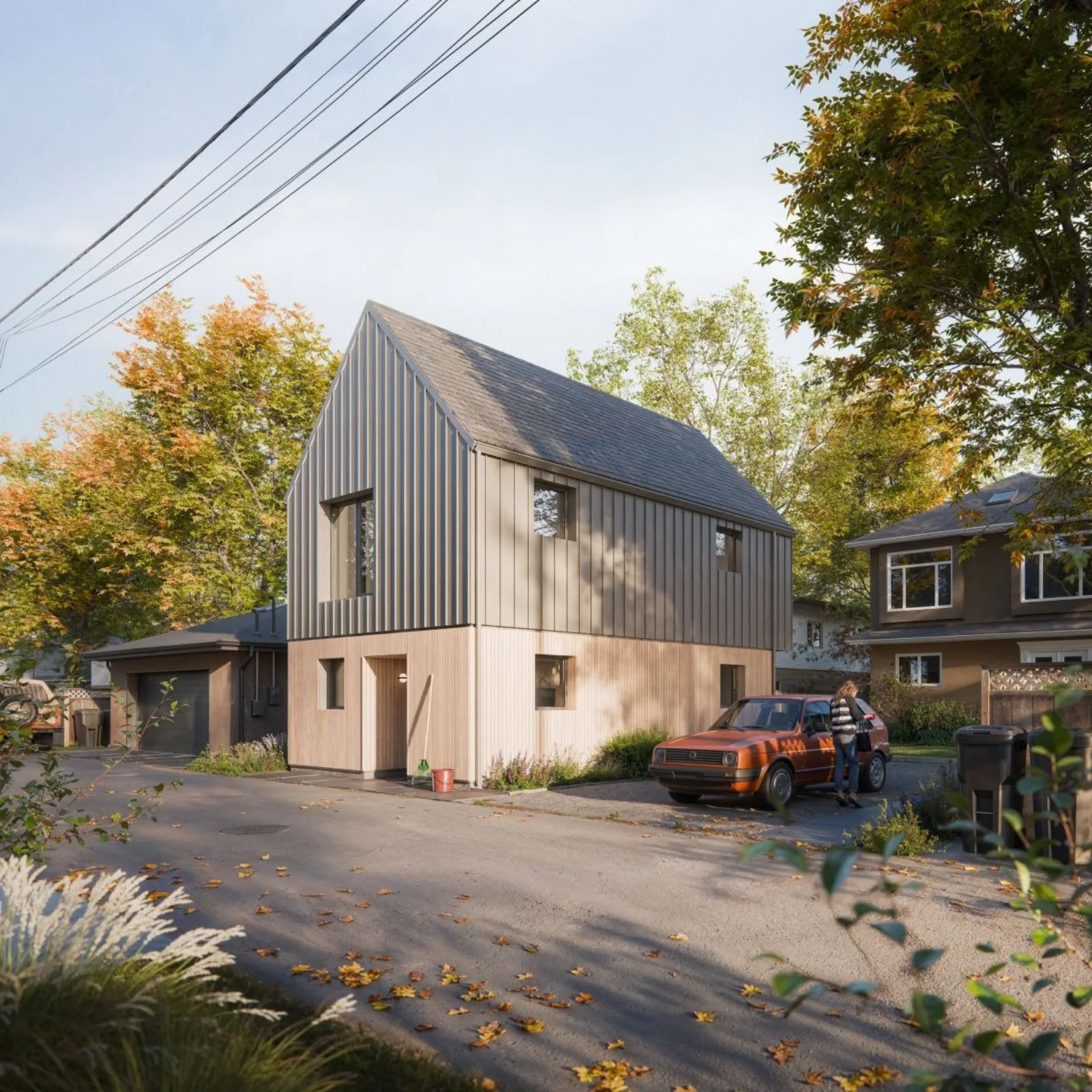
ADU 02 — Alternate View
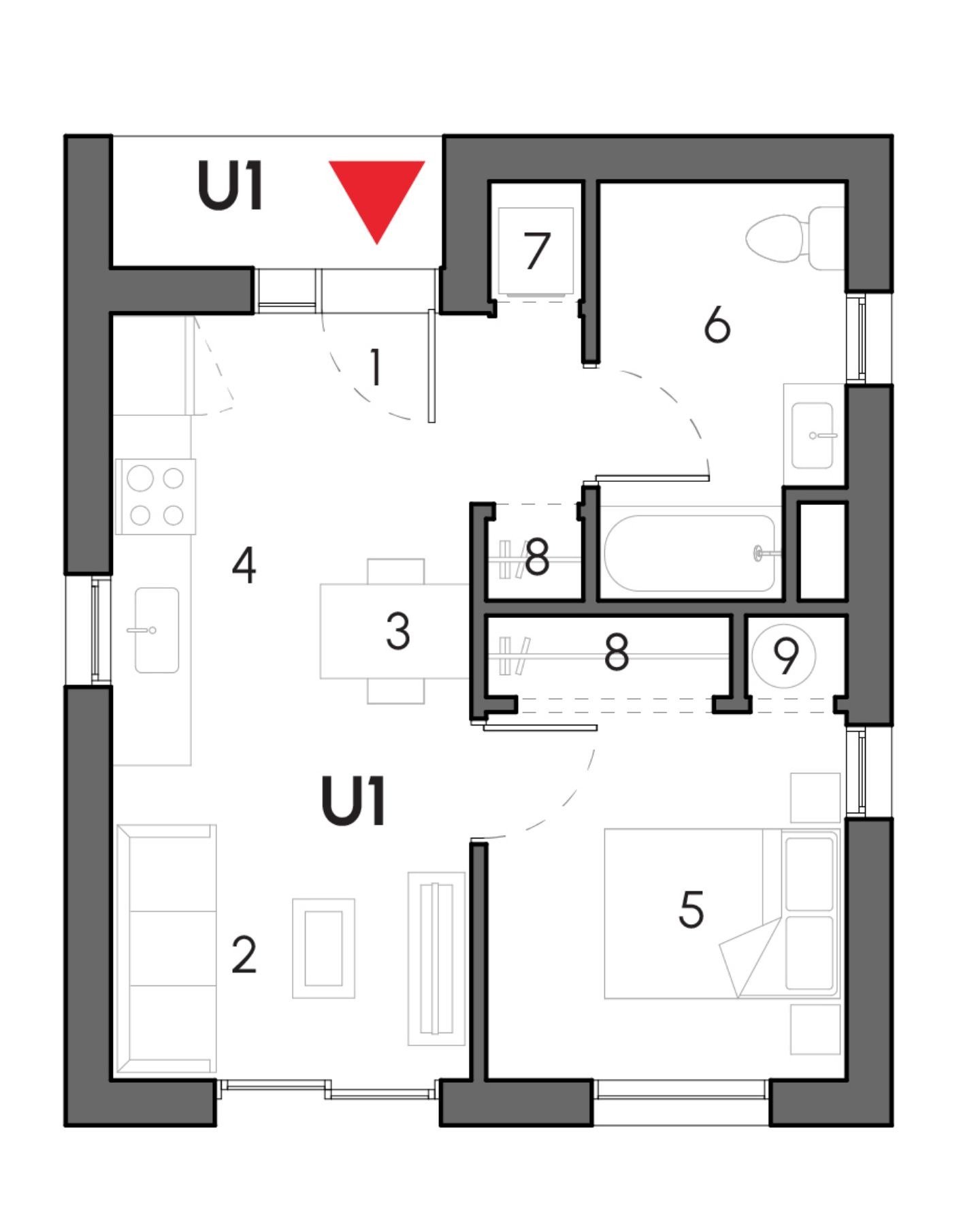
ADU 01 — Main Floor Plan
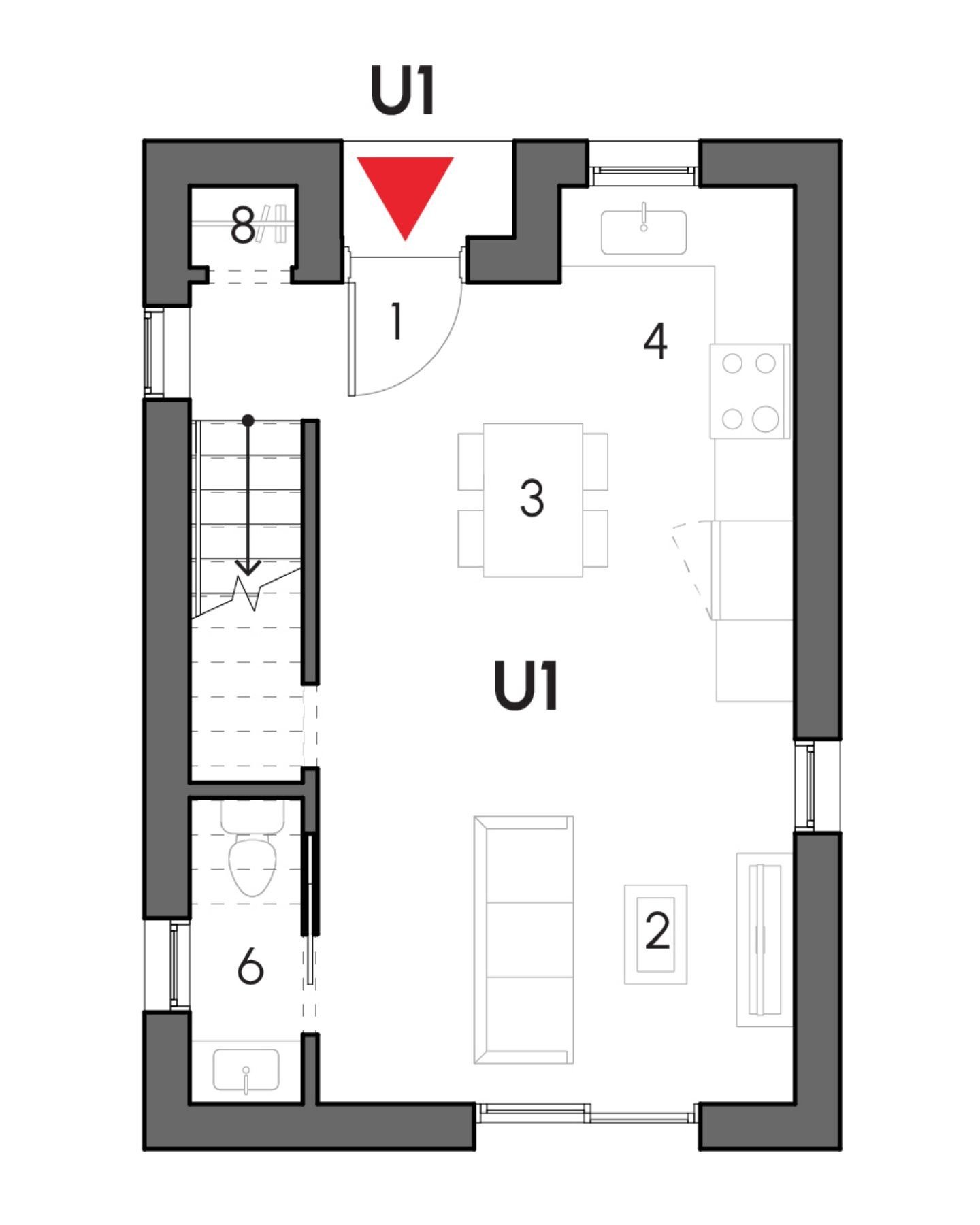
ADU 02 — Main Floor Plan
Images sourced from the BC Standardized Housing Designs Catalogue (gov.bc.ca). Designs created by Leckie Studio Architecture + Design and partner firms under contract to the Province of British Columbia.
Lot Requirements
ADU requirements vary significantly by type. Laneway houses have the most specific site requirements (lane access), while garden suites are the most flexible.
| Specification | Garden Suite (ADU-1) | Laneway House (ADU-2) | Carriage House (ADU-3) |
|---|---|---|---|
| Lane Access Required | No | Yes | No (above garage) |
| Typical Lot Area | 3,000+ sq ft | 3,300+ sq ft | 3,300+ sq ft |
| Max Floor Area | 90-93 m² | 83.6 m² (Van) | 46-65 m² |
| Max Height | 1-2 storey | 1.5-2 storey | 2 storey (above garage) |
| Setback (rear) | 1.2-1.5 m | 0.6-1.2 m from lane | Per garage setback |
| Typical Location | Rear or side yard | Rear, facing lane | Above existing garage |
Typical ADU Site Placement Options
Front Yard
MAIN HOUSE
Principal Dwelling
Rear Yard · Min 1.2-3.0 m separation
Garden Suite
ADU-1
Rear or side yard
Laneway House
ADU-2
Faces lane
Carriage House
ADU-3
Above garage
Illustrative site placement — actual setbacks and positions vary by municipality
Design Considerations
Accessibility
ADUs should incorporate barrier-free design where feasible. Ground-level garden suites and laneway houses can readily provide level entry and accessible layouts on the main floor. Carriage houses, being above garages, are inherently more challenging for accessibility. Wider doorways, reinforced bathroom walls, and lever-style handles are recommended for all ADU types.
Fire Separation
Since ADUs are detached from the main dwelling, fire separation requirements are primarily governed by spatial separation (distance from property lines and other buildings). Carriage houses above garages require a fire-rated floor assembly between the garage and living space. Minimum distances between the ADU and the main house are typically 1.2-3.0 m depending on the municipality.
Sound Transmission
Detached ADUs (garden suites and laneway houses) do not have shared-wall sound transmission concerns. Carriage houses should meet STC 55 for the floor/ceiling assembly above the garage, particularly to isolate vehicle noise and garage door operation from the living space above.
Privacy
ADU design must balance the privacy of both the ADU occupant and the main house residents. Key strategies include orienting ADU windows away from the main house, using frosted or high-placed windows on the facing side, providing separate entrance paths, and using landscaping or fencing to define private outdoor areas for each dwelling.
Where Are ADUs Permitted in BC?
ADUs are the most widely permitted housing addition across Metro Vancouver. Almost every municipality now allows at least one type of ADU on single-family lots, though the specific types permitted vary.
| ADU Types Permitted | Notes | ||
|---|---|---|---|
| Vancouver | Garden Suite, Laneway House | Adopted | Laneway program since 2009; garden suites expanded 2023 |
| Burnaby | Garden Suite, Laneway House | Adopted | Expanded ADU permissions under SSMUH |
| Surrey | Garden Suite, Coach House | Adopted | Most single-family zones; lane not required for garden suite |
| Coquitlam | Garden Suite, Carriage House | Adopted | RS zones; streamlined permitting |
| New Westminster | Garden Suite, Laneway House | Adopted | Most residential zones; heritage-sensitive areas may have additional review |
| North Vancouver (City) | Garden Suite, Coach House | Adopted | RS zones; coach house above detached garage |
| North Vancouver (District) | Garden Suite | Adopted | Select residential zones |
| Richmond | Garden Suite, Coach House | Adopted | Flood construction level applies; elevated designs common |
| Port Coquitlam | Garden Suite | Adopted | RS-1 zones |
| Langley (Township) | Garden Suite, Coach House | Adopted | Urban residential zones |
| Maple Ridge | Garden Suite | Adopted | Urban residential zones; expanding permissions |
| White Rock | Garden Suite | Adopted | Select residential zones |
Cost Breakdown
ADUs are the most affordable way to add a dwelling unit to your property. Costs vary based on type, size, site conditions, and whether existing infrastructure (like a garage) can be utilized.
Hard Costs
$275 - $450
per sq ft
Soft Costs
$40K - $80K
permits, design, fees
Total Project Cost
$250K - $550K
for one ADU unit
Hard costs include foundation, framing, mechanical, electrical, plumbing, and finishes. Soft costs include architectural design, engineering, permits, surveys, and service connections. Carriage houses may cost less if leveraging an existing garage structure.
Energy Requirements
All new ADUs must comply with BC Energy Step Code, typically Step 3 or higher. As small, detached buildings, ADUs have a high surface-area-to-volume ratio, which means energy performance requires careful attention to insulation, airtightness, and mechanical systems. Heat pumps (mini-splits) are the most common heating and cooling solution. An HRV is required for ventilation. The compact size makes it cost-effective to achieve Step 4 or even Step 5 performance with modest upgrades to insulation and windows.
Run the Numbers for Your Property
Use the VanPlex proforma calculator to model ADU or laneway house scenarios on your specific property -- including construction costs, financing, rental revenue, and return on investment.
Try the Proforma CalculatorFrequently Asked Questions
Can I add an ADU in addition to a multiplex on the same lot?
It depends on the municipality and your lot size. Under SSMUH, the total unit count matters -- if your lot qualifies for 4 units, those could include a combination of multiplex units and an ADU. Some cities treat ADUs as part of the total unit count while others allow them in addition. Check your local zoning for the specific rules.
What is the rental income potential for an ADU or laneway house?
Rental income for ADUs and laneway houses varies significantly by size, location, and finish quality. Research comparable listings in your neighbourhood for current market rates. ADU rental income can significantly offset your mortgage, making ADUs one of the best mortgage-helper strategies available.
Do I need lane access to build a laneway house?
Yes, laneway houses (ADU-2) require rear lane access as they face the lane. However, garden suites (ADU-1) do not need lane access and can be placed in the rear or side yard with pedestrian access only. Carriage houses (ADU-3) sit above an existing garage and also do not specifically require lane access, though lane access to the garage is often practical.
What is the maximum size for an ADU in BC?
Maximum size varies by municipality and ADU type. Garden suites are typically capped at 90-93 m² (970-1,000 sq ft). Laneway houses in Vancouver can be up to 900 sq ft. Carriage houses are generally smaller at 500-700 sq ft. These limits change frequently as municipalities update their bylaws -- always verify with your local planning department.
Can I stratify and sell an ADU separately from the main house?
Under updated BC legislation, stratification of SSMUH units is possible in some circumstances. However, ADU stratification rules are more nuanced than for multiplex units, and some municipalities still restrict it. Consult with a local real estate lawyer for the latest regulations specific to your city.
Ready to Analyze Your Property?
Enter any BC address to get a free multiplex feasibility analysis with proforma projections.