
Fourplex Design Guide for BC
The most popular SSMUH build type — everything about fourplex designs, lot requirements, costs, and municipal permissions across Metro Vancouver.
Key Takeaways
- ✓ Fourplexes maximize unit count on standard lots, making them one of the most popular SSMUH builds.
- ✓ BC catalogue offers two configurations: Quadplex 1 (Stacked) and Quadplex 2 (Side-by-Side).
- ✓ Typical lot requirements are 40 ft frontage and 4,800 sq ft area for stacked; side-by-side needs more width.
- ✓ Total construction cost ranges from $1.2M to $2.0M, with strong per-unit economics.
- ✓ All four units can be stratified and sold individually, providing maximum exit flexibility.
What Is a Fourplex Under BC Building Code?
A fourplex is a residential building containing four dwelling units on a single lot. Under the BC Building Code, fourplexes remain classified as Part 9 residential buildings (up to 3 storeys, 600 m² per unit), which keeps construction costs and complexity comparable to single-family and duplex projects.
The fourplex is the maximum density achievable on a standard single-family lot under SSMUH legislation (for lots not near transit). With four units sharing a single foundation, roof, and site services, the fourplex offers the best per-unit economics of any small-scale multiplex type.
Which BC Catalogue Designs Apply?
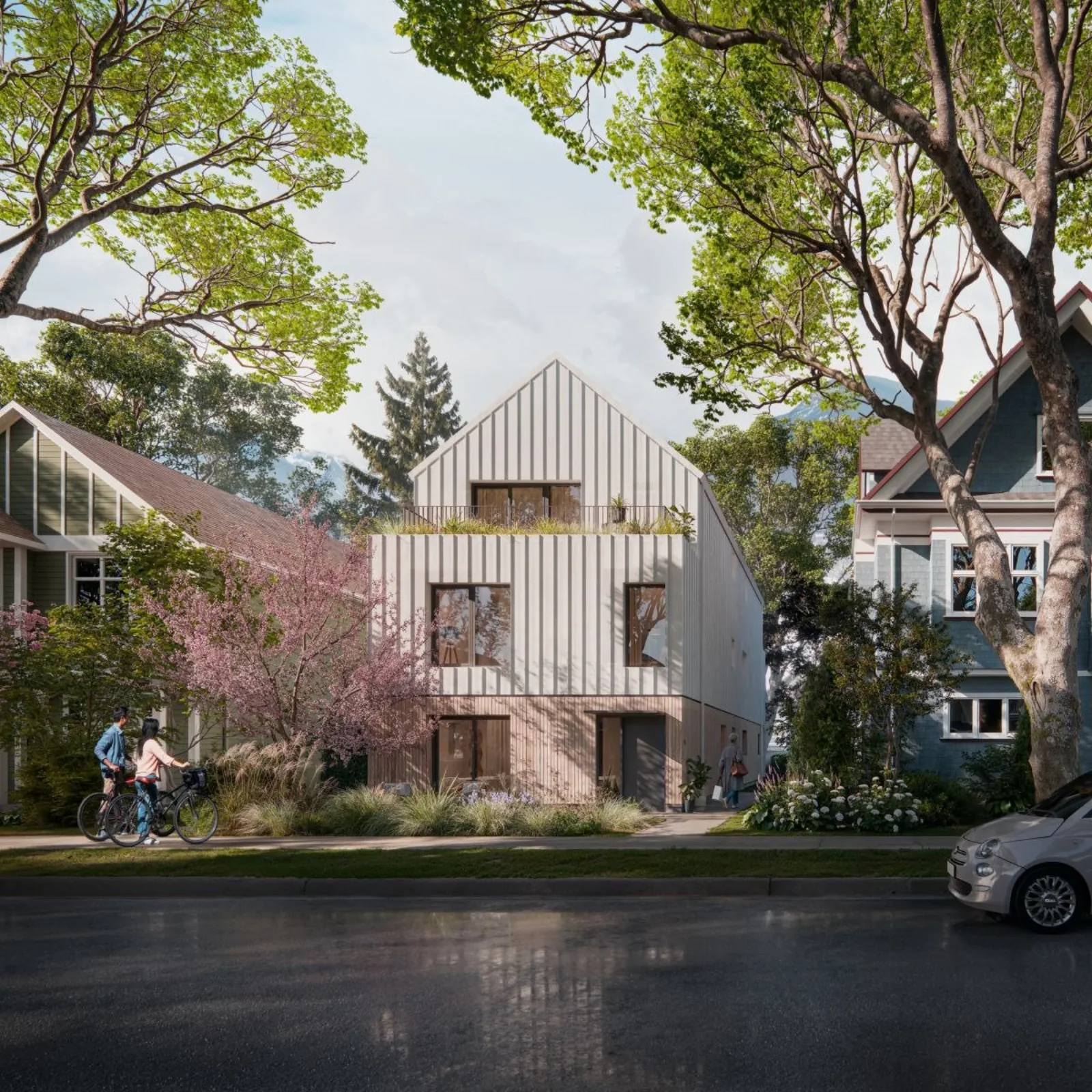
The BC standardized designs catalogue includes two fourplex concepts, each suited to different lot configurations and design goals.
Stacked Fourplex
Four units arranged in a 2-over-2 configuration across 2-3 storeys. Fits on standard 40 ft lots and has a compact footprint. Upper units accessed via exterior or interior stairs. Ground-floor units have direct grade access -- ideal for the accessible unit requirement.
Side-by-Side Fourplex
Four units arranged horizontally in a row, each with its own entrance at grade. Feels like a small townhouse row. Requires wider lots (44 ft+) but provides each unit with a ground-floor presence and private outdoor space. Ideal for family-oriented projects.
BC Government Standard Design Renderings
BC Standard Fourplex 01 — BC Standardized Housing Designs Catalogue
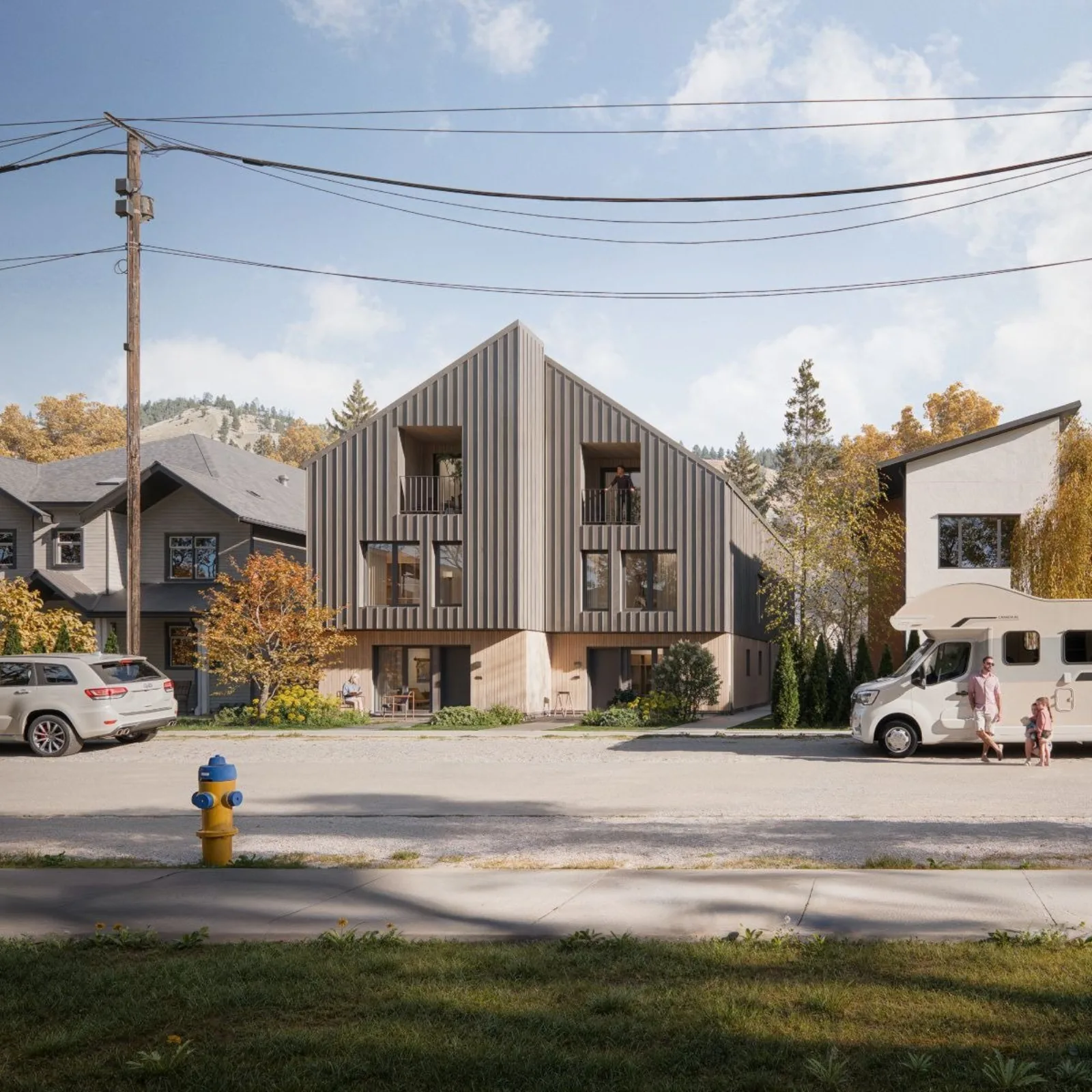
BC Standard Fourplex 02 — BC Standardized Housing Designs Catalogue
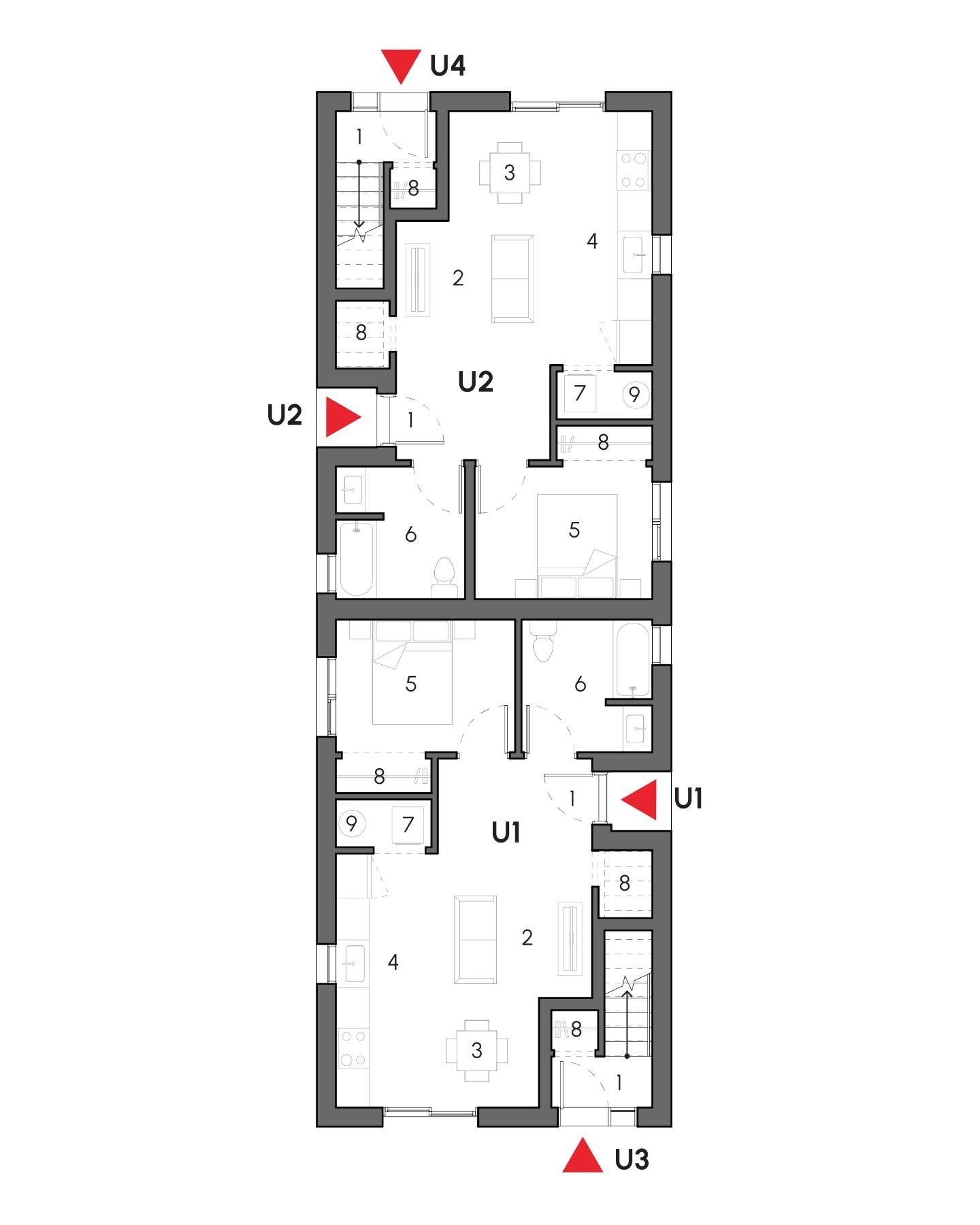
Fourplex 01 — Main Floor Plan
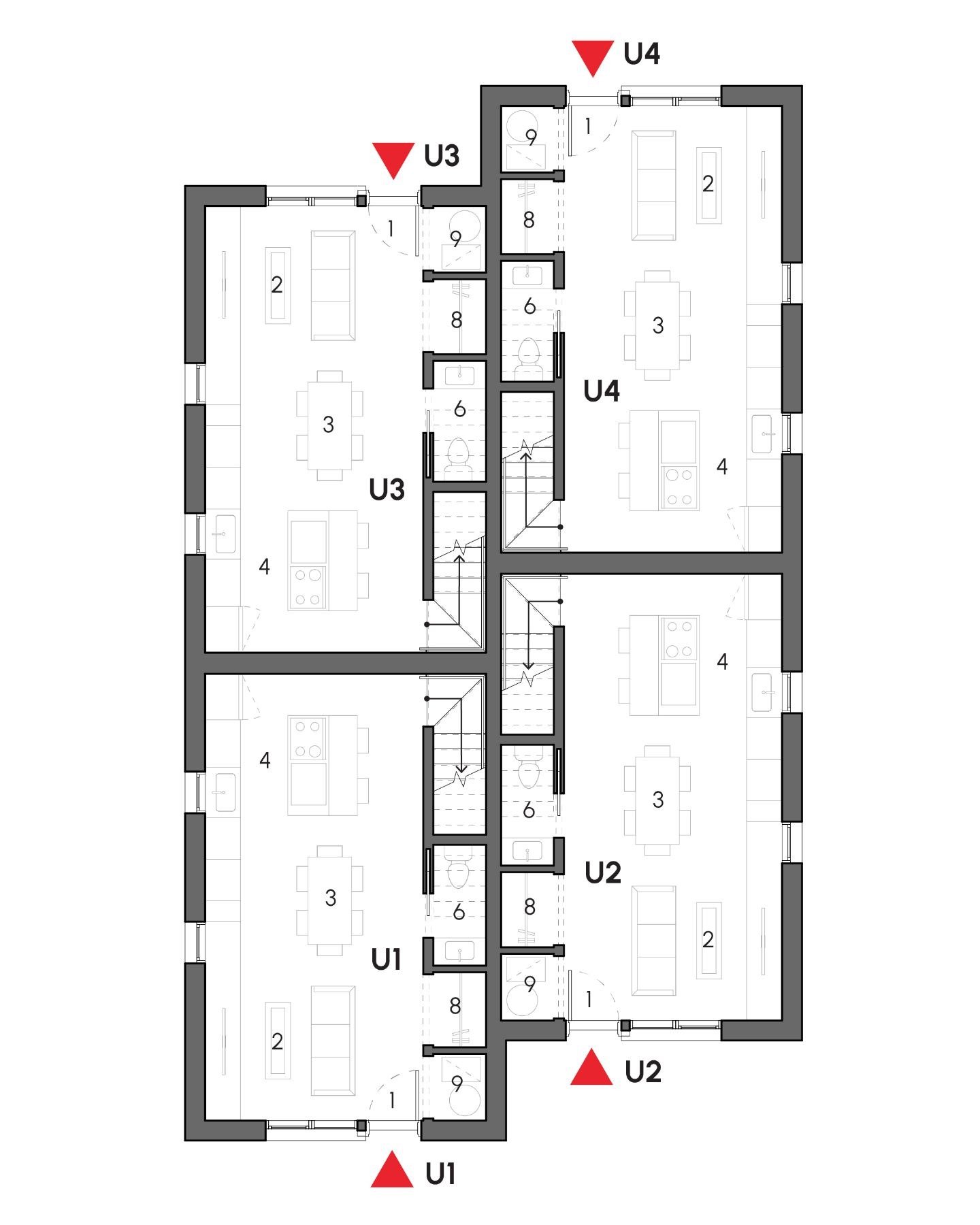
Fourplex 02 — Main Floor Plan
Images sourced from the BC Standardized Housing Designs Catalogue (gov.bc.ca). Designs created by Leckie Studio Architecture + Design and partner firms under contract to the Province of British Columbia.
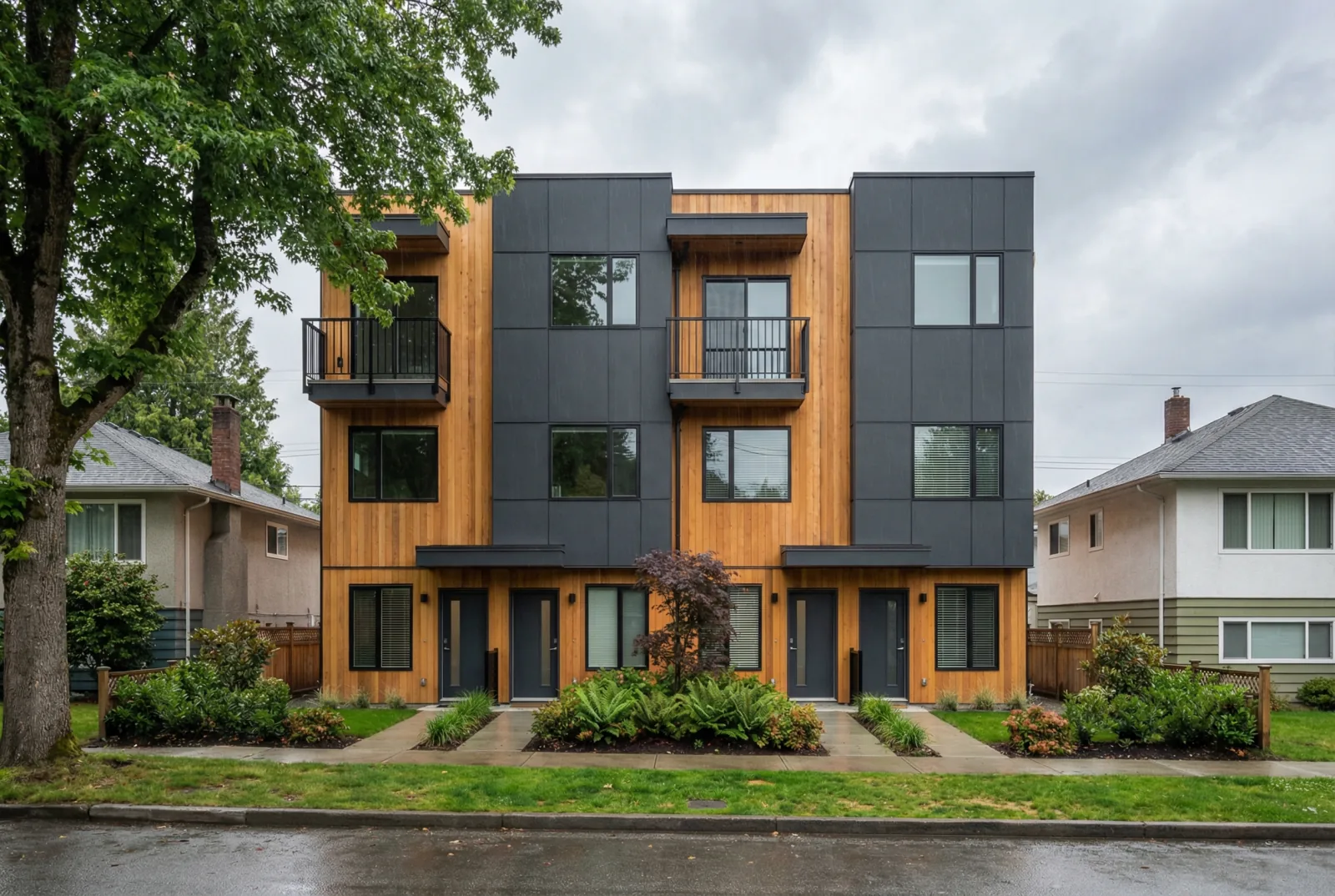
Quadplex 1 — Stacked fourplex with 2-over-2 configuration
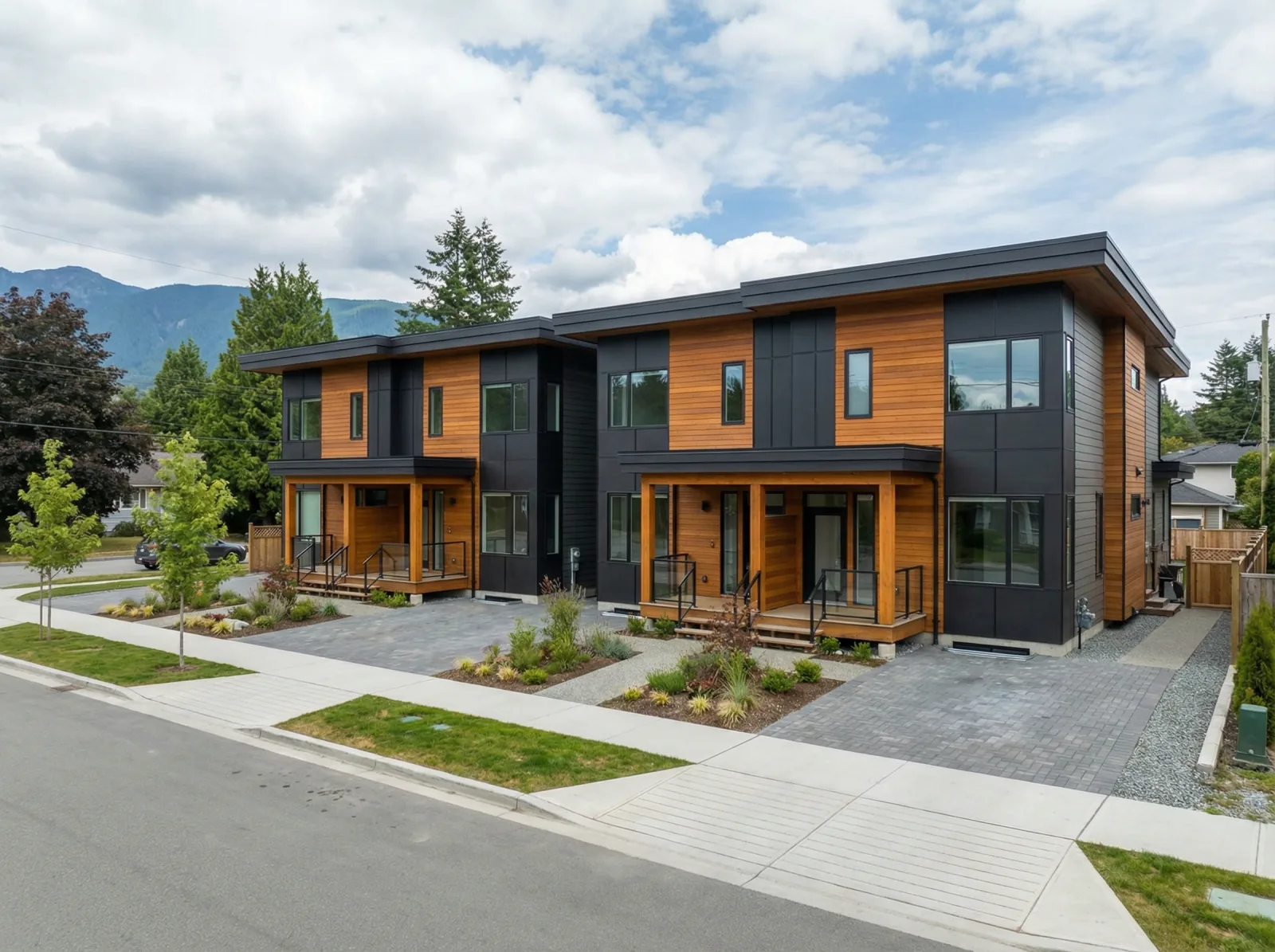
Quadplex 2 — Side-by-side fourplex with townhouse feel
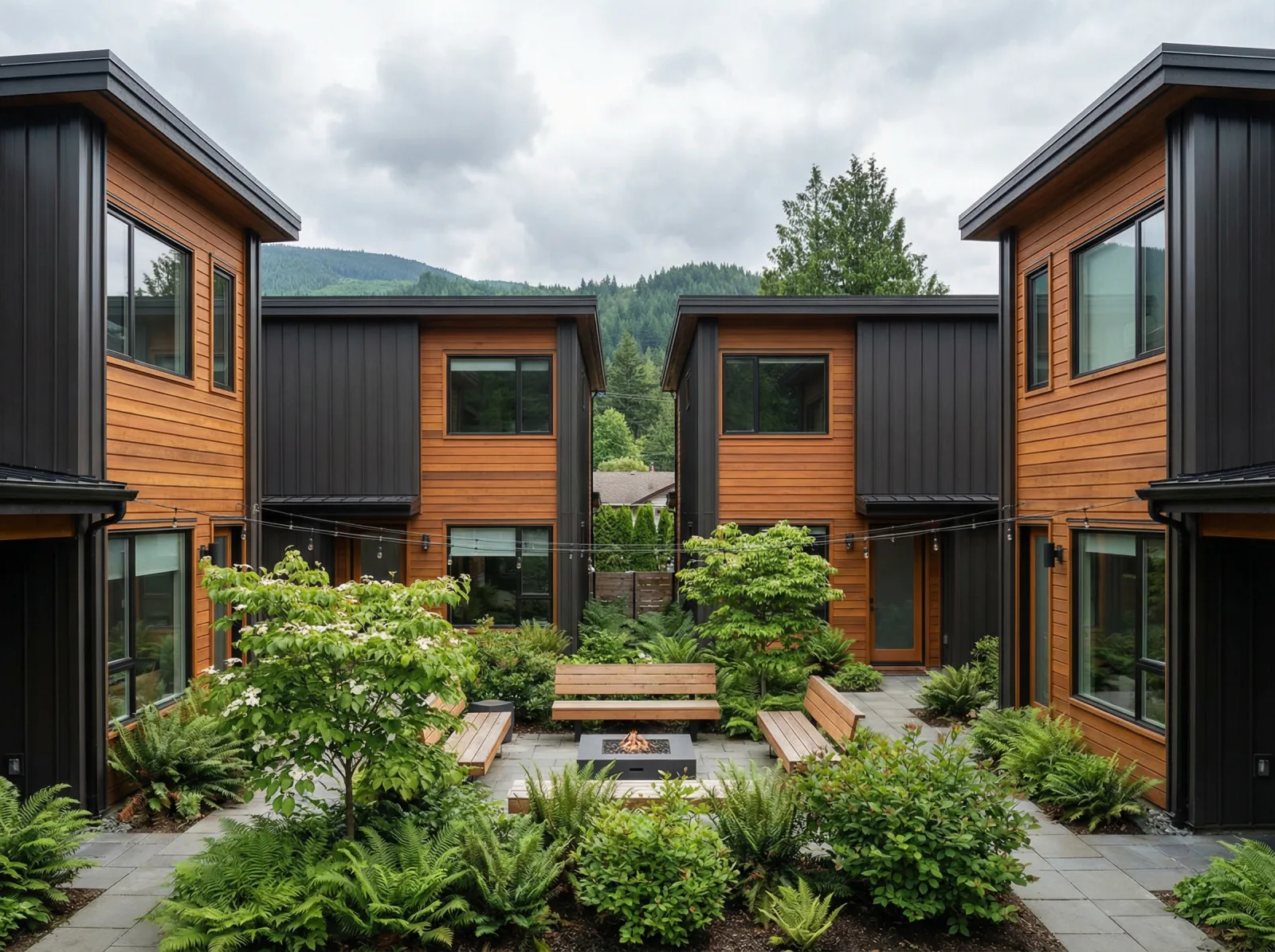
Courtyard design providing shared outdoor amenity
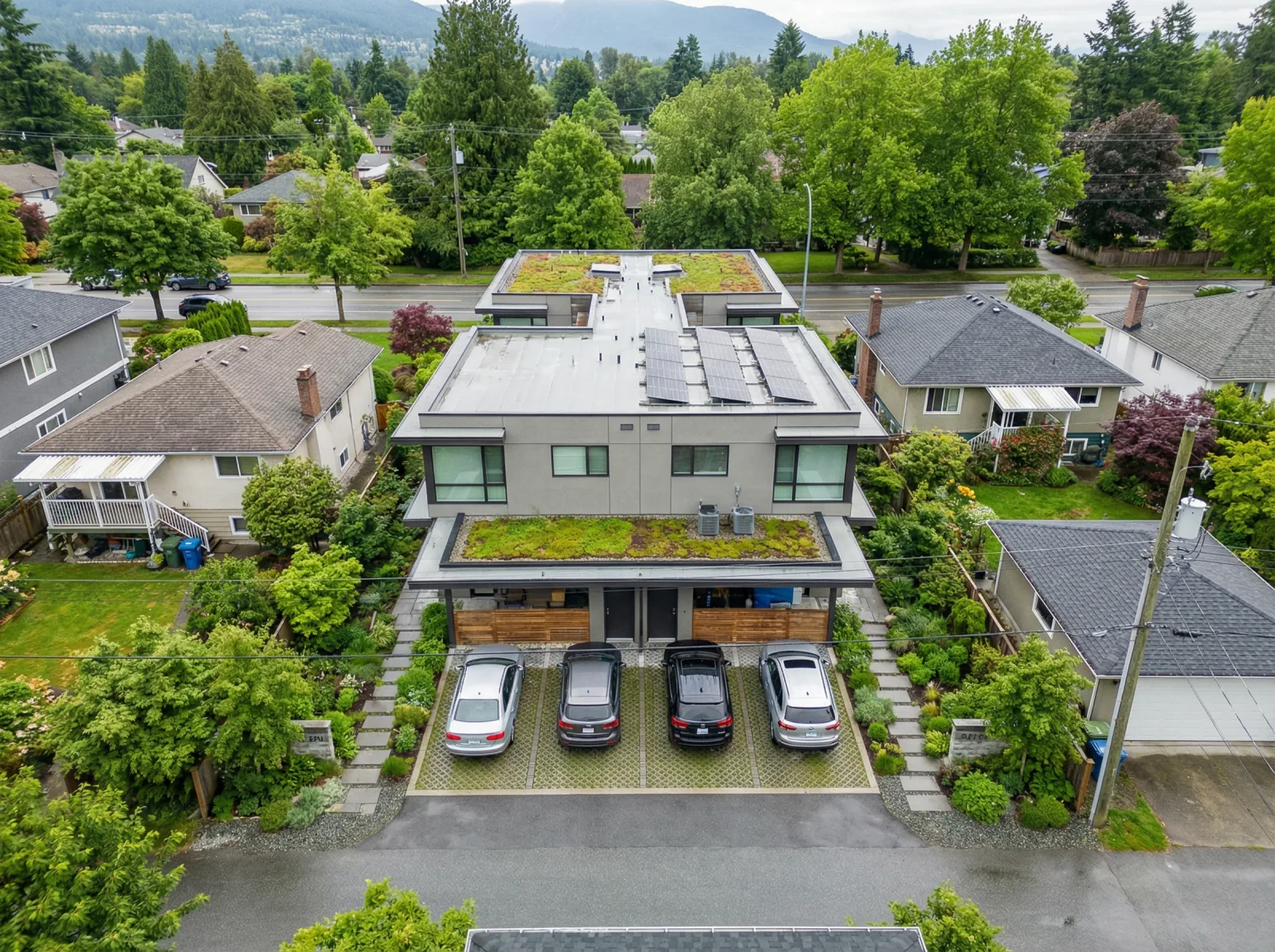
Bird's-eye view showing efficient lot utilization
Lot Requirements
Lot requirements differ between the two fourplex configurations. Stacked designs are more flexible on narrower lots, while side-by-side layouts need additional frontage.
| Specification | Stacked (Quadplex 1) | Side-by-Side (Quadplex 2) |
|---|---|---|
| Minimum Frontage | 40 ft | 44 ft |
| Minimum Depth | 100 ft | 100 ft |
| Minimum Lot Area | 4,800 sq ft | 5,200 sq ft |
| Typical Zones | R1, RS-1, RS-2 | R1, RS-1, RS-2 |
| Max Height | 10.7 m (35 ft) | 10.7 m (35 ft) |
| Max FSR | 0.90 - 1.1 | 0.90 - 1.1 |
Stacked vs. Side-by-Side Configuration
Quadplex 1 — Stacked (40 ft lot)
Unit 3
Unit 4
Unit 1
Unit 2
2-over-2 · Compact footprint
Quadplex 2 — Side-by-Side (44 ft+ lot)
Unit 1
2-3 storey
Unit 2
2-3 storey
Unit 3
2-3 storey
Unit 4
2-3 storey
Row of 4 · Townhouse feel
Illustrative configurations — actual layouts vary by design
Design Considerations
Accessibility
At least one unit must provide barrier-free access from the street with an adaptable principal floor. In stacked fourplexes, one of the ground-floor units is designated as the accessible unit. Side-by-side configurations can more easily provide multiple accessible units since each has grade-level entry.
Fire Separation
All assemblies between dwelling units require 1-hour fire-resistance ratings. Fourplexes have more complex fire separation needs than duplexes or triplexes due to the number of shared walls and floor/ceiling assemblies. Party walls at the property-line side typically require 1-hour rating from each side. Each unit must have independent egress and interconnected smoke alarms.
Sound Transmission
Inter-unit assemblies must achieve STC 55 (airborne) and IIC 55 (impact) for floor/ceiling assemblies. With four units, the acoustic design becomes particularly important at junction points where walls meet floors. Consider double-stud walls or staggered stud construction to exceed minimum requirements and improve tenant satisfaction.
Privacy
With four households on one lot, privacy design is critical. Offset window placement, separate entrance paths, private outdoor spaces (patios, decks, or balconies), and landscape screening all contribute to making each unit feel like a distinct home. Side-by-side configurations naturally offer better privacy than stacked layouts.
Where Are Fourplexes Permitted in BC?
Fourplexes are the maximum density allowed under SSMUH on most standard single-family lots. Municipalities with populations over 5,000 must allow up to 4 units on qualifying lots.
| Notes | |||
|---|---|---|---|
| Vancouver | 6 | Adopted | R1-1 zones; fourplex on lots 40 ft+; 6 units near transit |
| Burnaby | 4 | Adopted | R1 zones; min 4,800 sq ft lot area |
| Surrey | 4 | Adopted | All single-family zones meeting lot requirements |
| Coquitlam | 4 | Adopted | RS-1 and RS-2 zones |
| New Westminster | 4 | Adopted | Most residential zones; lot size dependent |
| North Vancouver (City) | 4 | Adopted | RS zones; streamlined permit process |
| North Vancouver (District) | 4 | Adopted | Select residential zones |
| Port Coquitlam | 4 | Adopted | RS-1 zones; 40 ft+ frontage |
| Richmond | 4 | Adopted | Single-family zones; flood construction applies |
| Maple Ridge | 4 | Adopted | Urban residential zones |
| Langley (Township) | 4 | Adopted | Urban residential zones |
Cost Breakdown
Fourplexes offer the lowest per-unit construction cost among small-scale multiplex types. Four units sharing one foundation, one roof, and consolidated site services create significant economies of scale.
Hard Costs
$380 - $480
per sq ft
Soft Costs
$120K - $160K
permits, design, fees
Total Project Cost
$1.2M - $2.0M
for all four units combined
Hard costs include foundation, framing, mechanical, electrical, plumbing, and finishes. Soft costs include architectural design, engineering, permits, surveys, legal, and project management.
Energy Requirements
All new fourplexes must comply with BC Energy Step Code, typically Step 3 or higher. Fourplexes have the best energy performance potential of any small-scale multiplex because the ratio of shared walls to exposed surface area is highly favourable. Interior units in a stacked fourplex can achieve extremely low heating loads. Key requirements include high-performance envelope, HRV systems, and airtightness testing below 2.5 ACH50.
Run the Numbers for Your Property
Use the VanPlex proforma calculator to model fourplex development scenarios on your specific lot -- including construction costs, financing, rental revenue, and return on equity.
Try the Proforma CalculatorFrequently Asked Questions
What is the difference between a stacked and side-by-side fourplex?
A stacked fourplex (Quadplex 1) places two units per floor in a 2-over-2 arrangement, fitting on standard 40 ft lots. A side-by-side fourplex (Concept E) arranges all four units horizontally, each with its own grade-level entrance, but requires a wider lot (44 ft+). Stacked is more efficient on land; side-by-side provides a townhouse feel.
Is a fourplex a good investment in BC?
Fourplexes are considered one of the strongest SSMUH investment types. They maximize unit count on standard lots while staying within Part 9 construction (lower cost per sqft). Four units generate strong rental cash flow, and the ability to stratify provides multiple exit strategies: hold and rent all four, sell individual units, or sell the entire building.
Can I build a fourplex on a 33-foot lot?
Most municipalities require at least 40 ft of frontage for four units. A stacked fourplex (Quadplex 1) is the most feasible configuration on narrower lots, but 33 ft is typically below the threshold. Some cities may have exceptions near transit corridors. Always confirm with your local planning department before proceeding.
How many parking spaces are required for a fourplex?
Under SSMUH legislation, municipalities cannot require more than one space per unit (four total). Properties within 400 m of frequent transit may have reduced or zero parking requirements. Tandem parking, compact stalls, and shared driveways are common solutions for fitting four spaces on standard lots.
Ready to Analyze Your Property?
Enter any BC address to get a free multiplex feasibility analysis with proforma projections.