
What “GO Housing” Actually Is
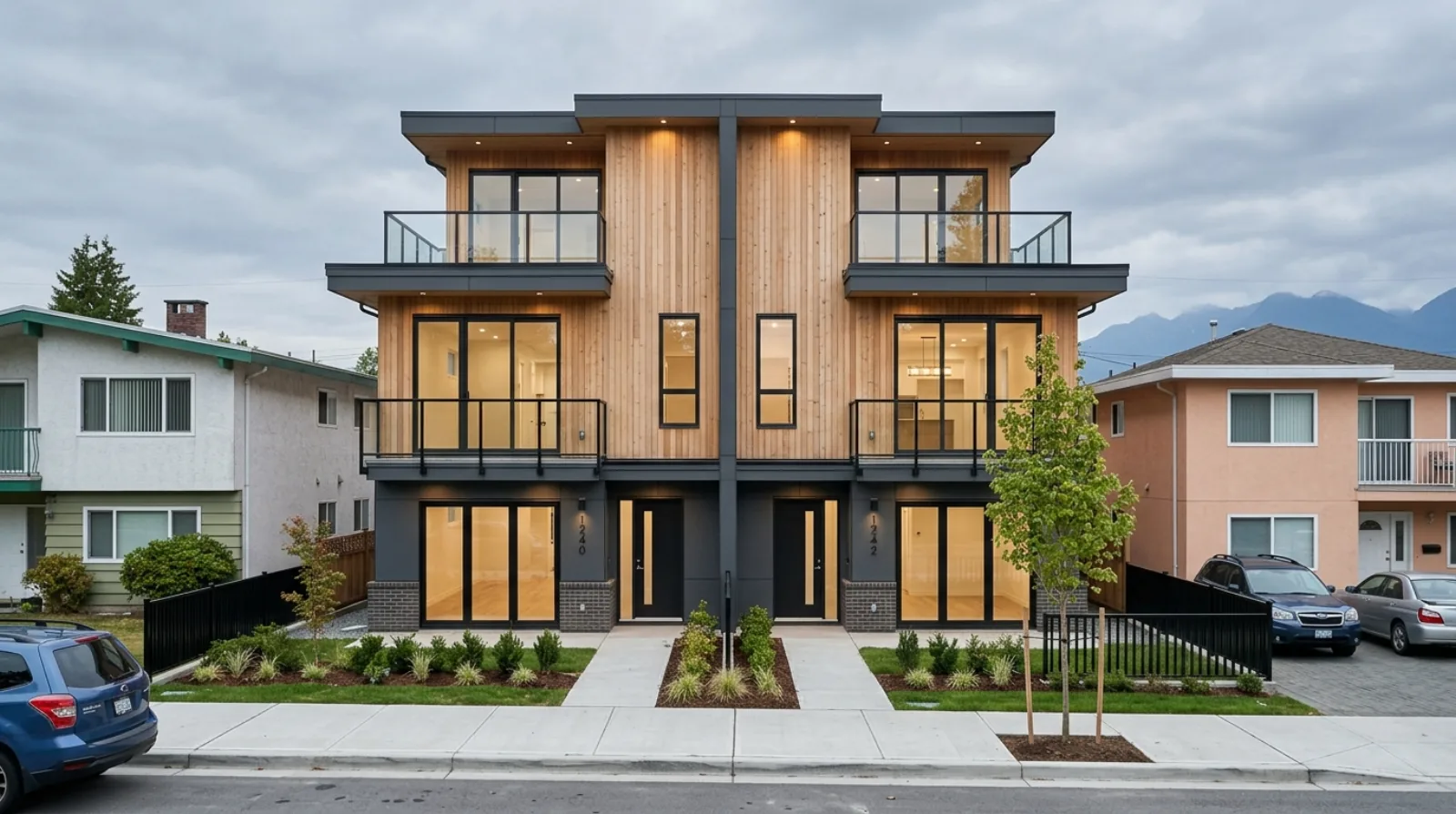
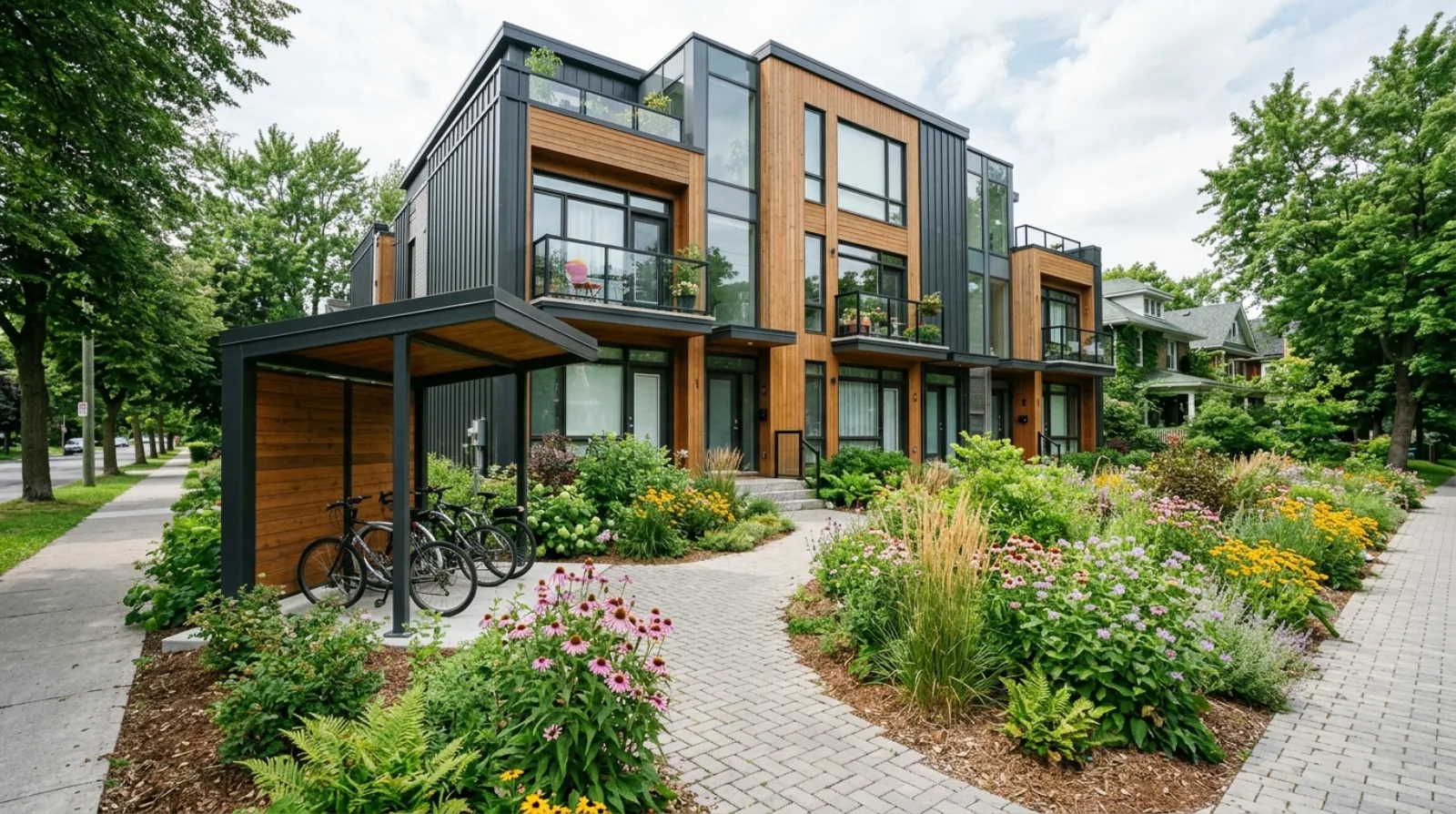
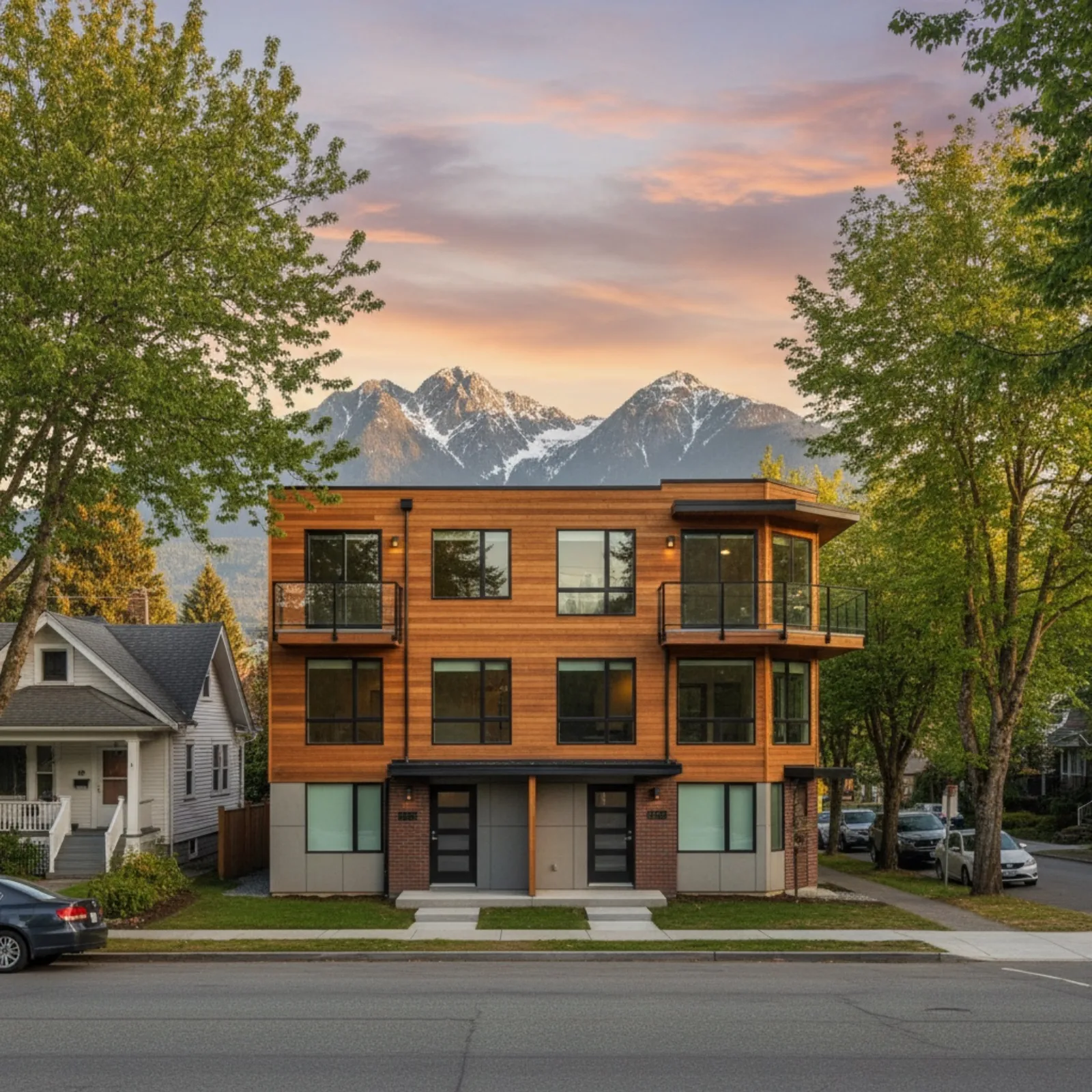
The City of North Vancouver has structured its multiplex rollout through a new zone called Ground Oriented (GO). The new GO (Ground Oriented) Zone is the city’s multiplex container: instead of keeping every block locked into one detached home plus a suite, it allows 3–6 primary units on a single lot, depending on lot size and location.
The bylaw sets the following basic pattern:
- Small lots (≤ 280 m²): up to 3 units
- Larger lots in Low Rise Neighbourhood 1: up to 4 units
- Lots in Low Rise Neighbourhood 2 or Residential Level 4: up to 6 units
Think of GO as “rowhouse / multiplex neighbourhood zoning”. It keeps the scale grounded – front doors at grade, modest heights, and a residential feel – but swaps the single front door for several.
For homeowners, the big shift is that your property is no longer evaluated only as “a house on a lot.” It’s now a potential small development site.
The Real Gatekeeper: 0.85 vs 1.0 FSR
If unit count tells you how many homes you can build, FSR (Floor Space Ratio) tells you how big they can be.
The bylaw draws a clear line:
-
In Low Rise Neighbourhood 1, maximum floor space is 0.85 FSR → total floor area can’t exceed 0.85 × lot area
-
In Low Rise Neighbourhood 2 and Residential Level 4, maximum floor space is 1.0 FSR
These numbers are critical for feasibility, because they operate as hard caps – even if the building envelope (setbacks, heights, roof shapes) would physically allow more volume, you still can’t exceed the FSR.
What that looks like in practice
For a simple example, take a 500 m² lot:
In an LR1 (0.85 FSR) area, your total buildable floor space is: 0.85 × 500 = 425 m² (~4,575 sq ft)
In an LR2 / RL4 (1.0 FSR) area, your cap is: 1.0 × 500 = 500 m² (~5,382 sq ft)
Now combine that with unit count:
-
LR1: up to 4 units sharing 425 m² → average ~106 m² (1,140 sq ft) per unit before circulation and service space.
-
LR2 / RL4: up to 6 units sharing 500 m² → average ~83 m² (900 sq ft) per unit before circulation.
The result is a subtle but important reality:
- In LR1 areas, the bylaw nudges you toward “larger 3–4 unit formats.”
- In LR2 / RL4, it tilts toward “smaller 5–6 unit homes” in the same footprint.
That balance will drive both design choices and land values once the market absorbs it.
Why FSR Caps Matter More Than Pretty Diagrams
Most public-facing material shows massing diagrams: rooflines, setbacks, and height envelopes. Those images are helpful for neighbours, but pro formas don’t care about roof shapes – they care about sellable square footage. VanPlex’s design guidelines page explains how massing rules translate into buildable area in practice.
Because the GO zone explicitly caps Gross Floor Area at 0.85 or 1.0 FSR depending on designation, this becomes the primary lever for:
-
How many units still pencil once you account for stairs, circulation, bike rooms, and garbage/recycling space (all of which have specific size and exclusion rules)
-
What mix of sizes (e.g., 3-bed vs 2-bed vs studios) can realistically fit
-
Whether a builder can hit target sale prices per square foot without shrinking units to unmarketable sizes
In other words: FSR is where feasibility lives or dies.
For some LR1 lots, an owner might technically be allowed “up to 4 dwellings,” but discover that by the time they meet parking, access, and landscape requirements, the home sizes are too small to justify the cost of land, design, and construction.
Conversely, a well-located LR2 or RL4 lot that combines 6 units at 1.0 FSR with strong townhome/condo comps nearby can suddenly look extremely attractive.
The Emerging Pattern We Expect to See
Based on how similar multiplex frameworks have played out in Vancouver and other cities, here’s the pattern we expect in City of North Vancouver once the GO zoning is fully adopted and lenders get comfortable:
“Prime GO Strips” will emerge quickly. These are streets where:
- The land use designation allows 6 units at 1.0 FSR
- There’s lane access
- And the surrounding product (townhomes, condos) already shows strong absorption and pricing
LR1 interior blocks will move more slowly. The 0.85 FSR cap with 3–4 units is a thinner margin. It may work well for long-term family strategies (multi-gen living, partial hold), but will be less attractive for pure build-to-sell developers unless land prices adjust.
Small lots (≤ 280 m²) will be a niche play. At a maximum of 3 units, these sites will rely heavily on design intelligence and construction efficiency. They may suit experienced local builders or owner-occupiers with a clear plan, but they’re less likely to be first in line for speculative activity.
Data will start driving decisions. Once there are a few dozen completed GO projects traded through the MLS®, the spread between “house value today” and “multiplex value tomorrow” will become visible – and that’s when real arbitrage opportunities appear.
What Monday’s Vote Means If You Own a House in CNV
If council adopts the bylaw as expected on December 8, three things become true for you immediately:
1. Your lot’s potential is now defined – not hypothetical. We know your allowed unit count and FSR cap based on your land use designation. The remaining questions are frontage, access, and site specifics.
2. The city has quietly turned you into a small-site landowner. You might never build a multiplex yourself, but you now own a property that can host one. That matters to:
- Developers looking for entitled sites
- REALTORS® pricing listings
- Appraisers modeling redevelopment value
3. Timing will matter. Early adopters in the most favourable designations typically capture more upside, because:
- Land prices haven’t fully “priced in” the new rights yet
- Construction and soft costs are known, but sale prices of new GO units tend to start high as the market tests demand
Waiting isn’t automatically wrong – especially if you’re playing a long game – but doing nothing without at least running the numbers becomes riskier once the policy is in force.
How VanPlex Is Approaching CNV’s GO Housing
VanPlex was built to analyze site-by-site multiplex viability in Vancouver and Burnaby. We’ve already seen how small differences in frontage, FSR, and exemptions create massive differences in ROE between “eligible” and “actually viable” lots.
We’re now applying the same approach to City of North Vancouver’s GO framework, mapping:
- Unit caps and FSR by land use designation
- Lot width, area, and access patterns
- Emerging sales data as the first GO projects are approved and built
Our goal is to help owners and their advisors answer three core questions:
- Is my lot a good candidate for multiplex redevelopment – or just theoretically allowed?
- What’s the likely spread between my home’s current value and a completed multiplex sale?
- Am I better off selling to a developer, co-developing, or holding for a future exit?
A Practical Next Step
If you own a detached home in the City of North Vancouver and want a clear, grounded view of your options under the new GO zoning, now is the right moment to start. Reviewing the permits process first will help you understand how long each stage takes.
We’re currently doing one-on-one feasibility reviews for CNV homeowners and their advisors, using the new bylaw framework and our multiplex pro-forma tools.
To explore what GO zoning and the 0.85 / 1.0 FSR caps mean for your specific lot, reach out to VanPlex at [email protected].
We’ll walk through:
- Your land use designation (LR1 vs LR2 vs RL4)
- Unit count and FSR constraints
- Early thoughts on viability (including likely exit strategies)
As Monday’s vote turns policy into reality, the advantage shifts to the people who understand the numbers first – not the loudest headlines.