
Which cities actually complied with Bill 44 — and which ones quietly blocked density?
Here is the definitive list of all 87 municipalities and regional districts subject to Bill 44 (SSMUH), updated to December 9, 2025. For a full breakdown of what Bill 44 requires, see the complete Bill 44 guide.
If you invest, develop, or advise in BC — this is the list that matters.
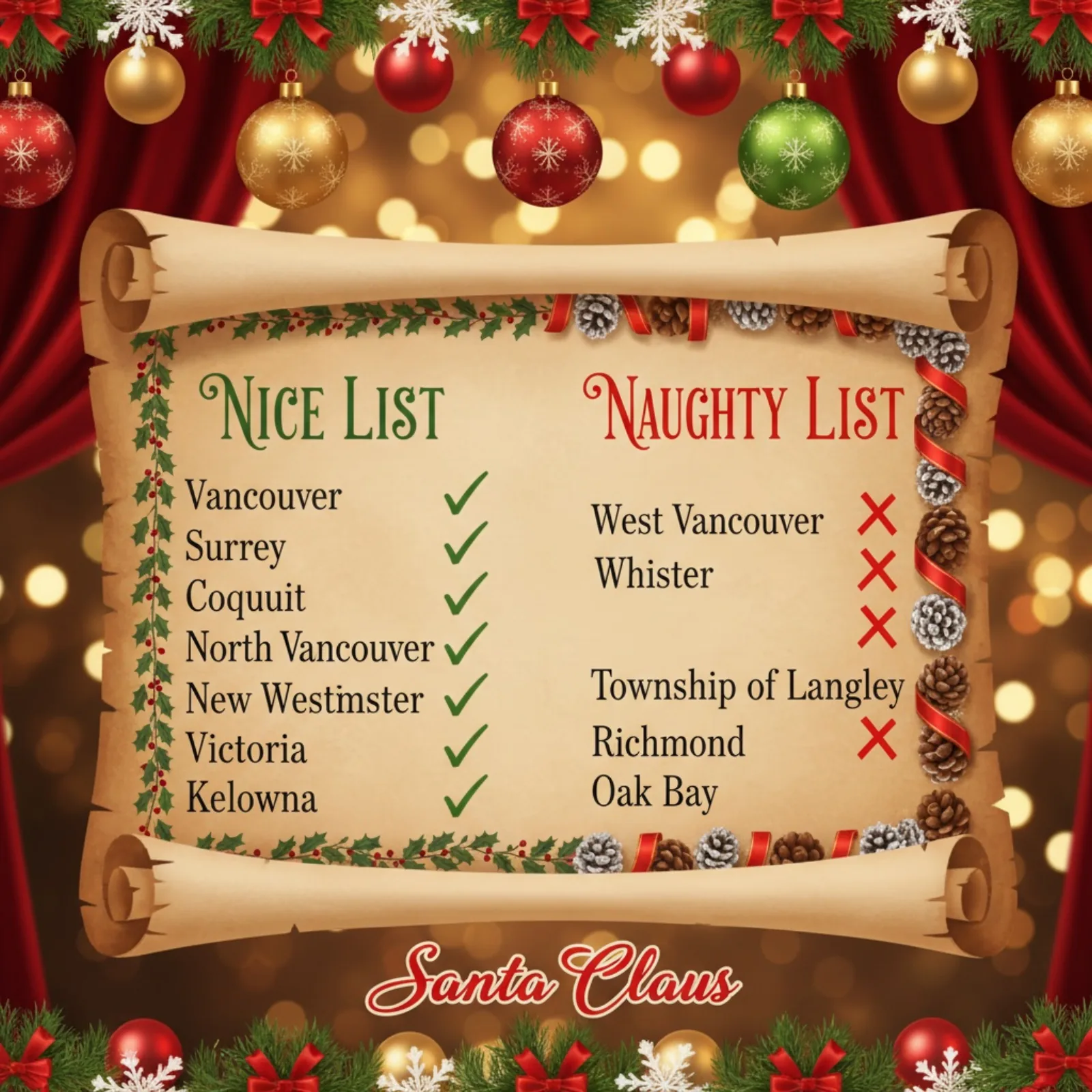
The Nice List — Fully Compliant (Zoning Active)
These cities met the June 2024 deadline.
Density is live.
Bill 25 enforcement is not triggered here.
Metro Vancouver (18 Municipalities)
- City of Vancouver (R1-1 active)
- City of Surrey
- City of Burnaby
- City of Coquitlam
- City of North Vancouver
- City of New Westminster
- City of Port Coquitlam
- City of Port Moody
- City of Delta (Adopted June 2024; refining in 2025)
- City of Maple Ridge
- City of Pitt Meadows
- City of Langley
- City of White Rock
- District of North Vancouver (strict slope rules)
- Bowen Island
- Village of Anmore
- Village of Belcarra
- Village of Lions Bay
Fraser Valley (6 Municipalities)
- Abbotsford
- Chilliwack
- Mission
- District of Kent (Agassiz)
- District of Hope
- Village of Harrison Hot Springs
Vancouver Island & Coast (24 Municipalities)
- Victoria
- Saanich
- Nanaimo
- Langford
- Campbell River
- Courtenay
- Colwood
- Comox
- View Royal
- Sidney
- Central Saanich
- North Saanich
- North Cowichan
- Ladysmith
- Qualicum Beach
- Parksville
- Port Alberni
- Duncan
- Lake Cowichan
- Esquimalt
- Squamish (⚠️ Flood Hazard DPA overrides density in key zones)
- Sechelt
- Gibsons
- Sooke (compliant but resistant)
Interior & Okanagan (17 Municipalities)
- Kelowna
- Kamloops
- West Kelowna
- Vernon
- Penticton
- Salmon Arm
- Merritt
- Lake Country
- Summerland
- Peachland
- Coldstream
- Armstrong
- Enderby
- Spallumcheen
- Oliver
- Revelstoke
- Radium Hot Springs (opted in)
Kootenays & North (13 Municipalities)
- Prince George
- Cranbrook
- Fort St. John
- Dawson Creek
- Terrace
- Prince Rupert
- Nelson
- Castlegar
- Trail
- Williams Lake
- Quesnel
- Smithers
- Fernie
The Naughty List — Restrictive / Hostile Compliance
These cities “technically” complied but deployed tactics that block density in practice.
High Bill 25 override risk.
District of West Vancouver
While West Vancouver originally resisted, they did comply in August 2024 under threat of ministerial order.
Whistler
Units 3 and 4 in a 4-plex often must be employee-restricted with 100% employee-housing covenants on new units, which kills ROI and makes projects unfinanceable.
Township of Langley
Amenity Cost Charges (ACCs) used as a density tax to make multiplex development financially unviable.
City of Richmond
Large swaths exempt due to Flood Plain and ALR designations, severely limiting where density can actually be built.
District of Oak Bay
Design Guidelines weaponized to bottleneck applications and slow down or prevent multiplex approvals.
The Exempt List — Official Hall Passes
Exempt due to infrastructure or emergency conditions:
- Osoyoos — EXEMPT until 2029
- Greenwood — EXEMPT until 2028
- Wells — EXTENSION - In Process for zoning update by end 2025
- Northern Rockies RM — Adoption Imminent - Public Hearing December 8, 2025 to Adopt Official Community Plan
Honourable Mention: Kitimat (extended to 2030)
Analysis for Investors & Developers
The Squamish Trap
Yes, they’re “compliant.”
But the Flood Hazard Development Permit Area map overrides most downtown SSMUH entitlements.
Know before you buy.
The Whistler Trap
On paper: compliant.
In reality: Units 3 and 4 in a 4-plex often must be employee-restricted, making them unfinanceable and unprofitable.
About Regional Districts
The “87” includes specific Electoral Areas inside urban containment boundaries.
For most investors, the municipalities listed above are the real playing field.
What Bill 44 Actually Created
Before this compliance map made any sense, Bill 44 had to create a new asset class — converting single-family lots into multiplex development sites with measurable ROI. That foundational shift is what turned compliance status into something worth tracking.
Ontario tried a similar approach with Bill 23. The BC Bill 44 vs Ontario Bill 23 comparison breaks down what each province got right, what they got wrong, and why BC’s approach has produced more actual permits.
If You’re Investing or Developing Under Bill 44, Precision Matters
The SSMUH program explains how these provincial rules translate into actual property rights at the local level. At VanPlex, we run parcel-level PlexScore™ analysis across compliant municipalities to identify:
- Viable vs. non-viable lots
- Hidden blockers (DPAs, flood zones, slope bylaws, covenants)
- ROI thresholds
- Partner cities with the strongest pro-density policy alignment
Bill 44 created opportunity — but only in the right locations.
If you want the full BC Multiplex Viability Map or PlexScore™ insights for your property, contact us to get started.
Note: This list is accurate as of December 9, 2025. Municipal policies can change. Always verify current zoning and development permit requirements with local planning departments before proceeding with any development plans.