
July 2026 Update — Where the Backlash Actually Landed
Six months after sixteen Metro Vancouver mayors petitioned the Province to amend Bill 44, here is the result: the law stands. BC passed Bill 25 in November 2025 to strengthen enforcement, not weaken it. The June 30, 2026 compliance deadline has now passed. The one municipality that formally refused — District of North Vancouver — is now under provincial oversight. The backlash was real. It changed almost nothing about the legal framework. What it is changing is design.
First-half 2026 data: permit volumes across Metro Vancouver are up year-over-year. The loudest opposition turned into better design guidelines, not fewer multiplexes.
Sixteen Metro Vancouver mayors wanted to kill Bill 44. Calgary already repealed its blanket upzoning. And a Leger poll shows 62% of Vancouver residents disapprove of the city’s direction. Nearly three years after Vancouver approved 4–6 unit buildings on single-family lots, the backlash against “boxy” multiplexes reached a boiling point — but is the design the real problem, or just the most visible symptom?
The Policy Timeline: How We Got Here
The multiplex revolution started in Vancouver’s council chambers in September 2023. Mayor Ken Sim and council approved a zoning overhaul allowing 4–6 unit buildings on traditional single-family lots — a historic shift for a city where detached homes had dominated residential neighborhoods for a century.
Just two months later, the provincial NDP accelerated the trend. Bill 44 mandated similar upzoning for every BC municipality with more than 5,000 residents, requiring cities to allow small-scale multi-unit housing (SSMUH) whether local councils wanted it or not.
The stated goal was clear: address BC’s housing crisis by adding “missing middle” density without high-rise disruption. By December 2025, the political winds had shifted dramatically. But by July 2026, the legal landscape had barely moved.
| Event | Date | Impact |
|---|---|---|
| Vancouver council approves 4–6 units on single-family lots | Sept 2023 | First major Canadian city to implement blanket multiplex zoning |
| Bill 44 passes BC Legislature | Nov 2023 | Mandates SSMUH for all cities over 5,000 population |
| Calgary repeals blanket upzoning | Dec 2024 | First major city to reverse multiplex policy |
| 16 Metro mayors petition against Bill 44 | Dec 2025 | Coordinated political opposition emerges |
| BC passes Bill 25 to enforce Bill 44 compliance | Nov 2025 | Province tightens, not loosens, the rules |
| Bill 25 compliance deadline | June 30, 2026 | All compliant municipalities now open; District of North Vancouver under provincial oversight |
What Critics Are Really Saying
The complaints aren’t abstract. They’re visceral, visual, and increasingly organized.
Burnaby Mayor Mike Hurley captures the sentiment bluntly:
“They’re untenable. They don’t fit in with neighbourhoods. I know there are a lot of upset people out there, and rightly so.”
Michael Geller, a veteran Vancouver planning consultant, describes what’s emerging on formerly single-family lots as “plain, boxy and oftentimes unadorned buildings” — structures that prioritize maximum floor area over neighborhood character.
Former NDP MLA Kathy Corrigan called some new builds “shocking” and “gigantic,” echoing concerns from constituents watching mature trees fall and three-storey masses rise where two-storey ranchers once stood.
The complaints cluster around five main themes:
- Aesthetic quality: “Boxy,” “plain,” “featureless,” “unadorned”
- Tree canopy destruction: Maximizing buildable area often means removing mature trees
- Zero parking mandates: Bill 44 eliminated minimum parking requirements for 6-unit buildings
- Scale mismatch: Three and four-storey buildings towering over single-storey neighbors
- Killed townhome development: Lot assembly became uneconomic, ending a popular housing type
The Parking Problem Nobody Wanted
One of Bill 44’s most controversial provisions eliminated minimum parking requirements for six-unit dwellings. In theory, this reduces development costs and encourages transit use. In practice, it’s created street-level conflict.
Port Coquitlam Mayor Brad West argues the policy “killed townhome development” — a housing form that families actually wanted — while flooding neighborhoods with parking-free multiplexes that push car storage onto public streets.
The numbers tell the story:
- Zero parking spots required per 6-unit dwelling under Bill 44
- Average Vancouver household: 1.3 vehicles (Statistics Canada, 2021)
- Projected additional street parking demand: 6–8 vehicles per multiplex lot
For neighborhoods already struggling with parking, the math doesn’t work. For transit-rich areas, the policy makes sense. The blanket approach satisfied neither constituency.
The Municipal Pushback: 16 Mayors vs Victoria
In December 2025, sixteen Metro Vancouver mayors signed a joint letter urging the provincial government to repeal or significantly amend Bill 44. Their argument: one-size-fits-all zoning ignores local context, community character, and infrastructure capacity.
The Calgary precedent loomed large. In December 2024, Calgary became the first major Canadian city to reverse blanket upzoning after sustained public opposition. The decision emboldened BC critics who argued the province’s approach was too aggressive, too fast.
Burnaby’s response offers a preview of municipal resistance within provincial constraints. The city reduced:
- Maximum building height from 4 storeys to 3 storeys
- Lot coverage from 60% to 45%
These adjustments stay within Bill 44’s framework while addressing the most visible complaints about building bulk.
What actually happened to the petition: The Province didn’t back down. BC’s response was Bill 25, which passed in November 2025 and gives the Province authority to override any municipality that uses local rules to block viable development. The June 30, 2026 compliance deadline has now passed. District of North Vancouver — the one municipality that formally refused to comply in April 2026 — is now under provincial oversight. The mayors’ letter produced better design guidelines in some cities. It produced no rollback of the core zoning reform.
The Case for Density Done Right
Here’s where the debate gets nuanced. The critics aren’t wrong about design quality — but they may be wrong about the underlying policy.
The housing math is still brutal:
- Metro Vancouver added 64,000 residents in 2023 alone (Statistics Canada)
- Rental vacancy rate: 1.2% (CMHC, October 2025)
- Average single-family home price: $1.89 million (Greater Vancouver REALTORS®, Dec 2025)
- As of mid-2026, no major easing in either vacancy or price-to-income ratios has been recorded — the supply deficit remains
Without additional housing supply — especially in established neighborhoods with existing infrastructure — prices and rents will continue climbing. Multiplexes offer a middle path between detached homes and high-rises.
The problem isn’t the policy concept. It’s the execution gap between what the rules allow and what builders actually construct. When small developers face razor-thin margins, they default to maximum envelope, minimum design — exactly the “boxy” outcomes critics describe.
Design Quality as the Solution
The good news: “boxy” isn’t inevitable. The bad news: quality multiplex design requires expertise most small builders don’t have.
What makes a neighborhood-compatible multiplex:
| Design Element | Standard Approach | Quality Approach |
|---|---|---|
| Massing | Single rectangular box | Varied rooflines, articulated facades |
| Materials | Vinyl siding, flat surfaces | Mixed materials, architectural details |
| Landscaping | Minimal, code-compliant | Mature tree preservation, perimeter softening |
| Parking | Surface, visible | Concealed, rear access, or underground |
| Entry design | Single utilitarian door | Multiple distinct entries, street presence |
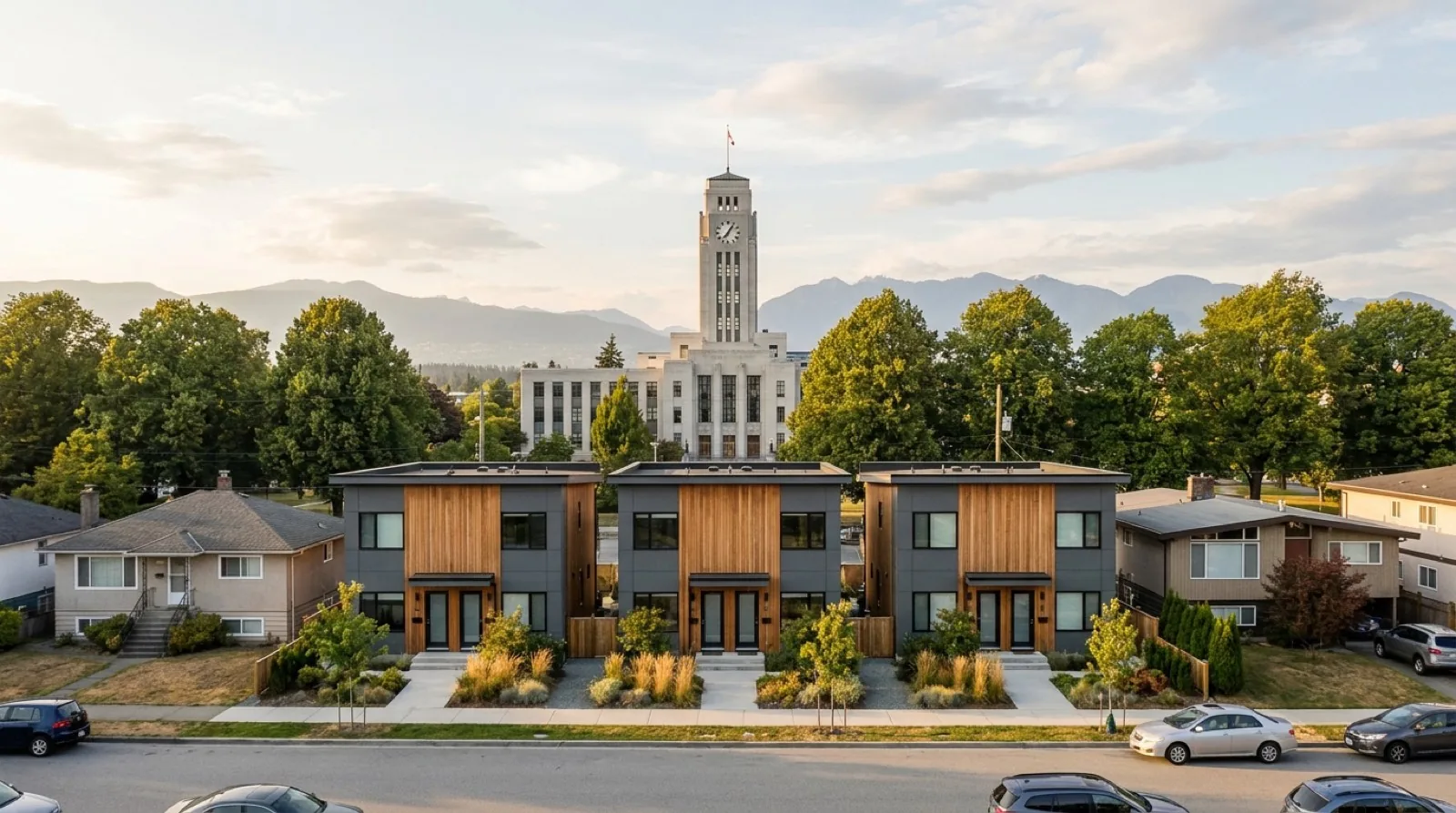
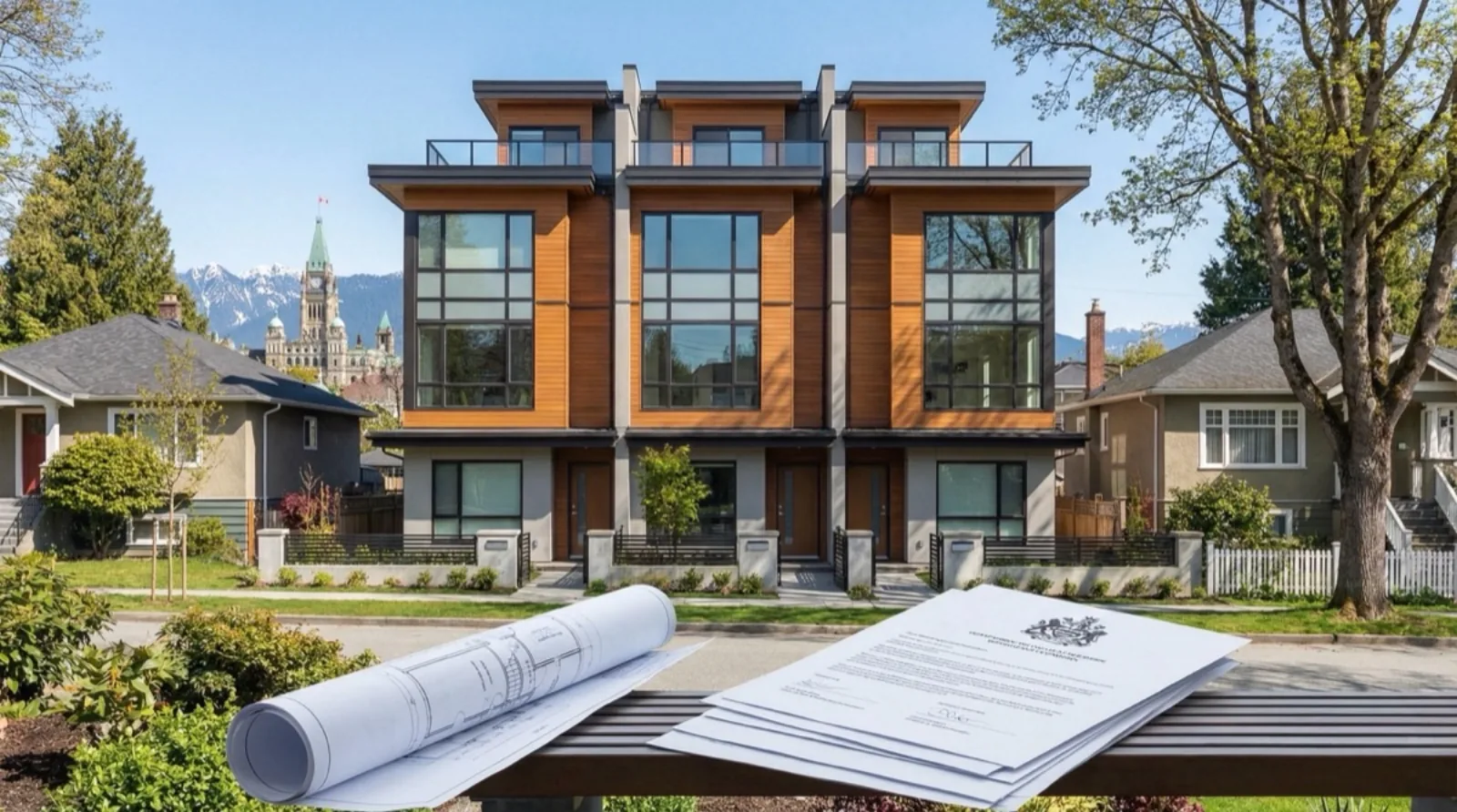
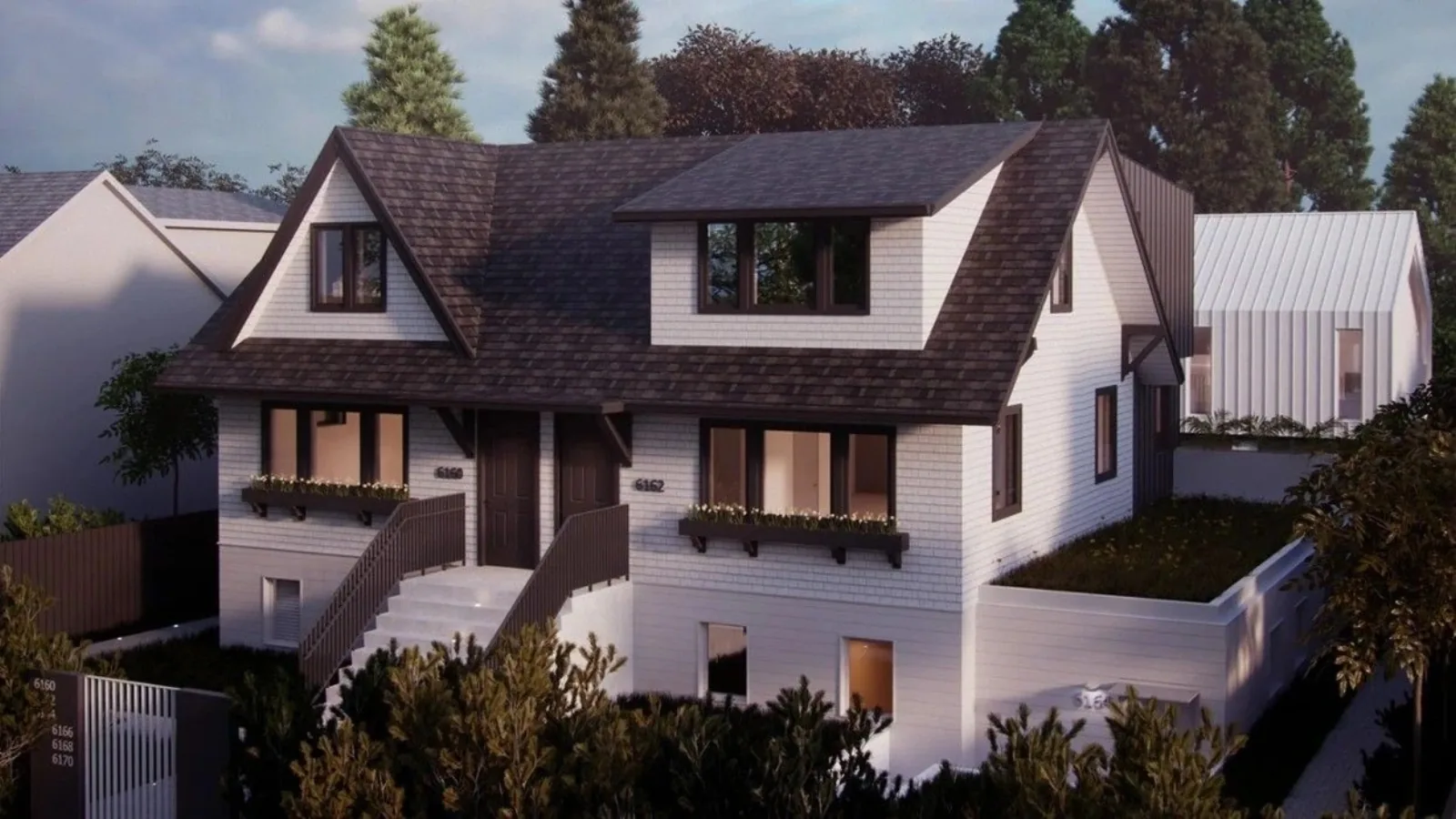
Standardized design plans from governments could help establish quality baselines. The DASH (Digitally Accelerated Standardized Housing) program represents one attempt to provide pre-approved designs that balance buildability with aesthetics — similar to what Vancouver’s own design guidelines are pushing toward for neighborhood-compatible density.
Private design expertise matters too. Projects that invest in architectural quality often achieve:
- Faster permitting (fewer design-related revisions)
- Higher valuations (premium finishes command premium prices)
- Better neighbor relations (quality reduces opposition)
First-half 2026 evidence: Cities that responded to the backlash with stronger design guidelines — rather than attempting to gut the unit-count rules — are seeing better community reception and fewer permit delays. The backlash, ironically, is producing better buildings.
What the Poll Numbers Actually Mean
That 62% disapproval rating deserves scrutiny. What exactly are residents rejecting?
Breaking down typical housing survey responses:
- Design quality concerns: High (visible, visceral)
- Density opposition: Moderate (varies by neighborhood)
- Affordability skepticism: High (multiplexes haven’t lowered prices yet)
- Process frustration: High (feeling excluded from decisions)
The poll captures dissatisfaction with outcomes, not necessarily opposition to density itself. Many of the same residents who dislike current multiplexes would accept well-designed, neighborhood-compatible alternatives.
This is the opportunity hidden in the backlash: quality multiplex development can rebuild public support by demonstrating that density doesn’t require ugliness.
VanPlex’s Approach: Making Multiplexes That Work
We’ve analyzed 86,000+ Vancouver and Burnaby properties for multiplex potential. Here’s what we’ve learned: the gap between policy potential and successful execution is where most projects fail — or succeed.
Where projects go wrong:
- Prioritizing maximum floor area over design quality
- Ignoring neighborhood context and character
- Underestimating permitting complexity
- Choosing lowest-cost materials and finishes
Where projects succeed:
- Working with architects experienced in multiplex design
- Preserving mature trees where possible
- Using quality materials that complement surroundings
- Designing for livability, not just maximum density
VanPlex connects property owners with design, permitting, and construction partners who understand that successful multiplexes must work for buyers, neighbors, and communities — not just on paper.
The Path Forward
The sixplex backlash is real, and dismissing critics’ concerns would be a mistake. At the same time, reversing density policy entirely — as some mayors advocated — was never a realistic outcome, and it didn’t happen. Bill 44 stands. Bill 25 tightened enforcement.
The constructive path:
- Acknowledge design problems without abandoning density goals
- Support municipal design guidelines that improve quality within Bill 44’s framework
- Invest in standardized quality designs that give small builders better templates
- Reward projects that preserve trees, integrate parking, and respect neighborhood scale
- Measure success by livability outcomes, not just unit counts
The choice isn’t between “boxy” multiplexes and no multiplexes. It’s between getting density wrong and getting it right.
Ready to See What’s Possible?
The debate over multiplex design will continue. But for property owners exploring development potential, the question is more immediate: what could quality multiplex development look like on your lot?
VanPlex provides:
- Instant feasibility analysis for any Vancouver or Burnaby address
- Financial modeling that shows realistic costs and returns
- Design partner connections with architects who prioritize quality
- Permitting guidance to navigate municipal requirements
👉 Check Your Property’s Potential — Free instant analysis 👉 Book a Consultation — Discuss your specific situation
About VanPlex: We’re Vancouver’s multiplex development platform, helping property owners navigate Bill 44 zoning through data-driven feasibility analysis, quality design partnerships, and end-to-end development support. We believe density and design quality aren’t mutually exclusive — they’re both essential.
References
[1] Todd, Douglas. “There’s a growing backlash against the outsized, ‘boxy’ apartment blocks being built in B.C.” Vancouver Sun, January 8, 2026.
[2] Leger Poll. “Vancouver Resident Satisfaction Survey.” December 2025.
[3] City of Calgary. “Council Report: Blanket Upzoning Repeal.” December 2024.
[4] Statistics Canada. “Metro Vancouver Population Estimates.” 2023.
[5] CMHC. “Rental Market Report: Vancouver CMA.” October 2025.
[6] Greater Vancouver REALTORS®. “Monthly Market Statistics.” December 2025.
[7] BC Legislative Assembly. “Bill 25 — Housing and Municipal Affairs Statutes Amendment Act, 2025.” November 2025.