
This is a real Vancouver co-development. Names and exact addresses are changed, but the numbers, the timeline, and the lessons are not. The homeowner agreed to let me write it up because, in her words, “someone needs to tell people what this actually looks like instead of the glossy version.”
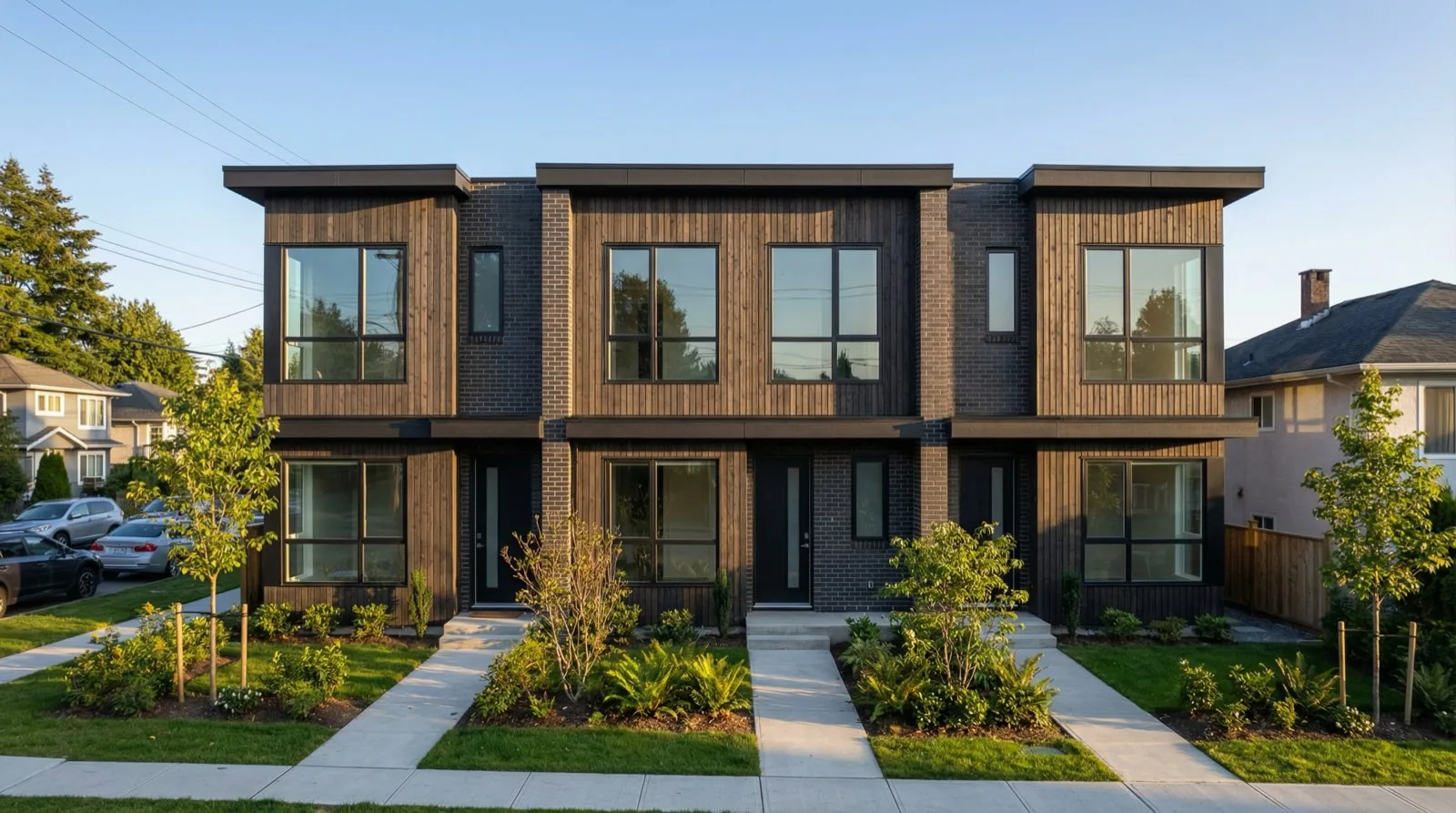
She kept two finished units in a 4-plex on a standard east side lot. Here is how it went from first phone call to final strata title.
TL;DR
- Standard 33 by 122 foot Vancouver east side lot, assessed at $1.72M
- Land-for-units swap: homeowner kept 2 of 4 units, builder took 2
- 24 months from first conversation to strata registration (2 months behind plan)
- Total build cost: $2.35M (6% over the contracted $2.21M)
- One major contract fight, one arborist surprise, one permit delay
- Final net position: two finished units worth ~$2.76M combined
- Single biggest lesson: hiring an independent real estate lawyer saved her ~$200K
The Homeowner
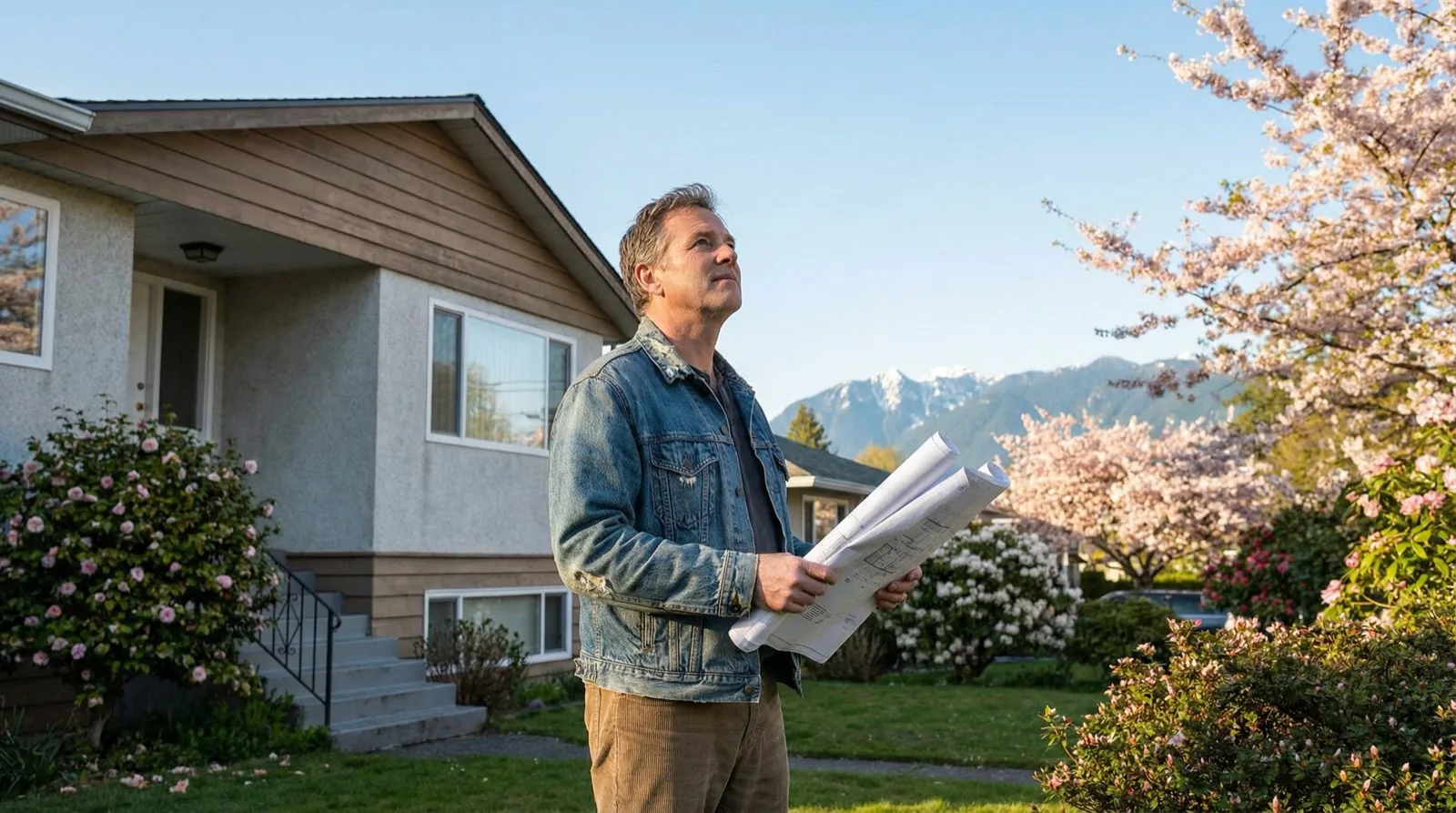
Call her Anne. Widowed, age 68, retired teacher. Bought the house with her husband in 1982 for $135,000. Raised two kids there. Paid off the mortgage in 2001. No debt. Modest pension. House was fully assessed at $1.72M by 2024, with the land at $1.49M and the old 1955 bungalow at $230K.
Anne’s plan was to sell and downsize into a condo. Her son, a finance guy, suggested co-development. He’d read about it and thought the math worked. Anne was skeptical but willing to listen.
The First Builder (Who Didn’t Work Out)
Builder A sent a marketing letter, offered $1.85M “or a co-development partnership where you keep 1.5 units in a 4-plex.” Anne met with them twice. They pressured her to sign an exclusivity LOI. They insisted on using their own lawyer for the term sheet.
Anne’s son told her to walk away. She did. Two months later, Builder A was named in a BC Housing licence suspension for unrelated work quality issues. A small moment of vindication.
Lesson: Builder A’s marketing was slick. Their paperwork was not. The tell was their insistence on their own lawyer. A good builder wants the homeowner to have independent counsel because it makes the deal stick.
The Second Builder
Builder B was smaller — eight multiplexes completed, all visible, all verifiable, all owners willing to give references. BC Housing licence in good standing. Insurance certificates produced on request. Lawyer based in downtown Vancouver, real estate specialist.
First conversation: three hours at Anne’s kitchen table, no contract, no pressure, no exclusivity. Rough terms discussed: $1.75M land value, 4 units built, 2 for Anne, 2 for Builder B. Anne asked for a week to think. Builder B agreed.
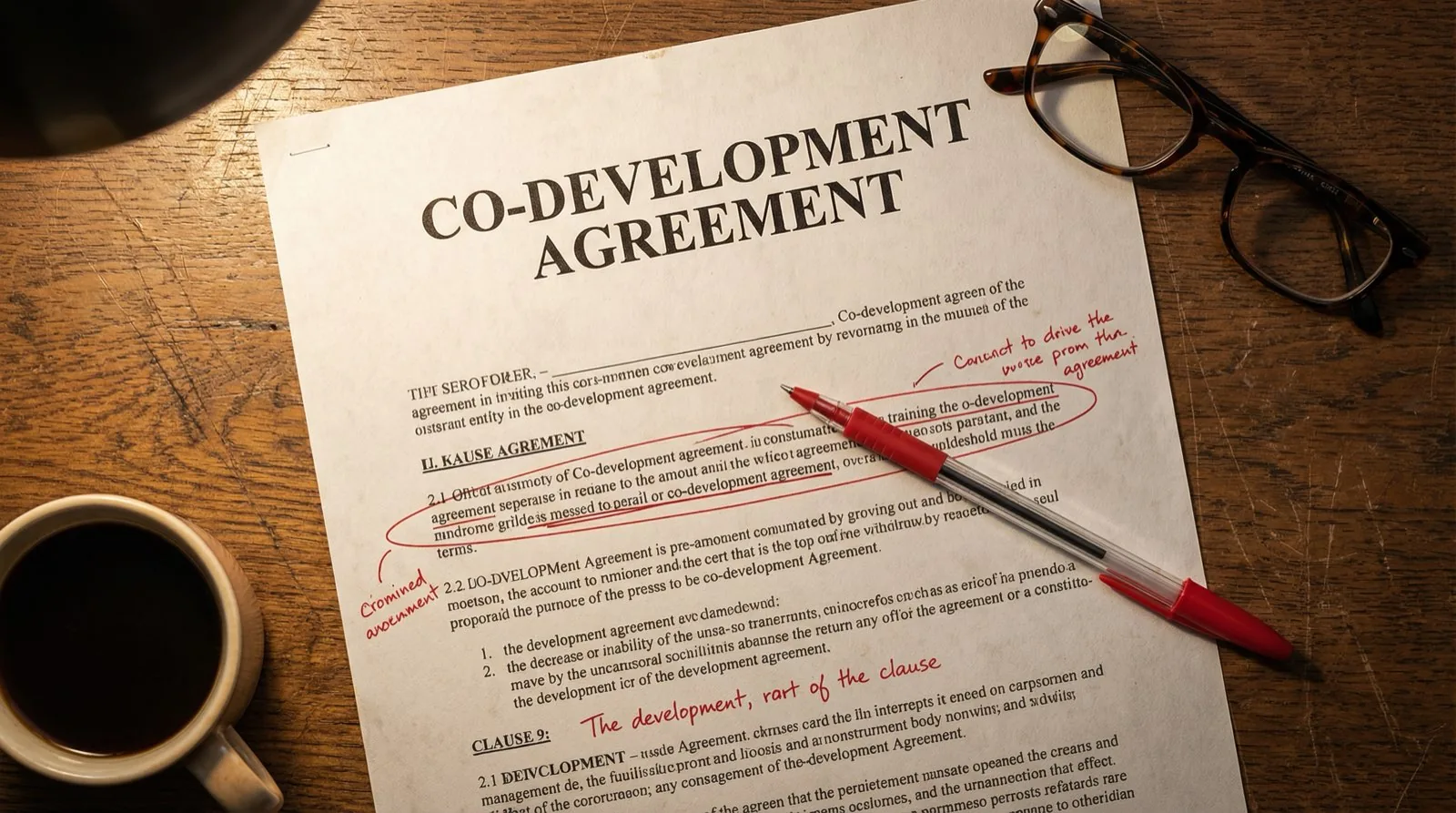
Term sheet arrived seven days later. Twelve pages. Anne took it to Wendy, an independent real estate lawyer her son found through the Law Society of BC directory. Wendy charged $2,500 for the initial review and marked up the term sheet in red ink.
The Term Sheet Negotiation
Wendy caught four issues:
-
Unit selection vague. The term sheet said “Anne receives two units, to be agreed upon completion.” Wendy rewrote it to specify Proposed Strata Lots 1 and 4 (ground floor front and top floor rear), with full finish schedules.
-
Performance bond was actually a personal guarantee from Builder B’s principal. Wendy insisted on a proper surety bond from an insurance company. Builder B agreed but it took three weeks and a $12K premium (paid by Builder B from their fee).
-
Waterfall had developer fee ahead of return of land. Wendy flipped it: return of land first, then developer fee. This was the clause that ultimately saved Anne about $180,000 when construction costs ran over.
-
Force majeure included “adverse weather” and “labour availability.” Wendy narrowed it to acts of God and government-mandated shutdowns only.
Builder B pushed back on items 3 and 4. Negotiation took six weeks. Builder B eventually agreed to items 3 and 4 in full. Anne later told me this was the moment she knew she had the right builder: “A bad builder would have walked. A good one grumbled and signed.”
Definitive Agreement & Due Diligence (Months 3-5)
Title search came back clean. No surprises.
Geotech report cost $4,500 (split 50/50). Soil was fine. No peat.
Arborist report revealed a protected 52 cm Norway maple in the back yard that Anne had completely forgotten about. The City required retention or 2:1 replacement. Builder B redesigned the rear envelope around the tree, losing 40 sq ft per unit. A small tax.
Definitive agreement signed month 5. Legal fees for Anne: $8,400 total (term sheet review + definitive agreement + registration work). Money very well spent.
Design & Permits (Months 5-11)
Architectural drawings completed month 7. Development Permit filed month 7.5. Building Permit filed month 9.
The City took 4.5 months to issue the Building Permit. This is longer than promised. Builder B absorbed the carrying cost because the contract included a liquidated damages clause for permit-related delays they were responsible for managing. Net cost to Anne: zero.
Construction (Months 12-22)
Demolition month 12. Anne moved into a rented apartment nearby at $2,800/month. Builder B advanced her $50K at demolition to cover 18 months of rent in cash (she earned interest on the balance; another small win).
Excavation revealed an old fuel oil tank from the 1960s. Environmental testing required. Cost: $18,000. This was technically a homeowner obligation under the contract (pre-existing condition) but Builder B split it 50/50 as a gesture.
Framing through drywall went on schedule. Cost overruns started showing up in month 17: lumber was up 11% from contract, electrical rough-in needed an upgrade panel ($9K), and a subcontractor walked off a different Builder B site causing a two-week delay.
Total cost overruns: $140K on a $2.21M contract. Per the contract, Builder B absorbed the first 5% ($110K) and Anne and Builder B split the remainder 50/50. Anne’s share of overruns: $15K. Because of Wendy’s waterfall fix, Anne’s land was returned first — the overruns came out of Builder B’s margin, not hers.
Completion (Months 22-24)
Strata plan deposited month 23. Units transferred month 24 (two months behind the 22-month plan, inside the contractual buffer).
Anne moved into Unit 1 (ground floor, 1,215 sq ft, private garden). Rented Unit 4 (top floor, 1,180 sq ft) to a family for $4,200/month within three weeks.
Final assessed unit values:
- Unit 1: $1,415,000
- Unit 4: $1,345,000 (top floor, smaller garden share)
- Total: $2,760,000
Property Transfer Tax: Unit 1 qualified for the partial newly-built home exemption, saving ~$9K. Total PTT on both units: ~$41,000. GST net after rebates: ~$95,000. Legal and accounting across the full project: ~$16,500. Interim rent from her own pocket (after the $50K advance): ~$6,400.
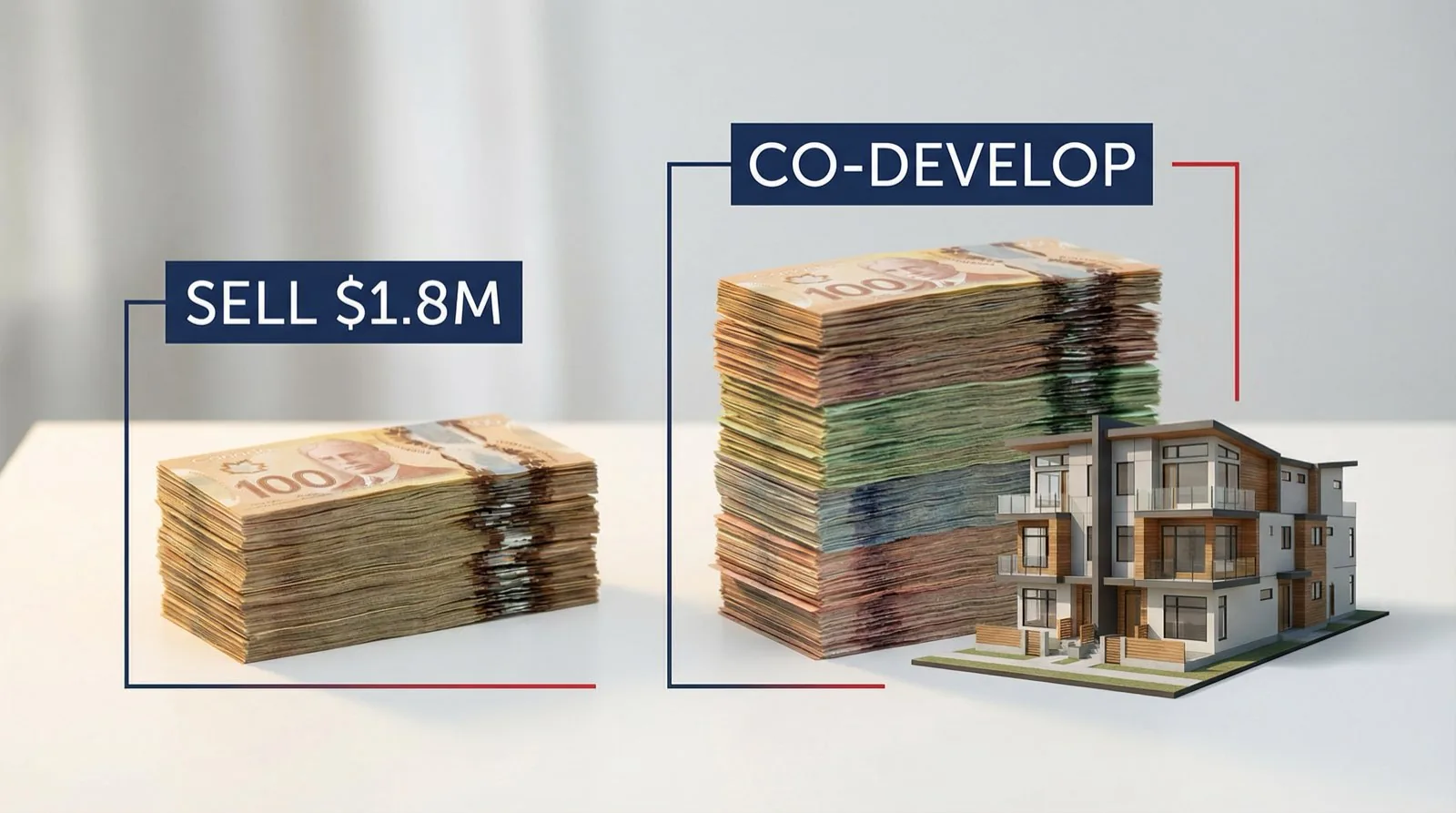
Net position at month 24: $2,760,000 gross value - $158,900 total drag = $2,601,100.
Versus selling at $1.85M for $1.78M net cash = a gap of roughly $821,000 in Anne’s favour.
What Anne Got Right
- She walked away from Builder A. That one decision was worth everything else combined.
- She hired her own lawyer and paid for real review. The four clause fixes were worth ~$200K by conservative estimate.
- She read every draft, took notes, asked questions, didn’t sign anything she didn’t understand.
- She kept her son involved as a second pair of eyes on the financials.
- She picked her units upfront and insisted they be specified by lot number.
What Anne Got Wrong
- She underestimated the emotional cost of moving out for 24 months.
- She forgot about the protected tree until due diligence. Should have been in the pre-LOI checklist.
- She didn’t model the tax drag carefully enough upfront — the GST hit was larger than she expected.
- She didn’t negotiate harder on the cost overrun split (could have pushed for 0% homeowner share above 10%).
The Honest Summary
Anne came out ahead. Substantially. But it took 24 months of active attention, paperwork reviews, lawyer fees, a rental apartment, and genuine risk exposure. She told me she would do it again, “but only with the lawyer I had and a builder I’d verified through BC Housing. Without those two things, I would sell.”
That’s the whole guide in one sentence.
Further Reading
- Full framework in the Co-Development Hub
- Deal structure mechanics in Deal Structures & Splits
- The contract red flags Anne’s lawyer caught: 5 Red Flags in a Co-Development Contract
- Broader context on Vancouver multiplex math: multiplex financing threshold guide