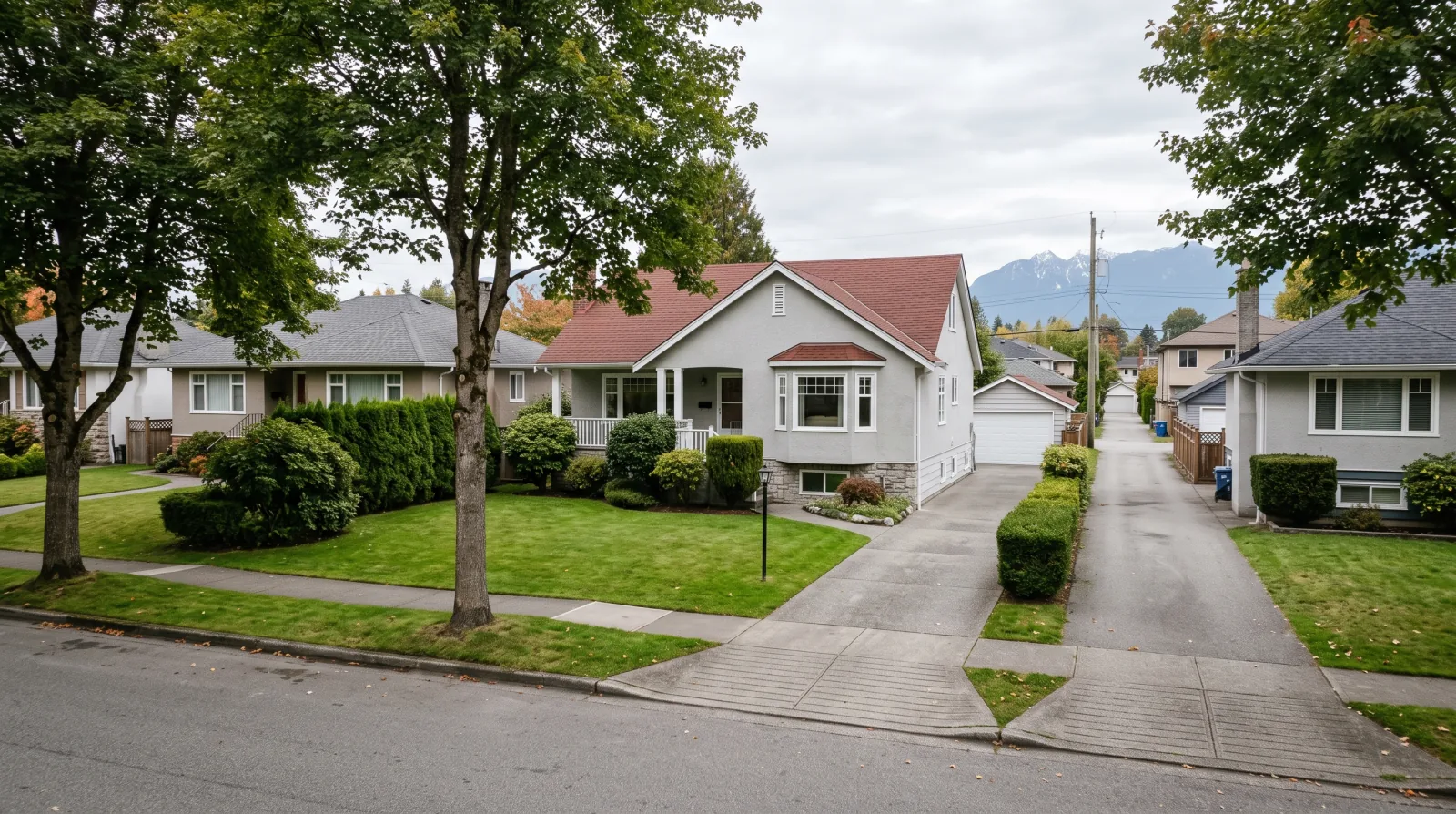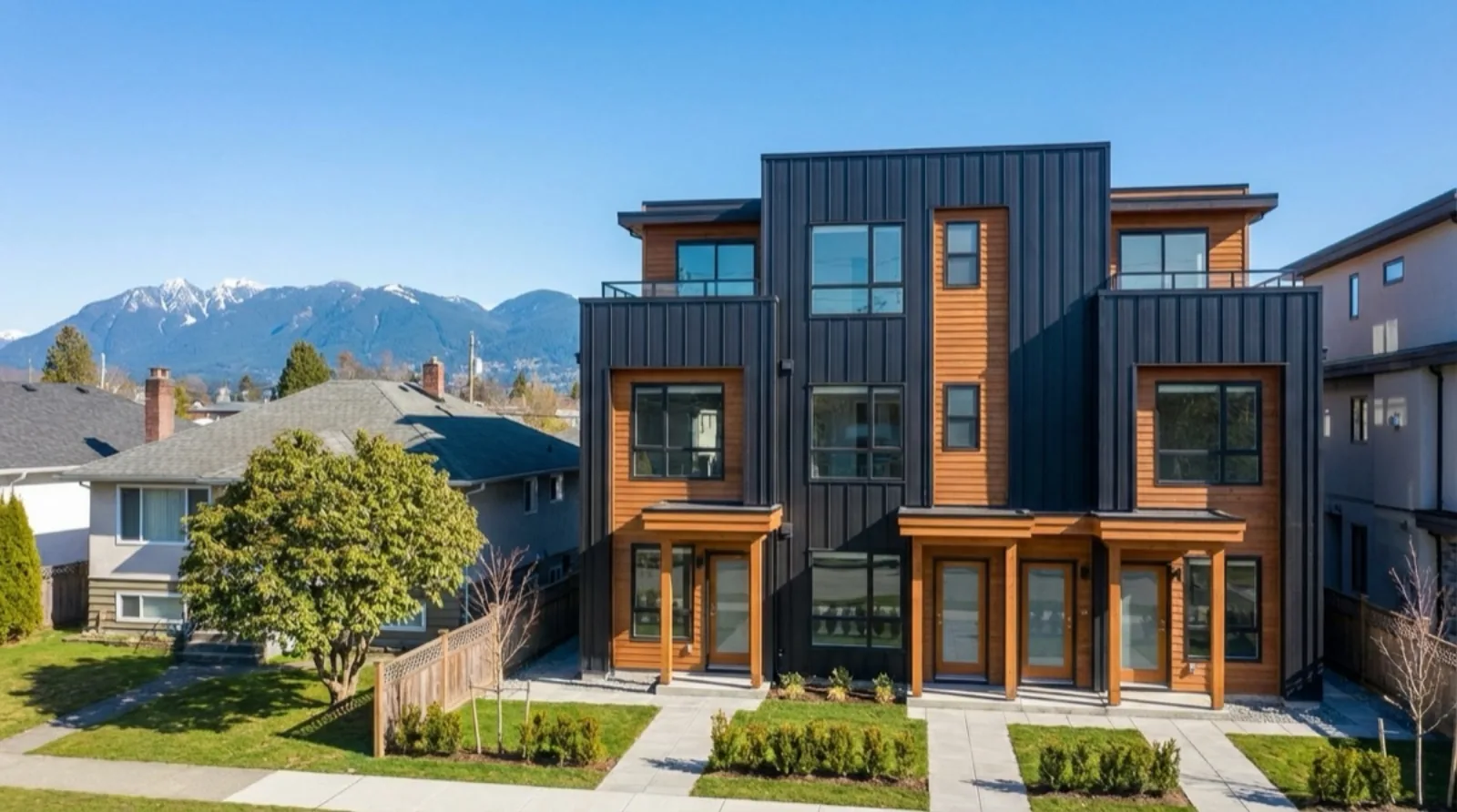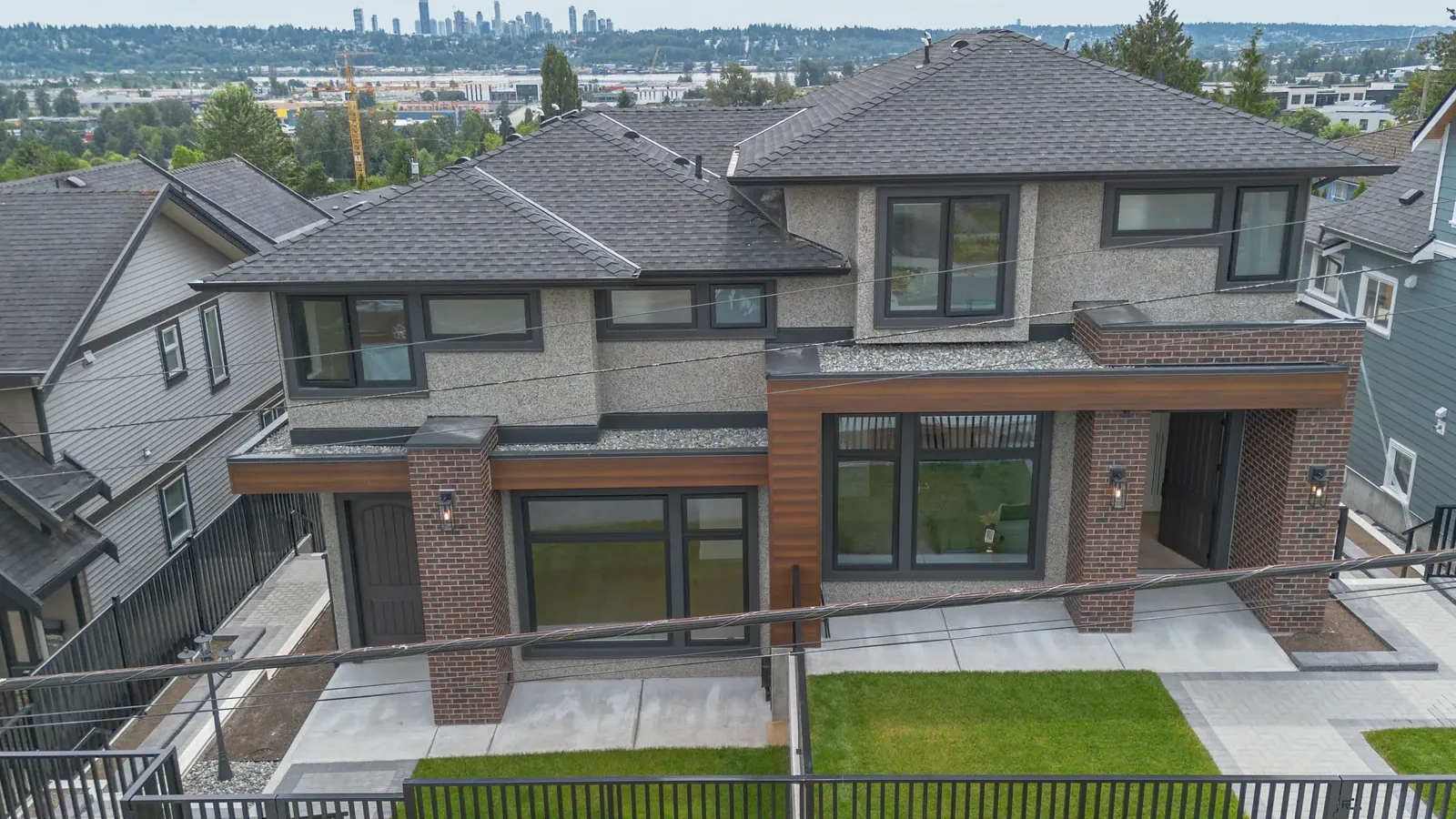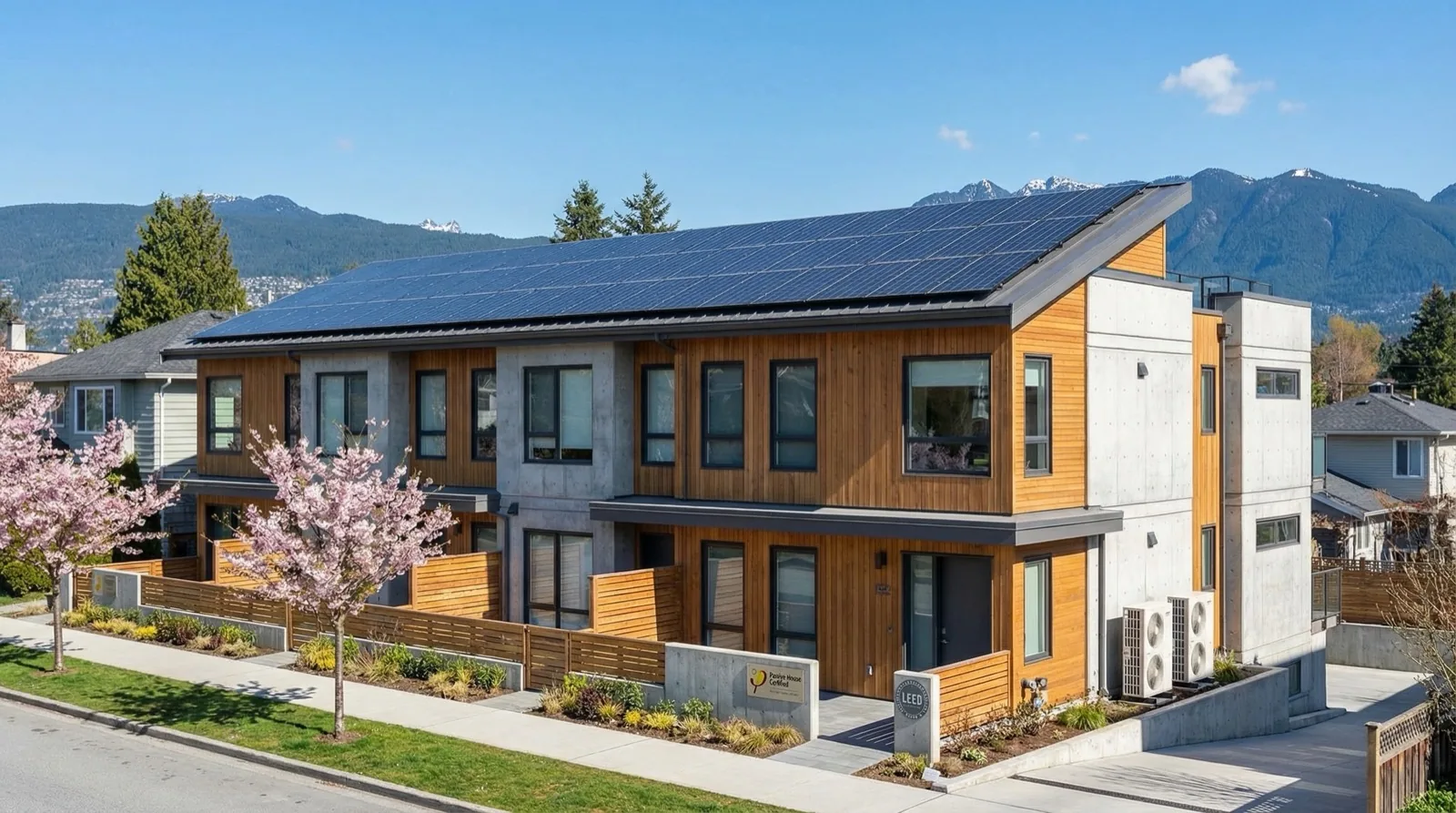

Vancouver offers a powerful incentive for sustainable construction: up to 19% bonus density for net-zero energy buildings. For multiplex developers, this can mean an additional $300,000-$500,000 in sellable space. Here’s how to capture it. Our design guidelines show how we integrate net-zero requirements from the earliest stage of a project.
What Net-Zero Bonus Means for Your Project
Vancouver’s zoning allows increased Floor Space Ratio (FSR) for buildings that meet near-zero emission standards. Here’s what that translates to in practice:
Standard R1-1 Multiplex:
- Base FSR: 1.0
- On a 4,000 sq ft lot: 4,000 sq ft buildable
Net-Zero Multiplex:
- Enhanced FSR: 1.19 (19% bonus)
- On the same 4,000 sq ft lot: 4,760 sq ft buildable
- Additional space: 760 sq ft
At $1,000/sq ft sale price, that’s $760,000 in additional value from the same lot.
The Financial Case for Net-Zero
Let’s compare standard vs. net-zero construction on a typical Vancouver fourplex:
| Component | Standard | Net-Zero | Difference |
|---|---|---|---|
| Buildable Area | 4,000 sf | 4,760 sf | +760 sf |
| Construction Cost | $1,800,000 | $1,980,000 | +$180,000 |
| Sale Value | $5,200,000 | $6,188,000 | +$988,000 |
| Net Profit | $800,000 | $1,608,000 | +$808,000 |
The 10% construction premium ($180,000) generates nearly $1M in additional profit. This is among the highest-return investments available in multiplex development.
What “Near-Zero Emission” Requires
To qualify for bonus density, your building must meet Vancouver’s near-zero emission standard. Key requirements:
Heating & Cooling
- Electric heat pumps required (no gas furnaces)
- Minimum efficiency: COP 3.0 or higher
- Backup resistance heating permitted
Building Envelope
- Enhanced insulation levels
- High-performance windows (U-value ≤1.4)
- Continuous air barrier
- Thermal bridging mitigation
Hot Water
- Heat pump water heater or
- Solar thermal system or
- Electric resistance with solar PV offset
Energy Modeling
- Third-party energy model required
- Demonstrate 80%+ reduction from baseline
- Annual energy reporting may be required
The Premium Breakdown
Net-zero construction adds cost in specific areas:
| System | Standard Cost | Net-Zero Cost | Premium |
|---|---|---|---|
| HVAC | $60,000 | $90,000 | +$30,000 |
| Windows | $80,000 | $100,000 | +$20,000 |
| Insulation | $40,000 | $55,000 | +$15,000 |
| Air Sealing | $15,000 | $25,000 | +$10,000 |
| Hot Water | $12,000 | $20,000 | +$8,000 |
| Solar-Ready | $0 | $10,000 | +$10,000 |
| Energy Modeling | $0 | $15,000 | +$15,000 |
| Total Premium | +$108,000 |
On a $1.8M construction budget, this represents a 6% premium—far less than the 19% bonus density it unlocks.
Operating Cost Advantages
Beyond the bonus density, net-zero buildings deliver ongoing savings:
Typical Operating Costs (Per Unit/Year)
| Category | Standard Building | Net-Zero Building | Savings |
|---|---|---|---|
| Heating | $1,800 | $400 | $1,400 |
| Cooling | $200 | $150 | $50 |
| Hot Water | $600 | $200 | $400 |
| Total | $2,600 | $750 | $1,850 |
Over 25 years, that’s $46,250 in savings per unit—$185,000 for a fourplex.
Market Premium for Net-Zero Units
Buyers increasingly pay premiums for sustainable homes:
Vancouver Market Data (2025):
- Net-zero certified units sell 5-10% faster
- Price premium: 3-7% over comparable standard units
- Stronger demand from younger buyers (under 45)
- BC Energy Step Code certification enhances marketability
Marketing Advantages:
- “Near-Zero Emission” certification
- Lower operating costs in marketing materials
- Alignment with municipal climate goals
- Future-proofing against carbon regulations
Implementation Strategy
Design Phase
- Engage energy consultant early (schematic design)
- Optimize building orientation for solar exposure
- Design compact building envelope
- Specify high-performance mechanical systems
Permit Phase
- Submit energy model with development permit (see permits overview for sequencing details)
- Document compliance pathway
- Coordinate with building permit requirements
- Schedule third-party verification
Construction Phase
- Blower door testing during construction
- Commissioning of mechanical systems
- Documentation of installed materials
- Final energy model verification
Completion
- Obtain near-zero emission certification
- Register with BC Energy Step Code
- Include certification in sales materials
- Provide owners with operating guides
Common Mistakes to Avoid
Mistake 1: Late Energy Consultant Engagement Engaging energy consultants after design is complete limits options and increases costs. Involve them at schematic design.
Mistake 2: Value Engineering Away Performance Cutting net-zero features to save construction costs sacrifices the 19% bonus density—a massive value trade-off.
Mistake 3: Inadequate Commissioning Heat pump systems require proper commissioning to perform correctly. Budget for thorough startup and testing.
Mistake 4: Ignoring Occupant Behavior Net-zero buildings perform differently than standard homes. Provide clear operating instructions to buyers.
The Burnaby Comparison
Burnaby’s R1 SSMUH doesn’t have the same net-zero bonus structure as Vancouver, but other incentives exist:
| Feature | Vancouver | Burnaby |
|---|---|---|
| Net-Zero Density Bonus | 19% | Not currently offered |
| BC Housing Grants | Available | Available |
| Utility Rebates | Extensive | Extensive |
| Green Building Requirements | Step Code 3 | Step Code 3 |
If net-zero bonus density is critical to your project economics, Vancouver currently offers the strongest incentive of any Metro municipality.
Is Net-Zero Right for Your Project?
Strong Candidates:
- Lots where bonus density significantly increases value
- Projects targeting environmentally-conscious buyers
- Long-term hold strategies (operating savings compound)
- Competitive markets where differentiation matters
Weaker Candidates:
- Very small lots where bonus density is minimal
- Budget-constrained projects unable to absorb premium
- Markets where buyers don’t value sustainability
- Rental-focused projects (harder to recover premium)
Your Net-Zero Action Plan
- Evaluate bonus density impact: Calculate additional floor area on your specific lot
- Model the economics: Compare standard vs. net-zero proformas
- Engage energy consultant: Get detailed cost estimates
- Design for performance: Integrate requirements from day one
- Market the advantage: Leverage certification in sales strategy
Visit vanplex.ca to see how net-zero bonus density affects your property’s development potential—including the additional profit it could generate.
VanPlex Team
PlexRank™ | Profit with Multiplex