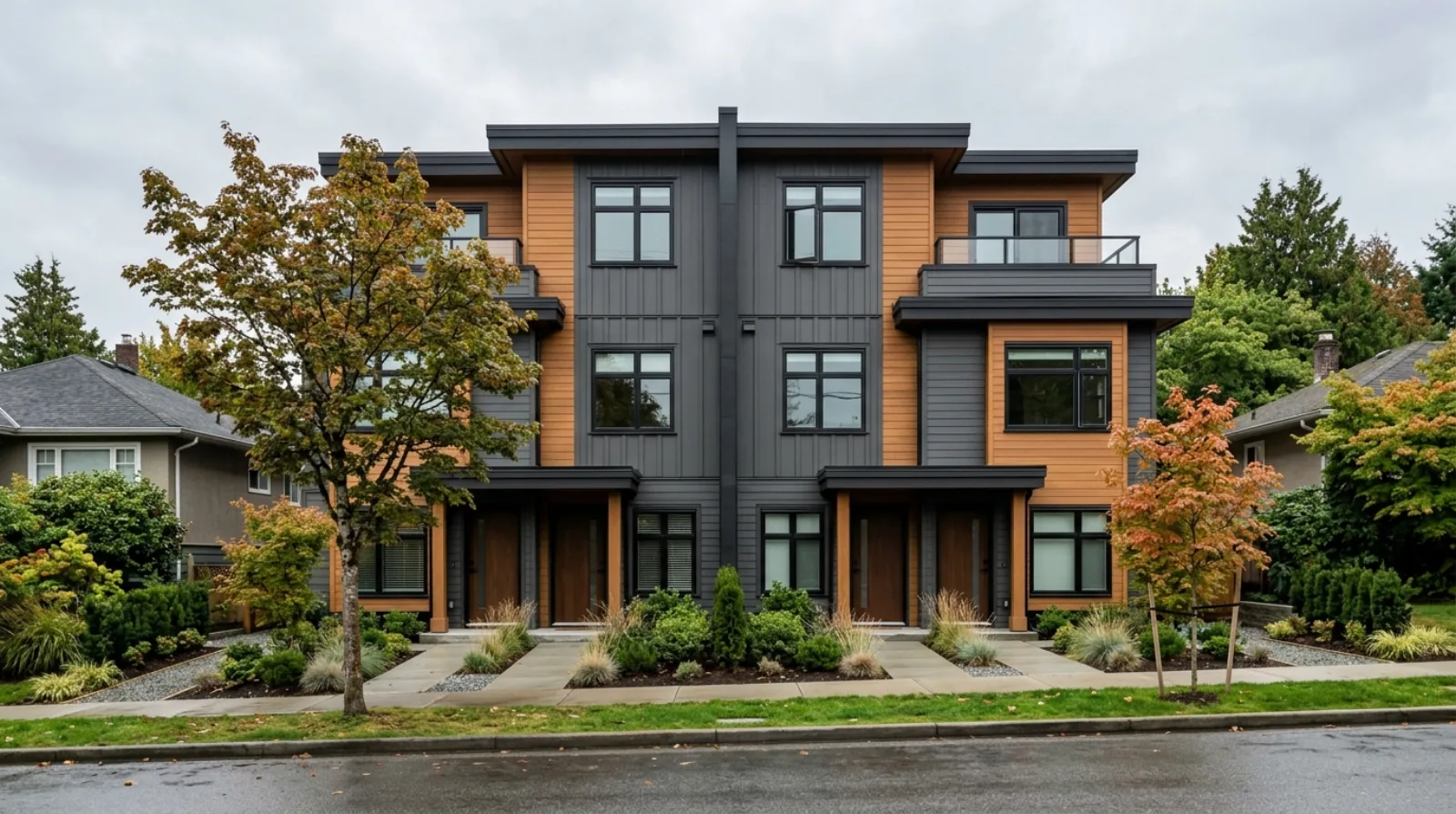

A reader in a new three-unit strata in Vancouver put this question to a strata advice column in April 2024. The owner of the largest unit wanted the strata to run with no bank account and no budget, and to split every bill three ways as it came in. Under the BC Strata Property Act, that plan breaks at least four rules. Every strata must pass a budget each year, collect strata fees into two funds, put at least 10% of the operating budget into a reserve, and keep the reserve money in an insured account at a savings institution in British Columbia. The rules are the same for 3 units as for 300.
This post goes through each part of the plan, the section of the law it runs into, and what the other two owners can do about it. If you want the full picture of how money works in a small strata, our budget and contingency reserve fund guide covers it step by step.
The plan, line by line
| What the owner proposed | What the law says | Where |
|---|---|---|
| No budget | The strata must prepare a budget for each fiscal year and pass it by majority vote at each annual general meeting | SPA s.103(1) |
| No strata fees, pay bills as they arrive | Owners must pay strata fees into an operating fund and a contingency reserve fund | SPA s.92 |
| No reserve | At least 10% of the operating budget goes to the reserve every year | Regulation s.6.1(2) |
| No bank account | Reserve money must be kept apart and held in permitted investments or insured accounts with savings institutions in BC | SPA s.95(1), (2) |
| Split everything three ways | Fees are split by unit entitlement unless all owners agree to another formula and file it | SPA s.99, s.100 |
| Skip the meeting | Allowed only if every voter waives the meeting in writing and consents in writing to the budget and the council | SPA s.41 |
Sources: Strata Property Act (SPA), Parts 4 and 6; Strata Property Regulation, B.C. Reg. 43/2000. Both current to October 27, 2026 on BC Laws.
A budget every year, even with three owners
Section 103 is short and has no size exception. The strata must prepare a budget for the coming fiscal year, send it out with the notice of the annual general meeting (AGM), attach a financial statement, and approve it by a majority vote at the meeting.
The Regulation (s.6.6) lists what the budget must show:
- the opening balance of the operating fund and the reserve fund
- income from sources other than strata fees, by source
- planned spending from the operating fund, by category
- the total going into each fund
- each strata lot’s monthly payment to each fund
- the expected balance of each fund at the end of the year
That last pair of lines is the part a “pay as we go” strata never has. It is also what a buyer, a lender and an insurer look at first.
If the budget fails at the AGM, the strata has 30 days to bring a new one to a special general meeting (s.104(1)). Until a new one passes, owners keep paying the old monthly fees (s.104(2)).
Skipping the meeting is possible. Section 41 lets a strata skip its AGM, but only if all eligible voters waive the meeting in writing before the deadline and also consent in writing to resolutions that approve the budget, elect the council and deal with any other business. A waiver still needs a budget.
The largest owner has one vote
Section 53(1) gives each strata lot one vote unless the plan has a Schedule of Voting Rights, and that schedule is possible only when the strata has at least one nonresidential lot (s.247, s.248). In an all-residential strata, every lot has one vote.
A majority vote is “more than 1/2 of the votes cast” by voters present who do not abstain (s.1). In a three-lot strata, two owners pass the budget. The owner of the biggest unit cannot block it alone.
A 3/4 vote works the other way. It needs at least 3/4 of the votes cast, so in a two-lot or three-lot strata a single “no” stops it. That matters for spending from the reserve, covered below. Our vote calculator shows the count for 2 to 6 lots.
Two funds and the 10% floor
Section 92 sets up two funds, both paid through strata fees:
- The operating fund, for costs that come once a year or more often: insurance, utilities for shared areas, gardening, small repairs.
- The contingency reserve fund (CRF), for costs that come less often than once a year or that do not usually come at all, such as a roof or a new fence.
Since November 1, 2023, the yearly contribution to the reserve must be at least 10% of the operating budget, at every size of strata (Regulation s.6.1(2)). On a $9,000 operating budget, the minimum is $900 a year (our arithmetic). The old rule that let a strata stop contributing once the fund reached 25% is gone. Our budget and reserve fund guide shows how to set the contribution.
Spending from the reserve needs a vote first. Most spending needs a 3/4 vote at a general meeting (s.96). The exceptions are an emergency to ensure safety or prevent significant loss, where only the minimum may be spent and owners must be told (s.98(3), (5), (6)), and a few items that need only a majority vote, such as a depreciation report. In a three-unit strata, the 3/4 rule means all three owners agree before the reserve pays for a new roof.
Why the law leads to a bank account
The Act does not use the words “bank account”. It does say three things that cannot be met without one:
- The strata must account for reserve money separately from its other money (s.95(1)).
- It must hold all reserve money in investments the Regulation allows or in insured accounts with savings institutions in British Columbia (s.95(2)).
- Special levy money gets the same treatment, kept apart and held in the same kinds of accounts (s.108(4)).
The records rules lead to the same answer. The strata must keep books of account showing money received and spent and the reason for each (s.35(1)(d)), and must keep bank statements, cancelled cheques and certificates of deposit for at least 6 years (s.35(2)(l); Regulation s.4.1(3)). If the strata’s money sits in one owner’s personal account, the strata has no separate reserve and no statements of its own to keep. Our forms and records page lists every record and how long it stays.
There is also a spending limit with no budget behind it. When a cost was never put in a budget or approved at a meeting, the strata can pay it from the operating fund only up to the amount in its bylaws, or, if the bylaws say nothing, the lesser of $2,000 or 5% of that year’s operating fund contribution (s.98(2)). With no budget at all, every larger bill needs a meeting.
”Just split it three ways”
Each lot’s share of the fees comes from section 99: the lot’s unit entitlement, divided by the total unit entitlement of all lots, times the total budget. Unit entitlement is a number for each lot printed on the Schedule of Unit Entitlement filed with the strata plan. For a residential lot it is one of three things (s.246(3)):
- the lot’s habitable area in square metres, measured by a BC land surveyor
- the same whole number for every lot
- a number the Superintendent of Real Estate approves
If your three lots have the same number, a three-way split is the legal split. If the numbers follow floor area, the largest unit pays the largest share, and a three-way split would move part of its cost onto the two smaller units.
| Lot | Unit entitlement (example) | Share of a $12,000 budget |
|---|---|---|
| 1 | 80 | $3,200 |
| 2 | 100 | $4,000 |
| 3 | 120 | $4,800 |
| Equal split | $4,000 each |
Example figures, our arithmetic using the s.99 formula.
To use any other formula, owners pass a resolution by unanimous vote at a general meeting held after the first AGM, and it has no effect until it is filed at the Land Title Office with a Certificate of Strata Corporation (s.100). Our unit entitlement guide and fee split calculator show the numbers for your own building.
Insurance is a line no budget can drop
Every strata must insure the common property, the common assets and the buildings on the strata plan for full replacement value (s.149), and carry at least $2,000,000 of liability insurance (Regulation s.9.2). It must review the cover every year and report on it at each AGM (s.154). The premium is a common expense in the operating budget.
One rule helps a council that cannot get agreement. Keeping the insurance the Act requires counts as preventing significant loss under s.98(3.1), so the strata can pay for it without a vote even when no budget has passed. Our strata insurance guide covers deductibles and what your own home policy should add.
What the other owners can do
If one owner wants to run the strata off the books, here is the order of steps the Act gives you.
- Call the AGM. Give every owner at least 2 weeks’ written notice (s.45(1)) with the proposed budget and a financial statement attached.
- Vote the budget. A majority of votes cast passes it. In a three-lot strata that is two owners.
- Set up the accounts. Open an account for the strata corporation and a separate one, or a separate investment, for the reserve, as s.95 requires.
- Collect the fees. Under Standard Bylaw 1, fees are due on or before the first of the month. If an owner does not pay, the strata can register a lien against that lot for unpaid strata fees (s.116(1)).
- Ask for a hearing. An owner can ask council in writing for a hearing, and council must meet within 4 weeks and answer in writing within 1 week after (s.34.1).
- Take it to the tribunal. After that hearing request, an owner can file with the Civil Resolution Tribunal (CRT), BC’s online tribunal for strata disputes. The filing fee is $125 online or $150 by mail, and the tribunal hears strata claims of any amount. Our disputes guide walks through it.
None of this needs a lawyer or a manager. It needs a written budget, one account with statements, and minutes of the vote. That is also most of what you will be asked for the day one owner sells.
We are building the StraPlex app for owners of 2 to 6 unit stratas, with the budget, the reserve fund and the records in one place. The waitlist is below.
David Babakaiff, Co-Founder, VanPlex | PlexRank™ | Profit with Multiplex