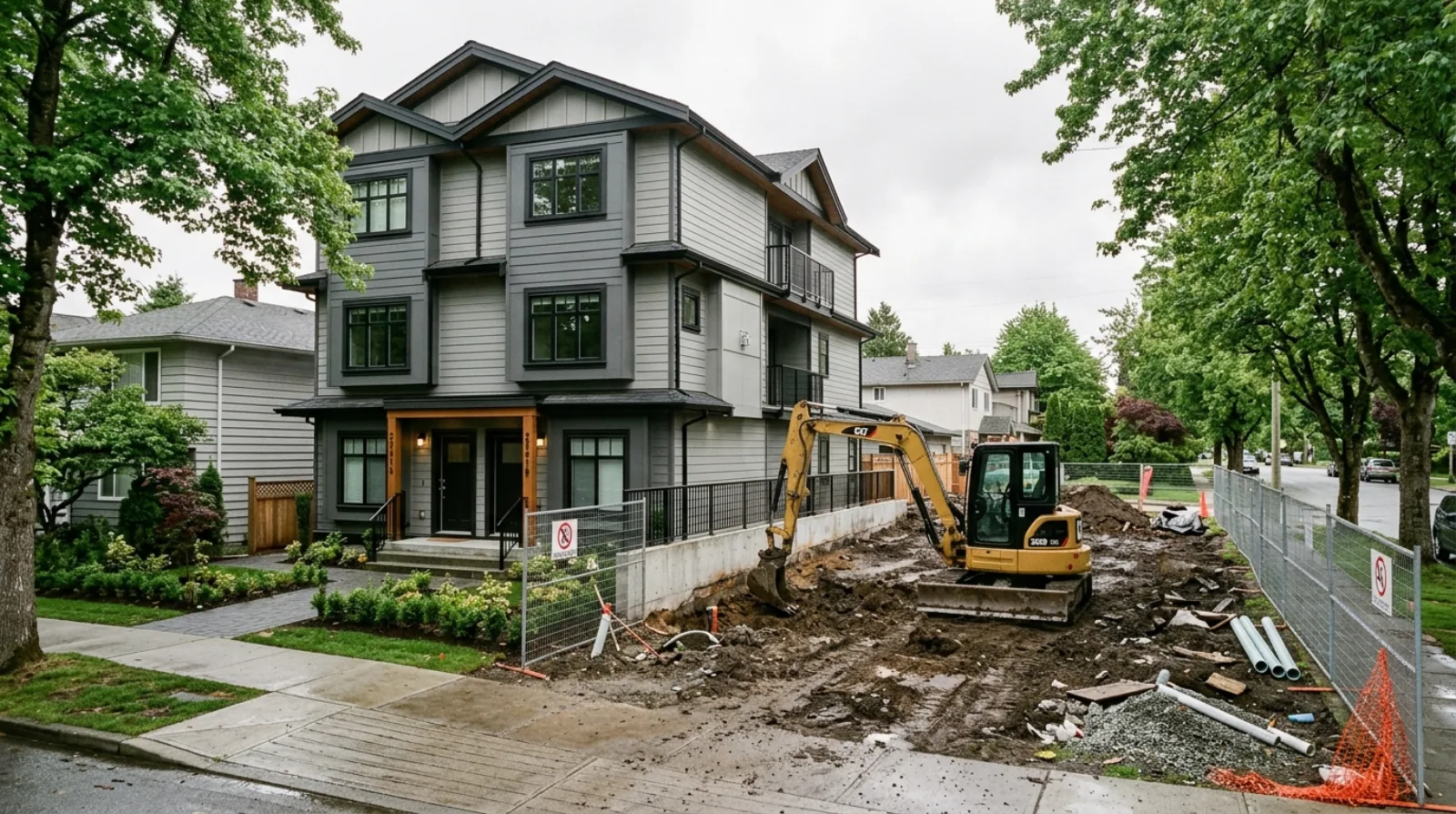

A lot can look completely clean and still cost you a five-figure surprise once the excavator starts digging. Old fill, a former gas station two owners back, a buried oil tank from the 1960s: none of it shows on the surface. For infill multiplex builders in BC, contaminated soil is one of the quiet risks that can wreck a budget and a timeline at the same time.
BC changed its contaminated sites rules, and the new system pulls more soil disturbance into scope than before. Here is what triggers a Site Disclosure Statement, how the assessment process works, and why a Phase 1 review is cheap insurance.
What triggers a Site Disclosure Statement
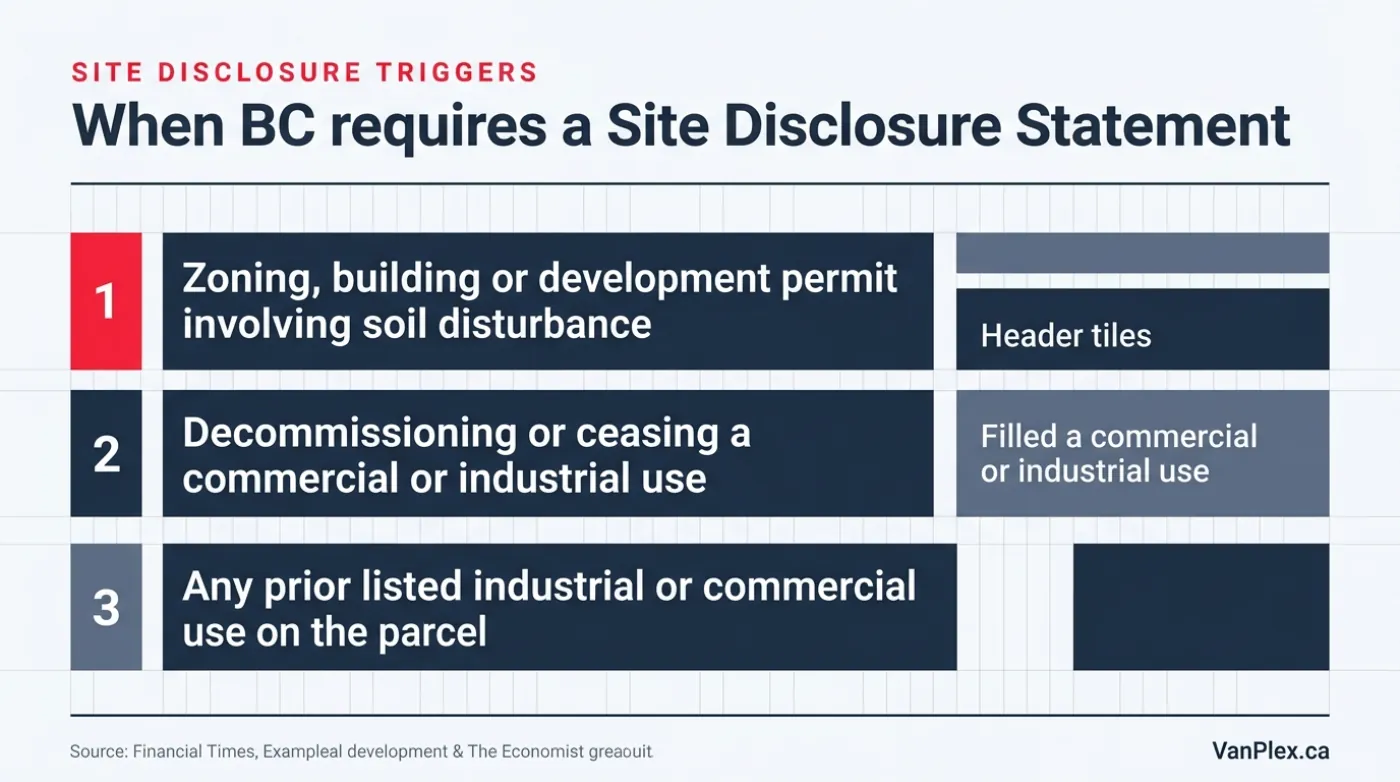
The trigger most infill builders need to watch is soil disturbance tied to a municipal application. When an applicant applies for approvals such as zoning, building permits, or development permits that involve any amount of soil disturbance, a Site Disclosure Statement may be required to the municipality or approving officer. There are other triggers too, including decommissioning a site or ceasing a commercial or industrial operation, which must be reported to the registrar within six months.
The key shift in the new regime is that it captures more activity than the old one. If your lot has any history of a listed commercial or industrial use, and you are about to disturb soil to build, you can land inside the disclosure system. That is not automatically a problem. It is a step that has to be handled, and handled early, so it does not stall your permit.
The reports you have to produce
Disclosure is not just a form. A person required to provide a Site Disclosure Statement must submit to a director every report in their custody or control about the environmental condition of the land, produced in the five years before the disclosure. So if a prior environmental study exists, it comes out into the open.
This is why sellers and buyers both need to be honest early. If a Phase 1 or Phase 2 study exists on a lot, it will surface. Better to know what it says before you are committed than to inherit a problem you did not price. For a builder, the practical move is to ask for any existing environmental reports as part of due diligence, before removing a subject or firming up the deal.
The assessment ladder
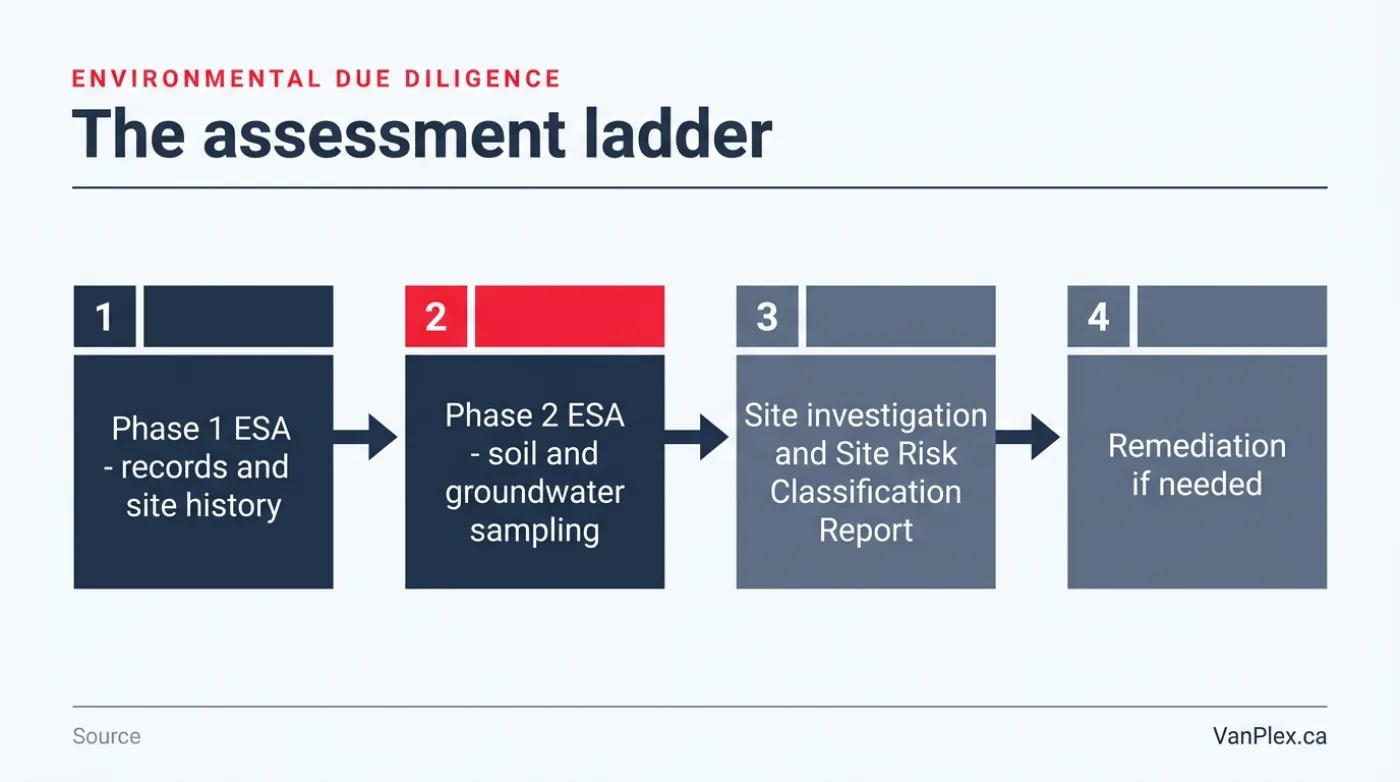
Environmental due diligence climbs a ladder, and you only go up as far as the evidence pushes you. Phase 1 is a records and history review. An environmental professional checks past uses, old permits, aerial photos, and site records to see whether contamination is likely. Most clean residential lots stop here.
If the Phase 1 flags a concern, Phase 2 follows. That means physically sampling soil and groundwater to see what is actually there. From there, the new regime can require a site investigation and a Site Risk Classification Report, and if contamination is confirmed, remediation. Each rung costs more than the last, which is exactly why the cheap first rung is worth doing before you buy.
The clock that can freeze your project
The new system has a timeline you cannot ignore. Within the first year after submitting a Site Disclosure Statement, a site investigation must be completed and a Site Risk Classification Report submitted to the ministry, unless the director gives a different timeframe. That is a real deadline attached to a real report.
For a multiplex build, this can collide with your construction schedule. If you discover the disclosure requirement late, you may be waiting on an environmental process while your financing costs run and your build sits idle. The way to avoid that is to front-load it. Know your lot’s history before you buy, and if there is any industrial or commercial past, budget the time for the environmental process into your schedule from day one.
Why the cheap check pays for itself
A Phase 1 assessment is a small cost against the risk it manages. Confirmed contamination can mean soil removal, disposal at a regulated facility, and delay, any one of which can dwarf the assessment fee. Finding it before you own the lot lets you walk away, renegotiate the price, or budget properly. Finding it after you own it means the problem is yours.
The lots most worth checking are the obvious suspects. Former gas stations, dry cleaners, auto shops, or lots near old industrial uses carry higher risk. A quiet residential lot that has always been residential is usually low risk, but the only way to know is to look at the history, not the surface.
Common questions about contaminated soil
Does every infill lot need an environmental assessment? No. Many clean residential lots never leave a Phase 1 records review. The trigger is soil disturbance combined with a lot history or an application that pulls you into the disclosure system. When in doubt, a Phase 1 is the low-cost way to find out.
What is a Site Disclosure Statement? It is a form you may have to submit with municipal approvals when your project involves soil disturbance and the lot has a relevant history. It can lead to a required site investigation under BC’s updated contaminated sites regime.
How long does the process take? It depends on what is found. The regime sets a clock: within one year of the Site Disclosure Statement, a site investigation and Site Risk Classification Report must be submitted unless the director allows more time. Remediation, if needed, adds more.
Can I just skip it and start digging? Not safely. Disturbing contaminated soil without following the process creates legal and financial liability, and you can be forced to stop and remediate. The cheaper path is to check the history first and handle disclosure properly.
The dirt you cannot see is the risk you cannot price without looking. Check the lot’s history before you buy, not after you dig. Screen your lot in about two minutes and build your due diligence around what you find.
David Babakaiff, Co-Founder, VanPlex | PlexRank™ | Profit with Multiplex