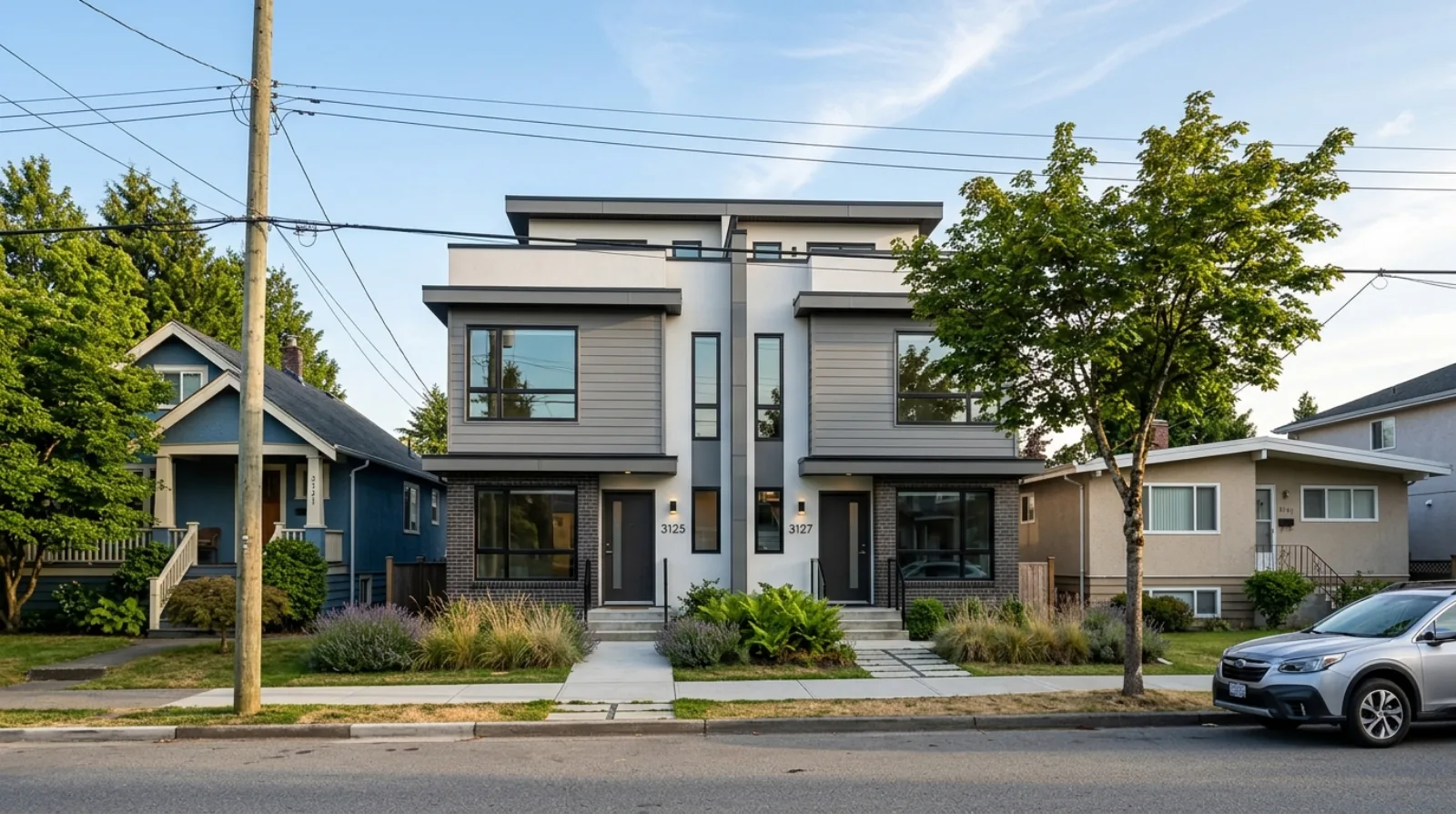

If you own several properties in Vancouver or Burnaby, your next financial move may soon look very different. OSFI’s 2026 lending proposal could reshape how multi-property homeowners qualify for mortgages—but understanding the change now gives you the opportunity to act before the rules tighten.
The OSFI Framework: What’s Changing and Why It Matters
If you own several properties in Vancouver or Burnaby, your next financial move may soon look very different. The Office of the Superintendent of Financial Institutions (OSFI) — Canada’s banking regulator — is drafting a 2026 proposal that could reshape how small-scale investors and multi-property homeowners qualify for mortgages.
OSFI’s goal is financial stability. But its impact could be the most restrictive change to real estate lending in over a decade. The new framework would limit how lenders account for rental income across multiple properties, directly affecting homeowners who’ve relied on their existing portfolios to fund new acquisitions or refinances.
For years, you could take the rental income from one property and use it to qualify for another. The for homeowners guide explains how to think through your options as this landscape shifts. Under the new approach, that leverage could be sharply reduced or removed entirely.
In other words, if you own several properties and depend on rental income to qualify for financing, the old formula—buy, hold, rent, and refinance—won’t work the way it used to. The investment section covers how experienced operators are adjusting their capital structures in response.
What the New OSFI Framework Means in Practice
While the proposal is still under review, its direction is clear: tighten credit access for individuals with multiple mortgages.
The logic is regulatory. OSFI aims to reduce systemic risk by curbing the layering of mortgage debt based on projected rental income. The result, however, could be that the most responsible and well-capitalized investors, those with significant equity, will have the hardest time deploying it.
Here’s what this shift could mean for you:
- Rental income limits: Less of your rental income can be counted toward new financing.
- Restricted borrowing power: Even with high equity, lenders may cap your ability to leverage it.
- Uneven competition: Institutional players, who borrow through commercial credit channels, remain unaffected.
- Reduced liquidity: Refinancing to fund new purchases or renovations becomes more difficult.
For many, this marks the end of the ladder strategy that built countless family portfolios across Greater Vancouver.
A Parallel Policy Creates a New Opportunity
While federal lending is tightening, municipal zoning is moving in the opposite direction.
In late 2023, British Columbia passed Bill 44, a housing reform that rezoned over 70,000 single-family parcels in Vancouver and Burnaby. For the first time, these properties can be redeveloped into three to six-unit multiplexes by right—no rezonings, no public hearings, no political uncertainty.
That reform has created an entirely new way for homeowners to activate the value of the land they already own.
Instead of holding multiple single-family homes as rentals, you can redevelop one of them into a multiplex, sell the new units, and realize liquidity, without borrowing against your existing portfolio.
From “Hold and Rent” to “Build and Sell”
This shift in the policy landscape points to a new, more resilient wealth strategy: redevelopment over refinancing.
For homeowners with three to five properties, here’s what the new approach looks like:
- Select one property—ideally a well-located single-family home in Vancouver or Burnaby.
- Redevelop it into a multiplex, using new by-right zoning rules under Bill 44.
- Sell the newly built ownership units, unlocking equity in the process.
- Leverage that capital for your next purchase or diversification without relying on restricted rental income.
It’s not about flipping homes. It’s about reallocating equity from static land into liquid capital—capital that you control, not the banks.
An Illustrative Example (for Context, Not Projection)
Consider a typical homeowner with four properties:
- Three are rented, one is fully owned in Burnaby, valued at $2.4 million.
- That property now qualifies for a four-unit multiplex under Bill 44, or six units if close to rapid transit bus in Burnaby.
- Estimated permit & construction costs: $2.4 million to $4.6 million.
- Comparable new ownership units in the same area: $1.4 million to $2.3 million each.
If the homeowner builds and sells say six units, the potential gross revenue could fall in the $7.4–$10.2 million range, before expenses.
After deducting construction and land costs, that homeowner could unlock up to $2 million in pre-tax cash, depending on design, pricing, and timing.
These figures are illustrative only, not guaranteed or prescriptive—but they reveal what’s possible when policy change meets preparation. Some properties are not profitable to convert to multiplex - find out if yours does at www.vanplex.ca
A Strategic Way to Stay in the Market
For homeowners with multiple properties and strong equity, the choice isn’t between selling everything or doing nothing.
It’s about being proactive before regulation catches up.
By converting one property into a multiplex:
- You generate liquidity independent of rental income or OSFI rules.
- You stay invested in the market while modernizing your portfolio.
- You control timing, redevelopment happens on your schedule, not a lender’s.
In a tightening credit environment, flexibility becomes the most valuable asset you have.
Technology Removes the Guesswork
Even with new zoning, few homeowners want to wade into spreadsheets or permitting processes alone.
That’s where AI-driven zoning and feasibility tools, such as VanPlex.ca, change the equation.
With one search, you can:
- Verify if your property qualifies for multiplex development.
- Estimate buildable area, potential layouts, and costs.
- Review neighborhood sales data and demand trends.
This transparency allows homeowners to make confident, informed decisions—without guesswork or gatekeepers.
Conclusion
Federal lending reform and local zoning reform are happening simultaneously but in opposite directions.
One is restricting leverage. The other is expanding opportunity.
Homeowners who understand both can convert policy change into advantage.
If OSFI’s new rules make it harder to borrow against rental income, one solution is already available: turning one of your Vancouver or Burnaby properties into a multiplex to unlock a meaningful injection of cash—capital you can redeploy, reinvest, or hold as a financial buffer.
It’s a rare moment when the path forward is both compliant and creative. Those who act early will define the next generation of small-scale real estate success.
Check If Your Property Qualifies
Before the 2026 lending rules take effect, see if your property qualifies for multiplex development under Bill 44.
Visit VanPlex.ca to explore the Vancouver Multiplex Index™, review zoning eligibility, and understand how you can transform one property into your next major liquidity event—on your own terms. Use the advanced proforma calculator to model the development economics before committing to any path.
Frequently Asked Questions
What is OSFI’s 2026 lending proposal?
OSFI’s 2026 lending proposal aims to tighten credit access for individuals with multiple mortgages by limiting how lenders account for rental income across properties. This means homeowners who rely on rental income to qualify for new financing may face significantly reduced borrowing power.
How will OSFI’s new rules affect multi-property homeowners in Vancouver?
Multi-property homeowners in Vancouver and Burnaby may find it harder to refinance or acquire new properties using rental income as qualifying income. The new framework restricts the “ladder strategy” of using existing rental properties to finance additional purchases, even for well-capitalized investors with significant equity.
What is Bill 44 and how does it help Vancouver homeowners?
Bill 44 is British Columbia’s housing reform that rezoned over 70,000 single-family parcels in Vancouver and Burnaby, allowing them to be redeveloped into three to six-unit multiplexes by right. This creates an opportunity for homeowners to unlock equity through redevelopment instead of relying on rental income for financing.
How can I unlock equity from my Vancouver property without refinancing?
Instead of refinancing, you can redevelop a single-family property into a multiplex under Bill 44, then sell the newly built units. This converts static land equity into liquid capital without relying on traditional mortgage financing or rental income qualification.
What are the potential returns from multiplex development in Burnaby?
Returns vary significantly based on location, design, and market conditions. Illustrative examples show potential cash unlocks ranging from $400,000 to $1.2 million for a four-unit multiplex development, but these figures depend on construction costs, sale prices, and timing. VanPlex.ca provides property-specific feasibility analysis.
Will institutional investors be affected by OSFI’s lending changes?
No. Institutional players typically borrow through commercial credit channels that operate under different regulations. OSFI’s proposed changes primarily affect individual investors and homeowners with multiple residential mortgages, creating an uneven playing field.
When will OSFI’s new lending rules take effect?
OSFI’s proposal is still under review, but the framework is expected to take effect in 2026. Homeowners with multiple properties should evaluate their options now, before the rules are finalized and lending standards tighten.
How can VanPlex help me evaluate my multiplex development options?
VanPlex.ca provides instant zoning eligibility verification, buildable area estimates, construction cost projections, and neighborhood sales data for Vancouver and Burnaby properties. The AI-driven feasibility tool helps homeowners make informed decisions about multiplex development potential without guesswork.
Ready to analyze your Vancouver or Burnaby property for multiplex potential? Use VanPlex’s free proforma calculator to see instant ROI projections, zoning analysis, and cash flow estimates before OSFI’s 2026 rules take effect.