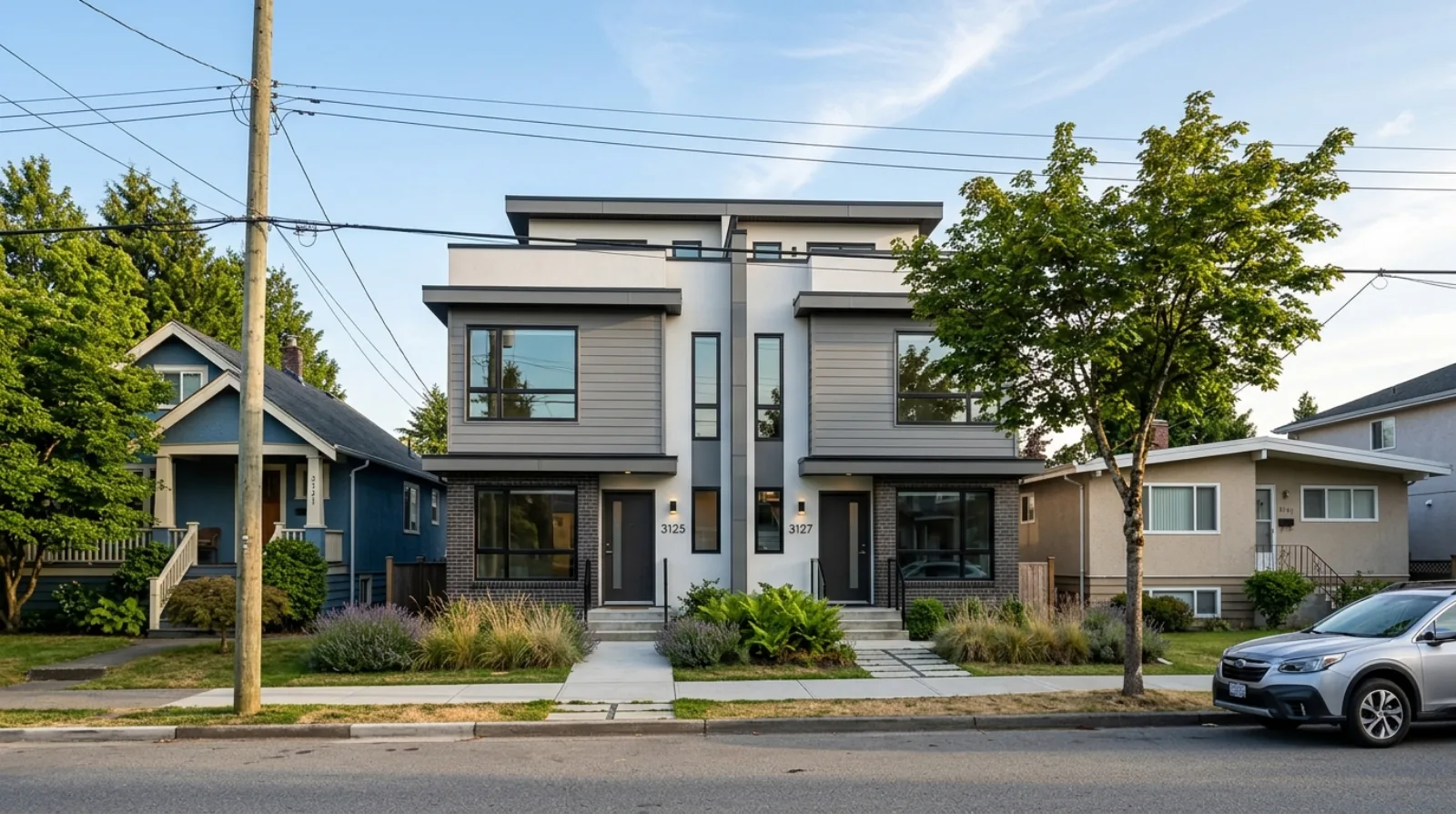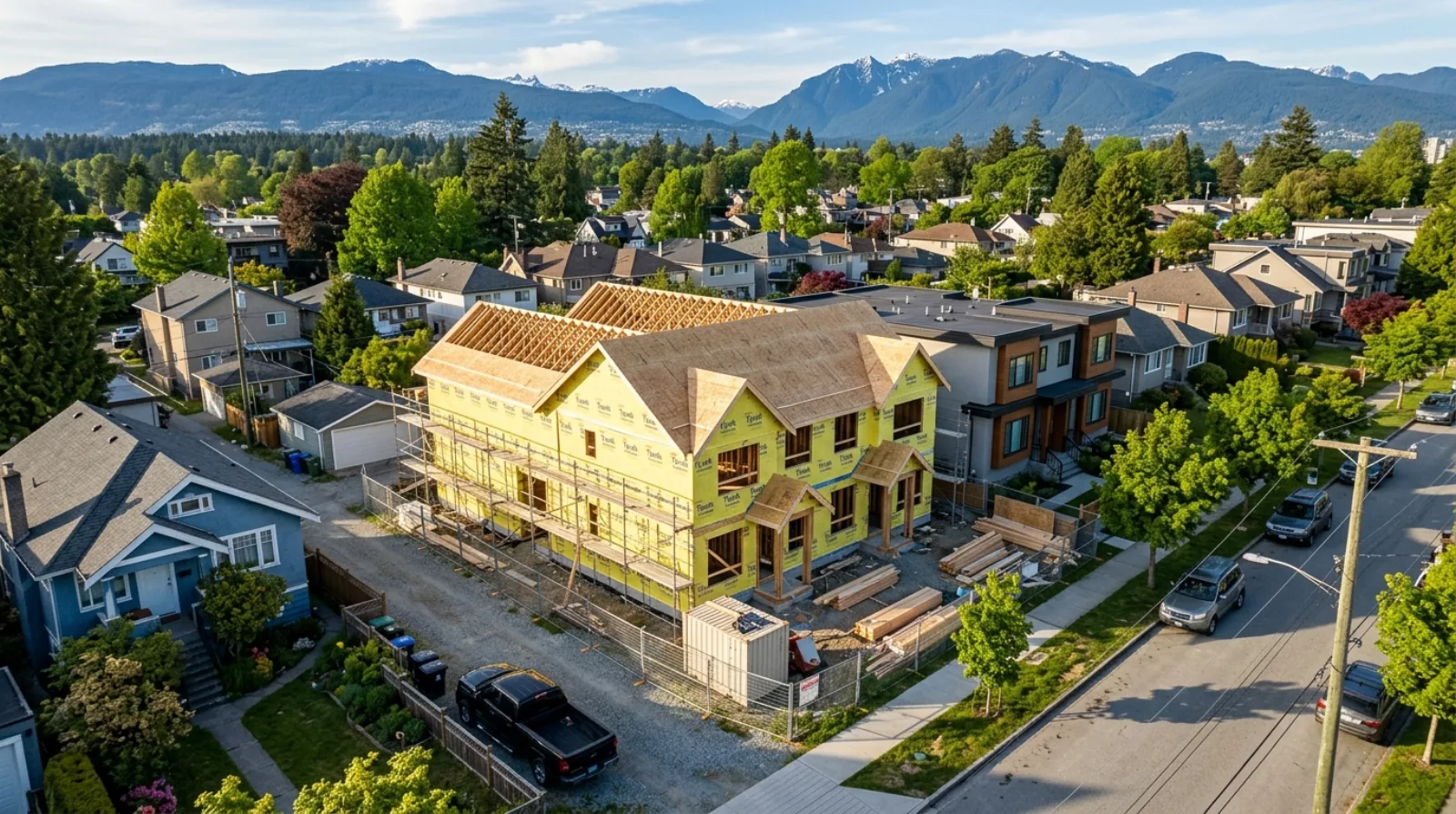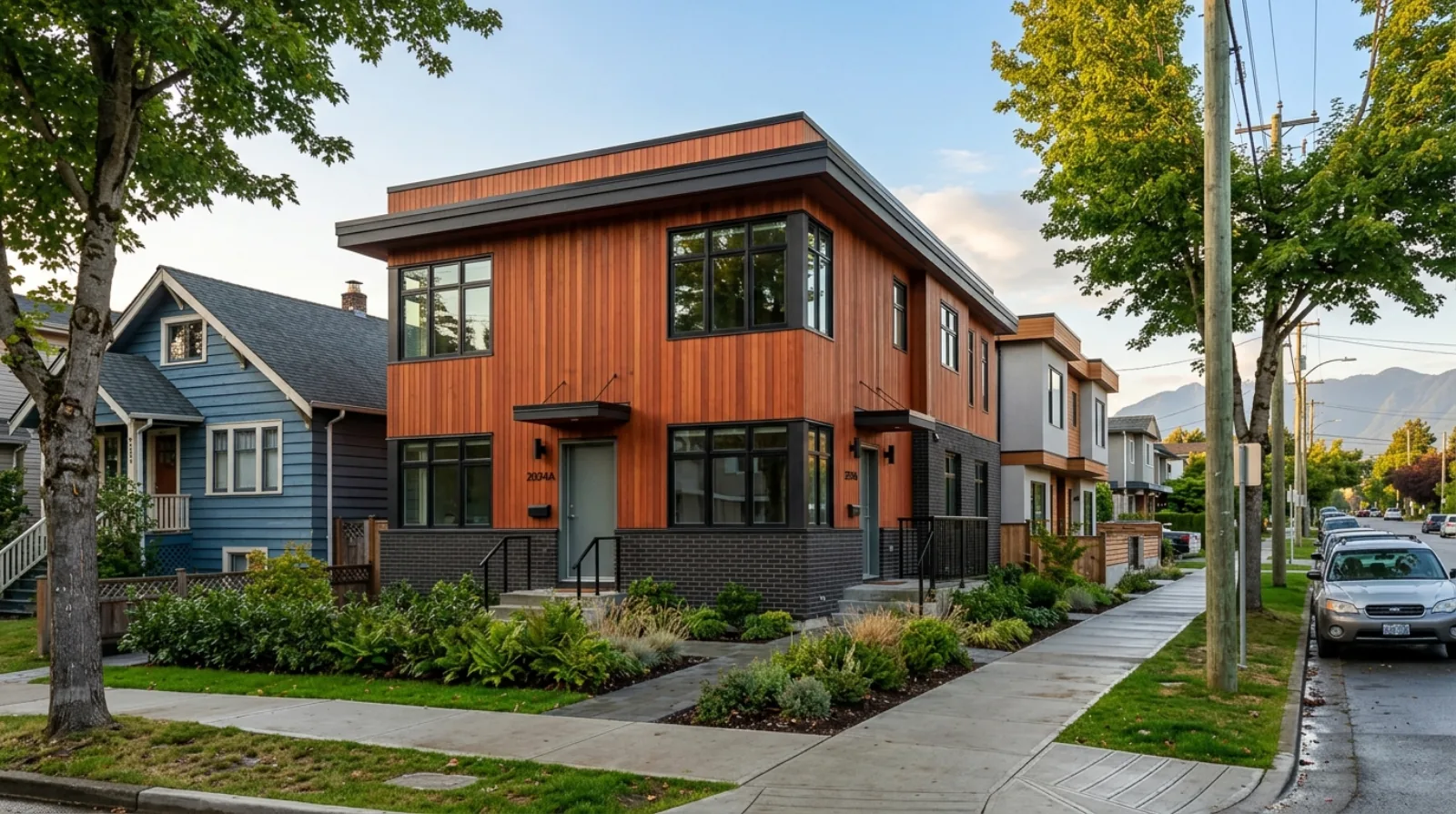
When Bill 44 passed, the standard line in the press was that hundreds of thousands of BC lots had become redevelopable overnight. That was true legally. It hasn’t been true in practice.
Two years in, the actual redevelopment rate on R1 lots is well under 1% per year. Most owners aren’t building. Why not?
This is the gap between “permitted to redevelop” and “economically able to redevelop.”
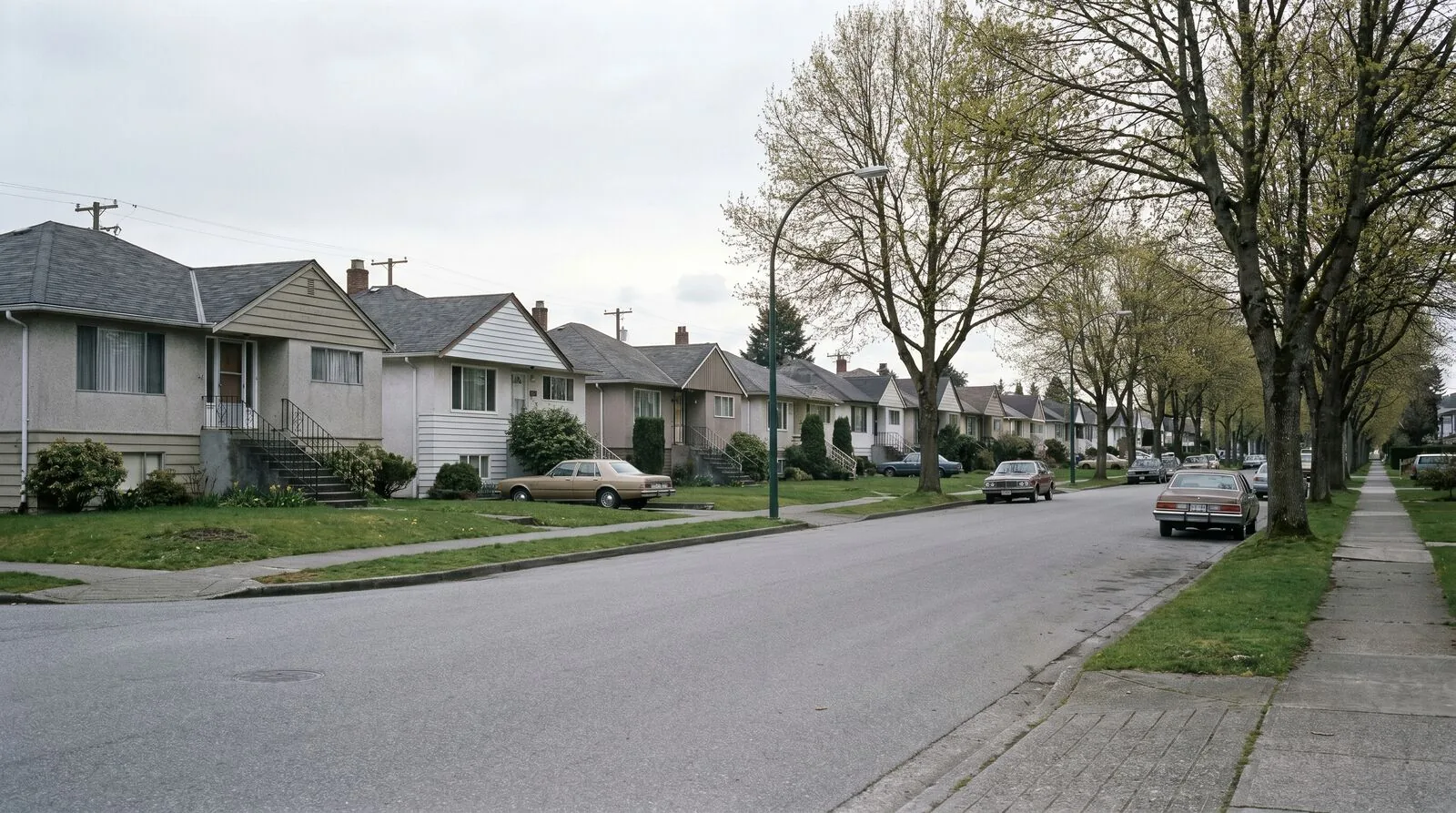
The gap, in one chart
The City of Vancouver has roughly 86,000 residential properties in its open data. After Bill 44, the great majority of those became eligible for at least three units, by right. The actual issued building permits for new multiplexes in the City in 2025 were 643 (see the multiplex vs SFH crossover analysis).
643 permits across roughly 86,000 lots is a 0.75% redevelopment rate. Even if you assume only the 50,000 or so most-redevelopable lots are realistic candidates, you’re at 1.3%. Both of those numbers are lower than what most policy advocates assumed Bill 44 would produce.
This is not a failure of the bill. It’s a feature of how zoning change interacts with construction economics. The bill made things legal; it can’t change the math underneath.
Reason 1: Land basis
Most owners bought their homes long before Bill 44 was contemplated. Some bought decades ago and have low land basis. Others bought after 2017 — the period when Vancouver detached prices peaked — and paid prices that don’t support new multiplex construction at current build costs.
Roughly speaking, our underwriting screens (see most lots fail the BTR test) suggest that owners who paid above a certain threshold per buildable square foot rarely produce a deal that pencils. The threshold moves with construction costs and rents, but the directional answer is: a lot of recent buyers can’t make new construction work because the land bill alone exceeds what the building can support.
Statistics Canada’s residential building construction price index shows BC residential build costs rose roughly 35–45% from Q1 2020 to Q1 2024 and have been roughly flat since. Detached land prices over that same period rose, then softened, but not enough to compensate. The net result: even where Bill 44 says four or six units are legal, only a subset of lots produce a viable proforma.
Reason 2: Construction cost has stayed high
The pandemic-era cost run-up didn’t reverse. CMHC’s Spring 2026 Housing Supply Report showed Vancouver residential build costs holding near the 2024 peak, not falling back. Materials stabilized; labour costs kept climbing.
For a multiplex to pencil at current cost levels, you generally need:
- Strong rents per sq ft (helps DSCR)
- Tight unit sizes (more rent per square foot)
- Clean lot (no peat bog, no party wall headaches — see Vancouver peat bog foundation costs)
- Old land basis or favourable purchase
If any one of those fails, the project usually doesn’t go.
Reason 3: The five-unit financing threshold
A lot of R1 lots are eligible for three or four units, but not five or six. That puts them in the worst zone for financing. CMHC’s MLI Select program — by far the strongest small-multiplex financing tool — kicks in at five units. Below that, you’re in conventional residential mortgage territory.
We covered this in detail in the five-unit financing threshold piece. The short version: a four-unit project usually has to use much higher-cost financing than a five-unit project on the same street. That cost difference often flips the proforma from “marginal yes” to “no.”
If you can get to five units — through the rental bonus, through transit proximity, through a larger lot — the project usually works. If you can’t, it usually doesn’t. A lot of R1 lots sit in the four-unit range and stay there.
Reason 4: Owner inertia
Most R1 owners are 50+, often 60+, and bought their home to live in. The retirement plan was already set before Bill 44 existed. Adding “redevelop my lot into a multiplex” to a retirement plan is a major decision involving:
- Living somewhere else for 18+ months during construction
- Taking on or co-signing significant construction debt
- Becoming a landlord (if rental) or going through a sales process (if strata)
- Tax implications on principal residence designation
Most owners aren’t interested. The reform helps the owners who want to develop. It doesn’t change the appetite of those who don’t, and that’s the larger group.
This isn’t a failure of the policy — it’s just realistic about what zoning change can and can’t do. The bill makes the option available. It doesn’t force anyone to take it.
Reason 5: Site-specific friction
Even when the lot, owner, and basis all align, individual sites face friction:
- Trees: City of Vancouver tree protection rules can reduce buildable area or force expensive accommodations
- Setbacks and side yards: tight lots produce awkward forms once setbacks are honored
- Soil: peat, fill, slope, or seismic conditions add foundation cost
- Easements and rights-of-way: utility easements can sterilize entire portions of a lot
- Adjacent properties: existing structures right at the property line complicate excavation and shoring
The aggregate effect is that not every legally eligible lot is physically developable at the unit count the bylaw permits. In our screening work, the rule-of-thumb attrition from “legally eligible” to “physically buildable to bylaw maximum” is on the order of 20–40%, depending on neighbourhood.
Reason 6: Tenure choice and the rental gap
For some owners, the best play under Bill 44 is rental — and the Vancouver rental tenure path is genuinely one of the strongest in the province. But rental requires the owner to:
- Have or finance to construction completion
- Then carry the operating phase as a landlord
- Accept that they can’t sell individual units later
A lot of owners want strata sales as the exit. Strata works for some lots, doesn’t work for others. The mismatch between what works on a lot (often rental) and what the owner wants (often strata sale) eliminates a meaningful share of otherwise-viable projects.
We covered this tension in strata vs rental multiplex by city.
Reason 7: Permitting timelines
Even the cleanest fourplex application in Vancouver is a months-long process. Larger projects (sixplex, single-stair, code-complex) take longer. The city’s permit tracker publishes review times. They’re better than they were in 2022 but still significant.
For an owner currently sitting in a paid-off house with no urgency, multi-month permit processes are a real friction point. It’s not just the calendar time — it’s the uncertainty about what conditions might be added during review.
What would push the rate higher
If the goal is to lift the redevelopment rate from under 1% to 2–3% per year, the structural levers are:
- Construction cost relief (most powerful, hardest to control). Material price stability, prefab adoption, factory components.
- Faster, more predictable permitting. Vancouver and Burnaby have improved here. More to do.
- Lower DCLs and city fees on small multiplexes. We covered the Vancouver fee stack — there’s room.
- More seller financing / inheritance-bridge products. Helps owners with low cash but high equity unlock without selling.
- Single-stair adoption across more municipalities. We covered this in the single-stair reform piece. Wider adoption changes the unit-economics on narrow lots.
None of these are quick. None are about Bill 44 itself. They’re about what surrounds Bill 44.
Why the slow pace is OK
There’s a tendency to read “low redevelopment rate” as policy failure. I’d push back. Bill 44 is two years old. Auckland’s similar reform took 4–5 years to show up in permit data. Minneapolis’s 2040 plan faced legal challenges and took even longer to manifest in completions.
A 1% per year redevelopment rate in Vancouver, sustained over 10 years, produces meaningful change. 8,600 lots redeveloped at an average of four units replacing one is roughly 25,000 net new units. That’s not nothing — it’s about three years of typical Vancouver completions. Sustained, it’s transformational. And the rate is rising — 2024 vs 2025 saw a 46% jump in multiplex permits.
The criticism that Bill 44 hasn’t transformed neighbourhoods overnight is correct but misses the point. Zoning reform is a slow lever. The question is whether the trend is in the right direction. It is.
What this means for individual owners
If you own a lot and you’ve been waiting for “Bill 44 to kick in” to redevelop, the lesson is: the bill already happened. The remaining question is whether your specific lot, basis, and goals make a project pencil. That’s a math question, not a policy question. Run the numbers — our proforma tool is one way to do it; an independent quantity surveyor is another.
For broader context, see the missing middle hub and the Bill 44 explainer.
— David Babakaiff, Co-Founder, VanPlex