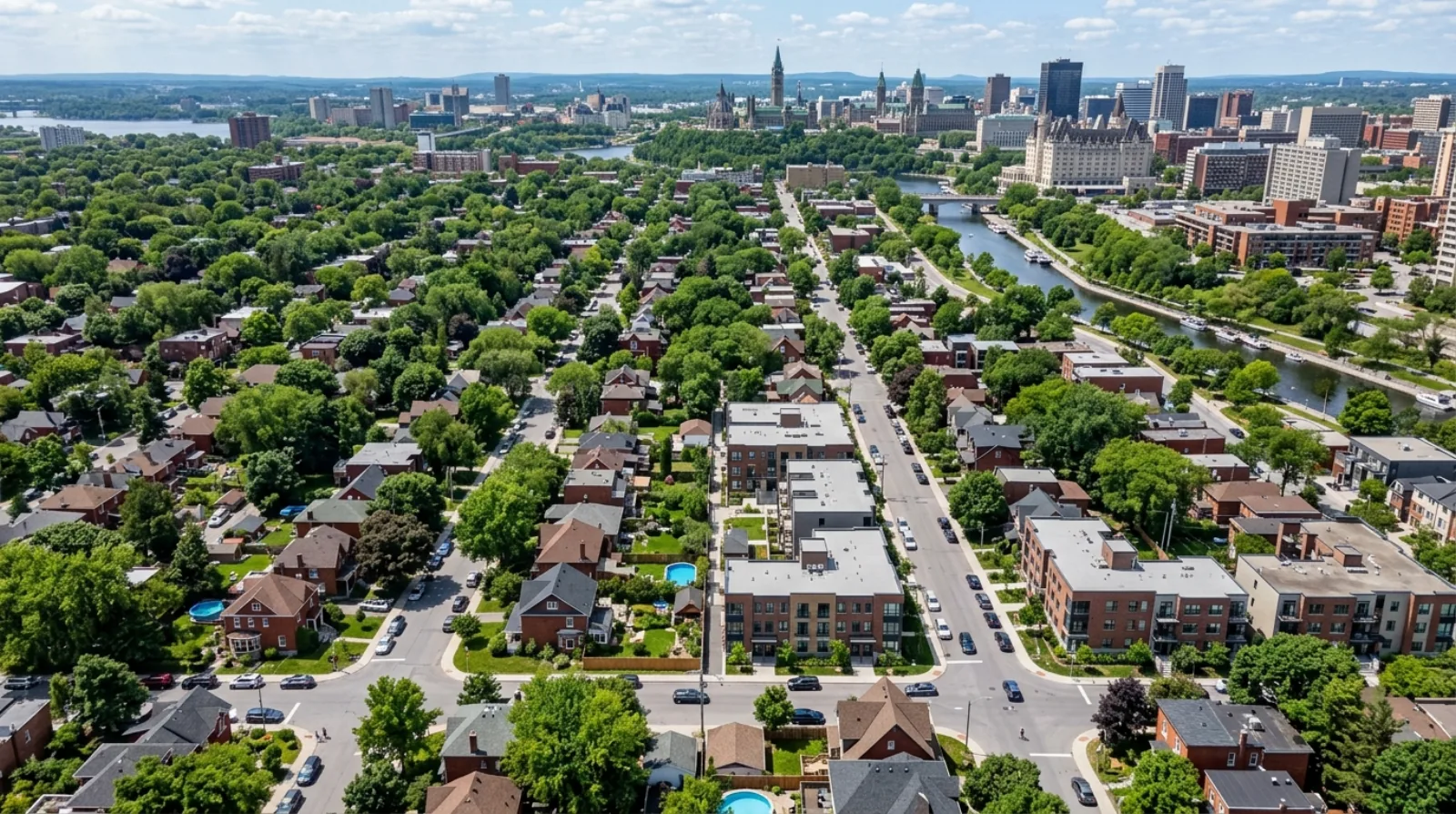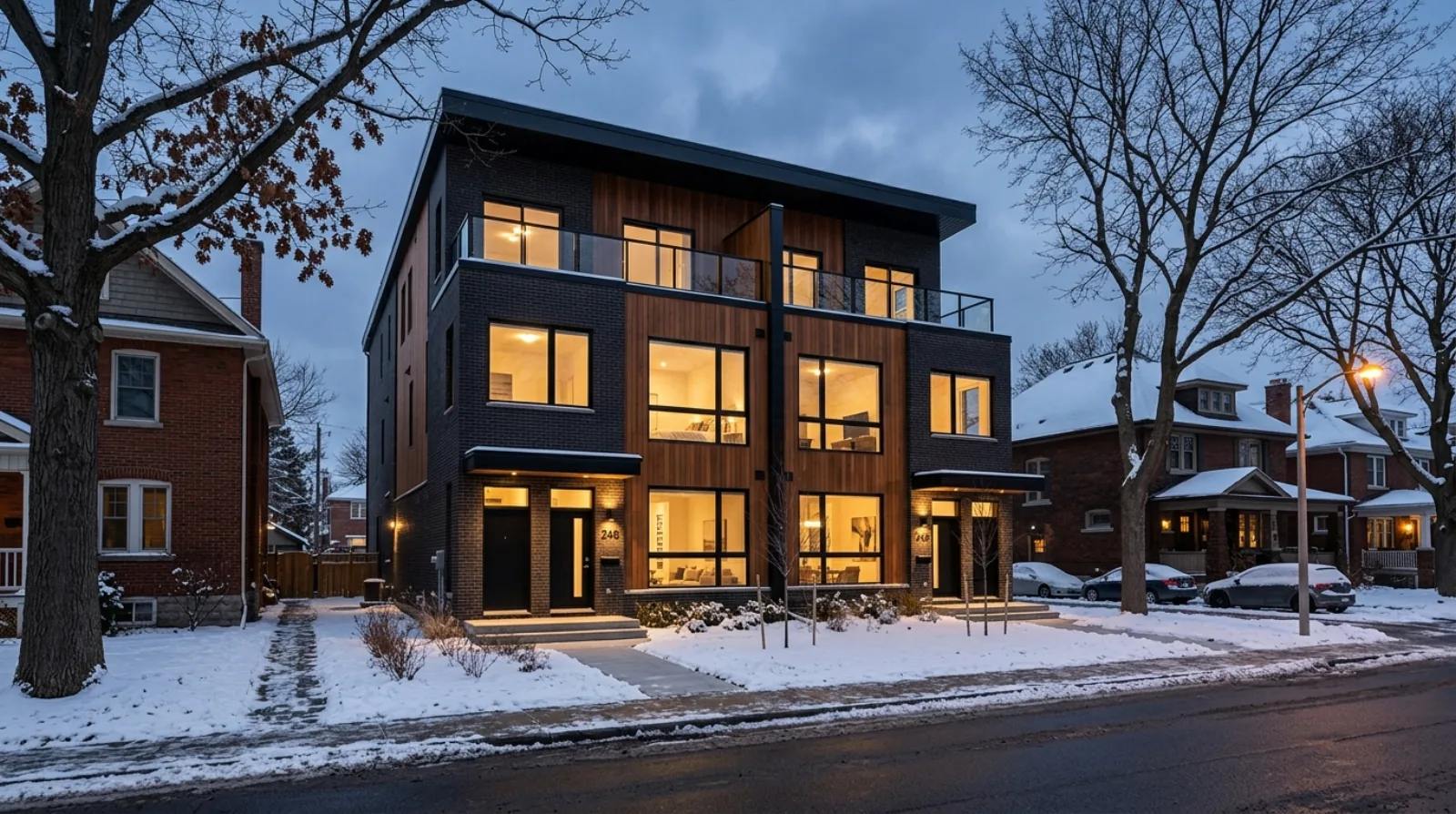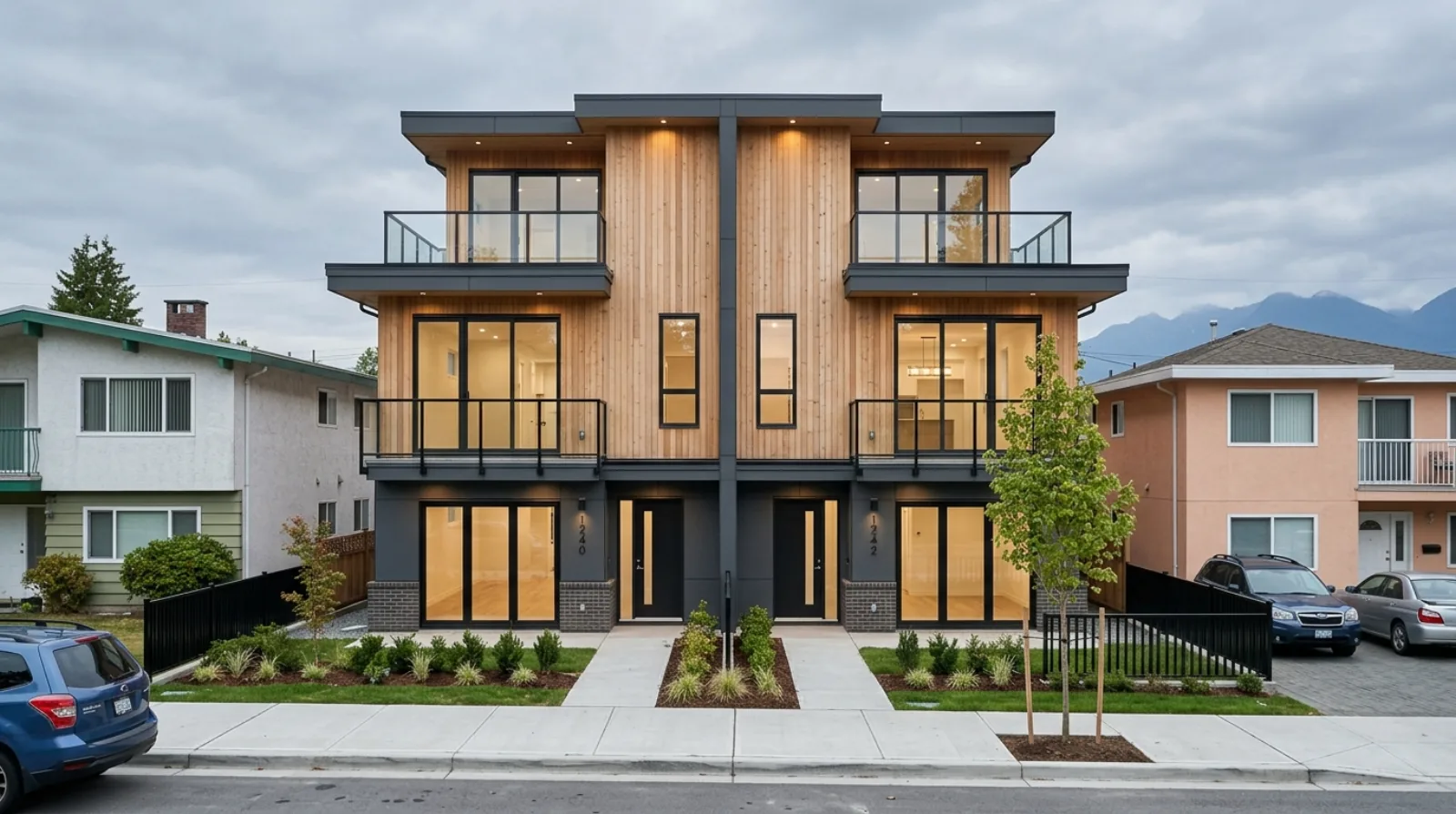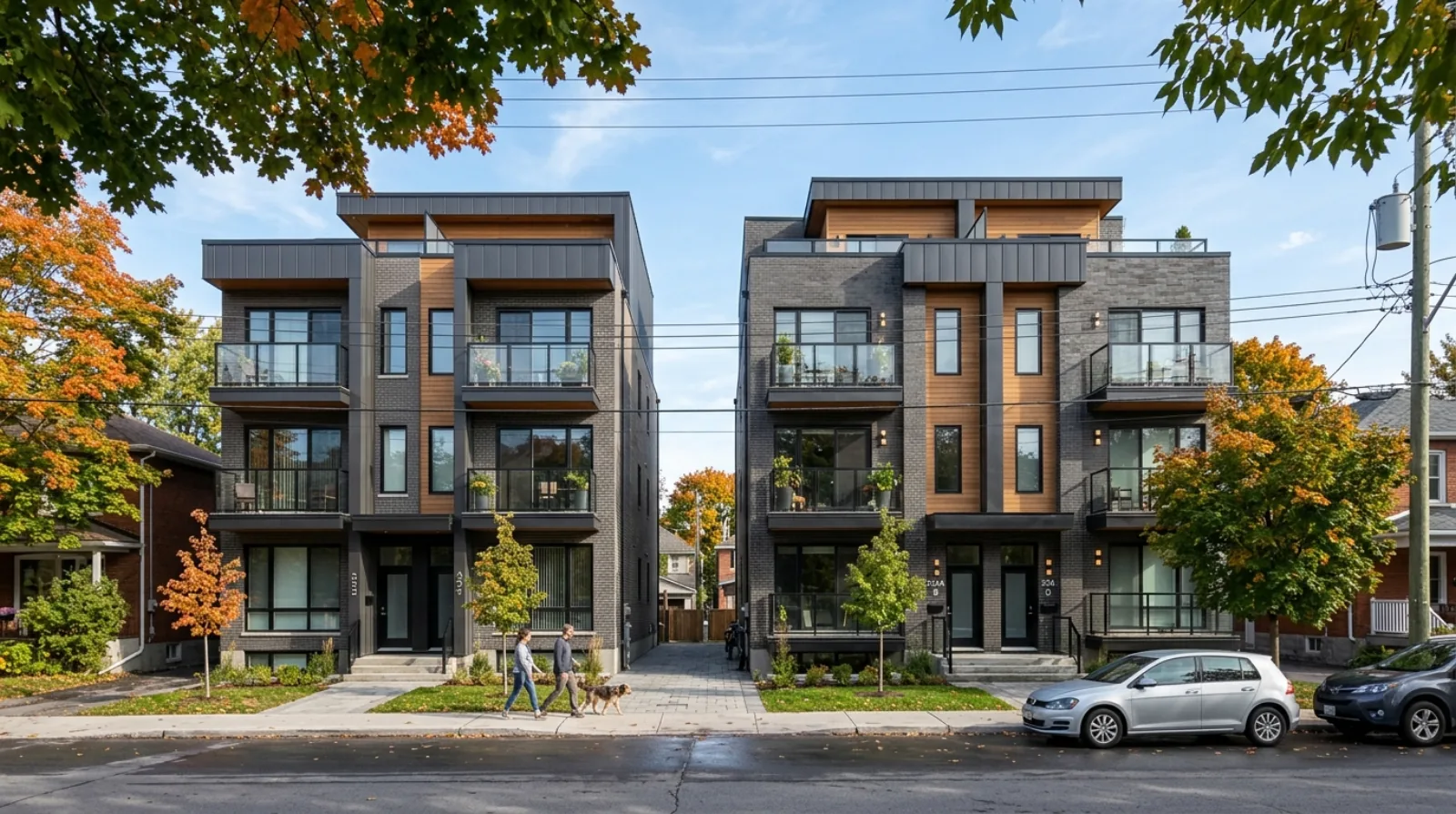

If you’re deciding between a triplex and a fourplex on an Ottawa lot, you’re standing on top of two different rules at once. One is provincial. One is municipal. They don’t say the same thing, and the gap between them is the whole decision.
Ontario’s Bill 23 says you can build 3 units almost anywhere. Ottawa’s own zoning by-law says you can build 4. Both are true. Understanding which one governs your day-to-day, and why, is the difference between leaving a unit on the table and building the multiplex that actually pencils.
TL;DR
- Ontario’s Bill 23 (More Homes Built Faster Act, 2022) makes up to 3 residential units as-of-right on most lots province-wide. It is a floor municipalities cannot go below, not a ceiling.
- Ottawa’s By-law 2026-50 goes further: up to 4 units as-of-right on a serviced lot, enacted March 11, 2026.
- In Ottawa, the city rule governs what you can actually build day-to-day. So the practical answer is four units as-of-right, not three.
- For a builder, that fourth unit changes the math on land cost per door, financing, and rent roll. It’s usually why a fourplex beats a triplex on the same lot.
- For readers who know the BC story: Bill 44 in BC mandates 4 to 6 units and overrides municipalities. Ontario’s design is different. Bill 23 sets a 3-unit floor; cities like Ottawa choose to go higher.
Two layers, not one
The thing that trips up most people new to Ottawa multiplex building is assuming there’s a single rule. There isn’t. There are two layers, and they stack.
The bottom layer is Ontario’s Bill 23. Passed in 2022, it allows up to 3 residential units as-of-right on most lots that already hold one home. That can be 3 units inside the main building, or 2 units in the main building plus 1 ancillary unit such as a garden suite or laneway suite. The province set this as a minimum. No municipality in Ontario can zone below it. The same act removed parking minimums near major transit and exempted additional residential units from development charges in defined cases. The provincial target behind all of this is 1.5 million homes by 2031. You can read the bill text on the Legislative Assembly of Ontario site and the province’s plain-language summary on ontario.ca.
The top layer is your city. Ottawa chose to go past the provincial floor. By-law 2026-50, approved January 28, 2026 and enacted March 11, 2026, allows up to 4 units as-of-right on a serviced lot. It also removed parking minimums city-wide and sorts neighbourhoods into size-based zones, N1 through N4. The details are on the city’s zoning engagement page.
So both numbers are real. Three is the provincial floor. Four is what Ottawa permits. Bill 23 didn’t cap Ottawa at three. It set the minimum and let the city build on top of it.
Which rule actually governs your build
Here’s the part that matters when you’re costing a project. The provincial floor tells you what every Ontario municipality must allow. Your municipal by-law tells you what you can actually apply to build today.
In Ottawa, the by-law is the one your designer, your permit application, and your lender work from. It permits 4. That means the practical answer for an Ottawa lot is a fourplex, not a triplex, assuming your lot is serviced and your N-zone and lot dimensions support the form.
This is why builders shouldn’t anchor on the Bill 23 number when they’re working in Ottawa. The provincial 3-unit floor is the safety net for the whole province. The day-to-day rule in Ottawa is 4. Confirming your specific lot’s N-zone and dimensions on geoOttawa before you sketch anything keeps you working from the rule that actually governs your permit.
Three units or four: the builder’s math
Say you’ve got one lot and two designs in front of you. A triplex and a fourplex. The land costs the same either way. So does a big share of the soft costs: the survey, the design fees, the permit process, the servicing connections, the site mobilization. Those are mostly fixed whether you build 3 doors or 4.
That fourth unit spreads those fixed costs across one more income stream. Land cost per door drops. The shared costs per door drop. The incremental cost of adding the fourth unit, more framing, another kitchen and bath, is usually well below the per-door average of the first three. That’s the basic reason a fourplex tends to beat a triplex on the same Ottawa lot.
It isn’t automatic. Lot width, depth, the N-zone’s height and setback limits, and the building form all decide whether a fourth unit fits without forcing a worse layout. A cramped fourplex can lose to a clean triplex on rent and resale. But when the lot supports it, the extra door is the single biggest lever on project returns. And in Ottawa, that door is as-of-right. You don’t need a rezoning to get it.
The financing picture shifts too. A fourth unit changes the rent roll, which changes the debt the project can carry and the takeout math when construction wraps. None of that exists if you default to the provincial 3-unit floor on a lot that the city would let you build 4 on.
A fair word on BC’s Bill 44
If you’ve followed the BC multiplex story, the Ontario setup will feel familiar but it isn’t identical. BC’s Bill 44 mandates 4 to 6 units on most single-family lots across the province, and it overrides municipal zoning to do it. The province set the number and the municipalities had to comply.
Ontario went a different route. Bill 23 sets a 3-unit floor and leaves room above it. Cities decide whether to go higher. Ottawa did, to 4. That’s a more municipally driven model than BC’s top-down override. Same direction of travel toward gentle density. Different mechanics underneath.
For a builder, the practical takeaway is the same in both provinces: read the local rule, not just the headline provincial number. In BC that means checking your municipality’s interpretation of Bill 44. In Ottawa it means working from By-law 2026-50’s 4 units, not Bill 23’s 3.
The honest version
Three units is the law everywhere in Ontario. Four units is the law in Ottawa. If you build to the provincial floor on an Ottawa lot that supports a fourplex, you’ve left a unit, and a meaningful chunk of return, unbuilt for no reason.
The number that governs your project is the municipal one. Confirm your lot’s N-zone and dimensions, then design to what the city actually permits. For most serviced Ottawa lots, that’s a fourplex.
Start with the full picture on the Missing Middle Housing in Ottawa hub, then check your specific lot on geoOttawa before you commit to a unit count.
Sources
- Legislative Assembly of Ontario, Bill 23, More Homes Built Faster Act, 2022: ola.org
- Government of Ontario, More Homes Built Faster Act overview: ontario.ca
- City of Ottawa, new Zoning By-law engagement: engage.ottawa.ca/zoning
- City of Ottawa, geoOttawa property mapping: maps.ottawa.ca/geoottawa
David Babakaiff is Co-Founder of VanPlex. PlexRank™ | Profit with Multiplex.