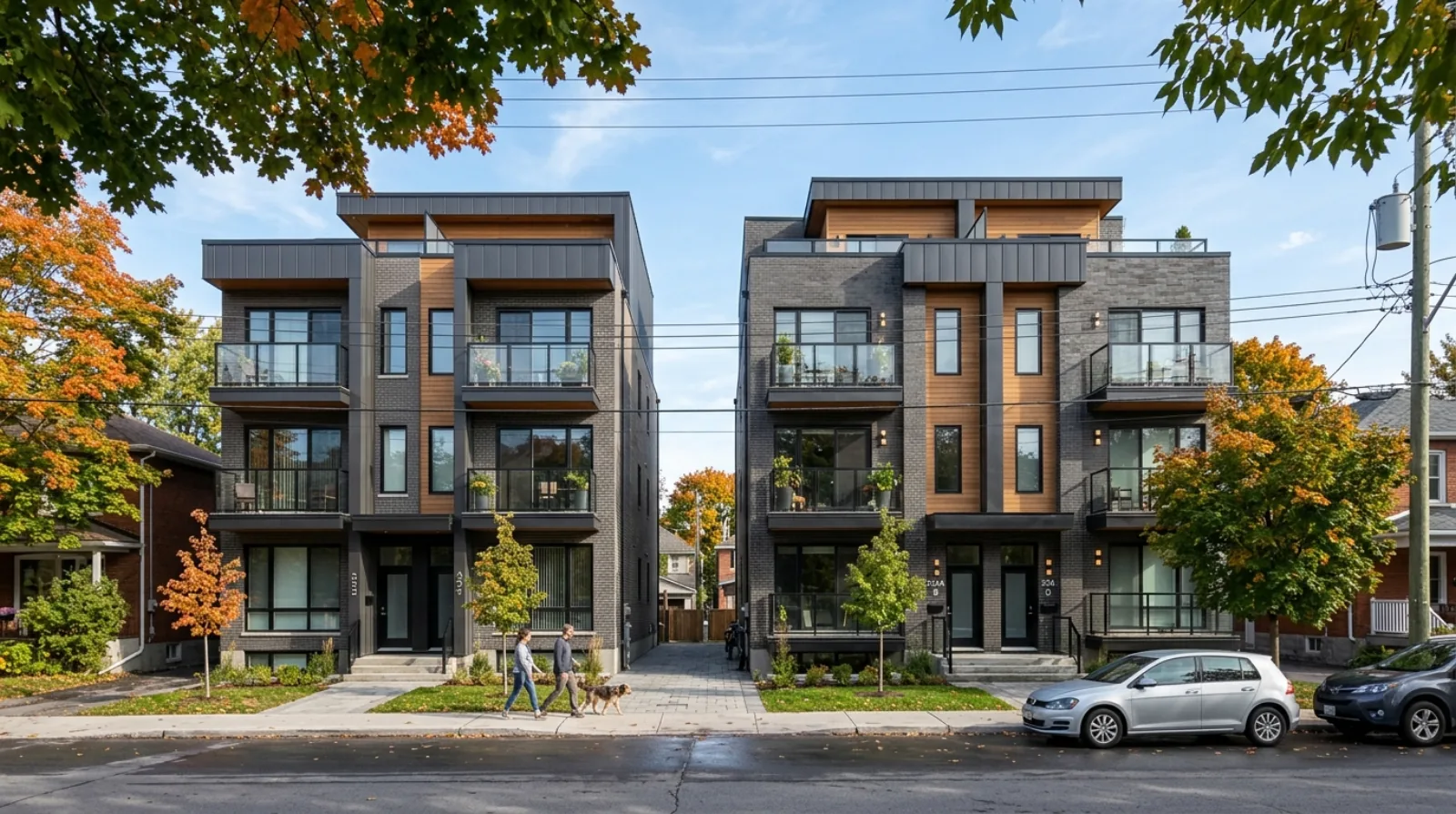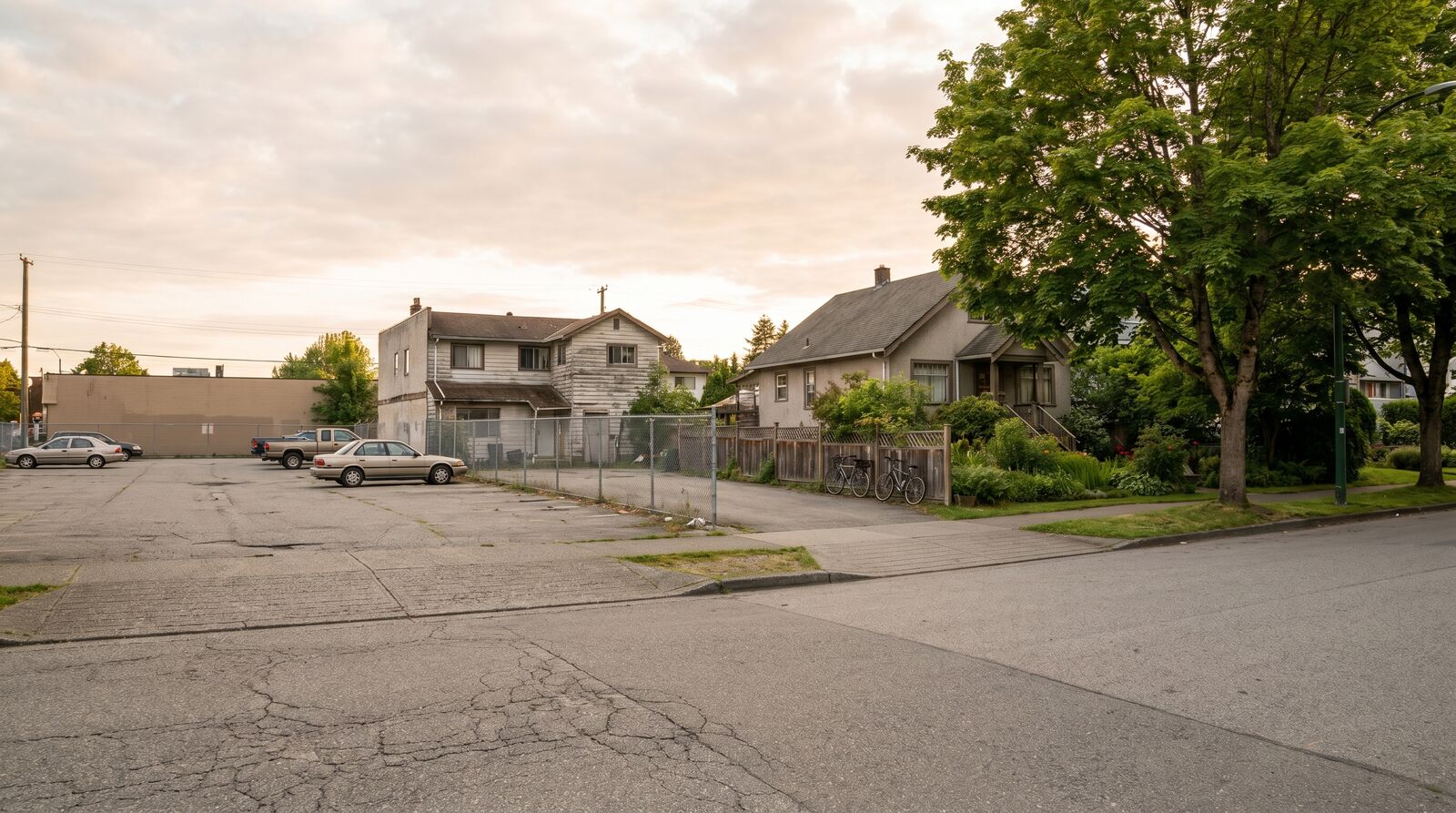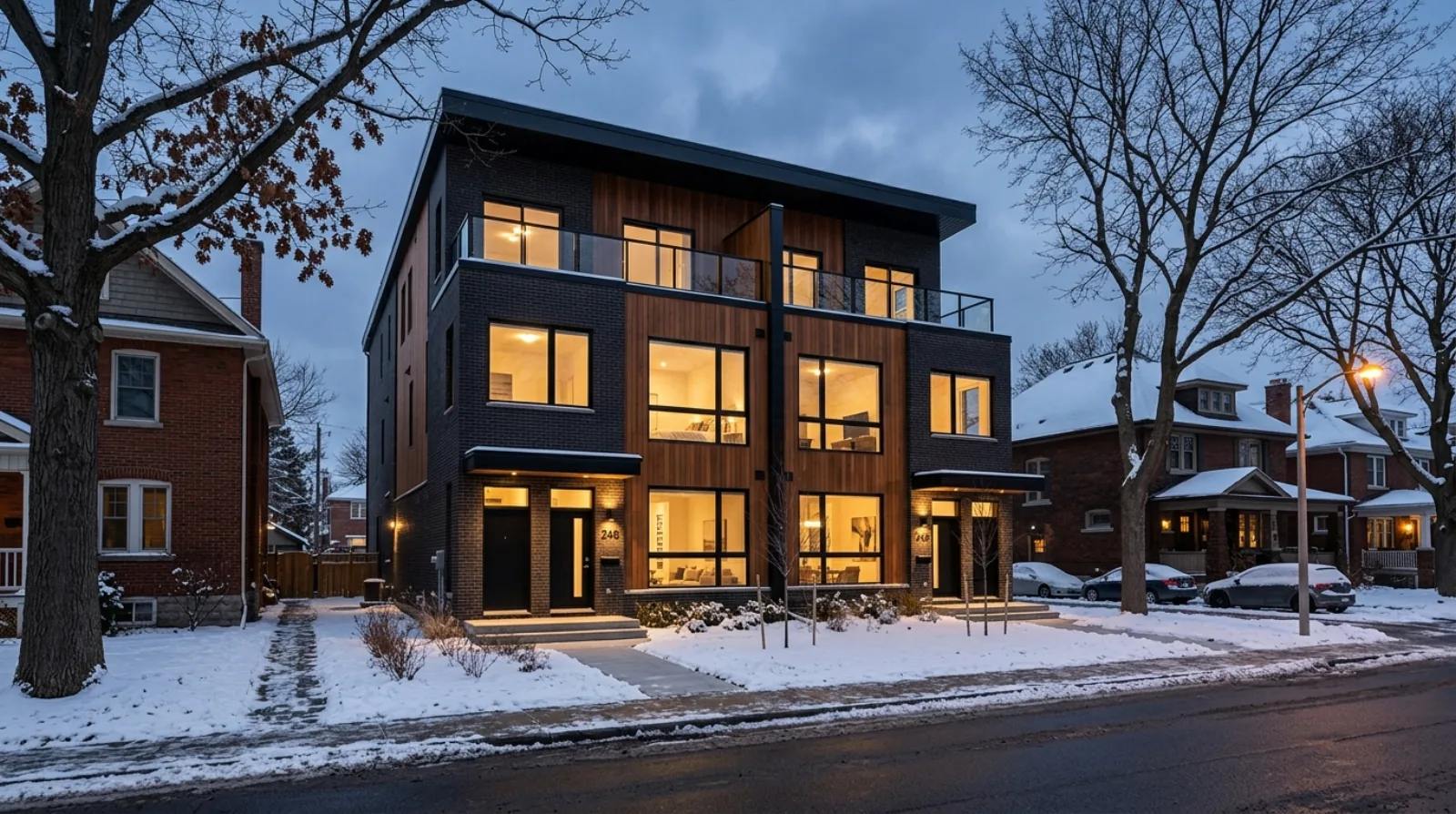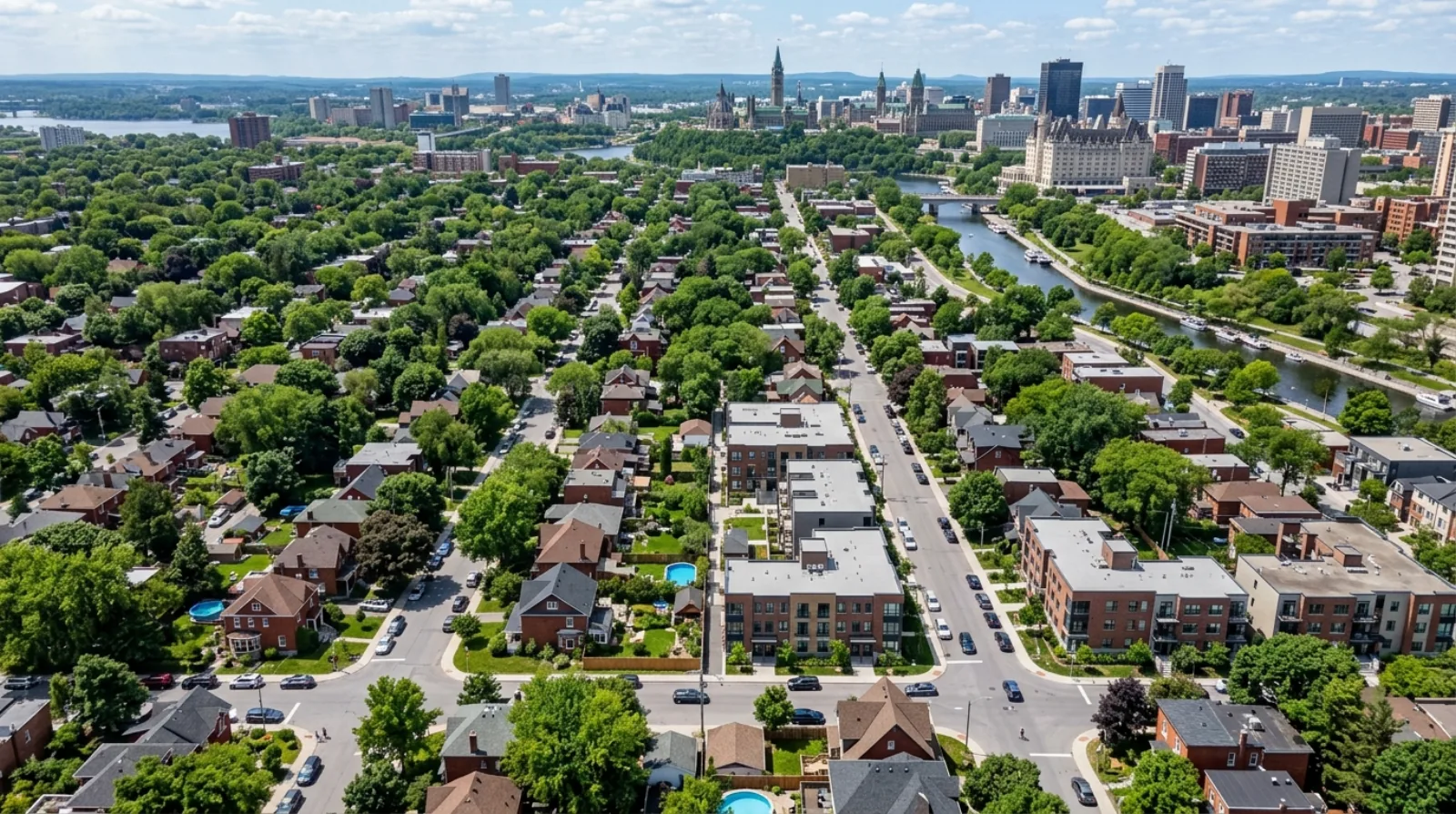

On March 11, 2026, Ottawa stopped sorting its residential land by building type. The old R-zone system — R1 for single homes, R2 for doubles, and so on up the ladder — was retired. In its place came a set of size-based Neighbourhood zones, N1 through N4, that ask a different question. Not “what kind of building is this?” but “how big can a building on this lot be?” For anyone planning a small multiplex, that change reorders how you read your own property.
This is the practical version of what happened, and what it means before you start drawing plans.
TL;DR
- Ottawa Zoning By-law 2026-50 was approved January 28, 2026 and enacted March 11, 2026. It replaced building-type R-zones with size-based Neighbourhood zones N1–N4.
- Up to four units are allowed as-of-right on a serviced lot. No rezoning, no minor variance for the unit count itself.
- Parking minimums were removed city-wide. You can still build parking — you just aren’t forced to.
- Old R1 generally maps to the new N1. But “generally” isn’t “always.” Confirm your specific parcel on geoOttawa.
- Ontario’s Bill 23 set a province-wide three-unit floor. Ottawa went to four.
What actually changed
The headline is the structure of the zoning itself. Under the old by-law, the zone told you the building type. R1 meant one dwelling. If you wanted more units, you usually needed a different zone, which often meant a rezoning application.
By-law 2026-50 flips that. The new Neighbourhood zones — N1, N2, N3, N4 — are graded by scale, not by what the building is called. The zone sets how many units and how much height a lot can carry. A multiplex isn’t a special category you have to apply your way into. It’s one of the allowed outcomes of the zone your lot already sits in.
The City approved this on January 28, 2026 and it took effect March 11. The full text and reference maps live on the City’s zoning engagement page.
Four units as-of-right
The part most small builders care about: up to four units are permitted as-of-right on a serviced lot.
“As-of-right” is the operative phrase. It means the four units are baked into what the zone allows. You don’t ask permission for the unit count. You don’t file a rezoning. You don’t seek a variance to be allowed four. You apply for a building permit and build, the same way a single-family permit works.
This puts Ottawa ahead of the provincial baseline. Bill 23 set a floor of three units on most residential lots across Ontario. Ottawa chose four. For a multiplex builder, the fourth unit often matters more than it sounds — it’s frequently the difference between a project that pencils and one that doesn’t.
Two things to keep straight. First, “serviced lot” is doing real work in that sentence. The four-unit allowance assumes municipal water and sewer. Second, four as-of-right is the units side. Whether four units physically fit is a separate question answered by the lot’s size, setbacks, and height limit.
How big can you build — the N1–N4 ladder
The Neighbourhood zones step up in scale. Rough per-building unit caps run like this:
- N1 — around four units. This is where most former R1 land lands.
- N2 — around six units.
- N3 — around ten units.
- N4 — mid-rise scale, the largest of the four.
Heights in N1 and N2 run to roughly 11 metres, about three storeys. So a lot in N1 or N2 is generally a three-storey envelope, and the unit count climbs as you move up the ladder. These are approximate figures. The exact cap, height, and setbacks for your lot are set by the zone schedule for that parcel, not by a rule of thumb.
The clean read for a small multiplex builder: if your lot was R1, you’re probably in N1, and four units as-of-right is your starting point. If you’re in N2 or higher, the ceiling is higher and worth checking carefully before you settle on a unit count.
Parking minimums are gone
Ottawa removed parking minimums city-wide under 2026-50. This is the change that quietly moves project budgets.
Under the old rules, a multiplex triggered a required number of parking spaces. On a tight urban lot, those required spaces ate into buildable area, forced awkward site layouts, and sometimes pushed a project toward underground parking that wrecked the numbers. Now the minimum is zero. You can build parking — nothing stops you — but the by-law no longer forces a count.
For an infill multiplex near transit, that’s room you can give back to the building, the yard, or landscaping instead of pavement. Read the details on parking reform before you assume zero parking is right for your tenants. Removing the minimum is a permission, not an instruction.
What this changes for someone building a small multiplex
Put the pieces together and the day-to-day workflow shifts.
- You skip the rezoning gamble. Four units as-of-right means no rezoning application, no public hearing, and no months-long wait for the unit count. The risk and timeline that used to define small multiplex projects largely come off the table.
- Your lot’s potential is set by size, not by a building-type label. Read your zone, read the height and unit cap, and you know the envelope.
- Parking stops dictating your site plan. You design the building first and decide on parking second.
- The fourth unit is on the table everywhere serviced. That extra unit often carries the project’s economics.
None of this guarantees a project pencils. Land price, construction cost, and what the local rental or resale market supports still decide that. Zoning sets the ceiling. It doesn’t set the return.
How to read your lot’s new N-zone
Don’t trust the old R-zone in your memory or in a stale document. The mapping from R to N is general, not mechanical. Check the source.
- Open geoOttawa, the City’s official mapping tool.
- Search your address and pull up the parcel.
- Find the zoning layer and read the current Neighbourhood zone — N1, N2, N3, or N4 — plus any overlays or special provisions on the parcel.
- Cross-reference that zone against the schedule in By-law 2026-50 for the exact unit cap, height limit, and setbacks.
The full reference maps and by-law text are on the City’s zoning page. If your parcel has an overlay or a site-specific provision, that controls — the general N-zone rules are the baseline a special provision can override.
The honest version
By-law 2026-50 is a genuine change for small multiplex builders in Ottawa. Four units as-of-right and no parking minimum remove two of the biggest friction points the old system imposed. That’s real.
What it doesn’t do is make every lot a good project. A favourable N-zone tells you what you’re allowed to build. It says nothing about whether the numbers work on your particular lot at today’s land and construction costs. Pull your parcel on geoOttawa, confirm the zone, read the schedule, and then run the economics. The zoning is the easy part now. The math is still the math.
For a fuller map of the changes, start at the hub: Missing Middle Housing in Ottawa.
Sources
- City of Ottawa, “Council approves landmark new zoning by-law,” ottawa.ca.
- City of Ottawa zoning engagement page, engage.ottawa.ca/zoning.
- geoOttawa parcel and zoning mapping tool, maps.ottawa.ca/geoottawa.
- Government of Ontario, Bill 23, ola.org.