By Sanj Aggarwal, Owner of Icon Projects Ltd., CHBA Master Residential Builder (MRB).
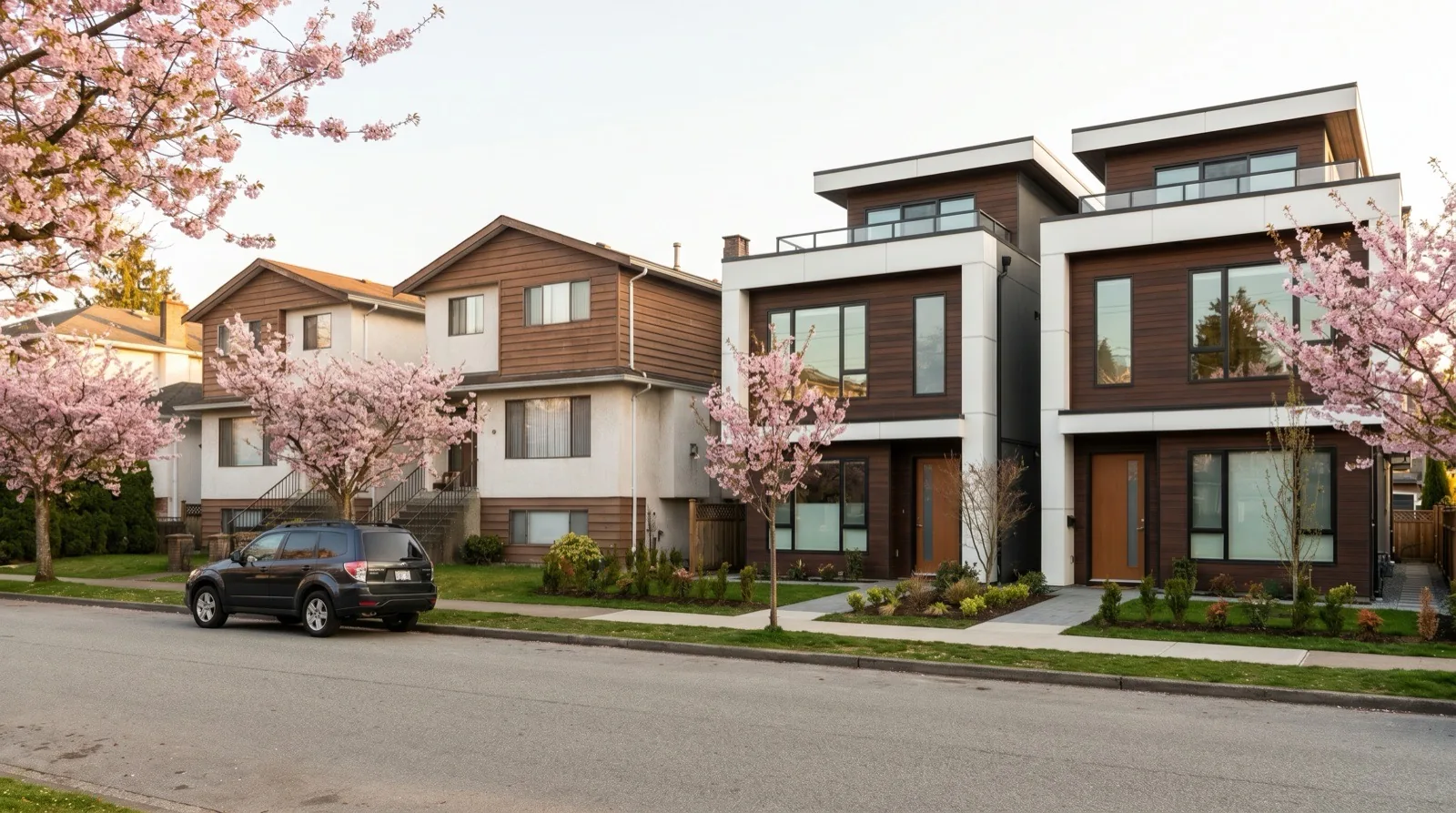
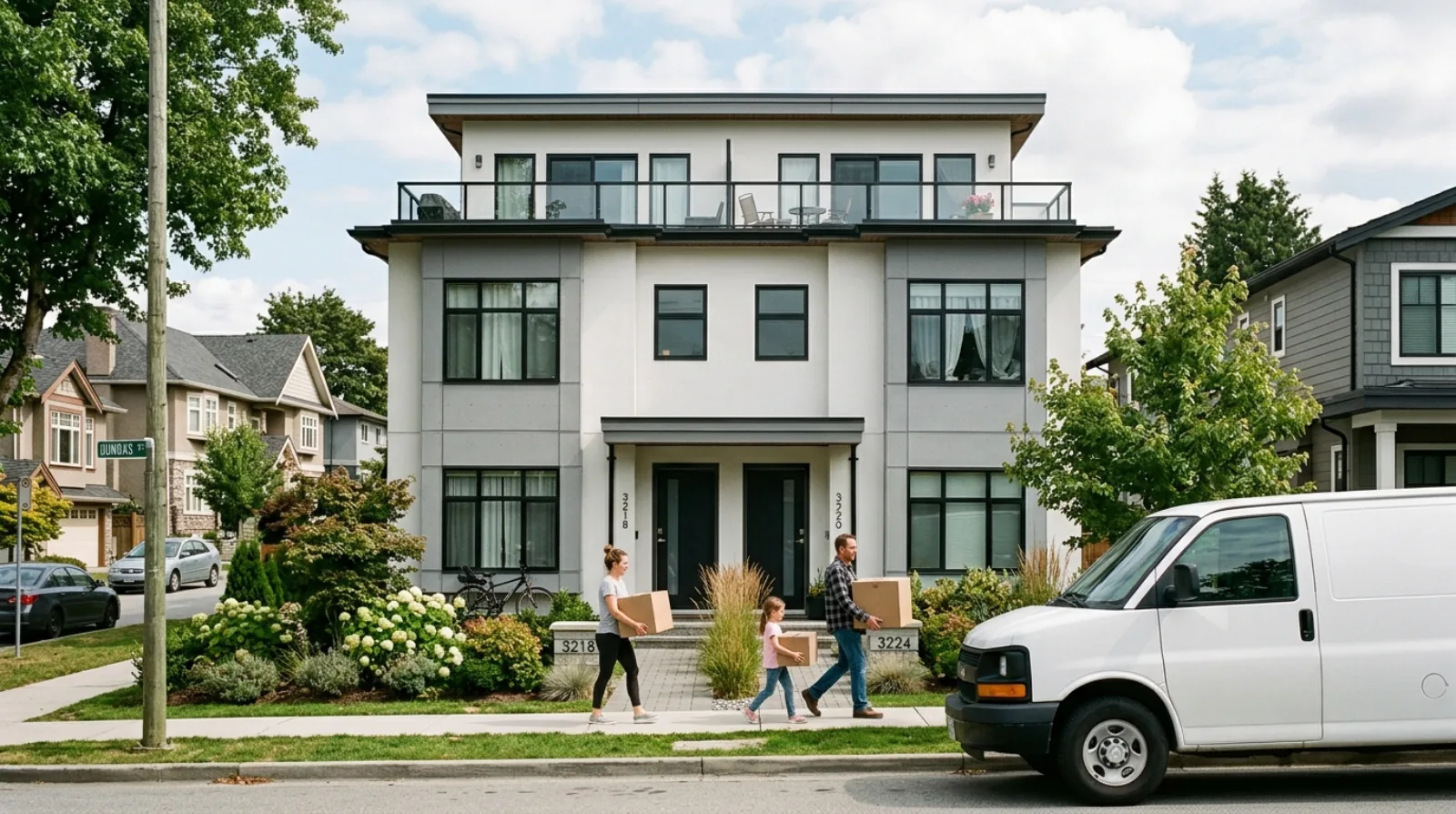
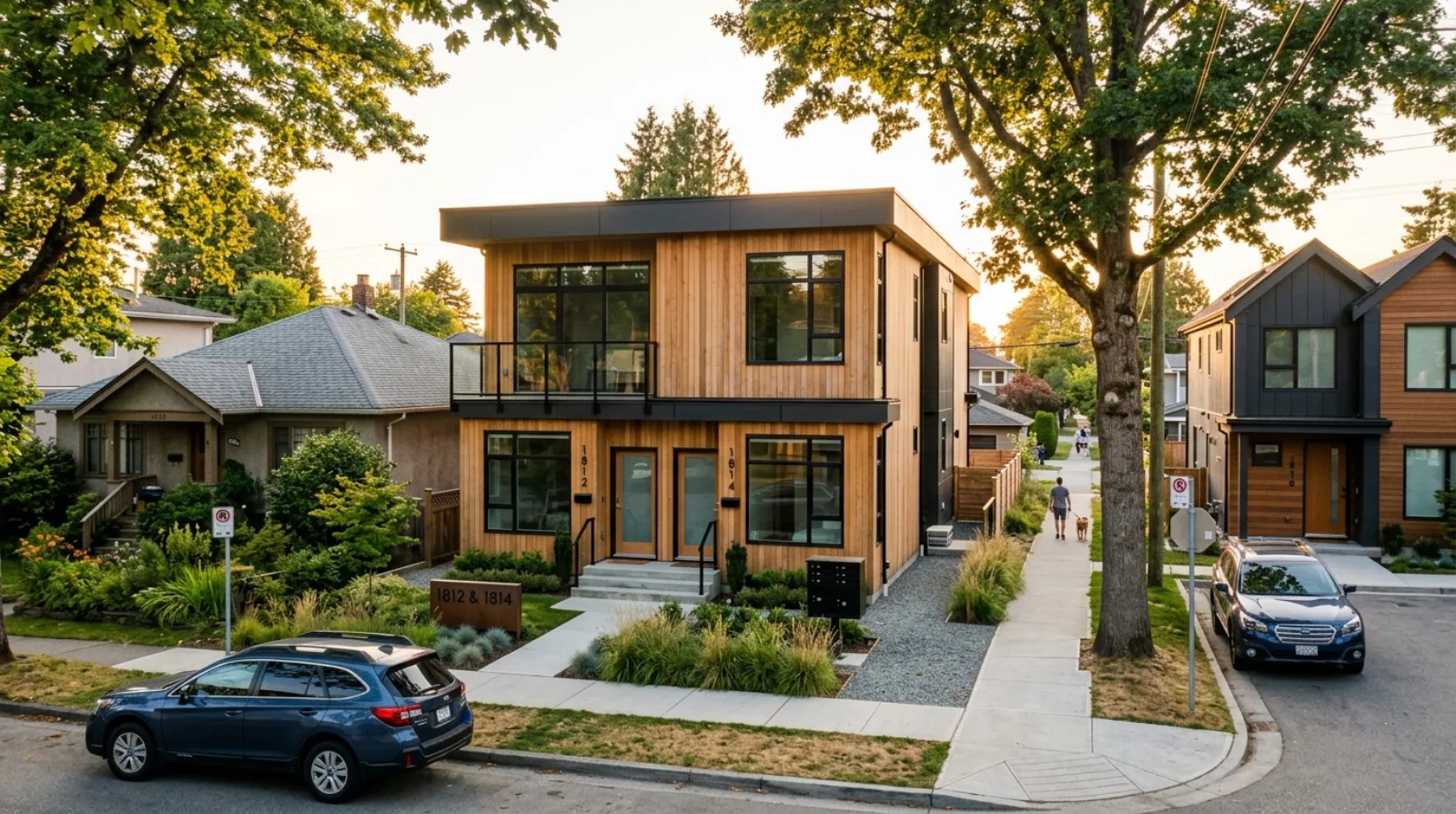
Vancouver crossed the multiplex line in 2025. Burnaby didn’t. On premium-view lots, sloped lots, owner-occupier projects, and neighbourhoods without strata comp depth, custom SFH still beats multiplex on profit, timeline, and exit. Here’s the lot math we’re seeing this spring at Icon Projects.
Half the calls coming into Icon Projects from Burnaby owners this spring start the same way: “Should I just build a multiplex?” The honest answer, more often than the headlines suggest, is no. Not yet. Not on your lot. We’re still building single-family homes across Burnaby in 2026 — and the proforma is the reason, not nostalgia. As a CHBA Master Residential Builder, I want to be clear: multiplexes pencil on the right lot, and we build them too. But on a meaningful share of Burnaby’s premium inventory, the cost gap between a properly built custom home and a small multiplex has widened materially over the last 18 months — and most owners haven’t priced that in yet.
Here’s what we’re seeing on actual Burnaby lots this quarter, why custom SFH still pencils on a meaningful slice of them, and the seven questions to run before you decide what your lot wants to be.
TL;DR (Key Takeaways)
- Burnaby’s Bill 44 rollout has been slower and more constrained than Vancouver’s — many lots aren’t eligible for full 4–6 unit density yet
- High-end Burnaby neighbourhoods (Buckingham Heights, Deer Lake, Capitol Hill, Burnaby Mountain) still trade detached homes at $1,100–$1,400/sqft built
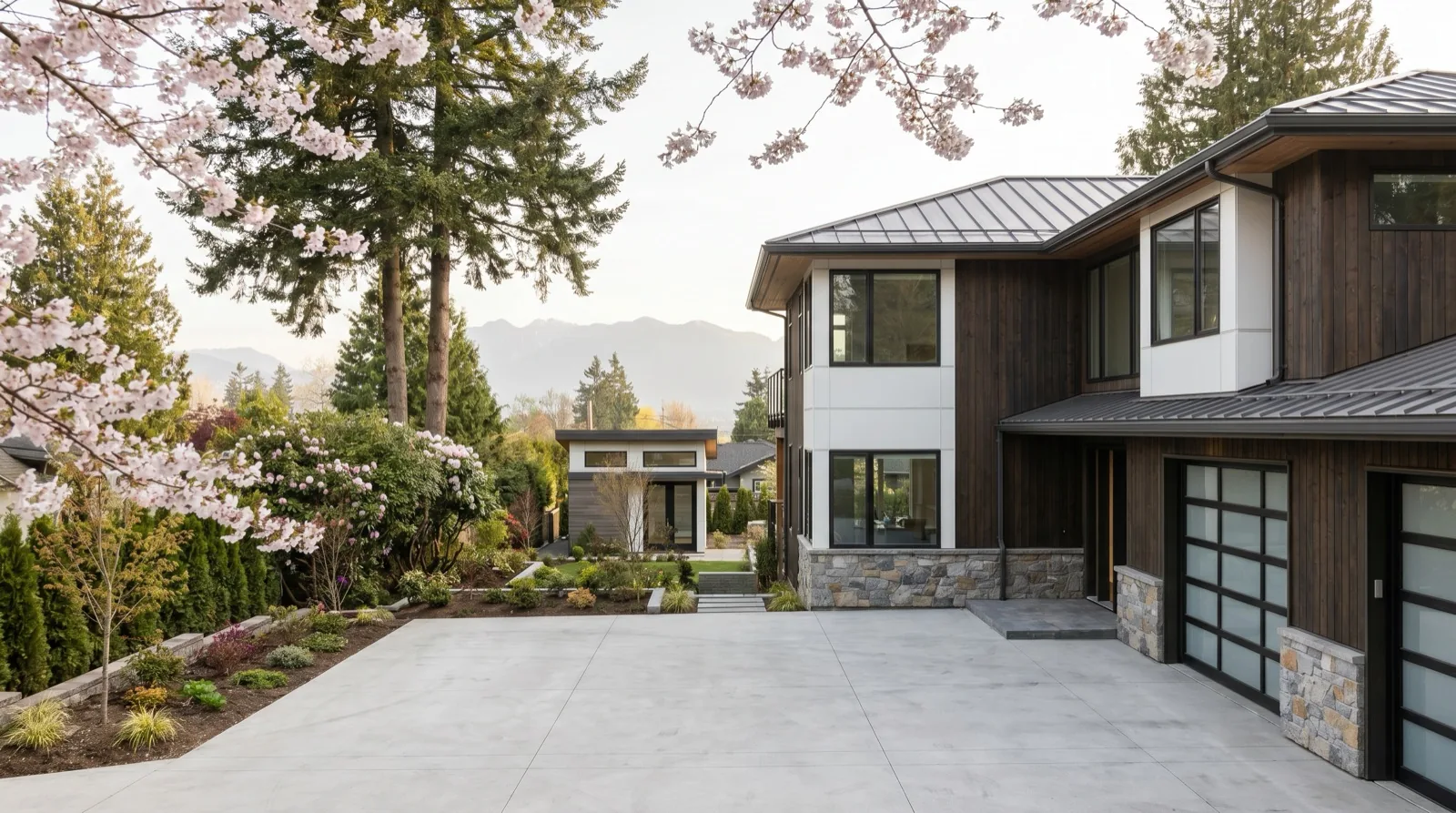
- A 4,500 sqft custom SFH + secondary suite + laneway delivers 3 dwellings on one title — comparable revenue to a small fourplex with simpler construction
- Construction cost gap is real — and bigger than most owners expect. For example: if a luxury-spec SFH runs $300/sqft in hard costs, building a multiplex to the same finish level will typically run closer to $400/sqft. Part of that is code — fire separation, sound assemblies, egress requirements, multiple service entries. But a big part is geometry: you’re fitting more kitchens, bathrooms, and separate entrances into the same building footprint. The more program you squeeze in, the more expensive every square foot gets. In a custom SFH, more of the buildable area is working efficiently.
- Multiplex financing under 5 units sits outside CMHC MLI Select — conventional construction loans, higher rates, tougher covenants
- Owner-occupier resale market for detached homes is liquid; small-multiplex strata exits are not
- The right answer is lot-specific. We screen 7 inputs before we recommend SFH or multiplex on any Burnaby property
What we’re actually seeing in Burnaby right now
Vancouver crossed the multiplex-vs-SFH permit line in 2025. Burnaby has not. The City of Burnaby’s permit data tells a different story than its neighbour to the west, for three reasons:
1. Burnaby’s Bill 44 implementation is more conservative. The province set a minimum floor — 3 units on lots under 280 sqm, up to 4 units on larger lots, and 6 units on lots near frequent-transit stops. Burnaby’s bylaw adopted that minimum without going further. Vancouver pushed past it in places (R1-1 allows up to 8 units in specific configurations). The result on the ground: a Burnaby lot that would unlock as a 6-plex in Vancouver often only unlocks as a triplex or fourplex in Burnaby.
2. Burnaby’s lot stock skews larger and more sloped. A lot of Burnaby’s RS-zoned inventory sits on 8,000+ sqft parcels with grade changes, mature tree canopy, and view easements — none of which play well with multiplex floor plate efficiency. Multiplex math depends on standardized typologies built repeatedly on similar lots. Burnaby’s hill-and-view geography pushes more lots into custom-design territory, which favours SFH.
3. The high-end detached resale market is still functioning. In neighbourhoods like Buckingham Heights, Deer Lake, Capitol Hill, parts of Burnaby Mountain, and the Government Road area, detached homes between $4M and $8M continue to transact. The buyer pool for those homes wants a single title, a private lot, and an owner-occupier configuration — not a strata unit in a fourplex. That demand is what holds the per-square-foot price up enough to make the SFH proforma work.
The proforma comparison on a real Burnaby lot
Take a typical Burnaby south-slope lot — 50 × 150, RS zoned, currently allowed under Bill 44 to build up to 4 units or alternatively a custom SFH with secondary suite and laneway. Here’s what the math looks like at 2026 cost levels:
Side-by-side proforma: SFH vs. small multiplex on the same Burnaby lot
| Line Item | SFH + Suite + Laneway | 4-Unit Multiplex |
|---|---|---|
| Buildable Area | ~5,400 sqft | ~5,800 sqft |
| Build Cost | $420/sqft | $540/sqft |
| Total Hard Cost | $2.27M | $3.13M |
| Soft Costs + Fees + DCCs | $280K | $420K |
| Land Basis | $2.4M | $2.4M |
| Total Project Cost | $4.95M | $5.95M |
| Resale | $5.85M (custom + suite + laneway) | $6.40M (4 strata units) |
| Gross Profit | ~$900K | ~$450K |
| Build Timeline | 14–16 months | 18–22 months |
| Exit | 1 owner-occupier buyer | 4 strata buyers (or hold) |
Illustrative proforma on a 50×150 Burnaby south-slope RS lot at 2026 cost and pricing levels. Your lot will differ — run your own numbers.
On this lot the SFH path produces a higher gross profit ($900K vs. $450K), faster timeline (14–16 months vs. 18–22), and a simpler exit. The multiplex generates more total revenue, but most of the extra revenue is consumed by the higher build cost, the longer carry, and the strata creation work.
The build-cost delta isn’t a markup — it’s real. A 4-unit multiplex needs 1-hour fire separation between every dwelling, STC-rated sound assemblies in floors and demising walls, four meter bases instead of one, four service entries, sprinklers in many configurations, and a building envelope detailed for shared walls. Build it to current BC Building Code and current building science (insulation continuity, air-tightness, rainscreen detailing) and the per-square-foot number lands where it lands. Cutting corners to close the gap is how you get callbacks five years in. We don’t do it. The cost is the cost.
This is not a universal answer. Move that same proforma to Metrotown, Edmonds, or Brentwood and the multiplex usually wins — the per-unit resale price holds up better in transit-adjacent neighbourhoods, and the build cost gap shrinks because the lot supports a more standard typology. Move it to a 7,500 sqft view lot in Buckingham and the SFH wins by even more than the chart shows.
Where SFH is still the highest-and-best use
Five categories of Burnaby lot where we’re still recommending custom single-family construction in 2026:
1. Premium view lots in Buckingham Heights, Burnaby Mountain, and parts of Capitol Hill
When a lot has a $4M+ resale value as a tear-down because of the view, the SFH math is decisive. A custom $5M home on that lot trades to a single owner-occupier at a premium per-sqft because they’re paying for the view and the privacy, not the unit count. A multiplex on the same lot has to share that view across four strata units, and the per-unit price doesn’t scale linearly.
2. Sloped or irregular lots where multiplex floor plates lose efficiency
Multiplex profitability depends on getting close to maximum buildable area at a standard cost. Sloped lots, lots with mature trees that have to be retained, and lots with view easements all push design into one-off territory. Once you’re designing a custom multiplex, you’ve lost the cost advantage of a repeated typology — and at that point, an SFH is usually the cleaner build.
3. Lots in neighbourhoods with weak strata-comp data
Multiplex strata units are easier to price (and to finance) when there are recent comparable sales nearby. In neighbourhoods that haven’t seen multiplex completions yet — large parts of north Burnaby, parts of Government Road, the southeast slope below Royal Oak — appraisers struggle, lenders get cautious, and presale velocity is slow. Custom SFH appraises against detached comps that have decades of data behind them.
4. Owners building for themselves (or one extended family)
A meaningful share of our Burnaby SFH builds in 2026 are for owners who plan to live in the home — often with a secondary suite or laneway for an aging parent, an adult child, or rental income. The proforma question changes when you’re not selling the asset. The owner-occupier discount on space, customization, and privacy is worth more than a few hundred thousand in spec-build profit.
5. Lots where the existing single-family home is salvageable
If the existing house has 15+ years of useful life, an addition + secondary suite legalization + laneway addition can produce three dwellings without the demolition, design, and full-permit cost of new construction. We’ve seen this path produce $400K–$700K in equity creation on Burnaby lots where the teardown-and-multiplex math didn’t work.
Where multiplex still wins in Burnaby
We’re not anti-multiplex — we build them too. Multiplex is the right call when:
- Lot is flat, regular, and 33×120 or larger with clean rear access for a service lane
- Lot is within 400m of a SkyTrain station or frequent-transit corridor (lift in unit values)
- The owner is not building for themselves and wants spec-build margins or rental cash flow at scale
- The neighbourhood already has completed multiplex strata comps so appraisal and financing are straightforward
- The lot supports 5+ units which unlocks CMHC MLI Select financing at materially better terms
In Edmonds, Metrotown-adjacent blocks, parts of Brentwood, and the corridors along Hastings, Kingsway, and Lougheed, those conditions are stacking up. We’re building multiplex there.
The 7-input lot screen
Before recommending SFH or multiplex on any Burnaby lot, we screen seven inputs:
- Lot dimensions and slope — flat regular lots favour multiplex; sloped or irregular favour SFH
- Distance to frequent transit — under 400m lifts multiplex unit values; over 800m flattens them
- Bill 44 unit eligibility under current Burnaby bylaw — many lots are 3-or-4-unit eligible, not 6
- Existing structure salvage value — a usable existing house changes the proforma sequence
- Recent comparable sales within 1km — detached comps vs. strata comps drive the resale assumption
- Owner intent — spec-build vs. owner-occupier vs. build-to-rent each favour different paths
- Soil and tree retention conditions — peat, fill, and protected trees can swing foundation cost by $100K+
Score those seven and the lot tells you what it wants to be. The mistake we see most often is owners assuming Bill 44 means every lot should be a multiplex. It doesn’t. It means every lot has more options. The right option is still lot-specific.
What this means if you own a Burnaby lot
If you’ve been told a multiplex is the only modern answer for your property, get a second opinion on your specific lot before you commit to design fees. The conversation should start with the seven inputs above, not with a generic recommendation.
For owners actively considering SFH:
- Confirm the resale per-sqft assumption with a Burnaby-specific real estate professional, not a Vancouver number
- Underwrite the secondary suite and laneway revenue as part of the holding-cost offset, not as the headline return
- Plan for a 14–16 month build window with ~10% contingency on hard costs
For owners on the fence:
- Run both proformas side-by-side on your actual lot — the chart above is illustrative; your lot will land somewhere different
- Test the multiplex path against current Burnaby bylaw (not the provincial maximum) — many Burnaby lots are constrained below the headline 4–6 unit number
- Talk to a builder who’s done both in your neighbourhood in the last 18 months. The 2026 cost gap is bigger than the 2024 gap, and Q1 2026 closings tell the truest story
The bottom line
Vancouver’s permit office crossed the multiplex line in 2025. Burnaby’s hasn’t, and on a meaningful slice of Burnaby lots it shouldn’t — yet. Custom single-family construction with a secondary suite and laneway is still the highest-and-best use on premium-view lots, sloped lots, owner-occupier projects, and neighbourhoods without strata comp depth. The provincial policy gave Burnaby owners more options. It didn’t standardize the answer.
Run the proforma on your specific lot. The numbers will tell you what to build.
Sanj Aggarwal is the Owner of Icon Projects Ltd. and a Canadian Home Builders’ Association Master Residential Builder (MRB). Sanj leads every Icon project with a focus on craftsmanship, code excellence, and the latest in building science. Learn more at wemakehomes.com.