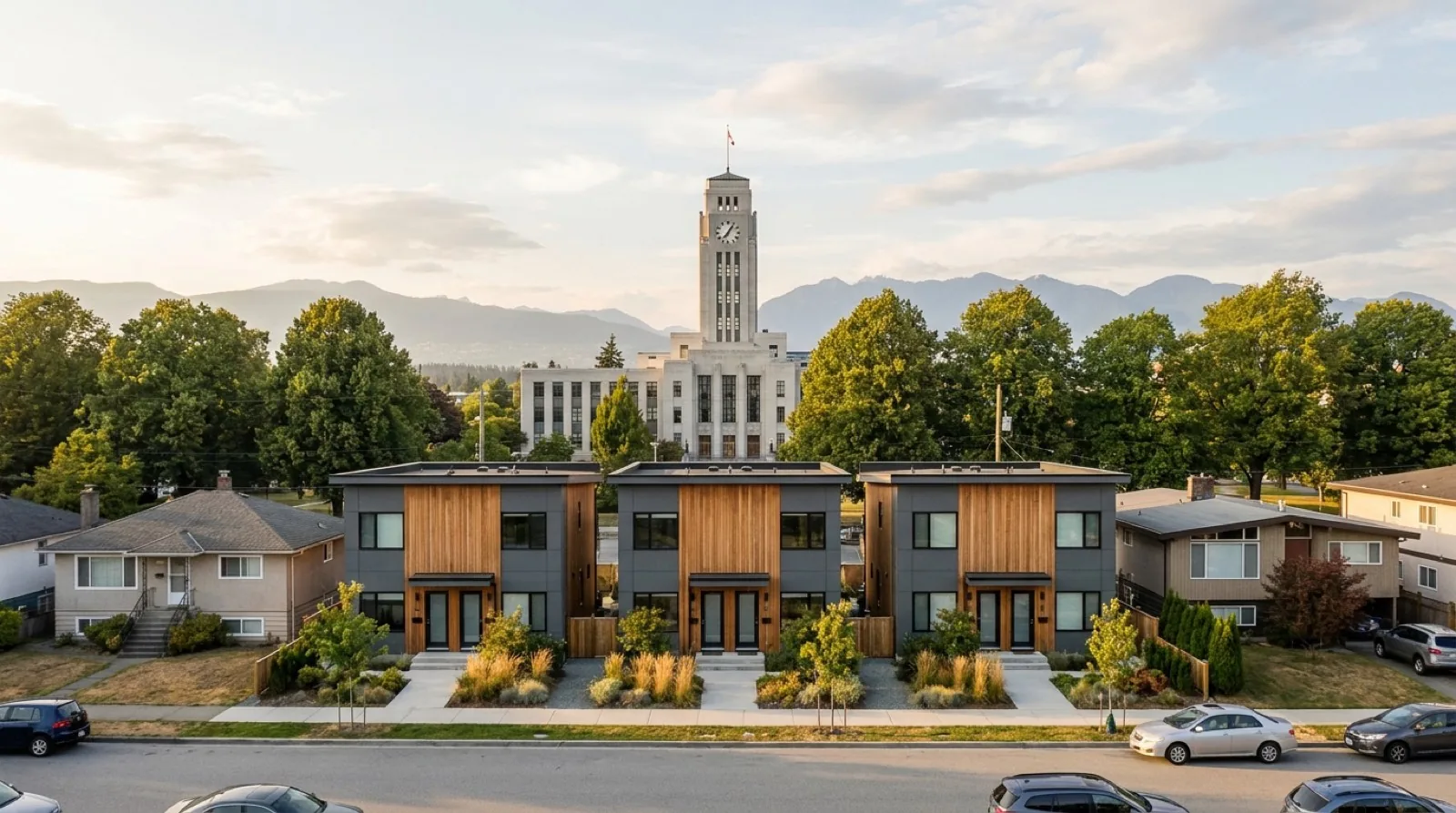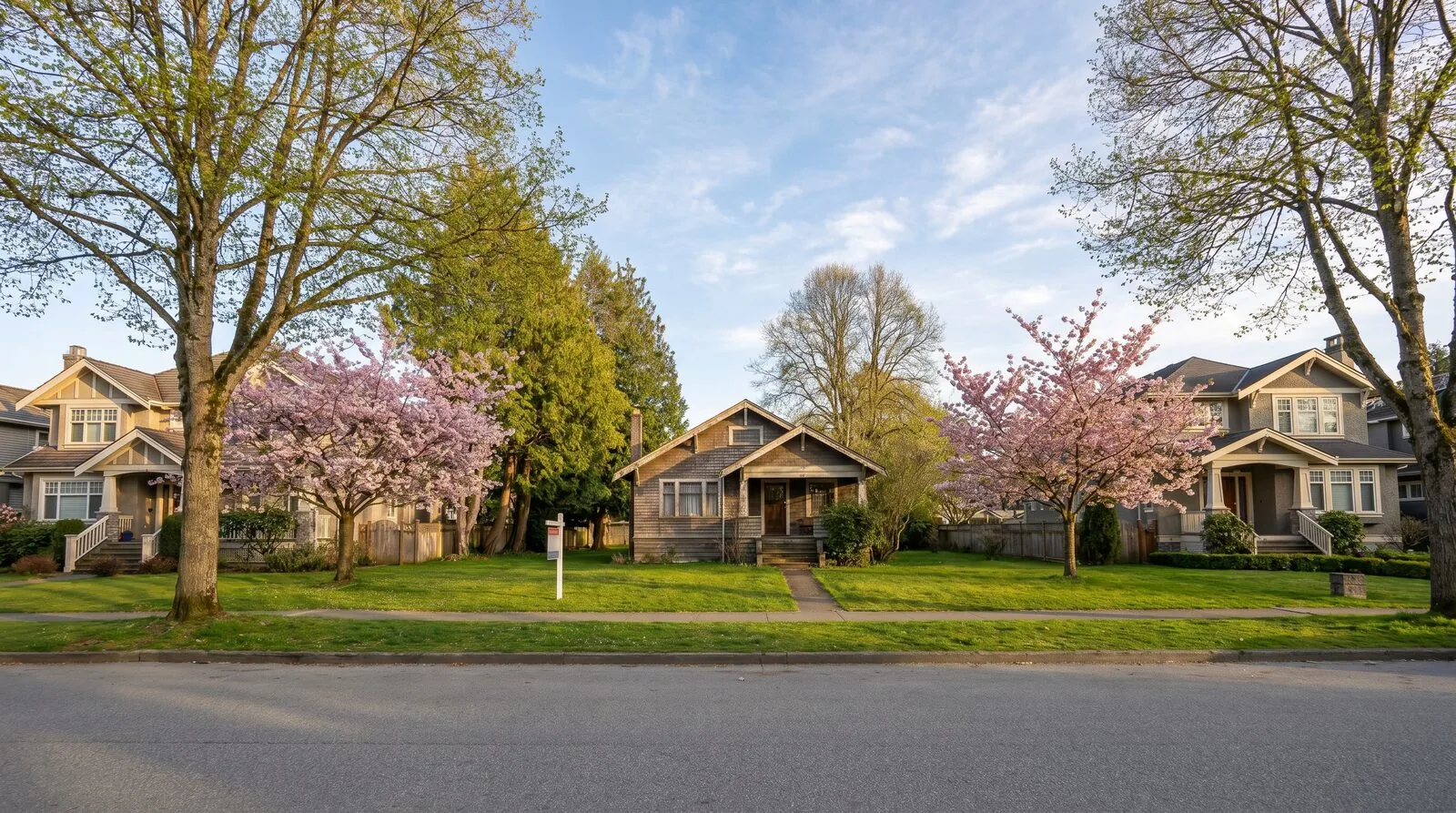

Vancouver West Side residential street with a 50 foot R1-1 lot at the center showing a 1926 house alongside a rendered five unit Bill 44 multiplex overlay representing a thesis converted into an underwritten investment position with limited partner economics and a break even price floor twenty four percent below current comparable sales
Investor Letters Featured

Being Right Has Never Paid a Dollar

David Babakaiff
David Babakaiff Co-Founder, VanPlex | 25+ Years BC Construction
6 min read

Field Notes Issue No. 008. A thesis is an opinion about the future; a position is money in the ground. I took a 50-foot Vancouver West Side R1-1 lot sitting on MLS right now, ran it through PlexRank and our full underwrite, and priced the difference — a 20-month build-to-sell with a 1.59x LP equity multiple and a break-even 24% below market.

Key takeaway

VanPlex Field Notes Issue No. 008, dated Saturday May 23 2026, by David Babakaiff, Co-Founder and CEO of VanPlex. The letter argues that after seven prior issues making the case that Bill 44 created a measurable land arbitrage on BC single-family lots — including Vancouver, Burnaby, City of North Vancouver, and Kelowna — believing the thesis without taking a position has produced zero financial return. To translate the thesis into a price, the author underwrote a publicly listed 50-foot Vancouver West Side lot, built 1926, zoned R1-1, supporting five units and approximately 7,465 buildable square feet. The lot was scored by PlexRank at 10 of 10, a Signature tier. The illustrative limited partnership economics for a 20-month build-to-sell project: $2,565,500 LP equity to fund land and closing, 9 percent preferred return, 60/40 LP/GP profit split above the pref, 1.59x equity multiple, 59.3 percent cash-on-cash, approximately 35.6 percent annualised, target IRR 42 to 46 percent. The capital stack is: LP equity in as land, senior construction loan funds the build, on sale the loan repays first, then equity returns, then the 9 percent preferred return, then 60/40 profit split — investor sits ahead of the promote. Stress testing: the project breaks even at $976 per buildable square foot; comparable sales average $1,282 per square foot with the lowest comp at $1,118; sale prices would need to fall approximately 24 percent below anything currently transacting before the project earns zero; an explicit bear case at prices down 15 percent still produces approximately $849,000 in profit; the 9 percent preferred return is paid before profit split. The underwriting includes a $116,454 density bonus charge that is set to shrink for permits issued after June 30, 2026, following Vancouver Council's May 5, 2026 vote to strip density bonus contributions for permits on or after that date. June 30, 2026 is also the date province-wide small-scale housing rules fully lock in; the Province has shown enforcement willingness, overriding West Vancouver by Order in Council in April 2026. The real clock on a top-tier lot is absorption, not a calendar date — organized capital is actively raising to buy these specific lots and a Vancouver competitor recently structured a multi-fund raise against an $87M project pipeline. The letter is not an offer; the lot is publicly listed; replying to subscribe to the deal short list commits the reader to nothing.

VanPlex Field Notes Issue 008 May 23 2026 David BabakaiffThesis vs position believing Bill 44 thesis paid nothing50 foot Vancouver West Side lot 1926 R1-1 five units 7465 square feetPlexRank 10 of 10 Signature tier scoringLimited partner equity 2565500 dollars funds land closing9 percent preferred return capital stack60 40 LP GP profit split above the pref1.59 equity multiple 20 month build to sell59.3 percent cash on cash 35.6 percent annualisedTarget IRR 42 to 46 percent multiplexCapital stack senior construction loan first equity pref splitBreak even 976 per square foot Vancouver West SideComparable sales 1282 average 1118 lowest comp24 percent below market break even floorBear case 15 percent down 849000 dollars profitDensity bonus charge 116454 dollars set to shrinkVancouver May 5 2026 Council vote density bonus removalJune 30 2026 small-scale housing rules lock inWest Vancouver Order in Council April 2026 overrideAbsorption clock 10 of 10 lot finite supplyVancouver competitor 87M project pipeline multi-fund raiseInvestor short list reply commits to nothing
field-notes investor-letter plexrank underwriting vancouver-west-side r1-1

VANPLEX FIELD NOTES — Saturday, May 23, 2026 — Issue No. 008

Most Saturdays before 7 AM Pacific, I share something I’ve been watching, measuring, or building. You’re getting this as an insider who registered for possible investment at vanplex.ca/investor.

For seven issues I’ve made an argument. Bill 44 opened a one-way door, the land hasn’t repriced, the gap is real and measurable. If you’ve read along, you probably believe it by now.

But believing it has paid you exactly nothing.

A thesis is an opinion about the future. A position is money in the ground. The two feel similar on a Saturday morning, but everyone who “knew” Bill 44 mattered in 2023 and did nothing is, financially, indistinguishable from someone who never heard of it.

So this week, no argument. I took a property sitting on MLS right now and ran it all the way through our underwriting to show you the difference between believing the thesis and pricing an actual position.

A listing anyone can see, priced the way we see it

A 50-foot lot on Vancouver’s West Side. Built 1926, R1-1, five units, ~7,465 buildable square feet. PlexRank scored it 10 of 10 — a Signature tier. I haven’t made an offer on it. I underwrote it. Here’s what a deal structured like this would hand a limited partner over a 20-month build-to-sell:

Illustrative LP economics
LP equity (funds land + closing)$2,565,500
Preferred return9%
Profit split above the pref60% LP / 40% GP
Equity multiple1.59x
Cash-on-cash59.3% over 20 months
Annualised~35.6% / year
Target IRR42–46%

Illustrative of how a deal like this would be structured — not an offer.

The structure is plain: equity goes in as the land, a senior construction loan funds the build, and when the units sell the loan is repaid first, then equity comes back, then the 9% preferred return — and only then is profit split 60/40. The investor sits ahead of the promote, not behind it.

Now let’s try to break it

A 1.59x is the kind of number a careful person should be suspicious of. So here’s the part most pitches leave out — the floor.
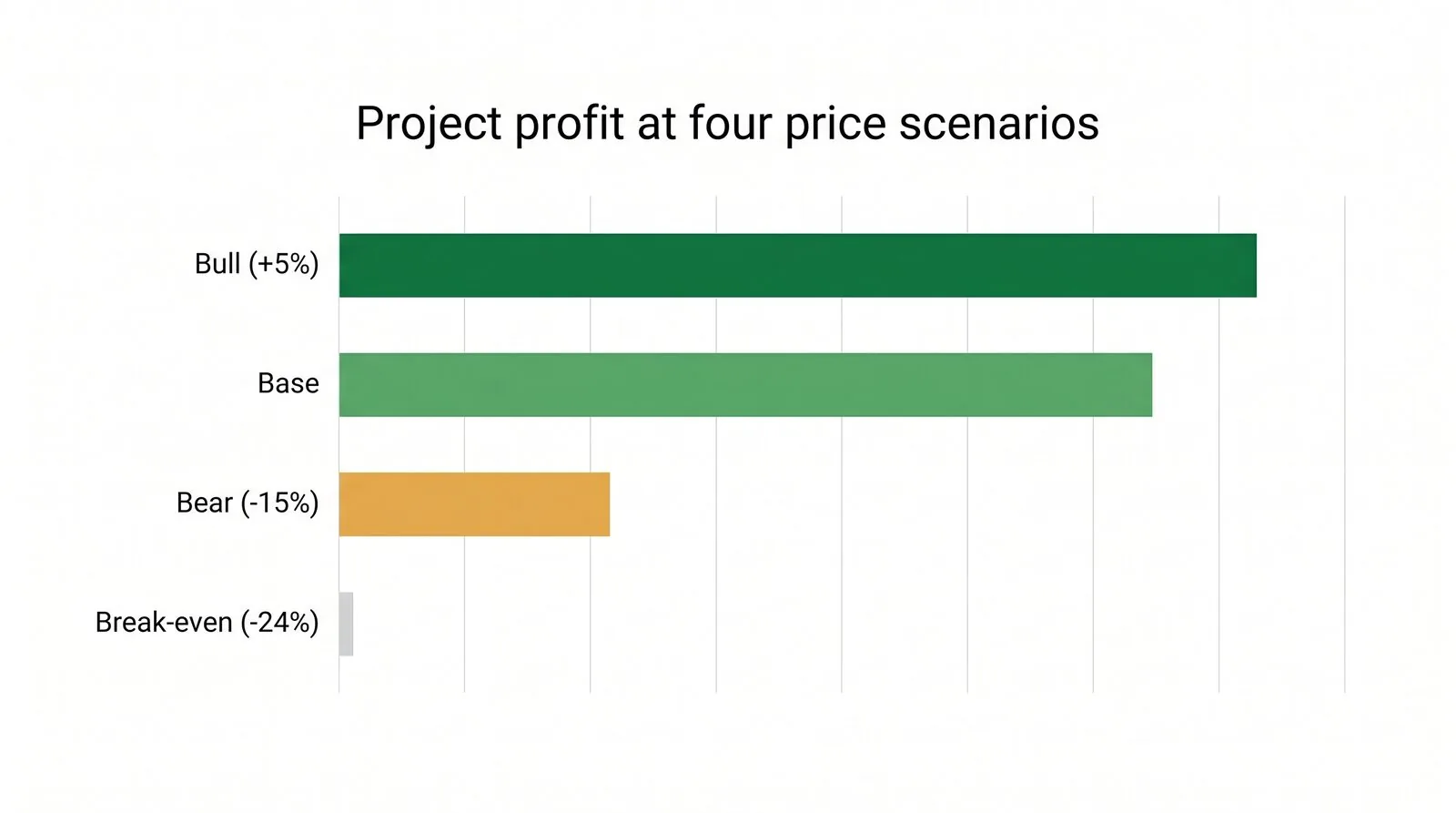
Bar chart of project return on equity at break-even, bear, base, and bull pricing for a Vancouver West Side multiplex underwrite showing the deal still produces profit at 15 percent below market and breaks even only at 24 percent below current comparable sales

This project breaks even at $976 per square foot for a nice Vancouver West property. It’s priced off comparable sales averaging $1,282, and the lowest comp in the data set is $1,118. Sale prices would have to fall roughly 24% — below anything currently transacting in that neighbourhood — before the project earns zero. Run the explicit bear case at prices down 15%, and it still produces about $849,000 in profit. And the 9% preferred return is the first money paid after the loan and capital are returned, so it sits in front of the part of the stack a soft market eats into first.

One more thing about that floor: the underwriting still carries a $116,454 density bonus charge. For a deal permitted after June 30, that charge is set to shrink — so the real floor is likely better than the one shown above.

The clock that actually applies

Two things converge on June 30. Province-wide, it’s the date the small-scale housing rules fully lock in, and the Province has shown it will enforce them. It overrode a resistant West Vancouver neighbourhood by Order in Council in April. And in Vancouver specifically, Council voted on May 5 to strip density bonus contributions for permits issued on or after that date. A West Side R1-1 deal acquired now would be permitted into the new, cheaper framework.

But the real clock on a lot like this isn’t a date. It’s absorption. A 10-of-10 lot doesn’t sit while organized capital is actively raising to buy exactly this. The best addresses are finite, and that’s the whole reason the arbitrage isn’t permanent.

How I’m thinking about it

If a deal only works when everything goes right, is it a deal or a bet dressed as one? This one breaks even 24% below market.

If you’ve believed the thesis for nine months and earned nothing from it, what is the belief worth until it becomes a position?

And when one of these clears our screen, what’s the actual difference between you and the investor who moves on it — other than being ready?

I’m asking these of myself too.

I don’t hold this lot. It’s public; you could go find it yourself. But finding it was never the work. Knowing it scores a 10, pricing the build, and structuring the capital so the floor sits 24% below market is the work. The next time a deal like this one clears our screen and we move to secure it, the only question that matters is whether you’re ready. If you want a first look when we do, just reply and I’ll put you on the short list. Replying commits you to nothing, and nothing here is an offer.

From the field this week

The example above is a real, currently-listed West Side property. I ran it through PlexRank to show the mechanics, not because we’ve tied it up. We’re also watching organized capital move in: a Vancouver competitor recently structured a multi-fund raise against an $87M project pipeline. That’s not a threat. It’s confirmation the window is real, and that the best lots are starting to get spoken for.

More next Saturday.

— David Babakaiff Co-Founder and CEO, VanPlex

You’re receiving this because you self-identified as an accredited investor on vanplex.ca and signed a Non-Disclosure Agreement. This communication is private and not intended for redistribution.
Free 12-page guide for Vancouver-area homeowners. Build, sell, hold, or partner — side-by-side comparison of the numbers, timeline, and risk on each path.

Verified phone required. We'll text you the link in 60 seconds.

David Babakaiff

David Babakaiff

Co-Founder, VanPlex | 25+ Years BC Construction

Building tools that help Vancouver homeowners unlock the multiplex opportunity. PlexRank has analyzed 100,000+ GVRD properties.

Want insights like this delivered weekly?

Join 2,500+ property owners getting ROI case studies, market data, and exclusive opportunities.

No spam. Unsubscribe anytime.

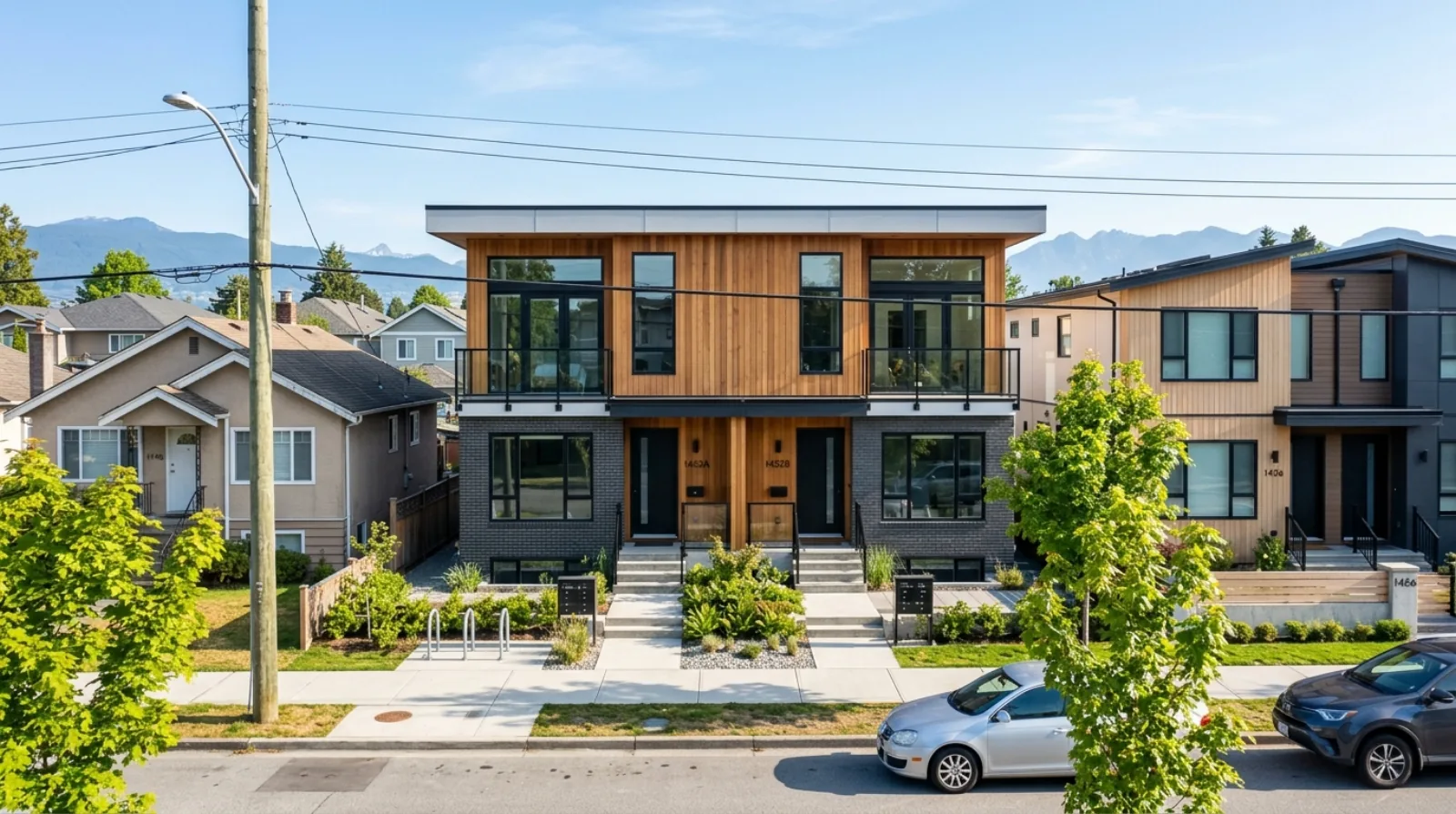
A newly completed ground-oriented Vancouver fourplex multiplex on a standard residential lot, framed as an investment-grade asset
6 min read

Multiplex Housing Is an Asset Class, Not a Project

A lot zoned for six homes can still lose money. Bill 44 gave hundreds of thousands of BC lots new capacity, but newly enabled land is not investment-grade land. Why serious capital should treat multiplex housing as an emerging asset class — filtered at scale, underwritten the same way every time — not a set of one-off projects.

Investment
multiplexasset-class+7
By David BabakaiffCo-Founder, VanPlex | 25+ Years BC Construction
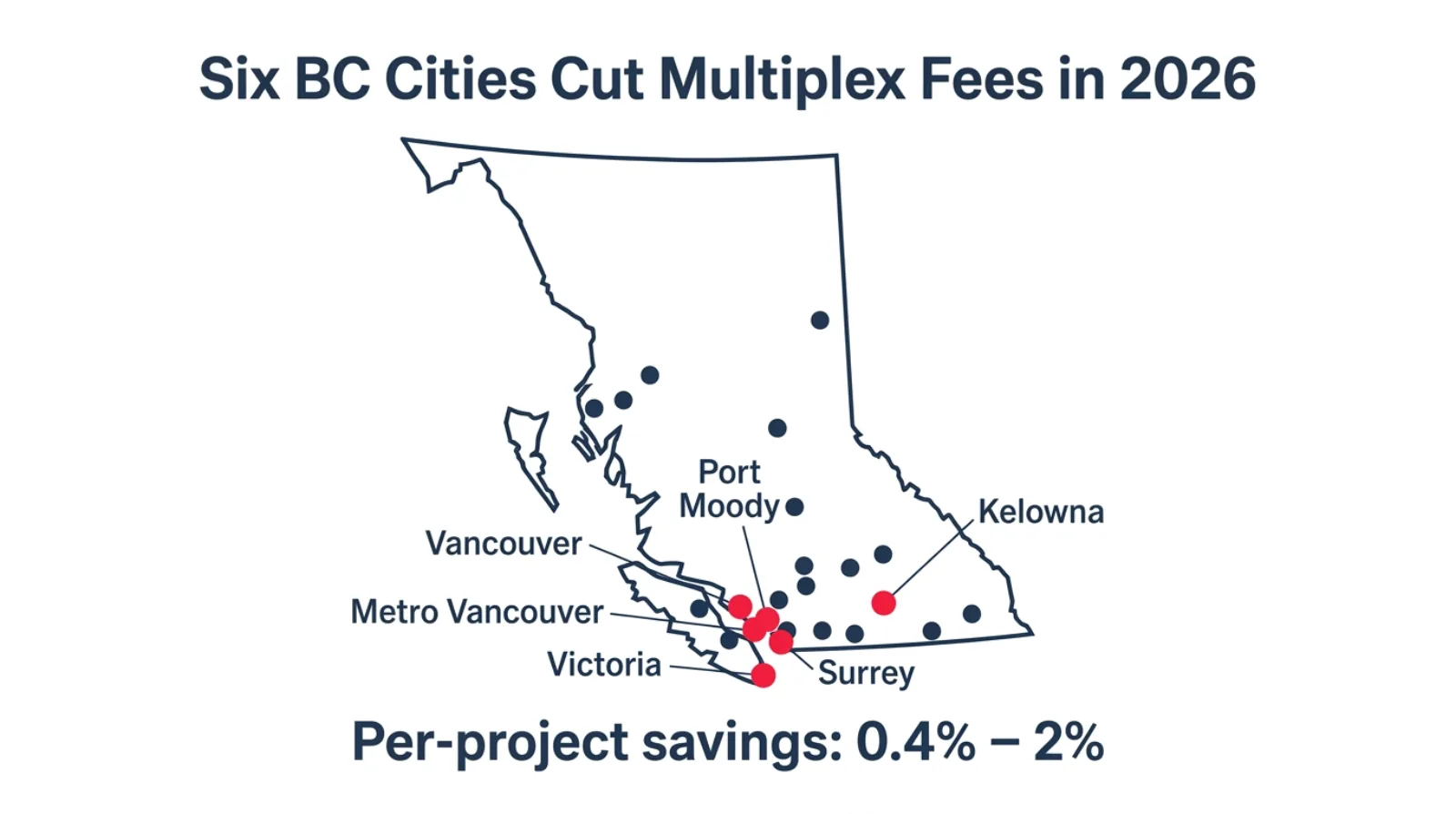
Map of British Columbia highlighting six jurisdictions that cut multiplex development fees in 2026 — Surrey, Vancouver, Metro Vancouver, Victoria, Port Moody, and Kelowna — overlaid with a per-project savings band of 0.4 to 2 percent against a backdrop of a Vancouver four-plex under construction
Featured
9 min read

Six BC Cities Cut Multiplex Fees in 2026. Math = 1%.

Surrey, Vancouver, Metro Van, Victoria, Port Moody, and Kelowna have all moved on multiplex fees in 2026. Stack every program a Vancouver builder can claim and per-project relief lands at roughly 2% of total cost. Thirteen GVRD cities haven't moved at all.

BC Housing Policy
multiplex-feesdcc+12
By David BabakaiffCo-Founder, VanPlex | 25+ Years BC Construction
Vancouver city hall with a residential street of newly built multiplex buildings, framing Council Motion 9 to review the city's multiplex housing policies after three years of implementation
Featured
8 min read

600 Projects In, Vancouver Reviews Multiplex Rules

On May 20, 2026 Vancouver Council passed Motion 9, directing staff to run an expedited review of the city's multiplex policies — three years and 600-plus project submissions into the program. Co-submitted by Councillors Zhou and Meiszner, the review must also align Vancouver's rules with provincial Bill 25 and look at massing, height, lot coverage, tree retention, and views. What it means if you're underwriting a multiplex today.

Policy Analysis
vancouvermotion-9+9
By David BabakaiffCo-Founder, VanPlex | 25+ Years BC Construction