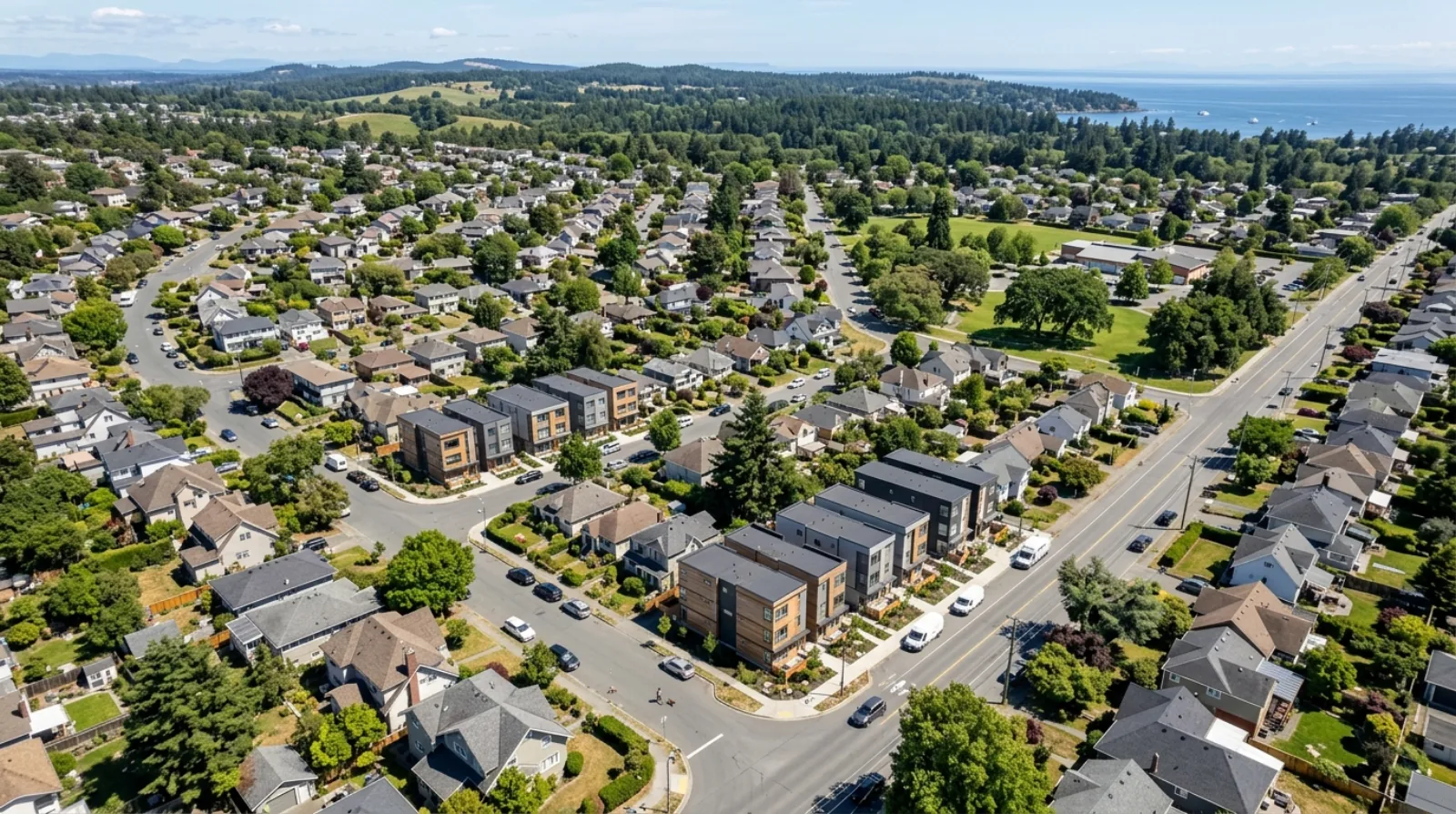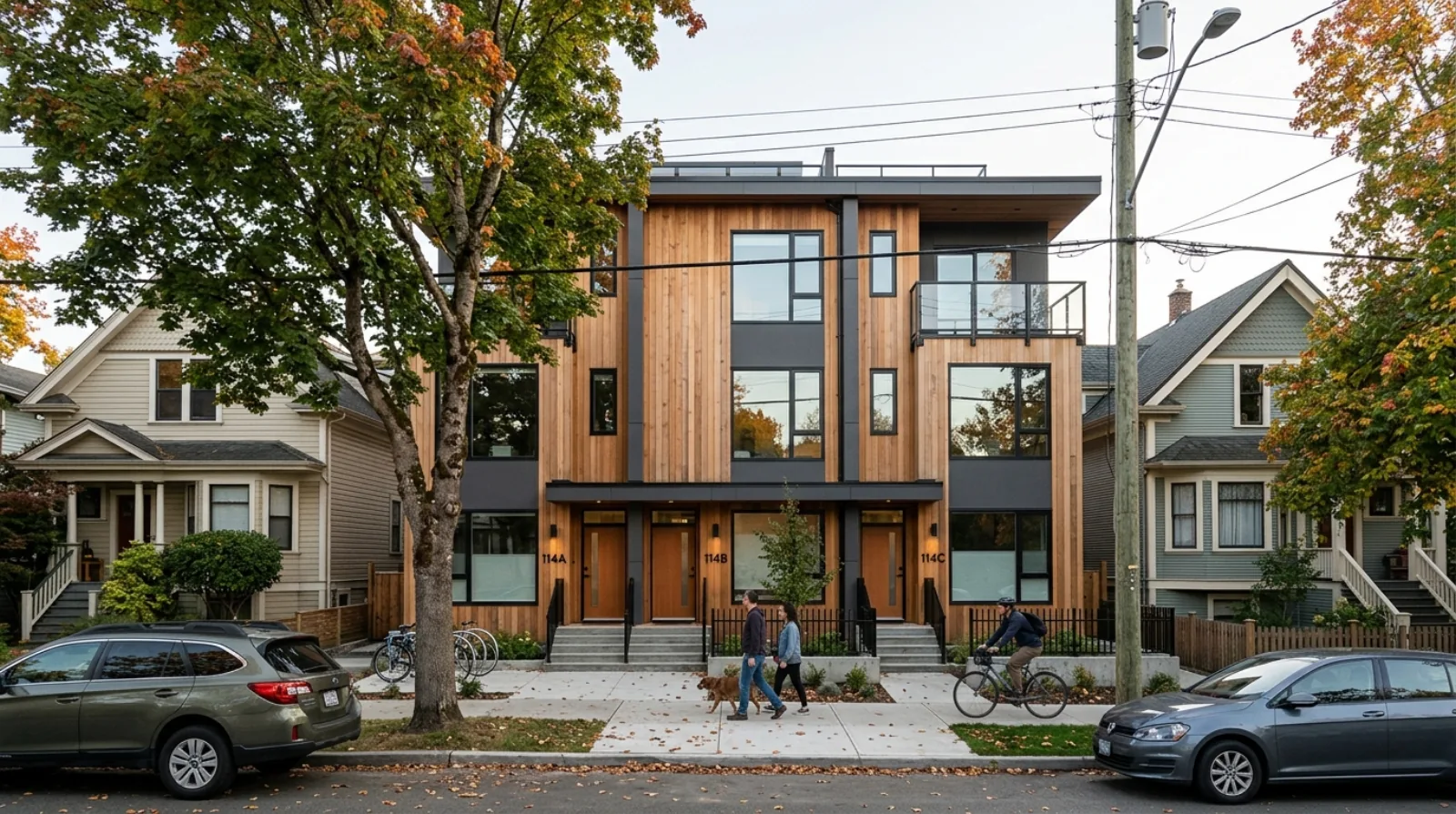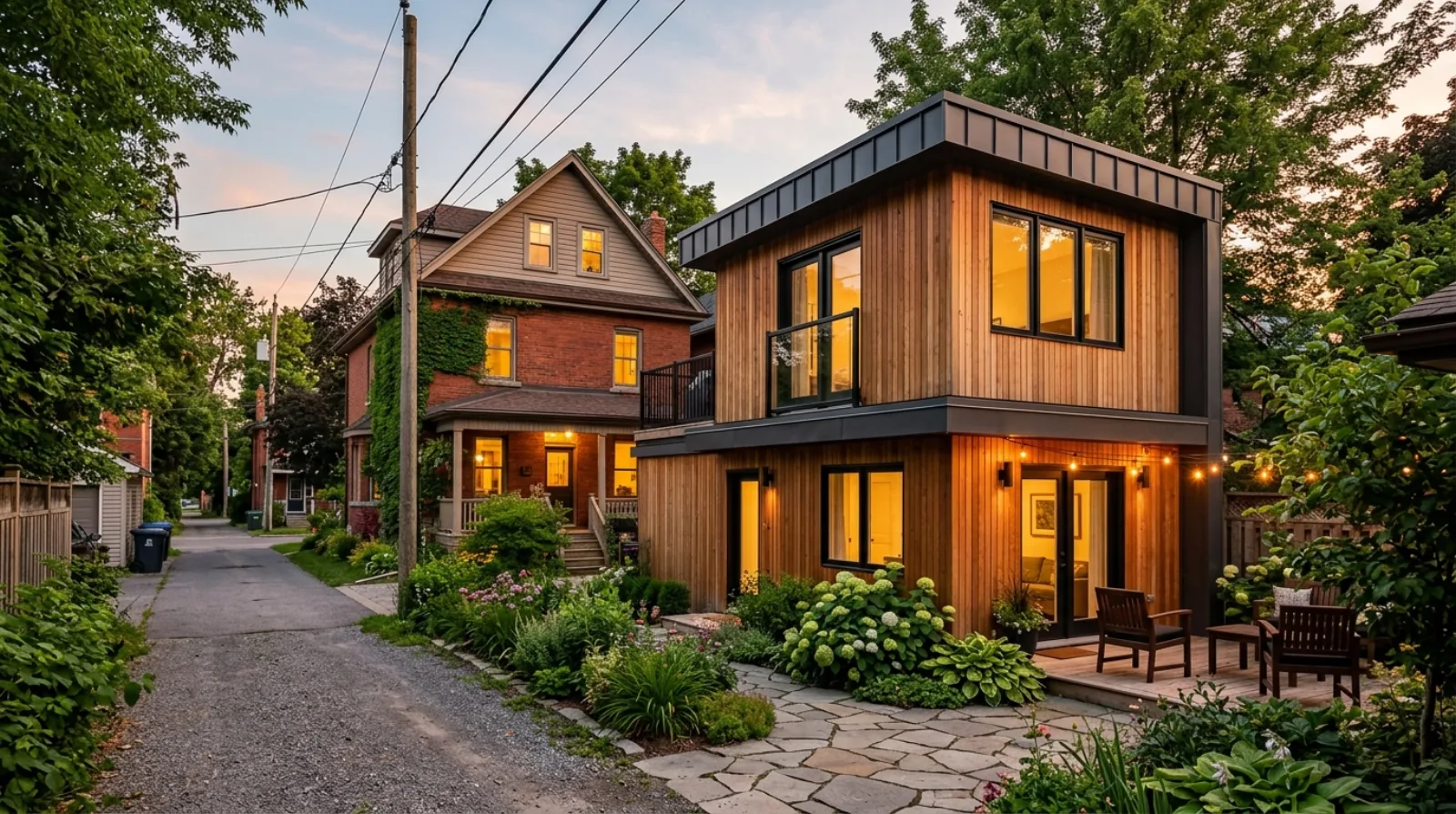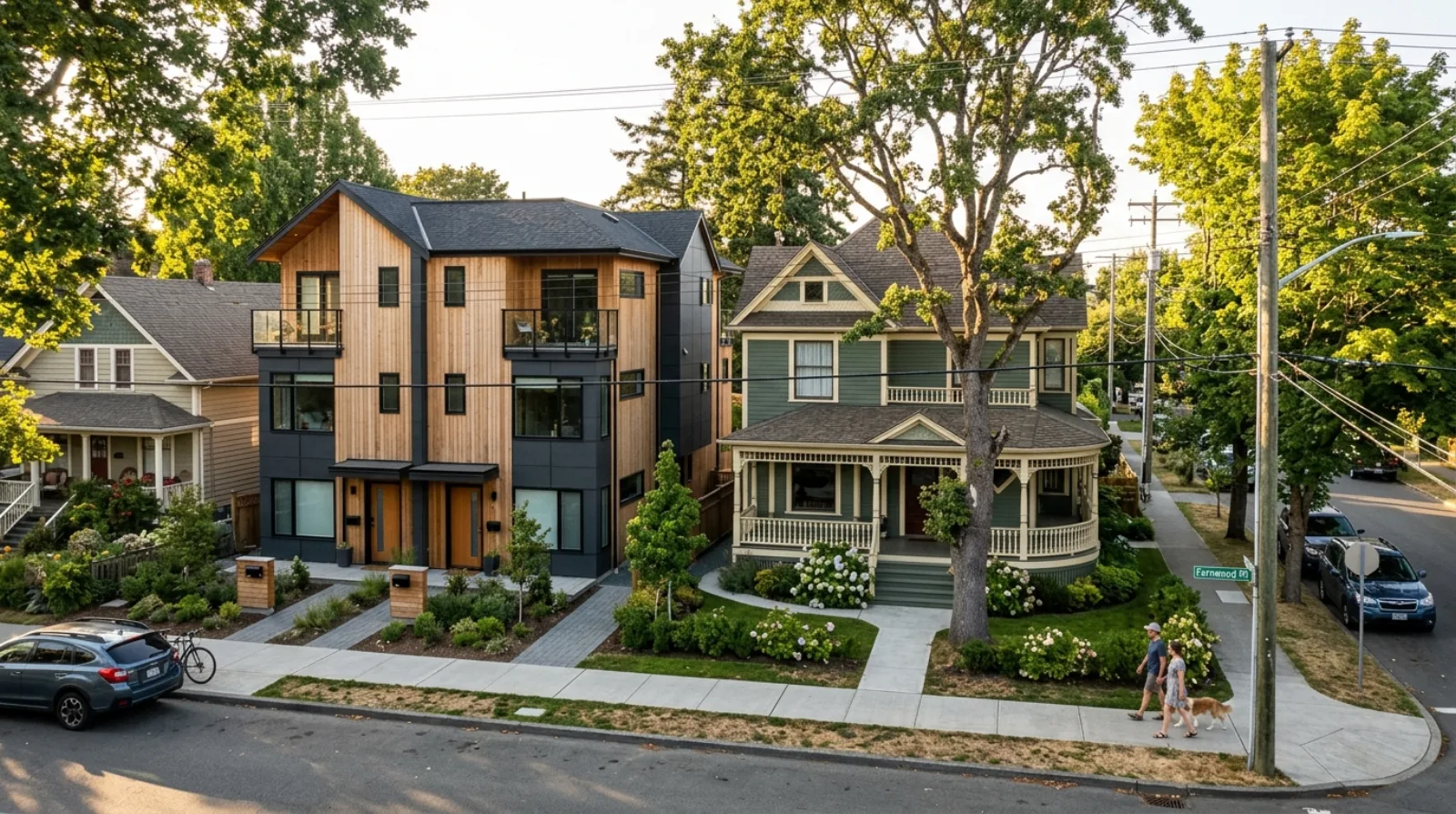

The fear about missing-middle housing in Victoria’s oldest neighbourhoods is that it means knocking down the Queen Anne and the Edwardian four-square to put up boxes. The bylaw was written to do the opposite. In Fernwood and James Bay, the smart move is often to keep the old house — and the rules pay you to do it.
TL;DR
- Victoria’s Schedule P rules give heritage-conserving infill a 1.1 floor space ratio — higher than the 1.0 standard houseplex ratio.
- That means keeping a heritage building and adding units around it earns more buildable area than a teardown-and-rebuild would.
- Fernwood and James Bay carry deep stocks of pre-1914 homes where this approach fits best.
- Heritage status is a separate permit layer — confirm a property’s status with the City early, because it changes both the rules and the incentives.
- For four-plus-unit projects, design review weighs fit with the surrounding character homes.
The incentive most owners miss
Victoria’s Missing Middle rules set the standard houseplex floor space ratio at 1.0. But for heritage-conserving infill — new units added to a lot while conserving a heritage building on it — the Schedule P ratio is 1.1.
That gap is the point. The City is rewarding conservation with more buildable area than demolition gets. In a neighbourhood where the old house is half the reason people want to live there, that aligns the financial incentive with the neighbourhood’s character.
Why Fernwood and James Bay
These two neighbourhoods are where the heritage question is sharpest.
Fernwood grew up around a streetcar line, with western blocks built in the 1890s and most of the east end built in the 1907–1913 boom. The result is a dense stock of Queen Anne, Italianate, and Edwardian homes on a regular grid about 1.5 km from downtown.
James Bay is older still — residential since the 1850s, often called the oldest residential neighbourhood on the West Coast north of San Francisco. It holds well-preserved Victorian-era homes a short walk from the Inner Harbour. One caution specific to James Bay: parts of it are denser than the four low-density Missing Middle zones, so confirm a lot’s Traditional Residential designation before assuming eligibility.
Retention is a design strategy, not just a constraint
Keeping the heritage home changes how you site the new units. Instead of a single building filling the lot, you are working around an existing structure — often placing the added units behind or beside it. That is more design work, but it is also what earns the higher FSR and what clears design review in a character neighbourhood.
For a houseplex of four or more units, the development permit reviews the design against the General Urban Design Guidelines, which weigh massing, materials, and how the project sits next to its neighbours. In Fernwood and James Bay, that review takes the surrounding Victorian stock seriously. A design that respects the block moves faster.
Confirm heritage status first
Here is the trap. “Older” and “heritage-designated” are not the same thing. A formally designated or registered heritage building carries its own protections and permit requirements on top of the zoning. That can be an asset — it is what unlocks the conserving-infill incentive — but it also adds process.
So before you design anything, confirm the property’s exact heritage status with the City. It changes what you can do, what incentives apply, and how the permit runs. Our heritage and character page covers the interaction in more detail.
The bottom line
In Victoria’s oldest neighbourhoods, the houseplex was not designed to erase character — it was designed to add homes while keeping it. The 1.1 FSR for heritage-conserving infill means the bylaw will give you more building for keeping the old house than for tearing it down. In Fernwood and James Bay, that is usually the better project anyway.
Start with the Victoria Multiplex hub, or read the heritage and character page.