
For most of our parents’ lives, homeownership came with one simple promise. Buy a home. Live in it. Keep it long enough, and it will be worth far more than you paid.
That promise was not foolish. For millions of Canadians, it worked.
But the last ten years in Metro Vancouver tell a different story, and it is one almost nobody is doing the math on.
The ten-year math nobody runs
Here are the two numbers most homeowners know.
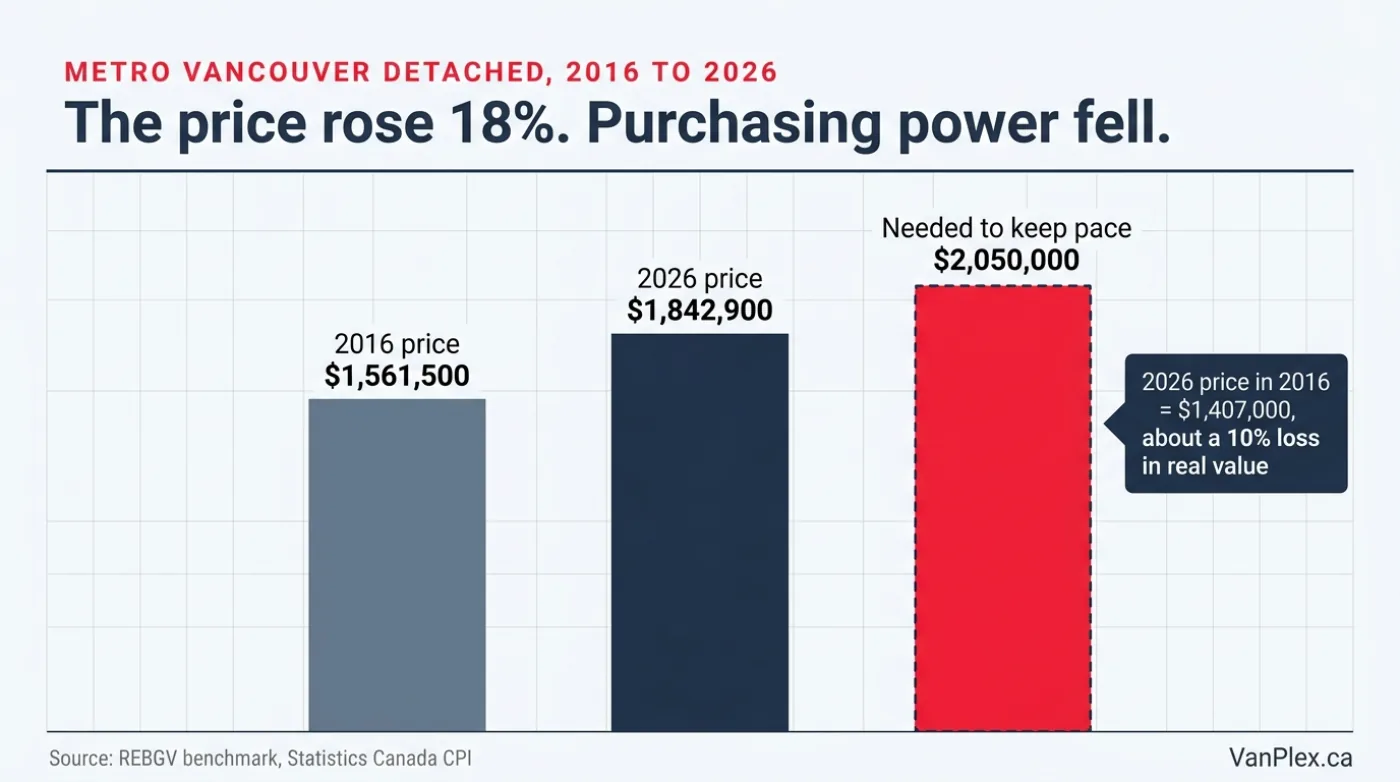
In June 2016, the benchmark price of a detached home in Metro Vancouver was about $1,561,500. By June 2026, it had reached $1,842,900.
That looks like a gain of $281,400, or 18%. On paper, the homeowner came out ahead.
But prices for everything else were rising too. Groceries, fuel, insurance, a plumber’s hourly rate, a coffee. Canada’s Consumer Price Index climbed about 31% over those same ten years. So a 2016 asset worth $1,561,500 needed to reach roughly $2.05 million by 2026 just to buy the same basket of goods it could buy before.
The actual benchmark price was about $1.84 million. That is a shortfall of roughly $200,000 against inflation.
Put it the other way around. Take the 2026 price and strip out inflation:
$1,842,900 divided by 1.31 equals about $1,407,000 in 2016 dollars.
Compared with the original $1,561,500, the detached home lost about 10% of its real purchasing power. And that is before you count a single dollar of mortgage interest, property tax, insurance, maintenance, renovation, or the cost of eventually selling.
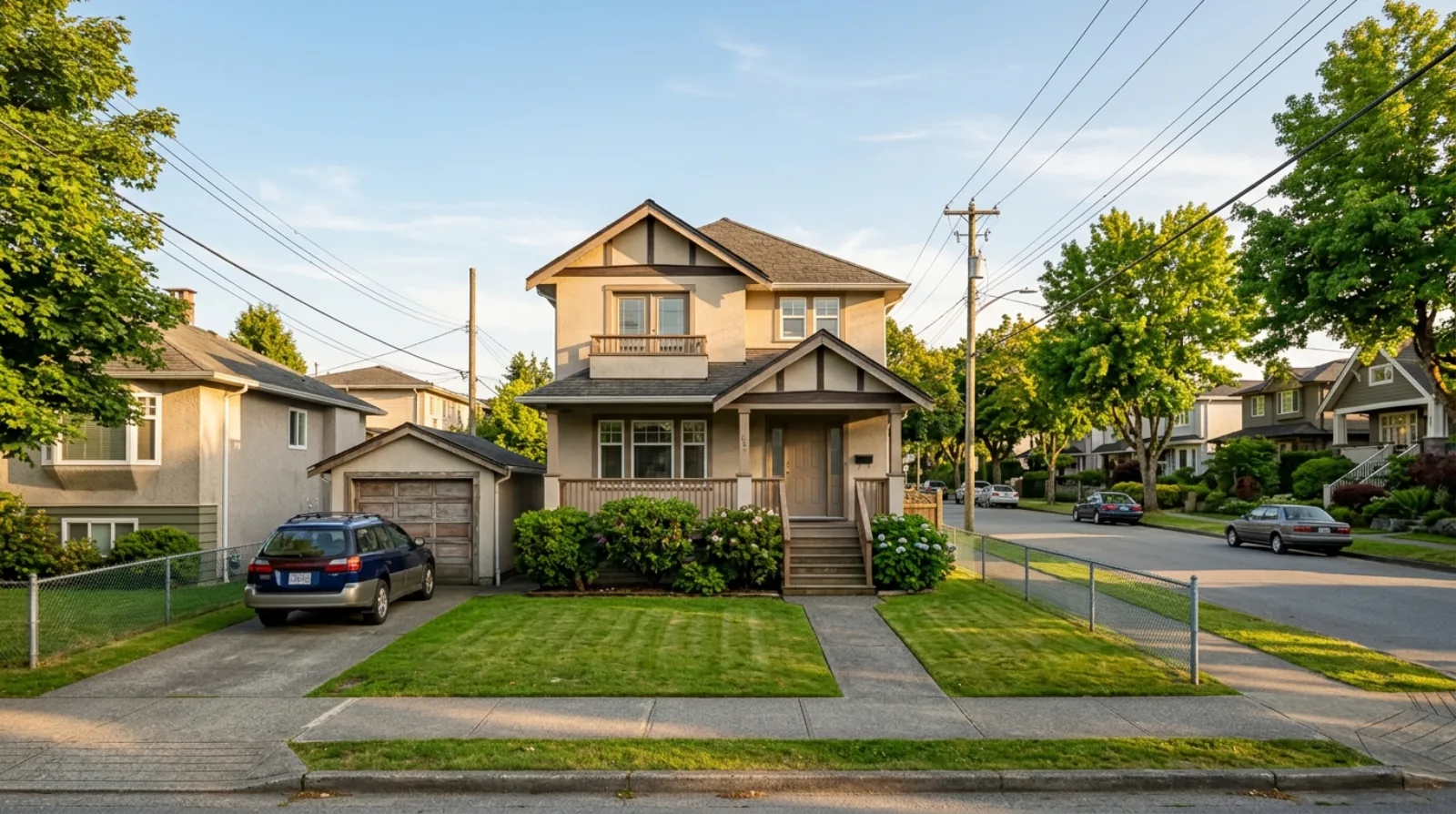
The homeowner still got something real: ten years of shelter, a place to raise a family, a home. That has enormous value. But measured as an investment, the benchmark detached house did not hold its real economic value over the decade.
Apartments held up better. The benchmark Metro Vancouver apartment rose from about $501,100 to $695,200, a nominal jump of nearly 39%. After inflation, though, that is only about a 6% real gain across the entire decade, and that is before ownership and transaction costs eat into it.
The lesson is hard to ignore. A price going up is not the same as wealth going up.
Why the next ten years are harder to bet on
Now think about the ten years ahead.
2016 was not a calm year either. The Brexit vote had just happened. Donald Trump was running for president. The war in Syria was grinding on. Commodity markets had lurched. There was plenty of uncertainty.
What is different in 2026 is the number of big systems all moving at once.
War and geopolitics. The world now carries several long-running conflicts and constant pressure across Europe, the Middle East, and the Indo-Pacific. Energy routes, supply chains, defence budgets, and alliances now feed directly into household costs. The International Monetary Fund describes the global economy as running through war, geopolitical fragmentation, and repeated shocks.
Tariffs and trade. In 2016, open global trade was still the default. In 2026, tariffs and industrial policy are back as everyday economic tools. The IMF reports that trade-policy uncertainty has hit record levels in recent years. For a Canadian homeowner this is not abstract. Construction materials, jobs, interest rates, business confidence, and the Canadian dollar all move with the Canada and United States trading relationship.
Political division. Disagreement is not new. The intensity is. The V-Dem Institute’s Democracy Report 2026 finds that nearly a quarter of the world’s countries were sliding toward more authoritarian rule in 2025, with 44 countries getting worse. That left-versus-right split increasingly drives housing policy, taxes, immigration, infrastructure, and whether governments keep long-term commitments.
Artificial intelligence and jobs. In 2016, AI was a specialist tool. In 2026, it is starting to change how professional, administrative, technical, and creative work gets done. The World Economic Forum’s Future of Jobs Report 2025 estimates labour-market churn could touch 22% of current jobs by 2030. It also projects large job creation, but 40% of the employers it surveyed expect to cut staff where AI can do the work. The transition itself adds uncertainty around income, careers, and where people choose to live.
Predictability itself. The 2016 buyer could reasonably expect low inflation, cheap borrowing, and a more connected world. The 2026 buyer is deciding after a pandemic, a fast inflation cycle, sharp rate swings, supply-chain breaks, and rising government debt.
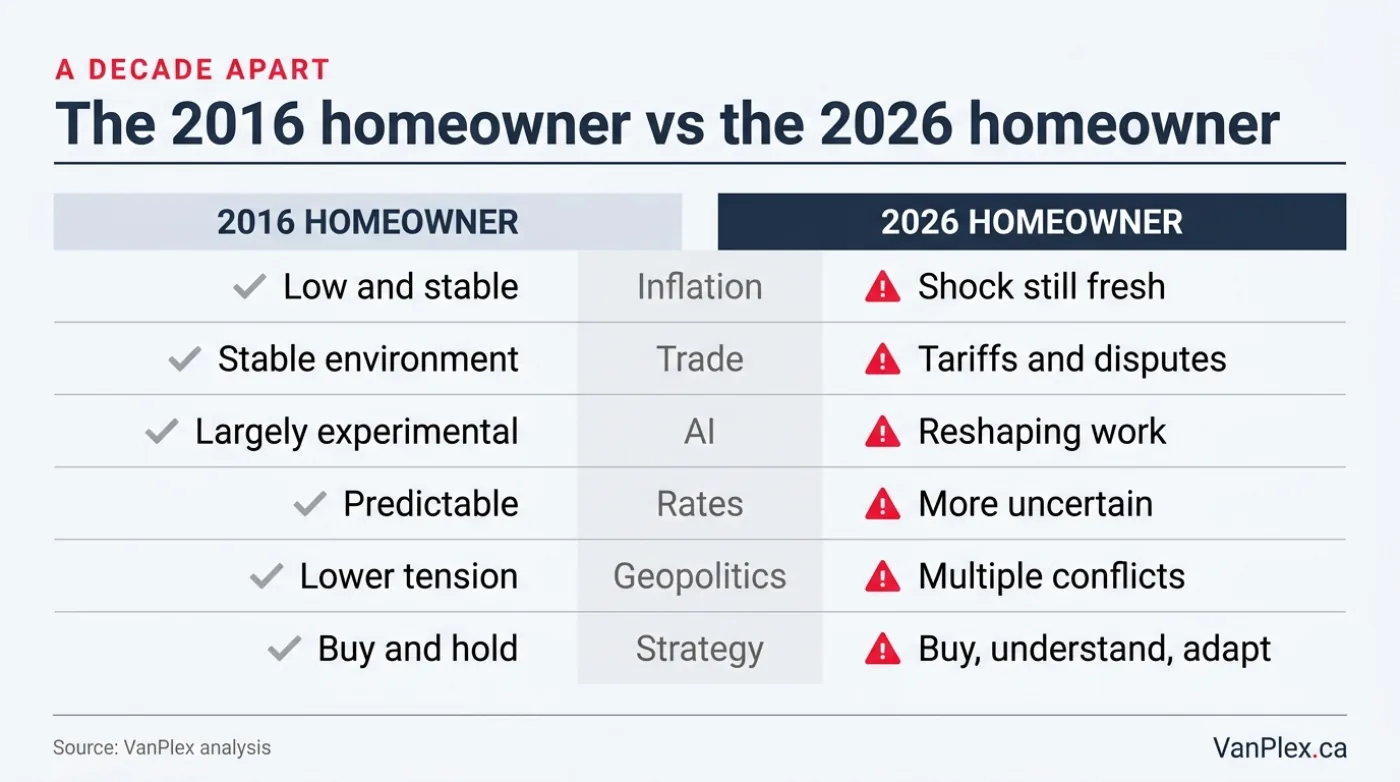
The point is not that everything will get worse. It is that the range of things that could happen has gotten wider.
The homeowner’s new job
The old strategy was mostly patience. Buy a good property. Maintain it. Wait.
That worked because land was scarce, the population kept growing, borrowing costs stayed low or fell, and prices kept climbing. Those forces did the heavy lifting. The owner just had to hold on.
The next decade may ask for something more active. Homeowners should actually understand:
- what their property is legally allowed to become
- whether more homes could be added to the lot
- how zoning changes move its value
- whether the existing house is really the best use of the land
- how rental income could strengthen the household
- and whether the property can adapt as family, money, and market conditions shift
A detached home can be a wonderful place to live without automatically being a strong investment. The last decade proved those two things are not the same. The next decade may make that difference impossible to ignore.
The strategy is no longer just buy and hold. It is understand what you own, understand what it can become, and use it to protect your family through a less predictable future.
A different option for some lots
Not every property can create new value through redevelopment. Some can.
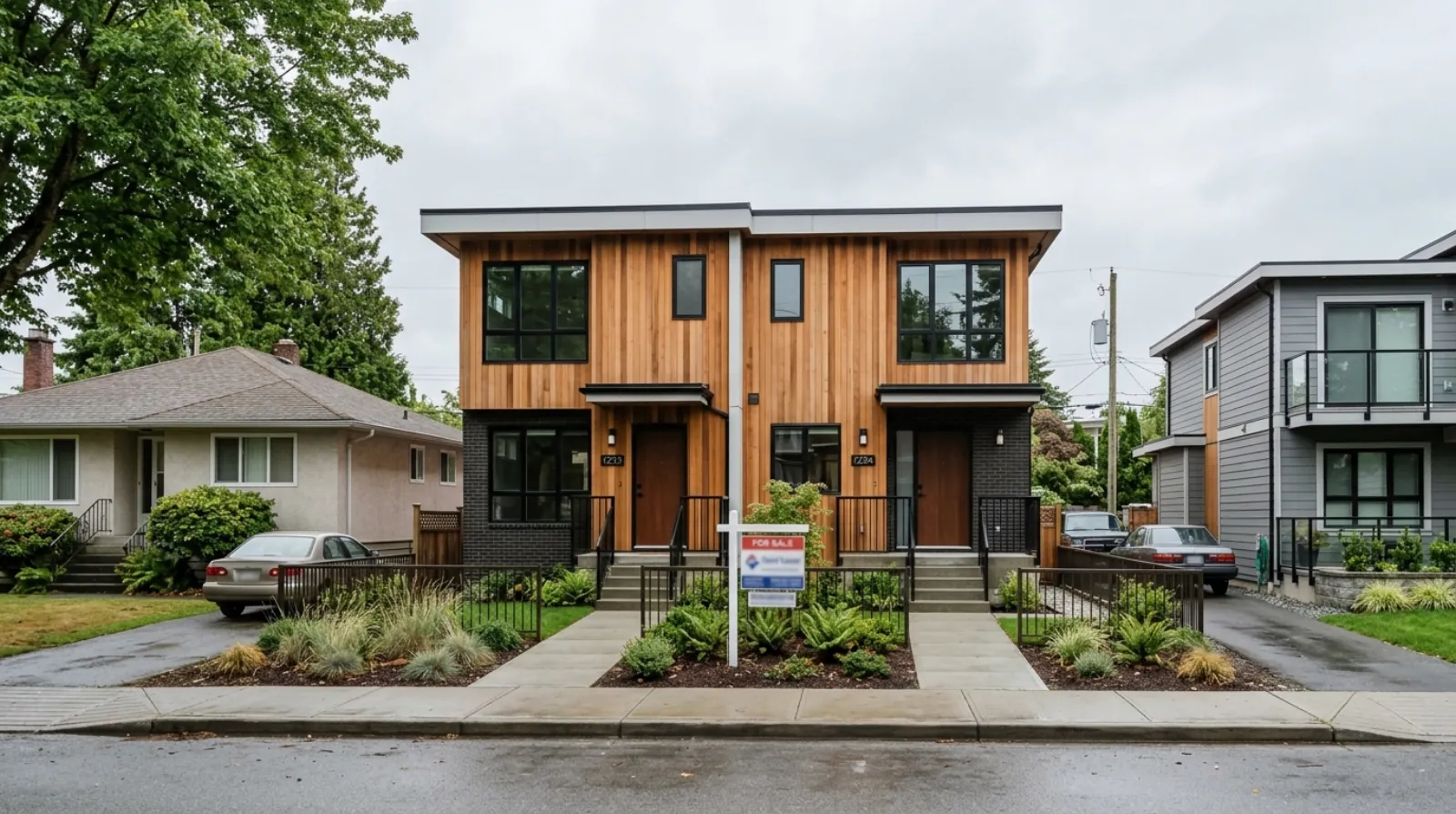
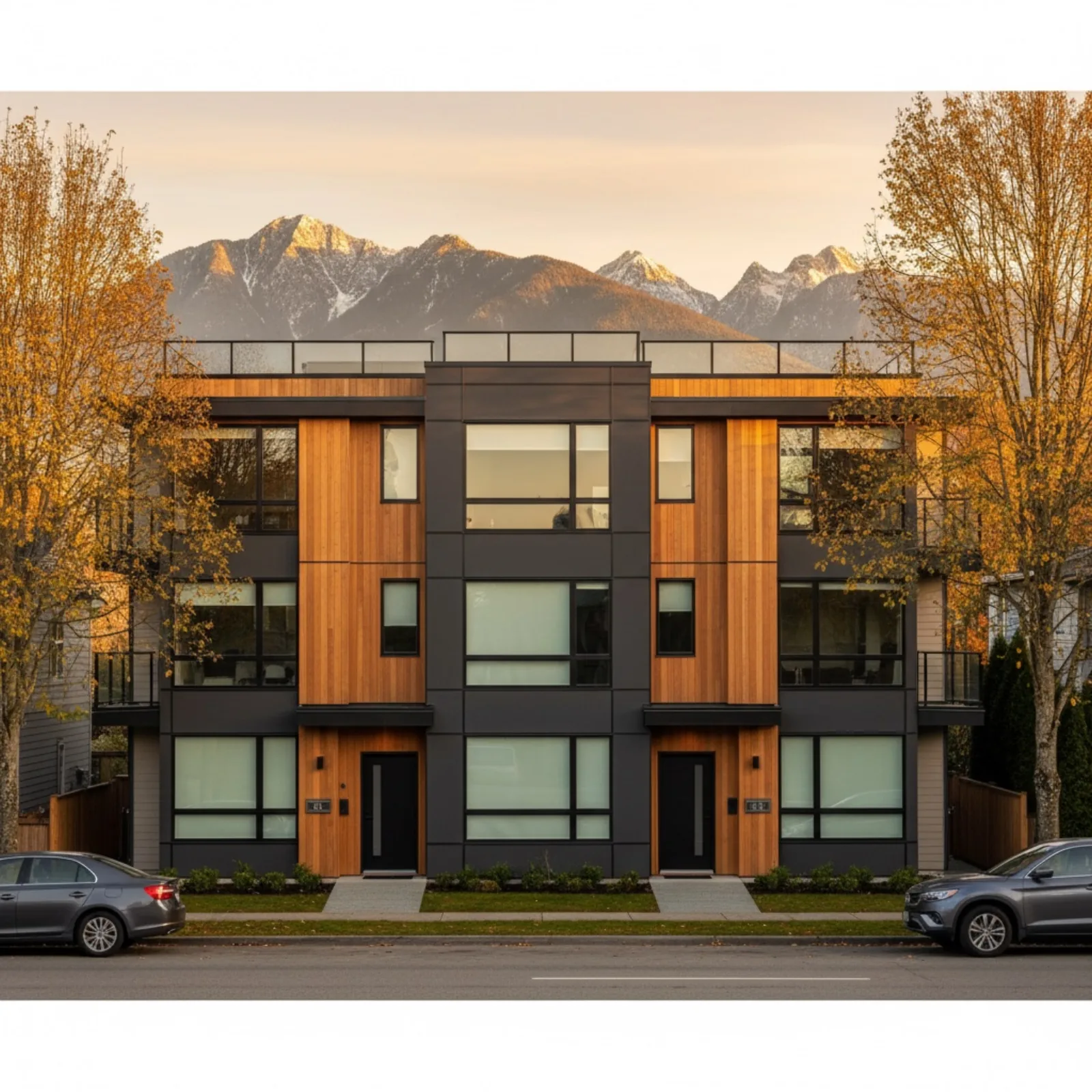
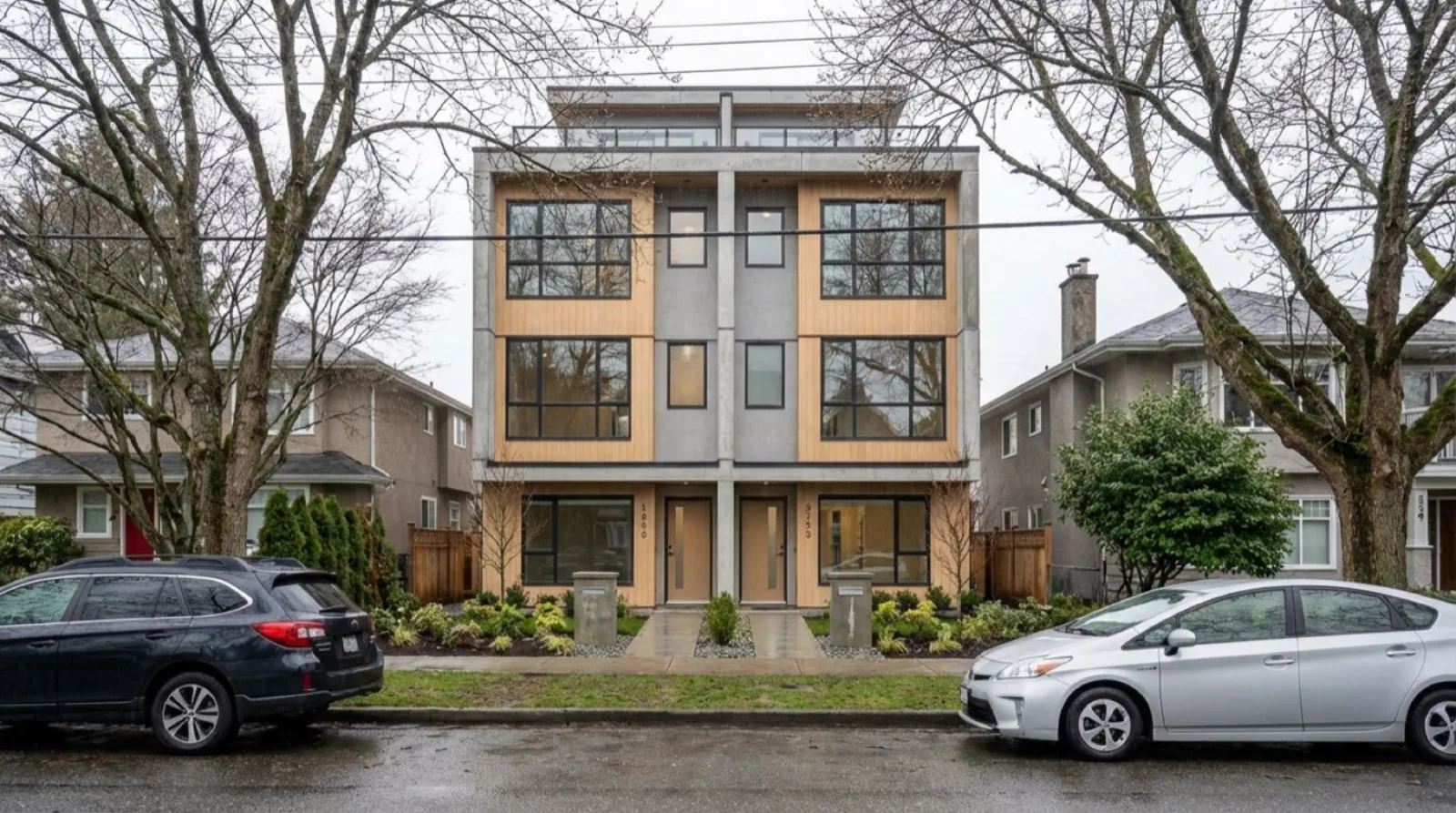
If your lot scores 10/10 on the VanPlex Multiplex Score, you may already own one of the more valuable housing assets on your street. Not because of the house standing on it today, but because of what the land is allowed to support tomorrow.
For those owners, the conversation changes. It moves from protecting wealth to building it. A well-planned multiplex can add new equity, produce rental income, house family members, or give you a way to age in place while raising the long-term value of the property. Under BC’s SSMUH rules, a lot that once allowed one house may now allow four to six homes.
It starts with knowing what your specific lot can do. You can check where your property stands at VanPlex.ca with the advanced proforma calculator, and the investment overview walks through the return math. It takes about two minutes.
Common questions
Did Vancouver homes really lose value over the last decade? Not in dollar terms. The benchmark detached price rose 18% between June 2016 and June 2026. But after adjusting for about 31% inflation over the same period, the real purchasing power of that home fell roughly 10%, before any ownership or selling costs.
Were condos a better hold than houses? By this measure, yes. The benchmark apartment rose nearly 39% nominally, which works out to about a 6% real gain after inflation across the decade, still before costs. That beat detached, which lost real value.
Does this mean I should sell my house? No. A home you live in provides shelter and stability that a spreadsheet does not capture. The point is to stop assuming price growth alone builds wealth, and to look at whether your land can do more, such as adding rental homes through a multiplex.
How do I know if my lot qualifies for a multiplex? Run your address through the VanPlex Multiplex Score and proforma tools. A high score means the land likely supports four to six units under current zoning, which can change the entire investment picture.
If this hit a nerve, especially if you have been sitting on a property and assuming time alone would do the work, I would like to hear where your thinking is. The last ten years quietly changed the rules. The next ten will reward the owners who understand exactly what they hold.
David Babakaiff | Co-Founder, VanPlex