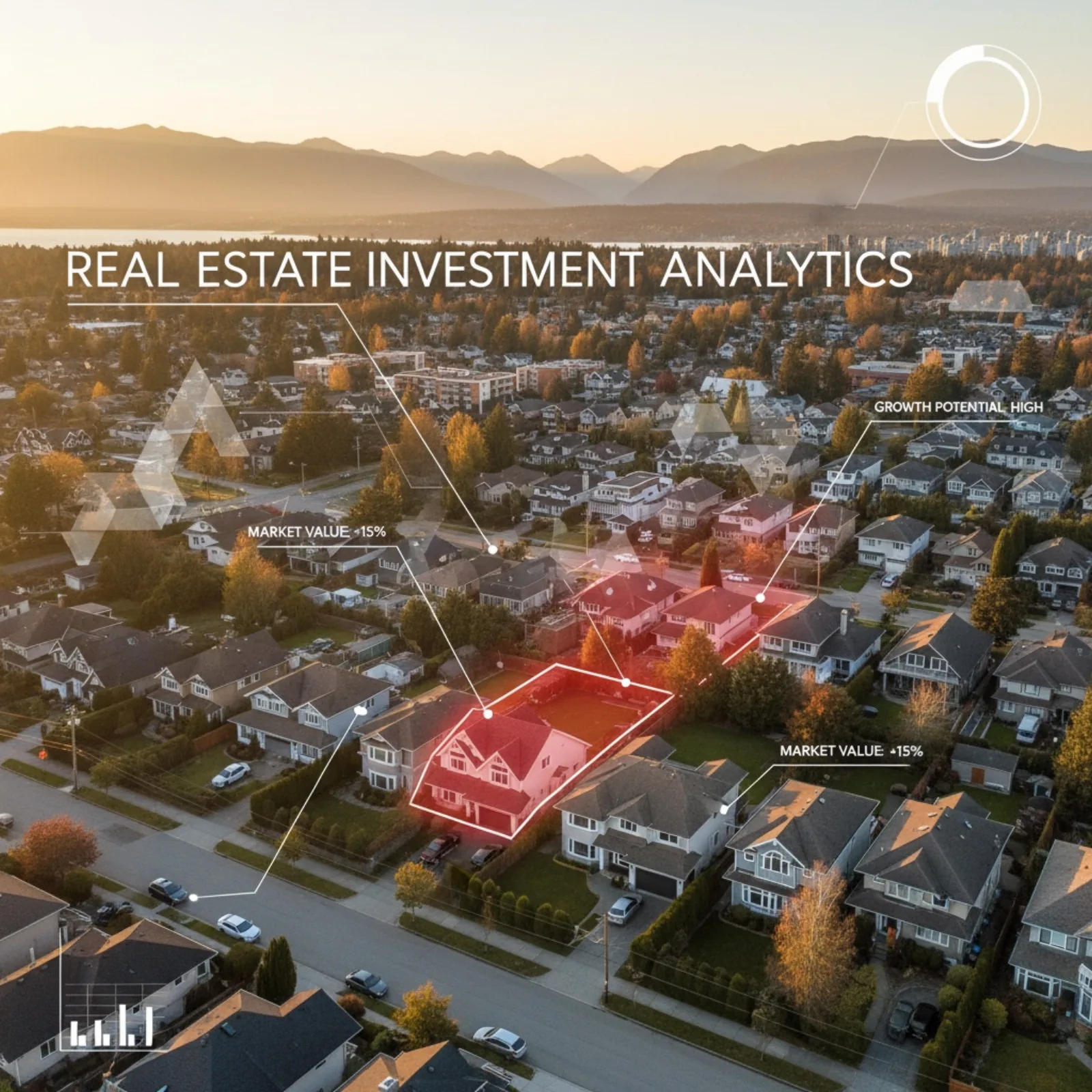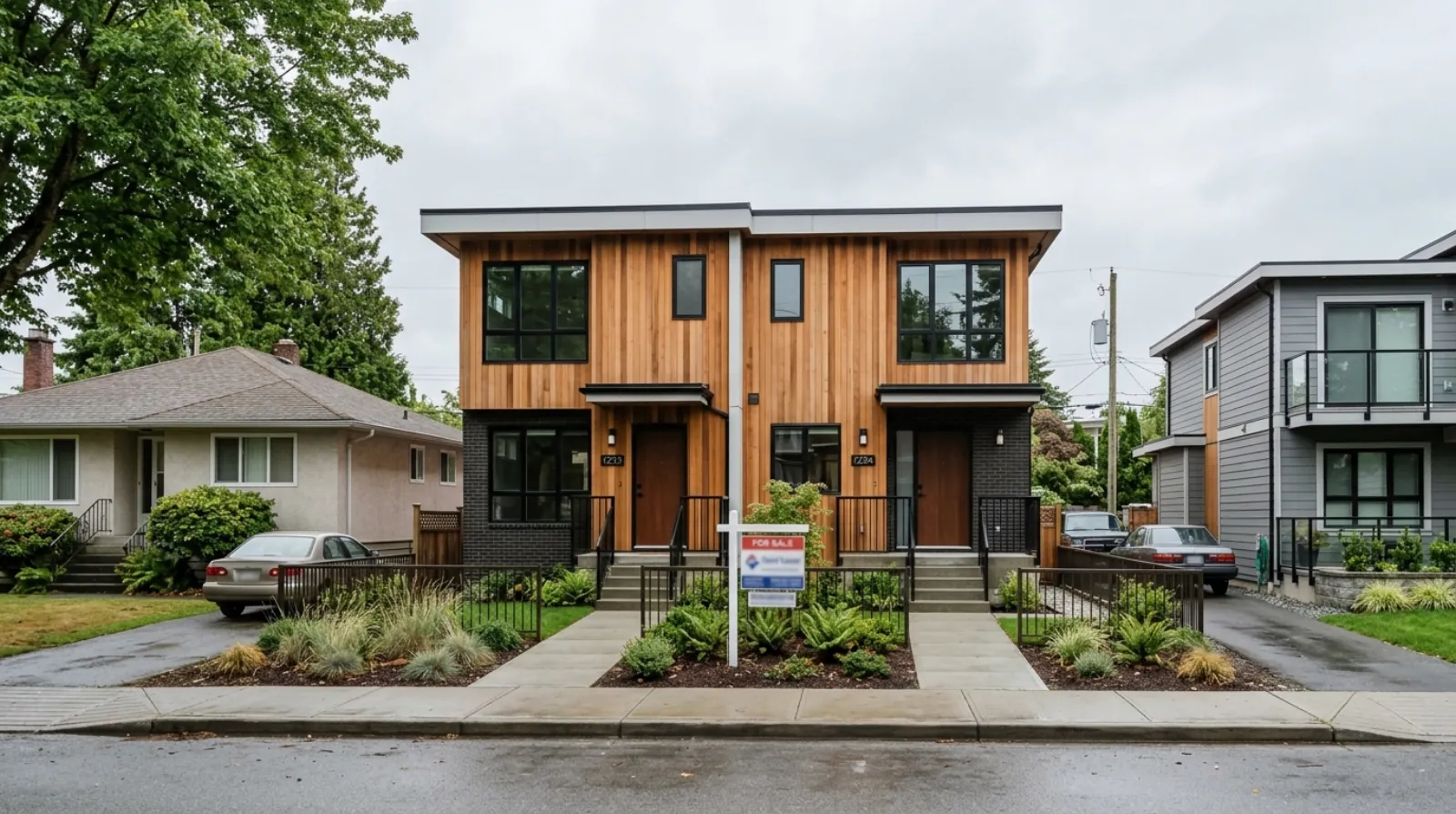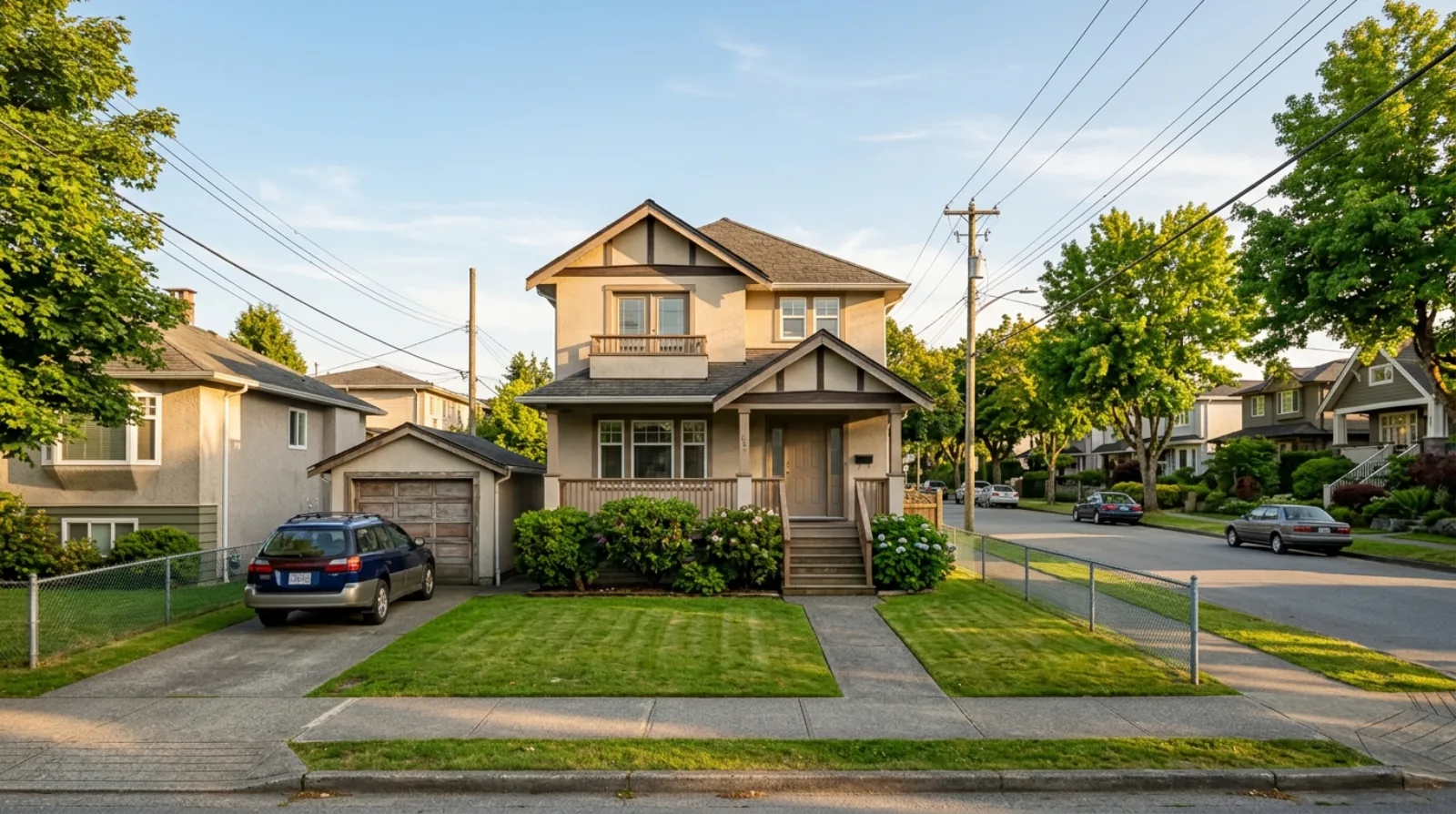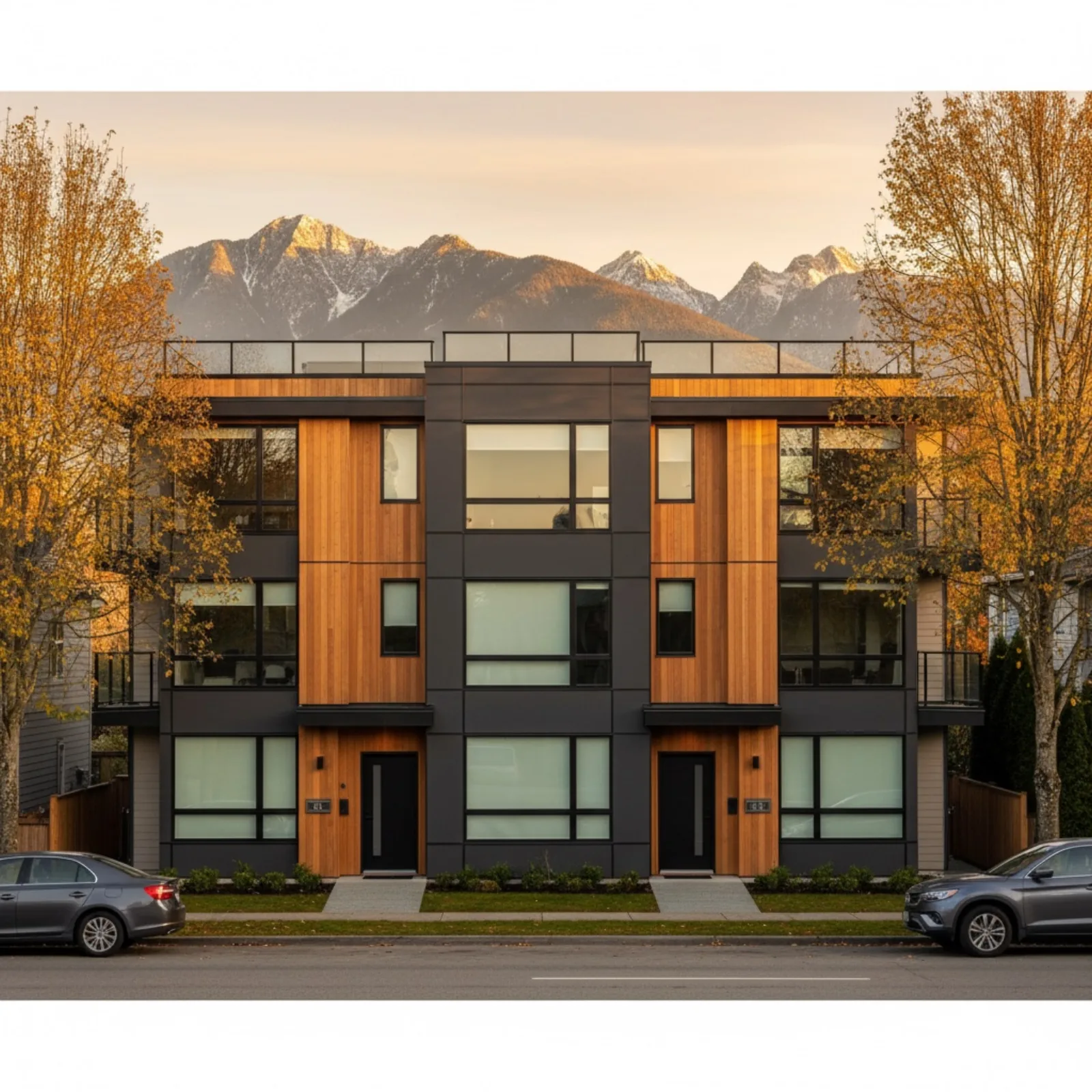

What 518 permits, 56,000 modeled lots, and 2026 policy shifts reveal for homeowners and investors. Over the past year, Vancouver’s multiplex conversation has moved from theory to reality—but behind the excitement lies a quieter truth that almost no one is talking about: most multiplex-eligible properties are not financially viable.
Key Takeaways
- 518 single-family homes have already been converted to multiplex redevelopment—the structural transition has begun
- Only ~12% of multiplex lots show strong viability after accounting for all costs
- ~2% achieve investor-grade, 100%+ pre-tax ROE—these are the “Alpha Multiplex Sites”
- Frontage requirements (13.4m for 5 units, 15.24m for 6 units) disqualify most 33-ft lots from optimal returns
- The old “build-rent-hold” model no longer pencils—rent doesn’t cover the build cost anymore
- CRA 45(2) elections create hidden tax implications for homeowner-led multiplex projects
- 1.25 FSR advantage via Net Zero exemptions is the new profit frontier—most builders stop at 1.0 FSR
- Developer-led projects are now dominating the 518 permit landscape
Only ~12% of Multiplex Lots Show Strong Viability
VanPlex has now modeled over 56,000 R1-1 lots across the city. When you factor in:
- Construction costs
- Soft costs
- Financing
- DCL/DCC/density fees
- Frontage rules
- Sale absorption
- Neighborhood price ceilings
…the distribution becomes unmistakable:
| ROE Category | Percentage of Lots | Assessment |
|---|---|---|
| Negative or very low (under 15% ROE) | ~50% | Not financially viable |
| ”Okay but not great” | ~25% | Below institutional threshold |
| Builder-grade viable | ~10-12% | Standard execution |
| Investor-grade (100%+ ROE) | ~2% | Alpha Multiplex Sites |
In other words: Vancouver didn’t create 60,000 opportunities—it created a few thousand real ones.
And the market is already pulling those to the surface.
Related Reading: I Analyzed 56,000+ Vancouver R1-1 Lots | PlexRank Precision Guide
The Frontage Rule Quietly Eliminated Thousands of Properties
To build five units, a homeowner needs 13.4m (≈44 ft) frontage.
For six units: 15.24m (50 ft).
This instantly disqualifies the majority of Vancouver’s 33-ft lots from optimal returns.
| Unit Count | Minimum Frontage | Vancouver’s 33-ft Lots |
|---|---|---|
| 4 units | Standard lot | Possible but constrained |
| 5 units | 13.4m (44 ft) | Disqualified |
| 6 units | 15.24m (50 ft) | Disqualified |
Four units are still possible, but the math is fundamentally different.
Unit count = land efficiency.
And efficiency drives ROE.
Related Reading: Complete Vancouver Multiplex Guide | How to Calculate Multiplex ROI
The Old “Build-Rent-Hold” Model No Longer Pencils
This is the most misunderstood part of the multiplex conversation.
For decades, Vancouver investors could build a duplex or triplex, rent the units, and the rent would comfortably support the mortgage.
Not anymore.
Today’s multiplex economics look like this:
| Factor | Value |
|---|---|
| Typical 1.0 FSR 4-plex rental revenue (3 rented + 1 owner-occupied) | Supports ~$1.8M mortgage |
| Total project cost | Often $2.5M+ |
| Structural gap | $700K–$900K |
That leaves a structural gap of $700K–$900K, even for owners with zero land debt.
In other words: the rent no longer pays for the build.
Not because of OSFI. Not because of lenders.
Because land and construction costs rose faster than achievable rent rates.
This is why the market is shifting toward build-to-sell, not build-to-hold.
Related Reading: OSFI’s 2026 Lending Proposal Impact | Zero Out-of-Pocket Development
CRA 45(2) Quietly Changes the Game for Homeowners
If a homeowner builds four units and rents three, the CRA views this as a change in use.
Result:
The owner has a deemed disposition for 75% of the property. Pay now or kick it down the road with a 45(2) election to pay a capital gain sometime in the future when you sell them.
| Scenario | Tax Implication |
|---|---|
| Keep 1 unit, rent 3 | 75% deemed disposition |
| 45(2) election | Deferred capital gains (due at future sale) |
| Full sale at completion | Capital gains on full appreciation |
Capital gains make homeowner-led “rent three units, live in one” far less attractive than people realize.
The build-to-sell model avoids this complexity entirely.
Related Reading: 5 Strategic Benefits of Multiplex Conversion | Retirement Wealth Through Bill 44
The 1.25 FSR Advantage is the New Frontier
Builders who stay at 1.0 FSR are leaving enormous value on the table—and paying the full stack of city fees (DCC, DCL, density bonus charges).
But under R1-1 rules, if a builder designs to Net Zero-ready and meets additional exemption criteria, they can access:
+25% additional floor area
| Component | 1.0 FSR Standard | 1.25 FSR Net Zero |
|---|---|---|
| DCC charges | Full payment | Exempt on bonus area |
| DCL charges | Full payment | Exempt on bonus area |
| Density bonus | Full payment | Exempt on bonus area |
| Additional sellable sqft | 0% | +25% |
This portion becomes:
- Fee-free
- Higher-margin
- Pure profit leverage
Yet most applications today are still at 1.0 FSR, failing to take advantage of this.
That’s why viability is so uneven—and why expertise matters.
Related Reading: PlexRank Precision Guide: The 1.25 FSR Strategy | Vancouver Multiplex Institutional Investment
Developer-Led Projects Are Now Dominating the Permit Landscape
The closer you examine the 518 multiplex permits issued so far, the clearer the pattern:
What Successful Permits Have in Common:
- Design sophistication
- Exemption optimization
- Capital structure
- Sales preparation
- FSR maximization
- Frontage utilization
These are not typical homeowner decisions.
Multiplex is behaving like small-scale development, not like laneways or renos.
The market has already figured this out—homeowners are just catching up.
Related Reading: Multiplex as Institutional Investment | Family Office Generational Wealth
What This Means for 2026
Three realities are emerging:
A. Homeowners with Strong Properties Have a Narrowing Window
The best sites—wide frontage, strong comps, good uplift—are being acquired and redeveloped at increasing speed.
B. Build-to-Sell is Now the Dominant Wealth Strategy
Because the equity spread is in the sale value, not the rental value.
C. The Highest Returns (100%+ ROE) Are Concentrated in a Small Set of Addresses
VanPlex calls these the Alpha Multiplex Sites, and they represent ~2% of Vancouver.
| Strategy | 2023 Reality | 2026 Reality |
|---|---|---|
| Build-rent-hold | Viable with right lot | Structural gap makes this difficult |
| Build-to-sell | Optional strategy | Dominant wealth strategy |
| Alpha site targeting | Early advantage | Competitive necessity |
If homeowners or small investors want to compete, they need precision—not enthusiasm.
Frequently Asked Questions
Why do only 12% of multiplex lots show strong viability?
Only 12% of Vancouver’s multiplex lots show strong viability because most properties face constraints from frontage requirements, neighborhood price ceilings, high construction costs ($2.3M-$3.5M), and city fees (DCL, DCC, density bonuses) that erode returns. VanPlex’s analysis of 56,000 R1-1 lots shows that ~50% produce negative or very low returns (under 15% ROE), while only ~2% achieve the 100%+ ROE that justifies development risk.
Why doesn’t the build-rent-hold model work for multiplex anymore?
The build-rent-hold model no longer works because rental revenue from a typical 1.0 FSR 4-plex (3 rented + 1 owner-occupied) only supports approximately $1.8M in mortgage debt, while total project costs often exceed $2.5M. This creates a structural gap of $700K-$900K that cannot be bridged even by owners with zero land debt. Land and construction costs have risen faster than achievable rent rates.
What is the 1.25 FSR Net Zero advantage?
The 1.25 FSR Net Zero advantage allows developers to access 25% additional floor area by designing to Net Zero-ready standards and meeting City of Vancouver exemption criteria. This bonus floor area is exempt from DCC, DCL, and density bonus charges, creating fee-free, higher-margin, pure profit leverage. Most builders stop at 1.0 FSR and miss this opportunity entirely.
What are the frontage requirements for Vancouver multiplexes?
Vancouver’s frontage requirements are 13.4m (approximately 44 feet) for 5-unit buildings and 15.24m (50 feet) for 6-unit buildings. This disqualifies the majority of Vancouver’s 33-foot lots from achieving optimal unit counts. Four units remain possible on standard lots, but the reduced unit count fundamentally changes the financial math and lowers potential ROE.
What is a CRA 45(2) election for multiplex development?
A CRA 45(2) election addresses the tax implications when a homeowner builds a multiplex and rents out units. If you build four units and rent three, the CRA treats this as a “change in use,” triggering a deemed disposition on 75% of the property. The 45(2) election allows you to defer this capital gains tax until you eventually sell, but the tax liability still exists—making build-to-sell often more attractive.
Ready to Understand Your Property’s True Potential?
If you want to understand the viability of your own property, or access the small percentage of high-return multiplex sites, here’s where to start:
- PlexRank Viability Scan: A data-backed assessment of your property or target lot
- ROE Modeling: Understand the financial trajectory before you commit
- 1.25 FSR Exemption Strategy: The biggest profitability unlock in R1-1 zoning
- Capital Structure Planning: Build-to-sell frameworks that eliminate homeowner uncertainty
If you’re planning a multiplex project in 2026:
- Check your property’s potential: VanPlex.ca
- Connect on LinkedIn: DM David Babakaiff
- Explore investment opportunities: VanPlex.ca/invest
Multiplex isn’t a trend—it’s a restructuring of how value is created from Vancouver land.
And the owners who understand the economics early will shape the next decade of wealth mobility in the city.
— David Babakaiff Co-Founder, VanPlex.ca
PlexRank | Profit with Multiplex