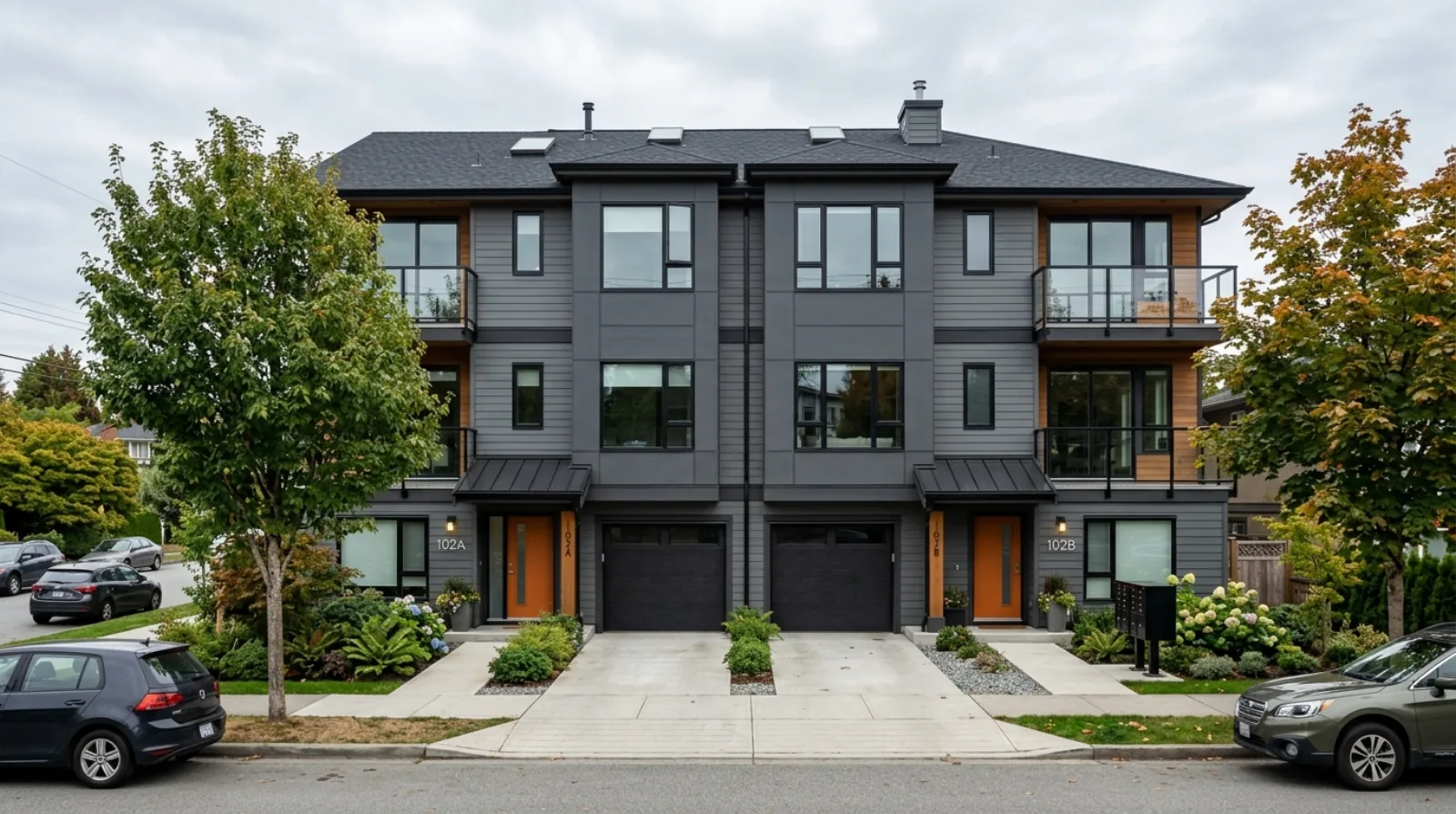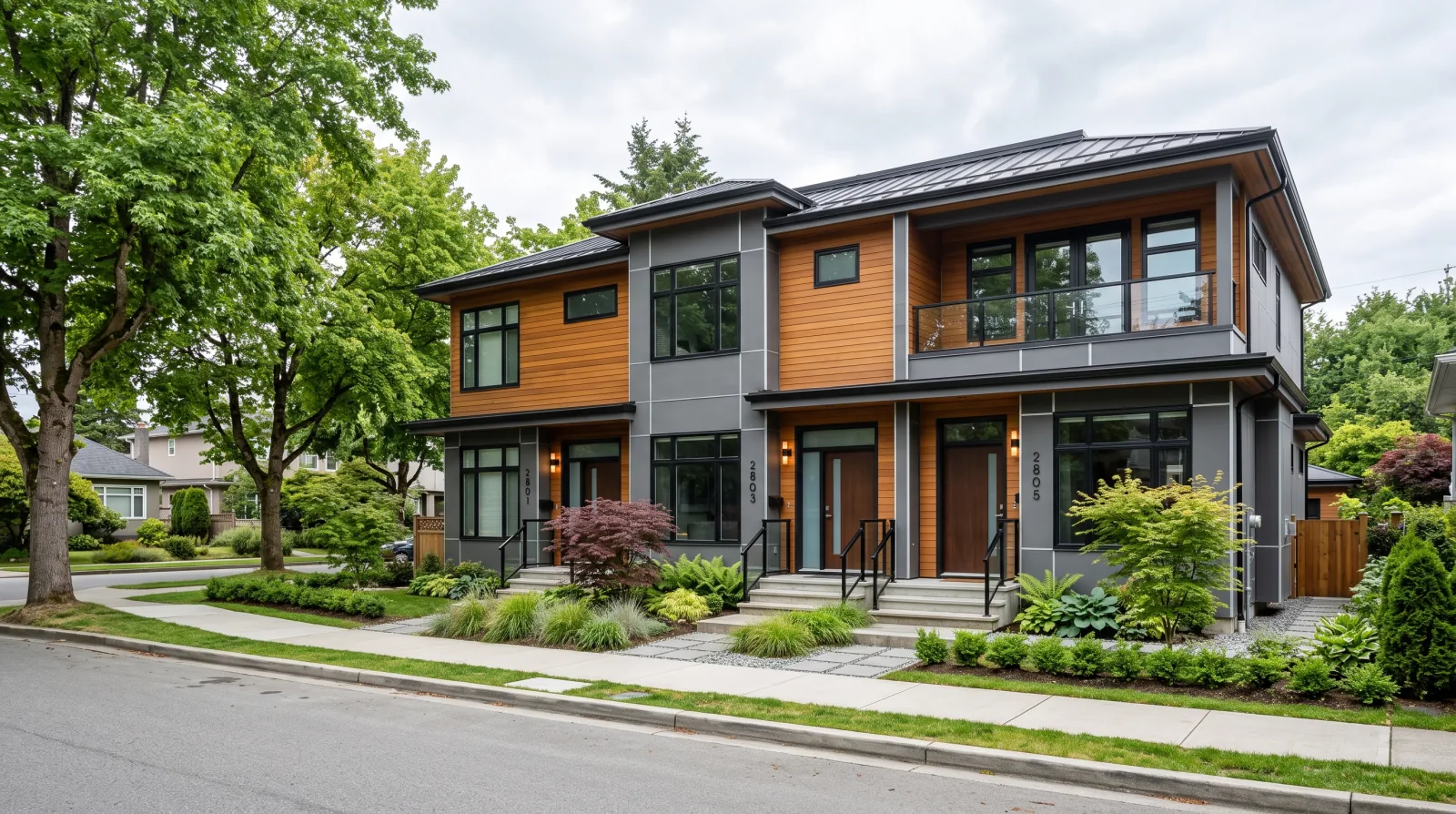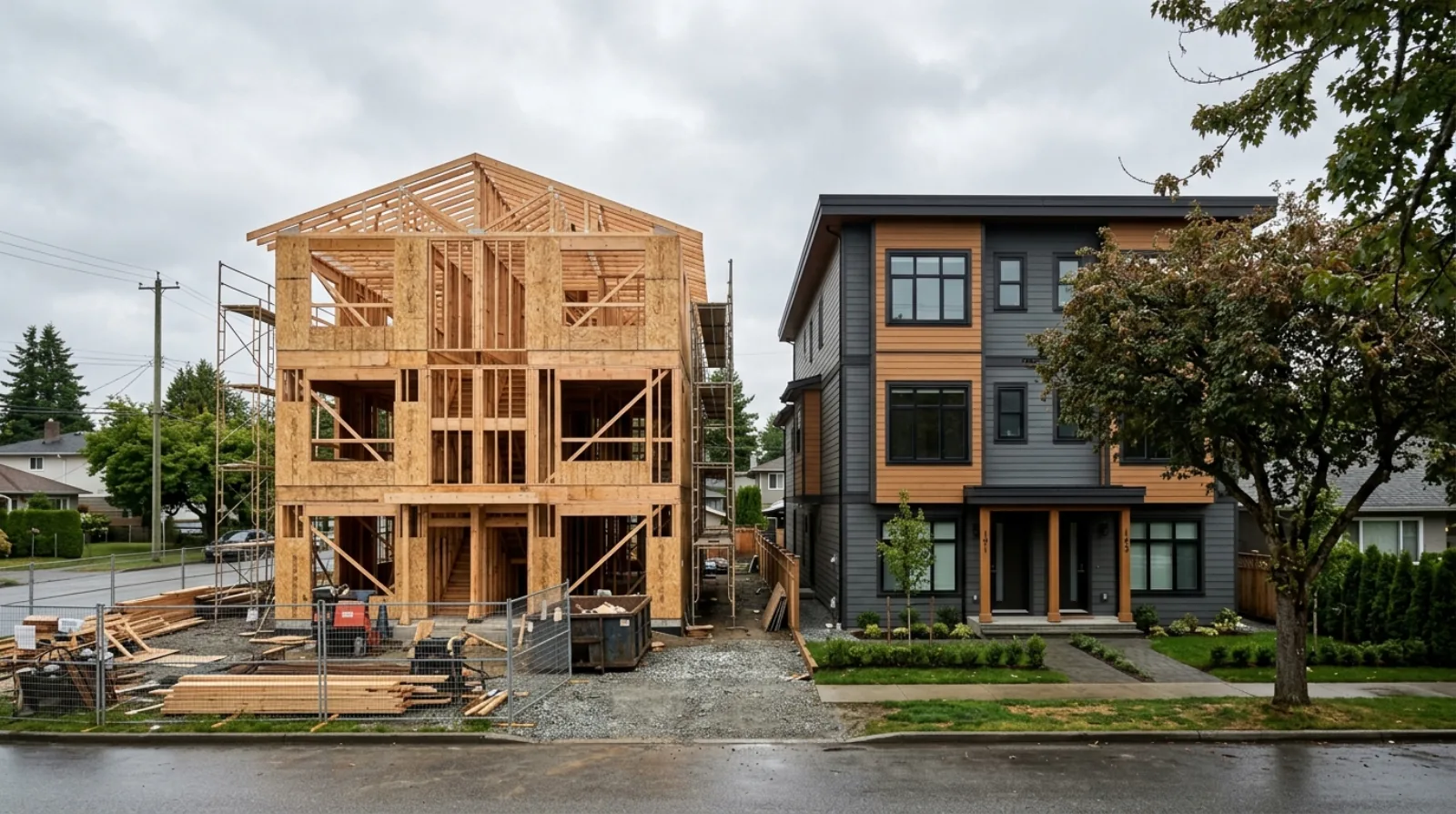

A construction loan does not hand you the money up front. You get paid as you build, in stages, after an inspector confirms the work is actually done. First-time multiplex builders often plan their budget as if the full loan lands on day one, then hit a cash squeeze when the first draw does not cover the early bills. Understanding the draw schedule fixes that before it happens.
There is a second surprise waiting at the end: the 10% builders lien holdback that sits there for weeks after the work is finished. Here is how draws work in BC, when the money actually moves, and what the holdback does to your final numbers.
TL;DR (Key Takeaways)
- Construction loans release money in draws, not all at once. The draw schedule sets when funds come out as work is completed and inspected, which protects both the lender and you.
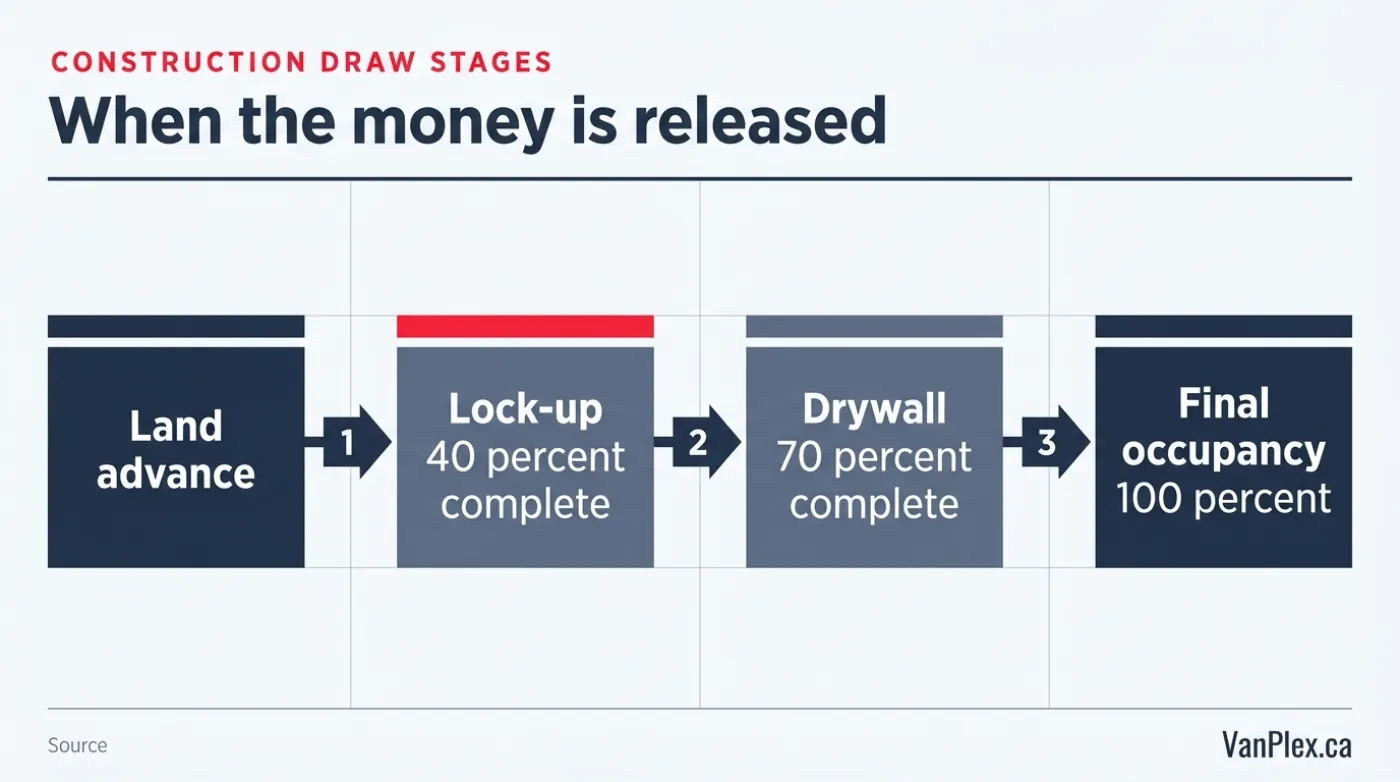
- Typical BC draw stages include a land advance, lock-up at about 40% complete, drywall at about 70% complete, and final occupancy at 100%.
- Each draw is inspected before it funds. An appraiser or inspector confirms the stage is reached before the lender advances the money.
- BC’s Builders Lien Act requires a 10% holdback on every progress payment. It is calculated on the greater of the value of work and materials provided, or the payment made.
- The holdback is released after completion, subject to a minimum 45-day holding period, and lenders monitor lien filings before releasing.
- A registered mortgage has priority for funds advanced before a lien is filed, which is why lenders check for liens before each draw.
Draws, not a lump sum
The first thing to unlearn is the idea that a construction loan works like a regular mortgage. It does not. The draw schedule is the heart of a construction loan. It sets out when funds are released to the builder or contractor as work is completed and inspected. The lender is not being difficult. It is protecting itself, and protecting you, from paying for work that has not happened.
That means your early costs, the ones before the first big draw, often come out of your own pocket or a separate facility. If you plan as though the loan covers everything from the start, you can run short exactly when momentum matters. Map your cash needs against the draw schedule, not against the total loan amount.
The typical stages
BC construction draws usually follow a recognizable sequence, tied to how complete the building is. A land advance covers the property purchase. Lock-up comes at roughly 40% complete, once the foundation, framing, and exterior sheathing are in place and the building can be closed up. Drywall follows at about 70% complete, after the plumbing, electrical, and mechanical systems are roughed in. The final draw comes at 100%, on completion and receipt of the occupancy permit.
Each of these is a milestone the lender can verify. An inspector or appraiser confirms the stage before the money moves. So the pace of your draws follows the pace of your build. Fall behind schedule and your draws come later, which means you carry more cost on your own for longer. Keeping the build on pace is not just about the finish date. It is about your cash flow the whole way through.
The 10% holdback that catches people out
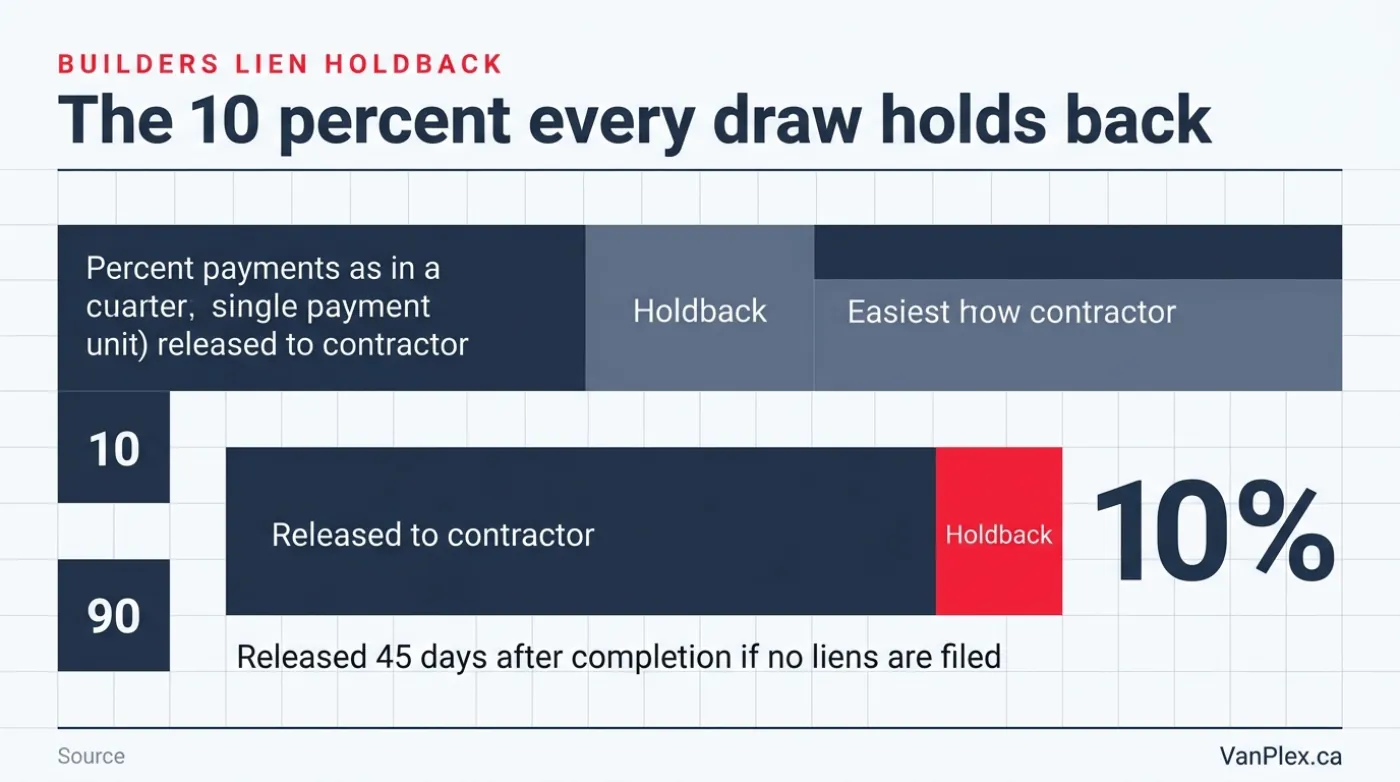
Now the part that surprises first-timers. BC’s Builders Lien Act requires a minimum holdback of 10% of the value of work done and materials supplied under each payment. This applies to every progress payment under any construction contract in BC. The 10% is calculated on the greater of the actual value of the work and materials provided during the period, or the amount of the payment made on account of the contract price.
So on each draw, 10% is held back. A construction holdback withholds 10% from payments to the general contractor, and once construction is complete, that remaining 10% is paid out after a minimum holding period of 45 days. That waiting period exists to give anyone who worked on the project time to file a lien if they were not paid. Plan for it. The last 10% of your money is not available the day the building is done. It sits for at least 45 days.
Why lenders check for liens before every draw
There is a legal reason your lender watches for lien filings, and it affects how draws are handled. A registered mortgage has priority over a lien for all funds advanced before the claim of lien is filed. Once a lien is registered, that priority picture changes. So construction lenders typically monitor lien filings before advancing draws, because advancing money after a lien is filed can weaken their security.
For you, the practical effect is that unpaid subtrades are not just an ethical problem, they are a financing problem. If a subtrade files a lien because they were not paid, it can hold up your next draw and complicate your loan. Paying trades properly and keeping clean records is part of keeping your money flowing, not just good manners.
How to plan your cash around the draws
Build a simple cash flow that lines up your expenses with your draw milestones. Know what you have to spend before lock-up, before drywall, and before completion, and know when each draw actually lands after inspection. Then add the holdback: assume you will not see the final 10% for at least 45 days after the building is done.
The builders who never get squeezed are the ones who treat the draw schedule as a cash flow plan, not a formality. They keep a cushion for the gaps between spending and draws, they keep the build on pace so draws come on time, and they pay their trades so no lien freezes the pipeline. None of that is complicated. It just has to be planned before the first shovel, not discovered mid-build.
Common questions about construction draws
Do I get the whole construction loan up front? No. It comes in draws as the build hits milestones and passes inspection. Typical stages are land advance, lock-up at about 40%, drywall at about 70%, and final at 100% with the occupancy permit. Plan your early cash needs accordingly.
What is the builders lien holdback? BC’s Builders Lien Act requires a 10% holdback on every progress payment. It gives unpaid workers and suppliers time to file a lien. The held-back 10% is released after completion, subject to a minimum 45-day holding period.
When do I get the final 10%? After construction is complete and the minimum 45-day holdback period passes, assuming no liens are filed. Do not count on that money the day the building finishes.
Why does my lender care about liens? Because priority depends on timing. A registered mortgage has priority for funds advanced before a lien is filed. Lenders monitor lien filings before releasing draws to protect their security, which is why unpaid trades can stall your funding.
Money follows milestones, and the last slice waits at the end. Plan your cash around the draw schedule and the 45-day holdback, and you build without the squeeze. Test your project’s numbers in about two minutes before you sit down with a lender.
David Babakaiff, Co-Founder, VanPlex | PlexRank™ | Profit with Multiplex