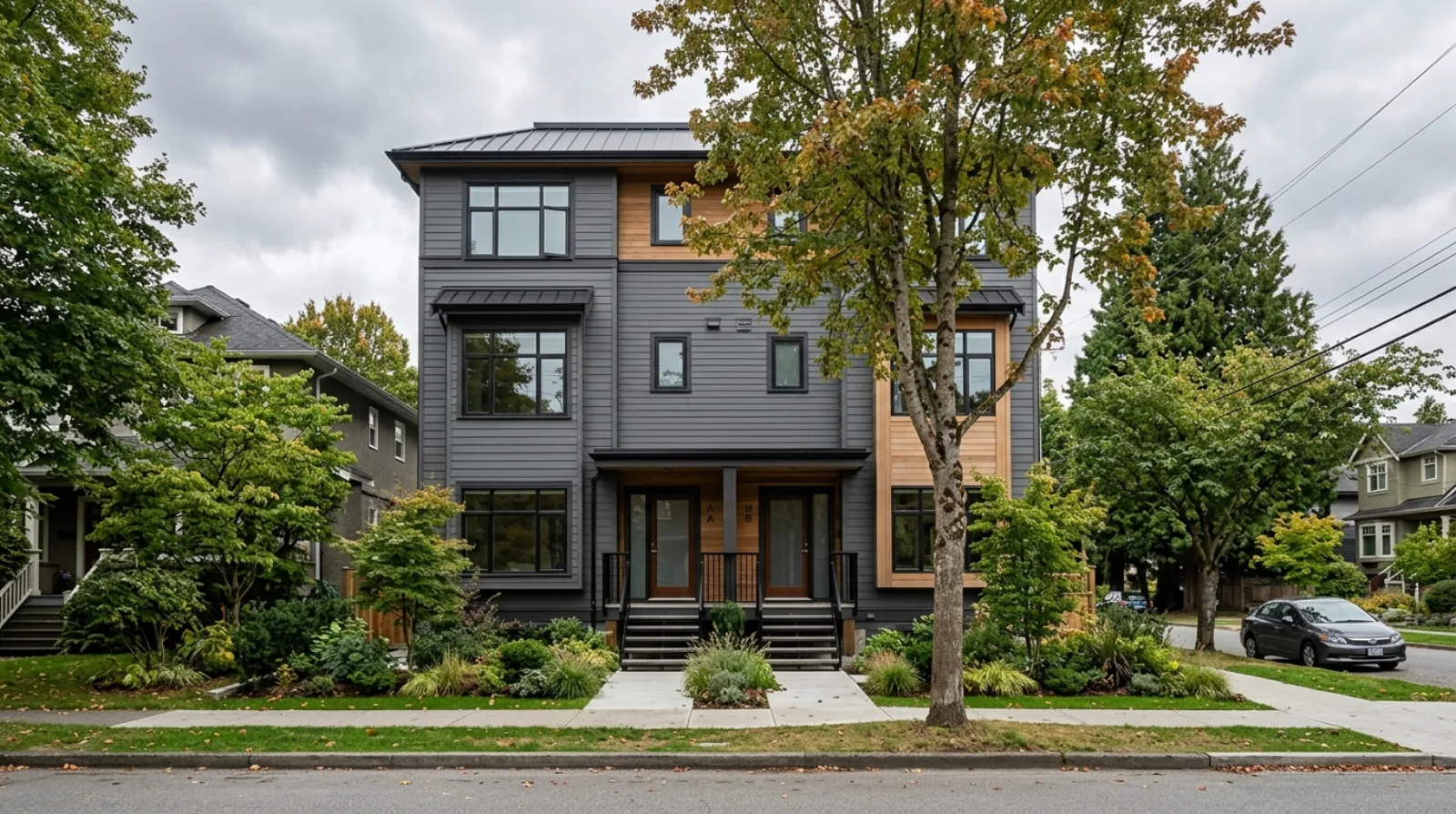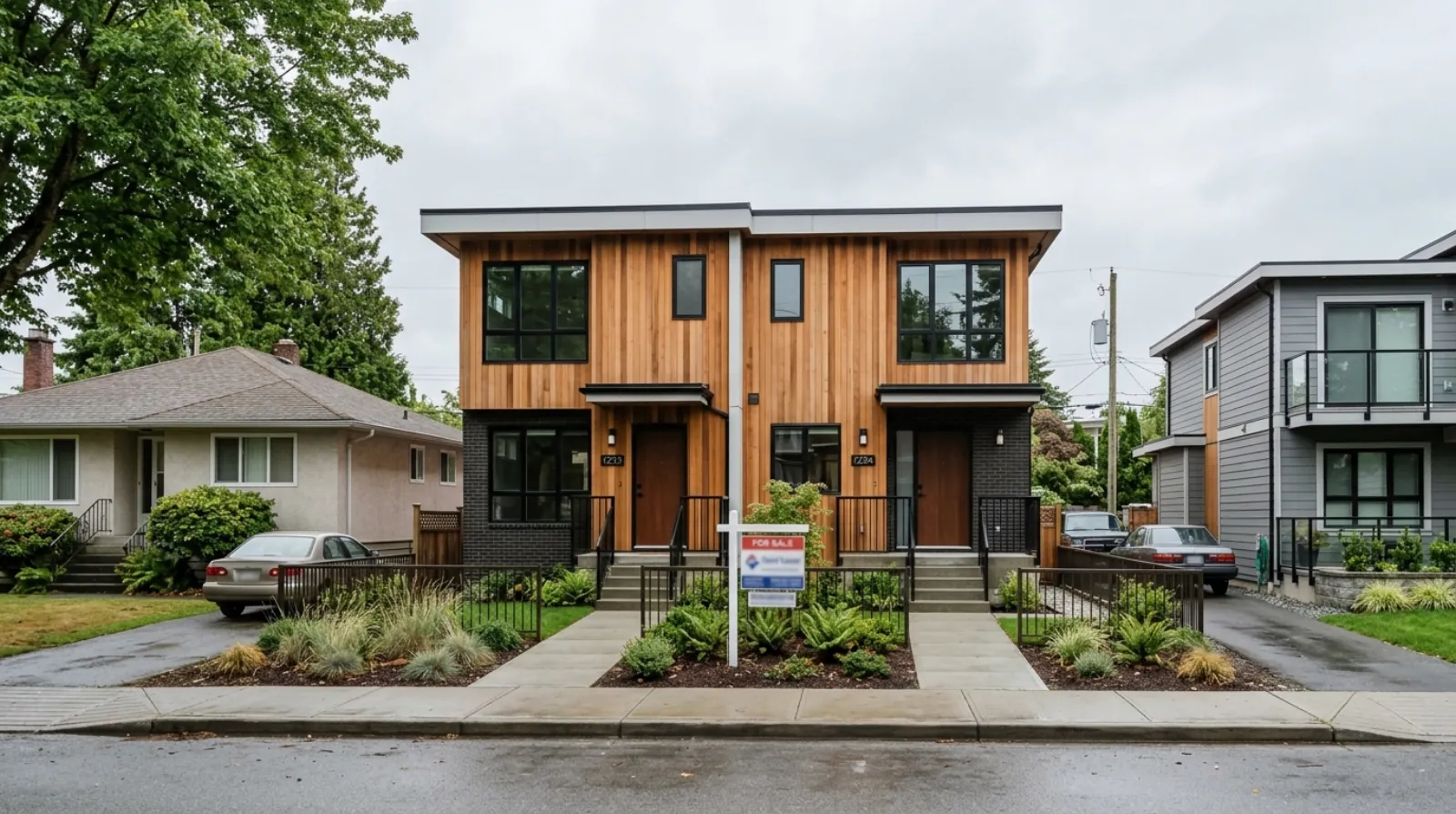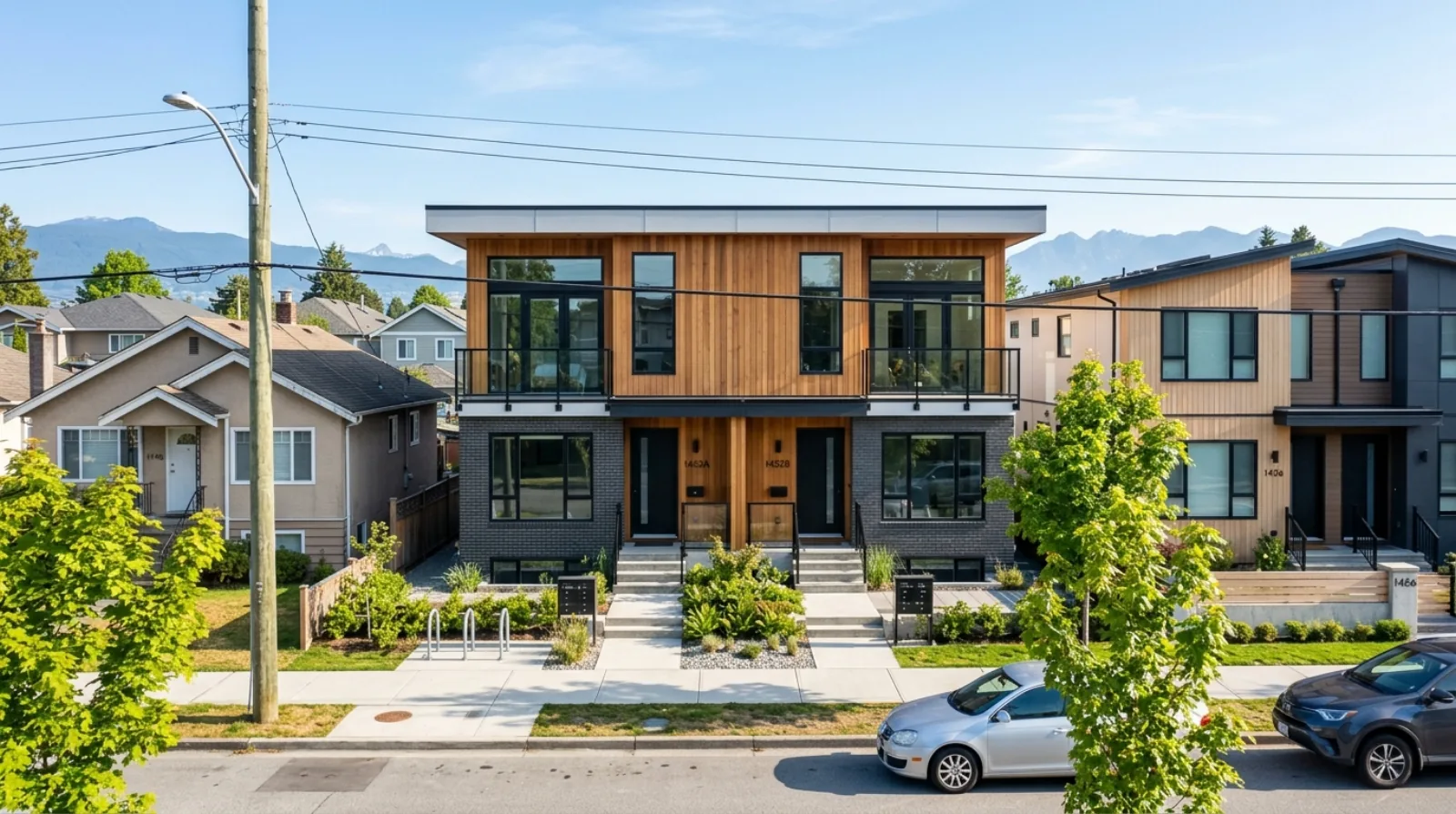

Investors with real money to deploy are never short of options. Public markets, private credit, real estate syndications, development deals, operating businesses, cash-management products, and the proposal a friend brings to dinner. Any new category has to earn a spot in that lineup. Multiplex housing is no different — and it hasn’t fully earned it yet.
BC’s recent wave of upzoning changed what a single lot can hold. Under Bill 44, most single-family lots in the province now allow three to six homes where one or two stood before. On paper, that looks like a large opening. But newly enabled land is not automatically investment-grade land. That gap is the whole point of this post.
Newly enabled land is not investment-grade land
This is the first discipline, and most people skip it. Bill 44 gave hundreds of thousands of lots new capacity overnight. That does not mean those lots are good deals.
A property can be zoned for four, five, or six homes and still lose money. The building might be technically possible but financially weak. The design might leave value on the table. Construction costs might eat the profit. Financing might be hard to arrange. The exit value might not cover the risk you took. And time — permit delays, trade scheduling, a slow lease-up — can turn a promising pro forma into an average result.
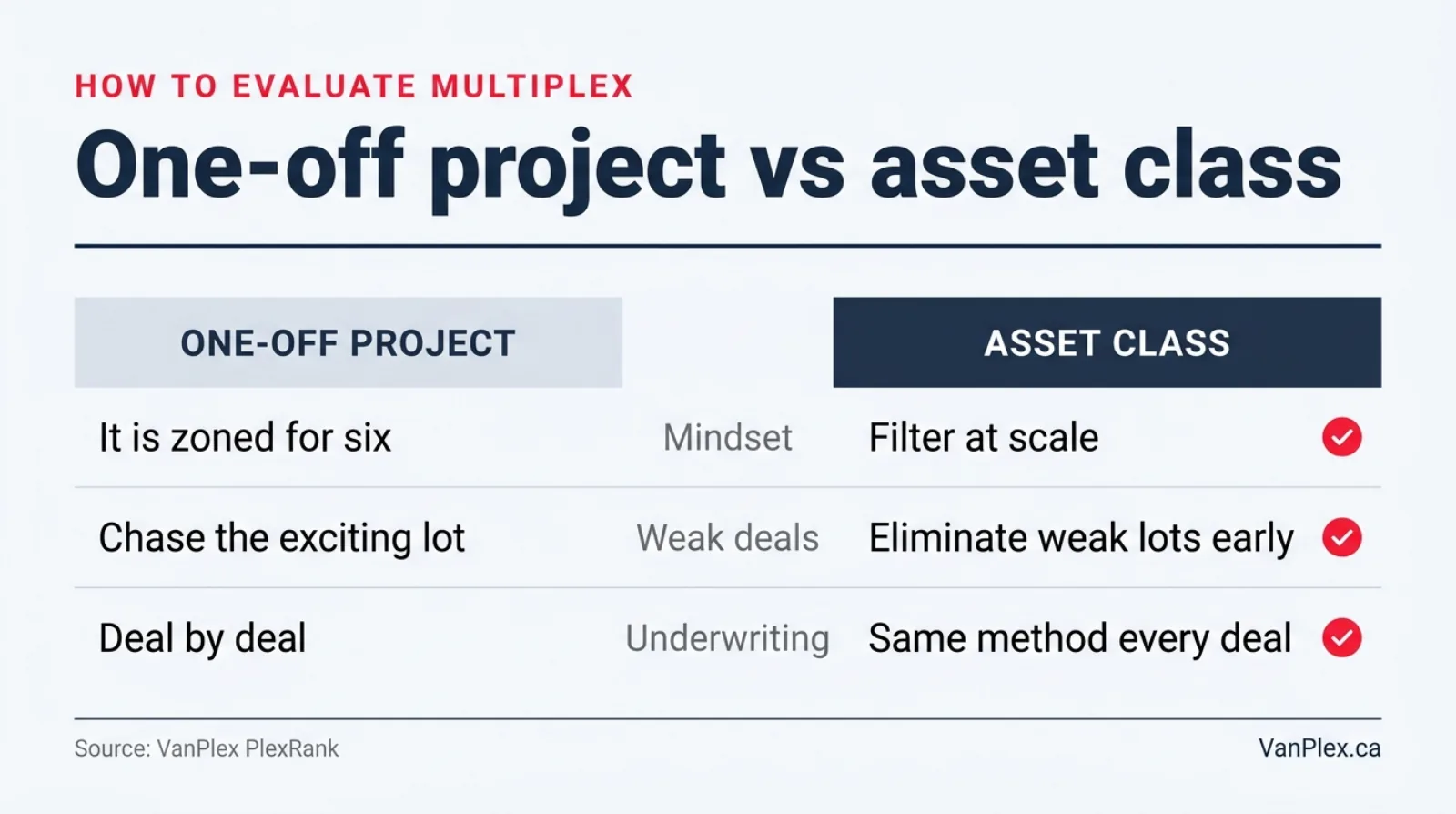
So “it’s zoned for six” is where the analysis starts, not where it ends. Treating a rezoning as an automatic win is how investors buy the wrong lots at the wrong basis and wonder later why the returns never showed up.
The questions serious capital actually asks
Once you treat multiplex as an asset class, the questions change. You stop asking “is this one lot interesting?” and start asking whether the whole category can be run with discipline.
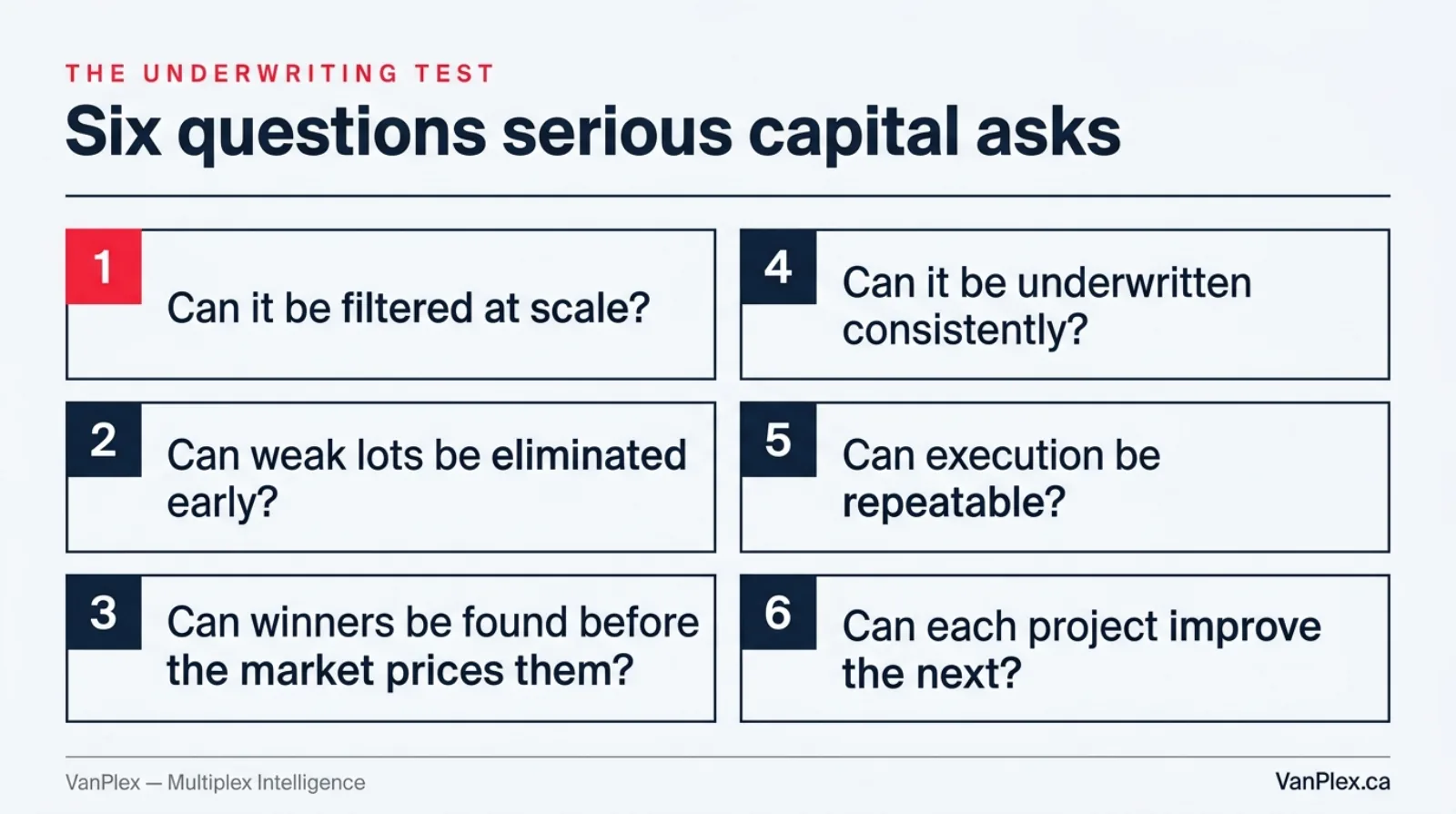
A serious investor should be asking:
- Can this category be filtered at scale?
- Can the weak properties be eliminated early?
- Can the better properties be identified before the market prices them correctly?
- Can projects be underwritten consistently, deal after deal?
- Can execution become repeatable instead of heroic?
- Can the same intelligence improve each project over time?
Those six questions are the difference between a hobby and a program. A one-off project answers none of them. An asset class has to answer all six.
Why VanPlex starts at the parcel
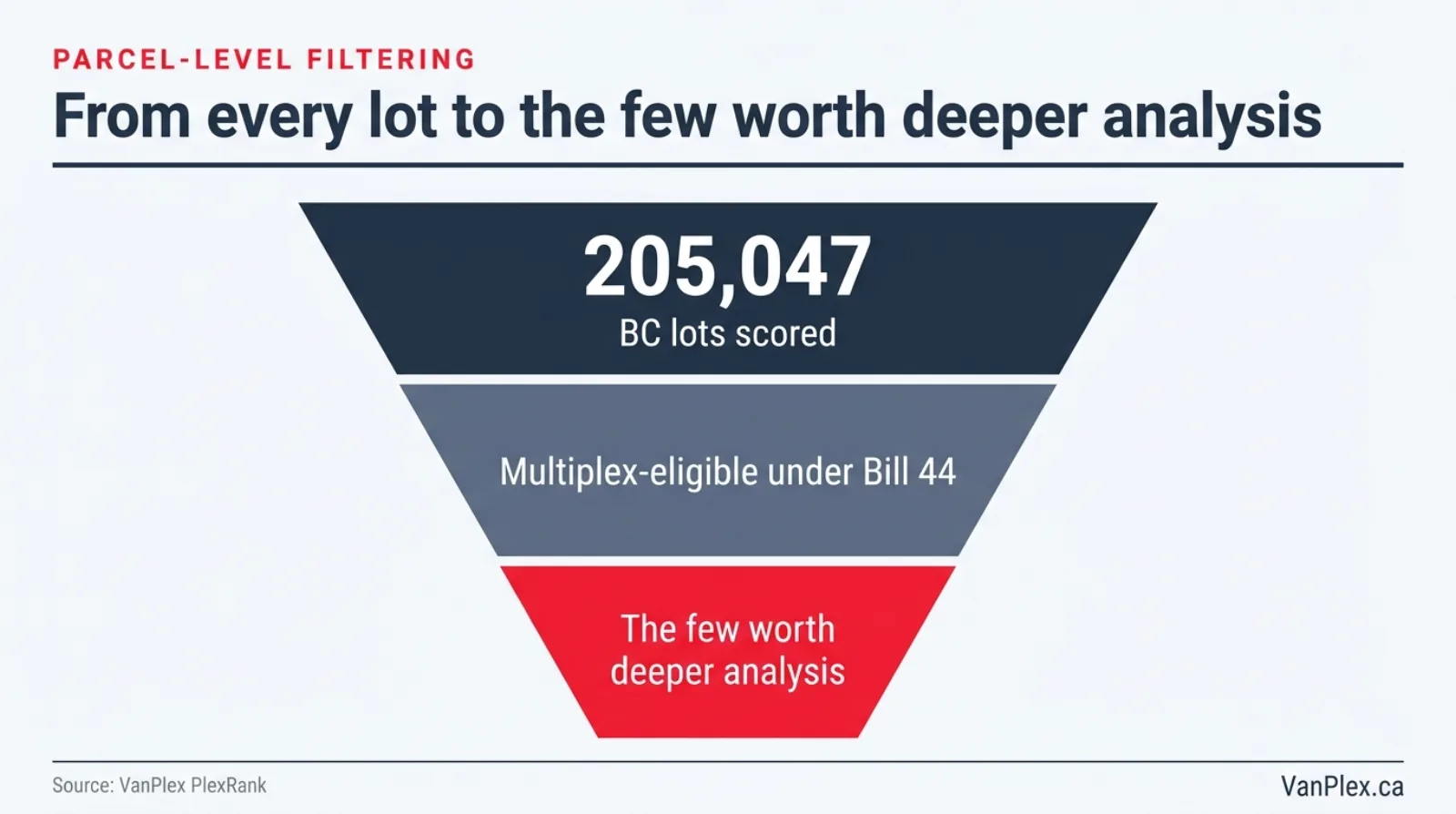
Our work begins at the lot, not the pitch deck. We look at zoning, site constraints, development potential, financial feasibility, likely resale or rental values, project costs, financing assumptions, and return profiles across large numbers of multiplex-eligible properties.
The goal is not to prove every property is an opportunity. Frankly, most aren’t. The goal is to identify the small share that may deserve deeper underwriting, and to get rid of the rest early — before anyone spends money on a deal that was never going to work.
That order matters. Serious capital is usually less interested in excitement than in discipline. Return potential is important, but it only counts when it sits on top of downside analysis, project controls, repeatable decisions, and an honest view of the assumptions carrying the investment. A filter that eliminates weak lots quickly is worth more than a story about the one lot that might be great.
The human case doesn’t replace the numbers — it strengthens them
There’s a reason beyond returns to build this category properly.
Multiplex housing can add homes in established neighbourhoods without turning every growth conversation into a high-rise fight. It can help older homeowners pull equity out of their property while staying in the community they know. It can create homes for young families who would otherwise be priced out of those same streets. It can support multi-generational living, more flexible ownership, and a stronger local social fabric.
None of that replaces the financial case. It strengthens the reason to do the work well. The numbers still have to work. The capital still has to be protected. The underwriting still has to be disciplined. But when the economics and the human outcome line up, a multiplex stops being a small development project. It becomes part of a larger change in how neighbourhoods adapt.
The multiplex is the first chassis
Over time, we see this growing into something broader: intelligent residential living, where data, design, delivery, and community outcomes get better from one project to the next.
The multiplex is the first chassis. The larger opportunity is a repeatable system for better neighbourhood-scale housing — the same discipline applied again and again, improving each time. That’s a different ambition than flipping a few well-located lots.
For investors, the question worth examining is direct: can multiplex housing become a disciplined, intelligence-backed residential asset class worthy of programmatic capital? That’s the lens this newsletter will use. We’ll look at where returns are created, where they’re destroyed, what makes a project financeable, which risks get underestimated, and how parcel-level intelligence separates ordinary opportunities from the few that deserve serious money.
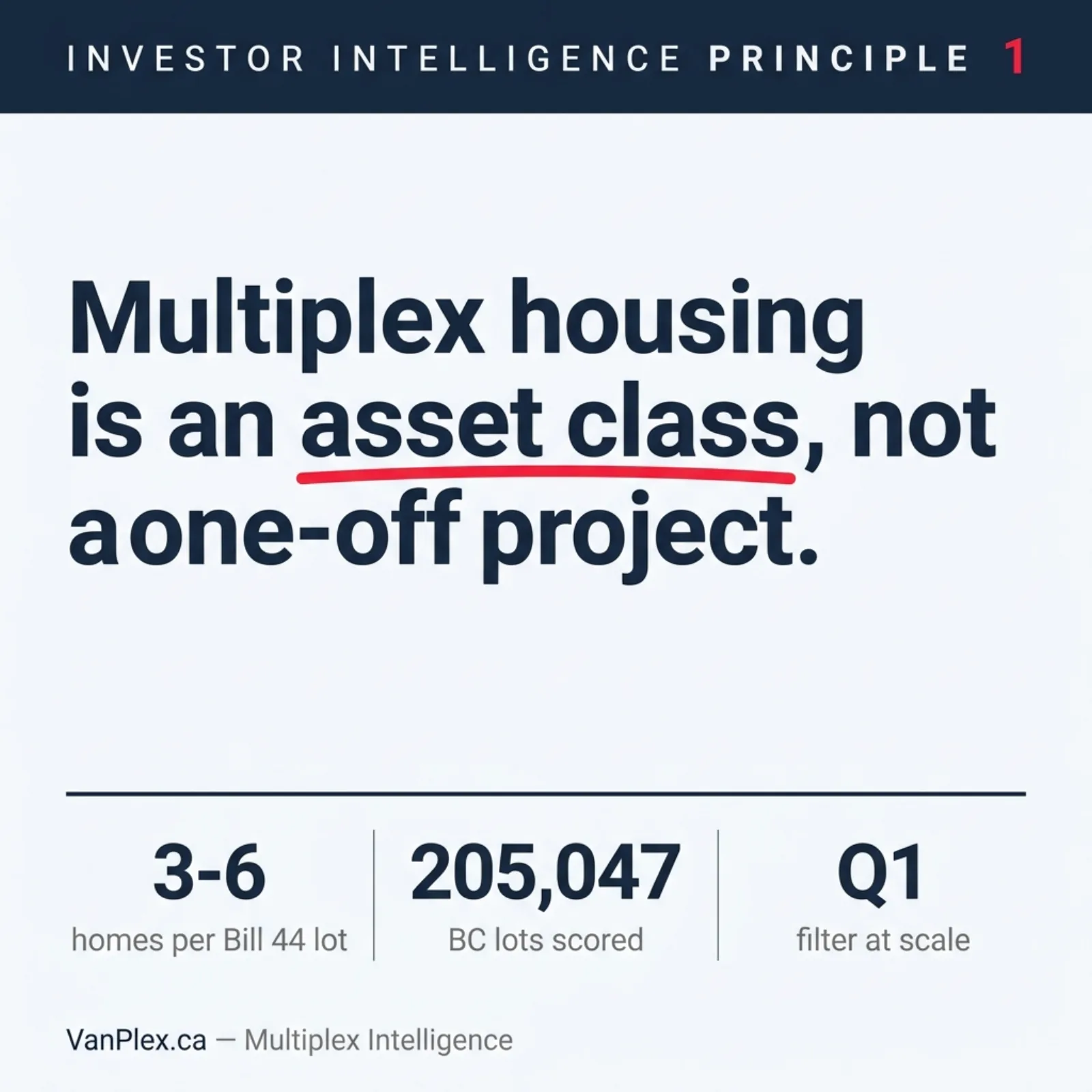
Investor Intelligence Principle #1
Serious capital should evaluate multiplex housing as an emerging asset class, not a one-off project.
Common questions from investors
Is multiplex really an asset class, or just a development play? Right now it behaves like a set of one-off projects for most people who touch it. The argument here is that it should be run like an asset class — filtered at scale, underwritten consistently, and improved deal over deal. The zoning capacity exists; the discipline is what’s missing.
If a lot is zoned for six units, isn’t it already a good deal? No. Zoning sets what you can build. Cost, design, financing, and exit value decide whether you should. Plenty of six-unit-eligible lots don’t pencil once you run the real numbers.
What does “parcel-level intelligence” actually mean? Scoring individual lots on zoning, site constraints, feasibility, likely values, costs, financing, and returns — then using that to eliminate weak lots early and flag the small share worth deeper underwriting. VanPlex scores 205,047 lots across BC on this basis.
Why does the human case matter to an investor? It doesn’t change the math, but it changes the durability of the category. Housing that fits into existing neighbourhoods and serves real families draws less political resistance and more staying power than housing that only works as a spreadsheet.
Multiplex won’t earn serious capital because it’s new. It’ll earn it when the weak lots get filtered out early and the strong ones get underwritten the same way every time. That’s the work. Check whether your lot clears the first screen — it takes about two minutes.
— David Babakaiff, Co-Founder, VanPlex | PlexRank™ | Profit with Multiplex