
Most builders think about CMHC MLI Select as a financing box to tick: get to five units, hit the points, unlock the cheap money. True as far as it goes. But there is a decision hiding inside that changes how cheap your money actually gets, and it happens on the drawing board long before you talk to a lender. It is your unit mix. How you size the bedrooms decides how many affordability points you can reach.
Studios and one-beds are easier to design and cheaper to build. Family-sized two and three-bed units earn more rent and reach further into the points system. Here is how to think about the trade-off.
Start with the five-unit floor
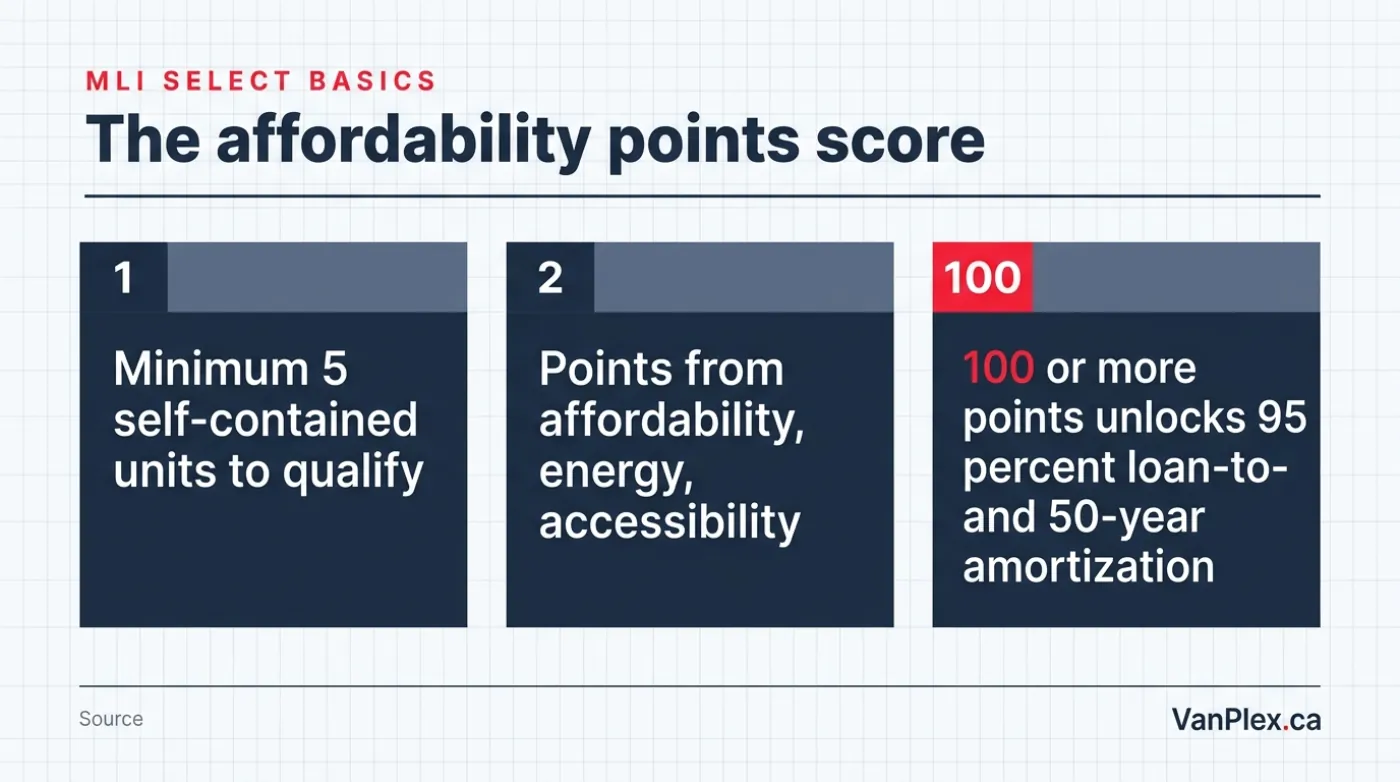
The first rule is simple and non-negotiable. MLI Select needs a minimum of five self-contained residential units. Not five bedrooms, not five keys in a shared house. Five real units, each with its own kitchen, bathroom, and entrance. A property with four units or fewer does not qualify.
This is why the five-unit multiplex sits at such an important line. Under Bill 44, six units is achievable on many BC lots, which puts MLI Select in reach for a lot more homeowners than before. If you are choosing between four and six units on a lot that supports six, the financing consequence is huge. Four units means conventional lending. Six units can open the door to MLI Select terms that a small builder could never get otherwise.
How the points actually work
MLI Select scores your project. Points come from three areas: affordability, energy efficiency, and accessibility. Reach 100 or more points and you unlock the maximum benefits, which can include up to 95% loan-to-cost, up to 50-year amortization, limited recourse, and meaningful premium discounts. Even a lower score in the 50 to 70 range can give you financing advantages over a conventional loan.
Affordability is usually the biggest lever a small multiplex builder can pull, and it is tied to rent levels. Committing to hold some units at rents below a defined affordability threshold earns points. That is where unit mix enters, because the size of a unit shapes both the rent you charge and how the affordability commitment plays out across the building.
The bedroom mix trade-off
Now the real decision. You can fill your building with small units or lean toward family-sized ones, and the two paths lead to different outcomes.
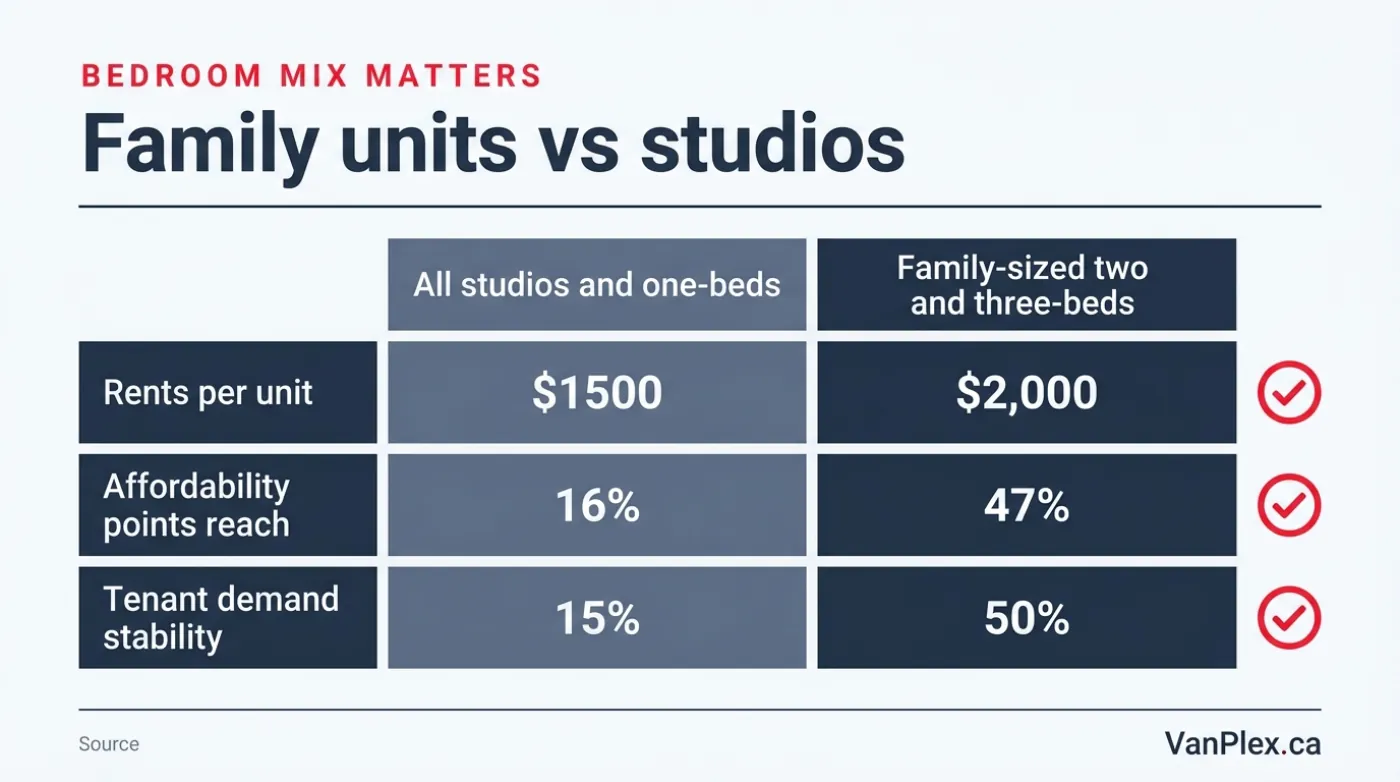
All studios and one-beds are cheaper to build, fit more units into the same floor area, and are simpler to design. But they earn less rent per unit and serve a narrower slice of demand. Family-sized two and three-bed units cost more per unit and eat more floor area, so you fit fewer of them. In return they earn higher rent, and they serve a slice of demand that is chronically short in Vancouver: families who need actual bedrooms, not a bachelor suite.
For the points math, larger units let you make a stronger affordability offer in absolute dollars while still charging market-reasonable rent, and family housing is exactly the kind of supply the program is designed to encourage. The right answer is not always more units. Sometimes fewer, larger, family-sized units score better and rent more reliably.
Why family units rent more reliably
There is a market reason to favour family-sized units beyond the points. In much of Vancouver and Burnaby, family rental supply is thin. Owners with kids, or two working adults who want a home office and a real bedroom, have few good options in ground-oriented buildings. A well-designed two or three-bed unit in a quiet multiplex attracts stable, longer-staying tenants.
Longer stays mean lower turnover, lower vacancy, and steadier net operating income, which is exactly what a rental hold wants. Small units churn faster. That churn costs money in vacancy and re-leasing every time it happens. So the family-sized path can protect your income as well as your points.
Design the mix on purpose
The mistake is to design the layout first and check the financing later. Do it the other way around. Decide what score you are aiming for, work out what affordability commitment gets you there, and then size the units so the rents and the commitment line up. The unit mix is a financing input, so treat it like one.
That also means running the numbers per lot. A narrow lot may only fit small units efficiently. A wider lot can carry family-sized units without wasting floor area. The lot shapes what mix is even possible, which is why the mix decision and the lot selection belong together.
Common questions about MLI Select unit mix
Do I need exactly five units for MLI Select? Five is the minimum. You need at least five self-contained units, each with its own kitchen, bathroom, and entrance. Bill 44 makes six units achievable on many lots, which brings the program within reach for more homeowners.
Does MLI Select tell me what bedroom mix to build? Not directly. The program focuses on total self-contained units and a points score, not a required bedroom distribution. But your unit sizes drive rents and your affordability commitment, so they shape the score you can reach.
Are family-sized units worth the extra cost? Often, yes. They earn higher rent, serve demand that is undersupplied in Vancouver, and turn over less. Fewer, larger units can beat more, smaller ones on both points and long-term income. Run it per lot.
What score do I need to aim for? 100 or more points unlocks the top benefits, including up to 95% loan-to-cost and up to 50-year amortization. Even 50 to 70 points beats conventional lending. Aim as high as your affordability, energy, and accessibility choices reasonably allow.
Your bedroom mix is a financing decision wearing a design hat. Decide the score you want, then size the units to reach it. Check whether your lot supports a five or six-unit build before you lock in a layout.
David Babakaiff, Co-Founder, VanPlex | PlexRank™ | Profit with Multiplex