The Core Problem | Viable Density
The density that actually gets built
Deciding how much density to grant is the hardest call a planner makes — and the one with the least data behind it. There is a right answer hiding between two failures, and it is measurable.
The core problem we solve
Two ways density goes wrong — and the range in between
Density too low
Nothing gets built
Below a certain number of units, a multiplex can't cover land plus construction. Builders walk. The lot stays a single house and the upzoning produces no housing.
The viable range
Homes actually get built
Enough units that the project clears a builder's return threshold — so permits get pulled and units get delivered. This is the band you're trying to hit.
Density too high
Infrastructure can't take it
Past a point, servicing, traffic, and community capacity can't absorb the density — and council and neighbours push back. The plan stalls for a different reason.
The idea in three lines
- ✓A rezoning only makes housing if a builder can earn a return on it. Zoning permission is not the same as a built unit.
- ✓VanPlex measures, lot by lot, the density at which a multiplex becomes financially viable in your city.
- ✓That tells you whether your current rules will deliver units — and which lever would change it.
How many lots clear the line?
This curve plots how many lots fall below each return threshold. Read up from the point where a builder will act: everything to the left is zoned for a multiplex but does not pencil. The gap between "zoned" and "viable" is the housing your rules are not yet producing.
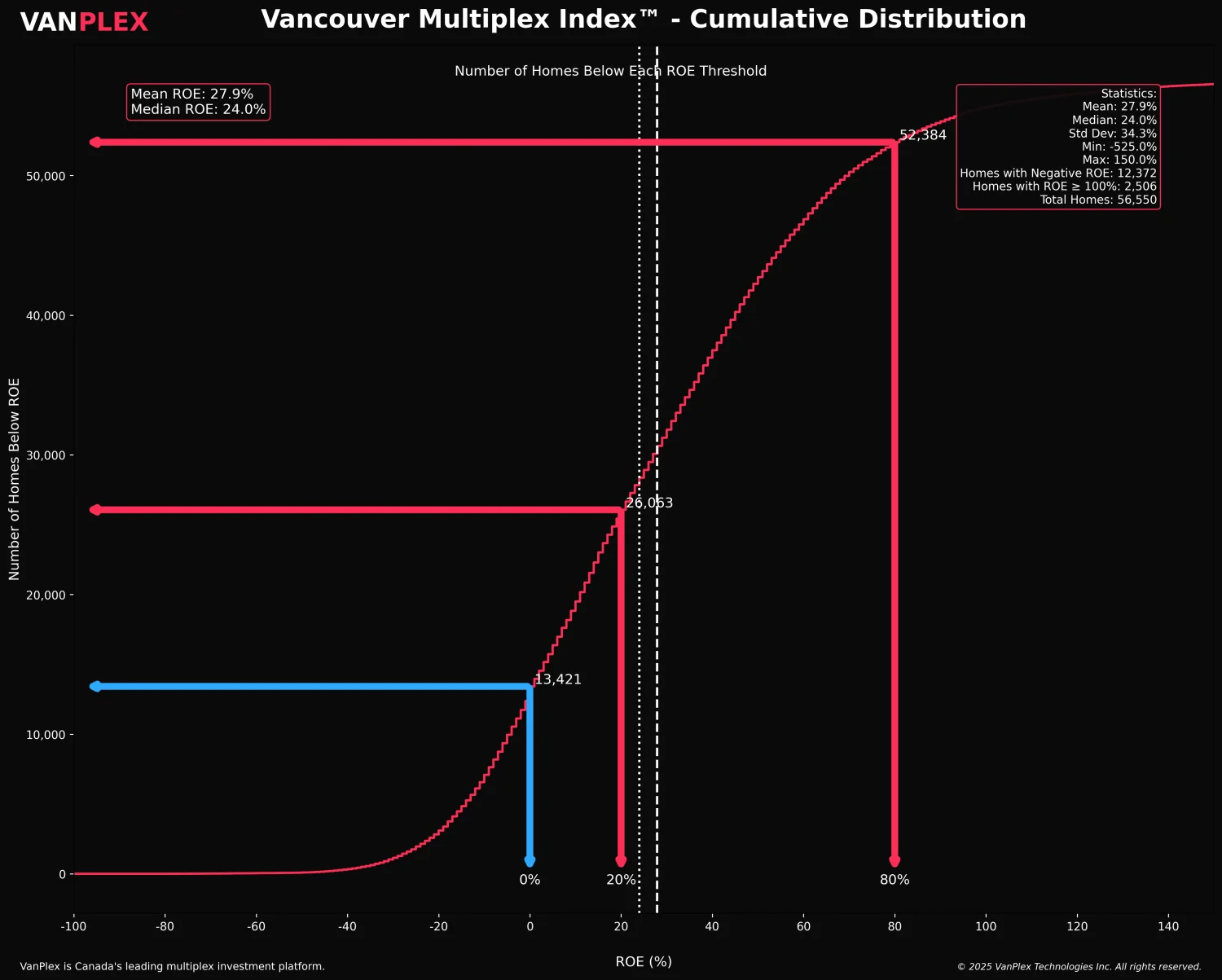
The cumulative count of lots below each projected return. The steeper the climb past the build threshold, the more supply a small density or cost change can unlock.
Vancouver Multiplex Index™. We build the same curve for your municipality.
The levers that move the line
Four of your decisions decide where the viable line sits. Change one and the share of lots that get built moves with it — which is exactly what we model with partner cities before a rule goes to council.
Allowed units
One more permitted unit can move a lot from a loss to a build. It is the single biggest lever you control, and the one your zoning sets directly.
Parking minimums
Each required underground stall can add tens of thousands in cost. On a tight lot, a parking rule alone can be the difference between viable and not.
Development charges & fees
DCCs, amenity charges, and permit fees come straight off the bottom line. Where they land decides how many lots clear a builder’s threshold.
Setbacks & form
Setbacks, height, and lot coverage decide how much sellable or rentable floor area a lot yields — which is what the whole return rests on.
Find your city's viable-density range
We compute the share of your lots that pencil today, then model how parking, fees, or an extra unit would change it — before you take a rule to council.
- Share of your lots viable at current rules
- The binding constraint, lot type by lot type
- Scenario modeling: move a lever, see the new viable share
- A council-ready read on whether your density delivers units
Frequently asked questions
What is the "viable density" sweet spot?
How does VanPlex know where the viable line is?
Can you show how a rule change would affect supply?
Does this replace an infrastructure capacity study?
Want this for your municipality?
We already track multiplex permit uptake and lot-by-lot feasibility across BC. Tell us your city and we'll show you what your data says — and how a monitoring partnership works.