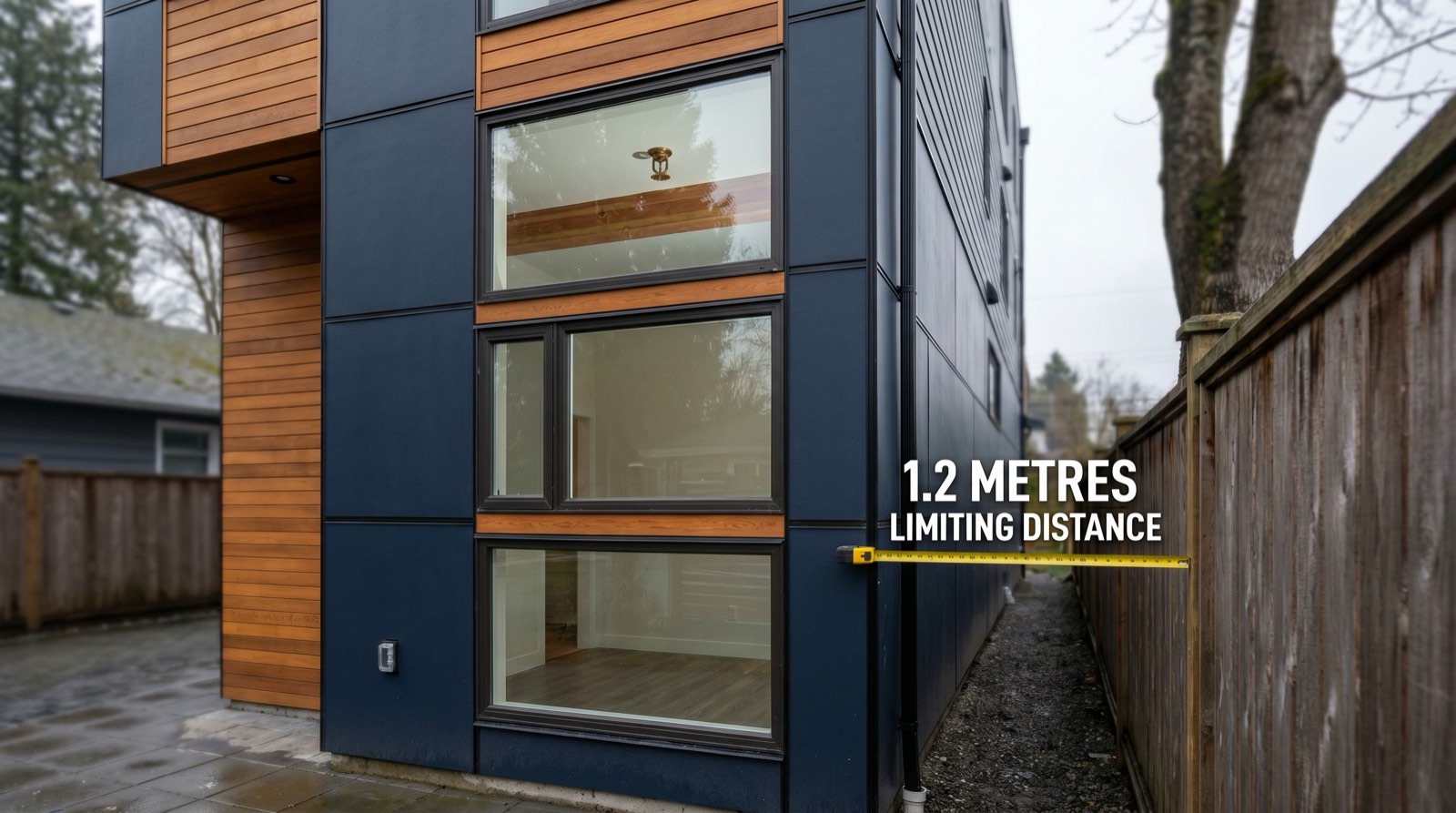
Multiplexes are relatively small projects, but they often come with large-project complexity from an execution standpoint. Most of the conversation right now is about policy, zoning, and housing supply. There’s a lot less conversation around the realities of actually delivering these projects on the ground — which is what my team at Theorem Developments deals with after the rezoning is done.
TL;DR
- A typical Vancouver multiplex requires coordination across BC Hydro, FortisBC, telecom providers (Rogers or Telus), and the City for storm and sanitary servicing.
- Multiplexes often require significant upgrades to site infrastructure and electrical capacity compared to a single-family home or duplex.
- The biggest lesson: be proactive in the design phase. Onboard experienced electrical and civil consultants early — and engage BC Hydro early too, because builders generally cannot self-perform off-site Hydro work.
- Telecom is evolving. Providers that previously allowed aerial servicing on single-family homes are now requesting underground telecom in certain situations.
- Site logistics is its own discipline. Many multiplex projects involve two or three structures on constrained urban lots, and managing staging, deliveries, lane access, overhead power lines, and construction sequencing keeps projects efficient.

Utility coordination is the layer most teams underestimate
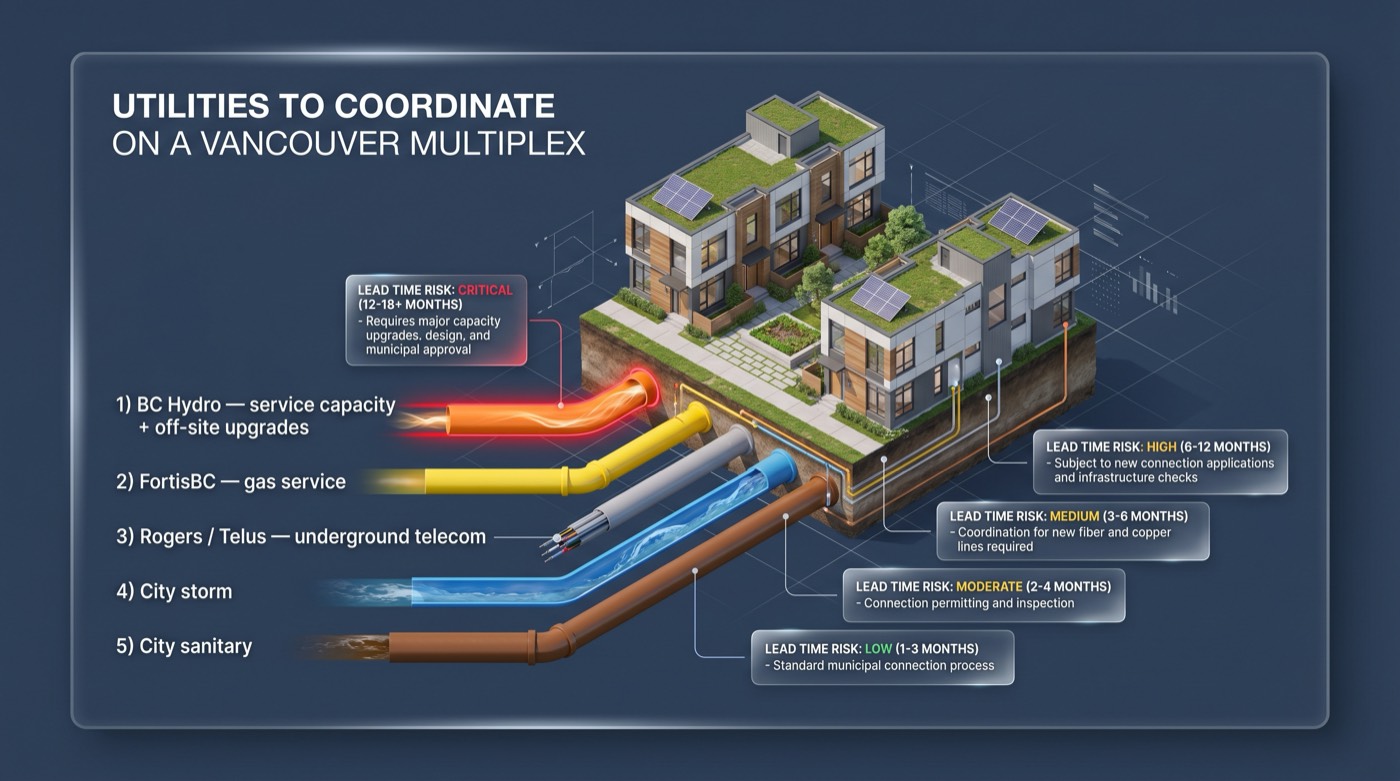
A major example of where small-project framing breaks down is utility coordination. On a typical Vancouver multiplex project, we’re coordinating across BC Hydro for electrical servicing, FortisBC for gas, telecom providers such as Rogers or Telus, alongside city storm and sanitary servicing requirements.
Compared to a traditional single-family home or duplex, multiplex projects often require significant upgrades to site infrastructure and electrical capacity. That introduces another layer of coordination and planning that owners and first-time multiplex teams routinely underestimate.
Being proactive in design is the single biggest lesson
One of the biggest lessons we’ve learned is that being proactive early in the design phase is critical. We strongly recommend onboarding experienced electrical and civil consultants as early as possible — particularly teams that have direct experience working on residential multiplex projects in Vancouver.
With BC Hydro specifically, early engagement is extremely important to better understand servicing requirements, timelines, and whether off-site upgrades may be required. In many cases, builders are unable to self-perform or privately contract portions of off-site BC Hydro work, meaning projects become dependent on utility provider scheduling and execution timelines.
If those conversations happen too late, it can materially impact project completion schedules. That part is hard to overstate. The building is small. The dependency on someone else’s crew calendar is not.
Coordination between all utilities — especially on constrained sites
Coordination between all utilities also becomes increasingly important on constrained sites. Civil design needs to carefully consider the layout and routing of electrical, gas, telecom, storm, and sanitary lines to avoid conflicts both underground and at service connection points.
We’ve also seen evolving telecom requirements on multiplex projects. Providers that previously allowed aerial servicing on single-family homes are now requesting underground telecom infrastructure in certain situations. These are important considerations to identify early — especially before hardscaping and landscaping are completed — because late-stage utility revisions can become costly and disruptive.
Site logistics — the part that’s invisible from the street
Another challenge that’s often underestimated is site logistics. Unlike a single-family home, many multiplex projects involve two or even three structures on constrained urban lots.
Managing staging areas, material deliveries, truck access, lane conditions, overhead power lines, and construction sequencing becomes incredibly important. In many cases, we intentionally stagger the progress of buildings on-site, because trying to construct multiple buildings at the exact same pace can create logistical bottlenecks. Maintaining space for lumber, gravel, waste management, and trade access all becomes part of the construction strategy.
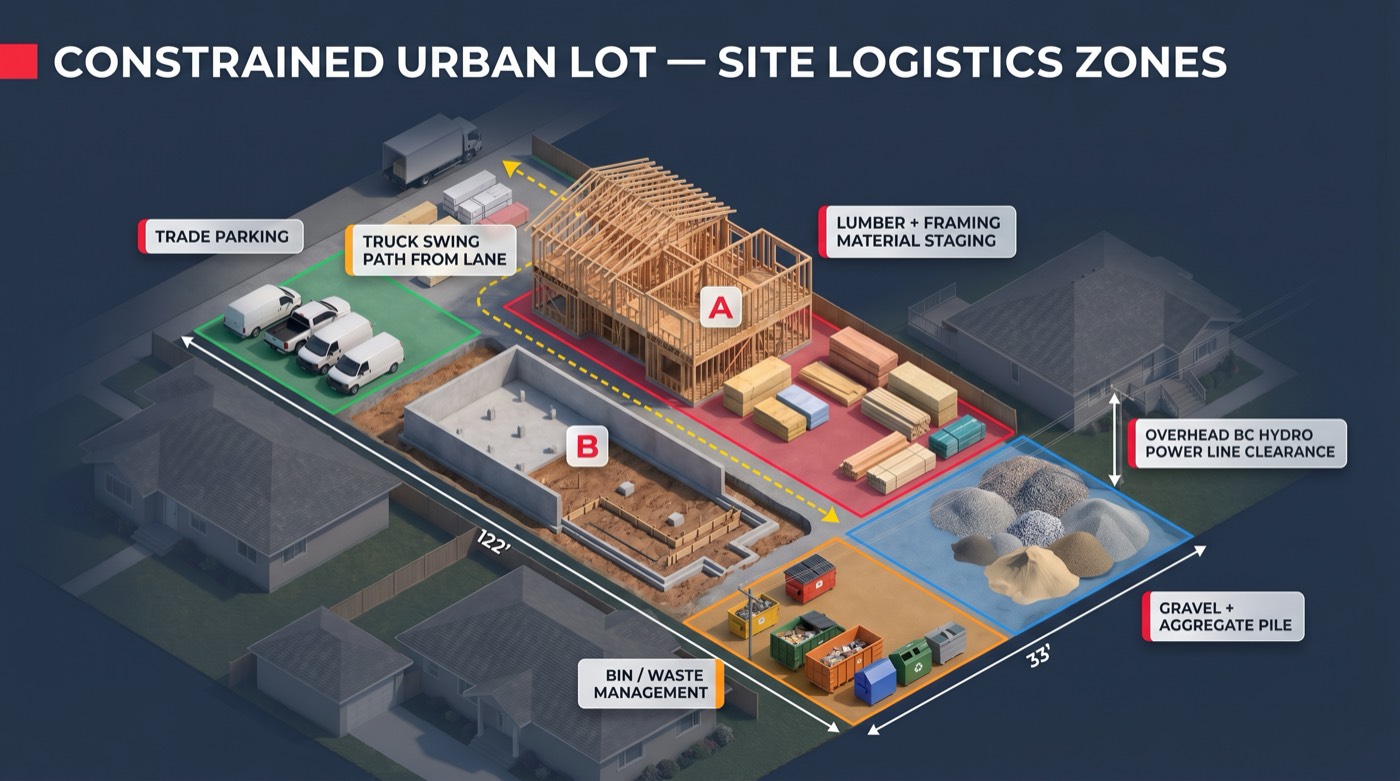
These are details that aren’t always visible from the outside, but they play a major role in keeping projects efficient and on schedule.
Frequently asked
Why are multiplexes treated as complex compared to single-family or duplex builds? The footprint is small, but the project requires upgrades to site infrastructure and electrical capacity that single-family and duplex builds usually don’t. That brings in more utility authorities, more coordination, and more dependencies on someone else’s schedule.
Which utilities does a Vancouver multiplex have to coordinate with? On a typical project: BC Hydro for electrical servicing, FortisBC for gas, a telecom provider (Rogers or Telus), and the City for storm and sanitary.
Why does BC Hydro need to be engaged early? To understand servicing requirements, timelines, and whether off-site upgrades may be required. Builders generally can’t self-perform or privately contract portions of off-site BC Hydro work, so the project ends up dependent on the utility’s scheduling. Late conversations materially impact completion.
What’s changing with telecom? On some multiplex projects, providers that previously allowed aerial servicing on single-family homes are now requesting underground telecom infrastructure. Identifying that before hardscaping and landscaping go in avoids costly late-stage revisions.
Why stagger building progress rather than building everything at once? On constrained sites with two or three structures, trying to construct multiple buildings at the exact same pace creates logistical bottlenecks. Staggering keeps staging space, deliveries, and trade access workable.
The buildings are small. The execution isn’t. The teams that ship multiplexes on schedule in Vancouver are the ones that treat utility coordination and site logistics as first-class design problems — not as a checklist someone fills out after permit.
Run your Vancouver lot through PlexRank to see whether it’s a multiplex candidate before you spend a dollar on design. If the lot scores, the next call is to a team that has actually wired one of these up before.
— Suraj Jhuty, P.Eng. | Co-Principal, Theorem Developments