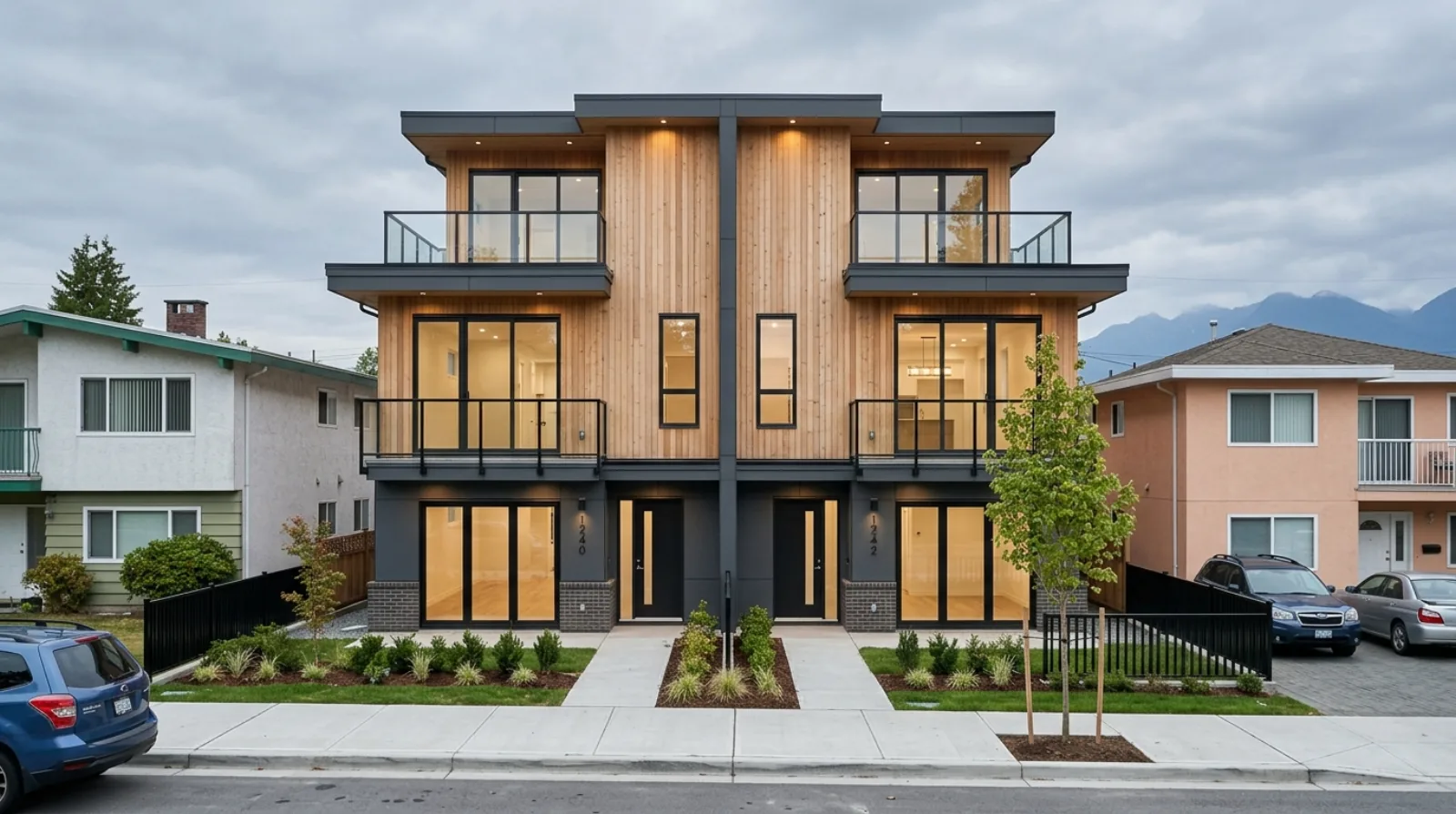
Bill 44 made multiplex zoning by-right. That doesn’t mean your neighbours are happy about it. By-right means the city has to approve a code-compliant project — it doesn’t mean the people next door have to like the construction noise, the temporary parking impact, the workers’ trucks, or the look of the new building.
In our project work, the difference between a bad neighbour relationship and a workable one is rarely the building itself. It’s how the owner handled the eight to twelve months of construction. This is the engagement playbook that actually works.
Why this matters
A neighbour who’s mad doesn’t stop the project — by-right zoning is by-right. But an actively hostile neighbour can:
- File noise complaints with the city, triggering inspections and slowdowns
- Document and photograph every infraction, however minor, and forward to the building department
- Object to every variance request you might need (and you probably will need at least one)
- Make the worksite unpleasant for trades, who will start losing days
- Sue, even if the suit doesn’t win, costing you legal fees and time
- Sour the building’s reputation in the neighbourhood, affecting strata sales or rental lease-up
A neighbour who’s neutral or mildly positive doesn’t do any of those things. The cost difference between hostile and neutral can be substantial — slowed schedule, blocked variances, legal time. Engagement is cheap. Litigation is expensive.
What I tell every owner before construction starts
Three rules. Every project. Every time.
1. Talk to them first, before the construction notice
The official notice the city posts is impersonal and arrives later than it should. By the time your neighbour reads “Notice of Building Permit” on their fence, they’ve already been imagining the worst.
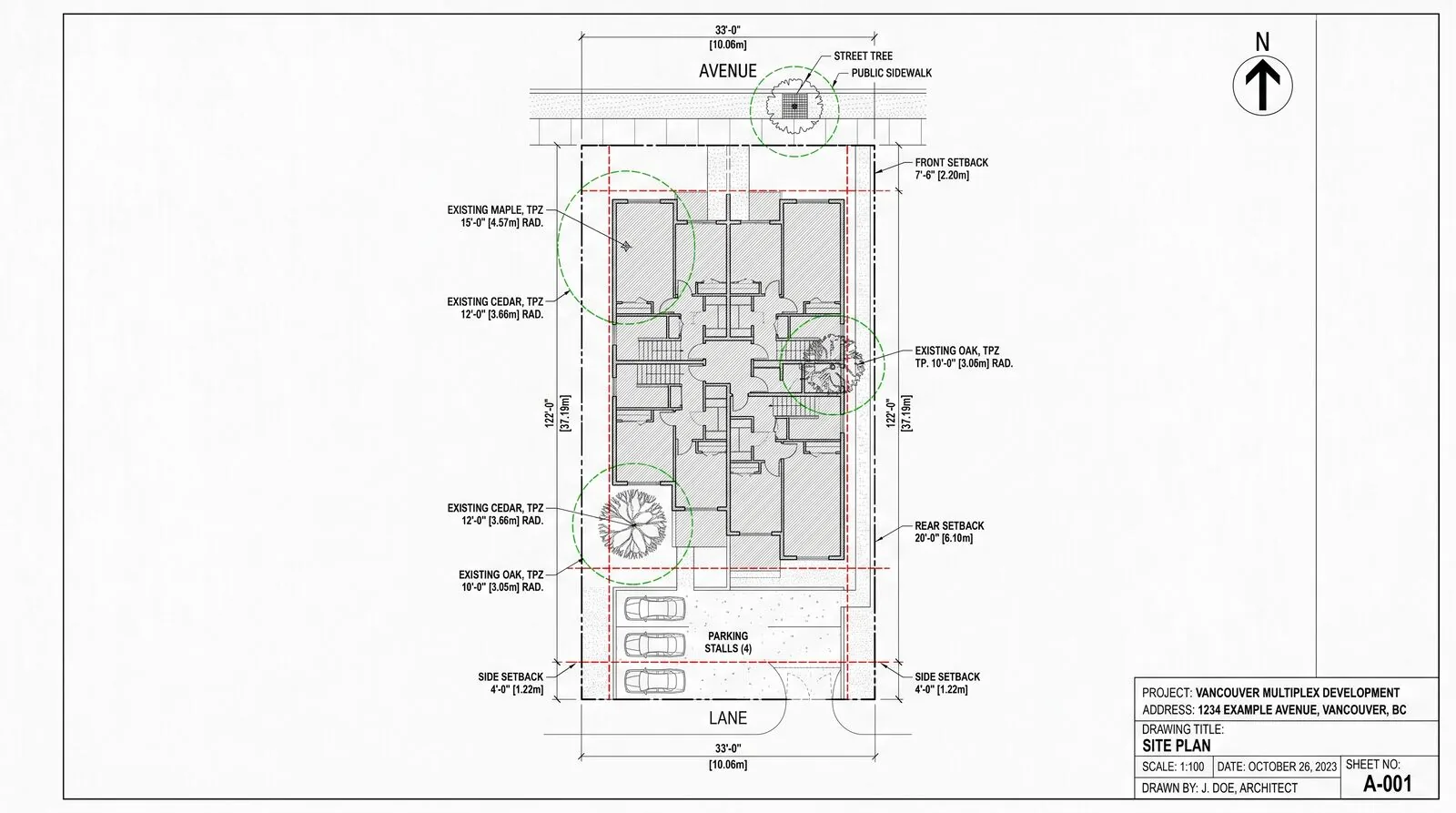
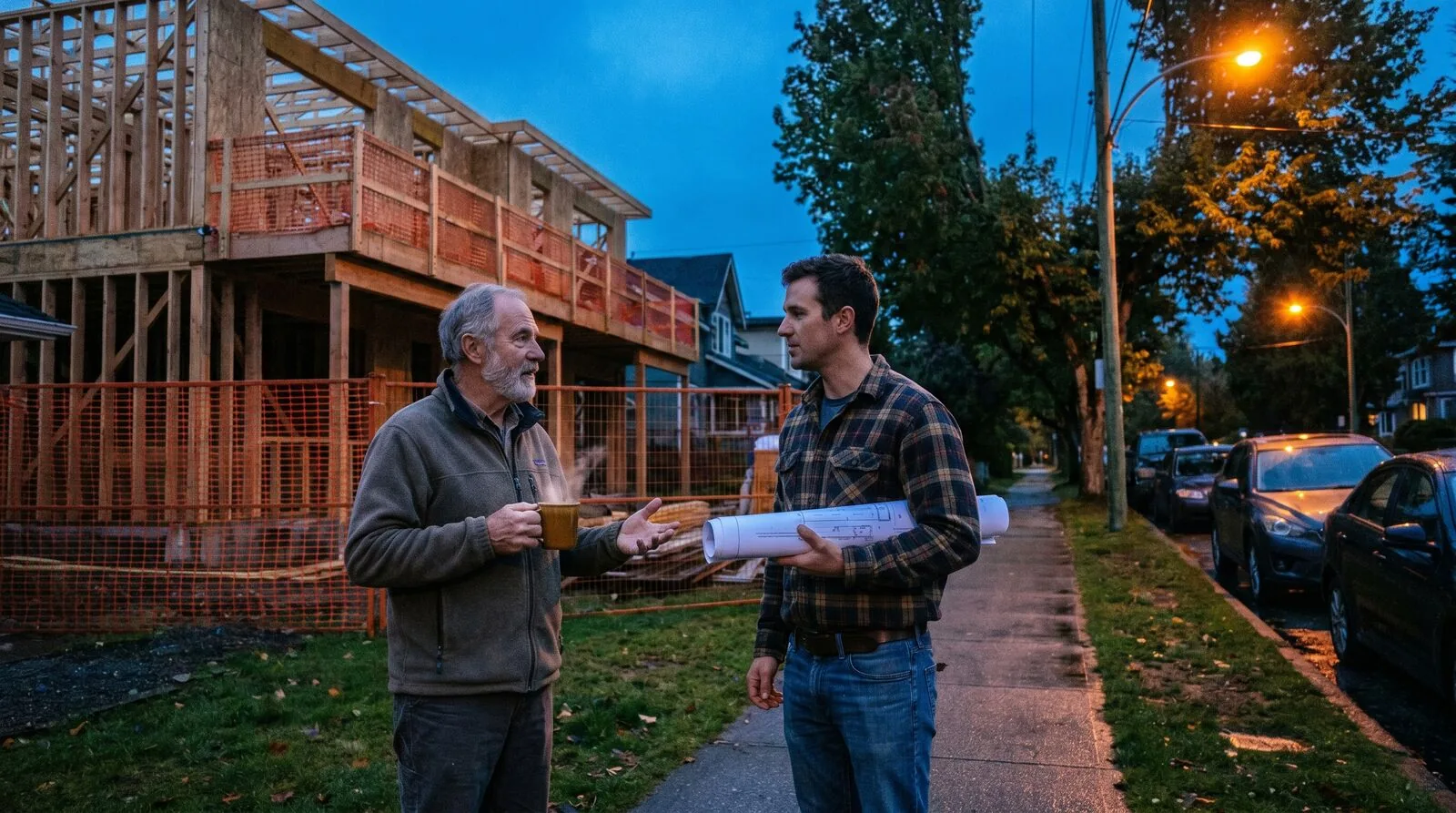
Beat the notice. Knock on the door 30–60 days before construction. Bring the site plan and elevation drawings. Show them where the building will sit, which trees will be retained, what the parking and lane access look like, and roughly what the construction sequence will be. Ten minutes. No legal jargon. No hard sell. Just the picture.
What you’ll often hear back: “I had no idea you were planning this. The current notice didn’t tell me anything specific.” Then a list of practical worries — “Will my driveway still work? Will you damage my fence? What about my dog?” — that you can address point by point.
This isn’t a meeting to convince anyone. It’s to introduce yourself and the project before any fear has had time to compound.
2. Give them a real contact, not a phone tree
Neighbours don’t have time to figure out who your project manager is. Give them a phone number, a name, and an email. Tell them: if anything happens that affects you — noise, water issue, equipment in your driveway, anything — call this number first, not the city. We’ll handle it.
In practice, this means you (or the project manager) will get occasional calls about minor issues. Take them seriously. Show up within a day. The cost of one site visit per complaint is trivial compared to the cost of having those complaints get filed with the city instead.
The bylaw enforcement team is a different conversation than the homeowner-to-homeowner conversation. Once a complaint goes to the city, it’s a paper trail you can’t undo and it changes the relationship. Most neighbours would rather talk to a person than file a form. Make that easy.
3. Keep the worksite clean
This sounds basic. It’s the single most predictive factor in neighbour relations. A clean site says “we know what we’re doing.” A messy site says “anything could go wrong here, and probably will.”
What “clean” means in practice:
- Construction fence in good repair, not falling over
- No trash accumulating outside the fence
- Equipment stored inside the fence at end of day, not on the street
- Workers parking on legal spots, not blocking neighbour driveways
- Daily sweep of the sidewalk and lane in front of the site
- Mud removal from the street after rain or excavation
These cost money. They also save money. A clean site triggers fewer complaints, which means fewer inspections, which means a smoother schedule.
Common neighbour worries, and what to actually say
Here are the questions that come up in roughly 80% of pre-construction conversations, and the answers that work:
“Will the building block my light?”
Pull out the elevation drawings and the site plan. Show them where the building sits relative to their property. If there’s a south-facing window of theirs that will be affected, tell them honestly. If there isn’t, show them the drawings so they can see for themselves.
Many neighbours imagine a building larger than what’s actually permitted. Vancouver’s R1-1 zoning specifies maximum heights and setbacks that limit how much shadow falls on adjacent properties. Showing the actual envelope often resolves the worry.
”What about the trees?”
Pull out the tree retention plan. Show them which trees stay and which go. If trees on their property are within the construction zone, show the protection measures (fencing, root protection, monitoring). Vancouver’s tree protection bylaw requires specific protections for retained trees.
If you’re removing a tree they liked, acknowledge that. Don’t argue it. Tell them what’s being planted in replacement, when, and what species. The acknowledgment matters more than the replacement species.
”Where are people going to park?”
Show them the parking layout for the new project. Confirm it complies with the bylaw. If you have surface or tucked-under parking, that’s the answer.
If your project has reduced or zero parking (in transit-rich areas), explain that residents won’t have private stalls and will be expected to use street parking only as available. Acknowledge this is a real change. Don’t oversell it.
”How long will construction take?”
Be honest about the schedule. A typical Vancouver multiplex from excavation to occupancy runs 12–18 months. The noisy phases are concentrated in early excavation, foundation, and framing — typically the first four to six months. After that, most of the work is interior and quieter.
Tell them the noisy weeks. Tell them the quiet weeks. They’ll plan around it. What they can’t plan around is uncertainty.
”Will it affect my property value?”
Direct answer: probably not negatively, and possibly positively. The peer-reviewed research on this is moderately consistent — small-multiplex infill in detached neighbourhoods doesn’t typically reduce adjacent property values, and in some studies has been associated with slight appreciation. The Joint Center for Housing Studies at Harvard has summaries of this literature.
That said, the conversation isn’t always about empirical evidence. It’s about your neighbour’s emotional connection to “what the street looks like.” Acknowledge that. Don’t try to win the argument. Move on.
What not to do
A few patterns I’ve seen go wrong:
- Bringing a lawyer to the first conversation. Sends the message “this is going to be adversarial.” It might be, but you don’t escalate first.
- Promising things you can’t deliver. “We’ll be done in six months” when you know it’s twelve. The trust you lose when the schedule slips is worse than the trust you gain at the start.
- Avoiding the neighbour after construction starts. If you talked to them once and then went silent, the next conversation is going to be a complaint. Schedule a check-in at month three or four. Even a brief one.
- Treating it as a one-time event. Neighbour relations are an ongoing conversation, not a single meeting. The drywaller making a mess in month nine is your problem, not just theirs.
When to involve the city before they do
Some situations warrant proactively contacting the city’s planning or engineering department:
- A neighbour expresses concerns the project doesn’t fit the bylaw — get the city’s confirmation in writing that it does, share with the neighbour
- Any unexpected discovery on site (archaeological, environmental, structural) that might affect adjacent properties
- Any work that touches a shared lane, sidewalk, or service line — get a permit and notify in writing
Going to the city first puts you on the front foot. Letting your neighbour go to the city first puts you on the defensive. The same set of facts plays out differently depending on who initiated the conversation.
After completion
Once the building is finished, the construction phase is over but the neighbourhood relationship is just beginning. If the units are strata, the new owners are now your neighbour’s neighbours. If rental, the same — different residents, but a permanent presence.
What helps:
- A short note of thanks to the adjacent neighbours after construction wraps. Acknowledge the disruption. Mean it.
- Quick follow-up on any outstanding minor issues (a fence section that got damaged, a driveway that has a chip in it, a tree that didn’t make it). Fix them quietly.
- An introduction to the new tenants or owners, if the neighbour wants one. Not everyone does. Offer.
These small things — none of them legally required — translate into neighbours who respond well when there’s an issue with the building five years from now, instead of treating it as another grievance.
What this is really about
Bill 44 changed the law. It didn’t change the social fabric of Vancouver neighbourhoods. The buildings will get built either way, but how they get built and how they’re received depends on a lot of small interpersonal decisions.
Most neighbour anger isn’t about density per se. It’s about feeling unheard, surprised, or disrespected. The things that prevent that — talking first, giving a real contact, keeping the site clean, being honest about the schedule — are cheap. They’re the most under-priced part of the multiplex business model.
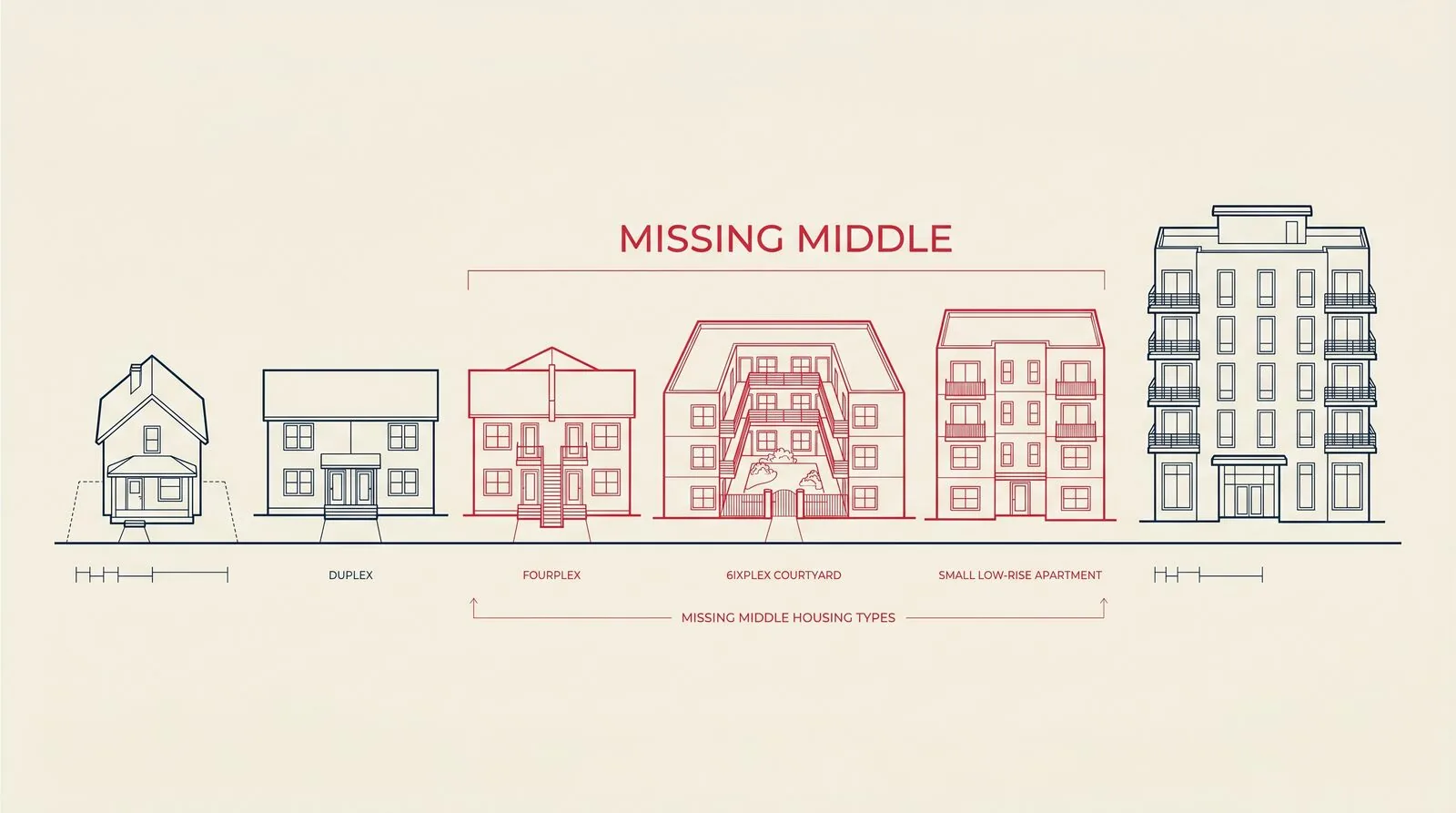
For more on the operational side of new multiplexes, see property management for small rentals, the lot-to-stabilized timeline, and the missing middle hub.
— David Babakaiff, Co-Founder, VanPlex